From Limitation to Leverage: A Realistic Philippine Promise in Philippine Manufacturing
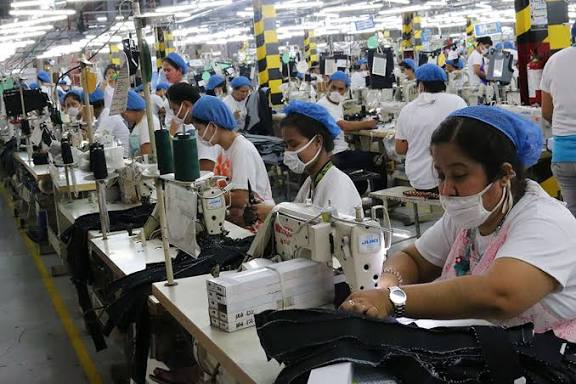
By Karl Garcia
They say we don’t manufacture with optimal value-added — and for a long time, that was true. We built on what we had, and often that meant improvisation. The repurposed Army jeep became a Filipino icon in the 1950s, but it also became a metaphor: ingenuity locked in a comfort zone, innovation that never scaled beyond the prototype. What began as creativity hardened into inertia.
We export ships, yes — but mostly for foreign fleets, designed by foreign naval architects from Australia or Korea. We assemble cars and semiconductors, but rarely design the platforms ourselves. We mine ores but outsource the refining, not because we cannot, but because the global tables were set before we arrived and the seats were expensive.
This is the diagnosis. But it does not have to be the destiny.
The realistic promise is this:
1. We can build value, step by step — not by leaping to the frontier, but by owning each rung of the ladder.
Countries that now dominate refining, ship design, or automotive engineering did not begin there. They started with assembly, repair, imitation, and modest export niches, then layered capabilities year after year. The Philippines does not need a moonshot; it needs a staircase — and reliable access to markets that make each step economically worthwhile.
2. We can upgrade from assemblers to co-designers.
Our semiconductor industry is already moving from packaging to testing, then to R&D collaboration. The same shift is possible in shipbuilding: from merely constructing hulls to developing Filipino naval architects who lead projects instead of subcontracting them.
But co-design thrives only when firms have a predictable stream of income — anchor clients, long-term procurement plans, and export agreements that give local innovators the confidence to invest in higher-value work.
3. We can move from ore exporters to partial refiners — then to circular value creators.
Full-scale smelting may be capital-intensive and geopolitically fraught, but mid-stream processing, green refining technologies, and battery recycling are winnable spaces. They let us capture more value without fighting uphill against entrenched giants.
Yet none of these survive on vision alone. They need stable demand — domestic manufacturers, ASEAN contracts, long-term offtake agreements — so that investors see continuity, not volatility.
4. We can transform improvisation into innovation.
The jeepney was never the failure — the failure was not iterating beyond it. But the same instinct for repurposing, customizing, and adapting can power a new generation of micro-manufacturers, marine tech innovators, and clean-energy fabricators.
To scale these, we must shift from survival entrepreneurship to secured entrepreneurship — where small producers have guaranteed buyers, government-backed procurement pipelines, and entry into regional value chains.
5. We can anchor all of this in a distinctly Filipino advantage: a workforce that absorbs complexity quickly and collaborates naturally.
Our people run advanced ships, operate global BPO infrastructure, and build the world’s devices. The capability is there — what we lack is the ecosystem that lets local talent design, patent, and export under a Filipino name.
And the heart of that ecosystem is not just skills, but markets: reliable, diversified, and accessible markets that turn Filipino capability into Filipino income.
The Promise, in One Line
We will not become a manufacturing superpower overnight — but we can become a country that steadily climbs the value chain, secures markets for its producers, guarantees income continuity for its workers, and refuses to stay frozen in the past.
Not a boast. Not a lament.
A commitment.


 The Society of Honor by Joe America
Tatak Pinoy: How Filipino Innovation Can Drive Industrialization
In the Philippines, the phrase “Tatak Pinoy” goes beyond pride—it’s a call to action for the nation’s industrial and economic future. Literally meaning “Filipino brand,” Tatak Pinoy represents products, innovations, and industries that are distinctly Filipino, rooted in local resources, culture, and ingenuity. From dried mangoes and piña fabric to locally developed medical devices and eco-friendly technologies, these are more than goods—they are the face of a potential Filipino industrial revolution. Law as a Catalyst for Tatak Pinoy
For Tatak Pinoy to thrive, legal frameworks are essential. The Intellectual Property Code (RA 8293) protects Filipino inventions, preventing unauthorized use and ensuring inventors can reap the rewards of their creativity. Trademark laws safeguard the reputation of Filipino brands at home and abroad, while Geographical Indications can link products like Bohol tarsier crafts or Davao durian to their origin, giving them a unique market edge.
Government policies also play a crucial role. Incentives for local manufacturing, tariff protections against cheap imports, and procurement laws that favor locally-made products (RA 9184) create a fertile ground for Filipino industries to grow. Science and technology laws, like the Philippine Innovation Act (RA 11293) and the Science and Technology Act (RA 10055), provide the research and development backbone necessary for turning local ideas into competitive products. Tatak Pinoy and Industrialization
Industrialization is not just about factories; it’s about building domestic capacity, creating jobs, and generating sustainable growth. Tatak Pinoy is a strategy for achieving this. By focusing on agro-industrial products like coconut, abaca, cacao, and ube, the Philippines can create value-added goods that feed both local and global markets. Sustainable technologies such as bioplastics and renewable energy solutions position Filipino innovation as forward-looking and globally relevant.
Supporting small and medium enterprises (SMEs) is equally vital. These businesses are often the incubators of Tatak Pinoy, turning local raw materials into products with international appeal. Government incentives, financing support, and R&D assistance can help these SMEs scale, creating a robust industrial ecosystem. Challenges and Opportunities
Tatak Pinoy faces real challenges. Weak enforcement of IP laws leaves products vulnerable to imitation. Dependence on imported materials limits the local value chain. And many SMEs struggle with capital and market access.
Yet the opportunities are enormous. Branding and marketing Tatak Pinoy internationally can create premium products recognized worldwide. Integrating technology—like AI in agricultural processing or digital platforms for artisanal goods—can enhance efficiency and competitiveness. By linking Tatak Pinoy with sustainable industrialization and ESG principles, the Philippines can build an industrial model that is not only economically viable but socially and environmentally responsible. Conclusion
Tatak Pinoy is more than a label; it is a blueprint for Philippine industrialization and economic independence. With strong laws, supportive policies, and a focus on innovation, Filipino products can compete globally while preserving cultural identity. In every ube-based dessert, abaca textile, or locally manufactured medical device, the Philippines has the potential to show the world that Filipino ingenuity is not just worthy of pride—it is an engine for progress.
https://thediplomat.com/2024/08/what-is-the-tatak-pinoy-act/
The Philippines’ manufacturing sector is a key economic driver, focusing on electronics, food, automotive parts, and more, attracting foreign investment but facing challenges like import dependency. While showing recent growth in some areas like food and transport equipment, it’s experiencing recent slowdowns due to weak demand, global disruptions, and typhoon impacts, despite long-term government efforts to boost competitiveness and employment through programs and investments in upskilling.
Key Aspects
Sector Snapshot
In essence, the Philippine manufacturing sector is vital but navigating fluctuating global demand and local challenges, with ongoing efforts to solidify its position as an emerging Asian manufacturing hub.
focuses on adopting advanced tech (Industry 4.0), boosting competitiveness via programs like the Manufacturing Resurgence Program (MRP) & CARS, strengthening supply chains, and improving skills, with recent S&P Global PMI data showing positive but sometimes subdued growth driven by demand, though facing challenges like skills gaps and needing better infrastructure/policy support. Key areas include digital transformation (sandbox), R&D, easing logistics, promoting smart manufacturing, and combating smuggling to support sustained expansion.
Key Improvement Strategies & Initiatives:
Digital & Tech Adoption: Implementing Industry 4.0 (AI, automation) via initiatives like the Industry 4.0 Sandbox to allow experimentation with new tech.
Policy & Programs:
Manufacturing Resurgence Program (MRP): Aims to expand capacity through better collaboration, logistics, and supply chain solutions.
Comprehensive Automotive Resurgence Strategy (CARS): Offers incentives to attract auto investments.
Manufacturing Industry Upgrading Roadmap: Targets 30% contribution to output and 15% to employment.
Skills & Workforce: Investing in upskilling/reskilling, leveraging academe-industry collaboration for a skills-based learning system.
Infrastructure & Logistics: Reducing transportation costs to boost competitiveness.
Anti-Smuggling Efforts: Collaboration with customs (BOC) to fight smuggling and ensure fair competition.
Recent Performance & Trends:
Positive Growth: Manufacturing PMI (Purchasing Managers’ Index) generally above 50 (growth threshold) in 2024-2025, with strong new orders and output.
Demand Drivers: Robust local demand, product diversification, new clients, and improving export orders (though sometimes fluctuating).
Inflation & Costs: Muted inflationary pressures and falling input costs, allowing for potential policy rate cuts.
Challenges: Subdued overall growth rates compared to historical highs, concerns about supply chain issues, and maintaining employment amidst automation.
Focus Sectors:
Electronics, food processing, automotive, and pharmaceuticals are key areas for advanced manufacturing growth.