Authors
-
Wilfredo G. Villanueva
-
Cha Coronel Datu
-
Juana Pilipinas
-
Karl Garcia
-
giancarloangulo
- Problem Solving the Philippines: How the National Expenditure Program Is Generated
- Problem Solving the Philippines: A Primer on the National Budget
- Problem Solving the Philippines: Idea Post. Who carries a student invention the last mile?
- Problem Solving the Philippines: Idea Post. Can we stop and talk a while?
-
Irineo B. R. Salazar
-
JPilipinas
-
karlgarcia
-
JoeAm
-
Beyond the Weak Peso: Why Philippine Development Must Compound
By Karl M. Garcia A country becomes stronger not simply when its economy grows, but when each period of growth leaves it better equipped to handle the next crisis. This is where the Philippine development challenge becomes clearer. The country has a large domestic market, a young and globally connected workforce, internationally competitive service industries, … Continue reading
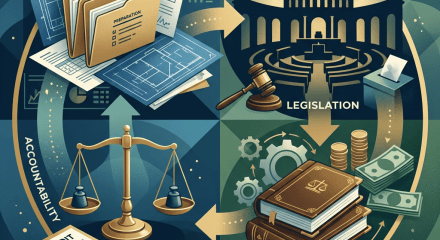
Problem Solving the Philippines: A Primer on the National Budget
Part 1 of The Budget Series: who does what in the Philippine national budget, how the budget year runs, and where the money goes.
THE ILLUSION OF STATUS: DOÑA VICTORINA, COLONIAL MENTALITY, AND THE FILIPINO SOCIAL CLIMBER
The desire to rise socially is not inherently wrong. Every society contains people who want better education, greater prosperity, more influence, or a more secure future for themselves and their families. Social mobility can be a sign of a healthy society, especially when advancement comes through education, enterprise, professional achievement, or public service. But José … Continue reading
WHEN HAZING CANNOT BE STOPPED BY LAW ALONE
How to make a deadly tradition unnecessary, difficult to hide and impossible to romanticize By Karl M. Garcia Every time a young Filipino dies or is seriously injured because of hazing, the country goes through a familiar cycle. There is outrage. There are investigations. Schools suspend organizations. Police investigate. Officials promise tougher enforcement. Calls are … Continue reading
A Brake, Not a Roadblock
By Karl M. Garcia A Temporary Restraining Order is supposed to be a brake, not a roadblock. That distinction matters in a country where courts must protect citizens from unlawful government action while government must also be able to build roads, railways, airports, ports, power facilities and other infrastructure without every major project becoming vulnerable … Continue reading
Recent Comments