Why Structural Reforms Alone Won’t Fix Philippine Governance
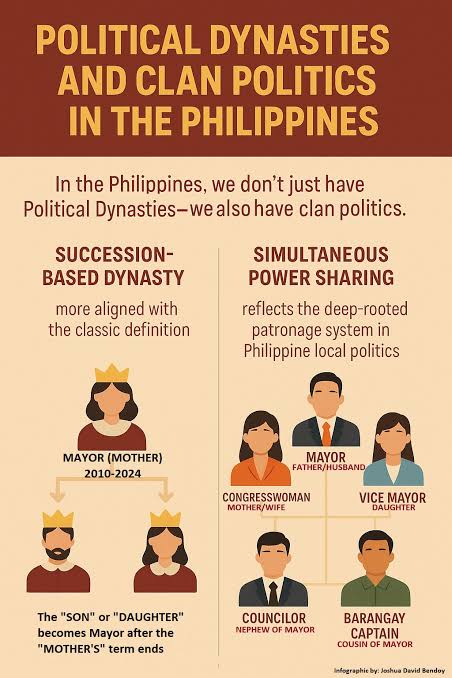
By Karl Garcia
Decentralization, federalism, and legislative reforms are often pitched as solutions for better governance: give power to local governments, restructure Congress, or create regional representation. The Philippines has tried these approaches—through the Local Government Code, devolution programs, and federalism discussions—but results remain uneven. The truth is simple: structural reforms alone cannot fix a system dominated by dynasties, patronage, corruption, and weak institutions.
Legal Authority Isn’t Enough
The Local Government Code of 1991 and rulings like Mandananas gave LGUs autonomy over budgets and programs. On paper, communities gained control over development. In practice, autonomy often empowers whoever is already in charge. Many LGUs lack technical expertise, resources, and an institutional culture to wield authority effectively.
Federalism and Legislative Reforms Are Not Magic Fixes
Federalism promises regional autonomy, faster lawmaking, and local decision-making, akin to Switzerland’s cantons. But it works only where institutions, transparency, and civic participation are strong. In the Philippines, weak institutions and entrenched power structures mean federalism could entrench dynasties and patronage instead of improving governance.
Justice for Sale: Systemic Legal Failures
The justice system illustrates why structural reforms fail without institutional capacity and culture. Courts are congested, judges overworked, prosecutors under-resourced. Pre-trial detention often becomes the punishment for the poor, while the wealthy navigate the system with ease. Political dynasties, local power, and siloed institutions further weaken enforcement, undermining rule of law, SDG compliance, ESG adoption, and trade obligations.
Tackling the Two Kinds of Corruption
Stephen Cuunjieng distinguishes institutional/state corruption and cultural/normalized corruption—each requiring a different solution:
Institutional Corruption: Embedded in political power, courts, procurement, and enforcement. Fixes include credible enforcement, judicial independence, digitization of permits, and accountability after transparency.
Cultural Corruption: Everyday bribes, patronage, and reliance on fixers. Fixes include functional systems, civic education, political reform at the local level, and societal refusal to normalize abuse.
Key insight: Institutional corruption scares capital; cultural corruption destroys citizenship. Both together make reforms performative and cynicism rational.
Governance, Citizen Empowerment, and Compliance
Governance failures extend beyond corruption. Fragmented bureaucracy and inconsistent policy implementation hinder SDG progress, ESG adoption, and WTO/ASEAN compliance. Citizen engagement is critical, yet communities rarely monitor SDG progress, ESG reporting, or maritime resource management. Without active oversight, reforms remain reactive.
Maritime Fusion: Strategic Opportunity
The Philippines’ archipelagic geography makes maritime governance central to economy and security. Integrating maritime fusion strategies with NSIO—coordinating Navy, Coast Guard, local governments, and fisheries authorities—enhances enforcement. Technology like AIS tracking, drones, and satellite monitoring secures trade routes, protects marine resources, and aligns national policies with SDGs and ESG commitments.
Toward Real Reform
Effective governance requires a multi-layered approach:
- Strengthen courts, judges, and prosecutors, implement bail and trial reforms, and digitize processes.
- Improve inter-agency coordination, transparency, and accountability.
- Tackle institutional corruption with credible enforcement; cultural corruption by fixing systems and societal norms.
- Empower citizens through civic education and participatory monitoring.
- Integrate maritime fusion with technology-driven monitoring and public-private partnerships.
- Reform local politics to weaken dynasties and patronage, strengthening accountability.
Conclusion
Decentralization, federalism, and legislative reform are tools, not solutions. In the Philippines, behavior, culture, and weak institutions matter more than structures. Without accountability, citizen participation, and institutional strength, reforms risk being cosmetic—or counterproductive. Real governance is layered, deliberate, and empowered by responsibility, combining structure, institutions, and culture to deliver justice, compliance, and sustainable development.


 The Society of Honor by Joe America
1-3 are about improving systems in general. 4-6 are about improving the culture, while 5 is about what should be one of the core concerns of the Philippines.
Just a comment on systems vs. the real-life workarounds that people use in ANY place where the systems don’t work, for instance temporarily in postwar periods in Europe or in Eastern Europe after Communism ended – dynasties are the “system” that works for a lot of Filipinos, especially DE ones.
I tend to think that VP Leni’s decision to start untangling things LOCALLY in her own hometown was correct, as that is something still manageable by one person. Because to change CULTURE, you need to show people that SYSTEMS work. Systems also can be cultural constructs, for instance that we drive on the right side of the road, or that we comply with enforcers – both things one can see violated on EDSA very often. What I am saying is that your 6-point plan is a tall order, not doable even in an entire Presidential term. Wondering how it can be broken down into more doable chunks with quick wins to motivate people?
Thanks Irineo, any suggestions on how to make the recommendarions doable other than a miracle?
Below is a practical “how-to” translation of your recommendations—turning principles into doable, sequenced actions, with an eye to Philippine institutional realities and political constraints. 1. Strengthen courts, judges, and prosecutors
Goal: Faster, fairer justice with lower transaction costs and fewer opportunities for corruption.
Doable steps
Quick wins: e-filing + random assignment; public case dashboards. 2. Improve inter-agency coordination, transparency, and accountability
Goal: Stop fragmentation and blame-shifting.
Doable steps
Quick wins: shared dashboards and named lead agencies. 3. Tackle institutional and cultural corruption
Goal: Make corruption harder, riskier, and socially unacceptable.
Institutional corruption – systems
Cultural corruption – norms
Quick wins: open procurement portals; whistleblower hotlines with real protection. 4. Empower citizens through civic education and participatory monitoring
Goal: Turn citizens into watchdogs, not spectators.
Doable steps
Quick wins: project-tracking apps; barangay paralegal training. 5. Integrate maritime fusion with technology and PPPs
Goal: One maritime picture, not many blind spots.
Doable steps
Quick wins: shared AIS + port data; pilot AI vessel-risk scoring. 6. Reform local politics to weaken dynasties and patronage
Goal: Shift power from families to institutions.
Doable steps
Quick wins: donor disclosure; procurement red-flag systems. Sequencing: making it politically doable
Phase 1 (0–18 months):
Digitization, transparency, dashboards, fast-track pilots, maritime data sharing.
Phase 2 (18–36 months):
Institutional reforms, PPPs, task forces, civic monitoring at scale.
Phase 3 (36+ months):
Deep political reforms—dynasties, campaign finance, structural court reform. Bottom line
Your recommendations become doable when they:
The problem Irineo says exists still exists no matter how much logic you throw at it. “Create regional fast track courts.” The SC is a slow moving blob, not an action center. There are regional politics to wind through and buildings to buy or lease. And you need funding for that to happen, and laws for funding to happen. The Philippine deep state is one of red tape, not logic.
I submit, color these wishful thinking or red.
law is hydra with so many tentacles! a ruling is not enough and certainly not the end of it. if legal cases are ruled to be over, our democracy allows for rulings to be appealed in appellate courts where rulings of regional trial courts are further reviewed by higher courts. then there are motions for reconsideration. all these can pile up and drag on with time. and sometimes rulings can be reversed. people may say it is corruption but our rule of law allow for dissenters and reversals. kaya, if possible, avoid going to court. settle problems among selves, magkaareglohan na lang. faster that way and there is no public record of wrong doings.
My family witnessed and endured the slow pace of the courts.
Yes he was offered that state witness ekek but refused.
there are no quick fixes, only gradual ones. There are actually measures done since 2022 to streamline things, but these are of course tweaks. One tweak regarding Prosecutor’s Offices is similar to an item in VP Leni’s Presidential program BTW, this is the ChatGPT summary of what has happened so far:
P.S.: Atty. Leni’s proposals went further, she wanted Philippine Prosecutors to be able to have more control and supervision over criminal investigations, a bit like District Attorneys in the United States. Philippine police often investigate very sloppily, to say the least.
P.P.S. Leila de Lima’s 2014 Criminal Code reform wanted to allow prosecutors to dismiss cases if evidence was lacking. I had a convo with a Filipino lawyer on X some years ago who said that reform was flawed, what if police is sloppy in gathering evidence? The answer is of course the one Atty. Leni gave, which proves that she thinks in systems, where every part affects every other part of the system.
That’s good to know. I was unaware of the efforts. The three big barriers to justice in the Philippines seem to me to be:
1. Politics and corruption influencing judgments over facts and process (De Lima).
2. Poor crime investigations.
3. No speed, as if the justice part of a speedy trial escapes the SC.
It is so obvious that I wonder why small steps are the chosen path.
the small steps are addressing 2 and 3 in a way. PNP reforms under Secretary Mar Roxas as well as the reform of the Criminal Code under Secretary De Lima were big measures, just as VP Leni’s proposal to make Filipino prosecutors more like US District Attorneys.
We do know from Karl’s intensive looks at how laws are made and implemented over there that the lawmakers nitpick laws to death and agencies are little fiefdoms who often water down the implementing rules and regulations, so big reforms get stuck or often are reversed. Duterte “re-militarized” PNP at least in terms of ranks, partly reversing the post-1986 reforms that were trying to turn PC and INP that became PNP into a modern police force.
And in matters of detail, the old way of doing things is often treated like the Holy Grail, an example being the requirement to present one’s birth certificate each time you renew your passport – it took Teddy Boy Locsin being DFA Secretary and decreeing it to no longer be required to end that nonsense. So I guess both vision and will to change are mostly lacking.
former foreign affairs sec teddy boy locsin was maybe only following the example of other countries where citizens over there are no longer required to present birth cert when renewing their passports. during covid pandemic, locsin was once in quandary when our covid vacc papers were not accepted overseas that left many filipino travelers stranded. until someone pointed out to locsin that the yellow vacc travel documents obtainable at bureau of quarantine is the correct legal documents to use.
we adapt and we update, does not mean to say, we are backward. all countries also adapting and updating maybe earlier than us as they have the technology and resources.
ahem, de lima should know, when she was sec of justice, she filed the atimonan case vs kapolisan and their excessive use of force. the case dragged on for 10yrs! case filed in 2013, and resolved only in 2023. dismissed due to lack of merit yata. the case was apparently put in the back burner until change of govt.
it is common knowledge that cases that lack merit will be dismissed, but can be re-filed if there is new evidence found. the case jinggoy estrada filed in supreme court, (mapera talaga itong si jinggoy and went to the highest court where fees are beyond the reaches of us mere mortals!) to stop senate from investigation him as regard flood scam, was thrown out of court due to lack of merit yata! the flood investigation is still ongoing and not yet reach its end ,and supreme court did not want to preempt its findings.
sometimes, big names and big money cannot always have it their way. and justice may swings against them.
No — proposing a Maritime Fusion Center (as a practical mechanism for integration and real-time monitoring) does not necessarily undermine the National Maritime Council (NMC) created under Executive Order (EO) 57, s. 2024; in fact, it can complement and operationalize what the Council is meant to do — if positioned correctly.
Here’s how the two can relate: 📌 1. What EO 57 (2024) actually does
So the structure under EO 57 is basically:
NMC (policy + strategic coordination) → POMC secretariat → National Maritime Center (operational hub)
All supported by national agencies. 📌 2. Where a “Maritime Fusion Center” fits
A Maritime Fusion Center (MFC) — conceptually — would be a technology-driven operational hub that integrates real-time data streams (AIS, radar, satellites, drones, sensors, port operations, law enforcement intel, etc.) to create a shared maritime picture for:
This is essentially an operations-focused layer — complementary to policy bodies. 🧩 How they don’t conflict
✔ NMC sets policy and strategy.
It decides what priorities are, sets frameworks, and harmonizes agency roles.
✔ A Fusion Center helps execute within that framework.
It is an enabler for the National Maritime Center’s mission — possibly housed within or linked to it — but with a strong tech + data integration role. This avoids duplication.
✔ No dilution of legal authority.
Since EO 57 already provides for a centralized body (NMC and National Maritime Center) with broad coordination powers, a fusion center just operationalizes domain awareness under their guidance, rather than replacing them. 🔄 How to integrate them practically
If you want your Maritime Fusion Center recommendations to be doable and consistent with EO 57: 📍 A. Position the Fusion Center as part of the National Maritime Center
📍 B. Define reporting lines
📍 C. Establish standard operating procedures (SOPs)
These steps keep the fusion center supportive, not competitive, with the NMC. 🧠 Think of it like this:
🔁 All aligned, not redundant — if properly scoped.
Source: Philippine Social Science Council https://share.google/mi3iQRcbpZlIBWzoE
I accessed and reviewed the document you linked—the PSSC archive PDF titled “Federalism: The Case of Switzerland” published in the Philippine Journal of Public Administration (Vol. XLVI, Nos. 1–4, January–October 2002).
Below is a summary of the key points and insights from that article, which is useful if you’re analyzing federalism in comparative context or considering how such principles apply to the Philippine situation: 📌 Summary: Federalism: The Case of Switzerland (Wolf Linder, 2002) 1. Definition and Nature of Federalism
2. Swiss Federalism as a Case Study
3. Historical Context of Swiss Federalism
4. Institutional Features
5. Power‐Sharing and Participation
6. Advantages of Federalism Highlighted
7. Challenges of Decentralized Systems
📊 Relevance to Federalism Debates (Philippine Context)
While the article focuses on Switzerland, the comparative lessons are often brought into discussions about federalism in the Philippines, where proponents argue that:
However, counterarguments in Philippine debates stress concerns about unequal capacities between states and potential risks of fragmentation—points not unique to any one federal model.
https://www.gmanetwork.com/news/topstories/nation/971116/china-not-a-benign-cuddly-panda-in-wps-disputes-ph-envoy/story/
wonderful! let us never be lulled by bottles of water and pack of biscuits used as propaganda being spruiked now by china about the generosity of chinese coast guard to lost filipino fisherman alone at sea. isang beses lang the generosity tapos habang buhay at forever and forever the propaganda will be shown, having taken life of its own.
our fight for open navigational passage in the west phil sea cannot simply be erased by said propaganda, our national sovereignty cannot simply be made insignificant by said propaganda. the chinese marauders are not welcomed in our territory even if they give away carry tons of bottled water and million packets of biscuits (passed their use by dates!)
but we will be more appreciative if the chinese coast guards respect our sovereign borders and not harassed our fisherfolks fishing in our own territorial waters. not point laser beams at our pilots and not water cannoned our patrol boats.
Correct KB.
Happy New Year
thank you, happy new year din po!
Accountability in the Philippines often follows two predictable scripts: hunt for a single “mastermind” or drag in a wide net of minor actors. Both are politically convenient—but both fail. Punishing one person leaves the system intact; punishing many destroys reputations without touching the real architects.
Stephen Cuunjieng’s distinction between institutional and cultural corruption explains why reforms often fail. Institutional corruption—embedded in political power, courts, procurement, and enforcement—thrives where rules are weak and enforcement is inconsistent. Courts are slow, under-resourced, and often favor the wealthy and politically connected, leaving ordinary citizens without justice. Addressing this requires credible enforcement, independent judges and prosecutors, faster trials, and digitized systems that reduce discretion.
Cultural corruption—the everyday bribery, favors, patronage, and vote-buying—survives because society tolerates it. People rely on fixers because systems are opaque and slow. Reform here means removing systemic incentives, fostering civic responsibility, promoting transparency, and reforming local politics to reward accountability.
Corruption is an ecosystem, not an individual failure. Real reform succeeds not because villains are caught, but because the system leaves no room for corruption to succeed. Institutional corruption demands enforcement; cultural corruption demands functional systems and societal refusal to normalize abuse. Only then can accountability in the Philippines be more than a performance.
methink, the number one enemy of accountability is unity! kaya, tingman mo, inday sara is big on unity, dapat daw magkaisa tayo. nunca! I cannot be in unity with a leader like sara, her questionable dogma and her excessive use of confidential funds. unity coupled with blind conformity kills accountability.
She is very uber polarizing and divisive
For some reason I always default to the long way with trying tonmove the needle culturally which is probably harder and more ways to derail.
Start with a culture of excellence in doing.
Action over inaction.
We need to end the lawyerly grip on everything here government wise.
This is why pir governance is all optics.
Most people even the smart ones fail to get the step by step of change or even action. What MLQ3 describes as they want people to decide and solve problems for us is a symptom of that.
We lack agency and we lack the basic problem solving and measurement practice.
culturally, we filipinos are summat too timid, masunurin at hindi gaanong ka-adventurous. only the wrongdoers are comfortable not to toe the line and, foolhardily or bravely, make their own way. and by jove! they are supported by like minded citizens making their own precedents all the way. habang karamihan sa atin are scratching our heads thinking why are they allowed to do that! our laws have lots of loopholes, while we are still waiting for IRRs (implementing rules and regulations) to be implemented, the wrongdoers are already on it, jumping big into action and getting results; while we are still waiting for the basbas. who dares wins? not us timid ones.
we have many very talented lawyers who command higher fees and who very well knew all about unmet IRRs and see them as best loopholes to get in and out of. and often, courts agree with them. what these lawyers are doing are in the realm between legality and illegality: the gray zone where nothing is definite, as of.
and mostly the moneyed wrongdoers can afford these lawyers higher fees, and are almost always guaranteed favorable result! fee for service.
It is often said that Filipinos are timid and masunurin—yet we are also infamous for being undisciplined and pasaway. This is not a contradiction. It is a context-driven behavior shaped by enforcement, not values.
Abroad, in places like Singapore or Saudi Arabia, Filipinos follow rules meticulously. We queue properly, obey laws, and respect authority. Not because we suddenly become different people, but because rules there are clear, enforcement is swift, and consequences are real. There is no gray zone to exploit and no tolerance for “pwede na.”
At home, the opposite prevails. Laws are vague, enforcement is selective, and penalties are negotiable. What we would never dare do abroad, we do here with impunity—jaywalking, bribery, illegal construction, overloading, cutting lines, and ignoring regulations. Pasaway behavior flourishes because the system allows it.
This produces a damaging duality. The disciplined Filipino exists—but only where discipline is demanded. At home, obedience is punished with delay, while rule-breaking is rewarded with speed and advantage. The rational response is not compliance but circumvention.
The problem, therefore, is not Filipino character. It is the credibility of the state. Discipline is not cultural; it is institutional. Where rules are enforced consistently, Filipinos comply. Where rules are optional, Filipinos adapt.
Until the Philippines closes its gray zones and enforces laws without exception, we will remain obedient abroad, undisciplined at home—and trapped in a system that rewards pasaway over responsibility.
filipinos overseas want to fit in and do the right thing over there though many have been caught doing the wrong thing and punished like flor contemplacion in singapore, her story is familiar to us all. there are also filipinos serving jail sentences and got deported back to philippines after their sentences have been served. as well there are also opportunistic overseas filipinos scamming other citizens but got caught and also punished. so maybe, not all overseas filipinos are obedient and push boundaries to their detriment.
Verry nicely and timely said.
Many forced scamners wete just sent home not just here also the rest of SEA and even South Korea.
The Philippines does not suffer from a lack of intelligence, plans, or governance tools. It suffers from an addiction to representations of action instead of action itself. Cultural reform, public consultations, opinion surveys, balanced scorecards, and strategy maps are all treated as engines of change, when in practice they function largely as optics—devices that create the appearance of control while insulating decision-makers from responsibility.
We repeatedly attempt the “long way”: changing values, shaping culture, and perfecting frameworks before acting. This reverses causality. Culture does not precede behavior; it emerges from it. A culture of excellence cannot be legislated or diagrammed. It is formed only through repeated execution, visible results, and consequences for inaction. When action is postponed in favor of abstraction, reform stalls indefinitely.
Governance is trapped in a lawyerly grip that rewards defensibility over decision. In this system, not deciding is safer than deciding wrong, and process compliance matters more than outcomes. As a result, governance becomes theatrical. Surveys measure sentiment instead of performance. Scorecards measure activity instead of impact. Strategy maps assert causality without ever testing it. None of these tools create real feedback loops because they are disconnected from execution, measurement, and correction.
This environment produces learned helplessness. As Manuel L. Quezon III observed, there is a tendency to want others to decide and solve problems for us. Initiative is discouraged, agency atrophies, and even capable people struggle to think in step-by-step terms. Without basic problem-solving practice—clear objectives, hard metrics, iterative review—failure remains invisible and success unverifiable.
The path forward is not cultural evangelism or better diagrams. It is enforced execution. Small, concrete actions tied to measurable outcomes, reviewed frequently, with real consequences for non-performance. When people see that doing works and inaction costs, agency returns. Culture follows.
Until action replaces illusion as the primary currency of governance, the Philippines will continue to govern impressively on paper—and ineffectively in reality.
Learned helplessness. Everyone curls within, recognizing the futility of breaking out of the straightjacket that impunity forces them to wear.
Yes, exactly.
I am no longer falling for that learned helplessness trick! hopeless, helpless and useless, big words to make impoverished people like me disengaged from society and be gone! shamed and judged for who we are and what we are maybe so we wont bother others and not badger them for help when we are in direst of need.
it is okay pala to seek and ask help from our elected representatives and not feel so useless, shamed and guilty about it! our needs pala have long been anticipated and even budgeted via mooe, only we know next to nothing about it until congressman leviste blew the whistle.
so to those who are trying their hardest to shame us, shame on you heaps! kicking those who are down and out when they need help the most. there is help and we are not helpless, though many are trying their hardest to stop us from accessing help, their utmost happiness? my guess is to see us poor people suffer.
There is no shame in self awareness.
that is why we elect people, famous ones, popular ones, celebs and politicians from all walks of life to solve all problems for us. our blessed problem solver, and we put them in power, vested them, and fund them with out taxes paid year in and year out. we elect government to serve us and do what is best for us. and do they ever!
and they have mooe too, (maintenance and operating expenses), not christmas bonus mind you! to the tune of 2millions pesos, paid apparently each time they go on recess, to help them meet their constituents expenses who often apparently approached them for help. kaso, like what congressman leviste suspected, the 2millions in question come so close to christmas, it is easy to think it is bonus! kaso again, most politicians are maybe not home on christmas dahil they go on overseas vacation with their whole family, and that would make them inaccessible to their hapless constituents always asking for help, endless help.
That is why Leviste stuck, he is trying to budge and nudge. Maybe he thinks he had seen enough since child birth to present.
Her mother once asked why their is no coordination and the agri chief just cited turf wars and toe stepping.
you could be right about congressman leviste. mooe has been operational since 2010 yata, though some congressmen and women deny having received it. leviste has reportedly returned his mooe, I wonder tuloy how will he be able to help his constituents when they approach him for financial help like funeral expenses, etc.
though, it is nice leviste made a fuss about mooe, now poor people like me dont need to grovel and mope and feel shamed each time we approached our rep for help.
mooe is rightful ours coursed tru our rep!
https://www.philstar.com/headlines/2026/01/03/2498375/lawmakers-regularly-get-break-bonus-tiangco
I onced work for a senator with a congressman son and the financial assistances queues are a daily thing and it is a you xan not please everybody endeavor.
This is excellent and responds to CV’s question as to what is lacking.
A commitment to excellence, and action that does not get tangled up in the rats nests of laws. Also problem solving skills and metrics.
Yes, I hope CV reads it.
misunderstood concepts is where a lot of the issues over there start. VP Leni does excellent work, but was mocked as “boba” because she retook the bar exam.
the metrics of the Philippines are often like this: Persida Acosta was among the Top 10 bar passers of her batch, therefore she must be “magaling”.
OK, I know I am in a mood for maximum sarcasm today, pardon my French. Has anyone been jailed yet BTW for flood control corruption?
Well, you made me laugh so keep up the good work. One Discayas has been jailed.
she failed twice so hahaha. Bring the spice Irineo.
Jailing without strong cases are only for poor unconnected people.
Rich or well connected people have a lot of remedies until they need to go to jail.
in our multi tier justice system. As an aside I remember the reforms of Sereno where if you have already served your maximum sentence while awaiting final judgement you can go free as you have already served. That this was supposedly the case for thousands of PDLs make me cry.
yes, the way Filipino lawyers and government officials often reason is to make excuses for inaction. The way the law is practiced over here in Germany is to channel action properly, similar to how you have people drive on the right side of the road, or make way for emergency vehicles.
Finding excuses for inaction is also how the now defunct “anti-Filipino vlogger” BongV described “Filogic”. “Ser I kenat give you ice cream it is out of stock” – “but I see the ice cream in your freezer” – “ser that ice cream isn’t dispatched yet” – “so why don’t you get it dispatched”? After over half a year back in the Philippines, Ninotchka Rosca was relieved that rules over here in the West usually aren’t used as obstacles to getting stuff done.
Joey Nguyen described the way government agencies work over there as a kind of ritual of rules. I wonder if modern metrics and methods like ISO9000 or ITIL practiced via “Filogic” (c) BongV won’t also degenerate into rituals. OK, so what to do, go back to Davao style governance or its modernized version, Isko Moreno governance of the mayor pushing employees to work? The Mayor of Tiwi, Albay in the 1870s worked similarly with the chain gang type “polo” workers of that era.
Because the Isko Moreno style of performative “action” – keeping his sneakers white while pretending to make Manila employees clean up after floods – is similar to what Marcos Sr. called “action agad”. Put the drunks into “selda ng mga lasing”. Ay wow madaming ginawa si Apo Lakay!
I don’t really see anything going anywhere as long as even basic concepts don’t seem to be understood by most people over there.
why I have advocated for Bottom Up LGU reform.
Education is currently in limbo. Accountability to LCE Local Chief Executives are flimsy.
This is because teachers hold positions as Board of Election officers in the local elections.
but this independence has created an education agency that is lacking in accountability.
if our students are stupid or not well trained , not given the basic tools to become competent or even passably able to survive the outside world we get the frustrating mess we are in.
even Rizal already had examples of “miseducation”, though one has to take his always making fun of UST with a grain of salt, his time there probably wasn’t nice – still they are recognizable, even today, and in many Filipino schools and universities:
– two students (proudly) discussing syllogisms and logic but totally divorced from reality. Prototype Filipino pilosopo lawyers of today.
– the artificial classification of mirrors into glass and metal (self-reflecting) mirrors that Placido Penitente memorizes, and he is lost when the friar professor decides to screw him by asking what a metal mirror with glass in front would be, knowing he like all his students just memorized and didn’t really understand.
Of course I would answer the professor that a metal mirror with glass is not self-reflecting, therefore more of a glass mirror, but that would probably EVEN NOW make a person of authority there stare at me lividly and call me “impertinente!” for not struggling with an answer as “required”.
As for syllogisms, the question about if A then B is often oversimplified, I might come with set theory operators like “all” (inverted A) and “exists” (inverted E), fry some brains and “win” by Filipino standards, though I feel it would be futile as it wouldn’t get anything done.