Inter-island Bridges Are Not Always the Answer: Why Train Ferries Make More Sense for an Archipelago

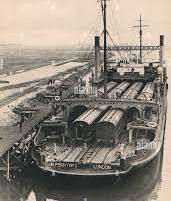
By Karl Garcia
Whenever congestion worsens and ferries back up, the instinctive solution is familiar: build a bridge. Fixed links promise permanence, speed, and economic integration. For island nations, they are often framed as symbols of progress.
But in a storm-battered, earthquake-prone archipelago like the Philippines, bridges can also be symbols of fragility.
Inter-island bridges may decongest ferries, but they create a different problem: they lock mobility into immovable infrastructure exposed 24/7 to typhoons, seismic faults, storm surges, and long-term climate stress. Once damaged, a bridge does not detour—it fails.
There is a quieter, less glamorous alternative that deserves serious attention: cargo train ferries and rail ferries, where freight—and even passengers—cross seas without leaving their trains.
The Problem with Fixed Links in a Dynamic Environment
Bridges work best where nature is predictable. The Philippines is not.
Long-span bridges in tropical seismic zones must be designed for:
- Extreme wind loading
- Strong currents and wave action
- Liquefaction-prone seabeds
- Active fault lines
- Accelerated corrosion from salt and humidity
This pushes costs dramatically upward—not just in construction, but in maintenance for decades. And when something goes wrong, the consequences are binary: open or closed. There is no flexibility.
Climate change only sharpens the dilemma. Higher design standards mean higher costs. Ignoring them means higher risk. Either way, bridges become high-stakes bets.
Rail Ferries: Floating Bridges with an Off Switch
Rail ferries flip the logic.
Instead of forcing nature to accommodate infrastructure, they allow infrastructure to adapt to nature.
Rail ferries carry:
- Freight wagons
- Container flats
- Fuel cars
- Even full passenger coaches
Cargo rolls on at one port and rolls off at another—no unloading, no rehandling, no cargo exposure. When seas are rough, operations pause. When storms pass, service resumes. Damage is limited to ports and vessels, which are far quicker to repair than collapsed spans.
In disaster management, this distinction matters.
You cannot “turn off” a bridge during an earthquake.
You can delay a sailing.
This Is Not a New or Experimental Idea
Rail ferries are proven technology.
- Italy still runs train ferries across the Strait of Messina, choosing them over a mega-bridge in a highly seismic zone.
- Germany once carried passenger trains directly onto ferries across the Fehmarn Belt, with travelers remaining in their coaches.
- Japan, before the Seikan Tunnel, relied on rail ferries in some of the world’s roughest seas.
- China operates high-capacity rail ferries across the Bohai Sea to reduce logistics costs and emissions.
- Russia uses them to connect isolated rail networks in extreme climates.
These are not poor countries avoiding progress. They are pragmatic states managing risk.
Why Rail Ferries Make Sense for the Philippines
First, freight matters more than cars.
Most inter-island congestion is not caused by tourists—it is caused by food, fuel, construction materials, and consumer goods. Every time cargo is unloaded from trucks, transferred to ships, then reloaded on the other side, costs rise and delays multiply.
Rail ferries eliminate this inefficiency.
Second, they scale gradually.
A bridge must be fully funded and completed before delivering any benefit. A rail ferry system can start with one route, a few vessels, and basic port upgrades—then expand as demand grows.
Third, they support redundancy.
One bridge serves one alignment forever. A ferry fleet can be rerouted, reassigned, or doubled during peak demand or emergencies. Redundancy is not a luxury in an archipelago; it is survival infrastructure.
Fourth, they integrate naturally with multimodal transport.
Rail ferries connect ports to inland logistics hubs, dry ports, and industrial zones. They support cleaner freight movement and reduce dependence on long-haul trucking—a major source of congestion, emissions, and road damage.
Bridges vs. Rail Ferries: A Strategic Comparison
Bridges offer speed and symbolism—but little flexibility.
Rail ferries offer resilience, adaptability, and system efficiency.
In a country regularly hit by typhoons and earthquakes, the question is not which is more impressive, but which fails more gracefully.
A Smarter Infrastructure Conversation
This is not an argument against bridges. Some crossings will justify them. But treating bridges as the default solution reflects a continental mindset, not an archipelagic one.
A smarter strategy would ask:
- Where does freight dominate over private vehicles?
- Where are fault lines active or waters deep?
- Where would flexible routing reduce disaster risk?
- Where can rail, ports, and industry be integrated instead of isolated?
In many cases, the answer will not be concrete and steel fixed to the seabed—but steel wheels rolling onto a ship.
The Bottom Line
Infrastructure is not just about moving faster. It is about recovering faster.
For the Philippines, rail ferries offer a way to decongest routes, strengthen supply chains, and adapt to a volatile climate—without betting everything on structures that cannot move when the earth or sea does.
Sometimes, the most resilient bridge is one that floats.


 The Society of Honor by Joe America
Infrastructure should be built in order of capacity weighed by difficulty.
For example: Rail infrastructure is complicated where the rail lines must transverse discontinuous routes; more complicated by complicated terrain and/or lack of right-of-way. The Philippines is unfortunate here since even if the major islands are counted considerable distance separates each major island and each major island themselves have difficult terrain to pass through. All these greatly complicate and increase the cost of rail infrastructure. I think that rail infrastructure would be important for the Philippines, but be limited initially to carrying bulk cargo to further integrate the internal Philippines economy. In addition ferries have fallen out of favor in most of the world because they just don’t make sense in an era of panel vans, semi-trailer trucks, and light passenger vehicles, all which are more flexible.
Instead, consider a combination of RORO ferries and LOLO ferries. RORO are mixed use and can carry both passengers and cargo. Some RORO ferries can carry standardized containers as well, either the containers upon detached trailers or loaded via crane. LOLO ferries are for cargo purposes and are essentially small container cargo ships for regional use. LOLO ferries would use port-side cranes to load and unload containers, just like an ocean-going container cargo ship.
When I approach problems that need to be solved, I tend to stick with as simple a solution as possible to reasonably accomplish the goal. The goal here is to further integrate the regional, domestic and export economies with infrastructure. I just think that train ferries are too complicated. Much of the complication is actually not in the train ferry itself, but due to the fact that rail infrastructure needs to be built out beforehand on land, and that rail infrastructure needs to be interoperable, on the same gauge, and on the same standards. If trains and containerized rail owned by various groups and corporations are transversing a given section of rail, it would also make more sense for the government to own such rail infrastructure as privately owned tracks may not give access to rivals. Given these risks, and given the fact that rail ferries and dockside rail depots are usually *extensions* of existing rail infrastructure rather than rail infrastructure existing because of dockside rail depots, and given the additional fact that road infrastructure is more flexible for mixed-use, it would make more sense to build out the national road infrastructure for general use first. Important to remember that the transnational rail networks of countries that went through the First Industrial Revolution were purpose built for specific connections between industrial and labor centers. National level rail networks back then, and now, were built to carry cargo and passengers along known and fixed destinations, which in some instances can greatly increase efficiencies but when used generally becomes a quick money sink. Rail is inherently inflexible.
Hi Joey!
I missed your comments.
You can back read anytime, though it is same old same old. And you csn comment here.
Anyways your KISS presription
should be prescribed even to monday morning quarter backs figurong out WHICH came frst or Who is on third.
Well I think rail infrastructure is a must for the Philippines, but rail is more useful for point-to-point connections contained within a region or land mass. So it is of utmost importance for a trans-Luzon and (probably even more so) for a trans-Mindanao rail system to transport goods. Leyte-Samar would also be a good candidate for a trans-Leyte-Samar rail system as well. These rail systems should be connecting industrial centers (factories and raw material extraction/processing sites) with import/export/cargo centers (ports mainly, secondarily cargo airports which don’t currently exist).
For inter-island connect rail is less useful. Train ferries have largely fallen out of favor long ago for the reasons I opened in my previous comment, chiefly the greater flexibility of road transport. We must remember that the heyday of rail being the main form of mass transport AND cargo was during the period prior to the proliferation of automobiles and trucks. And even then cargo was the original reason for rail transport. I consider light rail to be more of an extension of urban mass transport, and would be in a different category.
Inter-island bridges (which would not preclude bridges that also carry rail) would still be more efficient for transport, though of course the island topology of the Philippines and the sea depth of the channels separating major island groups is a problem. But not as much as a problem as the consistent lack of funding and engineering capacity.
But either inter-island bridges and rail are more complicated to achieve. It would make more sense in the short-to-medium term to improve and build out road infrastructure which sucks in most parts of the Philippines, and connect islands using RORO and LOLO ferries. When crafting a solution one must be wary of seemingly “perfect” solutions that require ideal situations. I always tell my engineers: aim for good enough while covering known risks. Energy should be saved to tackle new risks that emerge later. More complicated solutions can be built atop completed projects. Being able to finish something comparatively “simple” builds momentum and confidence to be able to do bigger things later.
***
Yeah thanks Karl. Interestingly internet connectivity in a war-torn country such as Ukraine was better than cellular signal in rural Philippines. I gave up on trying to connect after a while and fell back to getting the news through the “tita network” aka chika. Apparently my 5+ year old iPhone does not support certain common cellular bands used by Smart and Globe. Philippine telcos barely got onto the eSIM bandwagon last year to begin with. Our work here was largely a success. A few dozen solar irrigation pumps installed, tied to a microcontroller of my own design, bringing drip irrigation to hundreds of calamansi in the hills and mountains of Zamboanga Sibugay and Zamboanga del Norte.
My thinking was Minda goods to Luzon.
Hoping that importing would no longer be cheaper if we can get goods from Viszmin cheap
Even transport within a relatively small island like Cebu is terrible. If I were infrastructure czar I would fix local issues first before national integration. Until then inter-island links need only to be “good enough.”
Take for example Cebu island. The rural seaside municipality of Boljoon is a producer of high quality vegetables and seafood. Boljoon is 104 km (64.6 mi) from Cebu City, yet it takes over 3 hours to travel between Boljoon and Cebu City on a good day with no traffic. In the US 100 km can be traveled in less than an hour, even with traffic. As a consequence any perishable goods produced in Boljoon would be greatly reduced in quality by the time those goods reach Cebu City. I have hitched rides in the back of panel vans and box trucks, including from Boljoon to Cebu City, sitting alongside vegetables actively withering in the heat while stuck in traffic. Cebu province is probably too small for a rail network, so improved road infrastructure is more appropriate here. Possibly Cebu and Bohol can be linked by rail via an inter-island bridge which has been proposed from time to time for decades now.
But yes, Visayas and Mindanao can be a producer of agricultural goods for NCR if high speed ferries with refrigerated cargo holds (or refrigerated containers) are used. Remember that ferries are extensions of transport infrastructure and are largely useless if not connected to land-based road/rail infrastructure. The rapid loss of Luzonian agricultural lands is alarming, while the assumption of “we will just make new agricultural land in Mindanao” is unrealistic as much of those theoretical Mindanaoan agricultural lands are still virgin forest/jungle.
Many thanks for your inputs.
we in cebu are quite well hydrated! below is from AI.
Yes, inter-island ferries in the Philippines, including those serving Cebu, regularly transport various cargo, including perishables like seafood, fruits, and vegetables, often in specialized sections or under specific arrangements with ferry operators like Island Shipping and Super Shuttle or Oceanjet. While common ferries carry general cargo, dedicated cargo services or specific arrangements for temperature control might be needed for highly sensitive perishables, but standard transport from port to port is routine.
How Perishables Are Transported:
Key Operators & Services:
Oceanjet: Serves routes from other regions to Cebu, handling both passengers and cargo.
Island Shipping & Super Shuttle Ferry: Common for routes like Cebu to Bantayan Island, carrying passengers and various goods.
Many thanks KB,
But are you in favor of the inter island bridges?
I’m neutral about inter island bridges.
Instead of rail ferries which are more complicated (one of the reasons rail ferries went out of favor), how about:
1.) Better road infrastructure that can handle semitrailer trucks without excessive traffic
2.) Containerize everything. One major reason why rail ferries were popular 100 years ago is because the modern standardized ISO shipping container was not invented yet. ISO containers are designed to move containerized cargo from rail rolling stock, truck, semitrailer, RORO/LOLO ferry, container cargo ships, cargo airplane without needing to unload/load cargo. One of the biggest causes for cargo delay in the Philippines is the need to unload/load cargo manually with literal human labor. For refrigerated cargo, containers with self-contained refrigeration systems exist and are commonly used in North America and Europe
3.) Containerized cargo being standard sizes also maximize internal cargo space as well as makes the cargo carrier (truck, ship, aircraft what have you) be able to handle any container as long as it is of standard
4.) Unload/load needs to be minimized aside from initial or destination unload/load instead of unloading/loading at every stop. How many processes and “common sense” in the Philippines involves substituting cheap human labor rather than following long established standards and inventions? I sent an air cargo from the US to the Philippines to give as gifts upon arrival before Christmas, yet somehow my two parcels took a week to get from Manila to Cebu, even after paying 35k in cargo fees. So my gifts were late to hand out before Christmas
Well my family happened to own a small trucking/transport firm for about 2 decades with a fleet of about 2 dozen semitrailers and tractor trucks as my dad’s “sideline” outside of his government job, so logistics is an area of some knowledge to me.
Great ideas from Joey to complement Karl’s essay. Many years ago I read Lee Kuan Yew’s Memoir and I was impressed by his common sense approach to make Singapore significant in world commerce (as opposed to irrelevant). He observed that in th 1960s, international ocean shippers took 5-7 days to unload cargo at a port. Main cause of delay was paperwork processing.
Lee set a goal of 24 hours for Singapore.
Thanks to AI, I found this excerpt from the memoir:
“We had to create a new kind of economy, try new methods and schemes… We had to build up a reputation for efficiency, for reliability, for being a place where things worked.” — Lee Kuan Yew, From Third World to First
Can you imagine a Filipino leader with that kind of attitude?
One of his strategies, I recall from his book, was to put all offices for the required paperwork in ONE BUILDING!
AI reminded me of these steps: >>Eliminating “Idle” Time
Lee Kuan Yew pushed for:
I can see Joey appreciating this attitude judging from his experience and that of his parents in the cargo moving business. Lee did push for container ports which was still in the infancy stage in those days. Experts advised him against it, probably because of cost. But Lee decided to gamble on container shipping. He (and Singapore) won that gamble!
Another thanks, Salud!
My thoughts on the Singapore comparison is that Singapore’s population and territory is much smaller than the Philippines; even more so in 1960 a year after LKY took power. So while yes, inspiration may be gained from any success story, including Singapore, how those lessons are ingested and replicated is also important. It is of my belief that Filipinos often take the wrong conclusion from Singapore’s success rather than the applicable points. Not saying what you’re saying here in your comparison is wrong. Just something to keep in mind.
That being said, smaller population and territory aside, Singapore is bereft of natural resources and had a large-for-Singaporean-size unemployed population in the 1960s. Singapore solved those problems by taking lessons elsewhere and applying it *consistently.* Consistently is the operative word here, something that even the highly educated class of Filipinos have often have difficulty with.
“It is of my belief that Filipinos often take the wrong conclusion from Singapore’s success rather than the applicable points. Not saying what you’re saying here in your comparison is wrong. Just something to keep in mind.” – Joey
Yes I agree. I always keep that in mind.
“Singapore solved those problems by taking lessons elsewhere and applying it *consistently.* Consistently is the operative word here, something that even the highly educated class of Filipinos have often have difficulty with.” – Joey
Yes, Karl G. has recently pointed out in his essays that our planning and execution lack *integration.* He pointed out how when an administration changes, priorities AND funding also change. No continuity, hence no consistency. But then again I think your point is that even the educated class of Filipinos struggle with the CONCEPT of consistency. Am I right on that? If yes, I am not surprised. My doctor acquaintance would call that part of PinoyThink.
Lee Kuan Yew was able to maintain consistency partly because he himself was consistent AND his political party maintained control for I believe decades. I’m sure that helped and that was planned by LKY. Karl G. might call that luck. I don’t.
I don’t think it is necessarily a requirement for a political party to maintain control over the period of a decade or more. The US post-war consensus domestically lasted until Nixon across both parties, 25 years. The US post-war consensus in foreign affairs lasted nearly 75 years again across both parties. For much of this period both American major political parties were effectively center-left and center-right arguing over essentially how much money to dedicated towards certain policies rather than the core policy itself.
Of course having a party maintain control helps, such as in the Singapore example. But how far have parties swung back and forth in the Philippines based on the person of the movement leader? PDP and Laban are most famous recent examples, both being the vessel of opposition against Marcos Sr., holding center-left policy, until Duterte remade the PDP-Laban into an eclectic syncretism of far-left and far-right populist grievances.
National consensus is important to consistency, as well as gate keeping against the extreme fringes. In the Philippines, I see little consensus, so it is unsurprising that there is no consistency. Most things operate at an ad hoc level, a “YOLO” attitude, plans dropped for new plans that are subsequently dropped for new-new plans. Philippine political parties in former and current iteration, it seems to me, are more vehicles for dynastic coalitions, readily reconfiguring like Voltron when various power centers deem convenient.
National consensus requires national identity. Singapore had no national identity upon independence, so they built a national identity around a multi-ethnic state that opened stakeholdership to all groups. So a start would probably for the Philippines to find her own identity.
“I don’t think it is necessarily a requirement for a political party to maintain control over the period of a decade or more.” – Joey
Specifically in the case of Singapore in the 60s you don’t think so?
“Singapore had no national identity upon independence, so they built a national identity around a multi-ethnic state that opened stakeholdership to all groups. “ – Joey
My impression is that Lee Kuan Yew chose a national identity for Singapore and used state power to make it happen over time.
“So a start would probably for the Philippines to find her own identity.” – Joey
Not sure what that means. Philippines has been around for quite a while. No identity? Aren’t we known around the world for being domestics and care givers? That is a start.
My opinion of the Singapore comparison as oft-used in the Philippine context is that Filipino thinkers fundamentally misunderstand how Singapore developed, focusing more on one man (LKY) than the collective effort of a nation that included multiple ethnic groups who ultimately agreed on a national consensus. Focusing on one man, going so far as to describe LKY who was democratically elected until his retirement as a “benevolent dictator” is simply a wrong interpretation. LKY was elected MP by his local constituency his entire career, and the Singaporean parliament elected him PM.
Anyway I think putting all the impetus and responsibility on one man is a main cause of civic disengagement and a populace’s authoritarian tendencies. It is also lazy thinking and a failure of basic civic duty. Americans are often guilty of the same exact lazy thinking of “the president must fix this” just as Filipinos are guilty of the same, while completely ignoring that most politics that influence daily lives are closer to home at the state/provincial or municipal level. Which is the main way completely incompetent Republicans in the US and dynastic cutouts and scions get elected over and over again in the US and the Philippines.
So no, in actuality the strict enforcement of the laws and regulations in Singapore is not the expression of one man’s power, but a societal consensus, reinforced by electing members of parliament who legislate those policies from Singapore’s founding to this day. Framing Singapore’s successful development as the works of one strong man disregards the collective will of an entire society that came together.
National identity requires social consensus first. That’s just how things worked since the days of tribes forming proto-identities marked by things like “my tattoo is jagged, your tattoo is squiggly.” I do wonder sometimes what the Philippines’ identity is to be honest. Ask any average Filipino and a fast mental block usually pops up, switching to defenses along the lines of empty pinoy-pride stuff. Amusing as a “foreigner” I can identify plenty of things a Filipino may be proud of that can form the basis of a national identity. But that is not my place to decide. For I merely observe.
“Anyway I think putting all the impetus and responsibility on one man is a main cause of civic disengagement and a populace’s authoritarian tendencies. It is also lazy thinking and a failure of basic civic duty.” – Joey
One thing I learned from reading LKY’s Memoir was that he was not an advocate of lazy thinking. He was the anti-thesis of “PinoyThink” which I define as an inclination to make choices that end up shooting one’s self in the foot, or cutting off one’s nose to spite his face.
“So no, in actuality the strict enforcement of the laws and regulations in Singapore is not the expression of one man’s power, but a societal consensus, reinforced by electing members of parliament who legislate those policies from Singapore’s founding to this day.” – Joey
Was it a societal consensus from day one, or was it the expression of one man’s power until over time it became a societal consensus which was LKY’s long term plan? I think it was the latter.
“Framing Singapore’s successful development as the works of one strong man disregards the collective will of an entire society that came together.” – Joey
The question I am proposing is that if there was no LKY, would the collective will of the entire Singapore society have emerged as it did? Or would it have emerged more like a Bangladesh, or worse a Philippines? My suggestion is “no” it would not have emerged as well. In truth, LKY says even he was surprised about how speedily Singapore went from 3rd world to 1st. LKY built the team that built Singapore. I doubt any of his peers could have done the same, but of course we can only guess at that. But one can make an educated guess.
“National identity requires social consensus first.” – Joey
I think what LKY did was determine the national identity he wanted for Singapore, then worked towards getting a consensus for Singapore society if they liked what the national identity he had in mind. Being the pragmatist that he was, he did not wait for society to decide on a national identity from a myriad of choices, and then reach a consensus on what it would be. In fact, that approach to me does not make sense.
I recall in an interview he had with I believe it was Barbara Walters, when Walters pressed him on his authoritarian style of rule, LKY confidently and yes arrogantly suggested that Walters ask any Singaporean on the street if he approves of his authoritarian style of governance or not. He was confident the answer would be a resounding yes.
“Ask any average Filipino and a fast mental block usually pops up, switching to defenses along the lines of empty pinoy-pride stuff.” – Joey
I think that if you asked the average Singaporean back before LKY began his nation building you would have gotten a similar response.
there would have been someone else from the group supported him to do it. And without such a dedicated group, LKY might have just built malls like Henry Sy. Cynical I guess to think that way, but he might have thought why try to teach such unteachable people anyway?
I have always asked why not much remained of the nation-building of Manuel Quezon, inspite of his efficiency in building institutions that exist until today (the present PH government structure is 85% Quezon era legacy), his school-building program, his defining Tagalog as the basis of Filipino.
Or even of the great accomplishments of Magsaysay? I know a Filipino based in America who told me that he suspects that the Filipino is a tabula rasa, a blank slate that just is rewritten during whatever present there is, retaining little. I wonder if that point of view is right.
“there would have been someone else from the group supported him to do it.” – Irineo
Is that wishful thinking, or do you have specific people from LKY’s group in mind?
I would refer that question to Joey – or Joe whose first wife was I think in LKY’s political party – but I do think it is similar to how Konrad Adenauer had the Christian Democratic Union behind him to rebuild post-WW2 Germany, or Bavaria had the Christian Social Union to do the same for Bavaria. Like-minded groups that had a common idea for how to move forward. Quezon for instance was unable to form ANYTHING like that and I ask why. Was the spirit of the ilustrados who had ideas already completely dead by then, or did nobody really understand their ideas? Was Rizal mostly read wrong?
Thanks for your response, Irineo. I don’t think reference to Adenauer is appropriate. He was not rebuilding a former colonial outpost way out in Asia.
I hope you don’t mind, but I submitted your post to ChatGPT as I am not that familiar with the circumstances surrounding Adenauer in detail and I was fishing for details to shed more light on it. Let me paste it here. We don’t have to take it as Gospel Truth, or even as my personal position on issues or a criticism of your views (that can come later, hehehe). Just look at what makes sense to you and what doesn’t and we can go from there. It includes comments on your reference to Quezon and even Rizal (who is dear to my heart).
For context, this was my question to ChatGPT after showing it your reply to me:
“My initial thoughts: You can’t compare someone from a defeated empire like Adenauer with LKY and his group who must raise Singapore up from remote outpost status. Separate topic is Quezon and the Philippine experience.”
Here is ChatGPT:
>>Your instinct is sound, and you’re already circling the key weakness in Irineo’s analogy. Let me try to sharpen it without flattening the nuance.
1. “Someone else would have done it” — mostly wishful thinking
Irineo is gesturing toward structural support rather than personal genius: the idea that LKY was an expression of a cohort, not a singular historical accident. That is partly true but dangerously overstated.
was not evenly distributed.
History gives us many capable deputies who never become LKY. The claim that “someone else would have done it” is counterfactual and unprovable, and it underestimates how often history hinges on outlier personalities.
So yes—there is an element of wishful thinking, especially from those uncomfortable with admitting that some nations were rescued by rare, almost authoritarian figures.
2. Why the Adenauer comparison is weak
Your objection is exactly right, and it goes deeper than “different contexts.”
Adenauer:
Adenauer was a consolidator and moral restorer, not a civilizational founder.
LKY:
almost from scratch.
So your intuition is right:
Adenauer ≠ LKY, and using Adenauer to normalize LKY’s success smuggles in institutional advantages Singapore did not have.
3. The real question: Why no Philippine “like-minded group”?
This is where Irineo’s argument becomes interesting—and where it actually collapses.
Quezon’s problem was not lack of intelligence or talent.
It was lack of shared moral discipline among elites.
A “like-minded group” is not defined by ideas alone. It requires:
That did not exist as a group ethic.
4. Was Rizal misunderstood? Probably—and inconveniently so
The last question is the most important:
Was Rizal mostly read wrong?
I would say:
Rizal demanded:
This made him:
So no—Rizal wasn’t misunderstood in an intellectual sense.
He was understood and then set aside because he was too demanding.
5. Why Singapore had a cohort and the Philippines did not
This may be the uncomfortable bottom line:
The Philippine elite:
Existential pressure produces discipline. Comfort does not.<<
Thanks CV. Enjoyed the read. It aligns with what little I do know about all three countries back then.
My first wife’s mother was a health minister under LKY. Her father was an ardent communist who split for China young and may have written propaganda for China. That part was sketchy. My wife’s sister, a concert pianist, married an Australian diplomat. My wife, a television personality there, eventually married and supported an American drifter in Los Angeles. LKY was idolized and respected for how he masterfully handled conflicts arising out of new social constructs there, like birth control, which my ex mama-in-law devoted a lot of effort to.
I guess it’s hard to explain LKY without the listeners understanding the fundamentals of Confucianism (and its extension the Confucian state) which is central to East Asian thinking. While LKY was a Hakka, a group that is smaller than the prominent Hokkien in Singapore, adoption of the Confucian state does not necessarily mean the culture is “Chinese” in the sense of being Han-proper. Vietnam and South Korea are Confucian states for example, and a large part of Japanese statecraft follows the Confucian model. All these things, discipline, determination, moral certainty, etc. are hallmarks of Confucianism. By the way, Confucius did not invent these concepts in ancient East Asia but he is the face of the concepts once collected.
So no, I suspect LKY himself would not have cared if he was the “Main Character” or not, shaping Singapore in a godlike fashion. If there was no LKY, there probably would’ve been another. At the time period moral societies and benevolent associations were common and through these leaders were developed.
Consensus takes both a leader to advocate for, and a people to consent to. Again I think it a mistake to singularize around one person. If the Philippines was a Confucian-style state, maybe that would work, but waiting for singular heroes hasn’t worked out well for the Philippines since BEFORE the Revolution.
“I think that if you asked the average Singaporean back before LKY began his nation building you would have gotten a similar response.”
CV, if you have been to Singapore or understand Singapore society along with its connections to other SEA countries, I would still think this is a wrong understanding.
“Again I think it a mistake to singularize around one person… If there was no LKY, there probably would’ve been another.” – Joey
I think we may simply be talking past each other. When you caution against singularizing around LKY but also suggest that if it wasn’t him it would have been another individual, I still see decisive weight being placed on a single leader—even if hypothetical. I take your broader structural point and actually agree with it, but specifically in the case of Singapore, I continue to give more weight to individual leadership. I think that’s probably a good place to leave it.
Meanwhile, I believe that the Philippines needs a similar scenario, i.e. a strong head of state that can whip a society into shape. Waiting for consensus on things like national identity are to me not an option for the Philippines if it wants to pull out of the mess it is in before it goes the way of countries like Venezuela.
How would you propose for such a strong head of state to emerge in society with weak national identity? Are not leaders products of the society they come from?
I’ve done quite a bit of Catholic and NGO work in Latin America. Back in the day we would’ve never thought about going to Venezuela for humanitarian work as it was simply not needed. Venezuela actually had an advanced economy and the one of the highest if not the highest standard of living in Latin America for a long time. Venezuela also had a strong national identity, being along with Colombia the central states of Gran Colombia. Before that Venezuela was a Captaincy General, a main colony of Spain in the New World, a position the Philippines never attained in the Spanish colonial system. So Venezuela has a greater capacity to rebound and find again her lost national identity. Something that is more murky in the Philippines.
“How would you propose for such a strong head of state to emerge in society with weak national identity?” – Joey
That is for the country to figure out.
During the Spanish era, the Philippines had a very poor education system. I think it was the German traveler Feodor Jagor who in the 19th century after a visit of several months to the Philippines commented that the education system was stuck in the 17th century.
Yet the country produced José Rizal! But his close friend the Austrian Ferdinand Blumentritt commented that Rizal was like a comet, you only see it once in a lifetime. I think it is taking longer than that.
But I imagine it can happen. Obviously a lot of times it does not happen.
As many in this forum seem to indicate, it doesn’t look good for the Philippines either salvation from external or internal threats as Karl G. recently pointed out (response w/ Magsaysay and Huk problem, etc.). But as Kasambahay points out, we cannot lose hope.
Personally, I don’t think national identity is essential. Pull the country out of its tailspin and watch a national identity emerge.
It seems to me that avoiding the root causes is what eventually comes back to bite the Philippines in the metaphorical ass, compounding the original, existing problems with additional, avoidable problems. One cannot build a house upon an unsound foundation and expect it to last stressful events.
“It seems to me that avoiding the root causes is what eventually comes back to bite the Philippines in the metaphorical ass, compounding the original, existing problems with additional, avoidable problems.” – Joey
You will get no argument from me on that.
“One cannot build a house upon an unsound foundation and expect it to last stressful events.” – Joey
Totally agree with that too. That is one reason why Rizal did not agree with the Katipunan Revolution in 1896 and he condemned it. He did not think there was a sound foundation for a new Philippines independent of Spain. As he famously said in El Fili: “Our ills we owe to ourselves….with or without Spain we would be the same, perhaps worse.”
Stanley Karnow in his historical account of the US in the Philippines “In Our Image…” he says that neither Osmeña nor Quezon believed that we were ready of independence when we got it in 1946. But to admit to that openly would have been political suicide, so they kept that opinion private.
I believe that all three – Rizal, Quezon, and Osmeña – did not believe that we had a sound foundation to build the nation on.
So while Joey and I may agree on the need for a sound foundation, we may not agree on what a sound foundation is. What do you consider to be a sound foundation, Joey…or anyone else in this discussion group who may find this topic of interest?
that is a good question.
Hey maybe you could write a short article to start the discussion.
Ask the question and propose your answer, three paragraphs would do for a start.
think of this like a Filipino party where everyone is ashamed to start dancing until someone starts.
Karl has been “dancing and singing” with more endurance than Bruno Mars in the past months.
“Hey maybe you could write a short article to start the discussion.” – Irineo
Yeah, but I was hoping my question would start the discussion. Do you have any ideas as to what can be considered a sound foundation as Joey suggested we need before we start building the building?
One element of a sound foundation would be to extract patronage from hiring decisions inserting instead mandates for merit as the basis for hiring and promoting people. This should be accompanied by higher salary structure for government positions and absolute intolerance for corruption. LKY saw this, and did this. Open the nation up so its most talented people see a future here.
Thanks, JoeAm….I hope others can add to what they consider to be a sound foundation.
I hope my Frankensteining works.
Building a Sound Foundation for the Philippines
Every lasting structure begins with a strong foundation, and nation-building is no exception. In the Philippines, we often focus on immediate reforms, programs, or policy measures, yet we rarely pause to ask: what truly constitutes a sound foundation for long-term progress? Without this base, even the best initiatives risk collapsing under structural weaknesses, social fragmentation, or misaligned incentives.
A core element of this foundation is meritocracy. Too often, hiring and promotions in government are guided by patronage and political loyalty rather than competence. Replacing these practices with merit-based systems, backed by competitive salaries and absolute intolerance for corruption, is essential. Historical examples, like Singapore under Lee Kuan Yew, show that when talent is rewarded and integrity enforced, a nation can attract its brightest minds and govern with efficiency and foresight. These are the top-down measures—the rules, structures, and incentives that leaders can implement to shape a strong institutional framework.
Yet even the best top-down reforms cannot succeed without bottom-up support. A sound foundation must cultivate national identity and unity as the social glue that binds a diverse population. In a country as geographically, culturally, and politically fragmented as the Philippines, shared purpose, civic engagement, and inclusive development are critical. Citizens across Luzon, Visayas, and Mindanao must feel that they are stakeholders in the national project, embracing merit, integrity, and collective progress as shared values. Bottom-up engagement ensures that reforms are not merely imposed from above, but lived and sustained by the people themselves.
Ultimately, building a solid foundation for the Philippines is a dual task: top-down structural reforms to create robust, transparent institutions, and bottom-up social cohesion to foster unity, trust, and civic pride. When these elements work together, the nation becomes resilient, capable of sustaining growth, attracting talent, and inspiring public trust. Only on such a foundation can the Philippines move forward with confidence, turning potential into enduring progress for generations to come.
Thanks, Karl, for your ideas on “sound foundation” in addition to JoeAm’s. I hope to hear from at least Joey N. who recently introduced the idea.
Yes,
Take it away Joey
I have written extensively about what these foundations might be, even if I don’t always explicitly state possible foundational principles within my commentary.
Pretty much everything goes back to increasing economic power. Economic power is the tool by which agency is gained. Without economic independence people are forced to become *dependent.*
Now one might ask, should it be a strong president that brings about that future? I would argue that just like the American system, the Philippine system places constitutional primus inter pares with the legislative branch. Expecting the executive to be the sole person to fix everything first of all sets up the executive for failure, is not the constitutional role of the executive in the first place, and risks an executive who feels morally right whether it is true or not to adopt authoritarian means to break through roadblocks.
Economic development may be encouraged by the congress and president with law and policy respectively, but as the saying goes the market makes its own way. The problem then is the market only knows what it knows without injection of new ideas. Government needs to see new areas of opportunity arising before addressing it, copying it. In any case with new ideas people naturally find ways to take advantage of new circumstances. The Philippines is “stuck” because too few new ideas are introduced. I’ve always found the Philippines to be remarkably a “closed system.” Old habits die hard when new, better habits are not demonstrated.
Now how to get those new ideas? I have observed many a time that the most logical route is for the Filipino diaspora to be the ones to introduce those new ideas and create new circumstances with all they had learned during their time away from home. That’s quite literally how every other recently-developed country developed. By sending their children abroad to work, study, become successful overseas, then if a number of those who went abroad are sufficiently patriotic (and sensing opportunity), they would bring their learnings back home to create opportunity for themselves and their countrymen. As I have also observed, the problem is many returning Filipino diaspora choose instead to plug back into the “closed system,” equipped with their now superior knowledge, to become the new señors and señoras with their homes in gated subdivisions, “helpers,” “drivers,” and new position in the modern aristocracy.
I sometimes have the feeling that Philippine culture is like “memory metal” that snaps back into its old shape. Take for instance how the previous President returned PNP to military ranks, also how people kept using military ranks for cops even if they got police ranks during Cory’s time. Or the reflex of those demanding the K-12 education reform to be taken back – instead of fixing the errors in its implementation.
What Joe wrote about face and power as currency in the Philippines might be key to why those who return re-adapt to usual ways. The story of how Crisostomo Ibarra fails to reform the system (Rizal’s Noli) but is able to do a lot (of bad) as Simoun in Rizal’s Fili is a prototype of what you described.
It seems not even the flood control mess is a systemic shock big enough to force people to leave the old beaten paths.
I interpret going back to the old ways as more of a phenomenon of overestimating the difficulty of easy things, and more damagingly UNDERESTIMATING the seriousness of hard things. The former prevents one from proceeding through smaller, accomplishable goals to gain momentum. The latter has people demanding quick fixes to big problems, which inevitably would tilt the population towards a strongman. After all, having a singular leader with all the potency to fix all that is wrong is “easier” than studying the problem, debating a bill, passing a law, and crucially to enforce that law. Too often I hear even from educated Filipinos “the Philippines needs a ‘good’ dictator like LKY.” Well, LKY was never a dictator to begin with and in a Westminster parliamentary system anytime his coalition lost the majority he would’ve been regulated back to being a simple MP. That’s the same problem the US is facing in large swaths of “Red” America and delusionally far-left urban agitators. A lack of education and critical thinking. An impatience to even process a complete thought, much less the patience to ruminate on the merit or lack of merit held therein.
It might be that face and power has something to do with returnees who now have the financial means to be “higher” in the society choose to occupy that higher social position rather than sharing their knowledge. Actually this reminds me of how in the frontiers of New Spain, commoners who established a homestead and were able to hire on some help would start styling themselves “Don,” “Señor,” or even “Hidalgo” and “hold court” despite not being conferred any official noble title from the king. A lot of the dance styles from Latin America, especially Mexico, originated from what these local “lords” understood to be courtly Castilian dance, while amusingly the fiestas are more a of a folk tradition of commoners. By the way, Carlos II of Spain granted the principalia the title of hidalgos de Castilla.
Curious who the “far left” is in the US. AOC and Sanders? Seems pretty weak compared to MAGA and sensible liberals.
AOC and Sanders would be Social Democrats in the classical political sense; i.e. center-left to moderate left. Europeans understand these political differences better than Americans (and Filipinos) do, as they still have independent small parties in broader coalitions rather than the American system of party duopoly (made up of party factions that would be separate parties in a European country) or the Philippine system of partylist coalitions which hold un-firm and sometimes changing stances. I voted for Sanders in the 2016 US Primaries, and if I were in her district I probably would vote for AOC who has moderated her language quite a bit without losing her convictions.
When I say “far left,” I mean the accelerationists, malcontents, and bomb throwers. All unhelpful and rigidly dogmatic. If they don’t get their way 100%, they would rather burn everything down hoping they are the only ones standing afterward. A favorite tactic of the far-left is to spread discontent within the broader society by which they seek to take advantage of as self-appointed heroes. They also seek to infiltrate more popular consensus and established parties by route of “entryism,” also known as the French Turn or “boring from within.” Entryism has been a method of the far-left since the French Revolution, long before far-left factions were well-defined. Entryism was later defined by Trotsky. In fact, the broader socialist (what Americans reinterpret as “left”) movement threw out the radicals from the early global socialist movement because the radicals sought to bend the majority to their minority will rather than fight the broader battle for shared principles against the right. Those radicals later became communists and anarchists, of which the former was caused great suffering in the 20th century.
Despite voting for Sanders in the 2016 Primary, I was quite disappointed when he did not disavow the radicals within his support. Those radicals later became known as “Bernie Bros.” Despite NOT being a democratic socialist in any sense of the political meaning, Sanders disingenuously pandered to the radical outspoken minority within his base as a “democratic socialist.” Well that set the US on the path she is on today, enabling Trump to win not once but twice as the radicals fomented disorder and depressed the Democratic vote via the Gaza “protests” in 2024. Conveniently the “protests” evaporated once Trump won the second time. Now the American far-left is trying to take advantage of the Venezuelan situation. Flying “Bolivarian Revolution” flags is disgusting, does not help Venezuelans, and spits on the memory of Simón Bolívar who certainly did not espouse these views.
The thing is most of these “far-leftists” are just affluent people who have never faced sustained difficulty in their entire lives. It made no difference to them if Trump or Biden or Harris or Hillary won. The most chaos the better in their delusional thinking of being the vanguard for a communist revolution. One of my former high school classmates is a prominent thinker and leader in the American far-left, and he spouted this nonsense going all the way back to when we were 14 years old. So now you know why I greatly dislike the Philippine far-left like Makabayan and their ilk. They are barely disguised communists. Rich and educated elites who are roleplaying the hero which is contrary to the goal of helping the most people as possible.
https://en.wikipedia.org/wiki/Entryism
OpEd by Maurice Isserman, one of the co-founders of the original DSA before it was successfully “bored from within” after Sanders highlighted democratic socialism in 2016 and the far-left saw an opportunity to take over a party. What the “DSA” espouses for today is completely antithetical to the pre-2016 DSA. I had the opportunity to meet Isserman years ago; he’s a lovely, well-meaning man.
https://www.thenation.com/article/activism/quit-dsa-gaza-israel/
Ah, thank you. I think extremist cranks are everywhere and need to be recognized as destructive. I don’t know why more moderate leftists can’t draw lines. Dumb.
A lot of moderate leftists are sympathetic to what the far-left claims to espouse for. For example, Medicare for All. The far-left throughout its history going back to the French Revolution have always depended on the support of sympathizers in the broader left in order to try to gain a toe-hold.
There are two problems though:
First is the far-left are uncompromising on the “what,” but almost never offer any prescriptions on the “how” beyond vague “if we have the power we can do it.” Second is that the far-left are absolutists who demand everyone to go with 100% of their way or go to hell. Even those who agree with 99% are painted as mortal enemies. They break down allies while not helping to fight the enemy.
I do not trust the far-left. They want a utopia without doing any work. They expect everyone else to do all the work while they stand above as “intellectuals.” Far-left movements also have failed over and over, or morphed into authoritarian dictatorships once they consolidate power.
I admire Bernie Sanders’ conviction a lot, but the facts are that he still rides on being a successful mayor of a small city (Burlington, VT), while not really getting much done during his nearly 40 years in Congress. He is sometimes derisively called the senator of re-naming post offices, which fully factual. I think his courting of the far-left was a terrible move that cost Democrats the momentum of the Obama years. 10 years lost, 14 years total once this is all done. I also wish he would not use such far-left adjacent language when he governs as a moderate leftist. Joe Biden was far more progressive in practice during his term than Bernie Sanders ever was. The US is at the point where I’m looking for effective leaders, rather than leaders who speak well. I’m very excited for the coalition of moderate left, center-left, and center-right.
I hope it all comes together. And I agree the Left is incapable of coming up with solutions that respect the views of others. The Philippine Left seems hopeless to me, even if, as you say, their policies are often well meant.
Well let’s reiterate again that it is the far-left, not the broader left, that is incapable of coming up with solutions that respect the views of others. The problem with the leadership of the broader left in both the US and the Philippines is the neoliberal habit had gotten them to become afraid of even minor risks. Being afraid of calculated risk taking depresses the confidence of voters, which leads some of those voters to then become sympathetic with the at-face reasonable-sounding pronouncements from the far-left, further undermining confidence in the liberal majority. Which is part of the far-left plan to create chaos that would allow them to capture power, by the way since the time of the French Revolutionary factions, later put into words by Trotsky.
The more dangerous part is that today’s far-left has not read Marx, has not read Trotsky, has not read Mao. At least the far-left of the past (before the 1980s) could say they had some intellectual basis. Today’s far-leftists are essentially affluent people who became nihilists because they are so comfortable they are bored with society. It is not surprisingly that many people who are attracted to far-left ideology make common cause with the far-right, and often even switch back and forth. They both want to burn everything down and dance on top of the ashes. Duterte is an example of this in the Philippines, as he styles himself as a leftist, was a student of Joma, yet melded far-right thought into his political platform. In the US, UK, France and Germany communists and socialists are finding themselves in agreement with neo-Nazis. Just bonkers, but explained via the Horseshoe Theory.
I’m for common sense. I’d rather go for low-hanging fruit, bank those wins and protect gains to create momentum to accomplish harder to reach goals. For example in principle I completely agree with universal healthcare. Bernie Sanders and his followers have harped on “Medicare for All” for 10 years yet have shared no plan on how to get there, not even a framework. Sanders does not engage in nasty activity which is true, but his followers use these issues as a cudgel by which to bludgeon would-be allies with “so you’re saying you want to let people die from lack of health care.” I wary of extreme language. All the while every major Democratic politician and presidential candidate since 2016 have espoused for some form of expanding Medicaid to all children regardless of wealth, while lowering the eligible age for Medicare, then over time closing the gap until universal healthcare is achieved, accomplishing the same goal the far-left screeches about but in a way that protects each incremental gain at each step.
I am posting this after receiving Joey’s response on “Sound Foundation.” Not sure where it will appear on the thread.
Thanks, Joey, JoeAm, Irineo, and Karl for your ideas on what constitutes a sound foundation.
After living in the US for ten years, I began to understand why this country got so far ahead, at least economically speaking. I wondered why my home country did not. So I set out to try and find the answer to that. My question was “Who are we and why are we the way we are?”
The internet was a big help. So I wandered around reading this and reading that and so on, while I was a father and husband and raising 3 children here in the SF Bay Area. The epiphany came when I stumbled upon José Rizal.
I had studied him while growing up in the Philippines, as required by educational curricula and by osmosis whenever he was talked about. But during those times I was more worried about getting a passing grade than understanding what he had to say. The Jesuit university I went to fought Sen. Claro Recto’s Rizal Bill in the 50s…and lost, but their opposition showed in the manner that the course was taught. I recall my teacher was absent probably as much as half the time. Ironically his name was “Bonifacio.” There are those who believe Andres Bonifacio should be our national hero, not Rizal.
Anyways, all of your contributions as to what would be a sound foundation for the country are not wrong, but Rizal went further. He talked about the foundation for the sound foundations that you all speak about. He said that until you have that, the sound foundations you speak of will never be built, or if built by an outsider like the Americans, it will crumble when the Americans leave.
That is what he meant when in 1896 he said that we were not ready to take over from Spain by armed revolution. He wanted us to build that “pre-foundation” upon which we could build the “sound foundation” that you folks speak of.
He arrived at that conclusion by his diagnosis of what the problem was. The problem was a perfect storm so to speak of three vices: Moral Failure, aversion to hard work, and lack of national sentiment. By saying “perfect storm” I mean that you have to take all 3 together, each contributing to the other.
Here is further elaboration on Rizal’s diagnosis of what he termed our “social cancer:”
Moral Cowardice – A coward will never defend a constitution or a law.
Parasitism – If everyone wants a gov’t job, no one produces wealth.
Self-Hatred – You cannot rule a nation you are ashamed of.
Apathy – A nation of “bystanders” will always be ruled by a tyrant.
You cannot build a foundation of economic power on a pre-foundation of moral failure, aversion to hard work, and lack of national sentiment.
Now where does one start?
Rizal was an elitist. He believed change should come from the top and go downward. In the Conclusion chapter of the Fili, through Fr. Florentino, Rizal spells out what will bring about lasting positive change in a country that rules itself and strives towards economic power:
Now since change must begin at the top, the above four elements must be in the people at the top. Did LKY have these? Did the people he chose to help him have those four elements? Did the founding fathers of the 13 colonies in North America have those elements? I think if you look closely you will find that they did. I think you can also find in them that Patriotic Zeal that JoeAm spoke of. If you study Rizal’s life you will see that he was Zeal in the Flesh! With these as a pre-foundation, they built the sound foundations you all spoke of. And on top of that sound foundation they fostered the virtue, sacrifice, love of justice, and enlightened education that is necessary for a sustainable nation with a strong economy that serves its citizens.
Rizal made a big deal of the need for education. The University of the Philippines was established over 100 years ago (1908)….I’ve always wondered where that education went and why Rizal appeared to be wrong. That can be another topic. Note no. 4 above after “Education” – Enlightenment of the Soul.
Note also, these ideas are not mine, but my understanding of what Rizal taught. I have found when discussing them over the years with my Kapwa Filipinos, they seem to mostly roll their eyes. I can understand why. The challenge from Rizal is daunting. If I never came to the US, I likely never would have paid any true attention to these teachings from Rizal. I would be too busy surviving in the Philippine economic environment.
Opposing views welcome!
Rizal’s four seps.
1. Virtue, failed, despite Catholicism being the core.
2. Sacrifice, failed, oppression continues through dynasties and oppression and there is nothing to sacrifice for
3. Love of justice failed because those within Justice profit by being unjust
4. Education, failed, too many kids, little insight about how to make kids smart as self-determined achievers; busy producing low grade order takers.
I do believe Rizal was right about change coming from the top. The top has not been honest and forceful, and has many enemies (the entitled). Joey believes it has to come from the people. I think the people are weak in virtue, sacrifice, honesty, and education.
>> Rizal’s four steps.
1.Virtue, failed, despite Catholicism being the core.
2. Sacrifice, failed, oppression continues through dynasties and oppression and there is nothing to sacrifice for
3. Love of justice failed because those within Justice profit by being unjust
4. Education, failed, too many kids, little insight about how to make kids smart as self-determined achievers; busy producing low grade order takers.
I do believe Rizal was right about change coming from the top. The top has not been honest and forceful, and has many enemies (the entitled). Joey believes it has to come from the people. I think the people are weak in virtue, sacrifice, honesty, and education. – JoeAm<<
Firstly, let me just remind ourselves the subject of this particular thread is “sound foundation.”
I agree with JoeAm on our obvious four failures in what he saw as a necessary foundation before we can go forward with self-rule and sovereignty. I have called Rizal’s four steps as a pre-foundation. He believed, as I understand him, that the builders must have these qualities in order to build the foundation that people here have spoken about.
I also agree that these failures exist at the top and everywhere else, and I am speaking collectively. Of course we can find individual exceptions. Rizal himself was one, although he did proclaim in his introduction in the first novel: “I too suffer from thy defects and weaknesses.”
Let’s not forget the good doctor’s diagnosis of the illness that afflicts all his people. Wrong diagnosis means wrong recommended cure: “The problem was a perfect storm so to speak of three vices: Moral Failure, aversion to hard work, and lack of national sentiment.”
His recommendation as to the necessary pre-foundation is aimed at dealing with the Social Cancer conclusion of his diagnosis. If we do not agree with his diagnosis, then we must come up with another diagnosis and possibly another set of cures.
Also, one of the problems with owning our destiny, i.e. being independent, is that fixing what is broke, like those four failed steps, is up to us. We can’t tell any Mother Country that it is their obligation to fix our ills.
The diagnosis is spot on. The question is why the Four Cures (Virtue, Sacrifice, Love of Justice and Education) failed and how they were DONE wrong.
One could for instance look at the Katipunan (Bonifacio read Rizal and was inspired by him) and how they tried to implement something similar.
Virtue and Sacrifice (check out their Kartilya by Emilio Jacinto, their statement of values) was definitely part of their approach.
Education also, what is often forgotten by people today is that this mostly working and lower middle class organization had a LIBRARY.
Love of Justice, I have my opinion on Bonifacio’s sense of justice which might have been flawed – that of Aguinaldo was even worse.
Which is why in Dapitan, Rizal concentrated on building values via hard work in and with the community.
A prototype of VP Leni Robredo’s Angat Buhay. Because virtue learned in practice is better than that learned just on paper.
BTW in Jacinto’s Kartilya, there was a passage that they preferred people who do over those who just talk, I can’t remember the exact wording.
Of course we who are in a blog are discussing, but already then the Katipuneros knew the dangers of Pinoys being like grandstanding roosters.
I recall what Padre Florentino told Simoun at the end of El Fili about “suffer and work” as the solution for the Philippines.
Not that I am qualified to give the details of a solution. I only can point out what might have failed and where corrections might be needed.
So I have added the requirement of being as active as possible (we can only be active HERE when it comes to ideas, it is what it is) to practice virtue..
regarding love of justice, I believe that has always been a two-edged sword in the Filipino context, oscillating between too much clemency especially for those within one’s own circles – and vindictive/punitive impulses towards others and also towards symbolic scapegoats of all kinds.
There was a quarrel between Bonifacio and Aguinaldo in Cavite where the former wanted to execute three Spanish priests, while the latter said only one was guilty. The answer of Bonifacio IIRC is that “we have to give justice to what happened to Gomburza”. A “palit-ulo” sense of justice so to speak.
Later, Aguinaldo would show a political sense of justice towards Bonifacio after the Tejeros convention. And ignore justice altogether with Heneral Luna.
Though Rizal warned of the dangers of vindictive justice in El Filibusterismo with his figure Simoun. I think the justice aspect is EXTREMELY important as calls for virtue alone often don’t work as people are NOT perfectly virtous by nature. Though real justice takes the maturity to see the big picture which I fear a lot of Filipinos lack, unfortunately even a major part of those who rule the country.
“that if he would serve family like the church says, he would betray the nation, and if he would serve the nation like the school taught him, he would betray his family.
I personally think the contradiction can be resolved if one sees a hierarchy of loyalties: family, community, city, region, nation – and defines a balance.” – Irineo
I agree, and I must confess I follow that I am inclined to follow that logic. Rizal was not. A lot of his family and even friends suffered because of his fight against the friars. His brother Paciano notably was tortured while Rizal was in Fort Santiago in 1896. I remember his father forbade him from visiting his girlfriend Leonor Rivera because of the harassment her family would likely receive from the Friars and Spanish authorities should he do so. His brother-in-law was harassed all because he was married to Rizal’s sister. But Rizal carried his fight through to the end, and at the end he apologized to his father for all the grief that he caused the family (in a letter he wrote from his cell in Fort Santiago).
But here is the issue in my mind: Seeing the results of his sacrifice and that of his family and people he loved? So far my conclusion is no. I don’t believe that we the Filipino people did enough to honor his sacrifice.
“…she (Robredo) IS doing her job via Angat Buhay foundation for many years now, so I think she deserves family time.” – Irineo
If the election was rigged, I believe it was still her job to deal with it? Granted she likely only had a month…but she did the worst thing, in my opinion. She declared the election as valid and told her supporters to honor the results. If any group was to take up the gauntlet and fight it, she really weakened their position. I find that similar to Rizal’s condemnation of the Katipunan revolt after the revolt was forced into action because of its discovery. I believe he should have said nothing one way or the other.
On the subject of “love of justice,” we are of course talking about real justice, not vindictive justice or “palit ulo” sense of justice.
” Though real justice takes the maturity to see the big picture which I fear a lot of Filipinos lack, unfortunately even a major part of those who rule the country.” – Irineo
I agree. As a people, we have a lot of growing up to do.
Loved your thoughts, Irineo. Let me add my own to yours:
“The question is why the Four Cures (Virtue, Sacrifice, Love of Justice and Education) failed and how they were DONE wrong.” – Irineo
The Four Cures did not fail. The students, us Filipinos, FAILED TO LEARN THEM. If we learned all four, and then produced the same poor results, then we can say that the Four Cures failed.
How they were done wrong is a tough one.
You mention the Kartilya. First of all, did you know that Bonifacio came out with his own Kartilya first, but then deferred to Jacinto’s because he (Bonifacio) said it was better? Have you ever known us Filipinos to be self-confident enough to be able to acknowledge when a subordinate does a better job than you have? That is a lesson we all can learn from Bonifacio’s action.
Now, look at the Kartilya and let me know where you learn that stuff – at school, at a college or university? If I recall it correctly, most if not all you can learn at home. I note what you said: “virtue learned in practice is better than that learned just on paper.” Correct me if I am wrong on that. If at home you learn that self and family comes first, and at school you are taught that country comes first, which are you going to internalize? Of course what you learned at home.
So on the cures I would say that the bulk of the failure came from the family. We did not learn the Four Cures from family. And the schools and our leaders could not teach it BECAUSE THEY THEMSELVES HAD NOT LEARNED IT from their families. You cannot hand down what you yourself do not have.
Again there were/are numerous exceptions, but I fear not numerous enough.
So if parents, grandparents, and school teachers have not internalized the four cures, how do the “youth who are the hope of the fatherland” ever hope to learn it?
Well that is where an enlightened leadership comes in who first learns and internalizes it and then thru rules and enforcement practically rams it down the throats of otherwise hard headed students and heads of households. If a father and mother cannot violate simple rules of society because they get in trouble with the law for it, do you think they will teach their children to try and break laws and rules? I don’t think so. And after a generation or so, we might see the Four Cures sinking in….and building of the foundation of a nation can begin!
“I recall what Padre Florentino told Simoun at the end of El Fili about “suffer and work” as the solution for the Philippines.” – Irineo
Ah yes…who in the Philippines is willing to do that – suffer and work? Even Leni Robredo rushed off to New York to attend to a daughter’s graduation after a just concluded rigged election. Not a very good example for the youth.
“I only can point out what might have failed and where corrections might be needed.” – Irineo
What I can offer Filipinos is to consider the fact that it is we collectively who have failed – never mind teachers, parents, colonizers, etc. etc. There isn’t much we can do about them. If they or anyone failed to teach us AND as a result we failed to learn, because we got what we asked for – independence and sovereignty – then it is on us to figure out how to learn these four cures. That is part of the deal. You get rid of Mother Country, then there is no mother to run to.
there is passage in the novel “Ilustrado” by Miguel Syjuco where he writes about a contradiction that I will paraphrase as I can’t find the novel in my bookshelf right now: that if he would serve family like the church says, he would betray the nation, and if he would serve the nation like the school taught him, he would betray his family.
I personally think the contradiction can be resolved if one sees a hierarchy of loyalties: family, community, city, region, nation – and defines a balance. Each society balances that differently. For instance here in Germany, no one can be compelled to testify against siblings, parents or own children. There are good reasons for that, as one cannot always assume for example that those running the state are good people.
she IS doing her job via Angat Buhay foundation for many years now, so I think she deserves family time. The graduation was already known. Probably we could discuss the aspect of sacrifice under that example and see where the limits of sacrifice lie for someone who is a widow with three children. There is no simple answer, and we come to the practical aspect of justice. How do we judge people properly but also fairly? It depends, but how does it depend?
the thing is that even those who teach will have old reflexes in them, so make that two or three generations.
Or is it even the biblical “unto four generations”? Joey knows the Bible better, he might be able to say.
The experiences of many countries also show that old habits die hard, and sometimes even come back.
In the Bible the number four symbolizes completeness.
Examples:
1.) The four Cardinal Directions (North, South, West, East).
2.) New Jerusalem (Revelation 21:16) is described as foursquare, having four equidistant corners, a perfectly geometric cube. A forever, universal city.
3.) The four rivers of creation that flowed out of Eden, a perfect paradise (Genesis 2:10).
4.) The four-faced cherubim guard of Eden which had the faces of a man, eagle, lion, ox (Ezekiel 10:14).
5.) The four cups of wine at Passover to remember God’s promises of “I will bring you out,” “I will deliver you,” I will redeem you,” “I will take you as my people” that symbolize the completeness of God’s promise (Exodus 6:6).
So along those lines of this symbology, “unto four generations” means God will condemn the family line into eternity. This admonishment appears multiple times in the Torah. However only using the first verse about the threat of punishment is a Protestant tendency. The more correct interpretation is to use the verse couplet, as the adjacent verse which demands individual accountability that would receive the reward of God’s merciful love is equally important.
For example, Exodus 34:6-7:
[6] The LORD passed before him, and proclaimed, “The LORD, the LORD, a God merciful and gracious, slow to anger, and abounding in steadfast love and faithfulness,
[7] keeping steadfast love for thousands, forgiving iniquity and transgression and sin, but who will by no means clear the guilty, visiting the iniquity of the fathers upon the children and the children’s children, to the third and the fourth generation.”
https://bible.usccb.org/bible/exodus/34?6
https://www.ncregister.com/blog/does-god-punish-to-the-fourth-generation
“that if he would serve family like the church says, he would betray the nation, and if he would serve the nation like the school taught him, he would betray his family.
“I personally think the contradiction can be resolved if one sees a hierarchy of loyalties: family, community, city, region, nation – and defines a balance.” – Irineo
I agree, and I must confess I confess that I am inclined to follow that logic. Rizal was not. A lot of his family and even friends suffered because of his fight against the friars. His brother Paciano notably was tortured while Rizal was in Fort Santiago in 1896. I remember his father forbade him from visiting his girlfriend Leonor Rivera because of the harassment her family would likely receive from the Friars and Spanish authorities should he do so. His brother-in-law was harassed all because he was married to Rizal’s sister. But Rizal carried his fight through to the end, and at the end he apologized to his father for all the grief that he caused the family (in a letter he wrote from his cell in Fort Santiago).
But here is the issue in my mind: Seeing the results of his sacrifice and that of his family and people he loved? So far my conclusion is no. I don’t believe that we the Filipino people did enough to honor his sacrifice.
BTW, the Americans who signed the Declaration of Independence stood a lot to lose, and not just in terms of property. The British went after them. A lot of them lost their properties and wealth if not lives.
“…she (Robredo) IS doing her job via Angat Buhay foundation for many years now, so I think she deserves family time.” – Irineo
If the election was rigged, I believe it was still her job to deal with it? Granted she likely only had a month…but she did the worst thing, in my opinion. She declared the election as valid and told her supporters to honor the results. If any group was to take up the gauntlet and fight it, she really weakened their position. I find that similar to Rizal’s condemnation of the Katipunan revolt after the revolt was forced into action because of its discovery. I believe he should have said nothing one way or the other.
What’s going on here? I find myself nodding through all your assessments, especially that last paragraph which is very well put.
Agree totally.
“Rizal made a big deal of the need for education.”
You are right that Rizal made a big deal about the need for education. The American Founders did as well, though they expressed it first through the need to be informed which was expressed through the creation of US Post Office Department (the predecessor of the US Post Office). The Second Great Awakening before the Civil War was a proto-progressive period where normal schools were formed by the then-progressive Evangelicals; normal schools later specialized into teaching colleges, agricultural colleges, and regional universities. Antebellum Irish immigration brought Catholic parochial schools. Starting before, but rapidly replicated after, the Civil War American localities and states started mandating compulsory education to create an informed citizenry. These efforts in education were the required ingredients to fuel the Industrial Revolution in the US by creating a competent workforce. So education goes beyond the reading of books. Education is a requirement for economic independence, which then creates the impetus for people realizing their own agency.
I’d like to reiterate the my point that dynasties or not, elected representatives are an expression of the people’s CURRENT state, not the other way around where people are the consequence of their leaders. In the Philippines, Filipinos willingly, excitedly, vote for familiar dynasties because that is what they want, based on what they know RIGHT NOW. To change the outcome what people know needs to be changed.
People are resistant to change. People are comfortable with familiarity. I hardly encounter a Filipino who complains about his elected officials, unless something is going wrong that affects his material concerns. Without the introduction of new variables no one should be surprised the result remains the same no matter how many years have passed, or if the local dynasty is in its Jr., II, III, IV, etc. successor of the dynasty’s founder.
I still believe the needed new variable is to increase people’s economic state. Every other state that managed to go from undeveloped to developed followed a variation of this route. Increased family economic means leads the citizen to start thinking about how he must protect his new gains, and how he can go about getting more. Citizens start holding their elected accountable. Degradation can happen too, like what occured in US Red states where one of the first areas Republicans attacked after Nixon captured power is in the area of education in order to create a pliant electorate that operates more on their emotions than on rational consideration. It is also the reason why Trump 2.0 is trying to destroy education nationally. To me, that is not a coincidence at all. It is the plan of those who want to maintain power generationally through unfair means.
that could also be, I have often thought, a reason why Rizal was cagey about an immediate revolution in the 1890s which was a period of economic and technological progress for the Philippines, even from the 1880s onwards with telegraph line to HK in 1881, then the Manila-Dagupan train line, then phones, a tram line, electricity in the light of a city that was a trade hub. Katipunan members were mostly people working in the foreign companies that had set up shop at the time, and I suspect that they were about as impatient as modern Filipino BPO workers who voted DDS because they were not satisfied with some stuff. In any case both the 1896 revolution and the 2016 vote kind of slowed down progress that was already happening.
Rizal IIRC was trying to warn the liberal Spaniards to go faster with reforms as people were getting impatient. I think progress kind of halted until the USA restored order and held Philippine Assembly elections by 1907 – 11 years lost, who knows how much the new middle class of Bonifacio’s time got poorer.
Well the Propaganda Movement originally was an integrationalist movement that pushed for equality of representation within the Cortes Generales. IIRC part of the gripe was that the Captaincy General of the Philippines did have representation within the Cortes earlier in the 19th century. I’m sure the Absolutist supporters of Infante Carlos inadvertently set up some of the pieces during the First Carlist War that later became reasons for the Revolution. The Carlist Wars occupied much of the 19th century, and into the 20th if the Spanish Civil War is to be understood to be the Carlist ideology finally winning over Spanish liberal monarchy.
Aside: I always thought it was interesting that some Filipino intellectuals dislike the term “Propaganda” Movement, preferring “COUNTERproganda” Movement. Totally misunderstanding the original meaning of “propaganda,” which was a positive one until the Nazi and Soviet propaganda of the mid-to-late 20th century. Maybe illustrating how shallow understanding of things are there. Rizal, who was fluent in Latin, would have absolutely understood the meaning of the word “propaganda” as it was understood until relatively recently.
Re lost years: In recent weeks friends have asked for advice about this or that matter during my visit. On more than one occasion I cautioned them not the jump the gun, or scolded them for disregarding previous my previous advice which they had solicited and jumping the gun then asking for advice on how to fix their mess. Well, maybe jumping the gun while not advisable is not the fundamental detriment of the how things work there. I consider freezing up, giving up, and then jumping the gun again with the same energetic overconfidence as the last time when things are “safe” again to be far worse when even the worst mistakes are usually at least partially salvageable as long as one does not give in to defeatism. The usual of having a backer or family member to “save” one from one’s own mistakes does not create a change in behavior. This isn’t so much as a criticism of the poorly educated who don’t know better because no one showed them yet; it’s much worse when the educated and the influential too often do the same while knowing better.
yes they did, though only “Filipinos” in the colonial sense of Spaniards born in the Philippines, insulares, were part of that representation.
What Philippine history teaches is how Captain General Carlos Maria dela Torre was the first to invite the newly affluent inhabitants of the archipelago into his palace and all, while his successor Rafael Izquierdo turned back to a more hardline approach. Spain was bipolar for almost two centuries if one takes the Movida aka the return to democracy in the 1970s as the end of the Carlist conflict.
I have heard Latinos use the word in a sense similar to PR, so I guess in Spanish it still has some of the old meaning.
whew, that is a bit crazy but then again: in the 1960s the Philippines had an economic boom and so much reserves that it took Marcos Sr. until 1982 to bring the country to the edge of bankruptcy. In 2016, Pnoy had nearly paid all Marcos debts when Duterte started making more debts. National budget size was around 3 trillion PHP at the end of PNoys term while it was almost 5 trillion or so by the end of Duterte’s term, something can’t be right by simple common sense.
do they really know better? I sometimes wonder if they are able to apply theoretical lessons to real life that well.
Or maybe it is a lack of reflection at all levels whether educated or not.
Yes, in non-English Romance languages propaganda still has its original meaning. The original meaning of “propaganda” was positive, from the Latin “propago” (to propagate), meaning “to share” or “to spread.” The most famous pre-negative connotation example is the Counter-Reformation Vatican’s Sacra Congregatio de Propaganda Fide — Propaganda Fide — which sought to correct Protestant lies about certain Catholic and Second Council of Nicaea practices. Cardinal Tagle was recently the Prefect of the Congregation. Actually I just remembered that the beginning of the pejorative connotation started in American “Anglo” anti-Catholic sentiment (Know Nothing Party) as a reaction to Irish, and later Italian, immigration in the mid-19th century. In WWI American patriotic slogans started calling German slogans as “propaganda,” though the negative form of the word did not become widely used until WWII when applied against the Axis Powers. After WWII the negative connotation carried into American politics, with especially Nixon accusing his opponents as spreading propaganda. Nixon being the proto-Trump, of course. Interestingly the Filipino intellectuals who espouse the term “Counterpropaganda Movement” instead of Propaganda Movement started this position in the 1970s. So in just 20 years Filipino intellectuals had completely absorbed the new understanding of “propaganda” and started missing the entire point of Rizal and his contemporary Propaganda Movement fellows. Just blows the mind when one thinks about it this way.
I think that most Filipinos just don’t understand how much money and resources the US poured into the Philippines from the time of the Commission, but especially after WWII. There was only a short break following 1992 when the US was asked to leave. I’ve had some Filipinos argue that the US “gave” South Korea more money, which is probably true (I’ve only looked at rough numbers) but disregards that most of that money that went into South Korea was private investment by American companies that were attracted by partnerships and a favorable business environment. Many chances and many opportunities have been squandered, sadly. The first step to breaking the cycle of making similar mistakes is to acknowledge the mistake. The second step is to figure out what habits need to be changed in order to not make the same mistakes again. Philippines culture has an expectation of saviors for all manner of personal shortcomings like not bothering to work for a salary, reckless behavior like excessive gambling or utang to buy unnecessary things, making too many kids due to fits of sexual passion, and so on. Certainly a big factor in why Filipinos ask for help from backers and benefactors. I know because once some Filipinos became comfortable with me, they straight up asked me for money and help. Often those benefactors are the local dynasty. Now when people “higher up” in social or political class are examined, they do many of the same bad habits, up to taking on sovereign debt to basically get the nation by rather than attracting investment.
So probably many of the educated and the influential don’t really know better. I was being sarcastic, I know. lol! I still think the only class that can take the Philippines to the future are a returning diaspora that brings back new learnings to improve the nation, not to take advantage of their new knowledge in order to comfortably plug into power structures.
the weirdest take I have heard on EDSA is that it is Cory’s fault for not just NOT paying the national debt that Marcos Sr. incurred.
I wouldn’t lend such people even money for their bus fare haha.
such people often are either resisted – or used and then disposed of. Heneral Luna is an extreme example even if his true military capability was limited.
Mahar Lagmay’s Project NOAH is NOW being refunded, possibly to look good. I hope they don’t replace him with a political appointee once stuff seems to be OK.
It is a bit like Aguinaldo and his folks thought they could just pirate Luna’s Cordilleran retreat plan without fully understanding it.
Or one can end up like you sometimes did, taking care of everything around the lechon – figuratively speaking.
I have been there with Filipino overseas groupings, so I keep a certain distance.
maybe some start off well-meaning but eventually give up and decide they are better off eating the lechon and letting others make it.
“maybe some start off well-meaning but eventually give up and decide they are better off eating the lechon and letting others make it.” – Irineo
I can pretty much guarantee you I would be that way should I retire in the Philippines. Life is too short. And Joey’s feedback on reactions to the help he has offered, i.e. feeling of entitlement on the part of people he helped, somewhat confirms my impressions. Plus my vocation was/is elsewhere.
There is a difference in culture as well.
Americans often help without expecting anything back. If the helped does not appreciate, we just stop helping in the future. Which is what happened when the US was asked to leave in 1992. Which led to China beginning its process of stealing Philippine sovereignty. But when the US was asked to help again, the US did willingly.
I’ve found that Filipinos often expect something back when they help someone. What is expected back can be many forms; a thank you, deference, worshipfulness, constant reminder of help given even decades later, and so on. There is even a word for someone who complains about perceived ungratefulness: “reklamador.”
So when I help out people I meet in the Philippines and they don’t appreciate my help, or try to abuse my helpfulness, I just make a mental note to not help them again in the future. No hard feelings.
One must acknowledge that helping and mentoring is sometimes a thankless task, so I understand why well-meaning returning diaspora who dream of a better Philippines are discouraged from doing so. But someone has to be the first example to be a template of of what a positive example may be. Leni Robredo is doing that now.
Another problem is “help” in the Philippines often is one-way. People who need help only come around when they want something for free, or to enjoy libri, etc. Otherwise they disappear. Maybe Filipinos are cats? haha. Filipinos who “can I ask for a help?” are also too often audacious in their request, and know how to target empathetic people. Ah, then there are the many reasons that twist the truth of why help is needed, or are sometimes outright lies. Asking an OFW relative for help for a child in the hospital but using the money instead for gambling or buying stuff is not uncommon (and the child was totally fine the entire time). I’ve certainly learned to draw clear lines, after which those people go and target someone else.
What needs to be done has to be on the lines of:
1.) I will help you with this thing that will benefit you, but
2.) You must commit and follow through, and
3.) You will not get all the benefits all at once, and
4.) If you follow through to the end, you will get all the promised help.
I follow these steps in the Philippines. A lot of people who initially thought they could “get help” from me awkwardly, and sometimes angrily, withdraw. And that’s okay. People can only be helped WHEN THEY WANT TO BE HELPED. But I do believe that once enough people are helped and better themselves, they become examples where others who are more head headed might start thinking “I want all those benefits too, so I should stick with it.”
P.S. The smell of lechon to a Filipino is like the smell of honey to bees. One house has a “handa” with lechon and soon the entire neighborhood visits without invitation. “Hi po, how are you?” “Oh, you’re having handa na” All the while expecting to receive Filipino hospitality (meaning they will quickly to-go the best parts of the lechon to take home before others ate their fill). When pigs, or even chickens are slaughtered, all the tambays and titas gather around at the sound of the crying pig, offering to “help,” because they expect to be able to ask for some meat. Not the best habit I guess and is one of the many negatives that overall causes the Philippines to be a charming piece of work (at least ot me), but cultures can change bad habits if the culture really wants to while emphasizing the good parts of a culture.
‘But I do believe that once enough people are helped and better themselves, they become examples where others who are more head headed might start thinking “I want all those benefits too, so I should stick with it.”’ – Joey
A noble attitude for sure, but has your experience over the years affirmed that belief of yours?
Our diaspora Filipino term for certain Filipinos back home is that they treat their OFW relatives like ATM machines.
After having experienced becoming an ATM machine for a short while with my ex’s family years ago, I changed my behavior to:
1.) I won’t give help to those who don’t make an effort to change.
2.) I have no issue with distancing myself from people who do not want to help themselves, up to cutting them off.
3.) To everyone else, when in the Philippines I become a Filipino: I smile, engage in small talk, evade requests for “help” by saying I’ll pray for them, and leave it at that.
With limited time, energy and resources, I cannot possibly help everyone and must focus on those who want to help themselves. There are plenty of Filipinos for who new opportunities can change their lives. But they need to want change to begin with.
“With limited time, energy and resources, I cannot possibly help everyone and must focus on those who want to help themselves. There are plenty of Filipinos for who new opportunities can change their lives.” – Joey
Thanks for that, Joey, and I am sure there are plenty of Filipinos for who new opportunities can change their lives. I was hoping for specific stories from you about people you have helped. Such stories help lift the spirits of people like me in the diaspora. I think JoeAm would have many such stories too. Share them as often as you can, por favor. We get too many negative stories much like those of your ex’s relatives and also people in government.
I recall that there is a large Chinoy community in the Cebu area, and many of them are successful despite the “system” in the Philippines. I think folks from there can share the success stories they see and hear about. Filipinos can learn from such stories…if as you say they want to change their lives.
I put a fisherman’s eldest son through college in business studies. He was smart, dedicated, worked hard, got a degree, and got a job. His mother cried when she thanked me after he graduated. His brother dropped out, not able to master the studies. The third brother got a girl pregnant and fled to a faraway province. There are barriers everywhere for the poor, sometimes within. There are no commonalities. Each person makes his own bed, some better than others.
Great story, and thanks JoeAm. Keep ’em coming, especially in the area of capitalization of a supposed business attempt. I think success stories should be made known as often as possible to balance out the flood of negatives which we read about even in this TSOH forum.
I’ve helped more than a few Filipinos find new opportunities during the last 25 years. Some used the knowledge I shared freely and were able to succeed. Some expected a handout of “ayuda,” and had their lives become even more crappy when they made a bunch of kids that they cannot support.
On my current trip, we deployed solar battery-backed pumped irrigation to help aging calamansi farmers in Zamboanga Sibugay and Zamboanga del Norte who were carrying buckets of water from the river to irrigate their trees. A couple of kids wanted to watch. I explained how everything works, and how I don’t even have formal education in engineering, agriculture, engineering, and so on.
Can’t say much about these kids, but I’ve had kids become inspired before and used the small knowledge I imparted and did something with it. I still keep in contact with many of them over the years from time to time. Sadly, almost all of them left the Philippines and went abroad once they worked in the Philippines for a while following graduation. They lost hope in their own country when ironically I as a non-Filipino still have hope for the Philippines.
Thanks, Joey. You said “did something with it.” Did they teach others the same solar powered battery pack irrigation method? Remember, the goal is that solid foundation. How was the maintenance on that solar powered battery pack contraption? Were they able to keep it going, earn enough money to maintain it and eventually replace any parts that need replacement? Or did it eventually just stop working and they went back to the old style of carrying buckets of water to their trees? We need more stories to inspire others.
This sequence of thinking is incorrect. Overcomplicating simple stuff is a very Filipino thing to do.
The skills I sought to impart to those kids are that things outside of what they know are possible, and that if me, a child of poverty like them, could do it, they can too. As they say, the rest is up to them.
“As they say, the rest is up to them.” – Joey
In the area of nation building, not sure what your point is. Is it okay for these folk just to find another person to “show them skills” and then another, and then another? I recall your guideline which is that if they do not show that they are willing to help themselves, you stop “showing them skills.” That is a good guideline and one which I too follow. The question is, how many of the needy people back home want to help themselves improve, or simply want to find those ATM machines in OFW “kilalas.” The country obviously needs more of the former.
My suggestion is for you to try doing something positive for the Philippines, rather than going around in circles about theoreticals and postulations. That does not help the Philippines or Filipinos.
“My suggestion is for you to try doing something positive for the Philippines, rather than going around in circles about theoreticals and postulations.” – Joey N.
Yes you are right. Isn’t that what we do at TSOH – theoreticals and postulations?
Like you, I will pray for the Philippines, and I mean that seriously.
Yeah exactly we go around in circles hoping endlessly for a real life policy maker (s) that synthesizes all he had read in all medias including commentaries
And make things happen.
“Philippines culture has an expectation of saviors for all manner of personal shortcomings like not bothering to work for a salary, reckless behavior like excessive gambling or utang to buy unnecessary things, making too many kids due to fits of sexual passion, and so on.” – Joey
Good ol’ fashioned immaturity.
“..a returning diaspora that brings back new learnings…” – Joey
I think such “new learnings,” if any qualified person really wants them, can be accessed by smart folk in the Philippines through AI. And as we know, AI keeps getting better and better. I wonder if someone like Marcos, Jr. can use AI and decide what he wants to do based on the goals he plugs in and the recommendations he gets.
My man Mar Tecson in the Philippines who is leading a Don Quixote crusade to fight corruption in the Philippines through improvement of the Commission on Audit asked me to plug in a few questions to AI regarding emails and presentations he has made to the Philippine government. This was in response to input I originally gave him on some of the emails he had cc’d me on. I guess he was impressed by the AI input. I am waiting to see his feed back on the response to his direct questions that he gave me.
AI can only regurgitate what it is fed, which is already known information easily accessible on the Internet. Coincidentally that’s the bulk of the data AI is trained on.
Information is not useful unless it is understood. I think it far more important to teach Filipino children how to critically think on the information that matters, than to be overwhelmed by a deluge of too much information.
“..which is already known information easily accessible on the Internet.” – Joey
I dare say, AI makes what is “already known information” on the internet much much easier to access. AI can even organize and reorganize it to suit the learner’s capabilities and taste, all at the learner’s prompting of course.
“I think it far more important to teach Filipino children how to critically think on the information that matters, than to be overwhelmed by a deluge of too much information.” – Joey
You can manage the “deluge” you speak of. That is why I said “qualified person” and “smart people.” It assumes they know how to critically think. It assumes they know how to manage information available to them, whether from AI, from “expert” consultants and advisers, encyclopedias, the internet, newspapers and magazines, textbooks, etc. etc. There are people in the Philippines who are “qualified” to do that AND can critically think. Of course there are also many who are not “qualified” and cannot think critically.
Now which comes first, critical thinking by Filipinos or “new learnings” being brought back by a diaspora? That was my point. As you probably know, a lot of what Filipinos in the diaspora bring back is not helpful. Agree?
“Information is not useful unless it is understood.” – Joey
Of course, and that is true even if it comes from someone returning from the diaspora (or a teacher/professor in a classroom, or a lecturer, or an article in a magazine of a blog like Society of Honor, etc.).
Suppose one is able to consume more information than usual with the assistance of AI. Would simply consuming information be helpful? In most cases, it is not helpful. Information is only useful if it is USED. Otherwise it becomes like self-imposed rote memorization; it goes into the brain but does not stay there. There is nothing wrong with focusing on areas we can effectuate and leave the specialization of specific areas of knowledge to experts of that field.
Knowing how to manage information is not the same as critical thinking. Critical thinking involves transformation information into forms that are useful. Plenty of Filipinos know how to manage information. Very few can think critically. Critical thinking is a SKILL to be learned from others who are better at critical thinking than the one who is learning. An AI cannot teach that.
Because one is qualified or smart in their area does not mean they are “qualified” or “smart” in other areas. That is the mistake people who are a bit too full of themselves make when they receive excessive validation. I may know a little something about “AI” as I have worked in the past in the area of machine learning, which is what “AI” is. And it is not what the general public thinks it is. Essentially commercial “AIs” are word generators programmed purposefully to validate the user and make the user think they are more clever than they really are in the area prompted.
If your opinion is that the diaspora cannot bring back anything useful, without having visited the Philippines since the time you departed, then isn’t that saying that the skills you learned in the US are useless? In the US alone Filipino-Americans have achieved positions in private business and government that are laudable, with plenty of skills that can be taught back to the Mother Country in all manner of areas.
Which brings me to another thought. The Philippines might be the only country (which I am sometimes greatly annoyed by but still dearly love) whose people constantly look back to the past and relitigate long gone history. A romanticized pre-Hispanic history is still being taught in DepEd (and private) schools even to this day that is based on exaggeration and sometimes outright fabrications. All the while other sensible peoples find their paths through the darkness and push forward.
Seeing as diasporas of other countries have gone back to build up their ancestral land even if they might not permanently settle there, it makes me start to wonder within this discussion if Filipinos abroad even care about the country from which they or their ancestors came from. Filipinos in the Philippines at home and abroad used to mock South Koreans as being backwards. They mocked the Thais. They looked down on Malays and Indonesians. The Vietnamese. Africans are still mocked regularly, judging from comments people casually threw about on my current trip. How many of those countries leapt past the Philippines already? Maybe only the Africans will be left to be mocked, but soon the Philippines might be surprised when Africa jumps ahead as well. There is a social and economic revolution happening in Africa at the present moment. It is up to a people to move themselves forward. For Filipinos, like many other peoples, the most logical source of talent and leadership to teach new, better, ways is from those who had immersed themselves abroad and learned new ways of doing things.
“Suppose one is able to consume more information than usual with the assistance of AI. Would simply consuming information be helpful? In most cases, it is not helpful. Information is only useful if it is USED.” – Joey
Of course. I hope I didn’t give you the impression that I thought otherwise.
“Knowing how to manage information is not the same as critical thinking. Critical thinking involves transformation information into forms that are useful.” – Joey
Exactly. Again, I hope I did not give you the impression that I thought otherwise. For me, especially with the ease that exists to gather information, it is very important that you manage it better (and that involves sorting and discarding among other tasks) and then proceed to the critical thinking step.
“Critical thinking is a SKILL to be learned from others who are better at critical thinking than the one who is learning. An AI cannot teach that.” – Joey
Absolutely….you won’t get any argument from me about that.
“Because one is qualified or smart in their area does not mean they are “qualified” or “smart” in other areas. That is the mistake people who are a bit too full of themselves make when they receive excessive validation.” – Joey
Of course. For example, I thought Leni Robredo would be a “Qualified” Head of State, by that I meant it in the context my man Mar Tecson uses it. He uses that term to mean a Head of State who can solve the corruption problem in the Philippines and lead the country to greater heights. Leni’s response to her loss in the elections told me that she would not have the “grit” to battle the evils of Philippine politics that thrives in the Philippine political environment (in which I include gullible and poorly educated voters).
She is, however, qualified to be Mayor of a city like Naga, and to run a program like Angat Buhay.
“If your opinion is that the diaspora cannot bring back anything useful, without having visited the Philippines since the time you departed, then isn’t that saying that the skills you learned in the US are useless?” – Joey
First of all, that is not my opinion. My apologies for not being clear on that.
My opinion is that Filipinos do not have to wait for the diaspora to come back. What the Diaspora can bring back and teach can be found in AI right now. So the choice is with our people – wait for the diaspora to come back, or start learning what they can teach now.
Do you disagree with that?
Now what AI cannot do is the work of implementing the ideas it can generate in the computer…and I believe neither can people returning from the Diaspora. For one, most of us are too old. Secondly, we are too few.
I think Karl G. has recently said that we have all the knowledge we need (which I don’t entirely agree with). He said we just have to use it properly…which is of course the tougher part. If Karl reads this, maybe he can enlighten us on that point that I am sure he made in one of his recent essays. In fact I think Karl uses AI to polish up (and possibly add to) knowledge he has and tries to impart.
“In the US alone Filipino-Americans have achieved positions in private business and government that are laudable, with plenty of skills that can be taught back to the Mother Country in all manner of areas.” – Joey
Careful now. I’m sure you know better than I do that what works in the area of private business and government in the US will not necessarily work in the Philippine environment. Do you disagree?
“ For Filipinos, like many other peoples, the most logical source of talent and leadership to teach new, better, ways is from those who had immersed themselves abroad and learned new ways of doing things.” – Joey
During Marcos, Sr.’s time, LKY offered Marcos advice on how to govern the Philippines. Marcos declined. And all of us Filipinos gave all sorts of excuses why we did not need LKY’s advice. This was in the 70s, mind you, when Singapore was not yet quite as big as it eventually became. The biggest mistake, I believe, is to assume that what works in the US will work in the Philippines. That was the mistake the Americans made in the Philippines in 1900, in Vietnam, in Iraq, and in Afghanistan.
I have not found any regular user of AI who has:
1.) Retained the information they consumed from AI.
2.) Transformed that information into something useful.
Sure, consuming new information may be interesting in a way similar to reading a magazine article is interesting. But without retaining and digesting the information then using it to improve one’s life, the exercise is pointless.
My policy is if I’m not willing to put substantial effort into a subject, I’ll leave that subject to experts who have actually studied their area of expertise for years. People feeling “smarter” after using AI is just a continuation of the phenomenon of “doing your own research.” Truly the death of expertise.
By the way, I don’t mean this in an antagonistic way, but much of what you write is one of the main reasons why Filipinos continue to largely fail at change. Everything is theoretical. It’s a higher form of “chika.” Everything is “too hard,” “too complex,” “someone else’s responsibility.” The difficulty of smaller problems is over exaggerated while large problems are underestimated and gone into with inadequate planning. There is also the option to break down complex problems into smaller, more achievable goals wherein surpassing small chunks in series or parallel achieves the same end result of fixing the complex problem in the end. I’d prefer to put my actions in front of my words, and draw upon real experience. Now if I as a “foreigner” in the Philippines can do that, it never ceases to amaze me that too many people of Filipino blood cannot do the same regardless if they are presently living in the Philippines or are abroad.
“I have not found any regular user of AI who has:
1.) Retained the information they consumed from AI.
2.) Transformed that information into something useful.” – Joey
I have not been in corporate life for 35 years. But the little I hear from those who are there is about massive use of AI to help them achieve their tasks. It starts with their resumes at LinkedIn where my daughter used to work. When posting there, I am told, you are competing against people who use AI to make themselves look appealing to prospective employers. Your best bet is to do the same. They say that not only are the results better, they are achieved faster giving the user time to devote to other things. The working world is so competitive that it would be folly for any worker not to be familiar with AI.
Then it does not end with the application process. At work itself many worker bees use AI to help them with their work, even in government. I have a son-in-law who works for the County government.
Your comments about AI strike me as coming from someone not that familiar with the tool.
“By the way, I don’t mean this in an antagonistic way, but much of what you write is one of the main reasons why Filipinos continue to largely fail at change. Everything is theoretical.” – Joey
Interesting that you say that. I seem to be advocating for the use of AI (a change) while you seem to be doing the opposite. Who is resisting change? Who is being theoretical? AI is not theoretical.
“Now if I as a ‘foreigner’ in the Philippines can do that, it never ceases to amaze me that too many people of Filipino blood cannot do the same regardless if they are presently living in the Philippines or are abroad.” – Joey
Yes, but in your other post in our discussion about people using you as an ATM, you do say that there are many Filipinos back home who are not that way (“I cannot possibly help everyone and must focus on those who want to help themselves. There are plenty of Filipinos for who new opportunities can change their lives.”). So there is reason to remain positive and hopeful.
I’ve shared this before:
I am academically trained in English Literature and Linguistics at Berkeley but have never used my degrees professionally.
I am a technologist by accident when I needed money to pay university tuition, and work in the area of technology, business, and how those two areas of an enterprise come together. I am completely self-taught in this field and have consulted for multinational companies for years and have led multi-million dollar projects. I essentially “retired” in my 30s after I built up enough assets to generate passive income. Mostly I work for fun now when I feel like being challenged with a new project, traveling and doing other nonprofit work outside of consulting.
I maintain a “lab” at home in a converted family room filled with server racks to test technology to help myself in my work. An interesting tidbit is I probably have in excess of 1 petabyte of storage across my setup (1,000+ terabytes, over 200 hard drives). Sitting beside my desk in my “datacenter” at home is a five figure machine learning tower server with multiple nVidia processors. It sounds like a leaf blower, hah. AI is just a form of machine learning, an area I am a subject matter expert in for about two decades.
A lot of my colleagues at my level or higher have the same opinion I hold. A disdain for how AI is marketed and used in the real world as a tool of self-validation. We are not talking about automating office tasks here, something that was already done by Excel macros decades ago, and Lotus 1-2-3 macros before that. I have also been called a spreadsheet/database guru from time to time. Most AI company CEOs are not technologists, nor do they understand the technology they are selling; essentially charlatans who misunderstood certain dystopian science-fiction novels they read as teenagers.
So I may know a little something about AI, how it is designed, what the best uses for it are, and the negatives.
“So I may know a little something about AI, how it is designed, what the best uses for it are, and the negatives.” – Joey
Good to know. Perhaps some of us here can pick your brain regarding AI.
I have heard that it is changing at a breathtaking rate. Do you agree. If yes, has the “little something” you know about AI been able to keep up with these breathtaking changes?
AI is changing at a breathtaking rate in the area of fine tuning the artificial empathy of AI outputs which leads the user to feel a false sense of validation. That’s how many people become avid AI chatbot users.
Financial observers and technologists much smarter than I predict this AI boom is going to crash sooner rather than later. It is unsustainable investment for minimal real gain aside from being an artificial friend. Well, it turns out it is cheaper to make friends out in the real world, and more fulfilling as well.
AI will stay around after a collapse. It will exist mainly as automation tools for businesses or manufacturing, which is where the bulk of the real research in the area of machine learning is.
https://en.wikipedia.org/wiki/ELIZA – I am reminded of this classic, and how its author Joseph Weizenbaum became very anti-AI at some point.
of course before Eliza, there was the Turing test (of whether you are talking to a machine or a person) which was emulated by Blade Runner, which itself was based on the sci-fi story “Do Androids dream of Electric Sheep” by 1960s sci-fi author Ray Bradbury.
which doesn’t even look as good as “Joi” in Blade Runner 2049 haha. Anyhow, both Blade Runner and its sequel are about how we are losing touch with our humanity. Wondering how crazy the next wave, virtual reality headsets, is going to make new generations that grow up using them.
Well there have been plenty of articles wading through the psyches of these techbros, but much of it has to do with them being essentially teenage boys inhabiting the bodies of insecure middle-aged men who watched a sci-fi film adaptation of a novel yet did not understand any of the underlying themes.
Elon Musk is obsessed with “Blade Runner” and wants to bring the world of “Blade Runner” to real life, not recognizing “Blade Runner” is an allegory about what it means to be a human and a caution of dystopian corporate dominance in society.
Sam Altman showed his true reason for making an AI company when he admitted he wanted to bring the AI the main character in “Her” falls in love with to life as the “ideal girlfriend”, going as far as to steal the voice of the fictional AI’s voice actress (Scarlett Johansson) until OpenAI was sued.
Then there are the ways they were enabled and given unlimited validation that caused them to lack inhibition, which curiously led societies to think they were geniuses and being awarded with riches. So it’s no surprise they would create AI chatbots which seek to validate the user’s preconceptions. I fear for the death of expertise and the extinction of critical thinking. Then again, put another way, what better way to control a population if everyone is given a magic box that validates all of that person’s opinions? It’d be much more effective than ordering and telling someone what to think.
“AI is changing at a breathtaking rate in the area of fine tuning the artificial empathy of AI outputs which leads the user to feel a false sense of validation. ” – Joey
It is changing in many other areas too, and this artificial empathy area you speak of is probably the least important. A quick check w/ ChatGPT gives me this:
The real acceleration is in:
I understand AI is already writing computer code. Less programmers are needed.
My daughter works for a company that produces medical robotics. She tells me that their products allow aging surgeons to continue to do complex surgeries even though their hands are no longer as steady as they used to be. Great news! She told me that she has witnessed actual surgeries being performed and said it is comforting to know that such technology exists…and it will only be getting better by the month if not by the day.
I find it a bit amusingly ironic that after I disclosed that I happen to be a SME in this area, the retort was to use an AI chatbot to validate the position that AI chatbots have XYZ qualities… I do wonder, is having the last word in a debate more important than ending closer to the facts? 🙂
Good on your daughter if she is an expert in robotic engineering, including the software needed to control a robot. Certainly there is a lot of advancement in this area. It is a straw man to use an unrelated argument to prove a point though.
“I’d like to reiterate the my point that dynasties or not, elected representatives are an expression of the people’s CURRENT state, not the other way around where people are the consequence of their leaders.” – Joey
I agree….and even Rizal said that: “As a people are, so is their government.” (“Tal pueblo, tal govierno.”) He also said that a corrupt government would be an anomaly among a righteous people.
I believe, however, in the case of Singapore, a strong leadership can “influence” corruption of a populace enough to make it manageable. A Taiwanese acquaintance of mine here in the US told me that there is a lot of corruption in Taiwan, but it is mainly at the highest levels of government and business…not so much at the lower levels, unlike in the Philippines where it is at ALL levels.
“To change the outcome what people know needs to be changed.” – Joey
Exactly. The question is, how is this to be done? The US thought they could do it, but after a decade or so realized that the cost to them was too great. So they abandoned the cause.
LKY saw it as a matter of survival. He was within, unlike the US which was an outside force.
From what I can see, LKY imposed rules and enforced them. Law/rule enforcement did not have a good option to not enforce rules because then there was a high likelihood that they would get punished severely. LKY saw to that.
He did not do it himself all the time. He set up the institutions to do it until most of Singapore had bought into his vision. He formed a team of quality people who believed in his vision, then they brought in quality people and so on and so forth. Kinda like the vision of multi-level marketing I guess! Hehehe
“Without the introduction of new variables no one should be surprised the result remains the same no matter how many years have passed, or if the local dynasty is in its Jr., II, III, IV, etc. successor of the dynasty’s founder.” – Joey
Don’t forget the cheating/rigging factors. Sometimes the populace’s voice is not what the results show. I think, for example, of the last elections that Robredo lost, or even the Venezuela elections where Maduro declared himself the winner.
“I still believe the needed new variable is to increase people’s economic state.” – Joey
But who will do that, the corrupt government in power that can rig an election, or the people in poor economic state? Chicken or egg, eh? Joey thinks it is the latter. I don’t see how that will work. To me it is like telling a drowning person to learn to swim as quickly.
“Every other state that managed to go from undeveloped to developed followed a variation of this route.” – Joey
But who led the way – a person without virtue, without national sentiment, without an enlightened education, etc. etc.? I go back to my pre-foundation before building the foundation premise. If you cannot get the pre-foundation from within like LKY, you might have to get it from somewhere else (China?). Now the Philippines is a tough egg for even a talented leader(s) to crack. Very very tough…we need not fool ourselves. Enlightened Filipinos returning from the diaspora figure that out fast…and decide that it is not for them to make any changes.
Okay let’s get something out of the way. Marcos Jr. legitimately won the election, and Robredo lost. There are American liberals who also believe that Trump rigged the 2024 election, which is completely false. Of course shenanigans happen on the margins, but a national conspiracy is impossible to cover up. As Benjamin Franklin once observed “two can keep a secret if one of them is dead.” Believing in election rigging conspiracies TAKES AWAY the agency one still has and encourages defeatism. Rather, the energy should be used to adapt to WIN the next election. I think the Maduro stealing the 2025 Venezuelan elections is a bad comparison, as the Venezuelan opposition showed hard data that was corroborated on vote tallys.
I also don’t agree that Taiwan is a country with a lot of corruption. Taiwan is one of the highest ranked countries in the Indo-Pacific in terms of government transparency. Rather, the corruption that exists in Taiwan are in the form of indirect quid pro quos, which is how corruption works in the US. The only people harping on corruption in Taiwan are usually KMT types who don’t realize their party has been taken over by the Chinese Communist Party.
I find it curious that you inevitably re-visit LKY as a model. As I said before, LKY was wholly democratically elected as MP, and his PM position was due to his political coalition electing him (parliamentarians choose the PM, who is the leader of the majority coalition). LKY was never a strongman, and having strong policies which the people support (because they kept voting for him as MP) is not the same as being a strongman or benevolent dictator. This framing also disregards what Singaporean society wanted and voted for across many decades until the present day. Filipinos misunderstanding LKY and Singapore is a shortcut to saying “let’s having a good dictator for the Philippines.” Well, how many dictators remain good when they realize they no longer are accountable to the people? Dangerous.
The only ones who can change the government are the people who elect their officials. Most Filipinos consistently elect bad leaders due to a number of reasons I previously outlined in this thread. To change that behavior, Filipinos need to be shown how changing their behavior is beneficial. The route almost always is through increasing economic means. How to get to those increased economic means, there are different routes which I also have written about extensively. At the present moment the easiest way is to get some of the relocating manufacturing fleeing China. But Filipinos need leaders closer to home to teach them how to change. In other countries after WWII, this was done by returning diaspora. So Filipinos abroad must change too.
Thanks for your thoughts, Joey. My comments:
“Marcos Jr. legitimately won the election, and Robredo lost.” – Joey
Okay, we can agree to disagree on that.
“I also don’t agree that Taiwan is a country with a lot of corruption.” – Joey
I can concede that point to you. It is possible that my acquaintance (was a long time customer of mine) may have been naïve about the term “corruption” i.e. how bad it can be in places like the Philippines (and Venzuela).
“As I said before, LKY was wholly democratically elected as MP, and his PM position was due to his political coalition electing him (parliamentarians choose the PM, who is the leader of the majority coalition). LKY was never a strongman, and having strong policies which the people support (because they kept voting for him as MP) is not the same as being a strongman or benevolent dictator.” – Joey
Marcos, Sr. legally came to be the dictator. First he was legally elected. Then there were conditions where he could declare martial law (granted he manufactured those conditions) and under the law he declared Martial Law and became the dictator.
Now as to LKY not being a strongman, I had always heard, mainly from press people, that you could not criticize the Singapore government. I did some research and AI brought up these points:
I see these as strong man rule. What is different about LKY is that it was what in family-raising circles is called “Tough Love.” I’m sure you are familiar with that. In tough love, you discipline your children in ways that seem harsh to them, but as they mature, they see the wisdom of such methods of discipline. LKY “loved” Singapore and all his “strong man” tactics were geared towards what he saw as good for Singapore. You can correct me if I am wrong on that.
“To change that behavior, Filipinos need to be shown how changing their behavior is beneficial.” – Joey
Agree, and I saw that LKY agreed to, so using his Tough Love approach he (and his team) at first forced that changed behavior on the people of Singapore while at the same time saw to it that life improved for average Singaporeans. It was classic carrot and stick approach.
“The route almost always is through increasing economic means. “ – Joey
Exactly, which is while LKY was using the stick, at the same time he used carrots which was what you call “increasing economic means.”
“How to get to those increased economic means, there are different routes which I also have written about extensively. “ – Joey
Yes, and LKY had his ideas. He implemented them and was successful. The Americans had similar ideas for the Philippines and while they were in control, they worked for the most part. I understand that while the US mainland endured the Depression, the Philippines, its colony, avoided that fate.
“At the present moment the easiest way is to get some of the relocating manufacturing fleeing China.” – Joey
That is the “hardware” so to speak. Philippines, as everybody here points out, does not have the “software” i.e. a politically mature leadership, to get that manufacturing and turn it to gold. Our neighbors apparently do (Vietnam, Malaysia, Thailand).
So your solution is easy for a country that is ready to receive that relocating manufacturing. It is folly for a country that is not ready, like the Philippines.
“But Filipinos need leaders closer to home to teach them how to change. In other countries after WWII, this was done by returning diaspora. So Filipinos abroad must change too.” – Joey
Again, that is Rizal’s message to us. The Americans also agreed with your idea at the turn of the 20th century. And they were dumb enough to give it the good ol’ college try. They set up the institutions. They sent Filipinos to the US (my grandfather was one of them. They were called “pensionados.”) and they returned to serve in government. They were supposed to “spread the knowledge.” My great grandfather was wealthy and lived in Washington DC for about 10 years and returned to the Philippines. He did not serve in government. He was of the Ilustrado class.
I think over time, however, the Americans realized that we were a “special needs” student and they were not willing to spend the money, time, and other resources to be the special needs teacher. So they gave the “adolescent” country the independence it was demanding (our leaders demanded it, not necessarily the people) and the rest is history….a people not ready to receive the manufacturing from China.
Still, you are right. Filipinos must change too.
CV, I think you are completely misunderstanding my points…
“CV, I think you are completely misunderstanding my points…” – Joey
Maybe, but I am critically thinking about them….and possibly disagreeing with some of them. I hope you don’t mind. If I agreed with you all the time, one of us would be redundant. 🙂
Do not hesitate to tell me where I am wrong, and where you think I am wrong. You will find that I don’t take it personally, but more as an opportunity to learn. You probably have discovered a common Filipino trait is “personalan at pikunan.” I think that for the most part I successfully avoid that. I believe I learned to avoid that from observing discussions here in the US. I’m speaking of those shows on TV where they have people of opposing views sit together and discuss a topic. When I first observed them in the 80s, I was amazed….shows like This Week with David Brinkley. You probably are too young to remember that show. I loved listening to Sam Donaldson, Cokie Roberts, and George Will, and of course Brinkley himself.
BTW, I think that you misunderstand a lot of my points too.
“I hope you don’t mind. If I agreed with you all the time, one of us would be redundant.” LOL That’s good. That’s very good.
I like this clarification that LKY was skilled at politicking, not power-momgering like a dictator. But he was firm on his social policies and stuck to them to see them implemented even against headwinds.
Yes, that is the essential lesson Filipino thinkers should take from LKY and the Singapore success story.
I find it concerning that the subject of LKY when discussed in the Philippines inevitably veers into “we need a good dictator too.” This strongman tendency is a result of viewing things through a Filipino lens.
I thought about Thatcher, who I disagree with fundamentally, also often being viewed as the “Iron Lady” who had steely resolve of her conviction. But then again Abraham Lincoln Theodore Roosevelt, Franklin D. Roosevelt and so on also had a resolve of their conviction. Today a lot of politicians are wishy-washy, trying to put their finger in the wind rather than leading with what they believe and accepting the consequence of loss if people ultimately decide they don’t agree. It seems to me that a lot of current politicians care more about keeping their job, then using their job to help the constituents that have entrusted them with temporary power.
“I have written extensively about what these foundations might be, even if I don’t always explicitly state possible foundational principles within my commentary.” – Joey, Jan. 10, 2026
Good thoughts in this post of yours. I’m not sure if I responded on it directly, or touched on your posts in conjunction with other posts. We’ve exhausted ourselves, I think, on the topic so I decided to save in into my Documents folder for future reference.
“I hope my Franlensteining works.
Building a Sound Foundation for the Philippines….” Karl G.
Great ideas here, Karl. I’m filing it in my Documents for future reference in case the subject comes up again. I’m cleaning up my in-box. We’ve already spent too much time on the subject, especially me and Joey. Was that a typo – Franlensteining? Did you mean Frankensteining? I seldom hear that figure of speech used.
😂🤣😂🍻Tap shoes for Karl, and cane and top hat, are on order.
LOL ROFL
Irineo is TSOH’s Rizal to me, smart, superb recall, great vision. but he was jailed rather than nurtured because Marcos was not interested in nurturing Filipinos. Rizal was a global gadabout with lots of people opening doors and the priests slamming the big one shut.
“Rizal was a global gadabout with lots of people opening doors and the priests slamming the big one.” – JoeAm
Mainly because Rizal was such an articulate and prolific writer, the friars could not slam the door on his ideas and they survive to this day. Personally, I think Rizal’s thoughts are crucial to that “sound foundation” that Joey and I have recently been talking about.
Of many biographies of his that I have read, my favorite is the one by the Englishman Austin Coates: “Rizal, Philippine Nationalist and Martyr.”
You are totally right. My point would be that there are a lot of intelligent Filipinos around the globe, not just Rizal. Most of them had doors slammed shut and left. When the Philippines stops impunity and opens doors for its talent, it will get out of the dumps.
Yes CV
no chamba, ginagawa yan.
That us what baskeball fans of opposite teams say to each other after a spectacular shot, after supporter shouts Chamba!
This is about potential opportunities the Philippines had.
Historically, PH had strategic advantages similar to Singapore:
A geographically strategic location for trade and shipping in Southeast Asia.
Natural resources and an educated English-speaking population.
Early exposure to Western-style governance and education.
The “could have” emphasizes that PH had the ingredients to become a regional economic hub like Singapore.
Example: In the 1960s, before the Marcos era, the Philippines had a per capita income comparable to South Korea and higher than Singapore, suggesting the potential for rapid growth.
This is about what might have happened under different circumstances.
Singapore’s path shows that with effective governance, anti-corruption measures, and long-term planning, rapid development is possible.
The Philippines “would have” been able to industrialize, reduce poverty, and develop world-class infrastructure if institutions were strong and governance effective.
The focus here is more structural: policies, leadership, stability, and investment in human capital determine whether potential turns into reality.
Example: Singapore under Lee Kuan Yew systematically invested in education, infrastructure, and clean governance. The Philippines had periods where similar policies could have been implemented but were undermined by corruption or political instability.
This is more normative: what the Philippines ought to have done given its resources and position.
It emphasizes missed lessons and opportunities—not just external factors.
The “should have” reflects a moral-economic critique: the country had enough to succeed but failed to implement necessary reforms.
Example: PH should have strengthened rule of law, invested in industrialization, improved logistics and port infrastructure, and controlled political patronage systems—things that Singapore prioritized and did consistently.
Thanks, Karl….but like we used to say back in high school – “No use crying over spilled sperm!” 🙂
Good one.
Hmm, learned Filipinos often try to say I’m bashing for saying this, but the reality was that the 1960s “golden era” of economic growth was largely the result of massive infusions of American cash and investments during the Cold War and Vietnam War. GIs needed to eat and spend their salaries during R&R somehow, and it wasn’t all with the local ladies of the night. The Philippines was not unique in this, though the Philippines probably got more “attention” from the US than other SEA nations aside from South Vietnam. South Korea was probably more of a cluster-expletive than South Vietnam ever was during their respective civil wars, but South Korea had the benefit of being largely shielded from the newly emerging television war correspondent that came about during 1960s phase of the Vietnam War.
Singapore by the way did court American government aid, but was offered a relatively small sum as well, Singapore is a tiny territory and who would’ve known that Singapore would survive and thrive instead of being reabsorbed into Malaysia. Singapore mostly developed by attracting FDI and offering favorable terms for foreign companies to come in and help with development and technology transfer. That meant for a while, Singapore had to give up something (land lease rights, lesser position in the partnership, and so on.), which Singapore gladly did to gain working knowledge and technology. I can’t imagine the same happening in the Philippines in the current prevalent way of thinking by the shakers and movers. One wants to be the “bossing,” having others do all the work, but retaining the glory and credit. Simply not how the world works sadly outside of open-handed charity.
The Philippines for nearly 130 years has had the greatest benefactor in the world, though that benefactor at certain early periods was a bit let’s say “condescending compassion.” The Philippines just failed to use that benefit unlike South Korea and many other countries did better with. But that benefactor is still around. The Philippines still has potential to use that advantageous relationship to her great benefit.
Add the often-scorned Parity Rights for US enterpreneurs that expired in the mid-1970s, for instance allowing the transfer of GMA from “Uncle Bob”, the American who founded it, to the family of the present owners. The ABS part of ABS-CBN was also founded by an American before CBN was founded by the Lopezes of Negros who were hacienderos and poiticians and eventually bought ABS. Both BLTB and Philtranco bus companies were founded by American enterpreneurs.
OK, the 1960s probably also benefitted from Magsaysay having stopped the Huk rebellion – with American help as no one will seriously deny.
One thing I always thought was quite odd is that a typical German or a Japanese would readily acknowledge the great help the US gave in order to rebuild their respective countries. South Koreans would say the same. The French, not so much. One can acknowledge the help a friend gave during hard times without undermining one’s own potential to be seen as great as well. A lot of historical stuff that happened during the Commonwealth to present day makes me feel like the Philippines leadership class has a tendency to take without acknowledging. Which is not to say regular Filipinos do the same; there are more than a few regular Filipinos I helped a long time ago whjo are still in contact and still remember the relatively small help I assisted with, even though it wasn’t my money to begin with (charity), and I only gave my personal effort as a teenager in high school. Then if a connection is made from many present dynasties, whether literal blood lineage or lineage of authority, to past datus and rajahs where many were “foreign” Bruneians or other Indo-Malay second sons first raiding then capturing local chiefdoms possibly having a chip on their shoulders it all starts to make sense.
An argument can be made that possibly it might not be a good idea for a foreigner to control major industries, with both right and wrong attached. I think the “fear” in the Philippines is more of the elite class wanting to nationalize (i.e. “steal”) the hard work of others for themselves, and selling the rationale to the common folks by “we can’t let these foreigners control us.” Well that fear was unfounded as those key industries were so easily nationalized and capital stolen by legal and illegal means to begin with. The biggest test of undue foreign influence and whether the Philippines really has sovereign control was when the US was ordered to leave in 1992 by the Senate rejecting renewal of the base treaty, and the US really just got up and left. I bet few Filipinos at the time had expected that to happen. Reading old newspapers, if one reads between the lines of nationalistic renewals against “colonial domination,” the real play by the Philippines seemed to be a persistent, bordering on pestering, repeated requests for aid.
Remember that Video shared by Gian about the secret of Thai success and it was also GI spenfing and I said we too had GI spending during the Vietnam war.
The institutions’ crutches were made of reinforced steel but without the crutches the so called strong institurions had a very bad fall and and all the king’s horses…
GI Spending and Divergent Asian Growth Paths
U.S. GI spending during the Cold War provided significant economic stimulus across several Asian economies, including Thailand, South Korea, the Philippines, and Vietnam. Yet only some converted this external shock into sustained development. The difference lay not in the presence of American dollars, but in how domestic institutions, state capacity, and development strategies responded to them.
In Thailand, extensive GI spending during the Vietnam War era—centered on airbases and logistics hubs—boosted domestic demand, infrastructure, and foreign exchange earnings. Unlike the Philippines, Thailand used this period to deepen state capacity, expand export-oriented manufacturing, and maintain macroeconomic discipline. Military rule paradoxically provided policy continuity, while technocratic agencies integrated U.S. inflows into long-term industrial planning. When U.S. forces withdrew, Thailand had already diversified into tourism, electronics, and agro-industry, allowing growth to continue.
South Korea presents the most successful case. During the Korean War and its aftermath, U.S. military spending, aid, and procurement were immense relative to the size of the economy. Crucially, the Korean state aggressively channeled these inflows into industrial upgrading. Aid was subordinated to national development plans, domestic firms were forced to export, and capital was disciplined through performance-based incentives. GI spending functioned as seed capital for industrialization, not as a consumption subsidy. By the 1960s, South Korea had shifted decisively toward heavy industry and exports, locking in long-term growth.
Vietnam, by contrast, received enormous GI-related spending during the war years, but the structure of the conflict prevented developmental spillovers. Much of the spending was transient, enclave-based, and war-oriented, with limited linkages to domestic industry. Postwar isolation, central planning, and sanctions erased whatever economic gains might have remained. Vietnam’s sustained growth only began decades later, after Đổi Mới reforms in the late 1980s opened the economy, integrated it into global value chains, and rebuilt state-market relations.
The Philippines sits between these cases. GI spending supported growth and stability during the 1950s–60s, but weak industrial discipline, elite capture, and consumption-led growth prevented structural transformation. When external support waned and governance deteriorated, growth stalled.
The lesson is clear: GI spending accelerates growth only when states convert temporary foreign inflows into permanent productive capacity. South Korea and Thailand did; Vietnam did not until much later; and the Philippines failed to sustain the transition.
Here is a tight short essay suitable for an op-ed or academic note: GI Spending and the Philippine “Golden Age”
The Philippines’ postwar “Golden Age” in the 1950s and 1960s was not an economic miracle in isolation; it was significantly reinforced by U.S. military spending and GI consumption tied to America’s large base presence in the country. Clark Air Base and Subic Bay Naval Base were among the largest U.S. overseas installations, injecting substantial dollar inflows into the local economy through wages, procurement, housing, and everyday spending by American servicemen.
This steady stream of foreign exchange strengthened the peso, eased balance-of-payments pressures, and stimulated domestic demand. Businesses around the bases flourished, infrastructure expanded, and employment opportunities multiplied, particularly in Central Luzon and nearby urban centers. GI spending also generated strong multiplier effects, circulating income through services, manufacturing, and construction, while supporting the rise of a growing middle class.
Crucially, these external inflows coincided with relatively strong domestic institutions. The establishment of the Central Bank in 1949, prudent fiscal management, and investment in education and industry allowed the Philippines to convert foreign dollars into real economic growth. U.S. military spending did not create prosperity on its own, but it amplified the effectiveness of existing economic capacity.
The model, however, proved fragile. Growth was geographically concentrated, overly dependent on external support, and insufficiently diversified. As governance weakened and global conditions shifted in the late 1960s and 1970s, the foundations of this prosperity eroded.
In sum, GI spending was a major contributor to the Philippines’ Golden Age—but it functioned as a catalyst rather than a substitute for sound institutions. When those institutions weakened, the benefits of external support faded with them.
Great outputs here Karl, thanks.
I think it would be unfair to say Magsaysay and other early Third Republic presidents failed to take full advantage of the capital infusion during the early Cold War. They are but “one man” after all. One can argue as Irineo pointed out that Magsaysay was also busy with the Huk Rebellion. Too many things going on at once, while as is the usual too few people helping out with most others just standing around yapping their opinions. I experienced that over various handa and inuman in the past weeks to my great annoyance. Everyone thought it was amazing that the American caught from the baboyan, slaughtered, cleaned the pig and also became the lechonero and the server, but it would’ve been nice to have a bit of help along the way instead of people standing around telling me I should do it this way or that way.
That Insurgency problem of Magsaysay persists.
During the timeof FVR his multitasking icluded peace talks pardoning coup plotters, reintegratikn of rebels, afp modernization civilianizing police and coast guard
Our internal security is worse
Chinese with fake docs circumvented land ownrership maybe others did too but they are the most notorious. Then the infiltration ala pulang araw and similar and analogous eventd that preceded and exceded and succeeded.
What to do
Archipelagic defense instead of trade external and internal
Whole nation efforts in this fragmented Ph
I’m actually optimistic about the Philippines. In many ways it is easier to build something new rather than to rebuild something that was lost and broken.
I guess a problem in the Philippines is that plans are not really thought through, and when plans are set into motion there are abrupt stops and starts along the way.
A big problem in my estimation is looking back to a past that was exaggerated, or simply did not exist. Take in point Rizal. I’ve met even Political Science and History graduates of UP who completely misinterpreted Rizal’s plain meaning. The early nationalistic rationalizations following Rizal’s death never went away. Somewhat like a “Christian” who claims to not need a pope or even a pastor because he can read the Bible on his own, yet at best cherry picks verses or at worse is dependent on an un-trained pastor who cherry picks verses. It’s hard to reach a conclusion by trying to force facts to fit a narrative, as it eventually necessitates inventing or misinterpreting facts. When all along the allegorical meaning and moral teaching was the more important point.
Another way I think about things when someone proposes fixing stuff at the top is that when a building is being erected, one would not build the top floor first. No matter how fancy and strong the upper structures are, if the lower structures and foundation is weak eventually everything will collapse. Which is why I espouse for fixing the Filipino foundation so that once people develop more agency, they may develop their own identity that melds together into a national identity.
Now agency is a hard thing I guess. The best way it seems to me to develop agency is to give people greater power through personal autonomy. Personal autonomy is difficult when a people are dependent. How many of the vaunted super high election voter participation actually voted because they got a cash vote bribe or wink-wink-nod-nod ayuda as encouragement to vote for certain politicians and party lists? The real way to personal autonomy to give room for agency development is through economic means. In the recent weeks going through Mindanao I’m reminded again about the vast pool of available labor just idling. Even in Cebu City there is a relatively unseen underclass in tucked away squatter settlements. If those people had access to jobs to improve their personal situation, surely by the time of their children’s generation, their children would’ve developed more agency.
OMG, Joey. Your first two sentences have the words “optimistic” and “easier.”
Then the rest of your post documents how herculean of a task it would be for Filipinos to succeed.
If problems are always made out to seem insurmountable, might as well give up and not even try. It’s easier that way.
The Philippines is often seen as a country of abrupt starts and stops—plans conceived with promise, then stalled, reshaped, or abandoned. A contributing factor is a persistent focus on an idealized or misinterpreted past. Even figures like José Rizal, whose work contains enduring moral and allegorical lessons, are frequently reduced to simplified nationalistic symbols. When facts are forced to fit narratives, the deeper purpose of history—guiding reflection and informing action—is lost.
This misreading of the past mirrors a broader challenge in national development: the tension between top-down and bottom-up approaches. Hierarchies and rule-making structures matter. Without them, governance risks disorder. Yet, hierarchical structures alone are insufficient. Policies imposed from above without consideration of local realities often fail, while development that relies solely on grassroots initiative can lack coordination and coherence.
True progress depends on cultivating agency—the ability of citizens to act autonomously and improve their own circumstances. Formal participation, such as voter turnout, can be misleading when influenced by incentives, patronage, or short-term aid. Real autonomy grows from opportunity: access to education, meaningful work, and economic resources that enable individuals to shape their lives. When citizens develop this capacity, they can participate effectively within hierarchical structures, making governance more responsive and sustainable.
The lesson is clear: the Philippines must focus on strengthening its foundation before building ambitious upper-level reforms. Policies should enhance citizen capability, expand economic opportunity, and cultivate critical engagement. At the same time, institutions must be capable of coordinating, enforcing rules, and sustaining coherent governance. Only when foundation and structure are aligned can national identity, institutions, and policy outcomes rise reliably.
The Philippines does not need grand gestures or top-down fixes in isolation. It needs a deliberate, dual approach: empowering people while maintaining effective governance. Build the foundation first, and the rest will follow.
Solid ideas, Karl. But until we actually grow up politically (including our leaders)—citizens taking responsibility, institutions doing their jobs—none of what you suggest is likely to happen. You are right, we need to get the foundations right first. But I would not be surprised if even Pres. Marcos, Jr. has no idea what these foundations are and how they function as foundations.
I suspect the way towards building that foundation AND the collateral benefit of possibly gaining a national identity, is through RULES. You recently wrote about “Power over Rules.” I see rules as a tool. Mature Political Power that has good visions, will find rules a good tool to bring such visions to reality. Here in the US I have seen rules work, therefore I am not so jaded by their lack of effectivity when they are overruled (pun intended) by irresponsible power.
Was it uncle Henry Parker who told Peter Parker that with great power comes great responsobility. From Sk to way up there are many positions of power, if all are responsible, all are accountable, all will be cohesive and conducive to have a national identity no mater if no single language or no mother tongue pre school to primary.
“From SK to way up there are many positions of power, if all are responsible, all are accountable,…” – Karl G.
Absolutely and that is an indication of a person, or in the case of the Philippines, a society that is mature.
Trump does not take responsibility for failure…he will not be held accountable. He will find someone to blame. That is why many of his critics describe him as like a child. They are saying he is immature.
Exactly CV
Joey,
Great ideas, I was anti truck when it comes to traffic but without them we would shut down.
My friend just started a logistics business and no way will I tell him that he is causing traffic. Hehe.
trucks and heavy haulers usually operate at night when roads are not that busy. though there are firms that operate 24/7 specially during yuletide season.
we really should have ring roads, so trucks and heavy haulers can bypass crowded cities to get to their destination.
Another good catch kb.
Traffic during yuletide is 24 by 7
Expansion of highways and roads would be a great improvement. Definitely containerized trucking is more flexible. Even in Australia which is a relatively flat land mass went for super-sized semitrailer trucking (they call those “road trains”) rather than rail which is more suitable for fixed point-to-point connections.
Germany which already had a lot of rail has built what is called “Umschlagbahnhöfe” (interchange freight stations) where containers are offloaded from trains into trucks. Freight trains do make sense in spatially congested countries like Germany, as trucks put a heavy load on the roads, but being able to easily reload containers from ports into freight trains and then from freight trains into regional Umschlagbahnhöfe (usually at the edge of major towns like Munich, see picture below, and close to major Autobahns so the trucks can take care of the last kilometers) is key for logistics over here. So a container might automatically be moved from a huge ship in Rotterdam, the biggest container port in Europe, take its way down to Munich-Riem Umschlagbahnhof and then go all the way to Burghausen along the Inn river on a truck, for instance to supply the Wacker silicon wafer factory there with stuff it needs. I never worked for Wacker in any way, so this is just speculation, but it can work that way. For major supplies like for instance iron ore or coal, Germany does use barges on rivers or canals a lot, also because water-based transport is most cost-efficient for stuff where time doesn’t matter.
my personal equivalent to what Otis Redding sang about in “Sitting On the Top of the Bay” was smoking and watching barges go up and down the Rhine river in Bonn in my youth, often in situations similar to the famous song, sometimes just enjoying the hot and humid summer in that part of Germany. For perishables BTW matters are entirely different. A truck with for instance halves of cows just slaughtered have to go straight into a frozen container, often very early in the morning which is when a lot goes on in some slaughterhouses, and the truck driver has some hours to take the meat to other major hubs were it undergoes further processing until it reaches the freezer section of a supermarket somewhere. As for the Munich wholesale market (fruits and vegetables) it is beside a freight train station, but most supplies come via container trucks, with retailers buying from wholesalers usually before 6 a.m. to fill their shelves with fresh stuff. The trucks often come from as far as Spain, with drivers sometimes taking the wrong route and ending up under old bridges that are too low for them. The worst case is you fit under the 3 meter 6 bridge (4m is the modern European standard clearance) fully loaded and get stuck under it when you leave unloaded. But I digress.
Technically transference of cargo (containerized or not) between modes of transport would be called “multi-modal transfer,” while “interchange” is the changing of cargo from one cargo handler (company) to a receiver (company) who will continue on the next leg of the transport chain. Interchange was originally a rail term but now applies to truck-to-truck or ship-to-ship transfer as well.
That big thing in the attached pic is a gantry crane which are commonly used at transfer points/depots. There are very big gantry cranes for container ships, medium-ish versions for trains, and small cranes for trucked containers.
Railroads were a key development that enabled the rapid expansion of the First Industrial Revolution, which is why cargo rail networks still exist in countries that industrialized early on. In China, most trains are more of the passenger type similar to European high-speed passenger rail, while the bulk of cargo goes by barge.
Of course, railroads preceded the automobile (and the truck extension thereof). Animal-based transport existed alongside sprawling railroad lines back then, and animal-based transport was the common mode of transportation up until the exponential growth of the automobile, as seen in old pictures of main streets from a little over a century ago.
For all intents and purposes though, I think it would be vastly expensive and complicated to build an extensive rail network in the Philippines, though Philippines rail would be useful for example to transport raw materials from extraction sites to factories, then onward to export points. Bulk materials might be things like nickel, iron, coal, etc.
A real problem in the Philippines is the regular folks don’t have the wherewithal and prerequisite knowledge to effectuate change, while the intelligentsia and political classes “want all the things” without first doing the obvious things right in front of them. I can’t remember how many times a Filipino friend had shared with me about some new fancy project some fancy politician proposed. It sure looked futuristic, yet was never *realistic.* I tend to lean towards practicality that improves quality-of-life, of which enabling more economic activity via improved transportation would be one of them.
the German Mitteland canal is probably as important as the Erie canal in the USA – it was built in “Imperial” times to link the industrial heartland of the Ruhr area with Berlin (via another canal) and also connect major rivers like the Ems and the Elbe, even other canals leading to Hamburg harbor. The Volkswagen main plant is directly along that canal and I believe they do get a lot of raw materials or processed stuff like steel via the canal. Pulling stuff along canals or even rivers via animals was common in so many countries before industrialization, and as in Russia it was even via people, as a famous song of Volga boatmen shows. 19th century Upper Bavaria had rafts not for joy rides like today, but to bring logs down from the mountains to Lower Bavaria. An old guild rule of river boatmen for instance along the Inn river was not to be able to swim so they wouldn’t literally jump ship but watch out for the load they carried.
https://en.wikipedia.org/wiki/Mittelland_Canal#/map/0
ack. The MRT3 issues of some years ago made me compare what kind of maintenance urban railways need over here and it is the same. Wheels can “square out” and need to be re-rounded, doors (similar to elevators) can be damaged by people pulling them too much or pushing them open (which is why people are conditioned not to do it over here, and big stations have people to make sure it doesn’t happen), the pantograph for the electricity has to be well-adjusted to not spark too much. Even the stairs of stations that are outside need regular maintenance because they wear out – they allowed that to happen on some MRT stations – and escalators also need regular maintenance because they break down if they don’t get it.
Not to mention how catastrophic it is that even in Metro Manila, the different lines have incompatible rolling stock in terms of size and current supply. That kind of issue is understandable in classic metropolitan railways like London, Paris and New York, even Hamburg or Berlin, but not in a system started in the 1980s.
That is the theoretical-practical gap I have long noticed in the Philippines. The regular folks are tinkerers par excellence, think of talyer shop folks or those who put jumpers on electrical cables to get electricity for slum areas. Those who are college-educated over there are too disdainful of blue-collar details to know what is realistic or not – and systems thinking is something EXTREMELY few have over there. Dr. Mahar Lagmay has it – for flood control matters.
I have met Filipinos who were major execs in international software firms over there but they couldn’t conduct a convo about software architecture I could conduct with most average senior IT professionals here in Germany. I tried to explain to a chat group of batchmates back in 2009 (Ondoy) what preemptive water release was when it comes to dams (I suspected then based on water flow that most of the floods were because of Sta Mesa dam just overflowing) but it seemed they didn’t get it – and we are graduates of Philippine Science High School. Sure, that would be a higher level issue than the low reading comprehension in the Philippines, or maybe they are just tongue-tied and not as bold when it comes to opinions as Westerners and knew all of that, but I somehow doubt it, seeing what happens there and that NO preemptive release happened in Cagayan valley when typhoon Ulysses struck late 2020, hell barely even early warning as the water flowed down the big river.
EDIT: maybe those who would have the conceptual strength to grasp systems in the Philippines mostly don’t care about anything except their comfortable lives, their freaking Fortuner SUVs and their consumerism. The few who do care like Dr. Mahar Lagmay might be exceptions to that.
Yes, canals being used as animal-drawn towpaths are an old technology which was used in the Erie Canal back then as well. Throughout human history societies have figured out new things to leverage labor to accomplish more work due to lack of human labor or to free up humans to endeavor in other things. I do know of any similar towed-barge or transport canal system in the Philippines. Human labor is cheap there, such was the experience of a farmer kuya friend who took my proposal to obtain loans in order to mechanize but had his neighbors not come on board to share the investment burden. Philippine farms still use sweat labor provided by plenty of idle workers. Philippine warehouses and docks still largely use manual loading/unloading rather than forklifts. I once asked a foreman why he hired laborers to move stuff rather than using manual pallet jacks. He replied that the company did not want to invest in a pallet jack when they could just hire workers. Blows the mind.
The reality is much of the development in recent decades has been driven by capital infusion from OFW remittances, and more recently BPO workers. I shudder to think of what will happen when one or both revenue streams gets damaged.
Education the general population would be a long-term fix. In the near-term people can be taught with hands-on experience to upgrade themselves. It is appalling for an outside “foreigner” like myself the compatriots on my current trip to be the ones bringing improvements. Private and charity means do not have capacity beyond small projects. Whenever I do one of these projects it is my hope that those helped would learn something about what we are doing, and be able to replicate it. In the Philippines, that has never happened though I had old project participants in Africa and Central America report later they were able to copy the initial work. Aside from preferring to do things “the old way,” I can’t help but think that the powers that be (and which keep get voted for due to name familiarity) do not want their countrymen to become upgraded. After all the cardinal sin in the Philippines is for the lower person to “look better” than the higher person.
that reminds me of the story in the now defunct Antipinoy blog where a gardener refuses to use a lawnmower and cuts the grass with a big scissors instead, and told FilAm BongV aka the Antipinoy “ser this is what I am accustomed to”.
The highest person over there has to look like Rajah Mangubat in Amaya, like a somehow magical ruler. Otherwise the followers will not “bilib” in him as the “magic” is gone. Duterte was the embodiment of that. Marcos Sr. is somehow even more modern in that he has specialist people like Transport Secretary Dizon and doesn’t mind if they look “magaling” also. Still he knows well enough never to appear weak, given how Philippine culture is.
I think a lot of Philippine organizations get blindsided by that culture of not wanting to “shaim” (that is how Mocha Uson spelled shame, it was a DDS demo accusing yellows of exposing Duterte to ridicule) a higher-up. Japan at least has a culture of giving feedback to bosses as long as done POLITELY. The consequence of PH culture is that bosses have to micromanage, check stuff onsite in the Philippines, as subordinates often dare not tell the truth. Sure that exists to some degree worldwide, like in the infamous Dilbert comic where Dilbert tells his boss the status of a task is red, his boss reports upwards that it is yellow and that level reports it to the top as green. Stuff held in check by reality in capitalism and democracy, hehe imagine the Philippines as a communist state, it would be more delusional than Eastern Europe was when it was close to collapse in the late 1980s, or North Korea in these days..
To be fair I do sympathize with Filipinos being recalcitrant to change. Familiarity is more comfortable after all. But I also believe and have done informal observations that when even an uneducated Filipino is shown how a new way of doing things is beneficial to his time and more importantly his wallet, more people will be open to change. The problem I think, is there are not enough “teachers” in the Philippines. By teachers I mean mentors or people who can show by example, rather than a teacher in a formal educational institution. Personally I think developing some kind of actual mentorship program pipelining to job training would be really helpful. Sure there will be lazy bums sitting around asking their mothers for money even into their 40s and 50s, but those people can’t really be saved. Gotta focus on those who can be saved.
I’ve spent enough time around Philippine-side BPOs and just general observation to see the prevalence of deference to the higher up being somewhat fake and masking disdain. I’ve seen on numerous occasions the lower person professionally knifing their immediate superior in order to advance. It’s just echoes of the base culture and would be hard to change. I had thought before that perhaps the Philippines could be compared to the former Viking lands, but amusingly for all their ill repute of being crazy and disordered warriors, Vikings back home were quite organized and peaceful. Instead, probably better to extract immediate lessons from other Austro-Malay societies such as the Indonesian and Malaysian cousins to the south perhaps.
The difficulty is that at a high level with modern technology, globalized economy and necessary know-how, differing cultures need to be able to operate on the same playing field so to speak. But while let’s say the tools may be the same, and the end result may be more or less the same, one can utilize the positive aspects of his base culture in order to get to the solution by a different route. After all there are often multiple ways to solve a mathematical problem, which has a fixed, objective result. How many more ways are there to solve subjective problems? Many, I’m sure.
I find Netflix Vikings (the series) funny because they all speak English with an accent like modern Scandinavians who are not wild at all. But what I know of Viking village life from exhibits for instance in Northern Germany was that they were a lot like North Sea farmers of today in behavior.
A definite difference between Germanic/Viking cultures and Philippine culture is how loyalty is valued or not. Treachery is a huge violation of cultural codes in Germanic and Viking cultures, and I vividly recall the curse upon the oath-breakers in Lord of the Rings, whose core is Germanic mythology. How Filipino politicians etc. smile at people who committed major betrayals shocks me, the way it is just taken in stride as somehow “normal”, but well..
Filipino culture values loyalty as well — as long as he who displays loyalty gets something out of it. How about as soon as the flow of benefits from he who is to receive loyalty to he who gives loyalty is broken? The difference in Germanic cultures seems to be that when one makes an oath, one is expected to go as far as dying for that oath (figuratively, but in the past, literally). Back in my youth there were some Indochinese refugee gangs that accepted members from “the outside.” Most “outsiders” were either Cantonese/Fujianese, but occasionally there were Fil-Ams who joined as hangers on. Guess which group would snitch out a “brother” to the authorities once caught? I know ex-gang members who committed let’s say crimes which might put a person in prison for decades who have kept their mouth shut to this day decades later.
But I mean the acceptance of betrayal and possibility for renewed friendship in Filpino culture is to my mind actually a big positive. I’ve seen Filipinos who intensely hated each other for years up to the point of dangerous intent come to be able to forgive past wrongs and inuman as if nothing happened. Gotta build on a culture’s strengths while figuring out a way to minimize the negatives. So the Filipino ability to kiss, make up, and forgive is a superpower that I find hard to understand sometimes but recognize has the capacity to move things positively.
All this brings me back to my previous points about the Philippines does not know her true cultural identity while trying to adopt whole cloth outside cultural identities deemed “mighty” without understanding those identities either! In order to advance and update itself a culture must respect itself firstly, then identify which cultural habits are a hindrance, put those habits away in the mean time, keep those habits which are a positive, and adopt and adapt in localized fashion elements of others’ cultural habits that make them successful.
Thanks Joey and Irineo for valuable inputs.
Our docility is weird because it always has a bonus of rubbing in and reminding afterwards
forgive and not forget amplified.
Good to hear about your activities, more power!
I think your Comprehensive Maritime Strategy, Karl, should take priority over this. For one, the former also deals with national security, a major concern with China wanting to take over West Philippine Sea.
Thanks and I think you are right. I guess we need to learn how to prioritize and sequence without the need to do chicken and the egg debates.
Karl, I believe your Comprehensive Maritime Strategy actually covers some (if not a lot) commercial applications. If that aspect is implemented (big if), then the problem that train ferries may seek to solve may be smaller, perhaps much smaller.
Thanks CV , the current DOTR Usec for maritime once told me in a viber forum that they have something similar planned. It may not be during his time or our lifetimes but that is good enough.
“It may not be during his time or our lifetimes but that is good enough.” – Karl G.
Lee and Singapore certainly did not have that “good enough” attitude, else they would not be where they are now.
In tagalog pwede na yan.
Those great ones like LKY also had luck by their side.
We too had luck but bad luck.
Because I could not say we did not try at all
We do short cuts, we have wrong sequencing and actually everyone is in charge.
“Those great ones like LKY also had luck by their side.” – Karl G.
Really? Like what? I saw they had a lot of what you preach – integration, focus, discipline, systems governance. Often when you have that, luck follows.
That was what I meant, magaling na swerte pa. Others with promise stay at potentially great through some twist of fate. PH can not even get an A for Affort.
Yeah…what motivational speakers teach – your effort is within your control, luck is not. So you do your best in what is within your control, and hope God or luck come through on their end.
Of course motivational speakers also speak of influencing your luck. Its funny how people who we can give an A for effort also seem to be so lucky.
Thanks for this CV.
On National Identity
https://www.philstar.com/nation/2007/11/28/30027/why-national-unity-so-hard-achieve
Why National Unity in the Philippines Is a Jigsaw Puzzle
The Philippines is often described as a nation of islands, cultures, and languages. At first glance, it seems almost impossible to imagine unity in a place where over 7,600 islands, 170+ languages, and countless local histories coexist. Yet, national unity remains both a pressing goal and a persistent challenge — not because Filipinos lack a desire to be “one nation,” but because the pieces of the puzzle are incredibly diverse.
The Language of Unity: A Double-Edged Sword
In 2007, a Philstar article explored why national unity is so hard to achieve. At its core, it highlighted a central question: Can one language create unity? Filipino, based largely on Tagalog, was designated the national language, but the imposition of a single linguistic standard has often been met with resistance, particularly in regions where Cebuano, Ilocano, or other languages dominate daily life.
Language, while symbolically powerful, cannot alone unify a nation. True unity is less about enforcing sameness and more about creating shared understanding — a sense that everyone, regardless of dialect or island, belongs to the same national story.
Fragmented Geography: The Physical Puzzle
The Philippines’ geography is both stunning and challenging. Mountains, seas, and remote islands create physical barriers to infrastructure, governance, and social cohesion. Even the best national policies can fail if they cannot reach communities far from Manila or major urban centers.
Yet, fragmentation does not mean impossibility. Think of it like a jigsaw puzzle: the islands themselves are pieces that must fit together. Roads, bridges, ferries, and digital connectivity are the “edges” that allow disparate pieces to interlock. Investment in transportation and communication infrastructure is not just economic—it is a civic glue.
Fragmented Governance: The Institutional Puzzle
Local autonomy in the Philippines allows provinces, cities, and barangays to manage their affairs. But autonomy without coordination can create gaps, duplication, or conflicts. Political dynasties, corruption, and uneven governance capacity further complicate the picture.
The solution lies in functional interlocking:
Subsidiarity: Allow local governments to handle local issues while coordinating national priorities.
Inter-governmental councils: Platforms for negotiation, resource-sharing, and conflict resolution.
Transparency tools: E-governance and citizen feedback ensure that local actions reinforce, rather than undermine, national goals.
Unity, in this sense, is not centralized uniformity but a coordinated mosaic, where each piece retains its shape but contributes to the larger image.
Fragmented Citizens: The Social Puzzle
Perhaps the most challenging pieces are people themselves. Filipinos identify strongly with local communities, languages, and traditions. National identity often comes second, and in some cases, regional pride can feel at odds with a broader sense of belonging.
Bridging this divide requires inclusive strategies:
Civic education that highlights both local heritage and shared national history.
Community-led projects that connect local success to national progress.
Recognition of cultural diversity in festivals, arts, and public life.
The goal is functional unity without erasing difference—a society that celebrates diversity while working toward shared objectives.
The Jigsaw Puzzle of Unity
National unity in the Philippines is not a simple straight line. It is a complex jigsaw puzzle, with pieces of geography, governance, and citizen identity all interlocking in unique ways. Some pieces are irregular, others fragile, but when designed and connected thoughtfully, the pieces form a coherent whole.
Key principles for this “puzzle” approach:
Edges must align: Laws, infrastructure, and institutions must allow diverse pieces to fit together.
Interlocking mechanisms: Institutions, shared projects, and civic participation tie regions and communities together.
Shared picture: Common goals—resilient communities, equitable growth, and disaster preparedness—give meaning to unity.
Flexible fit: Unity does not require uniformity; diversity strengthens cohesion when respected.
Conclusion: Unity as Functional Integration
The Philippines will never be a nation of identical pieces. And that’s okay. National unity should not be a forced uniformity; it should be functional integration — a system in which diverse parts, though different in shape and size, fit together to create a nation that is resilient, inclusive, and forward-looking.
In the end, unity is not just a political slogan; it is the art of putting together the Philippine jigsaw puzzle — one island, one community, one citizen at a time.
https://www.bbc.com/travel/article/20251024-the-last-european-train-that-travels-by-sea
This is unique cargo. The narrow strait is the only place in Europe where passenger trains still travel by sea. Every morning, passengers aboard the Intercity Notte follow the same ritual: watching the train split in the southern Italian city of Villa San Giovanni, get shunted onto the ferry’s tracks and carried across to the city of Messina before being reassembled for the final run to Palermo or Syracuse.
“It is a small engineering choreography that keeps two shores and two worlds together every day: students, workers, families returning home, strait commuters, tourists who choose the slow pace of the night train,” Francesca Serra, director of Intercity operations at national operator Trenitalia, tells me.
But this choreography connecting land and sea may soon come to an end.
In August, the Italian government revived long-standing plans to build a vast €13.5bn (£11.7bn) suspension bridge over the strait – one of the world’s most ambitious engineering projects. Supporters see it as progress, while critics warn it could drain resources from southern Italy’s more urgent infrastructure needs. Whether or not it’s ever built, the proposal has cast a shadow over one of Europe’s most poetic journeys and the sense of ritual and connection it represents.
Analogous Topic
https://www.gmanetwork.com/news/money/motoring/906687/study-for-manila-bay-pasig-river-laguna-lake-ferry-system-done-within-the-year-dotr/story/#:~:text=%E2%80%9CWe're%20looking%20at%20having,west%2C%E2%80%9D%20de%20Velez%20said.
https://business.inquirer.net/492283/dotr-drawing-up-30-year-public-transport-master-plan
This is just an idea that is not on the radar of the planners. Not feasible but nevet say never.
Why true train-ferry systems aren’t prioritized
Geography & cost: Building rail corridors that require train ferries across long marine distances would be costly and operationally complex compared to alternative solutions like improving Ro-Ro networks or constructing bridges/tunnels.
Focus on intermodal connectivity: Philippine planners currently emphasize integrated terminals and transfers rather than physical rail-on-ferry technology.
Stage of rail expansion: Rail development itself (e.g., NSCR, subway proposals) is still a priority, so direct ferry integration often gets sidestepped for now in favor of connections via buses, ferries, or last-mile links.
The first world can afford tunnels but us “middle powers” can wish that we finally implement the most cost effective solutions and if this proposal is not it then anything that works excellently and efficiently would do.
It is a good thing that people do not run out of ideas, before google and llm I always say, I have ran out of ideas.
Summary
Has JICA ever studied rail ferries?
Not in a documented, public study: There’s no clear public evidence that JICA has explicitly studied rail ferry systems (where trains board ferries over water) in the Philippines or globally.
Closely related transport studies do exist: JICA has studied multimodal transport and road Ro-Ro terminals as part of broader infrastructure work in the Philippines, but that does not equate to a rail ferry study. �
Here is the rub.
Why JICA Studies Tunnels and Bridges—but Not Rail Ferries—in the Philippines
The absence of rail ferries in JICA-supported Philippine transport studies is not an oversight. It reflects deeper truths about engineering risk, institutional maturity, and how development agencies translate experience into policy.
JICA has demonstrated a clear willingness to challenge Philippine preferences for bridges by supporting tunnels where geography, resilience, and long-term value justify them. The Davao City Bypass Project, with its twin mountain tunnels, is a landmark example. It shows that JICA is not constrained by conventional thinking; it is prepared to introduce technically sophisticated solutions when conditions align.
Yet rail ferries—despite appearing logical for an archipelagic country—remain absent from JICA’s portfolio. This is striking, especially given Japan’s own historical use of rail ferries before the construction of permanent links such as the Seikan Tunnel.
The reason lies not in engineering feasibility, but in systems governance.
Rail ferries demand a level of operational integration that the Philippine transport system does not yet possess. They require synchronized rail schedules, port operations, maritime safety regimes, rolling stock compatibility, and unified maintenance standards. In Japan, such systems evolved under a centralized and disciplined institutional framework. In the Philippines, rail, ports, and shipping remain siloed—often competing rather than cooperating.
For JICA, this creates a risk profile that is unattractive. Development agencies do not merely fund infrastructure; they fund systems that can be operated, maintained, and governed for decades. A bridge or tunnel, once built, reduces institutional complexity. A rail ferry multiplies it.
There is also a strategic dimension. Japan itself abandoned rail ferries once traffic density, safety concerns, and national integration objectives demanded permanence. JICA’s development philosophy tends to export end-state solutions, not transitional ones. From that perspective, rail ferries look like an intermediate technology—useful historically, but misaligned with long-term integration goals.
This does not mean rail ferries are irrational for the Philippines. On the contrary, they may offer:
Lower upfront costs than megabridges
Faster deployment
Climate and seismic flexibility
Incremental scaling aligned with demand
Their absence reflects not technical impossibility, but institutional unreadiness and planning inertia.
In the end, JICA’s silence on rail ferries is itself instructive. It exposes the gap between what the Philippines imagines—spectacular structures—and what development partners quietly prioritize: governance capacity, lifecycle risk, and operational discipline.
Until Philippine transport institutions mature enough to manage truly integrated rail-sea systems, rail ferries will remain an idea discussed in policy circles—but never formally studied.
For CV et al.
This is a deep and very Philippine question, so I’ll answer it carefully and structurally rather than rhetorically. Short Answer
Yes, both an LKY-style leader and a Rizal-inspired reform path could have changed the Philippines for the better — but in very different ways, with very different risks.
The key difference is what gets transformed:
Part I — If the Philippines Had an LKY What LKY Actually Did (Often Misunderstood)
Lee Kuan Yew was not just “authoritarian.” He was:
Crucially:
That is where most Philippine strongmen fail. What Would Work in the Philippine Context
An LKY-like leader in the PH could have achieved: 1. Bureaucratic Discipline
2. Infrastructure & Industrial Push
3. National Direction
Where It Likely Breaks
This is the hard truth: 1. Oligarchic Capture Is Deeper Than in Singapore
2. Weak Rule of Law Tradition
3. Cultural Imitation Without Discipline
Result:An LKY-style leader might have produced a 10–20 year boom→ followed by institutional decay once the leader exits Verdict on LKY Path
Better than the status quo in the short-to-medium term
High probability of regression afterward
Part II — If the Philippines Truly Implemented Rizal What “Rizal’s Ideals” Really Mean (Not the Sanitized Version)
Rizal was not a romantic idealist. He was:
His core thesis:
What Rizal Would Have Changed 1. Education as Character Formation
Not just literacy, but:
This attacks the root:
2. National Identity Over Local Loyalties
3. Law as a Moral Contract
Why Rizal’s Path Is Sustainable
Because it changes:
Countries that took this path:
Slow at first. Transformational after a generation. The Hard Reality
Rizal’s path:
But once embedded, it is very hard to reverse. Part III — Which Is Better Than the Status Quo? Status Quo Philippines
Both alternatives are better — but differently. Path Short-Term Long-Term Risk LKY-style High improvement Uncertain Strongman decay Rizal-style Modest High Political impatience Status quo Low Low Slow national decline Final Judgment (Blunt)
Authoritarian discipline without civic transformation produces brittle progress.
Idealism without enforcement produces stagnation. Sustainable Change Formula for the PH
Anything else either collapses or mutates into something worse than what we already have.
If you want, I can:
Just tell me where you want to go next.
Assuming the future leader is a “devil we know” would anyone fit the LKY Rizal material?
MLQ3 has written an article titled “corruption with Philippine characteristics” and clarifies a classic Rizal quote:
https://www.facebook.com/manolo.quezon/posts/pfbid0V7YtNVKZjhfVHHyhAywDRY3v7jkdgJ5UBQawsG34zMkexyZwFRAvVUwZn6Xv1yjkl context: