Why the Philippines Needs Real Maritime Resilience—Not a Symbolic Aircraft Carrier


By Karl Garcia
The Philippines is once again confronted with a familiar question: should we acquire an aircraft carrier? At first glance, it seems appealing—prestige, visibility, and the aura of great‑power status. But history, regional experience, and strategic reality point to a different conclusion.
Aircraft carriers are symbols, not solutions, for an archipelagic country facing daily gray‑zone pressure, disasters, and resource theft.
The Carrier Trap: Symbol vs. System
Aircraft carriers demand not just ships, but escorts, air wings, logistics, maintenance infrastructure, and sustained budgets. Brazil’s carrier proved financially unsustainable. Thailand’s carrier became largely ceremonial. Even ASEAN states exploring carriers view them as niche, dual‑use assets, not war‑winning platforms.
China, by contrast, operates carriers as part of a massive, integrated system designed for power projection. For the Philippines to acquire even a second‑hand carrier would be to confuse symbolic parity with strategic effectiveness.
Salami Tactics: The Threat We Actually Face
The Philippines is not facing an imminent amphibious invasion. It faces salami tactics—incremental, gray‑zone actions that change facts on the water without triggering open war:
- Persistent coast guard and militia presence
- Gradual exclusion of Filipino fishers
- Harassment and normalization of intrusions
A carrier does little against this. What’s needed are persistent, everyday capabilities that deny normalization and impose costs quietly.
The Porcupine Strategy: Make Coercion Painful
This is where the Porcupine Strategy applies. The goal is not to defeat a great power at sea, but to make coercion costly, uncertain, and unattractive.
A Philippine porcupine does not bristle with prestige platforms. It bristles with:
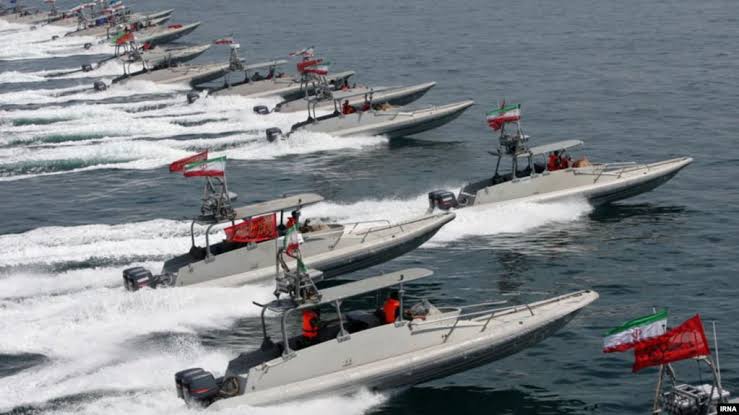
- Offshore Patrol Vessels and Fast Attack Missile Craft
- Mobile anti‑ship missiles
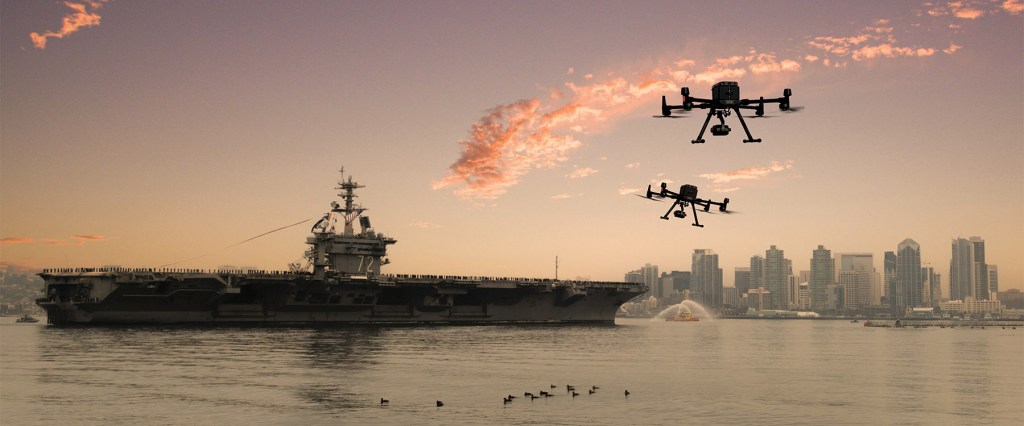
- Drones, radars, and maritime patrol aircraft
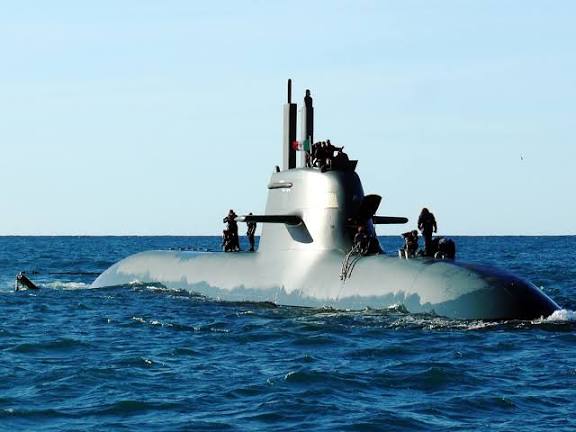
- Submarines and naval mines
Each “quill” is modest alone. Together, they impose disproportionate risk.
Naval Mines: Shaping the Battlespace
Naval mines are often dismissed as outdated or escalatory. In reality, they are one of the most cost‑effective tools in a porcupine arsenal—not as a stop‑gap for submarines, but as a permanent layer of sea denial.
In an archipelago of narrow straits and predictable approaches—Bashi Channel, Verde Island Passage, key West Philippine Sea approaches—defensive minefields:
- Channel hostile movement
- Raise uncertainty and clearance costs
- Operate continuously without constant presence
Mines shape the terrain. Submarines exploit it. One does not replace the other.
The Cabbage Strategy: How Pressure Is Applied
China’s cabbage strategy—layering civilian, coast guard, and naval forces around a contested feature—has proven effective precisely because it avoids escalation.
The Philippine response must mirror this logic defensively:
- Coast Guard presence first
- Navy and Air Force as overwatch
- Legal, diplomatic, and information layers reinforcing the physical ones
This layered response requires numbers, persistence, and integration—not a single, high‑value asset.
National Resilience Framework: Security That Serves Citizens
The smarter path lies in a National Resilience Framework—a distributed system that serves both defense and civilian needs:
- OPVs and fast attack craft for daily sovereignty patrols
- Helicopters and C‑130s for disaster response and mobility
- Maritime domain awareness networks integrating radars, drones, satellites, and AIS
- Submarines and naval mines for credible, quiet deterrence
These assets deliver value every day, not just in wartime.
Conclusion: The Right Kind of Strength
The Philippines does not need to look powerful. It needs to be hard to coerce.
Aircraft carriers invite symbolic comparison and catastrophic loss. Porcupine forces impose constant friction. Against salami tactics and cabbage encirclement, resilience beats prestige.
Strategic focus—not spectacle—will protect Philippine waters, livelihoods, and sovereignty. The future of maritime defense is not a floating symbol, but a layered, stubborn, and citizen‑serving system.


 The Society of Honor by Joe America
Wait what? I hadn’t heard this one. The PN acquiring aircraft carriers would be insanity given capability gaps at more basic levels.
Even countries capable of sustained blue water operation (UK, France) foolishly build carriers as prestige flagships. The UK has two expensive carrier-sized amphibious assault ships due to re-equipping their new carriers with ski jumps. France couldn’t afford two carriers, so they only built one de Gaulle-class carrier. But the French have a *nuclear-powered* carrier, so they feel more awesome than the British.
My firsr drop have Indonesia’s intent to have one and we must not follow suot, but I eventually deleted Indonesia.
I think this is important because even Miliary officers were asking about this in forums and I see time and again the president of the Maritime League explaining why we should not.
HADR was Indonesia’s justification
https://www.navalnews.com/naval-news/2025/06/indonesia-eyes-giuseppe-garibali-aircraft-carrier-procurement/
It seems to me that the HADR rationalization is just an excuse to buy a prestige flagship. Just like in the age of battleships where nations raced to build bigger and badder battleships, many navies forgot that a ship is just a capability platform. It’s often in the escorts that enable that capability to be used in the first place. The German and Italian navies for example in WWII had pretty good battleships. The German battleships were caught alone and hunted down. The Italian battleships were sunk in harbor. In both cases those battleships did not have a sufficient number of destroyer escorts, cruisers and frigates escorting them to provide air cover.
If Indonesia wants a HADR platform, I could think of numerous other ways to do it. Converting a container ship for example as a helicopter transport, buying any number of surplus landing dock ships, or heck, even an amphibious assault ship makes more sense.
Oh yes we have many prestige procurements already as stated in Joe’s bee fleet article.
The Philippines is a giant aircraft carrier covering the whole west Pacific. Putting a sinkable chunk of metal in the ocean is the dumbest thing imaginable. Build 5,000 drones instead. Make the Philippines the nastiest beehive in the Pacific.
Though drones were not mentioned in your bee fleet they fit in this article of yours.
https://joeam.com/2013/08/31/the-bee-fleet-2/
Drones were not perfected war tools back then. Today I’d recommend drone missile cruisers.
The US has 1,000+ older model MQ-9A Predator B drones in surplus from the GWOT that have been superseded by longer range drones. There was discussion under the Biden administration to transfer these drones to Ukraine, but ultimately there was no transfer as while the drones have light attack capability they don’t have defensive capability beyond basic countermeasures so the drones would not be useful in a non-permissive airspace like over Ukraine. But for the Philippines to use as naval/sovereignty patrol and surveillance in a territory as small as the Philippines, a drone such as MQ-9A would be perfect. The Philippines should see if they could get the drones from the US for free, since AFAIK the drones are being slated for destruction anyway.
not get drones for free, but borrowed. of course horses for courses, we are not nation of mendicants, but we can borrow drones in exchange for our eyes on the ground. they lend us the drones, we give them the tit for tat. I think that is fair.
https://navalinstitute.com.au/chinese-drone-in-philippine-waters/
We borrow kamikaze drones no return no exchange.
we mainly need surveillance drones, not attack drones. we dont want to escalate the situation in the west phil sea into a full blown war. though we want to monitor our skies and underseas and similarly, china is doing the same on us! we are heavily spied on. it is highly probable that china knew the locations of our underseas cables both domestic and international. if china decides to cut the cables off like what was done in EU’s undersea cables, china will get their nose badly bloodied: shouldnt give trump a reason to maduro xi jin ping!
You are correcr of course.
I don’t see getting stuff from friends as mendicancy KB as long as the giver and the receiver are both willing. After all, Filipinos libri friends all the time.
Predator B drones are still a thoroughly modern ISR platform. They are just not used that much anymore by the US due to their shorter range (about 2,000 km) for a Pacific war. But for the Philippines Predator drones would be great as north-to-south the Philippines is only about 1,900 km. The Philippines taking on the Predators would also save the US the cost of storing the drones in the bone yard (our senators are notorious for wanting to hoard old equipment) and/or scrapping the still-good drones. The Philippines would probably need to pay for operation cost of the Predator’s Ground Control Station (GCS) which is a command and control center for the drone pilots, commander and mechanics in intermodal container form. A GSC just needs a satellite connection for the datalink to the drones.
not all libri friends are the same, or we’ll end up with padrino, again! we are indebted to god and not just to anyone. america is ally and a friend, but not that kind of friend. america give us aid, in return we do their bidding, to a point.
Ukraine would slap in new tech, just using the framework. Dumb not to send them over.
on ukraine’s request, australia sent their aging 48 abrams tanks to ukraine, to be modified fit for combat. the tanks have been in storage but will now see combat. apparently, the ukrainians are quite handy and know how to equip and modernize older tanks and make them lethal.
Very resourceful, and cheers to the Aussies!
Actually Ukraine wanted to use the Predators as long-range one-way kamikaze drones, as they did with obsolete Soviet-era recon drones. Staying in the air for long periods of time is just not survivable in Ukraine’s eastern oblasts as it is under constant Russian anti-air threat. Ukrainian fighter jets are also not used for dogfighting but for anti-drone patrol and lobbing the limited supply of Western long range missiles at Russia across the border. By the way, the Ukrainians eventually developed their own long-range kamikaze drones to fulfill what they wanted to do with the surplus Predators. A Predator isn’t really obsolete; the drone is just too short-legged outside of a regional war in the Middle East or Afghanistan. So retrofitting a Predator for one-way kamikaze use is just a waste of a useful modern platform.
Ukraine first modernized a Soviet-era anti-ship missile (ironically originally designed by the Ukrainians in the first place) into the Neptune cruise missile and recently, “Long Neptune.” 1,000 km range.
Ukraine also converted civil light aircraft (think Soviet analogues of single-engine Cessnas) into long-range kamikaze drones, which they still use extensively to bomb Russian bases and refineries everyday.
Ukrainian company Fire Point last year unveiled its new kamikaze drone of up to 1,600 km range. It is in use now.
German-American company Auterion has a partnership with Ukraine to mass produce Shahed clones but with AI object recognition targeting capability. Factories are being built in Western Ukraine (I cannot disclose as the Ukrainian company has not been disclosed yet), Virginia, and Germany.
Biden did send Ukraine a thousands of kamikaze drones of more tactical use (under 500 km range), and Trump hasn’t stopped that policy yet.
The Predators are primarily an ISR platform. The optics and sensors are thoroughly modern, as the only issue why they are de-emphasized in US usage is their shorter range. But a Predator B’s 2,000 km range is not an issue for the Philippines where they can land at the numerous PAF airbases throughout the country, or even land at austere airfields. Command and control is usually containerized in an shipping container, and only requires a satellite link to control. All this works well in distributing capability throughout the country and can be rapidly repositioned. Also a plus is PAF C-130s can carry both the containerized command and control station as well as a couple of drones at once to reposition throughout the country. The biggest capability gap the Philippines has is not having enough eyes. IMHO having more eyes is far more important than building immediate offensive capability. With eyes everywhere, the Philippines can simply allow allies to work better together with the AFP to help counter Chinese threats while other capability is being built.
Thanks for the insights. I think any decision not to send usable but outdated equipment to Ukraine is the height of stupidity.
Biden was constrained in the first year and a half of the current war by advisors who were junior staffers during Obama’s admin who were too cautious and not risk taking. Certainly a factor in Biden losing support as almost all of the American left and a majority of the American right are pro-Ukraine.
I know Ukrainians quite well having visited that country many times. Ukrainians are sometimes very emotional (similar to Filipinos, actually), and at times they demanded all manner of weapon systems. They wanted tanks which are practically useless in Ukraine. At other times they wanted attack helicopters, which are equally useless aside from being used to lob short range rockets as improvised short-range aerial artillery. Biden did provide the USEFUL things, and I wish he had given more. In the last year of Biden’s term he rushed a lot of what was needed. What Ukraine needs is massive amounts of kamikaze drones, more Bradley fighting vehicles, artillery ammo, an ability to hit strategic targets in Russia. A lot of the technical assistance that Ukraine got to build its own technology was actually provided by the US (from Biden), Germany and the UK.
Yes I understand the emotionality. But I’m impressed with their warmaking, no matter how they scrape up or manufacture weaponry.
I completely understood Ukrainian emotionally after the 2022 invasion. The Ukrainians were a hair away from losing their country and were grasping for anything to blunt the Russian attack. Personally I had advised Ukrainian friends that there are more productive ways to strongly press for the assistance they need. I’m glad Biden, British and German officials also counseled the same at a higher level.
The war in Ukraine at the moment is brutal. I met with American friends who are serving in the Ukrainian Foreign Legion when we brought over trucks, lifesaving gear, and drone components from Poland. The Ukrainians highly value their own soldiers, going as far as risking death to retrieve the bodies of fallen comrades. The Russians just leave their dead scattered around the battlefield after each “meat assault,” which I saw with my own eyes. The Ukrainians clean up the Russian dead as well.
During my trip there I thought about how existential threat leaves one with two choices: Rapidly try every solution within reach, or lay down and give up. That is a lesson I’d hope the Philippines can learn. It’s a good thing that the AFP is exploring lessons from the Ukrainian armed forces, and that Marcos Jr. is pursuing industrial partnerships with Ukrainian firms.
chat gpt cut and paste
Short answer: yes, but only conceptually—never as a serious, funded acquisition plan.
Longer, clearer picture 👇 1. Strategic imagination vs. reality
At several points, Philippine defense thinkers and naval officers have thought about carrier-like capabilities, but always at the level of:
The Philippines has never had an official program, budget line, or government-approved plan to acquire a true aircraft carrier. 2. Why the idea came up at all
The carrier concept surfaced mainly in three contexts: a. Archipelagic defense thinking
Naval planners periodically asked:
In theory, a carrier solves:
But theory immediately collided with reality (see Section 4). b. External inspiration
Filipino officers studying abroad—especially in:
were exposed to carrier strike group doctrine, which naturally sparked “what-if” discussions back home.
These were professional conversations, not policy commitments. c. South China Sea anxieties (2010s)
During heightened West Philippine Sea tensions, some analysts floated the idea that:
This was mostly think-tank and op-ed level, not AFP planning. 3. What did get considered instead (important distinction)
Rather than aircraft carriers, Philippine planners consistently gravitated toward carrier-adjacent but realistic platforms: ✅ Helicopter-capable ships
Examples:
These support:
❌ Not fixed-wing carrier aviation
There has never been serious planning for:
4. Why a true aircraft carrier was never viable
Philippine planners themselves understood the blockers: a. Cost (overwhelming)
This alone ends the discussion. b. Doctrine mismatch
The AFP’s historical focus:
Carriers are power-projection tools, not defensive necessities. c. Infrastructure & manpower
A carrier requires:
None of this exists locally. d. Alliance realities
The Philippines has long relied on:
From a planner’s perspective:
5. The Subic Bay misconception
Important clarification:
This sometimes creates a public illusion that:
It did not. 6. Bottom line
If you want, I can:
Just say the word.
https://ipdefenseforum.com/2025/10/philippines-ukraine-consider-joint-drone-production-in-strategic-defense-pact/#:~:text=Philippines%2C%20Ukraine%20consider%20joint%20drone%20production%20in%20strategic%20defense%20pact,-October%2011%2C%202025&text=The%20Philippines%20and%20Ukraine%20plan,nation's%20sovereignty%20by%20authoritarian%20regimes.
https://www.navalnews.com/naval-news/2025/09/ukraine-eyes-joint-drone-production-deal-with-the-philippines/
BBM wished for an aircraft carier once.
MANILA, Philippines — President Ferdinand Marcos Jr. acknowledged on Thursday, February 6, that the Philippines lacks the naval capability to drive away China’s largest coast guard vessel from its waters, but maintained that Philippines forces will continue to challenge all intrusions in the West Philippine Sea.
“We don’t have the means na paalisin. Buti kung meron tayong aircraft carrier na kasamang destroyer, frigate, at submarine na papupuntahin natin doon para matulak sila palayo. Wala tayong ganoon,” Marcos said at a press conference.
I suppose the Philippines can get an aircraft carrier and be like the British who need the US Marines to station their Harriers and F-35B’s on two new Queen Elizabeth class carriers, haha!
medyo moot na yata ‘yan. we could have gotten much more than aircraft carrier but the opportunity has passed. just like what we did in 1991 bases treaty, despite offers of significant aid, we declined it. not the 1st time we have declined aid from united states though, not when our sovereignty and security are concerned.
commodore jay tarriela et al has declined united states offer of aid and help in pushing the chinese away from our waters for that would be seen as surrendering our sovereignty. one day, we will come up with new definition of sovereignty, but until that day, we stay tunnel visioned.