Antonio Trillanes IV: Reformist, Rebel, Legislator, and Political Maverick in the Philippine Power Structure
By Karl Garcia
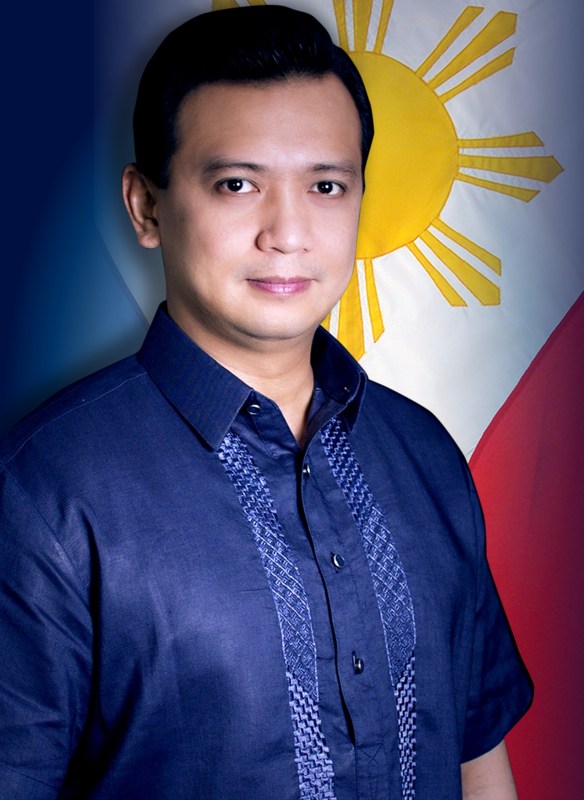
Few modern Filipino political figures evoke as much admiration, frustration, and debate as Antonio Trillanes IV. His career cuts across the military, the Senate, national elections, and opposition politics, intersecting with presidents, dynasties, reformists, and populists. He has confronted administrations, led investigations against powerful families, criticized allies, lost major elections, and yet remained relevant in national discourse.
To understand Trillanes is to understand a deeper reality of Philippine politics — a system where reform, elite networks, dynastic power, and personality-driven leadership constantly collide. His story is not simply about one man, but about the difficulty of pursuing institutional reform inside a political culture dominated by families, factions, and shifting alliances.
This essay presents a full, fact-checked synthesis of his military roots, mutiny years, legislative record, Senate investigations, controversies, electoral defeats, and political positioning involving figures such as
Leni Robredo,
Risa Hontiveros,
Rodrigo Duterte,
Sara Duterte,
and the broader dynastic landscape that includes the Binays, Marcoses, and other political families.
I. Military Origins and the Birth of a Reformist Identity
Trillanes emerged from the Philippine military establishment, graduating from the Philippine Military Academy and serving as a naval officer. Even early in his career, he developed a reputation for questioning corruption inside the Armed Forces. His academic work reportedly examined irregularities in the Navy, reflecting a pattern that would define his later political life — confronting institutions from within.
He entered national consciousness during the
Oakwood Mutiny,
when junior officers occupied Oakwood Premier in Makati to protest corruption in the Armed Forces and the administration of
Gloria Macapagal-Arroyo.
Although the protest ended peacefully, it marked Trillanes as both a reformist and a rebel.
He later took part in the
Manila Peninsula siege,
another protest action against the Arroyo government, reinforcing his image as an officer willing to challenge entrenched power structures even at personal risk.
For supporters, these acts symbolized courage.
For critics, they suggested recklessness.
For the public, they made him impossible to ignore.
II. Election to the Senate: From Detention to National Office
In one of the most unusual events in Philippine political history, Trillanes ran for the Senate in 2007 while still detained and won a seat. His election transformed him from mutineer to legislator, but his political style did not become conventional.
During his two Senate terms, he built a reputation for being:
- Highly active in filing bills
- Aggressive in investigations
- Vocal in privilege speeches
- Frequently in conflict with powerful figures
His Senate career would be defined as much by confrontation as by legislation.
III. Legislative Record: High Output, Mixed Results
Contrary to the belief that he focused only on investigations, Senate records show that Trillanes filed hundreds of bills and was involved in multiple laws that were enacted.
Defense, military, and security legislation
He was principal author, sponsor, or co-author of laws such as:
- Revised AFP Modernization Act
- Increase in subsistence allowance for uniformed personnel
- Archipelagic Baselines Law
- Strategic Trade Management Act
- Burial assistance for veterans
- Cabotage law amendments
These reflect his consistent focus on defense reform and national security.
Social and civil legislation
He also worked on laws including:
- Anti-Bullying Act of 2013
- Immediate release of retirement benefits for government employees
- Anti-Corruption Month Act
- Expanded Senior Citizens Act (co-author)
- Disability rights amendments
- Expanded PAG-IBIG coverage
These show that his work extended beyond military issues.
Technical and professional laws
He sponsored or authored measures affecting:
- Social workers
- Forestry regulation
- Chemistry and engineering professions
- Nutrition and dietetics
- Farm tourism
These rarely attract attention but form part of his legislative record.
Volume of bills filed
Senate reports indicate:
- Over 150 bills filed in one year while detained
- Hundreds of bills across multiple Congresses
- Frequent ranking among senators with high filing output
However, many proposals did not pass, especially when he was in the minority.
This led to the common assessment:
Productive legislator — but not always effective in passing laws.
IV. Investigations: The Source of His Fame and Controversy
Trillanes became best known for investigations rather than legislation.
Binay investigation
He led hearings on allegations against
Jejomar Binay
including the Makati parking building controversy and alleged hidden wealth.
The hearings lasted months and led to Ombudsman cases.
Supporters called it accountability.
Critics called it political persecution.
Duterte bank account allegations
He accused
Rodrigo Duterte
of hidden bank deposits through privilege speeches.
Complaints were filed against him, but cases were dismissed.
Again, reactions were divided.
Military corruption exposés
He repeatedly raised issues involving AFP procurement and pensions, consistent with his original grievances as a naval officer.
ICC and drug war accountability
After leaving the Senate, he supported international investigation into the drug war, continuing his anti-corruption and accountability narrative.
V. Electoral Defeats and the Limits of Reform Politics
Despite national recognition, Trillanes struggled in later elections.
- Lost vice presidential race in 2016 to
Leni Robredo - Failed Senate comeback in 2022
- Lost mayoral race in Caloocan in 2025
These defeats highlight a key reality:
Reformist reputation does not always translate into votes.
Philippine elections often favor:
- Dynasties
- Local machines
- Celebrity appeal
- Populist messaging
Trillanes’ confrontational style helped his image but sometimes hurt his electability.
VI. Conflict Within the Opposition: Robredo vs Hontiveros
One of the most controversial recent developments was his criticism of fellow opposition figures.
He questioned decisions made by
Leni Robredo,
including her meeting with
Sara Duterte,
arguing that such moves could weaken opposition strategy.
At the same time, he expressed support for
Risa Hontiveros
as a possible future national leader, citing consistency and credibility.
This showed that Trillanes does not automatically align with any faction, even within the reformist camp.
He chooses allies based on his own standards, not popularity.
VII. Navigating Dynasties and Power Networks
Throughout his career, Trillanes has crossed paths with major political families:
- Binay family — investigation target
- Duterte family — political opponent
- Marcos camp — complex positioning
- Local dynasties — electoral rivals
He is both insider and outsider.
He belongs to elite institutions but challenges elite behavior.
This contradiction explains why he is admired and distrusted at the same time.
VIII. Overall Assessment
Strengths:
- High legislative output
- Key defense and social laws
- Strong investigative record
- Consistent anti-corruption stance
- Willingness to confront powerful figures
Weaknesses:
- Many bills not enacted
- Often polarizing speeches
- Limited electoral success outside Senate
- Seen as confrontational even by allies
- Reputation tied more to hearings than laws
IX. Conclusion: The Meaning of Trillanes in Philippine Politics
Antonio Trillanes IV represents a rare but difficult role in Philippine governance:
- A military officer who rebelled
- A senator who investigated elites
- A reformist who criticized allies
- A politician who lost elections but kept influence
Some call him hero.
Some call him troublemaker.
Both views are supported by facts.
His career shows the fundamental tension in the Philippine system:
Reform vs dynasty
Principle vs strategy
Institution vs personality
Accountability vs political survival
And as long as those tensions exist, figures like Trillanes will continue to appear — controversial, polarizing, and impossible to ignore.


 The Society of Honor by Joe America
Thank you for this Karl. I am an admirer of Trillanes, love his bravery ad courage to expose corruption in the government.
My pleasure Arleen.
As a disclosure this is abf the following three essays are my research of people who have been good to our family. If I am doing research and writeups why not about them?