All About Philippine Development

By Karl Garcia
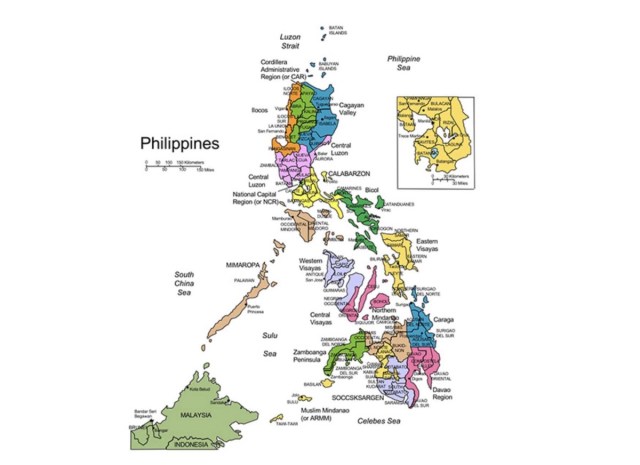

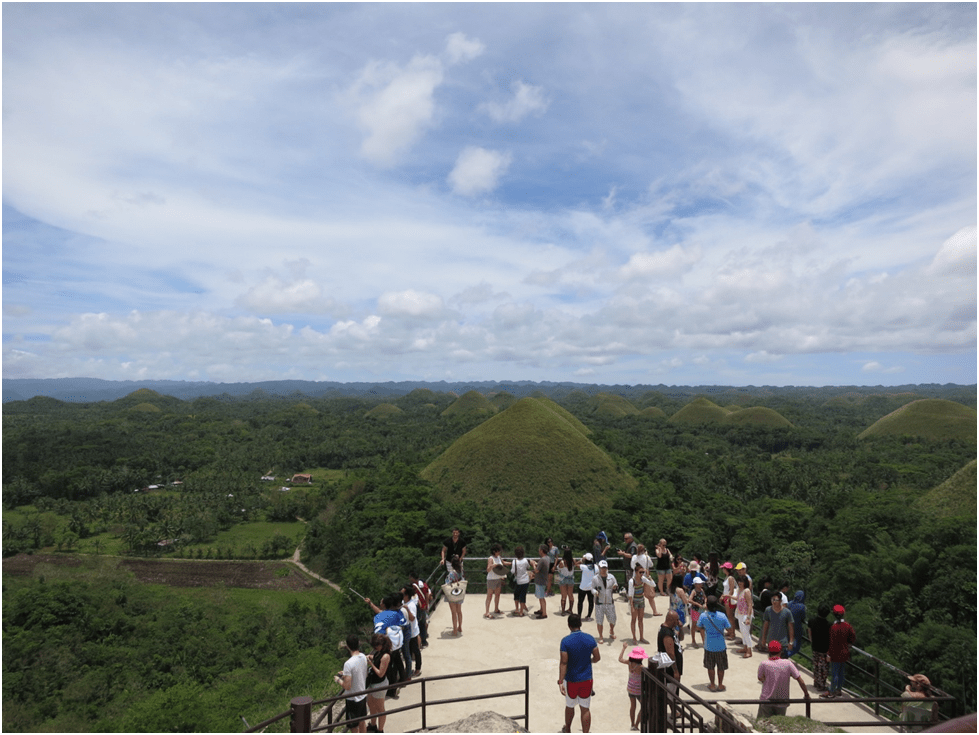
Pictured above is the map of the Philippines and a farmer harvesting palay. Picture below is a representation of Philippine tourism which is the Chocolate Hills in Bohol and lastly, a picture of a Philippine Navy Ship.

There is recognition from our blog owner himself, Joe, that the readership of this blog site has diminished. It maybe because some of the topics in the articles and comment threads from the same old “echo chamber” is getting old.
One solution, I see is for the silent readers and lurkers to try and contribute by submitting articles and participating in the discussions. Yes, some contributions have been rejected by our editors maybe due to the timing, it might have been too controversial, or it does not fit the main guideline of Joe that it is for the betterment of the Philippines.
Do articles have to please everyone? That is a big no! I myself have written articles with ideas shot down by my fellow contributors like my modern monetary theory articles espoused by one of the former regulars here, Micha. I wrote about direct democracy which seems farfetched for some. Yes we must be outside the box,but not miles or kilometres away from the box.
Another idea that I am forehead slapping is the idea of getting away from rice to concentrate on other food items. Since we could not get away from rice, and many meals and international cuisine like Korean, Japanese are rice based, that means importing forever and that is a bad idea come to think of it.
So what if we have bad ideas, then let others come up with better ideas and suggestions.
Now for my present set of ideas, I asked chatgpt for some roadmaps for our agencies that incorporate Sustainable Development Goals (SDGs) and Environment Social and Governance (ESG) principles.
To create a more comprehensive and integrated development plan for the Philippines that includes the national security policies, key government roadmaps, and the alignment with Sustainable Development Goals (SDGs) and Environmental, Social, and Governance (ESG) principles, I suggest filling in the missing areas with proposals that emphasize collaboration, modernization, sustainability, and inclusivity. Here is a breakdown by sector and department:
1. National Security Policy Integration
- Philippine Development Plan (PDP) & National Security
- Strengthen the PDP’s alignment with the National Security Plan (NSP) by integrating maritime security, defense modernization, and interagency cooperation to address territorial issues and safeguard natural resources.
- Encourage joint exercises and capacity-building initiatives with allied nations to enhance readiness and maritime defense capabilities.
- Propose the creation of a National Resilience Strategy, merging security, climate adaptation, and disaster resilience efforts.
2. Department Roadmaps
- Department of Trade and Industry (DTI) Roadmaps
- Promote green industries, sustainable manufacturing, and blue economy initiatives (e.g., sustainable fisheries and marine tourism) to drive economic growth while safeguarding marine ecosystems.
- Focus on AI-driven innovation, digital transformation, and clean energy adoption across industries.
- Department of Science and Technology (DOST) Roadmaps
- Enhance investment in research and development (R&D) focused on climate-resilient agriculture, marine biodiversity conservation, and renewable energy.
- Collaborate with universities and industry on technology transfers to modernize sectors like maritime transport and fisheries management.
- Department of Social Welfare and Development (DSWD) Roadmaps
- Strengthen social safety nets by targeting marginalized communities in disaster-prone coastal areas through climate adaptation programs and livelihood support.
- Expand health and education services to remote maritime regions, focusing on gender equality (SDG 5) and coastal community development (SDG 14).
- Department of Migrant Workers (DMW) Roadmaps
- Introduce targeted programs for overseas Filipino seafarers, addressing welfare, labor rights, and reintegration into the local economy.
- Enhance coordination with the Department of Labor and Employment (DOLE) to prevent exploitation and promote better working conditions in the maritime sector.
- Department of Labor and Employment (DOLE) Roadmap
- Focus on upskilling Filipino workers in green technologies, sustainable maritime practices, and AI-driven industries.
- Support initiatives that align labor policies with ESG standards in key industries like shipping and coastal tourism.
- Department of Health (DOH) Roadmap
- Strengthen healthcare access in coastal and maritime communities, particularly focusing on diseases related to climate change (e.g., water-borne diseases).
- Increase focus on mental health support for seafarers and coastal populations affected by climate-related displacement.
- Department of Education (DepEd) Roadmap
- Enhance STEM education with a focus on marine science, environmental conservation, and sustainable development.
- Create partnerships with international universities to develop maritime and ocean governance curricula that support future leaders in maritime law and policy.
3. Maritime Security and Governance
- Philippine Navy & Coast Guard
- Modernize the Philippine Navy and Philippine Coast Guard with green technologies such as renewable-powered vessels to reduce environmental impact.
- Propose establishing a joint maritime task force with the Philippine National Maritime Police and international partners for joint maritime patrols, focusing on securing the West Philippine Sea and combatting illegal fishing and trafficking.
- Expand disaster response capacity of the Coast Guard in coastal regions to address climate-related disasters and oil spills.
- Philippine National Maritime Police
- Improve the coordination of maritime law enforcement to tackle issues such as illegal fishing, smuggling, and marine pollution.
- Develop a national maritime safety and security database to improve information sharing between agencies and the private sector.
4. Philippine Maritime Education and Labor
- Reform the Philippine maritime education system to align with international maritime standards and ensure that seafarers are trained in ESG-compliant practices.
- Expand public-private partnerships (PPPs) with maritime education institutions to drive innovation in maritime labor practices, focusing on sustainable development and gender equality.
- Strengthen labor rights and safety nets for seafarers, particularly regarding mental health support and reintegration into domestic industries after their contracts.
5. SDG & ESG Proposals
- Expand the focus on inclusive economic growth (SDG 8) by encouraging industries that promote green employment opportunities, especially in renewable energy and sustainable tourism.
- Implement ESG frameworks in all major national security and infrastructure projects, ensuring environmental sustainability and community well-being are at the forefront.
- Integrate the ESG principles into the management of maritime resources to promote the long-term health of the Philippine coastal zones (SDG 14: Life Below Water).
6. Proposed New Initiatives
- Sovereign Wealth Fund for Maritime Development
- Create a Philippine Sovereign Wealth Fund dedicated to sustainable maritime development, focusing on investment in green ports, renewable energy infrastructure, and marine biodiversity conservation.
- Blue Carbon Strategy
- Develop a Blue Carbon Strategy aimed at protecting and restoring mangroves, seagrasses, and coral reefs to enhance biodiversity, promote fisheries, and combat climate change.
- Inclusive Development and Women’s Empowerment in Maritime Sector
- Propose specific programs aimed at empowering women (SDG 5) in the maritime sector by supporting leadership roles in maritime education, labor, and governance.
- Create partnerships for women-led maritime businesses, particularly in coastal tourism, aquaculture, and maritime logistics.
7. Interagency Cooperation and Implementation
- Propose a National Maritime Governance Council to enhance coordination among the Philippine Navy, Coast Guard, Maritime Police, and other government agencies. This council would develop joint action plans for maritime security, sustainable resource management, and climate resilience.
- Develop a Green Maritime Fund under the DTI to support private sector engagement in sustainable shipping, port operations, and eco-friendly marine tourism.
Conclusion
By integrating these suggestions, the national development plan can align more closely with SDGs and ESG principles, while also addressing critical gaps in national security, maritime governance, and labor.
________________________
All images except for the PH map are taken from the Philippine article in Wikipedia. The PH map is from https://www.freeusandworldmaps.com/world-countries-philippines-pdf-printable-pdf-maps/


 The Society of Honor by Joe America
Good day all. Let us fill in the blanks.
Readership is a function of marketing, content, political flashpoints, and readership patterns. I don’t really market the blog, having dropped off Facebook and no longer engaging with Riassa Robles and others. The content lagged for several years. Today’s political flashpoints are not “yellow” which was the core audience of the blog. Readership dropped when Duterte was elected and people gave up or left. Younger people hate reading, I think. Or, like Joey was, are completely unaware of what goes on here.
Still, we have the potential to reach important people.
The checklist of to-do ideas is shaded by the guidance, green and sustainable, and I think skips past the hard needs of the present. For example green warships are not a priority when the nation has few warships. And if the nation has little manufacturing capacity, it can’t manufacture green vehicles. That said, there are signs that the nation is on the path you suggest. DOTransportation is drawing up specs for Philippine manufactured e-vehicles. Exactly what needs to be done.
My guess is that other of the initiatives are underway as well. My impression of the Coast Guard is that it is professional and moving in the direction outlined.
Many many thanks Joe for not only filling in the blanks but also the means to achieve them.
In the education post Education Secretary gave importance to Values that Values begin with the family and not only school.
What do we value?
Do we value peer pressure(Pakikisama), Risk taking(bahala na)
Do we value the time of others(Filipino Time)
Do we work smart or just be streetwise(diskarte)
Are we Wais and not wise?
Are we Juan Tamads wating for the guava to fall?
Are there always masters and servants?
These attitudes may be a generalizationand kicking our selves in the butt, but there is domestic truth to it.
Piano tayo aasenso kung palagi tayong ganito
I think these values are seated primarily in the education system that does not push back against the failure to be accountable. And the social conventions support negligence. So from my observation, the push toward sustainable and environmentally development conscious starts with the values taught in school. When tossing trash out the bus window is seen as an obscenity rather than convenience, then the nation is getting on the right path.
Your insights are really valuable.
Worthy suggestions Karl. Wha if we focus on agriculture too? The problem is the super rich focus on turning agricultural lands to subdivisions. And in case of calamities, we are forever relying on donations and a few reliable people in the government.
All good observations worth doing something about. Thanks!
CARP probably needs reform itself. As is, landowners have figured out ways to evade parceling out the land to smallholder farmers, while smallholder farmers have such small parcels that they effectively can’t produce enough for even their own family. I’m familiar with general good agriculture practice, but am not knowledgeable on the specifics of how the landowners through their land corporations are converting agricultural land into subdivisions. My guess is the stock vs land exception in CARP that allows the landowner to “sell” the parcel to the beneficiary at 1988 values when CARP was signed into law. Then take the parcel and develop it into subdivisions as combining parcels back into a consolidated large farm is also not permitted under CARP’s anti-hacienda rules.
Thank you Joey for explaining it well. I appreciate it. There are subdivisions now even in provinces where there used to be rice fields.
Yes it’s very sad to see the formerly emerald green Nueva Ecija start to turn into a monotone grey of roads and developments. Back in the late 1990s and 2000s I remember Tarlac as mostly farmland — also changed. In my usual haunts in the poor areas of Metro Cebu like Bankal, even the undesirable adjacent land to Mactan Airport in which informal settlers live are slowly becoming subdivisions. Sometimes I go to Cotabato, where Tulunan still has many palay fields perhaps due to the semi-remote nature of the area.
The loss of agricultural land is terrible. Without fresh vegetables I’ve noticed poor children becoming more malnourished than I remembered poor kids back 20+ years ago. Due to less lowland areas in the Philippines to live and grow crops, I’d wish the developments focused on high rises rather than condo units.
Sad scenario talaga. Some people are greedy, they are focused enriching themselves without a care of the environment.😒
Have written the evergrande post. seems this comment is related.
Looking forward!
Arlene this was my take on Agriculture.
CURRENT ISSUES
We have been pushing for 100 percent rice sufficiency when we have other products like coconut, corn, fruits, and aquaculture.
Overimportation, smuggling, hoarding of rice.
We have problems of land conversion because debt-saddled farmers would rather sell their land because they cannot buy fertilizer and other goods to make their lives easier. So they just sell their land. This, in my opinion, has made a mockery of the Comprehensive Agrarian Reform
Lack of Knowledge and Financial Support of Farmers.
Non implementation of AFMA in terms of financing.
Aging Farmers.
Food vs Forest, Food vs BioFuel issues.
Overfishing with the use of illegal methods.
WPS issues; China.
Disease and infestation on coconut and seaweed.
SOLUTIONS ALREADY TRIED
The Agriculture and Fisheries Modernization Act or AFMA was conceptualized by the late Senator Edgardo Angara. He lamented on its implementation. Several other Agriculture Senate Committee chairs like Senators Loren Legarda and Cynthia Villar say the same and the latter even says that poor implementation of AFMA led to our current crisis.
The Agriculture Training Insitute gives training to the farmers. One plus-factor is their seeking of the best practices abroad and that includes Israel.
Agriculrural land as collateral may sound bad to the taste but this is a way to solve financing issues. What happens next is up to the farmers. Maybe they need finance lessons as well.
The Rice Tarrification Law may have removed the NFA from the picture but the NFA was supposed to be a regulator, not an importer. Leave the importing to the private sector. Regulation must check for hoarding and dumping from overproduction of host countries.
Even with these solutions, we still have over-importation and hoarding of rice and conversion of prime agricultural lands to mixed use development properties. The food vs forest, food vs biofuels issues persists.
With the DE classes, “rice is life,” literally. DE often lack affordable (and appetizingly fresh) vegetables, live on daing/bulad, canned goods and instant pancit. Typical meal can be two servings of rice, instant pancit, 1 hotdog or 1 egg or a couple spoons of carne norte. It’s just carbs upon carbs. The excessive rice stops hunger momentarily, but on this diet one becomes hungry quickly in a few hours, so the poor constantly eat rice to stave off hunger.
There is also the issue of downsides of growing palay, principally water usage compared to other crops, inefficient use of available land. But even if palay land isn’t converted into other crops, vegetables can be grown on less suitable land. The main difficulty is how to get those vegetables quickly to market before the vegetables spoil. Consequently nutritious and longer-satiating vegetables are often quite expensive, spoil quickly if a family doesn’t have a refrigerator.
vit D from the sun is free and many filipinos no matter how poor are not anemic. apparently, it’s the kaldero (cast iron) they use in cooking that infuses their food with much needed iron. but since many are now using aluminum cookwares, the incidence of anemia among filipinos is increasing. it’s not aluminum that gives them anemia but the lack of iron in their diet.
some relief goods given during sakunas have bottles of multivitamins and minerals that ought to address nutritional deficiencies even if momentary.
those who are nutritionally deficient can always head down to botica and avail themselves of multivitamins and minerals. my friends who dont want to get fat prefer to take multivitamin pills than eat food and pile on calories. and with less calories to burn, they dont need to exercise as much.
In the Philippines I still prefer to cook with pundido kaldero and kawali/kalaha. In the US I also often use cast iron. I wonder when aluminum became the norm in the Philippines? Cast iron lasts longer if taken cared of, sometimes for generations, and food tastes better cooked in cast iron. Maybe because cast iron is heavy and more expensive compared to aluminum, and rusts without proper care.
I advised my friends to include children’s multivitamins in their children’s diets, but vitamins may be avoided if one eats a balanced diet with the appropriate vegetables. Sometimes it’s shocking to see Filipinos as young as their 20s walking around with obvious signs of diabetes with ulcerated toes from the massive carbohydrate consumption.
boils and foot ulcers are common ailments of filipinos. you know it’s diabetes when they feel nothing on their toes anymore despite the obvious. it’s apparent diabetes have destroyed their nerve endings and pain can no longer be transmitted to the central nervous system and before gangrene sets in and do away with their limb, the toe/s may have to be amputated firstly.
some kids are finicky eaters and dont like to eat their greens, but like to eat cheetos and ice cream so maybe you are correct: multivitamins are in order for them.
I’ve cooked gulay in the Philippines before using natively available Filipino veggies, which everyone gobbled up leaving an empty plate. Many times vegetables in the Philippines are not that fresh when bought, especially the vegetables that contain a lot of vitamins and minerals. In SM Market and similar supermarkets, yes the vegetables are fresh due to refrigeration but very pricey compared to the wet market. Many DE people also don’t have a refrigerator, or they keep it unplugged to “save electricity.” So I think a possible solution to eat more vegetables is to keep produce fresh for longer, and to cook vegetables in a more appealing/satisfying way.
kaming mga pulubi can live without the luxury of refrigeration. we buy fresh meat and fish once a week on market day. we have fresh vegies nearly all year round. tomatoes can stay on room temperature and dont need registration, just keep them free from insects.
spring onions with green leaves can be put in a glass of water and can live for weeks providing us with steady supply. same with kangkong and all kinds of talbos, their stems can be put in glass of water and will sprout new growths.
pechay ends with any semblance of root can also be put in a shallow glass of water and will shoot new growth. most of all, from mongo we can make sprouts (tawgi). mongo beans in a container with little water and put near the window can sprout in few days.
mongo sprouts are delicious added to noodles and great with sardinas and dried fish too.
If only other Filipinos think this way 😅 most families I know don’t even have a refrigerator so keeping food fresh is a problem. Then there’s also the habit of “buying viand,” where the family will cook their own rice but buy ulam. Even families that have refrigerators do this, to my amusement when I asked why they have a refrigerator — the answer is for sweets and ice cream of course! 🤣
It took my wife several years to learn to use the refrigerator to extend the life of foods, versus an ice cream storage device. Now she’s a pro but got confused when I told her not to put my precious Haas avocados there.
Did she trick your children when they were in elementary by reusing the ice cream tubs for fish too? 🤣
Haas avocados are so expensive in the Philippines. I have a whole bag here at home, and more from my sister in law’s tree.
Ha, no, but she does horde containers for reapplication. I almost bought a 19 acre avocado farm in Simi but our due diligence revealed that water was at municipal rates so that killed the deal. Bummer.
Yes, it’s tough to make a small farm nowadays in the Western US due to water rights laws that favor those who can buy out rights from original rights holders. My family has a small orchard out in San Jacinto Valley where we grow jujube, which is then sun dried and commands a premium price to Chinese and South Korean buyers. Jujube is a lot less labor intensive than avocado, and requires much less water as well since it originates in semi-arid areas.
Thank you Karl. Great post you have there.
Thank you.
All these are related, karl. I would start with AFP and DND and US Embassy Manila demanding no libbo (that’s short for liberty, R&R, shore leave, etc. after exercises), everyone in the US military does work in disaster prone coastal areas. no time for KTV, buy me drinkie bars, etc. They did this in the ME and Afghanistan, no KTVs over there, they can extend this same discipline in the Philippines. US Marines and sailors can enjoy in Australia, peer to peer. But have them keep working in the Philippines. maritime defense and securing coastal areas from disaster are essentially the same thing. Inday Sara mentioned tree planting in that 2 hour long press con, no one asked about it. What’s the OVP planting and where, are they mangroves, seagrass, etc.? seems like that should be priority. Though deforested hills are priority too, but you can’t get US Marines and US Navy in land. better to use them helping out the coastal areas. Sure their mission is against China, but while we wait for China, typhoons and over fishing and pollution is happening as we speak, that’s more of a clear & present danger. For Maritime policing, again same to similar missions peer to peer enemies and criminality (terrorism, insurrection, kidnappings, etc.) you can bring the capabilities from maritime defense to maritime policing, and US Navy and US Marines can help in that regard. US Marines wrote the book on small wars, but they’ve never really done maritime policing, this factors in perfectly to their feasibility studies of contested logistics. You scratch our back we scratch yours. US Marines and sailors should be planting trees and hanging out in coastal areas, not in KTV bars in cities, its good for the soul. Save all that sexual energy for Australia.
The US is helping today via the EDCA bases. The US was early to respond on Yolanda, providing the crucial step of clearing the Tacloban Airport so aid could get through. Pre-positioned foodstuffs and water were wiped out by the storm.
USAide is extraordinarily engaged in helping the Philippines. China does nothing. Neighboring countries do little. The US does a lot.
The presumption that the US troops are out drinking and not helping is as wrong as can be.
As I reflect on this, I see it as a common problem these days that social media observers start with their own experiences as the context that others operate within, and don’t bother setting up a legitimate factual foundation before opining. I do this, too, and am frequently embarrassed when knowledgeable people shove data into my ignorance.
Joe, these are my people. I know them well. I’m saying a deployment to Philippines should be like ME/Afghanistan, just focus on work. libbo in Australia. not in the Philippines.
The US has no moral basis for doing what the Philippines is responsible for. They do what they do, which is a lot, because it builds the alliance bonding that benefits both the US and Philippines. Your position is like that of the beggar who, upon getting $5, demands $20. Plus you disparage US troops when you suggest their main focus is sex and booze. There are hundreds here teaching, helping, preparing for disasters, and helping some more. If Filipinos host them for fun, great. But their engagement here is professional, and that’s the characterization that should emerge.
“If Filipinos host them for fun, great. But their engagement here is professional, “ If we’re to be peer to peer, it has to be above professional, more than professional. Again look into the CAP Marines model. they’re always talking about the Strategic Corporal but only that time in Vietnam with CAP Marines was this truly done. And I’m not disparaging the troops. its more fun in the Australia, do more work in the Philippines. libbo in Australia.
theres a better video i’m trying to find, but i guess its not there anymore with Jeannie Johnson who wrote a book on them. but this documentary is also pretty good, about truly knowing and becoming part of the village and culture. that is beyond professional. and its been done, so it can be done. They can do more, Joe. US-Philippine relationship needs to be closer. not just professional.
I don’t have complete data on it, but you are allowed an opinion. The US treads a fine line between Filipinos who want her out and those who want her to take over some Filipinos military duties. I don’t know what more than professional means in that context. I’m impressed with what is going on here. Defense Secretary Teodoro attends the meetings with US counterparts and seems professional himself. More American-style thinking than most. I don’t know how to do it better and stay balanced on that fine line.
You’re right , Joe, whether Filipinos want it is another issue totally separate. But Marines due to their pivot in doctrine towards EABO and SIF here : https://www.hqmc.marines.mil/Portals/142/Users/183/35/4535/211201_A%20Concept%20for%20Stand-In%20Forces.pdf
They want to do this. Right now its just the islands north of Luzon and for Stand-in Forces to face China (with Filipino forces). I’m just saying theres Marines totally open to CAP Marine type missions that require them to do real world missions vis a vis maritime policing. Start in the yellow, and if its successful , expand it.
here’s more on EABO:
“Expeditionary Advanced Base Operations is a form of expeditionary warfare that involves the employment of mobile, low-signature, operationally relevant, and relatively easy to maintain and sustain naval expeditionary forces from a series of austere, temporary locations ashore or inshore within a contested or potentially contested maritime area in order to conduct sea denial, support sea control, or enable fleet sustainment.”
https://www.marines.mil/Portals/1/Docs/230509-Tentative-Manual-For-Expeditionary-Advanced-Base-Operations-2nd-Edition.pdf
Its a perfect spot from which to keep an eye on Benham Rise, Joe. both US and Philippine interests, but most importantly, the people on the ground get something in return re US-Philippines relations. then expand it, Celebes sea would be perfect too.
That’s up to the Philippines.
Do you think Teodoro and PBBM would be open to it?
I am supposing gilbert teodoro is more than aware that the chinese are already buying up pristine lands closest to proposed edca sites. it has also been reported that chinese on student visas some with phds and masters degree and yet could not speak a world if english are also congregating and filling up the campuses of colleges and universities within close radius of proposed edca sites.
I would imagine so.
Even these tiny islands between Luzon and Visayas, Joe. Marines just need islands to practice their EABO/SIF on. I’m not saying counterinsurgency, but maritime policing & coastal protection. the missiles have no bearing here for this CAP /maritime policing work, but drones etc. is perfect. theres all sorts of tiny to bigger islands that would stand to benefit here.
https://en.wikipedia.org/wiki/Combined_Action_Program
“The program involved the U.S. Marines in Vietnam. In theory, a Marine rifle squad and a medical Corpsman combined with a Vietnamese Popular Force platoon to provide continuous local security for villages in the tactical zone. The Marines lived in the villages, trained the local militia, and conducted patrols and ambushes, both day and night. Begun in August, 1965, with a single platoon, the program expanded as Marine volunteers were specially trained and organized into Combined Action Platoons. Squads from the platoons then combined with Vietnamese forces to form Combined Action Companies. By 1969, the number of platoons reached 102, organized into 19 companies under four Combined Action Groups, numbered 1st through 4th.“
I know they are, Joe. I think they can do more. Libbo in the cities is no good, its also a waste of time. Focus on those coastal areas, before disasters hit (after disasters hit). Those 4 bullet points are related. They can revive CAP but for maritime policing:
https://smallwarsjournal.com/jrnl/art/swj-book-review-village-bing-west-0
The Philippine-US military relationship is quite professional. This isn’t like the old days where old thinking led some American officials to act superior. Nowadays US SecDef regularly attends meetings with foreign secretaries and ministers of defense from tiny countries (like the Baltics) and treat them as equal partners who have valuable input.
As to your concern about “libbo,” EDCA stipulates far shorter leashes on US forces than the heyday of freewheeling Clark and Subic. In addition the US military is a far more professionalized all-volunteer force now. I mean look at the CO and XO of the USN Yokosuka Repair & Maintenance Center. Two Filipino-American Navy officers of high rank (O-6, O-5) who apparently went on their own “Mango Avenue” adventure and got immediately canned. What an embarrassing way to lose one’s command, and the Pentagon holds commanding officers to account all the time to set an example to the lower ranks.
https://taskandpurpose.com/news/navy-fires-co-xo-naval-repair-japan/
As for disaster relief, the USCG and USN does this very well. An added benefit of EDCA was that the US was pre-positioned to help immediately after Julian and Kristine:
https://www.pna.gov.ph/articles/1235071
https://newsinfo.inquirer.net/1995883/marcos-orders-use-of-edca-sites-for-relief-ops-amid-kristine-onslaught
MREs, bottled water, canned and dry goods, batteries, generators, search and rescue crews were deployed by the Joint US Military Assistance Group (JUSMAG) for immediate relief, alongside USAID personnel.
“Two Filipino-American Navy officers of high rank (O-6, O-5) who apparently went on their own “Mango Avenue” adventure and got immediately canned. “ Joey, I’m just reading “loss of confidence” no Mango Ave. adventure. It could just be another Fat Leonard corruption stuff or spying for China. no details were given. “In addition the US military is a far more professionalized all-volunteer force now.” This has nothing to do with all-volunteer force, Joey. 1st world vs. 3rd world disparities, but turning blind eye when troops go to bars. which wasn’t an issue in the ME Muslim countries. though high ranking ME officers regularly cavorted with Russian/Ukrainian women , as well as the refugee situation that gave way to prostitution say of Iraqi women into Syria. but 99% of the US troops never saw that because it wasn’t open to them. Mango Ave. et al are open to them. I don’t think there are laws in place now that say explicitly you cannot partake. libbo is still libbo, granted you’re right theres no Olongapo or Angeles , but when ships dock say in Manila or Cebu, when they off load, aside from security advice eg. watch out for this and watch out for that, no one is saying fellas, no hanky panky. hence my comments. as to your “shorter leashes”, I can see folks stationed in those Filipino bases being told you can’t go as far as there etc. or to strictly stay on base. but ships doing R&R port calls. I’ve not heard of any restrictions.
“Lost of confidence” is the most common reason given when removing command from an officer. It’s a face saving gesture that recognizes previous contributions, the indiscretions that caused removal of command not withstanding. And the Fat Leonard scandal was basically CO’s engaging in Mango Avenue behavior, which allowed themselves to be blackmailed into scamming the Navy on Leonard’s behalf.
Well LCpl, it’s probably been nearly 2 decades you’ve been out of the service. Things have changed a lot. And even in the 2000s things were a lot different from the Vietnam and Korean Wars. Plus, being near Camp Pendleton I have a lot of Marine buddies and I can say most of their libbo tales are probably all embellished, if not concocted. Young men are going to be young men telling tales to impress their buddies, especially in the area of sexual conquest. Though I’d not consider something is a conquest if it’s paid haha.
The current US military engagement in the Philippines is strictly for working relationships and interoperability training with the AFP. It’s not the job of the US to do maritime policing on another nation’s behalf, though the US can assist if asked.
What’s happening in the EDCA bases is a rollout of the new Marine strategy of island hopping and going back to being a mobile/expeditionary force, rather than being “Army Lite” as the Marines were used during GWOT. I also believe the Commandant’s strategy is the correct one. That is, pivoting to rapid mobility, focusing on hit and run tactics with mobile tube and rocket artillery, missile forces. And I also believe that the Philippine Army and Marines should copy this strategy as well, since it is suitable for the AFP’s budget.
“And the Fat Leonard scandal was basically CO’s engaging in Mango Avenue behavior, which allowed themselves to be blackmailed into scamming the Navy on Leonard’s behalf.” It was the corruption and embezzlement, Joey. the whores and prostitution sure was part of it, but if they did ding those two Fil-Am CO and XO for that, then they can easily throw everyone else under the bus. cuz 90% would be guilty. thus prostitution in the 3rd world isn’t really a smoking gun of any sort. as to libbo in Manila or Cebu, like i said Joey, nothing’s changed. nothing official has been floated that says No more patronizing EDSA entertainment complex or Mango ave.
“the indiscretions that caused removal of command not withstanding.” But how are you able to discern this was Mango ave adventures instead of more common sexual assault in work place or corruption or espionage even. cuz if you have insider info, then I hope those guys do a tell all. and drag everyone down. that’s if its only for prostitution. soliciting thereof. by itself prostitution is a none issue, Joey, especially at port. sure Fort Hood scandals, JAGs gonna be all over that (or not). but no ones going to a KTV and buy me drinkie bar, thinking oh crap JAG will see me. Officers in charge will simply be far away. hell junior officers may also partake, but they’ll have their own gimmick.
“and I can say most of their libbo tales are probably all embellished, if not concocted. “ Why would anyone concoct KTV and buy me drinkie bars stories? its cheap and ubiquitous. Now orgies in Sydney or Perth, i would totally be incredulous but when its black and Hispanic Marines telling it, I would listen. They put P. Diddy’s freak offs to shame. But I’m really curious why you’d think its concocted? I mean that Jennifer Laude incident was just 2014. what am i saying here that doesn’t jibe, Joey. re KTV and bars. its like you and Joe are idealizing the US military.
“It’s not the job of the US to do maritime policing on another nation’s behalf, though the US can assist if asked.” Well, that’s what I’m saying. Teodoro and PBBM should ask away. There s plans in place that fit hand and glove. to everyones benefit, including the people on the ground.
Think about it this way, if the reason why loss of command occurred was corruption, these officers would be on trial already. It’s definitely a sexual indiscretion and they were made an example of. Really doubt they’d do a tell all as that would discredit them even more. If I were them I’d take the reprimand and loss of command, and quietly accept the desk duty re-assignment. I don’t idealize the military. What I’m saying is the sexual escapades happen way less than you think, or maybe you were just plugged too much into those crowds since you have many stories to tell about it 🤣 If a service member brings disrepute to the service, they should be punished under UCMJ then everyone just moves on.
On direct involvement by the US military, there are societal elements in the Philippines that need to be considered. The language and actions from both AFP and US Military are quite measured and careful to avoid stoking anti-US protests even more. The way EDCA is set up, it’s a base yes that the US can use, but the main purpose is to probably store and conveniently “forget” US weapon systems that can be used by AFP. The weapons like Typhon still being officially “owned” by the US is a way to navigate the geopolitical field vis a vis China.
“It’s definitely a sexual indiscretion and they were made an example of.” Okay, let’s go with sexual stuff then, within that sphere theres adultery, work place sexual harrassment/assault, why focus on prostitution? My issue here is its so ubiquitous that they’d have to UCMJ everyone if this was the case, Joey. but I’m with you that there should be crack down now, especially in Philippines. vis a vis what i’m proposing, eg. go to Australia for fun.
Its just not a valid conclusion that Fil-Am CO and XO for dinged for Mango ave adventures.
“or maybe you were just plugged too much into those crowds since you have many stories to tell about it” There were many folks that didn’t partake especially Christians or married folks (but lots of married folks also partook). I’d say gian’s old 20/80 would be the break down. again because its so cheap and ubiquitous. the folks at the US Embassy do afford folks that would rather do something meaningful, a chance to volunteer at some animal sanctuary or orphanage.
“to avoid stoking anti-US protests even more. “ Joe’s intimating the same too, and I agree with this. that’s why tiny islands not just coastal towns should be focus. cuz I don’t think anti-US sentiments exist in those tiny islands. they’ll take what they can get. Bert, one of the regulars here, lives in those islands i’ve circled yellow (right, karl?). PAO/PR , and PSYOPS (though not really call it that probably in the open, negative connotation ) and Civil Affairs would be perfect for this problem. cuz if Marine combat engineers and seabees are building and making things, it would surely counter anti-US sentiments. cuz China’s doing the same. why not make this part of the whole maritime policing/CAP Marine program too.
PAO/Public relations: purely informational usually positive.
PSYOPS: disinfo misinfo but usually to benefit US and its allies/partners
Civil Affairs: its like PAO/PSYOPS combined but with gifts. like actual projects.
negative connation for PSYOPS aside, just remember that it can be for the good. us vs. them. bad for them, meaning China & Russia.
Idealizing the US military? Huh? I’ve been in the US military, guys puking into the flower pots. I’ve also watched James Cagney, and Casa Blanca, so I understand love in a uniform. For heartbreak’s sense, every once in a while, I google-map Cholon in Saigon by a different name. That’s Mango Street times 1,000. You are no moral lord here.
I don’t think the US wants to shove its way militarily into the Philippines and the Philippines does not wish hordes of troops to be here. You can call it pride, you can call it a mistake, you can call it anything. It’s irrelevant. The US and Philippines are working closely. The PH has a top flight Sec of Defense. They have data and arms and work as one. If the marines are not in the conversation, they don’t want to be. My guess is they are, and it’s generals or admirals or whatever they have in that kinky branch of the navy.
“That’s Mango Street times 1,000. You are no moral lord here.” I can understand Joey’s push back, but I don’t understand yours, Joe. Are you in agreement with Joey that this is now old news remnants of a by gone era? or simply don’t want it mentioned vis a vis anti-US sentiments?
I think anecdotes are not the norm. Pemberton in Olongapo is not the norm. Thousands of drunken Americans have prowled the streets of Olongapo and Angeles City, and Cebu, without offending a nation. Pemberton offended a nation. The pollution left at Subic offends a nation. Yet Richard Gordon would have American troops back anytime. His city thrives. As the rest of the nation curses America.
The current arrangement is perfect. The Philippines rules the roost. The number of US troops does not dominate any city. They talk, train, and prepare for war. Longer runways that can take more powerful planes. New weapons previously unseen here. HIMARS and drones and radars and disaster goods. Antiship missiles. New buildings storing who knows what. Low likelihood of any more Pembertons. If the Philippines judges that the Marines should prowl the seas, they’ll say so.
By what set of standards do we declare this to be something other than peachy keen? Filipinos are happy with the arrangement except for the few who want to hook up with China.
I guess that’s fair, Joe. why shake the boat.
“Pemberton offended a nation. “ I remember interacting with the lawyer here. did she write a blog or was just in the comments. cuz I’m trying to find that blog and said interactions. what was her name?
found it: https://joeam.com/2015/12/17/the-pemberton-case-when-the-philippines-stood-for-justice-and-reason/#comment-152872
Good discussion there.
Joe, here’s more data… (from the same author):
I think this guy’s already rolled this concept out in the South Pacific,
https://cimsec.org/the-first-stand-in-forces-the-role-of-international-affairs-marines-in-force-design-2030/
https://www.mca-marines.org/wp-content/uploads/MCG-February-2021.pdf
read more in the links.
So its not my idea, Joe, my only original contribution here is to make all this benefit the people on the ground more. US and China will trample the Philippines. like Godzilla and King Kong, but in the mean time, before all that starts, get the US Marines to do some good on the ground. its also good training for them.
My first visit to the US Embassy in Manila was in 2008. I was in the lobby of the old building. The ambassador went by with three tall muscular white men with military hair. Who knows who is working there, or why.
Probably military attachés. They assist the ambassadors with military matters and liaison with the host country’s military officials.
I second emotion Joe and Arlene with regards to their comments,
Plus, industrialization via FDI as Joey has been proposing – now na.
Having people find points to contradict and correct in an article is good.
Often, the average Filipino discussion is either deadma or total putdown.
The when you know you know mindset worked in the very local, short term world of 1521.
Nowadays, a bit of Dunning-Krueger is the norm as our reach exceeds our grasp.
If someone who can do something gets ideas or seeds of ideas here, why not.
Better than future i7sharps treating this as Scripture even if it never was intended to be.
Attracting FDI is “easy,” even for “corrupt” countries. Take a look here:
https://www.transparency.org/en/cpi/2023
Of course foreign investment takes into account local corruption. The trick is to make the economic development zone where the factories and import-export activities take place to be lower in corruption and thus a more predictable business environment for foreign investors. But my guess is local conglomerates would hate to have their import-driven retail schemes broken, while those in political power would hate not being able to siphon off more money from projects. Greed is what holds the Philippines back.
I had to look this up, Ireneo.
re “points to contradict”, I think me and Joe are just talking past each other. like if I didn’t mention libbo and KTV, had I not said that we’d just go straight to efficacy of Philippine maritime policing and USMC EABO/SIF. because the serious side of this, is say Tulfo is actually pro-China, and he wins in 2028. because the relationship is just “professional”, read shallow, Tulfo can just as easily cancel everything. and since theres no connections, none would be the wiser. but if you really work hard in establishing connections at the root level, like how Joey can email friends in Cebu and hear about flooding etc. that’s the relationship thats needed. right now I doubt any of these US-Philippine exercises or disaster relief works is creating anything any relationship thats actually deeper than just surface. Sure theres sovereignty issues, but I gotta feeling Teodoro now (PBBM also) would be open to a more expanded role with US Marines and US Navy, not just facing China. but more domestic in scope.
Email? We are old, but not yet oldies haha. My Cebu friends just text me on iMessage or WhatsApp, or we FaceTime if time allows. Consequently, I’m plugged into the daily life of more than one barangay in Cebu, even though I stressed to my friends that I don’t want to hear the chismis haha.
My apologies, lol. I have a flip phone still. so out of the loop on these things.
Silent treatment is the closest equivalent, though deadma can also mean that people are actually rolling their eyes behind your back while not responding. Passive aggressive stuff. Across the Internet, it is even harder because you don’t have any other queues to go by. One can then think stuff is OK, and all the while, there has been no feedback in the conversation. People know something you don’t and don’t tell you, as their mindset is if you know you know. That is the way it is in a society composed of a lot of ingroups with little broad discourse.
Sometimes, I wish I could be more like you, who doesn’t care if people think he’s totally nuts. But well, I’m here with my name, and as Marlo Stanfield says in The Wire, my name is my name.
😉
I wish I was totally nuts, myself. lol. but LCPL_X handle allows me some leeway. I remember around the first times Joe banned me, there was some guy in the comments (not a regular) that actually bothered to look into my Twitter (at that time I was just using Twitter to log on here). And I was like whoah this guys trying to doxx me. so ever since I’ve been extra careful. but early on I was sloppy and if any actually bothered to read all my earlier comments, i think it would be possible to doxx. So anonymity is very important too, not just as persona. But you are on record here as providing the Bavarian Devil’s Wheel to Mango Ave, with your good name, and I’ll hold you to it, Ireneo. lol. thanks!
Binisaya is also a great resource, but for Cebuano-English-Tagalog dictionary and articles on Visayan culture. I wish their website was a bit more modernized though, like Tagalog.com or Tagalog Lang.
https://www.binisaya.com/
Patay malisya in Tagalog.
I hope most of the investment pledges come to fruition.
https://www.pna.gov.ph/articles/1236200
Boosting Productivity, Economic Growth Key to Ending Hunger, Malnutrition by 2030
https://www.pids.gov.ph/publication/development-research-news/boosting-productivity-economic-growth-key-to-ending-hunger-malnutrition-by-2030
Urbanization in the Philippines and Its Influence on Agriculture
https://serp-p.pids.gov.ph/publication/public/view?slug=urbanization-in-the-philippines-and-its-influence-on-agriculture
Land use act hinges on local collaboration, expert says
https://www.pids.gov.ph/details/news/press-releases/land-use-act-hinges-on-local-collaboration-expert-says
@lcx
This is quite related to.your USMC comments
https://www.marforpac.marines.mil/Media-Room/Pacific-Marines-Stories/Article/Article/3771254/philippine-us-forces-conclude-balikatan-humanitarian-efforts/
Service members from the Armed Forces of the Philippines and U.S. military successfully completed a series of humanitarian civic assistance efforts focused on community health engagements, engineering civic action projects, and civil-military engagements during Exercise Balikatan 24.
From March 26 to May 9, a team of 305 U.S. and AFP civil-military operations planners, specialized health professionals, engineers, and chaplains built schools, community health centers, administered medical and dental services, and distributed school supplies and classroom technology in Aurora, La Union, Ilocos Norte, Cagayan, and Palawan.
oh, that’s exactly what i just wrote above, karl. i’m just proposing stay. stay for longer periods of time. know the people. become Filipinos.
So the US military has been doing these projects since early 2000s as part of GWOT.
i dunno if Joey has come across some of these. but military PAO isn’t really good at spreading good news. for example there shoulda been a revisiting and accounting of all the past projects. like these are our good works. kinda like what Joey said about Filipino politicians being very good at this (and its not even their good works). but PAO s usually leave the military, if officer they usually get good gigs in Hollywood or media, for enlisted they usually run for VP under Trump.
so no continuity really. PAO and CA (Civil Affairs) are suppose to be a one two punch. cuz its like that old question if a tree falls in the forest and theres nobody there to hear it. why bother falling?
But the PSYOPS though has interesting possibilities vis a vis China and Benham rise and local politics. but yeah its totally related to PR and CA. all about spreading good and bad news and countering. but its the works that last. but many times its like that poem Ireneo shared, Look on my Works, ye Mighty, and despair! so am really curious whats left standing still. maybe AFP PAOs can tackle this project. history.
“My guess is they are, and it’s generals or admirals or whatever they have in that kinky branch of the navy.” My guess too. If Teodoro or PBBM (his staff) reads this blog and peruses the comments, I ‘d like them to ask for this CAP Marine program tack it on to maritime policing. BUT the biggest issue for me is not really anti-US sentiments or leftist protests against US, but that US Marines/ US Navy get sucked into corruption. cuz JP’s correct that stuff permeates every aspect of karl’s proposals.
Pro-US views can shift to anti-US views in a heartbeat. US generals will not get sucked into corruption. It’s all good.
Spreading news of good works isn’t really the job of PAO though. PAO mostly deals with providing a public record to correct misinformation and disinformation to reporters, who then report it out. Then there’s the various Radio Free Europe/Asia/Africa and Voice of America to cover the gaps where some things are not reported by commercial news agencies.
The USSR, then Russia invented the concept of active measures as a form of information war and PsyOps and were able to brain worm quite a few people. The PRC is doing it too. Just because the enemies engage in nasty stuff doesn’t mean we should as well. Active pursuit of propaganda goes against American values and morals, and the belief in freedom of information. Even if it has good intentions, positive propaganda still has negative connotations.
Come to think of it, propaganda is only needed when a country or a political figure is an abject failure at doing good works. If one were to do good works, let the record speak for itself. There will always be detractors anyway. So it’s similar for Filipino politicians who take credit. On one hand they recognize the positive value of what they are taking credit for, yet have not demonstrated any good works. So they just make stuff up.
I kinda agree with you there, Joey. but I’m also curious how Marines will use this since they are new at this, though adept in Small Wars already, so have been doing it only not in name. here’s an old pdf screen shot of some Army manual, i’m sure theres better graphs now. i was more thinking , comics and maybe giving out board games. no deep propaganda, just lightly influencing etc. more like give aways. like WW2 chocolate bars, etc.
https://theintercept.com/2024/04/02/pentagon-army-psyops/
its behind a paywall, but you can already get the gist. this skill can atrophy . the stuff they did in WW2 was next level. faking landings here and there. totally confusing Germans. We don’t use this , we lose it. Ukrainians are kicking ass on this front. US and Philippines need to be more adept. together.
here:
Well the USMC is a very focused combined arms force. The traditional use of Marine tactics throughout history is as an embarked shock force that goes in first to knock down stuff. Then the Army has the institutional knowledge to do the things you said about relationship building. The Commandant realizes this so that’s one of the major reasons why the USMC is pivoting back to being a shock force rather than “Army Lite.” The Marines being a much smaller branch just doesn’t have the manpower to accomplish everything, focus is needed where Marines excel.
While the Philippines is still modernizing and building up the AFP, the best the Philippines can do is to learn and move to tactics that compliment the traditional strengths of Filipinos. It’s a mistake at this point for the AFP to be a big bad force, which is what nationalist Filipinos want even if there is a lack of money. I think Teodoro and Gen. Brawner understand the limitations well. Everything I’ve observed them doing is moving the AFP to its traditional strengths, which is actually something more along the lines of the USMC. Light, mobile force that can shoot and scoot, break down fires and rapidly egress to the new firing position. Look at how much praise Teodoro and Brawner are heaping on the Typhon system that the US Army “forgot behind.” It was already reported that the next exercise will see another few Typhon systems brought over, which will probably be “forgotten” as well. That’s the idea of where things are going.
There is still the school of thought that war is manufactured and staged
I tend to agree, karl. and I think the US will manufacture and stage said coming war.
100% wrong on this one. The US is running away from war as fast as possible after the 20 year debacle in the Middle East. Afghanistan = good, but misguided nation building. Iraq II = bad premise, then misguided nation building. It’s Russia and PRC plus their allies that are stoking war this time, and it will be on the scale of a World War. The US does not want this and all indications is that the US continues to pull out all the diplomatic stops to prevent war from happening. The US is a mercantile country, wars that disrupt trade are a no no for the US.
Re nation building the USA was lucky with three previous tries:
1) the Philippines is a nation of people who say opo sir and comply on the outside with whatever the new master wants, be it Christianity or democracy
2) those Germans who wanted democracy and economic liberalization (for the latter in particular Ludwig Erhard, architect of Germany’s postwar economic miracle) found a great ally in the USA as the other three Allied Powers hated the Germans in varying degrees.
3) the Japanese adapted – intelligently as always – under Military Governor McArthur.
Of course, the Philippine project eventually failed as it seems little lasting lessons are learned there, and as soon as the old master (or the principal) is gone, it is back to “any old way.”
But in the other two nation-building projects, you mentioned, the USA encountered people who won’t adapt, neither for show like Filipinos, diligently like Germans, or cleverly like Japanese. Re war, yes, like Yoda in I think Star Wars Episode 2, I sense a disturbance in the Force, it is bad.
I would add South Korea as another successful nation building effort, albeit took quite some time. Stability allowed the South Koreans to eventually figure things out. South Vietnam probably would’ve emerged as a successful nation building effort but there was no political will by the late 1960s, among other factors including the successful defeat of American ideology by Soviet propaganda (and Nixon’s illegal back channel deals with the USSR and PRC during his campaign).
One could also chalk up Western Europe as a successful nation building project as well, as the US figured out a way to stop Western Europeans from fighting each other after thousands of years of wars. All it took was to interlace all the economies to make war more costly. Europe is stronger because of this.
After WWII the British and French assumed they could go back to their colonialism, which the US put a hard stop to. The British and French also wanted to permanently crush the Germans, which happened after WWI and planted the seeds for WWII, and the US put a stop to that too. It’s useful to use the US’s idealism and economic might, when it is used for good. The Suez Crisis comes to light. The US basically told the British and French that America will stop help rebuilding their countries, the British and French realized that American funds for rebuilding were worth more so they stopped their foolishness. The USSR was another story. An ally of convenience during WWII turned out to extend the Soviet Union’s shenanigans for another 5 decades of Cold War.
Your last point is why I’m very concerned about the nearly inevitable WWIII being stoked by Russia and PRC. After coming off of 2 decades of spending $8 trillion in a misguided nation building project in the Middle East, where the US did have good intentions (I’ve seen it first hand in Iraq), only to have the locals squander everything all the while bad mouthing the US, Americans are tired of helping ingrates. In the current Russian invasion of Ukraine, there was an initial large American sentiment of support for Ukraine, followed by anger when certain Ukrainians were unthinkingly bad mouthing and being ungrateful, but American sentiment went back to being super supportive once Zelenskyy realized the error and put everyone in line. Even now I regularly see Ukrainians shutting down their own people who complain and blame, reminding them of the allied, especially American help. Overall, most Americans know of the shared history between the US and Philippines which may be a base of support. But that support might not be there if there is increased anti-American sentiment in the Philippines.
Those who follow war and conflict in both historical and current forms are quite alarmed, especially since the Ukraine invasion. Historically authoritarian states that are facing a lot of internal troubles try to convert domestic anger into externalized nationalism. The ultra-nationalism always leads to belligerence, which causes wars. I fear we are at a major flashpoint. Global war is bad for everyone.
“The US is running away from war as fast as possible after the 20 year debacle in the Middle East.” I would say the US acquiescing to China building islands in the Pacific was all part of the plan to ensure conflicts continue. into perpetuity. Before a single sand was dropped to make those islands the US could’ve stopped it.
Completely disagree with this take. This muddying the water parallels Russian and PRC propaganda that seeks to blame everyone, when there are clear aggressors. The territory is not under US sovereignty. It belongs to the SEA nations, with where sovereignty begins and ends to be decided among the SEA claimants diplomatically. The PRC started acting aggressively in 1995. Not a coincidence this happened right after the US bases were kicked out of the Philippines in 1992. Can’t have the best of both worlds here. If the Philippines wanted US protection then make a suitable agreement with the US. Can’t just kick out the bases that were effectively protecting Philippine sovereignty, then go about saying it’s the US’s fault. The Philippines is responsible for her own sovereignty. Not the US. The Philippines can ask for assistance under the alliance framework if she wishes. And when that assistance is asked, the US will come help, which is what EDCA is all about.
“But in the other two nation-building projects, you mentioned, the USA encountered people who won’t adapt, “
Ireneo, Afghanistan had nothing to do with 9/11 per se; Saddam too. the two nation-building projects were 2nd thoughts. going into Afghanistan was to smoke out bin laden, going into Iraq was for WMDs, then US was stuck with it, think tanks said hey lets do democracy too. Gaza was ours W. pushed for elections when everyone said no. then Arab Spring. Were we so distracted that we just allowed China to build those man-made islands. Or was the thinking more like, perfect after 20 years or so we’re secured to have another conflict. cha-ching! karl’s correct.
Nation building was something the vast majority of Americans wanted at the time. Was it right? In hindsight no, which is why Americans wanted the US to withdraw. But Americans also hate losing wars, hence the backlash to Biden even though it wasn’t his fault. He inherited the problem. Conversely, if the nation building worked out, then everyone would love that too. We need to look at history objectively, and not connect unconnectable dots.
https://www.reuters.com/article/2010/07/27/us-china-usa-seas-analysis-idUSTRE66Q2GW20100727/
“Beijing had kept the South China Sea off the agenda of the ASEAN Regional Forum (ARF) for a decade and a half. But last week in a meeting in Hanoi, 12 of the 27 members — including some with no direct stake in the territorial disputes — raised maritime issues.
An angry summary of the meeting was posted on the Foreign Ministry’s website on Sunday evening, eschewing usually opaque diplomatic language to accuse U.S. Secretary of State Hillary Clinton of a barely disguised assault on Chinese interests.”
So we are going to blame the US, who has been trying to uphold international law, for Russia and China’s aggressions? China wants things to be quiet so they can continue unlawful activities. Quietness and fear benefits the PRC plan. Come to think about it, the SEA nations should be the one speaking up and forming an alliance to deter China, yet collectively did nothing so individually are salami sliced by China. The US has no dog in the fight besides sticking its neck out in upholding international law, which promotes peace, which allows for countries who love peace to live in prosperity.
“The territory is not under US sovereignty. It belongs to the SEA nations, with where sovereignty begins and ends to be decided among the SEA claimants diplomatically.” I agree its not, Joey. But it could’ve inundated China with freedom of navigation sail bys and fly bys. from the git go. The US didn’t do anything. I’m not going all the way back to the 1990s just to the time when China started constructing man made islands under Hillary.
“Nation building was something the vast majority of Americans wanted at the time. ” This wasn’t put to vote, it was an after thought. like oh shit we’re here now what do we do? Most Americans didn’t even know there were wars going. W. screwed it up, Hillary i don’t know what she was doing. Biden was right in carrying out what Trump set up. but why was China allowed to build those islands unmolested. thats my question. and karl hinted at the answer already. so time line would be W. and Obama (but Hillary calling the shots foreign affairs that was their deal).
FONOPS are a symbolic statement in support of international law. The US doesn’t have unlimited resources and there are other pressing needs at certain times. Again, it’s 100% the responsibility of each country to take care of their own sovereignty either on their own or by formally requesting help from allies. I’m not going to agree with this take that “it’s the US’s fault,” “US didn’t do anything,” “but US is also the world police.” It’s a tiresome line of reasoning that has Russian propaganda roots by the way. The Philippines’s current predicament is due to Chinese aggression and lack of strong Philippine pushback, enabled by the closing of American bases. Bases which by the way, allowed regular US patrols of Philippine sovereignty up until 1992. Without Clark and Subic the USN/USAF needs to go all the way from Japan or Korea, sometimes from Guam.
There is no direct democracy at the national level in the US. That’s why Americans vote for representatives. And those representatives mostly agreed with the plan in Iraq and Afghanistan. If Americans don’t like it then vote for other representatives. Hillary was not president, and as someone who spent my youth hating Hillary, I can say she’s probably one of the best diplomats and officials the US ever had. Everything Hillary predicted came true.
As Americans we can debate this or that, but I have seen the same blame game arguments in the Philippines. And all I’m saying is that’s a straight ticket to receiving minimal support from the US when China moves forward. Americans are generosity only goes so far. I have alluded to the USMC and US Army Pacific strategy is basically designed to completely bypass the Philippines in a McArthur “I’ll return” strategy. Would it not be better for the Philippines to work alongside the US then to blame the US for the Philippines failing to assert Philippine sovereignty?
“China wants things to be quiet so they can continue unlawful activities.”
100% Agree, Joey. I can understand W. not doing anything, in over his head. but why didn’t Obama and Hillary do anything. They stayed quiet.
Dubya isn’t as dumb as people think. He pretends to be dumb on purpose for others to underestimate him. He got bad intel on Iraq and the US made a mistake in hindsight, we’ll live with that.
Hillary was not President.
Obama tried to end the wars, but what Americans hate more than useless wars, is LOSING useless wars. 3 American presidents felt they had their hands tied politically due to this. So it was Biden who had the political courage to end the GWOT. If you dig deeper, all the people blaming Biden for Afghanistan were the ones connected to PMCs crying because they can no longer grift off of a war.
“The US has no dog in the fight besides sticking its neck out in upholding international law, “
Its American interest to ply those waters. and to ensure China doesn’t become a 1930s Japan. all the more reason to be more noisy. instead quiet was the go to response, yet Arab Spring we had a lot to say there.
If the PRC pulls a Pearl Harbor, they will be crushed just like Imperial Japan was. Except this time the US has allies that can basically beat the PLA/PLAN on their own (Japan, South Korea, Australia). Don’t underestimate how patriotic Americans can be, and the latent industrial power of the US. The US isn’t called the “arsenal of democracy” for nothing.
“The Philippines’s current predicament is due to Chinese aggression and lack of strong Philippine pushback, “ China vs. Philippines is kinda a given no push back will come from Philippines, aside from affidavits.
“that’s a straight ticket to receiving minimal support from the US when China moves forward. “ pro- or anti- USA, USA will still give support, Joey, that’s how important the Philippines is in all this. there should be no utang loob, milk US support cuz US needs to counter China. I’m just saying this countering of China was set-up. by us.
“I have alluded to the USMC and US Army Pacific strategy is basically designed to completely bypass the Philippines in a McArthur “I’ll return” strategy.” Can you elaborate on this, joey. cuz I don’t see the Philippines being by-passed at all. though the Philippines can vote for a pro-China president, and sure the US can be assed out. if this occurs.
“Obama tried to end the wars, but what Americans hate more than useless wars, is LOSING useless wars.” I agree with this re Iraq and Afghanistan, he was after all the guy that got bin Laden. but him turning his back on Crimea and South China sea is the same move. sure no wars, but its one of those moves that bite you in the ass.
“Don’t underestimate how patriotic Americans can be, and the latent industrial power of the US. The US isn’t called the “arsenal of democracy” for nothing.” I agree. I know i’m pushing for CAP Marine programs in islands and coastal areas. but make no mistake, when the war starts it’ll be missiles galore not like WW2. so like karl suggested factor in manufactoring and staging of wars, cuz China or Russia don’t have a track record of these, we do! industrial power is the issue. with military.
Re: Philippines predicament. Look to Japan and South Korea’s islands that China also claims. All the PLA/PLAN does is do angry drive bys. The difference here is South Korea and Japan host huge US bases that the Chinese know will respond quickly. The Philippines asked the US to leave in 1992, which the US did. The PRC’s belligerence started a few years later in 1995.
I’m gonna be frank here even though we are all pro-PH. Filipinos should not think that the Philippines is as crucial as Filipinos often think the Philippines was leading up to WWII. Would a strong Philippines be beneficial to the alliance network in the First Island Chain in a China containment strategy? Yes, absolutely. But with US bases elsewhere, one can conclude that the US military planning takes into account that the Philippines would not be available for basing.
I am a keen follower of military things and from what I’ve seen, it’s apparent that the US Pacific defensive war plan *assumes* that the Philippines will be a non-factor early in any war, just like in WWII. The US is beset by the “tyranny of distance.” Yes, there are bases in South Korea and Japan, Guam too, but it takes time to bring the bulk of the Pacific Fleet from San Diego and Hawaii to the Western Pacific. By that time Taiwan and Philippines would already be overrun. That’s why it can be surmised that the entire USN/USMC strategy has shifted to penetrating the Chinese A2/AD umbrella, projecting out an American anti-access envelope using mobile fires (cruise and ballistic missiles), adopting a lily-pad strategy of relearning island hopping. This entire strategy can work without the Philippines being available, in fact it is designed for that scenario. Would deterrence be greater if that anti-access envelope includes the Philippines? Yes it would be, which is why I’m sure Teodoro and Brawner recognize this, and why I’m grateful for that they are in the positions they are in. The Typhon that the US “forgot” in the Philippines is integral to this mobile fires concept.
Obama made a mistake on Crimea, when the Ukrainians begged for more help in the Crimean/Donbas invasion and Obama thought he could reason with Putin. That’s his mistake and Biden did not repeat it. In regards to Asia, Obama got bogged down by the rise of ISIS, which the GOP loves to attack him over, but I’d instead counter that is the US really responsible for protecting people that hate the US and are ungrateful to American help except when they need it? The US isn’t the world police, even if Russian propaganda says so; there are not enough troops to spread around everywhere. Countries need to be more responsible for themselves even if they do need some help. In Obama’s Asia pivot plan, I recall the SEA countries only being interested in the economic aspect, not the defensive.
CAP is an outdated concept. We now how drones and satellites for surveillance. Plus in the islands you noted before, hardly anyone lives there. There are no NPA guerillas waging a Maoist insurgency on those islands on behalf of the PRC. There’s no need to have a permanent presence as that would go against the mobile strategy in the Pacific. US troops should stay at EDCA sites unless asked by the AFP to assist.
Plus modular floating bases. Refer to my M4 article and make it military.
It may be too costly to build floating bases. Check out these things the US is working on to increase the “magazine depth.”
https://www.twz.com/44896/cargo-ships-as-missile-carriers-is-one-of-the-navys-options-to-offset-retirement-of-cruisers
https://www.twz.com/news-features/shipping-container-launcher-packing-126-kamikaze-drones-hits-the-market
The Typhon system is a land-based version of this containerized concept originally developed for the US Navy.
Link for MOB.
https://en.wikipedia.org/wiki/Mobile_offshore_base?wprov=sfla1
This concept was canceled in the late 1990s as it would be expensive to build a purpose built ship. Instead this is what the USN made from standard oil tankers:
https://en.m.wikipedia.org/wiki/Expeditionary_Transfer_Dock#Expeditionary_Mobile_Base_(ESB)_variants
These ESB’s are very effective for COIN and guerilla ops, and have been recently upgraded as drone motherships.
Thanks.
https://www.navy.mil/Resources/Fact-Files/Display-FactFiles/Article/2169994/expeditionary-sea-base-esb/
Check out what the Iranians did to copy the ESB idea by building their own janky version.
https://www.twz.com/sea/irans-bizarre-aircraft-carrier-seen-in-new-detail
Thanks
Feasibility studies are flexible. A process you repeat until satisfied.
A technical report presented to the U.S. Congress in April 2000 identified that such a base was technologically feasible and could be built by the defense industry of the United States. It was estimated that each 300m long module would cost around $1.5 billion and a full, 2 km long MOB would cost between $5–8 billion. However, a 2001 feasibility study for the United States Department of Defense concluded that a MOB would have lower cost effectiveness compared to alternatives such as aircraft carriers and LMSR cargo ships.
Smaller versions of the MOB have also been proposed – in 2017, the Malaysian Marine Technology Company proposed a Mobile Offshore Base Station, a 62m long self-propelled barge. It would be fully air-conditioned and feature a galley, a mess room, meeting room, prayer room, recreation room and control room. It can accommodate 40 sailors for one month at sea. It possessed a rear-mounted slipway to recover small boats (such as the Swedish CB-90) and a large, front-mounted helicopter pad. A smaller, 44.8m long “8-point mooring barge) variant was also proposed. In 2019, another Malaysian company, Muhibbah Engineering, proposed its own design, which had four legs, each 135m long, which it could deploy to raise it above the sea surface and swell. It could normally accommodate 150 military personnel and up to 420 people during disaster relief operations.
The problem with the MOB why it was canceled was that it ended up costing a huge amount of money, while not showing how it can be a force enabler.
The LCS (Littoral Combat Ship) is a project with the same idea and origin; cheaper, modular corvettes to bulk up the Navy’s ship numbers. Actually the modularity part of the LCS is directly related to the modularity of the MOD, which I learned from my godfather who is a retired General Dynamics, then Lockheed Martin engineer. The LCS famously failed to be modular, while costing nearly as much to buy and operate as a much more effective Arleigh Burke destroyer.
The ESB takes the idea of the MOB but puts it on a commercially available hull on the cheap (mob was also supposed to be built to commercial, not military standards) with the deck and hull space to bolt stuff on. Functionally the ESB does what the MOB was supposed to do. Apparently the Navy and Marines love the ESB and want more.
Here’s the system the Typhon is based on. It takes a standard Mk41 VLS quad pack and containerizes it into a standard ISO container which then can be air, ship, or land transported. Typhon is the land based variant of the Mark 70 Mod 1, that adds Patriot missile capability and can be transported by the M977 HEMTT truck though being a standard ISO container it can also be transported by any truck that can handle ISO containers.
https://www.twz.com/navy-unveils-truck-mounted-sm-6-missile-launcher-in-european-test
https://www.navalnews.com/naval-news/2023/09/u-s-navy-and-army-mk-70-pds-stretch-their-wings/
Leave the military with money and their own oversight, I think any military loves to develop crazy ideas that end up costing a lot due to feature creep. One thing the US military is very good at though is innovative ideas under pressure. Personally I think the PRC PLAN is dangerous, but not that scary. The PLAN’s tonnage is tiny comparable to the US Navy. But to allow high capability ships to focus elsewhere, the Navy is planning to stick containerized weapons on pretty much everything. While the US Air Force has proven concepts like Rapid Dragon.
This is Rapid Dragon, and would be great for the PAF, provided that PAF gets more suitable cargo transports like C-130. Good thing the USAF has a lot of C-130. Maybe the USAF will be next to “forget” things in the Philippines.
https://afresearchlab.com/technology/rapid-dragon
Rapid Dragon drops standard military pallets filled with anti-ship and land attack cruise missiles, or can also drop hundreds of drones at once. The PRC is big mad about the programs I shared by the way, because they were very confident in their A2/AD strategy to prevent USN supercarrier task forces and amphibious strike groups from getting closer by making the First Island Chain a kill zone. It’ll end up being defeated relatively cheaply by American out of the box unpredictably.
Forgot to add that in pics of Gen. Brawner during the joint exercises involving Typhon, his face looks like it can barely contain his feelings of glee. Weapons like these are the right tools for the AFP until the AFP can finish modernization. If the US military is using it then it must be good.
When you start big you sometimes fall hard. Malaysia tried it in a smaller scale. If they fall it may be just a soft landing.
I know Subic shipyard built a modern container ship before, MV Argolikos. Do you know if the new owner has started operations again? The Philippines can make her own expeditionary sea bases right in the Philippines, equipped with containerized weapons.
About the Hanjon Shipyard.
https://newsinfo.inquirer.net/1601991/new-operator-of-subic-shipyard-hires-displaced-hanjin-workers
More updated article.
https://www.philstar.com/opinion/2024/05/19/2356228/cerberus-and-hyundai-subic-partnership
Wait. Not exactly an MOB, but an uncrewed “island”.
https://www.navalnews.com/naval-news/2024/10/repmus-24-portuguese-navy-tests-autonomous-island-to-support-maritime-uncrewed-system-operations/
Re AI and Drones is Da Bomb
This uncrewed systems operations may hamper at worse and complement at best LCX’s Comboned Action Platoon.
CAP is a force multiplier. Militia recruitment then integrated to the Marines and Navy ALA CAFGU
Introducing Propnech. Maybe small now but baby steps
https://propmech.com/
This is great. Hope they can move to OPV and corvettes next. It seems their boat designs are mostly fiberglass patrol vessels for now.
OPVs they have.
https://propmech.com/collaborations/
Collaboration with Damen Netherlands. I’ve never heard of the OPV 1500, though I know of Damen’s other OPV series patrol vessels. From the model number it looks like a coast guard patrol vessel.
It was meant for the PN.
More news about propmech https://www.navalnews.com/naval-news/2024/10/propmech-ready-to-provide-more-vessels-to-philippine-navy-marines/
“CAP is an outdated concept. We now how drones and satellites for surveillance. Plus in the islands you noted before, hardly anyone lives there. There are no NPA guerillas waging a Maoist insurgency on those islands on behalf of the PRC. There’s no need to have a permanent presence as that would go against the mobile strategy in the Pacific.” Remember, what I was proposing was for CAP to be maritime policing (with AFP). not for NPA. they’re in Babuyan/Batanes right now, Joey, nobody lives there, but its close to Taiwan. I did not mean for permanent presence though it can be but more on mobility. contested logistics is all the rage right now, how to supply for EABO/SIF. and they’ve not figured that out yet fully. there needs to be testing trial and error fine tuning, those islands off Benham rise are better for learning contested logistics, same for where Joe is, same for Celebes sea. if the shit hits the fan, like in WWII theres gonna have to be a whole build up process for us, well China’s already there. they can scale up just as easily too even faster. and they have more missiles. so Marines need to really leverage Filipinos as allies and partners true partnership and the only way i see this happening is thru CAP programs, not tech and hardware. it has to be people. funding a CAP program is a drop in the bucket, pennies to dollar.
Nothing’s in the bag, Joey. Marines are thinking Chosin again.
There is nothing permanent and that includes bases. I still stand with mobile bases. Maybe not cost effective in the 90s but now is a different story.
Not sure how residents of small islands can really help in the war effort. If anything that would put them in harms way of Chinese missile strikes. Then if the proposed CAP concept doesn’t stay long enough, then well it would’ve been a waste of time. There’s also not really any intelligence to gather from tiny islands. And small islands are not big enough to build suitable logistics on. US Marines will definitely partner with Filipinos, who would be in the Philippines Marines and Philippine navy.
The chart is right that the Chinese shipbuilding is vast, but most are commercial not military vessels. Don’t know how to attach pictures, but the USN tonnage is many times bigger than the Z as PLAN. In a naval fight, tonnage can be a defense in itself, with heft being more survivable. It would take a dozen missiles to take down a US Navy ship vs probably 1-2 missiles for PLAN ships. And US layered anti missile defenses are better.
If the Philippines political leadership doesn’t get their head out of the sand and enable the AFP to modernize, and educate Filipinos on the benefits of having allies, then yes it will probably be a Chosin and Pusan scenario all over again.
The Philippines has huge demands on resources. It lost its military under Arroyo and started an “affordable” rebuild under Aquino that has continued under Duterte and Marcos. Obviously if there were no corruption and more manufacturing, it could do more. But there is a persistent chugging along toward enough capacity to irritate China. In a big war, Filipinos could help a little, but not much.
I actually lean towards Filipinos being able to help a lot in a future big war, if Filipinos want to. The mobile fires strategy I’ve shared is perfectly tailored for the Philippines’ strengths, as in WWII and beyond the PA and PMC excel at light infantry maneuver, quite similar to US Marines. They are just held back by being able to transport platoons around. The mobile fires strategy is also much cheaper, which has been shown in action in Ukraine where shiny big military toys were not as effective for a military that could not afford to maintain expensive equipment. I wish Marcos Jr. would direct Teodoro and Gen. Brawner to start discussions with the Ukrainians pronto on lessons learned. The Ukrainians have already said that anyone who opposes Russia and China’s Axis will be compatible friends.
“The Marines being a much smaller branch just doesn’t have the manpower to accomplish everything, focus is needed where Marines excel.” Under this EABO/SIF doctrine, the force multiplier and legality of doing stuff in those countries is with partner/allied troops. so theres a plan to leverage smallness, Joey.
” I think Teodoro and Gen. Brawner understand the limitations well. Everything I’ve observed them doing is moving the AFP to its traditional strengths, which is actually something more along the lines of the USMC. “ This I tend to agree. lots of small crafts given to US too.
“the AFP to be a big bad force, which is what nationalist Filipinos want even if there is a lack of money.” IMHO it should be kept small, never to the point of big cuz it’ll be bad, all depends on who gets elected. Martial again, etc.
*Martial Law again, etc.
EABO/SIF is part of the Commandant’s direction of rapidly putting up expanding anti-access envelopes. It’s “cheap” and basically is using the PRC’s A2/AD strategy against it, which is why China is so mad about it. It’s a concept that would suit the very excellent AFP mobile capabilities well, which is why I think Teodoro and Brawner are so excited about it. The Typhon system is one of the key components.
https://warontherocks.com/2019/07/the-dumbest-concept-ever-just-might-win-wars/
So who is arguing with you?
I think the argument’s done, karl. it was just Joe and Joey and me saying KTV etc. was the norm, them saying its not. As to Psyops and PAO and Civ. Affairs, me and Joey are just having a discussion on Psyops, which I tend to agree with as brought up by Joey, now we’ve moved on to AFP size. No arguments now, just discussion. general discussion, from Psyops to AFP size. me saying AFP should consciously be kept small. never too powerful. but lets see if theres argument there.
ps.— well I guess there were no takers for AFP size, karl. but we have South China sea now. vis a vis your manufacture and staging of wars.
Yes we were stuck to Mor-moro.
We think Taiwan and SCS is a Moro Moro too.
I think so , karl. Cold War was basically all branches Navy, Army, Air Force (but not so much Marines though) all vying for funding and telling the Fed gov’t, hey give us more money we can get these nuclear warheads delivered, by air , on land and sea. So again you’re manufactured and staged comment I’m totally in agreement with. but I think theres something redeeming and renovative about this CAP Marines idea, that like i’ve said has been floating around by Marines like writing in Marine Corps Gazette etc. so nothing new really, but the actual getting in the populace part i’ve never heard anyone talk about. but theres a lot of potential benefits there. for everyone involved. now and not later. all the missiles being forgotten doesn’t benefit Filipinos now. thats like an insurance policy, you can’t eat insurance policy , karl. so please ask questions now, so I can include it in the article I’m writing.
War manufactured is still a fake news propagated by the left concerning our local wars, even in the comment threads here or elsewhere of a certain BAYCAS that is what he implied o me, now your Combined Action Force for a Combined Action Platoon for a few goodl men recruit a few locals to be like the few and the proud Marihes but not for COIN but maritime policing.
Let us see how this will stop dynamite and cyanide fishing of the moneyed fishers backed by the dynasties and organised crime.
I have shot down your Sara posts and blogs this is a refreshing change. Your ACLU article was a good try. and please no aliens and UFOs and R18 stuff.
What’s R18?
A movie rating here. Rated R for 18 years old below eyes off.
ps. — this whole PSYOPS stuff is really new for US Marines, by the way , karl. they had to go to the Army to learn, who have been doing this stuff since WW2. its come a long way. I’m reading good stuff about it. but PSYOPS USMC used to look like this:
(i’ll put this here, way too confusing up top now)
“The chart is right that the Chinese shipbuilding is vast, but most are commercial not military vessels. Don’t know how to attach pictures, but the USN tonnage is many times bigger than the Z as PLAN. In a naval fight, tonnage can be a defense in itself, with heft being more survivable.”
But you gotta remember theres no difference between commercial and military with China, whereas they’re separate in the US. as to USN tonnage , here:
Which connects to this…
“Apparently the Navy and Marines love the ESB and want more.”
US Navy thinks its cheap, US Marines actually want more, but gotta settle cuz US Navy’s focused on submarines. But that’s way above my pay grade and interest, so you and karl can handle the tech and hardware. My point is only that re China US Navy sees it different and US Marines see less from a naval war scenario but more on the ground islands (whether real or man made). Air Force sees it different too, while Army is still talking tanks and artillery. In the end , no one really knows what a war with China will look like. sure not gonna be a repeat of WW2 with Japan. probably more like Korean War as far as scalability.
Which circles us back to US Marines and CAP/maritime policing. like i’ve said before theres the tech and hardware side of this, but in the end its people that win these wars.
“US Marines will definitely partner with Filipinos, who would be in the Philippines Marines and Philippine navy.”
This is not enough. Filipinos that we need to partner with has to expand in definition vis a vis China, meaning not just AFP or PNP, these are state apparatuses, the biggest issue Marines faced in that CAP program also aside from the North Vietnamese/Viet Cong were the South Vietnamese military/police that they were working with. wherein they had to slap around the South Vietnamese cuz they were abusing harrassing the villagers Marines were tasked to protect.
Which leads us to Marawi 2017, that was like mini-Gaza. and it became mini-Gaza because stuff were not laid out before hand (i’m saying focus on this before hand). 3rd world police/military can be pretty damn mean to its local populace. many times not knowing when to use a scalpel for a broad sword. So thats the one end of the spectrum. the other end of this spectrum is when in WW2 MacArthur left and ad hoc guerilla movements happened up and down in the Philippines. lack of coordination but it was the Alamo Scouts et al that eventually tied everything up. again no one knows how a China vs. USA war will unfold, but if you can tie together how Huks prosecuted WW2 and how AFP/PNP handled Marawi, it all boils down to people, Joey.
“I wish Marcos Jr. would direct Teodoro and Gen. Brawner to start discussions with the Ukrainians pronto on lessons learned. “
The main lessons to be learnt in Ukraine as far as China/USA and Philippines is concerned is PSYOPS AND PAO. sure theres the tech and hardware angle. but its PSYOPS AND PAO where the Ukrainians are really are changing rules to games (i dunno if thats thanks to USA or if they are just more adept than Russians, cuz Ukrainians are pretty smart pound for pound compared to Russians). now connect both to Civil Affairs and CAP in the Philippines, and that ties together the human aspect of an incoming China vs. USA war. sure drones and missiles have their part, but its about people.
“In a big war, Filipinos could help a little, but not much.”
And that’s why I vehemently reject this premise, Joey. its like putting wagon before the horse. wars are won by people, and by people i mean not necessarily police/military. but the populace.
So I think I’ll write an article on this, since theres a culture to culture aspect to all this, that may contribute to Joe’s 2028 trajectory for the blog. if you can ask more questions on the CAP/maritime policing idea here so I can add it to the article, please do so now, Joey (and Joe et al), but I think you guys are way to enamored with tech and hardware. and that’s actually common view to fall for, but its always the US Marines that get this, whilst Navy, Army, Air Force and lately, cuz of GWOT SOCOM which is basically another branch at this point.
Navy = ships
Army = tanks
Air Force = planes
SOCOM = beards
Marines = culture
So let me argue this part more in an article. will revisit then.
In terms of tonnage and strike cell magazine depth, the US vastly outnumbers China. Yes China has a lot of ships, but most are of smaller size (corvettes mainly) and are not built to fully military standards. Civilian standards ≠ military standards. Plus the US will not fight alone. The US has major allies all over the world, with South Korea, Japan and Australia in the Indo-Pacific being some of the most reliable allies, all with their own formidable militaries. In Asia, China has… Cambodia and Myanmar…
Well US Marines like to joke they get the secondhand stuff but still kick ass right? In a big war like the scale of WWI or WWII, everyone needs to make due with what they have. The US started off with exquisitely machined rifles and ships, yet in the end settled for stamped metal weapons and rapidly fabricated Liberty ships. The differentiator is American out-of-the-box thinking allows development of tactics that can defeat supposedly “superior” enemy equipment, such as the Japanese Zero fighter.
In a Pacific War, it’s all about naval assets and landing assaults, not much will change except the decade and the weapons used. The service branches may see what they like, but ultimately they answer to the Pentagon which has made a clear pivot to focusing on the Navy/Marines and long-range Air Force bombers. For example, I love fighter planes and follow the 6th gen NGAD program just like I followed the 5th gen programs decades ago in the early 1990s. NGAD is being pared down and the functionality rolled into the B-21 bomber program, with talk that the NGAD will be more of an escort fighter to protect bombers rather than multi-role. Different theaters require different strategies. Short-legged logistics of gas guzzling main battle tanks and air superiority fighters does not work well in the vast expanse of the Pacific, compared to the easier logistics of Europe.
I think CAP is an interesting idea to resurface but it probably won’t work in the Pacific. CAP requires sitting in one place and building relationships to push back against enemy guerilla fighters, let’s say a renewed NPA insurgency that is supporting China. That’s just not going to happen. By CAP platoons sitting around they are taking up resources that can be used elsewhere in a lightning advance. I’ve studied the WWII Pacific Theater and concluded that once the islands are taken, the Navy/Marines move onto the next island chain (island hopping). No need to leave behind troops to hold islands when there’s already a forward screen where the enemy can’t easily get a large contingent of troops past to take islands that are behind the front lines.
Also your understanding of how CAP worked in the Vietnam War is possibly wrong. My father and uncle both graduated from Thủ Đức Military Academy and led special forces units. The outer villages were riddled with VC sympathizers, with the VC moving freely between villagers. Some of those “villagers” planted the mines that blew off part of my father’s leg and evaporated a couple of his men. There was a lot of propaganda back in those days, like the famous photo of the guy who got summarily executed that became the poster of American Far Leftists. Turned out the guy was a high ranking VC who was abusing villagers.
I would not characterize the Marawi siege as a “mini-Gaza.” I’ve been to Marawi and the inland Muslim areas of Mindanao many times. The Muslim Filipinos there hate the terrorists, who are a bunch of drug pushers, rapists and bandits led by Maute brothers and preyed upon their fellow Muslim Filipinos. The Maute brothers along with their associates like Amin Bacu were already notorious in the area long before they “joined” ISIS for robbing people and rapes. Was it right to blow up half of Marawi? Probably not, but the AFP/PNP were not equipped with the training at the time to do surgical operations. They got a lot better once they collaborated with US SOCOM, which is when they started dismantling the Maute network. The people of Marawi are mostly grateful to be rid of the Maute network, despite the destruction.
Hmm… with China, there’s a Vietnamese saying that the Chinese can only win if they stand at the border and collectively piss (alluding to their numbers). Russia under Putin has fought in numerous conflicts in the Middle East, Central Asia and Africa. China has zero experience beyond a few policing actions in Africa under UN auspices (in which the Chinese peacekeepers basically ran away from fights with insurgents). China hasn’t fought any war since the brief 1979 border war with newly unified Vietnam when they unilaterally invaded after Vietnam took out their ally Pol Pot, got punched in the nose so hard they quickly retreated and claimed victory. Historically, China has always bullied smaller neighbors for over 2,000 years. The Philippines just never experienced it like the Vietnamese and Koreans did due to distance. Also historically, China was only able to “conquer” neighbors when the majority Han Chinese were led by outside dynasties who had conquered the Han, such as the Mongol, Manchu, etc. The only native Chinese dynasty that was able to conquer any neighbor was the original Han dynasty, nearly 2,000 years ago.
The Ukrainians are very smart. Ukraine was the cultural, academic and industrial heart of the USSR. Today’s Russia still uses weapon systems that are derivatives of stuff designed in the Ukraine SSR decades ago. What Russia has benefiting it is its much higher population to feed into meat assaults. Frankly I’m amazed at what the Ukrainians are able to do in terms of tactics. There’s no surprised that the US and Europeans, as long as Taiwanese have sent observers to learn. If those powers are interested in learning, it might behoove Philippines to learn from the Ukrainian tactics too.
I am interested in military tech and hardware, but yes wars are won by people, specifically military people. As for the civilians, Filipinos are mostly in support of protecting Philippine sovereignty and will support an American/Filipino military force protecting that sovereignty. I still think that CAP would be a waste of limited resources.
“The differentiator is American out-of-the-box thinking allows development of tactics that can defeat supposedly “superior” enemy equipment,” This I totally agree with, and where CAP Marines excelled at, since they were in “Indian country” by themselves.
“This would fall apart quickly as maintaining a presence on outlying small islands requires logistics. In a big war scenario, the Chinese would just lob hundreds of missiles at the place where those landing ships are based, cutting off those CAP platoons.” This is why US Marines still need to figure out contested logistics, Joey. The above scenario you’re posing is contested logistics, among a myriad of other scenarios. Now we’re getting to the meat of this. perfect. This is the criticism of EABO/SIF. so not about CAP Marines any longer.
“This is why militaries consolidate forces and place an anti-missile umbrella over it. There’s not enough money in the world to place defensive systems on all these small islands that don’t have any military value.” This is the cost benefits risk rewards that folks at DoD are trying to figure out, stretched thin and not cover as much or stay consolidated but easier to take out by missiles, why you always spread out cuz if you bunch up you’ll all get blown up. In GWOT, consolidate forces was the norm. CAP Marines was the opposite. we took more risks then, we don’t really take risks now. as a nation. and thats bit us on the ass.
“CAP requires sitting in one place and building relationships to push back against enemy guerilla fighters, let’s say a renewed NPA insurgency that is supporting China.” Again, this isn’t about counter insurgency, Joey, but maritime policing. the most interaction would be general banditry and smuggling on top of the maritime stuff, like fisheries and pollution etc. I know NPA use to have a maritime component but that was 1970s-80s. maybe karl can chime in on this, but I’m assuming zero counter insurgency here regarding the islands CAP Marines will be on.
karl: “Maybe the idea of CAP is force exponentiation they must hire a Ponzi schemer as a recruiting agent, all the budget you need is saliva currency. If it is below the radar much the better” This is actually my main worry. that JP’s pervasive corruption will seep itself into the program, but I’m hoping they’ll copy the Vietnam CAP Marines model and keep it with very low funding, except for the building of wells or cisterns or shelters for storms etc. but I don’t foresee corruption there if they stick to using seabees etc. cuz that’s also good training for them.
Ireneo: “Narratives are more important than ideas at this point. There is a reason why Ang Probinsyano, an epic teleserye with over a thousand episodes, which was about a cop fighting corruption and oppression, was successful.” And this is where the PSYOPS/PAO component to all this factors in. all about narratives, against China but also within maritime policing pro-environment, clean water, clean air, clean seas.
“It occurred to me that I have been to more islands outside the Philippines than in it, and that I know more European languages than Philippine ones. Growing up in the 1970s Philippines, I experienced a time when news of the “provinces” was rare in Manila. “ (take from Ireneo’s blog Who REALLY Knows the Philippines). again PSYOPS/PAO element of the CAP Marines idea is also to connect the whole Philippines. because the whole point of EABO/SIF is to ensure connectivity. well connectivity begets narratives, so Benham Rise Marines will talk to Celebes Sea Marines and to Palawan islands Marines and form a clearer picture of what Ireneo is saying here: “Parochialism is about not understanding that there are more perspectives than one’s own, and that knowledge is found by putting together varying perspectives, getting an idea of where the other person is coming from.” (quote from same blog)
So aside from just maritime policing, and why Int’l Affairs, Civil Affairs, Public Affairs (and PSYOPS) Marines are involved, is for this: https://defensescoop.com/2024/01/04/marine-corps-information-command-exercises-mature/
“At the joint level, there are many authorities that have to be coordinated, especially in the non-kinetic and digital realms as it pertains to intelligence collection — which is very heavily regulated under spying authorities known as Title 50 — and operations within cyberspace and the electromagnetic spectrum meant to disrupt an adversary’s operations, known as Title 10 or general warfighting authorities.
The emphasis for maturing the Marine Corps Information Command (MCIC) has been on working with combatant commanders to understand the authorities and command relationships, starting with U.S. Indo-Pacific Command.”
You’re having a wrong read on the CAP program. That’s not how it actually played out.
The US Marines will go where they are ordered. No need for Marines to figure out logistics, that’s the Navy’s job.
I think you misunderstood what I said about military value. If holding a location does not serve a military purpose then it’s a waste of personnel, resources, and puts the local population in unnecessary danger. It’s not about “taking risks.” Military planning involves “managing risks and tradeoffs.” The CAP program in the Vietnam War largely failed in its objective, which was to *hold* those villages; the prime objective was never to become friends with villagers, that was secondary. Why would the US military repeat mistakes especially given the fact that we no longer have a draft, and thus have less personnel to spread around?
Hard no on using US troops for maritime policing of other countries. That’s the job of the Philippine local law enforcement, including PNP and PCG. “Maritime policing” as you suggest is just another form of nation building. Filipinos hold their own destiny and need to figure out policing themselves. If the US or any other country had to go in and do everything on the *civilian* law enforcement side, then the Philippines might as well become a colony again, which no one wants.
“Also your understanding of how CAP worked in the Vietnam War is possibly wrong.”
Based on interviews, I think the CAP Marines had a better understanding of South Vietnam than South Vietnamese themselves , Joey.
https://en.wikipedia.org/wiki/Th%C3%ADch_Quảng_Đức#Day_of_the_act (that’s when USA pretty much took over, 1963)
https://en.wikipedia.org/wiki/Saigon_Execution (1968, South Vietnam was pretty much already lost)
That photo’s no joke, Joey. Even EJKs were done at night, largely out of view.
“The people of Marawi are mostly grateful to be rid of the Maute network, despite the destruction.” the destruction was what I was alluding to, not that they supported them.
“I am interested in military tech and hardware, but yes wars are won by people, specifically military people. “ Again, its about people, Joey. those two photographs bookend the Vietnam war pretty well when they lost sight of the people.
Consider that CAP Marines became heavily invested emotionally and “went native,” with the accompanying emotions clouding their judgement and memories. It’s an insult to all the US and South Vietnamese war dead and casualties to say the warriors did not understand themselves.
True that early in the Vietnam War the US bore the brunt of fighting. By 1968 the ARVN were taking on more responsibilities and becoming capable due to better training of regular enlisted. My father was one of the new officers who trained in Western tactics, specifically special operations. I’ve never met a veteran on the US side that said ARVN special forces were anything but effective and efficient.
By 1968 was the Tet Offensive, in which the VC attacked during a *holiday truce* which by the way is considered very offensive especially during Tet (New Years). The US and South Vietnamese counter-offensive completely crushed the NVA regulars and VC guerillas. North Vietnam was so thoroughly set back that they started considering agreeing to a Koreas-style permanent armistice that would end the war. This was later confirmed when the USSR archives were released following the USSR’s collapse.
What happened?
1.) LBJ deciding to step down from the Presidential race.
2.) Nixon committing treason and conducting foreign diplomacy while he was a candidate
3.) Via Madam Chennault, the South Vietnamese were pressured to oppose peace talks on an armistice, while the North Vietnamese and People’s Republic of China were assured the US would withdraw
4.) Since Nixon won in 1968, him and his associates were never prosecuted for their treasonous acts
https://en.wikipedia.org/wiki/Anna_Chennault#Vietnam_and_the_%22Chennault_Affair%22
https://www.lbjlibrary.org/media-kit/chennault-affair
Nixon ended up backstabbing everyone in pursuit of his own political power. No surprise here as a few years later his Vice President was convicted as a criminal, and Nixon himself would later resign in disgrace. Initially Nixon wanted to make a final push to defeat North Vietnam, but backtracked and started withdrawing US forces. But with the withdrawal of US forces, all supplies and ammo for the South Vietnamese were withdrawn as well. No jet fuel for the fighter and attack jets (of which South Vietnam had squadrons of F-5s). No gas for tanks and jeeps. No ammunition for the troops. By the last years of the war my father recalled needing to ration his men to using 1 magazine per day in heavy firefights, which is at the point where he was nearly killed by a mine. All the while China and Russia once they heard about Nixon’s treachery increased supplies and material to the North Vietnamese which rebuilt the NVA after it was nearly completely destroyed in 1968. So the outcome became predictable.
You misunderstand the “Saigon Execution.” Did you read it? It says the VC was running around shooting people in broad daylight as part of the Tet Offensive’s efforts to spread chaos, which was why he was apprehended. He was a known VC but was not apprehended previously, only monitored, because South Vietnam had laws, legal process and the guy hadn’t been caught breaking any laws yet. The photo was used as propaganda against the war, by people who misunderstand the context, amplified by communist sympathizers in the West.
Let’s get back to Philippines stuff. CAP didn’t work out back then, and it won’t work out now.
His article will be published next Monday. It is Philippine specific.
“The CAP program in the Vietnam War largely failed in its objective, which was to *hold* those villages; the prime objective was never to become friends with villagers, that was secondary.” This is a fair assessment. but that term “hold” is subjective can only be done dependent on what the larger friendly forces are doing vis a vis the enemies. I would argue that their success was exactly in becoming friends with the villagers, because although they in the end were unable to “hold” those villages, they garnered plenty of intelligence for bigger forces to act on. so essentially they were human sensors. the side effect of that was human connection.
“Consider that CAP Marines became heavily invested emotionally and “went native,” with the accompanying emotions clouding their judgement and memories.” Theres various accounts of theirs documented for posterity. Mostly with villagers and their fight against VC et al. But also anecdotal stories showing how protective they were of the villagers, eg. US Army column lumbers down the village, CAP Marine didn’t like the way they disrespected the villagers so he kicks ’em out, similar stories too of regular Marine infantry units that CAP Marines regulated on. then theres a bunch of stories too of South Vietnamese military and police abusing harrassing villagers, where in CAP Marines had to beat them up. so to me , aside from production of good intel, that connection is evidence enough of success, Joey. “hold” is to dependent on the bigger war being waged. metrics has to be fine tuned.
as to the other stuff, we’ll rehash all that next Sunday.
CAP Marines were always doing ad hoc solutions.
Consider that war is often romanticized. If one doesn’t hear the story from other parties, one doesn’t have a complete view. Vietnamese was not my first language — I learned it as a later in life specifically to understand the historical context better. CAP didn’t work out, which is why it was abandoned.
I really enjoy our other discussions, but I think you’re really beating a dead horse here trying to squeeze a drop of juice out of a bone dried calamansi.
That’s true too, Joey. these are oral histories. but they can be corroborated, these CAP Marines have been back to their villages. and they’ve been welcomed as heroes, many still remember them. they really became part of these villages. you don’t have to take their word for it.
As to drop, consider also that their numbers were capped at around 2,000 at its height, so success has to measured accordingly. I haven’t really dived in to CAP Marines history. So let me to that now on the run up to Sunday’s article, so we get this history out of the way and just talk about CAP Marines and Philippines then.
(i think Joe would be cool with that since this is now a stale thread, so we can do that here. or I can do that here, and you can just catch up on Sunday whatever you prefer, cuz I can do one hand clapping too, as karl is prone to tell me all the time)
In conclusion… It wasn’t abandoned, the whole thing was lost Joey. South Vietnam was abandoned. in a what if situation if all forces focused on CAP Marines instead of lumbering columns Vietnam might be different.
I had to look up”one hand clapping”
LOL, karl!
here’s a more detailed map coinciding with the numbers i’ve shared above.
seems like the bulk of it was actually flat land and coastal not the boonies. always thought they operated in mountain terrain. so this might connect to your bohol bar top notcher killed recently, Joey. I do remember how bohol NPA were the most professional, giving you receipts and shit when they tax you. lol. most friendly too. so its kinda sad. bar top notcher, i agree coulda done more shoulda hooked up with Oposa’s daughter (of Oposa Doctrine) and do more good there, i gotta feeling you’ll like my Sunday article, Joey: https://en.wikipedia.org/wiki/Anna_Oposa
“General Krulak visited Le My in May 1965, where he was warmly greeted by the district and village chiefs. As Krulak later related, neither of the two local Vietnamese leaders spoke English, but the district chief did speak French, as did General Krulak. The district chief told him that the program only had any meaning if the Americans were going to stay. He then asked the general point-blank, “Are you going to stay?” General Krulak responded that the Marines currently defending the village would leave, but other Marine units would not be far away and that the Popular Forces would always be there to defend them. The district chief, unsatis- fied, replied that Krulak’s answer was not what he wanted to hear, but it was better than nothing. True to Krulak’s promise, during the next five years, Le My was kept out of Viet Cong control.”
“General Krulak stated, “It is hard to say just where the idea of Combined Action [Program] originated, but Captains Paul Ek and John Mullen, Jr., and Major Cullen Zimmerman are prominently mentioned as the architects and General Walt, the overall Marine commander, lent his energetic support.” General Walt described the Combined Action Program as “basically simple: help the local defense forces at the hamlet level with training, equipment, support, and the actual presence of American fighting men.” Walt further explained that he could unequivocally state that the original suggestion was made by Captain John Mullen Jr., the first plans by Major Cullen Zimmerman, with the approval of the 3d Battalion, 4th Marines’ Lieutenant Colonel William Taylor. The first Combined Action Platoon (CAP) was commanded by then First Lieutenant Paul Ek and commenced operations on 3 August 1965. The results were beyond the most optimistic hopes of Marine leaders.”
Excellent proposals, Karl.
BUT we have to discuss the mammoth in the room. I believe there will be no progress in any front until ALL Filipinos acknowledge that CORRUPTION permeates every aspect of their lives. Its demise need to be seriously considered. It is the RUT that PH can not extricate itself from because a lot of Filipinos, especially those who have the power to stop it, had been complicit in normalizing it.
14 days to go until we find out who will be the next US President. It is a nail biter. Too much at stake, including democracy…
The best thing to do right now, JP. if you’ve already voted. is just to turn off the TV. Watch Agatha All Along on Disney plus, or that new Ana Kendrick directed movie on Netflix that’s a good movie. true story.
Thanks, LCPL_X. I watched all the Agatha All Along episodes already. I am on the 3rd season of Locke & Key right now. Will check the Ana Kendrick’s offering.
I voted my conscience and at peace, for now.
How ’bout the Sandman, JP? I need to get into Locke & Key just did the first season and didn’t really like it, will have to see S2 & S3, but loved Sandman.
The Sandman by Neil Gaiman? I will watch, read and listen to anything by Gaiman.
you’re gonna enjoy it, JP. don’t binge it , watch one episode each day.
Could it be that many Filipinos think corruption is the ONLY possible way there? It was like that in Romania for a long time as well. Only those who worked in other European countries saw that stuff worked better without corruption. Filipinos, in spite of seeing cleaner countries, don’t seem to want to change. What gives? Do the Romanians see hey these are fellow Europeans we can also do things like them? Do Filipinos believe their culture can’t do what others do? 🤔
There are Romanians who believe that the anti-corruption politicians are phonies, but in my experience, they are just a few. By contrast, I saw FB postings blaming LP during the 2013 pork barrel affair – though they weren’t the perpetrators. A lot of my Pisay batchmates posted that.
I think a lot of dysfunctional behaviors have been normalized in PH because of FEAR. Fear of retribution from the powerful to be exact. Yes, silence is complicity but some Filipinos have to choose between silent acquiescence or their own/loved ones’ death. When the powerful can act with impunity, the powerless will most often remain quiet and go on survival mode.
Pinning the blame on another party is often a survival strategy. It is akin to putting a bullseye on someone’s back to be the target of those who want to retaliate to save one’s self/tribe.
How to break the cycle?
Corruption is the way Filipinos adjust their income to meet their perceived needs. It is not criminal. It’s practical. It’s a process. It is sometimes the only way, sometimes the easiest way. What is missing for most Filipinos is a future. When leaders provide more futures there will be less corruption.
The leaders never run out of promises but stillvresort to vote selling on top of those promises.
Similar evolution happened in the Baltic states, even famously corrupt Poland as well. People can change if they want to, and if enough people change the nation changes.
I have observed before that even quite successful diaspora Filipinos, when they come back to visit revert back to the old habits, and if they don’t they are immediately labeled a killjoy or worse they are labeled as someone who is no longer Filipino, but American, Canadian, etc.
Change in societal thinking requires a critical mass to change their waves because they realize a different way of doing things is more beneficial. Then it needs constant social reinforcement of the new, better behavior. None of this change requires one to abandon the meaning of their cultural heritage.
Does the US want the Philippines to succeed? What might we expect successful development to look like? The link below references the US out-take from meetings between Philippine officials and US officials early this year, including the respective presidents. It addresses projects in five areas:
None of these is going to change the nation overnight. But it suggests the alliance is multidimensional, driven largely by what the US sees as important and the Philippines is able to do to progress as a stable democratic nation. If one were to rank the importance of Asian nations to the US, setting the Middle East aside, then we’d have Japan, Taiwan, South Korea, and the Philippines representing the core of democracy facing China. India is way off over there and not in the sea facing China.
It’s a bit of a quirky gang. South Korea and Japan don’t get along. The Philippines is a comparative economic lightweight dragged down by corruption. Taiwan belongs to China. So the US outlines a soft plan that does not demand much of the Philippines, but seals the two as partners. The things on the list are potential gems (nuclear technology, chip manufacturing).
We tend to think of the US as a military alliance. But it really is a development alliance, seeking ways to keep the Philippines growing in a democratic, capitalist, liberal direction. It’s all off the table if Trump wins.
https://www.whitehouse.gov/briefing-room/statements-releases/2024/04/11/fact-sheet-celebrating-the-strength-of-the-u-s-philippines-alliance/
Agree with Development alliance.
https://www.usaid.gov/philippines
Indonesia would not budge in SCS but business as usual when it come to BRICS.
ASEAN members as new BRICS partners
https://www.channelnewsasia.com/asia/malaysia-indonesia-vietnam-thailand-brics-asean-global-south-russia-china-4699841#:~:text=Asia-,Malaysia%2C%20Indonesia%2C%20Vietnam%20and%20Thailand%20become%20partner%20countries%20of%20BRICS,diversify%20trade%20and%20foreign%20relations.
“It’s all off the table if Trump wins.” I think PBBM will become stronger if Trump wins. I don’t know if he’s ever groped her, but I gotta feeling Trump is pro-PBBM. he s gonna drown on expensive watches, Joe.
Darn it why does groping have to be said
as Hall and Oats b4 becoming out of touch with each other said: Some Things are Better Left Unsaid.
Realistically, Imelda was probably hoping for it, karl. ngl.
She was with George Hamilton the right hand man of Don Corleone
LOL! I forgot about that, karl. that’s probably PBBM’s real dad.
Hahaha! The facial features are Marcos Sr. No need for dna test there.
Re developing industries in the Philippines, below long 90 minute video by two Americans who moved from the Midwest to produce PPop is worth listening to as it shows a lot of what is seemingly still wrong over there when it comes to building any industry.
Joey and I have conversed about how a lot of companies in the Philippines were originally the product of American entrepreneurship like for instance, Philtranco and GMA. The music industry in the Philippines is NOT subject to foreign ownership restrictions, which is why SB19 was originally under a Korean firm. But the Americans in the podcast note how they were shunned upon arriving in the Philippines and telling people what they were doing after having been very welcome as reactors before. The words smallmindedness and mediocrity are used to describe certain attitudes. One must take some things with a grain of salt as always, but some of what they describe is revealing, including Filipino time and what a Filipino boss allegedly said that Filipino consumers don’t need high standards as they would put up with bad service. They mention a concert their group was in that started 6 hours later than planned, and how there was chaos in the queues with employees not knowing who was to be let in when finally some where allowed to enter. They mention the fast buck mentality and reluctance to invest. They mention groups that hardly train. They don’t mention that the two top groups are there because they both invested and trained, but well, I don’t assume it was a malicious omission. They do mention how the biggest groups / firms have quality music mixes, especially now..
Thanks for this
Welcome. BTW Josh and Lucas of GKD labels got pretty bad comments on the Reddit PPop community, including being accused of trying to be white saviors.
Some redditors were even looking for possible violations of foreign ownership rules but clearly didn’t find any. Josh and Lucas did mention in the podcast that they did all the due diligence, including legal stuff, before moving. But like WOW, what crabs exist over there.
I find that some Filipinos tend to tokenize foreign supporters, such as “It’s so great that white-skinned foreigner loves the Philippines!” Well, it’s all love until the foreigner makes an observation or gives advice as a form of “watching out” for their new friends, then it’s pure invective. There’s both seeking out external validation, and also an inability to take even the smallest level of criticism. Believe it or not, I’ve been called a White savior before too. I know I’m just part White ancestry, but (???)!
But ah… bashing culture. There’s always a need to find someone or something new to bash. There’s a certain mob mentality to it. My conclusion is that Filipinos who participate in mob mentality do so to cover up their own flaws and avoid being the next bashing target. So they join in on bashing. It reminds me of the most extremist US morality pushers, anti-gay folks and all, who are exposed later to be closeted gay men. I think a lot of behavior is just a form of projection.
Filipino bashing culture AND neediness for external validation both seem to stem from a culture that is deeply insecure.
Irineo, the first time I read DAMAGED CULTURE by James Fallows I wrote him off of my friendly list. I think I’ll read him again to recalibrate my own criteria of friendlies.
I guess one has to see Damaged Culture and The Filipino Story with its emphasis on good Filipino traits like kapwa as complementary.
A realistic picture sees and weighs both sides of the coin.
I suppose the question is, is a culture that western capitalists find dysfunctional dysfunctional to the people within that culture, or are the western capitalists arrogant for thinking all cultures should be like theirs. My wife and son are on Filipino time. Relaxed, flexible, patient, happy. I’m an uptight western capitalist tied to the clock, high anxiety, impatient, stressed. So I criticize them for the error of their ways? Filipino culture is a legitimate culture formed over centuries. I find myself defending it against those who would declare it “bad”. I’d say it is “legitimate” and Filipinos should think about if it works for them. Not for western capitalists.
But cultures can change, some even in a short time when the national consciousness “wakes up” and evolves. Take the famous German timeliness and precision for example. Germans descended from tribes that just attacked like a random mob with no cohesion or direction. The Germanic tribes even collapsed the Western Roman Empire by moving across the Danube in waves of random mobs. Yet the Germans changed themselves. If Filipinos think keeping all these “bad habits” is fine, then it works for them, but it doesn’t work in the modern globalized world, and they should not expect to reap the benefits of that world.
There are a lot of studies on how German mentalities changed, including how certain groups such as Goths were first to adapt aspects of Roman military organization over centuries. The Goths managed to control Rome and make the Princeps Senatus, the Senate President of Rome bow to the Gothic King. The Lombards wholesale ransacked Northern Italy, held back from attacking the Pope in Rome for two centuries by Byzantines, who had regained control but seldom cared about Rome as they had revived Greek as the main language and culture. Finally, the Franks decided to protect the Pope in return for Charlemagne being crowned as “Emperor.”
The Hessian mercenaries that the British had protecting New York for them were notoriously undisciplined. General Steuben, Washington’s Prussian military adviser, was another matter. Even though the Prussians themselves had to go through a major reorganization of their military strategy after losing to Napoleon, only to make a comeback when he started losing. Prussians of course gradually took over the coming industrial heartlands of Germany after having secured the Eastern breadbaskets of Silesia and Pomerania, now part of Poland. The Prussian heel clicking mindset permeated 19th century Germany. There are studies about how German attitudes to time changed as the railway and the factory clock replaced the church tower and church bells. A “place where clocks go differently” means backward nowadays.
Likewise, I observed when I came to Germany how people often use industrial metaphors for themselves, like “switching faster” when it came to getting stuff. Maybe there is a shift already in Filipino mindsets as they use “lowbatt” nowadays as a metaphor for lacking energy. Certain cultural changes happen imperceptibly for those involved over decades, and suddenly, you have people totally different from their grandfathers. The Grimm brothers, being Romantics, were still able to preserve old stories slowly getting lost to industrialization. Disney utilized them..
Interestingly, the Prussian military started off as mercenary forces similar to other German states. From what I know, the Prussian Reform Movement contributed greatly to modernizing the civil side of Prussia, while military reforms by the likes of von Sharnhorst contributed on the military side. Both reforms were a reaction to the catastrophic defeat of Prussia by Napoleon, which required increased administration in order to pay the reparations demanded by the French Empire. So there was a catalyst that forced societal rethinking — which Prussia learned and later was passed onto the unified German Empire. There have been multiple catalysts in recent Philippine history, but each reformation was not carried out fully. Well, better luck next time.
Recent Filipino lingo such as “lowbatt” are mostly used by the lower classes, who may not have a strong grasp of English. I see it more as a form of conyo. Personally I think the greatest shift in thinking is among those in DE who got into BPO and VA. Sure there are many BPO agents who initially are spendthrift as if they are one day millionaires on payday, but that lifestyle gets “toxic” quickly, as I’ve been told. Those who don’t drop out of BPO tend to start withdrawing from the (very) toxic BPO office culture, and start saving money towards trips, then buying cars and renting small condos/apartments. Many have even officially cut off the beggars in their family, except for supporting their parents. I’m not very encouraged by the higher social classes, as they are quite comfortable and don’t care if things change for the better, but the lower classes may have a chance to change the nation.
Then again… I just remembered today something a cynical elder GenX diaspora Filipino told me once. He had given up on affecting change in the Philippines after the failures of EDSA and the rise of Duterte. He said that perhaps Filipinos who went abroad were like the ancient bands who left their tribe behind to chart out better horizons beyond the sea, to the Indo-Malay islands, then their descendants did the same going to Micronesia and New Zealand, then beyond to Polynesia. What he meant was that the strongest, brightest, hardest working Filipino ancestors left, just like every recent generation had the bulk of the same archetypes leave as well if they were not able to gain an economic foothold “at home.” What he was relaying was that times changed but culture did not, aside from the superficial. A sad metaphor indeed. Let’s hope for a future Philippines where people no longer need to leave by necessity, but one where people can leave to travel for pleasure instead.
The article below was how I sadly processed the debacle of May 9, 2022:
One could add to the historical perspective of nations going through cycles and oscillations (Dr. Xiao Chua used dialectics, LCPL_X wrote Hegelian) the personal aspects of good people leaving, especially in Germany. But also how societies can recover from bad times and losses.
https://en.m.wikipedia.org/wiki/Carl_Schurz who became a US Senator was a veteran of the failed German revolution of 1848. The Manhattan project was full of Germans (many of Jewish origin) who had left. The US space program was full of German rocket scientists till the 1970s.
Joe America’s ancestors left at a time when progress was very uneven in Germany and people from the countryside still needed a work and residence permit for towns, a system Lenin copied which remains in use in China till today as they copied it from the Soviets.
The liberalization of the 1920s had people rushing into the major cities, creating huge social unrest and crime that one can see, for instance, in the Netflix series Babylon Berlin. Huge migrations to the USA as well. After WW2 was the last major German migration to the USA.
Post-WW2 West Germany was downright mediocre compared to the pre-WW1 German empire and took, I think, until the 1990s to recover fully. In the 1980s, you still had the likes of Andreas von Bechtolsheim, aka Andy Bechtolsheim, to move to the USA to co-found Sun Microsystems..
I remain convinced that the Philippines needs to have an honest introspection within herself about what it means to be a Filipino. Whether that is a shared language, culture, ideals or national genesis. Too often, when I look deeper in many aspects of Filipino society I find things to be not fully formed. Ningas cogon as Karl repeatedly points out. Swings between extreme, sometimes unrestrained passion only to be snuffed out, often seeming like a “tuko” that autotomizes itself, only to grow back its tail though more diminished each subsequent time.
I can understand why the poor and downtrodden classes frequently engage in self-destructive behavior like shabu. In a way it is a form of self-medication, to numb a harsh life that has no direction for a tricycle driver or laborer. In this digital age where already an entire generation knows nothing of the analog past, the previously communal “komidor” sees Filipinos young and old mute around the scrap wood “latok,” their faces awash with a glow of artificial light from their mobile phones. Another form of self-numbing. Escapism.
When we seek ideas to rebuild, one would assume that something was built in the first place, complete and standing yet later broken down due to neglect, war or perhaps pandemics in times past like the Black Death. When a nation rebuilds on top of older ruins, the nation can rediscover an identity that was lost, just like the Jews did when they rebuilt Israel after nearly 2,000 years. Yet in the Philippines, there is no cohesive past to look to and I feel it was a big mistake to concoct a mythology not fully based on truth. Eventually the constructed myth falls apart like Barnum’s Fiji mermaid upon inspection. Or the constructed myth does not take strong hold over the population to begin with, due to the disjointed nature of the construction.
The Philippines and her many tribes does not have the benefit of a unified ancient state to look back towards, and the nacionalistas’ utopian dreams were not realized once the various regions started distrusting each other since they were well, different. Too many attempts at addressing that deficiency involved either pushing more strongly the narrative, or at the least trying to place a bandage over it.
But what if Filipinos can finally come to face the facts that there is strength in diversity? Filipino-ness can simply mean an ideal, something to aspire towards just like the ideal of an American, Canadian or Australian. Ideals are accommodating of different ethnic groups, subgroups, languages, religions and creeds. Ideals in their often elastic nature can evolve to accommodate societal change. The Philippines I sometimes imagine is one like America, or perhaps Switzerland, where one can hear fellow countrymen speaking their mother tongues on the street then switch back to English as lingua franca. I imagine a Philippines where all the languages are respected, elevated even, with the major languages simultaneously translated in all official signage and communication, just like my voter ballot I had just returned that is translated into 50 some languages.
Division breeds distrust, and is often the strongest tool of oppression. So it’s no wonder the Philippines has crab mentality, which is just another form of division and imposed scarcity. Just like the Spanish divided and conquered using tribes against each other, Filipinos still divided each other into tribes. Divided, people with common interests are blind to their natural alliances. Divided, people are easily conquered. And sometimes, they conquered themselves.
I don’t know how that occurs. That’s an ideal too far for me given the feudal entrenchment of families and forced allegiances here. Bright attorneys can’t even espouse principles that bring political parties together. And democracy itself fosters division depending on how the critical mass of money (Trump) and voices (Obama) align. And there certainly is no homogeneity of values in the US today. Aussies and Canadians bicker as well. Now strength in diversity, as an ethnic or language or geographic union, is a good idea but I tend to think one does not get to such unions until success is achieved and people rally around it. So I think the idea of having a better Philippines as an intellectual exercise is pretty much a non-starter. But building stepwise toward success will have it emerge naturally. So it’s pragmatics for me, work, decisions, steps one after another, not a slogan or teaching that suddenly inspires the uninspired.
Maybe just getting to know the Philippines better is a start.
“..Growing up in the 1970s Philippines, I experienced a time when news of the “provinces” was rare in Manila. The Visayas were far away and Mindanao was Terra Incognita, a place of “strange beasts”. Cebu Pacific budget flights were from the mid-noughties, and nowadays Boracay, El Nido and Siargao are places a lot of people have been. So much has changed really..”
Storms like the recent one make people realize the true scale and diversity of the country, just like I did when I wrote the article below nearly 4 years ago:
“Tiwi, Albay was terribly hit by Typhoon Rolly. My folks on my father’s side are from that town. But noticing I don’t know anyone still in that town made me even sadder. The old folks we once visited there in the times we were in the province are dead now. My grandfather already moved out of Tiwi to Daraga at some point. It is closer to the provincial capital Legaspi and just along the new railway line to Manila built in the 1930s. My grandparents had a house in Legaspi City, but none of their children lives there anymore. Most relatives I know are in Metro Manila or even abroad nowadays..”
An afterthought to that super long article (my old style) is that people moving to Manila even in Bonifacio’s time, but especially after WW2, led to friendships and marriages across “tribes” – for instance I recall knowing of many Bikol-Ilokano marriages, complementary temperaments. Then you have the OFW phenomenon, which has bonded groups that were distrustful of one another abroad as many of them find out there is more in common than what separates them. Finally, I guess thought leaders should get closer to the pulse of the people to be relevant.
Perfect and timely, Ireneo. I can use these for my CAP Marines article. I gotta re-read them again. in the meantime, what do you know about these islands here, vis a vis my article that I can use? (i’ll ask Joe the same thing, for his area)
Joe, hopefully i can carve out time this weekend to hammer out a quick article on CAP Marines, but what issues say mangrove forest replanting, illegal fishing, etc. that a CAP program can provide benefits in these islands. what are the important issues here? thanks!
Terrific. I’m sure it will churn up great commentary. I know I’ll argue with you because I think drones and AI are da bomb.
This would fall apart quickly as maintaining a presence on outlying small islands requires logistics. In a big war scenario, the Chinese would just lob hundreds of missiles at the place where those landing ships are based, cutting off those CAP platoons. This is why militaries consolidate forces and place an anti-missile umbrella over it. There’s not enough money in the world to place defensive systems on all these small islands that don’t have any military value.
Maybe the idea of CAP is force exponentiation they must hire a Ponzi schemer as a recruiting agent, all the budget you need is saliva currency. If it is below the radar much the better
😂😂😂
The Philippines is a place of heartfelt loss. That’s what occurred to me as I read your reflections. Each locale is a place of its own, unique as to language, geography, dynasty, and development. One part rustic and rough, one part modern with goods or trinkets or imported food. A place where people are genuine if a bit tricky, and at fiestas everyone’s your brother or sister. A bond develops, to the place, the people, the things you do. It is somehow richer than in the US where things move fast clean and shallow, where the good stuff is so common it doesn’t mean anything any more. Then you move or are uprooted and you lose that place. But you really don’t because it has become a part of you.
I recall a young mayor in Cagayan province campaigning for VP Leni in 2022, citing her having been there for her town when calamity struck. I did write something about home being the places and people you care for, even if it was in a bit of a roundabout way in 2020.
In the cadence of Cagayan province (which has an Angry Birds vibe to me but not in a bad way), the young mayor said that VP Leni for her is not a stranger as someone who is there when your river is going over your rooftops cannot be a stranger. That is from a province where not too long ago, Manongs got mad at students coming home from Manila if they still spoke Tagalog after passing Tuguegarao bridge. That majestic bridge was almost engulfed by floods..
“I know I’ll argue with you because I think drones and AI are da bomb.” LOL, da bomb. We’ve argued Obama’s drone wars before, so I’ll argue why am not a fan of drones and missiles in the Pacific now. though I actually am, I just don’t think it supercedes people.
Well that is an excellent counter-argument.
okay, just sent the article , Joe. can you go thru it one more time, I gotta run, kinda in a hurry. might have over looked things. thanks!
Progress probably won’t start from the top down. If that was the case, the Philippine elites (dynasties, business, academics) would have already done it. Dynasties like their entrenched power. Businessmen like the easy-money arrangement of a captured market. Academics argue about theoreticals and appear pilosopo, detached, to average Filipinos.
I’d come to the conclusions years ago that the progress needs to start at the bottom and bubble up, and my personal efforts while small are aiming at that model. If I can change one Filipino’s mindset, maybe he/she can change the mindset of another few Filipinos, or pass it on to their children.
Part of why I think Filipinos oscillate to extremes from one political coalition to the next in each general election is the *lack* of political and civic engagement by the political class outside of elections. So it’s natural for people who want a better future to rush towards whichever new populist that promises that brighter future, only to be disappointed and join another coalition next time. So any focus for a strong political movement needs to keep up constant engagement by combining political and civic functions that lasts longer than after election day. People remember who helped make their lives better. Honestly the bar is quite low in the Philippines on how to satisfy people’s basic needs. Why a country that has top universities can’t produce more leaders that figure this out is beyond me. Maybe they have all gone abroad.
I am not a believer of brain drain. It does not compute. This I might believe that having celebrity senators and congressman sucks …whose only education re governance is a 2 week crash course.
It is not a problem of dynasties after one dynasty they sit down with another dynasty to promise to allow them to have their way after they leave. Another revolving door in disguise.
Bottom up top top down. All the same once you shake them.
True that brainy people who remain in the Philippines don’t have many ways to stretch their wings. This is why I think quite a few go abroad for better opportunities. Filipinos do well in other countries, as I have noted before about the numerous Filipino-origin professionals of every field and background. Case in point, Rob Bonta here in California who may soon become the governor of a state that if were a country, would be the the 5th most powerful country in terms of economy and military, just behind Japan and far ahead of India. Rob Bonta was born in Quezon City to parents of humble origin, grew up around farm laborers in California’s agricultural heartland, yet he is now the 2nd most powerful lawman in the US as California Attorney General. His daughter Reina Bonta plays for the Philippine national soccer team.
As they say, “kinain ng sistema” and that can apply to both formerly idealistic academic types or those who make it up from poverty.
I don’t believe in revolution either, but realigning the system is very hard.
One can see Hontiveros trying to, and recently De Lima, as she reminded the fugitive Harry Roque in the media to face charges just like she did, in a very fierce way. Atty. Leni does it in her quiet way, continuing her work. Trillanes has strayed a bit due to his anger.
Most uprisings in the US build from universities out. The only significant uprising here was EDSA, inspired by an assassination and exhaustion with Marcos. The universities pop off now and then but the chemical reaction lacks the moral indignancy that characterizes US uprisings. So they never take off. Poor people are isolated within their communities and have no organization or connectivity to others to allow a brush fire to grow to reach the forests. People are subdued, conservative, and lacking any intellectual passion or will to protest. So I don’t see it happening. But I think leaders here have great influence as the legislature falls in with the President. So I see a better framework for change to emerge there.
We have activists but their causes are all in the blog you wrote about the left.
Anti EDCA is the most prominent.
University protests in the US are not really that effective, even the ones in the spring and summer of 1968. Nowadays protests are even less effective as they’re led by rich excess elites who recruit possibly mentally ill students. The recent Gaza protests were even more ineffective, and it turned out were financed by Russia and Iran. Aside from the typical Maoist protests in Philippine universities, a lot of the other protest activity seems to copycat American university protests. People are turned off by performative protesting.
But that’s not what I was getting at. What I advocate for is to awaken the consciousness of the DE classes, who in their bulk could win any election single-handedly if their support was gained. If people see possibilities of better income, better governance, better lives, they start to wonder, at first quietly. It would possibly take a good communicator who they see as one of their own to activate them later, just like how things go viral on social media.
Yes, and for me, that good communicator would so awaken them that he or she would become president and the game would change.
The President does have powers similar to those of a Spanish colonial governor of old or their American successors, based on what I have read. Trimmed a bit by the 1987 Constitution.
We have seen how quickly institutions like PNP flipped from being modern during PNoy to what they were during Duterte, so the top-down aspect matters and can complement bottom-up.
You wrote that the Philippines needs one good president. Joey is skeptical of that, whereas MLQ3 wrote that reforms take a decade to become more permanent, meaning two Presidents.
I partly agree with Joey as well that grassroots is important – also to help maintain the legacy of a good President or Presidents after their term(s).
It all depends too much on one person at this point in history.
Yes, but there isn’t even one motivating personality, other than Leni. So I don’t know how you motivate with no one. And Leni is a passive motivator whose lantern is not shining on 2025. As far as I can tell, the only thing that will motivate the masses is if Marcos has somebody meaningful shot. Or if war breaks out. The masses are simply not into nation building, even if the nation is the Philippines.
Sara made sure she would not be the one shot by having more body guards than the president. Aside from being siting ducks when war happens we do not have the will to fight.
In many ways, a President of the Philippines is “dictator lite” already, often with compliant Legislators. The biggest push to build a modern state was the Third Republic, but even there the 20 year effort of the best statesmen the Philippines had ever seen was collapsed by Marcos Sr.’s excesses in an even shorter period of time.
So yes I’m skeptical one good president can turn things around. Aquino certainly turned things around but the effect of his actions were not permanent. I agree with MLQ III but I would say that the Philippines needs 3 good Presidents to really cement a new paradigm. Imagine if Aquino was followed by Mar Roxas then Leni Robredo. That would effectively be an entire generation that grew up under good governance, 18 years, that would provide a stronger foundation. But all this assumes a singular man (or woman) with the willpower to drag Filipinos to a better future, with all the accompanying danger of falling into authoritarianism like what happened under Marcos Sr., and what the Philippines risked under Duterte.
There needs to be a way to get away from the need to have a strong leader, a daddy figure to direct with unquestioned authority. Even in the Singapore case, it was the Singaporean people who collectively worked together to gain a better future. It wasn’t the effort of LKK alone, which many DDS and their DE supporters thought. It’s interesting that Duterte and Marcos supporters gravitate towards the “good” authoritarian aspect of LKK without recognizing the effort of the majority of Singaporeans. Most poor Filipinos don’t know any better, because they have never known better. My idea of grassroots is to find a way to awaken the consciousness of the poor by expanding their economic horizons. When people have something to protect, they might start paying attention to how they can preserve it.
Here’s what I wrote in 2012. Now 12 years later, we see louder rumblings against dynasties. So maybe we are both wrong. Change will not come from the top or bottom, but from the middle.
November 8, 2012 at 8:54 pm
Maude’s gone to bed so I’ll respond. She was moping in her Kickapoo Joy Juice because the neighbor’s dog chewed up her best girdle. If the Philippines keeps its steady growth going, and builds tourism, trade, agriculture, entertainment (casinos), and call centers, it will develop a much larger core of people who are engaged in what is going on politically. The isolation of the ruling class, built on a large gap between the privileged and the working masses, will erode. The current fuss about dynasties is a part of that isolation eroding. At some point the electorate will make a statement. Maybe in 2013, maybe 2016, maybe later. The statement: “No more privileged class; we elect for competence.” I hope it plays out that way.
That’s what I meant. By raising more DE’s into the middle class they will start recognizing their own agency. A larger middle class will advocate for expansion of their economic outlook as they no longer are so hungry and poor they need to accept scraps. Well that’s my personal project anyway, with the tiny sliver of Visayans I interact with guiding them into BPO and VA work as those are the best “options” for increasing personal and family wealth right now. Those who stuck with the program in better jobs and didn’t quit started expanding their worldview and noticing inconsistencies with what politicians say and what politicians do. I’ve even been able to convince a few die hard Duterte supporters to go Pink, though entrenched thinking makes that a bit harder to do. I don’t have the time and resources to engage in a larger project. My effort is mostly on the personal level and rather small scale. But if someone or a group can pull Filipinos into the middle class, it would greatly benefit the Philippines.
Quezon had that willpower, but he might have been torn apart by the many centrifugal forces in the Philippines – see my comments on warlords – if not for still having direct US backing. I think Roxas had to call on the US to help against the Huk advancing toward Manila, and they even had the audacity to murder Quezon’s widow, who still had a lot of influence after WW2.
https://www.facebook.com/share/qvzTSXU54GdZtQBr/ MLQ3 does mention old and new middle-class banding together politically in some places as an ongoing process of change..
It seems that MLQ III also feels that a new and fresh political force is awakening. The new middle class are mostly D’s and some E’s that pulled themselves out of poverty by using innovative ways of thinking that goes against the grain of standard poor Filipino mindsets.
It reminds me of my engineer friend, a former E class who was used as a carabao by her extended clan for two decades and now is sadly at an age where having children would involve expensive IFV. She has resigned herself to her fate, but implemented a new condition for her help. She will only support her own parents, and in addition will support any younger cousins who want to go to school. If the young cousin gets themselves pregnant/gets someone else pregnant, the support will be cut off immediately, otherwise the support will continue until they graduate. Most of the cousins got pregnant and “started families.” But there are some that graduated and now have repeated the process with their own families.
To add to what I answered to Joe’s answer: I see that the Philippines isn’t at a stage yet where real philosophies of state mean anything to most people. Not even philosophy of any sort means anything – but stories do.
It is where the Greeks were in the time of Homer and before Socrates et al.
Watching the teleserye Maria Clara at Ibarra, a crazy (and yes of course often OA and corny) story about a Filipina Gen Z transported into Rizal’s novels, I reread the novels and realized what an effect the novels might have had on the Filipinos of Rizal’s time. Video below:
Bonifacio read Rizal’s novels and was a part-time actor, so essentially, the Philippines’ top heroes were a drama scriptwriter and a drama actor, respectively.
Narratives are more important than ideas at this point. There is a reason why Ang Probinsyano, an epic teleserye with over a thousand episodes, which was about a cop fighting corruption and oppression, was successful.
Of course, a lot of entertainment in the Philippines is like what the video above describes. It is about making people forget how their lives really are. But no chance of intellectuals and reformers reaching the people if they can’t connect with them like for instance Magsaysay did.
Well described. Well, the consistency of Ang Probinsyano was Coco Martin, always in a spot of trouble such that you could skip a few episodes and know that he’d still be in a spot of trouble when you got back. And the other cast members, family after a while, or neighbors if they are mean. “Narratives are more important than ideas at this point.” About the most insightful line ever written in these electronic pages. And the trick is how to jump into the narrative to nudge it in a bit of a different direction.
Yes, I did notice watching first GMA’s Maria Clara at Ibarra and then ABS-CBN’s Dirty Linen after the May 9, 2022 debacle to not look at disappointing politics (and shifting to checking out the music scene after both ended for the same reason) that the characters feel very familiar after a while and that is exactly their appeal in the National Village that I have described the Philippines as – unlike K-dramas that are weekend formats, teleserye are daily formats.
As for narrative, I can only point to Homer’s narrative of Odyseus/Ulysses first taking part in defeating the “East” (Troy) and then wandering the Western Mediterranean which the Greeks were settling in at the time of Homer. For Filipinos, it will have to be an underdog story or a heroic underdog story like Ang Probinsyano. Possibly weaving the oddysee of OFWs into the mix and showing a way to come home for good with real opportunities. The idea of a better life that Angat Buhay meant but more fleshed out. Atty. Leni had great industrial plans to give Filipinos opportunities, but that wasn’t broken down into something “every Juan” can visualize.
Of course people gravitate towards who they feel they can connect with. In the US people like politicians who are “regular Americans,” that is, have middle class origins. In the Philippines people like someone who is an everyman that rose from humble roots. That’s why it would be difficult for intellectuals and reformers to emerge from the elites, though Pnoy Aquino was an outlier case it seems. But those from humble roots can also become intellectuals and reformers, as Magsaysay a former auto mechanic and war hero did. Consequently, the situation should be reversed where the hope should be pinned on someone to rise out of the churning masses that holds up the Philippines.
Well I would not be so presumptuous to think I could fashion such an everyman hero, but I do think it’s important that the DE classes have those who can understand them and guide them. My personal experiences with poverty allows me to connect at a more raw level to the Filipino poor. It may take a generation or two of focused effort to foster the circumstances for a suitable cadre of leaders to rise. That’s why I focus my effort on mentorship and expanding economic horizons at a personal level among the poor. However, I am limited as I live in the US most of the time and have visited the Philippines less during Duterte’s term and after due to personal obligations that root me in the US. I wonder if there are any other people, foreigners or Filipinos, that are interested in developing relationships with the poor and nudging them along.
There is one person who continues to do so and will continue including those around her. This picture is from the recent typhoon.
It’s as if the nation is not yet ready for such a selfless leader like her 😕
The good thing about her foundation is that young people from university backgrounds can go and interact with the people, helping them, without risking a) getting red-tagged b) being used by a Far Left group or c) both. For all the Far Left (and populist right) branding the Liberals as elitists, her being a de facto left-liberal (Hontiveros is a liberal social democrat) gives protection to her and those around her. It could also be that she decided not to protest the election because hers is the long game, building a “community of praxis,” as monks would say.
I see Leni’s work to ultimately be more effective than the Far Left’s agitation. In many ways Angat Buhay reminds me of the early community work I did in the Philippines all those years ago with Catholic religious and lay groups, except Angat Buhay transcends religious sectarianism. Angat Buhay is the type of secular organization that’s needed in the Philippines. I think it’s a mistake to characterize Angat Buhay as simply a charity organization; it seems to be laying the groundwork for something much bigger. Fostering and training young leaders not to hold signs and shout ineffectively like the Far Left does, but to go out into the community to build relationships while helping others. While there are some Filipinos who will constantly ask for handouts, I think most poor Filipinos are so grateful someone actually sees them and lends a helping hand no matter how small. They remember, sometimes for a lifetime. Come to think about it, Angat Buhay’s detractors are either entrenched politicos or Far Left agitators who want to burn it all down, both who are do-nothing types in the end. But Leni is the one who is actually doing something. I’d be ecstatic if Angat Buhay branches out into skills training by experts who volunteer their time, or partnering with Western based diaspora Filipinos to expand the network of good works.
The author of below tweet is a doctor and was part of Angat Buhay’s anti-Covid initiative where Dr. Tricia Robredo also served.
https://x.com/easy_jonathan/status/1486257583446843395
Re partnering with Filipino organizations abroad, don’t see that much yet. Possibly Atty. Leni noticed what some Filipino migrant orgs on her bandwagon tried to do – chase clout. Not to discredit her sincere supporters abroad, shout out especially to the Pinks of Italy.
Most of the clout chasers seem to be smaller potatoes. Leni should try to develop relationships with diaspora intellectuals, business leaders, wealthy donors. Perhaps even set up a program where young diaspora Filipinos can come help out. The Philippines desperately needs an injection of competent outside experience, and diverse ways of thinking to show what’s possible when Filipinos crawl out of the “box” society and political structures keep them in. People tend to be more open to listening if someone has already helped them before, however small, then comes again to have a conversation.
Yes, but how can one criticize the oppressed for not ending their oppression? The oppressors have the power. The oppressed are poor, uneducated, and killed if they get out of line. Most here find ways to get along, and to have some fun doing it. Critics don’t help by adding their voice to the oppression. The focus, in my opinion, if we can agree that wealth makes for a better life, is to work on new wealth models. Get corruption and favor out of leadership and move to professionalism aimed at wealth-building.
What you said here is true, I understand the sentiment. But the “little” people of the Philippines vastly outnumber those who hold power. Even if the elites decided to mow down some with bullets, which has happened multiple times before, that would just serve to catalyses more Filipinos to rise up.
I also agree that wealth makes a better life and new wealth models. But the only wealth model that seems to work that I’ve seen at least is one that bypasses Philippine institutions and government. For very poor people it’s cash based or barter trade. For those who got into BPO and VA, they started opening international accounts and putting their money there, outside of the Philippine banking system, only keeping enough for monthly needs in a Filipino bank. These folks figured out a new way to a better life, but the hard reality is the nation does not benefit much from it.
Ukraine is another country dear to me, and where I maintain a similar network of friends. Eventually Ukrainians were sick and tired of Soviet-style corruption, favored closer ties to the EU. Yet many stayed silent out of fear of reprisal from the Russian-supported Yanukovych, especially his heavy handed Berkut secret police. It took a handful of brave university students to hold protests demanding change and accountability, becoming leaders among their classmates. Their brave actions unlocked the hidden feelings of their countrymen, who joined the protests until it grew to hundreds of thousands. Any brutality only catalyzed more people to their cause. But most importantly, after Yanukovych was toppled, the students stayed and became new leaders in government, civil life, and military. The movement did not dissipate like what happened after EDSA, and in many ways Ukraine today still holds up the light of Euromaidan brightly. What went wrong after EDSA?
you know what they say, dont put all your eggs in one basket hence filipinos investing their money overseas and get better return minus the tax paid by their broker. investments overseas are most probly out of the reaches of finance sec recto who is apparently hellbent on denuding banks, transferring moneys here there and everywhere he sees fit!
so, what really went wrong after edsa? with makoy gone, competing dynasties that escaped overseas to avoid makoy’s brutal regime allegedly came back and re-established themselves, barely unopposed. they had piggybacked on edsa. edsa also gave fledgling local dynasties the opportunity to rise and shine and make themselves relevant, while the heroine of edsa was besieged by 7 coup attempts all the while she was in office. surviving the coups was thought to be one of her greatest achievements.
This makes me wonder what the local dynasties were doing under the Third Republic. Were they just quiet and not that active? My grandfather who had dealings with the Third Republic, which he had immense respect for, is no longer here for me to ask him questions.
They were extremely active. There is an entire book dealing mainly with them, and the term warlords was used to describe their way of dealing with stuff. The killing of Moises Padilla was a case Magsaysay followed up on. The murder of Governor Floro Crisologo of Ilocos Sur in church in 1970 was Mafia style. In 1940, a young lawyer named Ferdinand Marcos was first sentenced for murdering his father’s political rival and finally acquitted by the Supreme Court under Chief Justice Jose Laurel, future President of the Japanese-occupied Philippines.
Prof. McCoy mentions in his book as well that some of the clans after WW2 owned film production firms that created the kind of Tagalog action movie that glorified goons..
https://lawphil.net/judjuris/juri1940/oct1940/gr_l-47388_1940.html
So the American period only put a pause to the violence of the short Aguinaldo era, I guess.
Also, the 1935 Constitution only allowed those who could read and write to vote, and IIRC literacy only went over 90% around 1990. Many people in post-WW2 Philippines had no electricity (rural electrification from the 1970s onwards thanks to USAID) even as most had battery-operated transistor radio by 1970. The Third Republic effectively excluded the people of the bukid, who at that time often spoke neither English nor Filipino, from participation.
Commenter sonny, born in 1944, answered me a long time after I asked what had destroyed the Third Republic as he had lived in it until he left for the USA in the late 1960s.
The Huk rebellion, damage of WW2 and vengeance among political clans..
MLQ3 hints at parts of the middle class being concerned about crime in growing Manila and turning to Marcos Sr. as a result. Cells for drunks openly caged were popular back then. So it seems that impunity in the countryside, urban migration which created winners and losers and from 1965 onwards massive migration of the middle class to the USA – allegedly two million until 1985, in a country with around 40 million people then – all played a part in the unraveling of the Third Republic, after the three things sonny mentioned had destabilized it..
When I thanked sonny for letting the skeletons of his generation out of the closet, his response as a comment was that our generation and those after have more skeletons to deal with..
There is the Marcos loyalist take on history that Marcos Sr. was decisive in dealing with warlords, somewhat like a King dealing with unruly barons. Indeed, there was a ban on most private weapons during Martial Law, and the news mentioned a tank found in the garage of a politician to further the narrative of Marcos Sr. as the bringer of peace and order. Politicians on the side of Marcos Sr. did have weapons and guards with machine guns, though.
Other historians write that Marcos made himself the Supreme Warlord by enlarging the PC and consolidating local police into INP. The two would merge and become PNP by Cory’s time, BTW.
The warlordism of post-WW2 never fully returned to Luzon and Visayas after 1986, for sure..
Finally, if one looks back at Aguinaldo’s Republic, his army was groups of followers of local „barons“ with one uniform designed by Juan Luna – but Aguinaldo’s own Kawit brigade would later kill Juan’s brother Antonio.
Without America coming in, that Republic might quickly have disintegrated into warlord factions on Luzon, with the Visayas breaking off into several island states. Ripe for the picking by the Dutch, Germans, British, or French, as McKinley implied in one of his speeches.
At least the Philippines has stayed one nation until now, maybe more due to force of habit than much real conviction. A bit like how many Filipinos are Catholic..
If the Katipunan had become a real Republic without Aguinaldo and the other proto-trapos, it would have been the original bunch of idealists with little strategic mindset plus the bandits they allied with shortly before inviting local leaders like Aguinaldo to join.
So the Third Republic (even the 5th) already was in a relatively good timeline of the Multiverse.
There was also Japan in that McKinley speech. Tama ba,
My bad only France and Germany.
https://www.americanyawp.com/reader/19-american-empire/william-mckinley-on-american-expanionism-1903/
The Russo-Japanese war was a few years later, and even after that, many still did not take Japan seriously. MLQ3 tweeted some detailed accounts of how Clark was bombed by the Japanese and yes, they had gotten news of Pearl Harbor the day before but couldn’t quite believe “The Japs could do that”. Then they sent planes to look for the Japanese planes as they didn’t have full radar coverage of the archipelago back then. Ran out of gas, and the Japanese attacked them when they were refueling on the ground. People forget how difficult it was to get proper information and reconnaissance back then. We are spoiled even compared to the 80s.
Bonifacio did mention Japan as an old trading partner and even tried to buy arms from Japan, but that failed. He had a lantaka forged in Balara when he hid from Spanish looking for him, but that ancient cannon could not pierce modern walls. The bukid version of the lantaka is the bamboo cannon. The modern version is the PVC boga. Rizal had told the Katipunan emissaries sent to Dapitan to have enough weapons IF they went for revolution, he was rational about it..
Thanks for filling in gaps in my knowledge Irineo. And thanks to Sonny too for providing the initial information.
I had known that Marcos Sr. had murdered his father’s political rival, and assumed that this local warlordism happened in other parts of the Philippines too — but not to the extent you describe.
There are some very elderly (now passed) diaspora Filipinos I’ve talked to who grew up under the Insular Government who described the beginning of what they thought would be a golden era for the Philippines. In fact they had wished that the US had “stayed longer” to guide development. My guess is the men of the Third Republic made an attempt to roll out a Filipino-flavored democracy modeled upon the US, but the people were not yet ready. I’ve heard some anecdotes from Insular period and early Commonwealth period (again, now passed) that the American government provided stability that was not available before, and the local clans “behaved,” especially during the Insular period.
Of course, this coincided with the height of WASP America with all the accompanying mores and idealism. Even decades later during the Vietnam War, LKY had observed that by elevating compliant leaders rather than the many available South Vietnamese nationalists, “The Americans had enormous wealth and power, but one thing they cannot buy, and that is a corps of men who understand human beings and human situations.” Of course the US nowadays is more multi-colored, with the military and government reflecting that diversity which brings advantages in being able to understand the concerns of other countries and how it meshes with US strategic goals.
Still, it seems to me that by the time of the Commonwealth the American officials and Congress were quite satisfied with the progress of Filipino “little brown brothers.” I currently can’t find which book I had read that in; it was quite some time ago. Perhaps the downfall of the Third Republic was not including the masa in a way that made them feel they had some semblance of agency, allowing the local dynasties to entrench to be the “providers,” even if the resources were being sent from Manila. Sometimes I wonder if the Fifth Republic can be saved. As KB noted, after EDSA the dynasties rushed back after their self-imposed exile and the local power vacuums allowed them to put down roots like noxious weeds do. The only way I see to fix this is to find ways to include the majority of the people, the DE classes, which in an earlier blog post some seemed shocked after I pointed out they are the vast majority. Convert the DE classes away from dependence on local dynasties by raising their economic outlook.
Forgot to add that after WWII there were tons of leftover small arms scattered around, undoubtedly snatched up by local dynasties. With the Vietnam War, there were even more, and even modern small arms that disappeared from Philippine Army armories. It isn’t that uncommon for me to encounter even squatter families with an old M1 Garand, M1 carbine, or early model M16A1 hanging in on the wall of their komidor. Old handguns like Colt M1892 and Colt M1906 revolvers, Colt M1911 semi-automatics are even more prevalent, even in rusted form.
Wealth model without fear or favor.
The comment section of that YouTube video is highly interesting, with Filipinos saying they hate Filipino time and the disrespect for other’s time that it implies, others telling the Americans to go back home, some telling them that being natural and spontaneous is what differentiates PPop from “robotic” KPop and of course that “unlike the Koreans Filipinos can really sing”, others agreeing that the puwede na mentality is no longer suitable to modern times. Finally, it will be the Filipinos who figure things out for themselves. Now na or “bye and bye”, it depends..
Josh and Lucas are where you were discussing with Manuel Buencamino decades ago. After just a year in the Philippines, they are in the middle of a major culture shock. Somehow, I see the more laid-back Lucas going totally “native” after a while, as Josh continues to struggle.
Haha, oh, those adjustment days were tough. They are still tough but my agitation skills are pretty good by now.
Matatag
Maginhawa
Panatag
https://2040.neda.gov.ph/about-ambisyon-natin-2040/
PH, US discuss maritime cooperation, SCS challenges
https://www.pna.gov.ph/articles/1236427
PH highlights formulation of sub-national SDG catch-up plans
https://www.pna.gov.ph/articles/1220425
we filipinos are adaptable. sometimes we got rewarded for our bad habits! rich countries keep giving or sending us stuff maybe to salve their guilt on seeing eyesores like us, or maybe those aids are to keep us from invading them, bringing disease with the greatest of ease, haha.
we are always given material aids from overseas and rarely money now, and we are sent lots of mentors too. to guide us and make us into better people. and you know what it’s like, what comes in one ear, goes out the other! and yes we learned a lot too that if we keep on going our merry ways, help will always come no matter what. and if no help comes (never gonna happen!) we are fine with that too. we can be like whales that beached themselves, alive one day, dead the next, and right into the bosom of abraham.
filipinos have gone global now and those that work in other countries are paid in accordance to that countries labor laws. no more no less. except those trafficked of course! our tnts (tago ng tago) or illegal migrants dont attract much attention, staying under the radar and undercut other illegals for any available work. pay may well be meager but constant.
we are so like grass in the forest and bend with conflict, and gotta live another day. but is it living? you becha.
I saw this project a few years back, which was similar to the solar irrigation system I designed and built in Mindanao, though mine was much simpler/small scale due to the water needs of calamansi being much less.
https://www.pna.gov.ph/articles/1134314
Recently it seems the Solar-Powered Pump Irrigation Project (SPIP) projects are starting to be finished.
https://www.philstar.com/headlines/2024/06/11/2361934/marcos-inaugurates-philippines-largest-solar-powered-pump-irrigation
This is a great, though I’m not sure who in the National Irrigation Administration came up with the idea. By placing the solar panel installations over the canals, water loss to evaporation is reduced in addition to the water below providing cooling for the solar panel components. SPIP would allow farmers to end the usage of old and gasoline thirsty generators to power irrigation pumps and make their fields more productive. This is especially important in Isabela, a province I’m familiar with due to some agriculture projects I did there in the past, as Isabela agriculture is mostly rain-fed as there are fewer rivers in North Eastern Luzon. Hopefully SPIP can be replicated to other farming provinces to reduce water loss and waste, as well as fuel consumption. The added benefit is the Cabaruan SPIP has more than enough excess power generated to power the farmer’s nearby homes, with extra to send back to the electrical grid. Imagine a solar Philippines where the bountiful sun replaces old and inefficient power plants.
OT, memory lane once again for new commenters like Joey and possible new silent readers.
Torre de Manila. Munich had a photo bomb tower hit its historical line of sight in the early noughties. It was already built, and it is hard anyway to stop any building project here once building rights are secured – the principle of legal certainty being so important for an ordered society and proper business. Nobody was blamed, but there was the famous and very tight 2004 referendum as to whether FUTURE buildings higher than 99 meters should be allowed. The traditionalists won. Even as referenda only are legally binding for ten years here, the new 150-meter towers being planned now near the rail yards are subject to a lot of discussion. My father often said Germans discuss too much before acting, but I guess that is better than the sacrificial blame games Filipinos play that Joe described in the article below.
Parex discussion wrap-up. I kind of agree that the “child fell into the well long ago” which is a German figure of speech and the child is Metro Manila. Just like Joe mentioned floods and waterways blocked up for two decades in the Torre article. I as a teen checked out old maps of Manila esteros and knew even then how many streets were built on top of old waterways even back in the 1950s. Metro Manila is now going the way of science fiction cities Trantor (Asimov) and Coruscant (Star Wars) – all built up – or of Iron City/Zalem (Battle Angel Alita) were Zalem is rich and Iron City lives off its garbage if one sees it as sci-fi dystopia. People didn’t have much foresight either as that evolved. I hate using the German figure of speech of “people not being able to see beyond their noses” as that is doubly unfair to the flat-nosed. But it’s often like that.
Just to give an idea to newbies what ground we have covered in all these years.
Joe showed me how one can put together stuff that amounts to much, block by block.