More Than Styles: How Filipino and Imported Martial Arts Built a Nation of Warriors
By Karl Garcia
Ask a Filipino martial artist how they began, and the answer will likely be different depending on the generation.
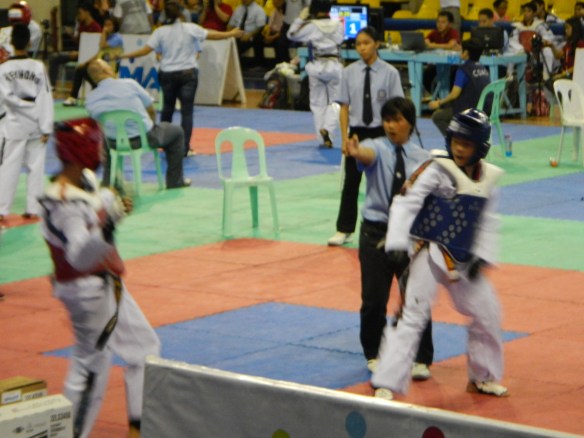
Some first picked up a rattan stick in an Arnis class. Others tied on a karate belt. Many learned Taekwondo in school. Some eventually discovered Brazilian Jiu-Jitsu, Muay Thai, boxing, or mixed martial arts. While the techniques differ, they all became part of the rich tapestry of Philippine martial arts culture.
The story of martial arts in the Philippines is not simply one of native traditions competing with foreign systems. It is the story of adaptation, exchange, institution-building, and the people who devoted their lives to teaching discipline as much as combat.
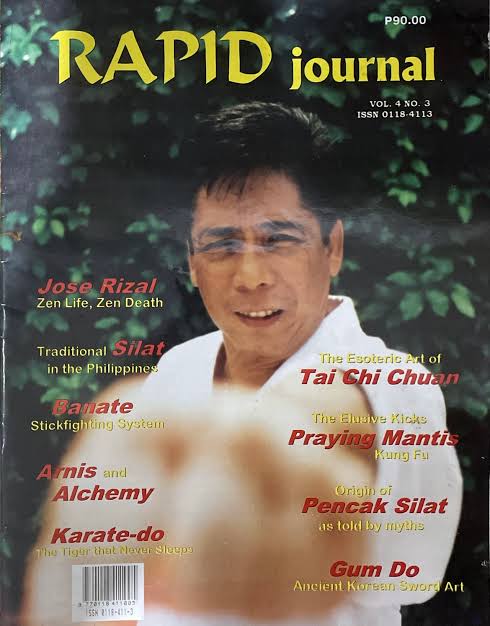
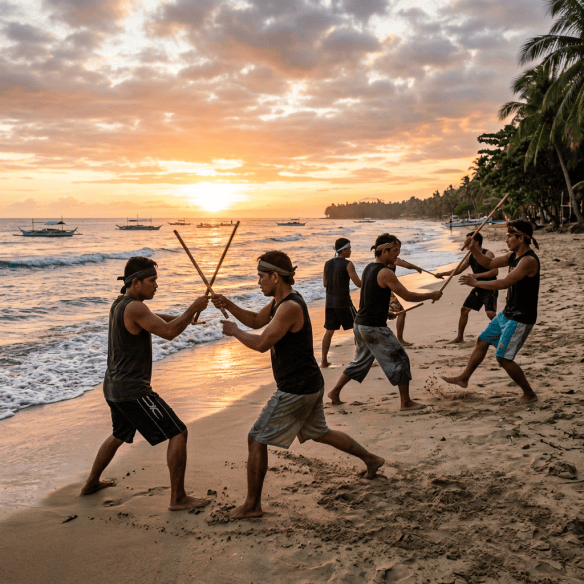
Long before modern sports federations existed, the archipelago already possessed sophisticated fighting systems collectively known as Arnis, Eskrima, or Kali. Forged through centuries of warfare, community defense, and practical necessity, Filipino Martial Arts emphasized weapons, mobility, improvisation, and efficiency. They evolved continuously, absorbing lessons from experience rather than rigid doctrine.
Even during periods when colonial authorities discouraged indigenous combat training, practitioners found ways to preserve their knowledge through cultural traditions and family lineages. Survival itself became part of the art.
In the twentieth century, another chapter unfolded. Japanese karate, Korean Taekwondo, Chinese Kung Fu, Western boxing, wrestling, and later Brazilian Jiu-Jitsu found enthusiastic Filipino practitioners. These were not replacements for Filipino traditions but additions that enriched an already diverse martial culture.
Filipinos embraced these arts because they recognized familiar values: discipline, respect, perseverance, humility, and continuous self-improvement.
Yet martial arts do not flourish on enthusiasm alone. They require institutions.
Behind every national champion are coaches who volunteer their weekends, instructors who teach after work, parents who sacrifice for equipment and travel, tournament organizers who keep competitions running, and administrators who build organizations capable of sustaining future generations.
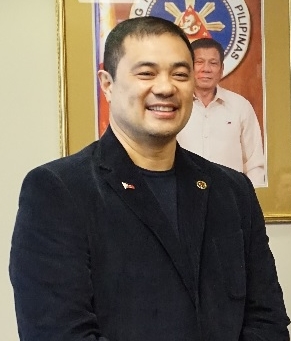
Few people illustrate this better than Manuel “Pocholo” Veguillas.
As one of the pioneers of organized karate in the Philippines and a driving force behind the Association for the Advancement of Karatedo (AAK), Veguillas understood that producing champions required more than talented athletes. It required qualified instructors, standardized competition, sound governance, and a shared vision.
Following karate’s inclusion in the 1987 Southeast Asian Games, he helped establish the Philippine Karatedo Federation, providing an institutional framework that enabled Filipino karatekas to compete successfully on the regional and international stage.
His leadership was not without controversy, and later disputes within the federation became part of his story. Yet institution-builders are rarely remembered because they were perfect. They are remembered because they left structures that continued to serve others long after they stepped aside.
His legacy survives in the dojos he helped inspire, the instructors he mentored, the tournaments that continue in his memory, and the generations of karatekas who may never realize whose work made their opportunities possible.
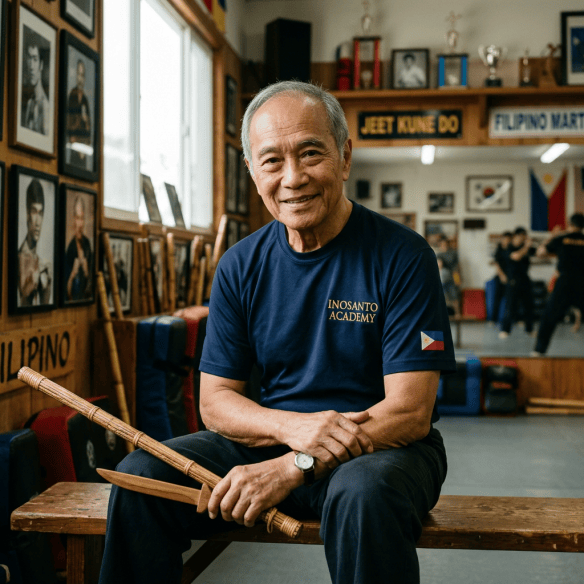
The same can be said of Filipino Martial Arts pioneers such as Remy Presas, Leo Gaje, Cacoy Cañete, Edgar Sulite, Dan Inosanto, and countless lesser-known masters who carried Philippine fighting traditions to the world while preserving their practical character.
Together, these pioneers demonstrated that martial arts are not static relics. They are living traditions.
The famous “dojo wars” of the 1980s and early 1990s reflected this reality. Karate schools competed with Taekwondo schools. Stylists debated which art was superior. Challenge matches and later the rise of mixed martial arts exposed the strengths and limitations of every system.
Rather than proving one style superior, those experiences taught a more enduring lesson: no single discipline possesses every answer.
Modern elite fighters now combine striking, grappling, wrestling, submissions, and conditioning into integrated systems. Ironically, this philosophy resembles what Filipino Martial Arts had emphasized for centuries: adaptability over rigidity.
The greatest lesson from martial arts history is therefore not about which style wins. It is about the willingness to keep learning.
That lesson extends well beyond the dojo.
Organizations stagnate when they refuse to evolve. Nations weaken when they mistake tradition for permanence. Progress belongs to those who preserve what is valuable while remaining open to improvement.
The Philippines offers a remarkable example of this balance. It has preserved one of the world’s oldest indigenous martial traditions while embracing disciplines from Japan, Korea, China, Brazil, Thailand, Europe, and elsewhere. Rather than diminishing Filipino identity, this openness has strengthened it.
Our martial arts community demonstrates that confidence in one’s heritage does not require rejecting ideas from abroad. It requires understanding one’s roots while remaining willing to learn from others.
In the end, medals tarnish. Tournament records are eventually broken. Even champions are replaced by younger generations.
What endures are the institutions that train character, the teachers who pass on knowledge, and the traditions that continue to evolve without losing their identity.
That is the true legacy of Filipino martial arts—and of the men and women, from Arnis masters to karate pioneers like Manuel “Pocholo” Veguillas, who devoted their lives not merely to producing better fighters, but to building better people.


I was once given a voucher for muay thai, dati kasi akong frontline worker and we become a punching bag of aggressive clients. some of my friends studied self defense and martial arts just so they can save themselves from lighting fast unpredictable druggos and drunks hell bent to beat up front liners, security guards are few and in between and not always available when needed. had my front shirt grabbed once and I duly hit back, and hit the offender on the head with a folder. though my training told me to hit the offender on the throat! but no, frontline workers dont mean to maim anyone.
anyhow, in full contact combat sports like muay thai, women are traditionally considered such evils and lowest of the low that they have to crawl at the bottom of the rope to get to the ring! whereas male fighters can rightfully step over the rope like the masters that they are.
I dont know if crawling under the rope on their belly makes women better fighter, though I know that some women are resentful of the practice.
Thanks for sharing. Must be tough
it doesnot always end up in violence. there are times when I dont need to use self defense training. I’m ashamed to say that sometimes, I treat inebriated grown men as children, and yell at them to behave and sit down! if you behave, I’ll give you a candy. it’s surprising how many men obeyed, and they got candy as promised.
Back in high school which would be late 60s, I got to witness an actual even where martial arts prevented physical violence. I was a sophomore at the time and one of the juniors got challenged to a fight by one of the school bullies. I was familiar with the fellow who was challenged…nice soft spoken guy, small in stature and skinny like me. I believe he was a runner too, like myself back then which is probably why I knew him.
I think the fight was going to happen during the school lunch break. News spread like wild fire (sorry for the cliché) and people gathered at an open space beside the cafeteria. So the two face each other, then my kilala went into this karate stance which was to crouch low with two hands up, open palms. Within seconds the bully backed off. I don’t recall any words exchanged, or even excuses given by the bully. He just backed up and walked away.
Of course we all thought that was way cool! Kinda anti-climactic though.
these days, problematic students in philippines carry guns to school and massacre their schoolmates. may mental problems kuno ang mga ito, yeah right. students just cannot accept their low grades gotten at exams and take their frustration at anyone and then offed themselves like the recent grade 9 shooter in cotabato high whose father is a deped official. these students have too much amor propio and left unsupervised, spent too much time on tictoc and instagram, clicking likes and following influencers, surfing the darkweb and endlessly checking their phone, but not having enough time to study their lessons! gimme a break. students spend too much time on fakery and social media, and not enough time spent in engaging the real world. and when the real world dont give them a pass, they lose their mojo and go on rampage.
I know this Filipino kid who lives in San Francisco. He had it tough because although he came over with his mom and dad when he was very young, their visa expired and they became TNT. So he spent his formative years in SF schools as a TNT, always watching his back. His parents both had to work hard at low paying jobs so I guess parenting was not exactly as good as it could be. To complicate things, he had cousins in San Francisco who were legal immigrants and a very wealthy family.
He didn’t do well as a young adult, but managed to stay out of trouble with the law. His first marriage failed, I would say not because of him but because of his wife…she was weird.
His passion, however, was martial arts. Long story short, he married a Caucasian lady who somehow straightened him up. Together, they opened a martial arts school in SF and as best I know, it is doing well. I visited it once a couple of years ago. I think that aside from love, his wife brought discipline to his life.
This topic sprouts rather nicely from prior discussions on building character. My conclusion is that it is best attained by the individual slicing and dicing all the guidance he or she gets from parents, schools, church, clubs, military service, work, and elsewhere. Martial arts start with the individual. There may be rituals and routines, but it is not a team sport. It is an individual’s exercise of character . . . and skill at mashing someone else, lol.
Lol exactly
ahem, there is an extreme sports open only to top public servants, sitting senators and politicians. it is called stollen, I think, I got the spelling wrong. sitting senators currently held the gold standard, marcoleta, jinggoy, bong revilla, and two congressmen, zaldy co and himbo romualdez. stollen involve extreme dexterity of both mind and body, sticky fingers, and uber ability to dodge both inquiries via houdini-like disappearances, also dodging justice via sickness only when disappearance doesnt work.
Magicians all. Or snake oil salesmen.