Praise the Philippines for a change
Analysis and Opinion
By Joe America
The world is a mess. The Philippines is not. I know you will object because you spend most of your time complaining. My advice is, push reset.
If you don’t stick up for the Philippines, who will?
The Philippines has character, great people, beautiful lands and seas, a sound economy anchored by competent businesses and brave OFWs, and a stable government that keeps us free and safe. Do you really want to be like Singapore, confined and disciplined? Or like an American suburb, clean and neat and boring as hell? And about to become a third world suburb?
My advice is just be yourself and appreciate it more. Stop griping every time you grab your keyboard. Praise your place on earth, your enjoyments, your good people, your fun places and fine food. Praise your struggles and the riches you find whenever you go out. No one is shooting at you. No one is demanding you obey them. It’s an adventure. Life is not empty. If the long suffering souls want actors in government, get involved like the pinks did and get louder next time. You have the freedom to change things, and ingenuity is a skill. If you don’t have it, strap on your resilience and praise the Philippines. You’ll feel better.
Stop being the dog and kicking the dog.
It’s psychologically unhealthy.
Stop moping in your beer, high-five the bartender, and get out of the bar.
Go to a cockfight and be thankful you are not a chicken.
The Philippines has spent a century and a quarter fighting ghosts and feeling sorry for itself. Stop it. You’re better than that.
You don’t need to be like anybody else. You need to be you, and like being you.
Once you have that in your head, you’ll walk straighter and talk better. More positive. You’ll have pride. Pride is satisfaction with achievements, through others, and through yourself. So go achieve something and praise your fellow builders.
Frankly, whining is not a good look.
Stop it. Leave it to the self-sorry.
Enjoy the Philippines for all it’s worth. Because it truly is a wonderful place, and its yours, all yours, right now.
________________________
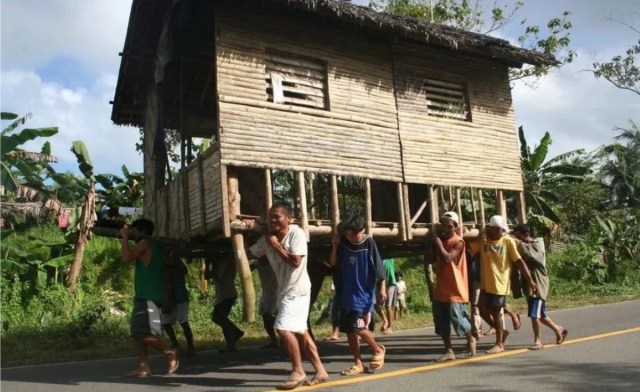
Cover photo from MakeYourAsia.com article “A Glimpse of the Filipino Culture“.


 The Society of Honor by Joe America
Thanks, JoeAm! May we, with our good Lord’s help, elect soon a better Congress! — G. H. Abad
Sent from Yahoo Mail for iPhone
That would be wonderful, but it’s looking grim for 2025. That’s why my focus is on 2028 as a breakout theme.
I like grim, election 2025 should be one big fiesta with all the trimmings both gaudy and tasteless and sometime, there is panache. complete with killings (good lord! here we go again) a fave pastime of filipinos during election. gun ban, alcohol ban, but AKAP is not banned, so money will flow and when money flows, there is killing. nobody wants to die but people do have habit of breathing their last, too much excitement. and election is not helping.
already governor gwen garcia of cebu has thrown her support for senatorial aspirant tito sotto, her one cebu party boasts 1.5million strong voters. not if darryl yap can help it though. already the pepsi paloma trailer is out which is apparently is not very flattering to tito sotto. gwen’s 1.5million voters vs the far reaches of darryl yap’s movie nationwide. sparks greater than the northern lights will light up the night sky!
yeah, election 2025 promises to be grim, so utterly boring.
Thanks for this positive post Joeam. I think we need more reminders of this. Election is coming, I pray that the people would elect the deserving ones who could help the Philippines rise up again.
Thanks Arlene. I’m thinking 2025 looks like a disaster for the Senate. But setting all that aside, I think the Philippines is a wonderful place to live. Sure there are things to work on, but for richness of life, I think few countries can match it.
Go to a cockfight and be thankful you are not a chicken.
Love this.
I once went to a bull fight in Portugal, and of course to rodeos in the US. Cockfights at first bothered me, but now I see them as a part of what makes fiestas and local life authentic and “earthy”. My brother-in-law raises them, rather third class birds I think, but puts in a lot of time training them to be aggressive.
One of my first financial mistakes was buying a fighting cock at age twelve. It died with in a week because I failed to care of it. I have no idea why I bought a fighting cock, I was not into cock fighting.
Oh my. I laughed but I know I should not have. I rode a steer at about that age. My dad had bought two young ones to fatten up for the freezer. He lifted me up and put me on one steer’s back. Two sharp jolts later I was on my back on the ground. My brother died laughing. Dad had a big grin. Then he lifted my brother onto the other steer. It was my turn to laugh.
Fun memories.
PS
Next time I will read the thesaurus for synonyms for words with multiple meanings hehe sorry for not using a thesaurus.
As one of the negatrons in the previous blogs, Positive reinforcement is so relieving and relaxing but do not go nowhere by resorting to flattery.
one must not resort to bola bola in short. That is not a relaxing exercise if you over do it.
The Philippines is still a young democrcacy, don’t worry it would take a millenia or two to emulate the earliest democracies like Greece.
People adapt to realities fast. The advantage of humans as a species is flexibility. Icelanders speak almost the same language as their settler ancestors but don’t have slaves anymore, don’t organize themselves in clans that meet every year in midsummer to decide matters, don’t believe (different from Marty in Back to the Future 3) that fistfights are for slaves, fight to the death is what real free men just like the old Vikings. Digong Duterte might say bayot na sila, puro kasi human rights human rights. Modern people roll differently, Swedes don’t act like Ragnar Lothbrok from Netflix Vikings anymore, but as pablonasid noted, their military reserve officers have arsenals that I say would make the characters of the Incognito teleserye jealous. It is important to deal with stuff mission by mission, to quote Trillanes based on his interview with Will Villanueva. Whether in reality or in drama. If in Incognito it is Isla Rosa first, forget Isla Asul, that is the Escalera clan fortress, Joe said aim for 2028, 2025 is almost done.
No bolahan pero opkors lahat tayo dito guwapo at magaling. Mataba nga lang sa real life unless miracles have happened and you are cycling as much as Gary V, who is older than us two but still manages to perform on stage with the two biggest PPop groups. I definitely am not at his level of fitness, but that is my fault as I could have eaten less Bavarian pork roast, I still eat too much meat, uric acid too high as per last checkup. So be real but not GRP style. Don’t put ourselves down, but be realistic, and if we want to change it, that only happens gradually.
As for millenia, they are not needed if one applies lessons OTHERS already learned to oneself. The question is how to apply them, how to make stuff that works elsewhere work in one’s own place. That really depends on many factors, but the not invented here excuse is an excuse. Krupp steel was not exactly a steal, but it was technology transfer. Queen Elizabeth was the daughter of a despotic father but told the Spanish, „I too can command the wind“ – in the movie. An Armada they thought was invincible landed in the English Channel, centuries ago.
Thanks for the insights.
Welcome. Maybe to add some lessons learned from Joey, let us not be OA. Better be corny or, as Joey said, apply dry sarcasm.
And even if we are pogi, let us not think we are the MC. Not even kontrabida. But maybe we can be MVPs in our own way, I mean in basketball terms, not the oligarch, even if we aren’t called such, at least dito sa blog atbp may silbi tayong mga “tambay”.
We have learned a lot from Joey, the short time he’s been here.
Let us be both OA and corny and call him Coach Joey.
As if we were a sports team or pop idols.
Let’s do that.
That’s true. No need to stop criticizing that which needs to be criticized. But, gosh, recognize what a great place it is. And is becoming.
Or as Joey said, even weaknesses can be turned into strengths. The late former Communist turned Evangelical (!) Mila Aguilar with whom I conversed a lot on Twitter said that the Philippines never having had Kingdoms was an advantage just as it never was truly patriarchal, and Ninotchka Rosca sometimes wrote that Filipino ungovernability is a great thing. Now that of course is exaggerated but them babaylanes or wise women have a point somehow.
Indeed, the strength of the Filipino are his or her communities and the personal bonds within them. All that just needs to be modernized to react to stronger storms, a modern standard of living to maintain – and the need of these thousands of barangays to deal with outside invaders. The different islands – also of thinking and belief – over there need to learn to talk to one another better. Not be like the Tagalog fish vendor who thought the Bikolano newcomer was mocking his fish because the word for fish in Bikol is sirâ, as a vintage 1950s joke goes.
Maybe he was into judo or aikido.
He definitely does not need sayonatchi.
And as he is 6 foot 4, we are dwarves but not even seven over here.
Correction: 6’4” is Joe. I’m about 6’2.5” but commonly round down to 6’2” as an American driver’s license doesn’t permit fractions (sorry ladies). In any case I’m a giant in the Philippines. I have at a time been a practitioner of various schools of martial arts, starting at age 5 when my dad decided to send a pasaway son to learn a bit of discipline. I’d say my dad was only partially successful.
Did some teach you sayonachi here in PH?
I’m acquainted with the art of the slipper 🤣 My good friend who is of the Tulawie clan of Sulu once convinced me to have a friendly sparring contest when we both visited in Sulu. Many members of the Tan, Tulawie and Estino clans are practitioners of Tausug silat or so I was told.
Sayonachi is simpler- You just give oponent your slippers then you run barefoot.
Sa yo na tsinelas. The slippers are yours.
Thanks Karl for explaining the origin. That makes sense now. I guess once the term was filtered down sayonachi was explained to me as like when a tita is chasing a kawatan with her slipper. 🤣
O yes
That is sayonachi for( or is it by?) women.
Hehehe
I have seen both Filipina and Vietnamese titas smack a fly with a thrown slipper from across the room as if using GPS precision guidance of a missile. It’s a scary sight to see. I would not want to be the bisyoso husband coming home drunk in that situation 🤣
We were talking about sarcasm earlier, my wife happen to see my FB posts and she told me more than once that I was sarcastic. Maybe that was when I started just greeting people on their birthdays. hehe how can you be sarcastic doing that?
Storm readiness is pretty good these days. You can’t make them behave, so a little bit of chaos can be worn as a badge of honor. I’ve got three big ones on my tote board and several minor ones. A modern standard of living is the big one, and attached to that, building opportunity into jobs. Raises and promotions. Good for one’s frame of mind. Barangays can be hospitable or inhospitable, useful or useless, or a bit of both. I’m grateful to the Tanod who walked directly up to my neighbors drunk brother who was firing his gun into the ground and cursing me for some reason. The Tanod put his arm around the guy and walked him home. Courageous that dude.
We have a mangrove (not flying) Dutchman here, pablonasid, who might add his picture. I do get the feeling that for the Dutch, the battle against the sea formed them as a people, their working together to manage water shaped their first democratic institutions, the waterschapen or water boards, and possibly that made them capable of throwing out the Spanish. Stuff like storm readiness can become a source of community strength for Filipinos as well, maybe.
As for chaos, I have a theory that explains why a lot of Filipinos raised in Germany sing badly. There are always neighbors here ready to call the cops when you make noise during certain hours or for most or Sunday. Neighbors in town once stormed me for singing at 2 a.m. BTW.
Well clearly, in addition to being the blog’s Chief Historian you should also carry the title Golden Throat, or Rabblerouser in Chief, I’ll have to ponder that.
Sharing this YouTube video on Filipino food as the Sleeping Beauty of Asia.
Having traveled all over the Philippines and being a foodie, there are memories over a meal everywhere. I recall the first time I had balut in the Philippines, where my host was shocked that I ate it with no complaints while his wife was fetching the penoy. I said, “Tito, you know balut is a common southern Chinese and SEA food?” He did not know. Of course the many “foreign” interactions over centuries were eventually made “Filipino,” just like my friend and former girlfriend who is I guess 1/16 Tagalog can speak Tagalog faster than gays I’ve met in Manila.
There’s the aromatic La Paz batchoy, sumptuous lechon that Cebuanos argue over which city is the best, kalo-kalo of which my favorite is the dukot (burnt rice), empañadas of various kinds. And who can forget the simple longaniza that goes with a morning meal? Pochero for rainy day, eskabache or paelya with the morning’s sea bounty cooking over kahoy collected on the shore while relaxing under the warm sun. Let’s not ignore the ubiquitous lumpia and pandesal as well, or Cebu’s famous pungko-pungko that has spread to Panay and Mindanao.
When I think of fusion, I think “Kapampangan” as I recall it had been said that Kapampangans created the first national cuisine back in the days of the First Republic. I had dog a number of times, so kawawa. Also for some reason, pusa which did not taste good at all. It’s fun to watch tourists jump out of their chairs as their fork reaches to the plate of “jumping salad.” But I could never get used to the taste of kamaru, something about bugs… though I’ll eat tamilok on occasion as long as I pinch my nose. Mechado but made with turtle meat stewed in its own shell wasn’t bad either. Ok I think that was illegal, but so is cockfighting.
So many things like the law are bendable and flexible in the Philippines, as are her people. But as Filipinos sway from left to right like a bamboo in the wind, I’m reminded that often after the typhoon, the strong roots of the bamboo leaves the plant intact. And so, Filipinos who seem to sway towards whatever new thing or new force pushing upon the nation must also remember that yes, the roots are strong, but like a bamboo Filipinos must extend their hearts and minds towards the sky.
Some links on Filipino food:
https://www.esquiremag.ph/long-reads/features/the-fascinating-history-of-kare-kare-a2386-20190802-lfrm2?s=njld05rps2juo62l1e3er0h7g4
https://en.m.wikipedia.org/wiki/Bicol_express (BTW, that dish reminds me of Thai curry in some ways)
I can cook these dishes. To be praised by a Kapampangan tita is like the pinnacle of amateur cooking 😀
Joe wrote this about Philippine cuisine nearly 12 years ago:
That article holds true today except there is no beer in the refrigerator and my wife is into more explorations on her sauces and productions. I mean, spicy shrimp tacos with mango chunks and chopped veggies, gadzooks. I am definitely some kind of royalty in this lifetime.
“like a bamboo Filipinos must extend their hearts and minds towards the sky.” I just remembered a discussion with Edgar Lores ages ago when I wrote that the Philippines needs a revolution of the mind, and Edgar answered that a revolution of the heart and mind is needed.
Even if someone is well educated (mind), without the heart that knowledge would never be applied. But often the heart needs to come first before the mind. Filipinos need a healthy dose of both.
Rizal noted in The Philippines, A century hence, that Spanish rule had tried to make Filipinos a beast of burden, a race without a mind and without a heart. That it took the teleserye Maria Clara at Ibarra for people (including Dr. Xiao who said he cried) to see how cruel the townsfolk (and most especially the soldier’s mistresses) were towards Sisa, a woman distraught and slowly going mad due to losing her children, shows how that damaged culture exists until today. Duterte merely tapped into existing weaknesses of the culture just like Hitler tapped into weaknesses of German culture of his day. Both were symptoms, not the cause of disease.
Of course, Simoun in El Fili was a warning about mind without heart. A lot of the Philippine Far Left is similar to Simoun, with the exception of some authors as good writers need empathy.
I saw some Filipinos on Twitter stating that they used to unthinkingly mock Sisa. BTW, my awakening to the cruelty of Duterte was a report on Clarita Alia of Bankerohan, Davao, who lost four sons to tokhang. Before that, it was easy to be for just killing abstract drug dealers. What shocked me though was some of my high school batchmates and others acting all cold when I shared that on the FB page of my old blog. For Christ’s sake, I thought, many Germans cried when GIs made them look at what had happened in concentration camps but they stay cold. Though I recall that in parts of Martial Law society, it was considered strong to be uncaring. Just like being smart meant taking advantage of opportunities but more in the diskarte sense.
I was well aware of who Duterte was well before the Philippines as a whole fell under his power. When I passed through Davao prior to 2016, there was always a smell of fear and the feeling that the Dutertes ran a local cultish following.
Even in that microcosm of Davao, there was a dismissive attitude towards the original DDS tokhang victims. It amazed me that here, a mayor and the son of a former governor who had influence over the local PNP, talked like a common thug and seemed to revel in cruelty. Then I learned more about the “Singapore of the Philippines” and that it was basically superficially built on foreign investments, Japanese and Chinese. But most Davaoeños seemed to like the fact that Duterte was their mayor.
When he won, knowing what I know of the DE and lower C, I wasn’t the least bit surprised. There is a simmering resentment and rage among the lower socioeconomic classes that most ABs are completely unaware of living in their bubbles in what I refer to as a “country within a country.” The power of Duterte was that he harnessed that resentment and rage for negative reasons, since the emotion is not identifiable even if the pointed question was asked to a DE. There is a nasty mentality that many Filipinos don’t want to admit to, which is that outside of personal relationships others can be seen as expendable. And even when someone close gets killed by tandem, the group would just exorcise themselves of any relationship to the victim and move on. After all if someone got tokhang, they must have deserved it somehow. I’ve been told this by many DEs.
But that same resentment and rage, which comes from a subconscious feeling that one cannot get ahead no matter how hard one tried, so let’s not try at all, can be harnessed for good if DEs are shown that yes, positive outcomes can happen and the government will help make that happen through better jobs and an increased living standard. The general answers to the problems are actually quite simple, and it seems there are many ways to solve such problems. It does require though, political courage and a certain amount of managerial skill to get buy-in from social and religious groups, encourage domestic business tycoons to take a measured risk with government backing, and the attraction of foreign investment to inject capital that would jolt the Philippines back to life.
There is a lot of submerged and unarticulated stuff among Filipinos. The Joeam classic below is about that as well.
My own habits could be like that at times. Just expressing myself freely here has made me less of what I used to be towards perceived higher-ups: sullen and timid at the same time. Changing that has meant a lot in my career of the last ten years.
The above article was by me after I saw the killing by PNP Cpl. Nuezca on video. Author Pat Evangelista in her book “Some deserve killing” noted that was the first time she saw someone actually killed, inspite of her having been on the tokhang beat. Ben and Ben wrote a very angry song due to that. I mention the penultimate chapter of the Fili in the first comment, where Tano who was conscripted into Guardia Civil duty on the Carolines and has returned, ends up killing his grandfather, who had become a rebel. Nearly all the Guardia Civil there are Filipinos.
Some historians I shared that chapter with laughed about it. Sure, the chapter is a bit OA, one can see likely Schiller influence. It is like in a 19th century German hunting novel where the trope is one of the hunters making a deal with the devil to hit their targets, but every now and then the devil decides where the bullet goes, and often it is a brother who is killed. But that Pinoy habit of laughing off even murder is distressing, I know we laugh too little in Germany..
Dr. Xiao has mentioned Nuezca as an example of non foreign oppressors, kudos to him.
The natural reaction in the US upon coming upon a accident or murder victim is horror, disgust, pity, followed by calling the authorities and perhaps covering the victim with a sheet or jacket to give to the victim a semblance of dignity from the darting eyes of passerby. In the Philippines, as I’ve experienced directly, the reaction is to crowd around in spectacle, contaminate the investigation by touching or taking mementos or photos. Onlookers will stand there speculating what happened, if the truck driver was drunk or not, or if the murder victim deserved it or not. If in a rape and murder victim, there might be whispers of how the poor girl “deserved it” as people pull up her shirt or hitch up her panties to look for clues to confirm their theories. I’ve seen it with my own eyes much to my dismay. Often the police investigating aren’t that much better than the gathering crowd, coming up with convenient theories containing biases that makes “solving” the incident all too farcical.
Of course the family of the victim feel immense pain and loss, but can be immediately shunned even by neighbors who distance themselves. Cases are everyone’s business, the talk of the town, often without any regard or empathy. I’ve been told by more than one person, in different cities, that if someone had died prematurely, then obviously they had done something wrong in the eyes of God and deserved it.
Then aside from the issue of unqualified lawmen being allowed to continue abusing their power, there are other problems like CAFGU. A barely organized citizens militia with access to M-16s, with troopers staffed by young local former tambays, receiving a paltry monthly salary (around 4.5k), only provides more opportunities for local leaders to use such groups as an extension of their own power. This is especially a problem in some parts of Mindanao. Heck there was a whole local war going on in Zamboanga del Norte and Zamboanga Sibugay less than 20 years ago, and the Tulawie vs Estino feud then Tan vs Tulawie feud that broke out into basically an all out war between the three clans in Sulu from the late 1980s up until the 2010s. My Tausug friend, the Tulawie, was a child soldier in that war who held a M-16 by the time he was 12. He was so traumatized by the experience that he abandoned his inheritance and lived as a normal person in Cebu working in BPO when he could’ve had helpers and not needed to work, which is where I met him. Well they got all those M-16s because the factions were technically all CAFGU, or had sympathizers with access to CAFGU armories.
It might be unpleasant, and sometimes even elicit pride-driven outrage, to many more educated Filipinos who aspire for the Philippines to have a greater place on the world stage to face the reality that in many parts of the Philippines that are not far removed from modern cities, old habits still die hard. The reality is probably closer to what I had described before, a large portion of the population may have modern trappings and accoutrements but that’s all superficial. The underlying tribalism for most had not dissipated, even if they themselves did not consciously recognize it. Well in order to begin with move forward and solve problems, one must face the hard truths first. The leadership class and ABs really need to try to understand what exists outside of their subdivisions and protective bubbles. Maybe that’s why LP keeps losing, because LP-pilled people exist in an orthodoxy of thought that discards any inconvenient truths rather than figuring out how to persuade others to change and bend towards progress.
It is possible that only Atty Leni, who has been around the entire country and some around her, fully understand what is going on there among the liberals. Kiko Pangilinan based on recent polls may make it to the Magic 12 Senators, he too gets it and that’s also because of his being married to Sharon Cuneta, having Gary V as a brother-in-law and Donnie Pangilinan as nephew. Those in showbiz know a bit more of how the masses are. Now I don’t want to Marites and lived under the anti-rumor mongering law of Marcos Sr., so I won’t repeat mere hearsay and speculations some Pinks here were indulging in, but who knows how strong the “realist” faction around Leni and Kiko is. Maybe Atty Leni not running for President has reasons we don’t know of as we aren’t flies on the wall at liberal meetings. Let’s just blame Bam Aquino. It’s easy. 😀
Some Filipinos have a modern kitchen shown to guests, and the dirty kitchen outside where the real cooking happens. BGC versus many other places in the PH is exactly that.
I have my own barangay tanod appreciation story.
When I face planted because I slipped tanods did quick response and coordinated with village security to assist me.
When I saw them again , I said thank you so much.
I like the barangay structure. Many good things they do.
Yes.
For the benefit of readers, I will share this Barangay article of mine
https://joeam.com/2016/05/26/community-based-progress-the-barangay-rules/
I realized that my colab with Irineo started pre-Duterte.
https://web.archive.org/web/20190129163400/http://filipinogerman.blogsport.eu/serving-the-community-and-the-environment/
https://web.archive.org/web/20190129163340/http://filipinogerman.blogsport.eu/more-on-community-police-doctors-schools/
The last link
https://web.archive.org/web/20190129163032/http://filipinogerman.blogsport.eu/initial-wish-list/
Thanks to Internet Archive, it was preserved.
Thanks. Good place to put it.
Welcome.
Rabble rouser indeed, Irineo is.
Calvin and Hobbes, I mean Rousseau and Hobbes pondered on the goodness and evil of man.
Here is a piece by Irineo on Developing the Philippines
https://web.archive.org/web/20190129094710/http://filipinogerman.blogsport.eu/developing-its-people/
Now his piece about the 2019 Senatoriables
https://web.archive.org/web/20190129095219/http://filipinogerman.blogsport.eu/peoples-champions/
The blog started when LCPL_X and I got banned for a month by Joe. I did get an offer by benign0 to join GRP but ignored it. Since there was this free blog hosting website based in Berlin, I went to explore topics on my own.
Let’s say I am still a troublemaker at heart. I also started Tweeting around 2015. There was more steam to let out back then, enough to run a locomotive or blow up at times.
Oh yes, and I sympathized with Duterte for much of 2015. That’s another story.
Sonny did inspire me to put my energy to good use by writing a summary history of the Philippines. I also translated Sun Tzu into Tagalog but from English, so there might have been two times lost in translation.
As Sonny wrote, my old blog (with over 200 articles) had sequiturs, non sequiturs, and new sequiturs. But it was also a place where Edgar helped me sort out topics with more structure.
I shut down my blog after the 2019 Philippine midterms. We wrote Going Home here in 2020.
As you noticed, the National Village article here kind of summarizes most of the old blog.
As they say, it takes longer to write shorter. This article, published on March 16, 2021, took over two months to write and especially compress as it could have been 30+ pages.
Ten years ago, Mamasapano happened. The noise of the National Village that I describe below led me to this blog. Actually I caught GRP first but somehow being there led to HERE.
WHAT I NOTICED was the big picture the articles of this blog had, different from the he said she said stuff in many Filipino socmed posts, blogs and newspaper articles. Something told me to check this place out, even as its POV seemed unusual to me. Well..
Philstar columnists Andrew Masigan has his own rants.
I was reminded of my direct democracy articles.
https://www.philstar.com/opinion/2025/01/22/2415965/political-system-doomed-fail
This one again is about dynasties and their budget.
https://www.philstar.com/opinion/2025/01/15/2414213/budget-dynasties-dynasties
Haha, maybe we can reconcile being positive about the Philippines but not so positive about how some people mismanage stuff a bit like the Bavarian saying one can roughly translate as “People are good, but them folks are bad”. 😉 😞
Did Google translate correctly? Die Leute sind gut, aber diese Leute sind schlecht
Die Menschen san guad, aber die Leit san schlecht. (Bavarian original)
In High German: die Menschen sind gut, aber die Leute sind schlecht.
Thanks, for quick Bavarian lesson,. A few days a go, I received a calll asking if I want to be her tagalog tutor. I was paranoid as hell because, I had been scammed before. I apologized for my rudeness and offered to message her some tips but I decided otherwise, because messenger is another avenue for scams. Better be paranoid than sorry.
Hehe, over here, scammers both online and offline often pose as authorities. “Those folks” are indeed good at finding people’s respective weaknesses.
In the Casablanca movie, a friendly pickpocket warns people about thieves.
I got one too. One posing that she is from the traffic bureau and told me that my wife had an accident and she needs assistance and she need s to pay the other party this and that.
I froze even if I am aware that there is budol budol and dugo dugo. I was about to go to the bank when my wife arrived and I got blamed for being gullible or uto-uto.
The accident modus already happened in the 1970s with people posing as phone line repairmen hijacking the lines and skilled scammers even faking the voices of spouses. I guess that is why you often have fake phone company repairmen do that in teleseryes even if today it wouldn’t work anymore. One would need an „IMSI catcher“ to hack into the cellphone network and simulate an actual „cell.“ I read and heard about this in theory, Joey could confirm. What is called modus today BTW was 1-2-3 in the 1970s.
Na 123, Na Duterte, Nabudol….
There really isn’t much hostility here. The anti-pinoy blogs, of which GRP is prominent, make their money by being hostile. It is a form neediness, now common worldwide. Here the main thrust is understanding, not blaming. Okay, well, some blaming but usually in the interest of building something honest and honorable and productive. You are a natural fit here.
I think the important thing especially in the Filipino context is to avoid 1) the nitpicking negativity and 2) the extreme individualism and factionalism that have plagued the Philippines for as you said a century and a quarter.
Taking oneself back isn’t always easy, and recently, LCPL_X has shown way too little restraint. The Philippines can emerge as a great place soon, but it will go through huge trials in the coming years, and if we want to do our small part we can’t afford “side quests” as gamers say.
From my understanding, what you’ve identified as the extreme individualism and factionalism probably existed as part of the proto-Austronesian society. These cultural traits also existed for the Taiwanese aborigines (who are the closest to the root of Austronesian migration out-paths) until fairly recently, and was one of the major reasons for the downfall of Champa. At some point extreme individualism probably was a plus for selecting chieftains, as the most outsized personality would likely gain support from his community.
I’ve also noticed that in other Austronesian groups, like Taiwanese aborigines and Indo-Malays, there is a moderating force against extreme individualism that does not help the community. This seems to come in the form of public or community shaming, and in the old days perhaps if a would-be leader didn’t bend to that pressure people would start leaving to live under a more suitable leader. I also noticed similar traits in the Malagasy of Madagascar and have heard tales from Polynesian elders recounting the same.
The various Filipino ethnic groups and Filipinos as a whole have often been described as a “collectivist” or “communitarian” culture, and indeed one can see many examples in Filipino daily life of people, friends, coworkers and groups working together. Fear of shame cast by the community moderates the behavior within in-groups, that seems clear. But once a group “grows” to sizes where group moderation is less effective, shaming no longer works. Come to think of it, outside of religious organizations there don’t seem to be any large non-government organizations in the Philippines. Most groups and organizations are quite small, and often fracture upon growing. What works for a small in-group doesn’t necessary work at a larger scale closer to the edges of group influence.
Culture of course is learned. The Chams of the time of Champa’s fall were no longer genetically Austronesian — then and now Chams are mostly genetically Austro-Asiatic — yet the culture was strong enough to transfer over. Chinoys see themselves as fully Filipino by the 2nd generation. One of my ex-girlfriends here in the US who is 1/16 Tagalog yet identifies as a Filipina despite being 1/2 Thai, 1/4 Italian-German, 3/16 Spanish.
If culture is learned, then culture can evolve and adapt to changing times and circumstances. Filipinos will either need to evolve the culture to address how to deal with seeing the larger picture, or adapt ideas from abroad that are not prevalent outside of educated cosmopolitan ABs, or stay stagnant due to an inability to adapt. Adapting “foreign” ideas and giving it a Filipino flavor isn’t a bad thing as some people (even intellectuals) who have a misguided unyielding nationalistic position may think. After all we can look all around in the Philippines and see how pieces of Hokkien Chinese, Tamil Indian, Arabic, Spanish/Mexican, American cuisine, religious practices and culture all were adapted and adopted into the larger sense of what it means to be a Filipino over the centuries. Why reinvent the wheel, when the wheel can just be “made Filipino” like jeepneys that are now so quintessentially Filipino that many have forgotten that the vehicles originally were an indigenous adaptation of surplus WWII jeeps?
The Javanese managed to establish somewhat religiously justified kingship even before Islam, based on Tamil Chola influences and other Malays who are, of course, Austronesians established Sultanates when Islam came. A Sultan is not just a ruler but also has religious functions from the little I know of Islam. Therefore, both Malaysia and Indonesia already had a bit of a state paradigm.
Shaming worked with both Marcos and Erap to some degree but Duterte openly admitted in front of the House “wala talaga akong hiya”, so indeed shaming rituals like People Power or House Committees no longer work.
As for culture, I noted Joe’s wife and her mango tacos, as I was reminded of an Ilocano couple in Germany who went crazy for coriander from an Asian store. Is that because it tastes good to a palate raised on pinakbet? You might know.
Stubbornness towards foreign influence is more due to mythos. The Greeks believed Achilles was invincible and looked like Brad Pitt. Ilokanos might believe that Lam-Ang is superior to Ang Probinsyano. But that kind of pride is pride chicken, aka bullshit that brings no Chicken Joy. One can admire Ang Panday, and indeed, he and Trese are the greatest, but reality is different. Pragmatism rules in real life, and mature cultures know what they can adapt for themselves. Coriander is OK, while many Filipinos adopting high carb carbonara is, of course, unhealthy.
Hope Filipinos know what to adopt and what not, but it is finally their choice.
There were pre-Chola Hindu-Buddhist influenced Austronesian chiefdoms in Maritime SEA before the rise of the Javanese, but AFAIK there weren’t any major kingdoms besides the Sumatran Srivijaya which predated the Majapahit. I’ve been considering the common Filipino understanding that the further away from the Sunda Shelf, the more remote and thus harder to organize a civilization. I think the answer may be much simpler though — Sumatra and Java have wide plains suitable for large scale agriculture, agriculture being a marker of organization due to the now-surplus in a type of good which encourages trade, whereas places like the Philippines archipelago did not. Champa being situated in the Mekong Delta had plenty of agricultural land in the delta plain, and had become an organized collection of quite strong “kadatuan” kingdoms with Hindu, then Buddhist, state religion since before the 200s AD. I think “sultan” in the Austronesian sense was more akin to the Arabic “malik” or king, as sultan assumes that there is nominal acknowledgement of being a local military-religious representative of the caliph, who was of course very far away. Adopting the title of sultan may have just been like adopting the title of rajah before the arrival of Islam; leaders like fancy-sounding titles.
Nowadays the effectiveness of shaming in Filipino society seems have broken somewhat, at least among DE’s. More children are opposing parents, people on the street engage in certain shameless activity without regard for possible reputational harm and so on. Shaming still exists though, in the negative form of moralizing and used as a weapon even by the shameless against perceived enemies — the victims of the drug war were famously shamed by DDS as human trash for example. Certain aspects of Filipino cultural cohesion are changing, unseen by more educated folks, and I’m not sure if I like that darker side so much.
Actually I despise ampalaya. As a child I was forced to eat ampalaya stuffed with ground pork and sotanghon, in a soup similar to tinola. Hated it. No matter how many Filipinos advise me on methods to remove bitterness from ampalaya, or allegedly “less bitter” varietals, I much prefer sayote. I feel the same towards liberal use of suka and toyo that overpowers the natural taste of other ingredients. Mango tacos would be almost like a crime against humanity for a Mexican. Coriander is interesting. Coriander and coriander spice (the seeds) are largely absent in Filipino cuisine, but it is everywhere in mainland SEA cuisines after introduction by Indian traders. Coriander originated in the Mediterranean basin and I guess it was never transmitted early enough to influence Filipino cuisine. Coriander has a subtle undertone of citrus, and is also used to add color — the lack of color is something I often complain about in typical Filipino ulam.
I often think that many Filipinos like the comfort of knowing what comes next. For predictable things Filipinos are often one of the surest peoples I know. The problem arises when unpredictability is introduced, then the Filipino sort of freezes like a deer in headlights. Ok humans are not that great at dealing with totally new things. An example is natural disasters in California, Texas and Florida where usually it takes an unusually bad series of disasters for safety and building codes to be updated, only to not be updated until the next disasters decades into the future are worse. But the earthquake, fire, flood and hurricane (typhoon) preparedness does get better. I guess in the absence of Philippines government guidance and support, the pragmatic thing for a normal DE to do is to just rebuild their house exactly in the same spot, in the same way, only to get blown away again. People don’t have the resources or expertise to make such decisions; that’s the job of governments to provide guidance and support. I don’t think Filipinos would have an issue with adapting if the government adapted first and showed the way.
„People on the street engage in certain shameless activity“ hehe, the first culture „shock“ my brother and me had in Germany (I was 17, he was 11) was seeing couples in school kissing in the school yard during breaktime.
We said to each other, „aso“ or „parang aso,“ I reference to the dogs one sees coupling on Philippine streets. Well, I am sure people don’t couple on the streets there even today, though in the 1970s, women wearing shorts in public already were considered a bit daring over there. And it was in the 1990s when many young Filipinas would be modern enough to say „hindi na ako virgin“ while before it was often pretending virginity because it seemed “required”. Though I don’t want to go back to the prudishness of before, much of it fake, hey I was a bit „jeprox“ and just by being mestizo automatically suspected as oversexed, but I don’t know about today. Possibly, it is a rebellion against the old hypocrisy that has gone out of control.
Well you may be shocked by this, but teens will still figure out a way when they can’t control their hormones. In the Philippines with the watchful eye of mothers and titas at home, a somewhat repressed culture, kids will just do it in alleyways and cemeteries. After a while if I took a shortcut through a cemetery, I stopped being shocked if I stumbled upon something or someone. Amusing though that Filipinos often think of Americans as over-sexed and “liberalized,” when American culture is probably one of the most conservative cultures on the subject of sex hehe. Well let the teen/single parents numbers speak for themselves, I guess.
Re Sultan, the late Spanish colonial period had Spain not just able to send gunboats way up to Sulu, it also had them playing games with different groups within the Sulu royal family as the succession was not clear.
Even now, they have no consensus on who is the legitimate Sultan of Sulu IIRC. Of course, there is the one who had his people land in Sabah, who is close to Robin Padilla.
Yes, food surplus. Many don’t know that the early encomienda system was not just oppressive to the natives. It also never managed to become profitable, like in Latin America. The widespread cultivation of the Central Plain of Luzon (Pampanga, Tarlac, etc.) was later.
The Bikol river only had decentralized irrigation when the Spanish came. No Pharaoh needed.
It is also documented that the datus upstream of Bruneian Manila and Tondo often blocked rice coming down the Pasig River. Robber barons in the traditional sense of the word. Even with all the wealth passing Manila Bay, the area still was far from being any kind of state or kingdom.
The Sultan of Sulu, while respected, doesn’t really have a lot of power. The real power lies in the hands of the family heads of the Tan, Tulawie and Estino families, though it seems at the moment the current sultan is related to the Tans through his mother. People like their titles though. There are places in Mindanao where the local family of prominence is still styled datu or rajah. I recall a town in Zamboanga Sibugay that had a major road named after the old datu’s family who are of Subanen descent. Well that road got renamed when a new family occupied the mayor’s office.
One of my high school classmates was a Maranao datu. It is similar to how every Albay abaca planter with a little more money, like my great-great-grandfather, styled himself Don. I have read somewhere that these local “VIPs” of Bikol also called themselves datu until the 18th century.
The most amusing instances of “datu” are the secret societies that tambay men form. Usually it starts within their drinking circle, calling each other kapatid and kuya. Perhaps after many rounds of drinks, one emerges as the “datu” or “hari” or “rajah.” To me it seems like a very naive version of what those men know about Freemasonry and native “warrior secret societies” that supposedly resisted first Spanish then American rule. I personally know of a few that are Visayan pro-Duterte “warrior” secret societies that border on cultish behavior, and plot to overthrow the Philippines government. Well, those men can’t even earn, so I don’t know how effective they would be in a native revolution.
I once wrote a satire where such a group makes Harry Roque into lechon, making President Duterte curse that his Speaker had been eaten.
Karl, please don’t post the archive link of that article, nakakahiya.
😂🤣😂🏆
I cooked spaghetti alla carbonara romana today as I was reminded by your comment. A priest friend returning from Rome had gifted me a nice hunk of guanciale recently. When I shared the results with my Cebu friends, they were positively disgusted that I mixed the raw egg into the pasta. “Where’s the evaporated milk,” they asked? “Why so little cheese?” and of course, “where’s the canned mushroom sauce?” I started explaining that in other cultures, food isn’t dunked in excessive sauce and besides the ingredients (guanciale and pecorino romano) are quite expensive and need to be used sparingly. The consensus among the friends ended up being that Italians eat disgusting food. I mean, who eats a raw egg? All I have to say about using glue-like canned mushroom sauce rather than making mushroom sauce from scratch is, YUCKS! hehe.
I’ve heard that Filipino-style creamy carbonara started becoming popular in the late 1970s and 1980s, but no one can tell me definitively how the pasta came to the Philippines. Just as carbonara started off supposedly as a dish that enterprising post-WWII Italians made to suit the taste of American soldiers stationed in liberated Italy and who had brought with them GI bacon rations, perhaps American troops eventually brought carbonara to the Philippines when the old US bases still existed there?
Re the collectivist culture of the Philippines, Dr. Xiao Chua mentioned kapatiran as a major value of the Katipunan. Indeed, they called each other kapatid.
INC also call each other kapatid. A good friend from my early migrant days in Germany married an INC, an ex-cop, and he told me a lot about how it was like a family. I also saw that in the only INC service I ever attended as a guest.
High school and college barkadas also sometime form nearly familial bonds, though my father in a 1970s article noted that barkada as people in one barko, one boat, had a similar origin as barangay from balangay. Well, the Maori of NZ call their subgroups “canoes.”
Familial appelations abound in many places like companies or academic cliques. The paradigm of family is extremely important in the Philippines.
Though the Turks also have their Atatürk, father of Turks, aka President Mustafa Kemal. They will also call respected figures abı or older brother. Men will protest at times if one tries to call them omdesh or uncle as it makes them feel old, but they too are a clannish culture.
I don’t fully agree with the video above that has a UP psychologist saying “Western culture is highly individualistic” as that is extremely simplified.
Latin people tend to be quite family-oriented, and the Slavs will usually have more collective roots, as evidenced for instance in the area around Berlin. Originally Slavic villages there are round and Germanic settlements are houses along streets, more on each to his own.
Though in Bavaria, agriculture made a difference as just after Settlement, simple modes of agriculture meant it took an entire village to eke out enough to just survive. More efficient modes from the monasteries, for instance, made individual farms viable by the 9th century. Essentialism i.e. the idea that culture is fixed throughout time is something I totally reject – it adapts to new ways of life and new possibilities, it should not be constrained too much.
Familial bonds, both blood and constructed, can also be a form of control. When groups refer to each other as “kapatid,” especially so-called secret societies or religious groups, I immediately sense the control being exerted. Of course, everyone is family-by-relationship until that person steps out of the boundaries of the enforced behavior. Then they are shunned, or worse, enemies.
The comments under that YT made me chuckle a bit. I had thought the channel was created to share Filipino culture with the young in the diaspora, though there is a heavy Tagalog slant. The comments ended up just being regular Filipinos arguing about who is a Filipino, accusing each other of “regionalism” and tribalism while not understanding their accusation itself is a form of tribalism. Well, it seems the Philippines has a long way to go. Learning to respect, lift up one another, see strength in differences rather than forcing conformity, and learn from one another would be a start.
This screenshot of an FB post by Ninotchka Rosca shows how, at times, nearly anything goes if one isn’t family in the Philippines. In the USA or Germany, one could assume a minimum level of trust in a housing association, for freaks sake that is among neighbors. But then again, even at SK level on hears of officers using funds for official cars they don’t need. Filipino associations abroad also often have malfeasance or allegations thereof – and sometimes no clean sides. But of course, family there can also mean those who earn more and work hard are exploited..
In the US, many of the newer subdivisions built in the 2000s and onward have housing associations. I purchase older homes not only because the lot has more land, but because I don’t want to deal with housing associations. Here many housing association boards are run by bored, power tripping housewives who imagine themselves richer and more important than others. Well, Millennial homeowners are starting to fight back legally to curb those abuses of power. I can’t imagine that pushback happening in Philippine housing associations though. Probably the housewives there want to join the housing association board to get some power themselves…
Actually I knew of a few people who were SK’s back then. Some did use official funds for personal use, even up to buying “official cars” for personal use. Well that’s easy enough to do when voters usually blindly “vote for the team” rather than for what benefits the voter. The trick is for officials to keep the level of malfeasance at a simmer rather than a rapid boil, and no one would be the wiser as they hand out bags of relief goods. The people end up thinking “my official is taking care of me” and continue voting for their team.
Among DE’s, especially out in the bukid parts of provinces, it’s not uncommon for a small handful of family members (usually young women) who are forced to work while the rest of the family has one excuse after another for not working. I had questioned a few idle people there before, for example that perhaps they have a reason for not working, but why not plant some vegetables or simple greens, maybe raise a chicken or pig to supplement the income? They usually look at me like I’m a crazy person for even thinking so reasonably. “Our daughter/ate/cousin doesn’t want us to work because she is loves to spoil us.” Judging from OFWs I spoke with before, I don’t think that was the case. Some OFWs can start off working abroad to support their families out of love, then quickly feel trapped until they enter their 40s with no prospects of a partner or children. It’s hard to know what even family members are saying is true or not. Did lola really go to the hospital? Did the nephew really need that much money for projects? That request for negosyo puhunan seems reasonable, but no one is there to check… Then unsolicited “proof” in the form of pictures and supposed evidence is used for additional pressure. It’s really sad that even after all the hard work of these loving and empathetic OFWs, their families are still living in poverty. Just like the government needing to be responsible to the people, people also need to be responsible to themselves.
The tragedy of the commons is at a very basic level in the Philippines. For sure, housing associations, especially in apartment blocks here in Germany, are not easy as there are conflicting interests. Same with district councils or party locales, which play a role in deciding what sidewalks to fix and all local stuff. I have never been at a district meeting of citizens even as I have always been curious about how that plays out here, including the open forum with city hall, the police and the district council members. Let’s say they all can be contentious.
I recall reading that the Agta in Bikol had a simple solution to prevent freeloading – able bodied men who did not join the hunt did not get a share of the kill. It is very simple at that level.
Societies closer to hunter-gatherers are more egalitarian, not by design but by necessity. When one member not pulling their full weight exists, they jeopardize the entire social unit. Settlement into sedentary society created surplus, which in turn created strong men who monopolized a portion of the surplus and later became rulers. There is often a romanticized version of the Philippines that even exploited family members can fiercely defend even as they are effectively slaves to their own family. I’ve seen many sad instances of this irrationality. Recently I advised a Filipina who is a BS CompSci grad, but was forced to care for the lola. Despite the lola wishing her granddaughter to be able to go out to work and find a partner, the tita commanded otherwise. That tita (about ~50) hasn’t worked for 20+ years, as her daughter is the provider of the entire clan. The tita likens herself as the queen of the family. Now the lola is insistent the Filipina can find a job, but with nearly 10 years since graduation she has lost both time, opportunity to gain experience, and confidence. When some can sacrifice the next generation for their own personal comfort, it makes it hard for people in the bukid to escape poverty.
Those are important guidelines that would be good values if people built them into their lives. I doubt that it will change though. The emphasis on resilience and what is here now drives things, not concepts or the future. And tribalism is a way of life. I wonder, though, if it doesn’t have its own peculiar checks and balances as too much power gets pushback, as we see with the Dutertes.
I also wonder if DEs are less negative than BCs, and we of the elite intellectual brigade are a part of the problem. We talk but leave it to others to do the hard work of doing things. But others have a reality we don’t share. And it is full of personality conflicts, envy, jealousy, and anger.
My fall back position is becoming complacent about how things are, to avoid the negativity, but still striving to influence togetherness, a future mindset, and building things.
DEs are a lot less negative than ABs and some Cs. I think it is true that the intellectual elites can talk too much and not have enough action — while a DE will smile and give deference, they are surely thinking in their minds “what fools.” There seems to be a penchant among the intellectuals who yearn for change to go for big moving actions. But that’s like trying to jump 2-3 steps up a ladder each time. Sometimes it works, and one feels good for making a leap and the rush of excitement for beating the odds, yet there is always the danger of losing one’s footing and being discouraged after falling all the way down to the bottom, having ti start all over again. Though informed by history, even ancient history, if one takes the totality of Philippines history from the Revolution until now it is almost like leaders keep trying to jump multiple steps up a ladder, falling down, then the next leaders saying “THAT guy fell because he’s an idiot, but NOT ME.” Why not take it a step at the time? The eventual goal (getting higher) ends up being the same even if each step is smaller individually. Slowly and surely always works.
I have watched too many teleseryes and read too many news about Real estate projects relocating former settlers to relocation sites with not enough electricity, water, not enough everything.
Same with big infra projects.
After declaring a victory for managing right of way issues that the government relocated affected people to a picturesque place, problem is they are too many.
Schools that absorb them get overwhelmed, hospitals, the list goes on.
https://newsinfo.inquirer.net/680136/resettlement-site-woes-homes-have-same-keys-rice-stolen-while-still-boiling
https://climatetracker.asia/how-socialized-housing-fails-to-address-poverty-and-climate-change/
““Sometimes, I only feed my children,” she shared in Filipino. “They ask me, ‘Have you eaten, Ma?’ and I tell them, ‘Yes, I already ate.’ But I don’t tell them that I haven’t eaten.””
When I tell DEs that I’ve experienced the same, and that at a young age I realized the white lie my mother told when she said exactly this, DEs start to open up and see me as one of them and not some rich foreigner or urban outsider that doesn’t understand their daily lives. I too, have eaten plain rice seasoned with salt or vegetable oil, patis and sugar on many an occasion as a child like the poorest Filipino children still face today. I have a lot of sympathy for the urban and rural poor. Been there done that.
For those who have some semblance of a comfortable life without many worries, anything that breaks that comfort can be seen as a threat. And so society tolerates pushing out the unseen homeless or informal settlers who inhabit the riverbanks or vacant lots. Out of sight, out of mind or so it is said. Is it legal for those people to squat unused public or private land? Sure, the legality is clear. But consider those people are just trying to build a bit of permanence despite the difficult lives they have daily.
The government exists to ensure the public good at the level of government whether national, subnational or local, not for the good of the few, and certainly not for the sliver at the very tippy top. It’s arguable if any government is perfect, and indeed none are. The difference is if the government is trying at all. In the Philippines clearly land reform needs to be relooked at, and solutions need to be created for the urban poor. The massive opportunity of creating new consolidated communities around manufacturing that’s moving out of China is available, but not for long.
My old dad has a property with only an award document or rights but not yet a TCT, shared with another two former pillars in the Navy and Caostguard. Now it is occupied by settlers, how will we fight this? Two of the said officers are now gone and my dad is the last man standing. This is a problem of even for former Chief of staffs of the Armed forces, and now we wait. So many urban land reform proposals already. It is easy to say that the congress is populated with land owners, dynasts, mining interests, that is why the party list was invented here to have the marginalized have their voice, but the party list became party lines that old term for some one tapping to your phone line making it increase your phonebills even if you can’t use the phone.
Yes, indeed that is a problem as if the squatters aren’t noticed long enough now they have some rights as well. I have a friend in Sultan Kudarat nearby Tacurong whose family are all daughters, and armed squatters have moved in on their “ancestral” land. They are Ilonggo, but had settled in Mindanao during the late Spanish period and have proper titles.
Not all squatters are armed like that though; they’re just people who need a place to live and can’t afford to rent. In my ex-girlfriend’s old barangay of Bankal, right beside Mactan airport where the house shakes every time a plane passes by. The barangay aside from proper homes and business along the roads is populated from reverse-migrant squatters from Mindanao (families who had colonized Mindanao under Marcos Sr. but came to Cebu for work). Ironically many of these squatters have titled land in Mindanao and are fiercely defensive of their titles, while they squat on others’ land in Cebu. Well their reasoning is someone “rich” owns the land and its vacant, therefore they will settle. Now that land is being developed into subdivisions and small malls, so the landowner worked out an agreement where each family would be paid 50K to move. My ex’s family didn’t move and their mother is left there to “hold” the land, even though my ex bought a condo in Cordova’s new developments 😅 surely the courts should be moving more quickly on this issue. The barangay captain and tanod are sympathetic to the settlers as of course, settlers can vote too if they reside in the barangay or city. This is why I think there needs to be a comprehensive government effort to resolve the issue of land titles that respects the title holder but also those who have lived on the land for a while and have some roots. The easiest way I can think of is to attract manufacturing and build new towns around factories with decent quality homes, shops, and a salary that can support living there. If people are given better choices, I think most would choose that better choice as it benefits them.
Part of me wants to say that that’s what being done here and everywhere.
Sure there is still gentrification literally creating a facade.
Here is a head scratcher quote from the PBBM about semiconductors that they were really not his priority but circumstances called for its expansion.
“Actually, we really need to push on the semiconductor industry. It’s because, again, it’s not something that we had in mind but the situation — considering how much money we make as the income we get from exports already,” he was quoted in a statement as saying during the meeting.
And as I mentioned here there is anew steel plant to give life to the steel industry.
Modern jeeps from Francisco motors and Sarao, ships that are philippine made. SDRP military materiel.
Small steps that got road blocked somehow.
I wonder if Marcos Jr. understands that even participating in semiconductor packaging requires a large effort. It’s not something that can just willed into existence. Both Indonesia and Malaysia had concerted government policies to first attract, then maintain and constantly upgrade the semiconductor packaging industries there which are quite large. I believe that the level of monetary investment that needs to come from the Philippines government would be quite small. Mostly what corporations are looking for is less red tape for building/expansion efforts, access to lower cost of labor, and stable government policy that permits decades-long operations that can be re-invested in. Of course the Philippines cannot expect $120,000 USD non-college degree salaries like in the new US semiconductor factories, but I dare say that even a 20-30K/month salary would attract a lot of workers, and prevent quite a few from going to overseas to Japan and South Korea for factory work. The more workers kept at home and productive, the more the benefits of investments flow back into the local economy as workers now don’t need to spend money on boarding houses, food and basic necessities while working abroad when they can just live together with their family and share costs.
On SDRP, I’ll believe it when I see it as the plan looks like just another policy paper-type effort. With the current war in Ukraine and the looming PRC and Russian threat, there is an immense need to recapitalize military stockpiles with NATO-standard munitions for example. While locally manufacturing M-16s/M-4 carbines and tube artillery pieces might be a stretch at the moment, I don’t see why the Philippines can’t get into the business of creating government-owned national arsenal factories and manufacturing, let’s say 5.56mm, 155mm ammo.
This is in line with your baby steps.
https://arta.gov.ph/about/the-eodb-law/
Ease of doing Business Law.
“DEs are a lot less negative” makes sense as they see no gap between what is and what can be. It is those of us with future on our minds, and an understanding of opportunity lost, that get frustrated. Small steps work, I agree.
At some point I hope there is a collective throwing up of hands and shouting “enough” at the countless and very detailed reports and policy papers coming out of Philippine government agencies. Their job is to run a government to improve people’s lives and by extension improve the Philippines, not come up with numerous proposals that almost never get implemented. I’ve read more than a few of those policy proposals and I must admit, the papers are usually quite good. But if even the first steps of action are lacking, the paper ended up being more than useless. I suppose having those papers written is the safer bet, because politicians can claim they are doing something, while also not taking action when the paper is complete because “it’s too hard.”
PIDs is the official think tank of the government.
Senate has SEPO
HOR has CPBRD
Academia has own think tanks
In my previous life as a consultant and researcher assistant to my dad I use all of then
Of course there still DTI proposals
DND proposals and so on.
implementing Rules and Regulations of every legislation is done by the line agencies.
How ever presidential appointees and new comers are the face of the agency after every election . They will always be a fish out of water with or without credentials The career officers and oldtimers can only sit down and watch.
Yes, the policy papers I have read before, and the ones you had shared previously as actually very well researched and written. The problem then is with the political appointees heading each office or department. The Philippines still retains many elements of a political spoils system for postings which the US got rid of right around the time after the the start of the Insular period. Well, nowadays with Trump the political spoils system is coming back, as there is no actual law preventing a US President from appointing whoever he wants, just like AFAIK the same applies for appointees in the Philippines. I guess unless a serious President is in office with a serious Congress to vet appointees, there would always be some incompetents sitting at the top of an office or department while the experts are powerless to make any changes as they are not the delegated authority of the Executive.
There is a huge theoretical to practical gap in the Philippines just as huge or huger than what is called split-level Christianity. Part of it is due to a certain somewhat feudal disdain for the practical. My father sees my IT job as basically on the same level as secretarial and manual labor. A lot of Filipinos saw Duterte flying above storm areas as in control and probably looked down on VP Leni actually being hands-on. My father did once say that Japan industrialized as a feudal culture, but they respected craftsmen all throughout their history.
Even laws that are passed are implemented only partly or badly. Partial implementation of laws would be called “pockets of lawlessness” here in Germany. The Pangilinan law to not punish minors was only partly implemented as juvenile reform centers planned instead of jails were not implementation in all places. Kiko Pangilinan was blamed for the law but a generation of delinquents was created by its patchy implementation, not by the law per se. Well, my father is one who is proud to say, “I don’t care too much about details,” and he isn’t the only one there.
In a population that is not well equipped with education, people often believe what they hear. Often humans also engage in confirmation bias to twist reality to conform with pre-conceived beliefs. In such an environment it would be hard for doers to prove themselves, because of course doing is much harder than just talking. One can only hope that over time enough people are converted over by seeing the benefits of changing their views and beliefs. It’s impossible to change everyone though, and I’d rather cut my losses if I was in charge of allocating resources. Feed everyone adequately, raising the level of basic care periodically as resources allow, and save the extra resources to focus on those who show promise to grow into people who can later benefit others.
We are in the same frequency.
MLQ3 at first said GRP is all about tough love. Maybe that was the main objective by the founder benign0. It is unfortunate that they morphed into something that is no longer tough love, maybe no love lost.
He is correct in stating things that brings us down like ningas kugon, pwede na yan attitude, etc some others noticed that way before him, and he wanted others to notice.
But in one comment I recall he started because he did not like Erap as president.
So is it just tough love for the country or a series of anti erap rants and blaming the Filipino for voting him.
I know that is too simplistic a conclusion for the methods to such madness, but what ever it is now, it is not a beautiful sight and site.
I was an early reader of GRP, but got turned off real quick because I detected authoritarian undertones in benign0, and got tired of his constant complaining yet offering no realistic solutions. He wants to make huge changes, yet wants others to do the work, so that doesn’t make him different from others before him. Small changes have a higher chance of success, and even small successes can give the confidence to take another step forward…
As balitaktakers ourselves We too are prone to too many suggestions.
In the place I lived in. I see people venting their problems in our small community not really on a daily basis, but frequent enough. I almost got in trouble in trying to let some one talk to the village head, I learned a lesson from the leader’s side that a simple case of committee chair being absent most of the time makes others loaded with other tasks do their tasks for them. It is complicated. A wakeup call for me who suggested direct democracy in this platform too many times.
Direct democracy is really difficult in a broad scale outside of the local level. Direct democracy also requires high citizen engagement, which is absent when citizens don’t have time to educate themselves on issues and/or there isn’t a government effort in past the basics of civics. But a representative democracy also has many roadblocks if the citizens don’t elect high caliber doers who focus on the public good. A catch-22 it seems. We can all dream of what we perceive as perfect to us but the reality is we need to work with what we have. Doers in the Philippines have a hard time communicating the good works they do, perhaps because they’re so swamped with fixing stuff while those who don’t care about progress can sit there and keep talking mostly nonsense like in a drinking session. Perhaps what’s needed is to recruit both doers and also those who can help communicate to the people what’s being done, and what is needed to be done.
Some of my drinking sessions especially with younger guys and gals tend to be enlightening.
We had a drinking session called Monday Club when I was still studying, by some Filipinos working in restaurants that were closed on Monday. A Bikolano former engineer, Mapua grad who had worked on the LRT1 but was in an Italian restaurant, working TNT. Somewhat Leftist in his politics, jeprox in demeanor. His brother, who worked as a pianist for an Italian bar restaurant, an oido player with a repertoire of 2000+ songs, similar league as Gigi’s pianist Jon. A former Manila cop who played the guitar and could accompany nearly anything, became my kumpare and karate dojo buddy later. We were in the place of a somewhat tambay Caviteño married to a Bikolana, in the projects where no one cared if we sang loudly in the night. Sometimes we had illustrious guests like Mahar Lagmay, yes him, as he was studying in Oxford and passed by Germany. There also were, at times, students out from the cold of the Soviet Union, including a Bikolano tenor studying in Kyiv. That one told me I resembled young Lenin.
Wild but interesting. Well, I was a bit of a tambay as a student, studied quite long..
Fascinating.
Some Filipino students in the old Soviet Union were artistic types. Some were people who had lost their way. Most had some Leftist influence in thinking. Most of them were shocked by the harsh reality of Communism. And the racism inspite of all the “Socialist Internationalism”. Skinheads even in the 1980s. Joey will certainly know that Vietnamese workers in “Socialist Brother countries” in Eastern Europe were kept in barracks similar to those for some Filipinos in the Middle East. One of the students who visited West Germany during summer break – they were allowed to leave even of some didn’t return and went TNT in Western Europe – is now a Catholic priest in the USA. Life is stranger than fiction, especially in the Filipino setting.
Thanks for the information, though confining to barracks is not like imprisonment, it is just the setup where you share your quarters with many. Military brats pov.
@Joey
Re Government Arsenal
https://arsenal.mil.ph/gwt/index.php/the-government-arsenal/
It still exists.
Armscor International started in Marikina now it is all over.
Pinoy Jeepney manufacturer aside from Sarao
https://franciscomotors.com/pages/about?srsltid=AfmBOor5ZIhlryBt94Vg3u3veglHChrPvjAZB8L7_uwCbW61xaZi2QzZ
You have heard of the Ford Fiera and Toyota Tamarraw.
Toyota Tamarraw morphed into an AUV. Ford Fiera morphed into a Fierari (joke lang) it was gone after a few years of existence.
Top Gear
Made an artist’s rendition of the new Ford Fiera.
https://www.topgear.com.ph/features/feature-articles/ford-fiera-render-a2588-20191120
Wikipedia link for ARMSCOR Philippines
https://en.wikipedia.org/wiki/Armscor_%28Philippines%29?wprov=sfla1
Armscor Global Defense, Inc. is a firearms manufacturing company based in the Philippines. It is known for its inexpensive 1911-pattern pistols, revolvers, shotguns, sporting rifles, firearms parts and ammunition. Armscor, whose manufacturing facility is located in Marikina, produces about 200,000 firearms and some 420 million rounds of ammunition a year, where 80 percent of this is exported and sold to over 60 countries. The company was known as the Arms Corporation of the Philippines (Armscor) until 2017.[1]
====
Back to the Government Arsenal
As part of the modernization effort, the arsenal, through the Department of National Defense, issued an invitation to bid for a Multi-Station Bullet Assembly Machine for 5.56mm M193/M855 in August 2009. This marked a significant expansion of existing production lines. Bids failed on December 4, 2009, and on March 10, 2010.
On November 15, 2012, the Arsenal established its Small Arms Repair and Upgrade Unit (SARUU) to handle the repair, refurbishment, upgrading, and enhancement of the firearms of the military and law enforcement services.
On November 14, 2018, Arsenal signed a co-production agreement with Samyang Comtech Co. Ltd. of South Korea to manufacturing and testing facilities within the Government Arsenal complex for the produce of armor vests and ballistic helmets.
=====
Disadvantages of lowest bidder requirement ….reforms took years and PBBM is taking credit for making it happen during his watch. I may not like it, but that is part of the game.
Thanks for the info on Arsenal. I wasn’t aware of the company and it seems to be a sound arms producer. They should diversify into armed drones. The work they’re doing for Korea reminds me that Coors Brewing Company made flak vests for US troops in Viet Nam. My mother helped grind and produce the porcelain interior that would shatter and stop the bullets.
You’re welcome and thanks for sharing your mother’s role in the production of bullet proof vests.
I need to do some clarification, I mixed up ARMSCOR and Government Arsenal.
ARMSCOR is the Filipino manufacturer of guns and ammunition and the Government Arsenal is the facility that supplies, bullets , ammo, kevlar vests, body armor,etc to our soldiers and police.
This is for the Filipino company Armscor.
Armscor, officially known as Armscor Global Defense, Inc., is a prominent firearms and ammunition manufacturer based in the Philippines. The company has made significant strides in expanding its product offerings to include unmanned aerial vehicles (UAVs), specifically the Raptor and Knight Falcon models. This move is part of a broader strategy to enhance its capabilities in manufacturing military-grade weapons.
========
As for our Government Arsenal
It was stated in links in another thread that COA dinged or flagged them for still using decades old equipment even if required by the afp modernization law to modernize, I guess it the usual Pinoy way of is if aint broke don’t fix it and if it is broke then cannibalize from those still worth salvaging like organ donation because procurement takes so long and some times deals fail.
That happens in the Navy, MRT or maybe anywhere and everywhere.
Got it. My misread. Thanks for the clarification.
You are welcome.
Filling in the blanks left hanging by Wiki about the Multi-Station Bullet Assembly Machine. The wiki article made it appear that it ended in a bidding failure.
https://newsinfo.inquirer.net/95993/government-buys-ammunition-machine
another follow up, apparently it still did not end well.
https://www.rappler.com/philippines/137723-government-arsenal-old-bullet-machine-coa/
There is also this Pinoy entrepreneur who wants to introduce hover crafts for military purposes, he already penetrated the Rest and Recreation sector of tourism. I received a comment from a fellow military brat, that hovercrafts are like Concordes, nice to have but already extinct.
I guess there is always reinvention and revival.
A video of outgoing US Ambassador Mary Kay Carlson praising Filipino values:
She was a good Ambassador I think. Active. Always positive. It will be interesting to see how Embassy services change under Trump.