Revisiting the Institutionalization of People Power: Onwards to Direct Democracy
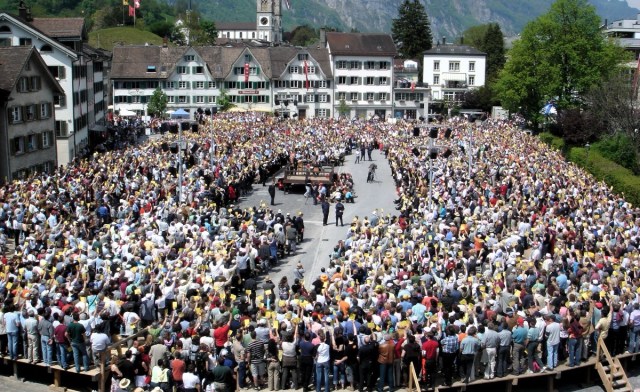
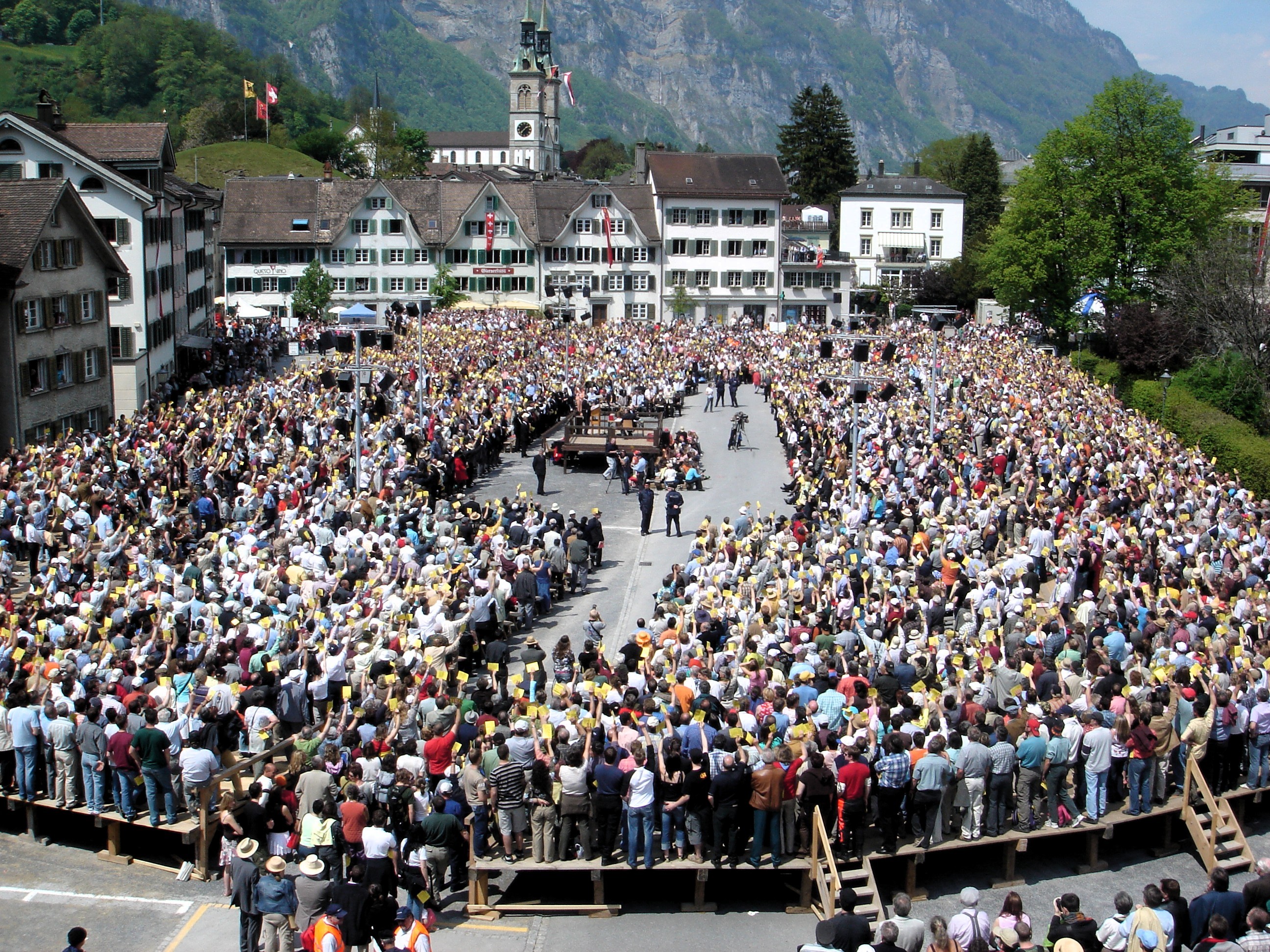
A Cantonal Assembly. Photo Credit: Wikipedia
Introduction
The Philippines, known globally for its vibrant democratic movements, has a unique political landscape that has evolved through significant events like the 1986 People Power Revolution. This historical moment not only marked the overthrow of a dictatorship but also solidified the concept of “people power” in the national consciousness. As the country continues to grapple with issues of governance, corruption, and political dynasties, there is a growing discourse on the need to institutionalize people power further through mechanisms of direct democracy. This write-up delves into the possibilities, challenges, and critiques associated with this idea, particularly in the context of the Philippine political system.
Definition of Terms

Photo Credit: Wikipedia
– People Power: People power refers to the collective action of citizens, often leading to significant political or social change. In the Philippines, it is most famously associated with the 1986 revolution that ousted President Ferdinand Marcos. This movement demonstrated the capacity of ordinary citizens to effect change, particularly in the face of authoritarian rule.
– Direct Democracy: Direct democracy is a form of democracy where citizens directly participate in decision-making, rather than through elected representatives. This can include mechanisms like referendums, plebiscites, and people’s initiatives. In the context of the Philippines, direct democracy is viewed as a potential counterbalance to the entrenched political elites and dynasties that dominate the representative system.
– Pork Barrel: In the Philippine context, pork barrel refers to government spending for localized projects secured primarily to bring money to a representative’s district. This term has a negative connotation due to its association with corruption, where funds are often used to curry favor with voters or are misappropriated by legislators for personal gain. The most infamous example is the Priority Development Assistance Fund (PDAF) scam, which involved billions of pesos in public funds being siphoned off through bogus non-governmental organizations.
– Barangay: The barangay is the smallest administrative division in the Philippines, similar to a village or district. It serves as the basic political unit where local governance is conducted. Barangay assemblies are gatherings where residents can discuss and influence local governance, making them a crucial element in the potential for grassroots direct democracy.
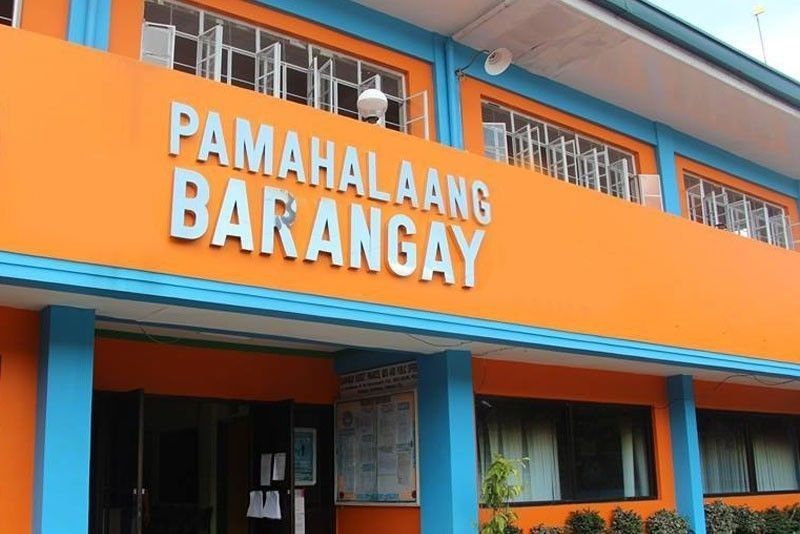
Photo credit: The Philippine Star
Critique of Philippine Congress


Photo Credit: Wikipedia
The Philippine Congress, comprising the Senate and the House of Representatives, plays a crucial role in the legislative process. However, it has often been criticized for several issues that undermine its effectiveness and credibility.
1. Focus on Investigations Over Legislation: Both houses of Congress frequently engage in investigations “in aid of legislation,” which are intended to gather information for crafting laws. However, critics argue that these investigations often serve more to garner media attention and bolster the public profiles of lawmakers than to produce substantial legislative outcomes. For instance, the Senate’s high-profile investigations into corruption and public scandals, such as the hearings on the “PhilHealth” scandal, have generated significant media coverage but have not always led to meaningful legislative reforms.
2. Lack of Quorum: A recurring issue in the Philippine Congress is the lack of quorum during important legislative sessions. This has led to the delay or stalling of crucial bills, such as the proposed Freedom of Information (FOI) Act, which has been languishing in Congress for years despite widespread public support.
3. Presidential Veto: Even when Congress does pass significant legislation, there is always the risk of a presidential veto. The president’s power to veto bills can serve as a check on Congress, but it can also be a tool for political maneuvering, especially if the legislation is seen as unfavorable to the executive branch’s interests.
Institutionalizing People Power
The concept of institutionalizing people power is rooted in the idea that the Philippines’ democratic gains can be deepened by providing citizens with more direct means of influencing government policy. This approach seeks to address the limitations of representative democracy, where elected officials often prioritize their interests or those of powerful elites over the general public.
- Citizens’ Assembly

Photo credit: The Irish Times
One proposed mechanism for institutionalizing people power is the creation of a Citizens’ Assembly. This idea draws inspiration from Ireland’s model, where randomly selected citizens gather to discuss and make recommendations on key policy issues. The Irish Citizens’ Assembly has successfully influenced major policy changes, such as the legalization of same-sex marriage and abortion.
Potential in the Philippines: Implementing a similar model in the Philippines could provide a structured platform for citizen engagement, particularly on contentious issues like constitutional amendments or social policies. However, the success of such an assembly would depend on several factors, including the selection process, the independence of the assembly from political influence, and the government’s willingness to act on the assembly’s recommendations.
2. Strengthening Legal Frameworks
The 1987 Philippine Constitution already provides for mechanisms of direct democracy, such as referendums, plebiscites, and people’s initiatives. However, these tools have been underutilized, partly due to legal and procedural challenges.
Referendums and Plebiscites: These mechanisms allow citizens to directly approve or reject laws or constitutional amendments. They have been used sparingly, with the last major plebiscite being held in 2001 for the creation of the Autonomous Region in Muslim Mindanao (ARMM).
People’s Initiative: This allows citizens to propose amendments to the constitution or enact new laws. However, the process is complex, requiring the signatures of a substantial percentage of the electorate. The last significant attempt to use a people’s initiative was in 1997, led by the group PIRMA, to amend the constitution and extend term limits. The Supreme Court eventually ruled the initiative as insufficient, highlighting the challenges in using this tool effectively.
Critique of People’s Initiative by Charter Change Opponents
The idea of using people’s initiatives to amend the Philippine Constitution has been met with significant resistance, particularly from charter change opponents, including many congressmen and senators. Their critiques are grounded in concerns about the potential misuse and implications of this democratic tool.
1. Vulnerability to Manipulation: Critics argue that people’s initiatives can be easily manipulated by powerful interest groups or political elites, undermining the true will of the people. Historical examples, like the 1997 PIRMA initiative, demonstrate how such efforts can be backed by influential political figures to serve their interests rather than the public good.
2. Complexity of Constitutional Amendments: Amending the constitution is a complex process that requires careful deliberation and expertise. Opponents argue that such profound changes should not be left to a process that might lack the necessary legal and technical scrutiny, which is more likely to occur in a people’s initiative than in a formal legislative setting.
3. Potential for Populism: There is a concern that people’s initiatives could lead to populist decisions that might not be in the long-term best interest of the country. Populism, while addressing immediate concerns, can sometimes lead to unsustainable or harmful policies, particularly in a politically charged environment like the Philippines.
4. Undermining Representative Democracy: Charter change opponents warn that an over-reliance on people’s initiatives could erode the foundations of representative democracy by bypassing the legislative process. They argue that while direct democracy has its place, it should complement, not replace, the role of elected representatives.
Examples of Direct Democracy in the Philippines
While the Philippines has a limited history of direct democracy practices, there are notable examples that highlight the potential and challenges of this approach.
1. People Power Revolution (1986): This is the most iconic example of direct democracy in action. The mass mobilization of citizens to oust President Marcos demonstrated the power of collective action and set a precedent for future democratic movements in the country.
2. Referendums and Plebiscites: The 1987 Constitution provides for these mechanisms, though they have been used sparingly. One notable example is the 2001 plebiscite for the creation of the ARMM, which allowed citizens in the region to vote on the establishment of an autonomous government.
3. Barangay Assemblies: These local assemblies enable residents to discuss and influence local governance. While their effectiveness varies, they represent a grassroots form of direct democracy that, if properly supported, could play a significant role in local governance.
4. Participatory Audits: Initiatives like participatory audits, where civil society organizations monitor government projects, have been successful in promoting transparency and accountability. These audits have often uncovered irregularities in public spending, leading to reforms and the prosecution of corrupt officials.
Potential of Direct Democracy in the Philippines
Expanding the use of direct democracy in the Philippines involves addressing several key challenges, exploring potential models, and setting a long-term vision that includes specific policy recommendations.
Challenges and Solutions
1. Political Dynasties and Corruption: One of the most significant challenges to direct democracy in the Philippines is the pervasive influence of political dynasties and corruption. These issues undermine public trust in the political system and can skew the outcomes of direct democracy processes.
– Campaign Finance Reform: Stricter regulations on campaign finance can reduce the influence of money in politics, allowing more diverse candidates to compete and win. This would help weaken the grip of political dynasties.
– Term Limits: Enforcing term limits is crucial to preventing the entrenchment of political families. While term limits exist for certain positions, they are often circumvented through various means, such as running for different offices or fielding relatives as candidates.
– Strengthening Anti-Corruption Institutions: Enhancing the capacity and independence of institutions like the Ombudsman and the Commission on Audit (COA) can improve accountability and transparency. These institutions must be empowered to investigate and prosecute corruption cases without political interference.
2. Information Disparity: Another challenge is the disparity in access to information, which can lead to unequal participation in direct democracy processes. Rural areas, in particular, often suffer from limited access to reliable information and communication technologies.
– Civic Education: Expanding civic education programs can empower citizens with the knowledge they need to participate effectively in direct democracy. This includes understanding their rights, the functioning of government, and how to engage in political processes.
– Digital Infrastructure: Improving internet access and digital literacy across the country would enable more citizens to participate in online consultations, voting, and other forms of direct democracy.
3. Voter Apathy: Voter apathy is a significant barrier to effective direct democracy. Low voter turnout and disengagement from political processes can result in decisions that do not truly reflect the will of the people.
– Mandatory Voting: Introducing mandatory voting, as practiced in countries like Australia, could ensure higher voter turnout. However, this would require substantial legal and cultural changes and must be accompanied by measures to educate and engage voters.
– Online Voting: Implementing secure online voting systems could make it easier for citizens to participate in elections and referendums, especially those who live in remote areas or have limited mobility.
Potential Models and Case Studies
1. Hybrid Systems: A hybrid system that combines direct and representative democracy could offer a balanced approach. For example, deliberative polling, where a representative sample of citizens discusses and votes on issues, could be integrated into the legislative process. Similarly, citizen juries could be used to provide recommendations on specific policy issues.
2. International Comparisons: Countries like Switzerland and Iceland offer valuable lessons in direct democracy. Switzerland’s frequent use of referendums and initiatives allows citizens to have a direct say in government policy. Iceland’s 2011 citizen-driven constitutional reform process, although ultimately not fully implemented, demonstrated the potential for citizen participation in constitutional matters.
3. Indigenous Governance: In the Philippines, indigenous communities have long practiced forms of direct democracy through consensus-building and communal decision-making. Incorporating these practices into the broader political system could enrich the country’s democratic processes and ensure that they are more inclusive and representative of diverse cultural traditions.
Long-Term Vision and Impact
The institutionalization of people power through direct democracy is not just a short-term goal but a long-term vision that requires sustained effort and commitment.
1. Cultural Shift: A fundamental cultural shift towards active citizenship is necessary for the success of direct democracy. This shift requires not only education and awareness campaigns but also tangible opportunities for citizens to engage in decision-making processes.
2. Social and Economic Impacts: Direct democracy has the potential to improve governance, reduce corruption, and foster greater social cohesion. However, these benefits will only be realized if the processes are inclusive, transparent, and genuinely reflective of the people’s will.
3. Measuring Success: The success of direct democracy initiatives should be measured using a range of indicators, including voter turnout, the diversity of participation, the impact on policy outcomes, and public satisfaction with the democratic process. Collecting reliable data on these indicators will be crucial for assessing the effectiveness of direct democracy in the Philippines.
Specific Policy Recommendations
1. Constitutional Amendments: One of the most significant policy recommendations is to amend the constitution to increase the use of referendums. This could involve lowering the threshold for triggering a referendum, expanding the range of issues that can be decided by referendum, and ensuring that the process is accessible to all citizens.
2. Legislative Reforms: Strengthening the role of public consultations in the legislative process is another key recommendation. This could include mandatory consultations for all major bills, the establishment of permanent citizen advisory councils for each legislative committee, and the use of digital platforms to facilitate broader participation.
3. Capacity Building: Building the capacity of citizens to engage in direct democracy is essential. This could involve establishing a national program for civic education, creating partnerships with civil society organizations to promote citizen participation, and providing resources and support for local initiatives that encourage grassroots democracy.
Conclusion
The institutionalization of people power through direct democracy represents a bold vision for the future of Philippine governance. While the challenges are significant, the potential benefits are equally profound. By empowering citizens to take a more active role in the decision-making process, the Philippines can build a more inclusive, transparent, and accountable democracy. This vision will require not only legal and institutional reforms but also a cultural shift towards greater civic engagement and responsibility. If successful, it could set a new standard for democratic governance in the 21st century.
For Further Reading
https://en.m.wikipedia.org/wiki/Citizens%27_assembly
https://en.m.wikipedia.org/wiki/Citizens%27_Assembly_(Ireland)
https://en.m.wikipedia.org/wiki/People_Power_Revolution
https://en.m.wikipedia.org/wiki/Referendums_in_the_Philippines?searchToken=en7yek8txh1dgtukd27i61qlk


 The Society of Honor by Joe America
I remember the rise up against Marcos. Stronger platforms have followed. Although smaller places as the Philippines have e see mallet problems compared to the USofA.
Thanks for dropping by AC. Usually in life those with small or no problems create more problems.
So are you say that the more problems there are then, people can reach the point of resolving all problems?🤔
You put it on a more positive note.
An anti dynast bill via PI
https://malaya.com.ph/news_news/peoples-initiative-eyed-against-political-dynasty/?amp
An order variation of the news.
https://opinion.inquirer.net/117414/an-antidynasty-law-via-peoples-initiative
From the 2018 article you posted below:
“For people to initiate the passage of a national legislation, the draft law must be signed by at least 10 percent of our country’s total voters, and at least 3 percent of every legislative district’s voters. (For ordinances, the 10-percent voters’ support applies to a province, city or municipality, and the 3 percent to the smaller local government units under each of them.)”
I think this is doable. A small ray of sunshine for PH!
We all know that the PH Congress is wishy washy about the writing of the Dynasty Bill’s implementing rules and regulations and passing it because a lot of them are dynasts. If the People’s Initiative gain momentum and the votes are there, bypassing the Congress and going straight to the Executive to have it codified could just be the break that PH need to rid herself of a number of corrupt politicians.
The upper and middle class population of PH could help in making the initiative a success. This is something that will benefit everybody regardless of their socio-economic class.
My next blog article will argue that this is irrelevant. All that needs to be done is to organize better. Next Monday’s blog.
Thought provoking read, Karl. The constitutional provisions for direct engagement by “the People” are rarely used because people are generally uninvolved, unread, and uninspired. Where they DO engage is through the barangays, but the barangays are effectively captured by the dynasties or political barons. So the ‘solutions’ they come up with are people like Duterte and Marcos. Non-solutions for real engagement and real progress.
The red tape of administrative processes, and a broad lack of trust in ANYBODY block reforms like Constitutional amendments or anti-dynasty laws. I think the solution (progress and wealth-building) has to start at the top. A “good” president who is more the populist than Aquino, I’d imagine.
Populism can exist already (Tulfo) or be manufactured (improving on the Robredo flare-up). The problem is the eternal grinding away of leaders for any perceived flaw or mistake, the “Goldilocks syndrome” as it was raised by Michele Obama at the Democratic convention. It seems to be human nature to be unforgiving. Makes me think I should write about that again.
Thanks for the great thought piece, comprehensive and educational.
Many thanks Joe.
Please do write about the unforgiving nature of humans. They say people forget until they are triggered.
Will do. Sho nuff.
Long live, Karl Garcia! More than THANKS, Joe America! People Power: True Democracy!
Sent from Yahoo Mail for iPhone
Thanks dommuch sir Gemino! Long live too!
My turn to activism actually predates People Power. First the civil rights movement in the 60’s, with an interlude serving in Viet Nam, followed by joining the anti-war protest. The US has more citizen involvement than does the Philippines. I suppose it’s because people there understand how national policies affect them, and know they can shape national policies by speaking out. Here, citizens do not “see and feel” the opportunity to direct their own destiny.
You are right, Joe America! We all need a stronger sense of Country!
Sent from Yahoo Mail for iPhone
We only value what we lose. We only get affected when things become personal.
Yeah, like how Aaron Kunin decided to write about this, when his own English department imploded , karl. people got to be personally affected. how you do that. I wish Thomas and Tompkins write their own books too. and they all get together for a panel, in the hopes of increasing sales and we get a full blown interview of just how exactly democracies collapse.
this story of Aaron Kunin former chair of pomona college’s English dept. is making its rounds on PhD twitter,karl. and I’m seeing that theres actual consensus on how prevalent this is. in both public and private institutions. i kinda recognized it in the military as simply a chemistry issue that any strong small unit leadership can squash. i gotta feeling everyone here whose been part of groups can relate. but depending on ones level in said group mileage will vary. essentially Kunin was a letter of the law type leader. who when given the position decided rules were necessary. his predecessor Dettmar sorta just towed the line status quo which i guess past chairs were of the same mind. cuz Pomona College is a well funded school especially the English dept receiving exorbinant amounts. for Dettmar and past chairs they just moved money around knowing they’ll never be empty. for Kunin however this having too much money made him nervous so he decided to clamp down. there were some complaints from other professors but they ended up agreeing. except for these two black (ones actually Moroccan) English professors. one his contemporary that’s Tompkins and the other his senior (she retired recently) that’s Thomas. but i guess instead of debate and concensus, Thomas and Tompkins started playing their race cards, and called Kunin racist (he’s a Jewish queer dude, specifically a masochist cuz he’s written about it i guess, like queer literature). it went all the way up to Pomona College’s top people who then hired an official investigator who concluded that Kunin was in fact racist. so Kunin sued the school and the court reversed the school’s findings. exonerating Kunin completely. now he’s in the process of writing a book about the whole ordeal, i guess in hopes that other English departments can learn from it. but he is using substack to write his drafts so the emails which were uncovered in the lawsuit are available in his rehashing. which actually reads like a telenovela, karl. but my point. if everyone just stuck to the rules, in Congress they have these folks called parliamentarians which i just learnt recently watching CSPAN, who ensure proper decorum is followed. so they advise the senators and congressmen. like you’re out of order, etc. that sort of stuff. so for start just follow procedures so personal drama’s affects are lessen. but yeah theres a a lot to be learned here. even more if you actually read his whole substack, karl. but here’s an article about it. hope this helps. granular democracy. it is.
https://www.claremontindependent.com/post/pomona-professor-writes-essays-on-college-discrimination-investigation
Thanks for introducing me to above.
oh, and they actually have a professional organization, karl. https://www.parliamentarians.org (is there something like this in the Philippines?)
and here’s the full article of what happened above (the link i shared is just the school newspaper’s account, this is more quality journalism): https://www.chronicle.com/article/when-a-department-self-destructs (its behind a pay wall but if you sign up which is free then you can read like 1 or 2 articles, its actually a pretty good magazine but i just read that one article, juicy! i love drama, karl).
And this one’s related , karl. pretty much the same thing but with the Mongols motorcycle club (enemies of the Hells Angels). he talks about how Doc the leader in the 2000s coopted the Mongols and made it a sanctuary for La Eme prison gang. and how after Federal investigations Doc and crew were cleared out and how now Mongols are practicing one man one vote, but they still have to be tough when it comes to other motorcycle gangs. i don’t think they use parliamentarians though, karl. i do know that they’re recruitment is more successful now than Hells Angels, spreading globally.
The legislature here has rules of order, as hearings are structured such that legislators and resource persons all speak through the person presiding over the hearing. It reduces confrontations. There are regimented processes to deal with the shaping of bills. It’s pretty effective, though too overmuch influenced in the House by the President. In the power society, he bestows gifts and penalties that affect their electability and riches.
the elephant in the room about this Pomona College drama is that its why people are pushing back against Wokeism and DEI, and Critical theory, etc. in the news especially MSNBC like Joy Reid and pundits they are always quick to say define wokeism. and then say gotcha! well theres in fact various definitions, if you’re liberal if you’re conservative if youre Dem or GOP, even farther if you’re MAGA (which has a more white supremacist bent definition). you yourself Joe have define it as progress. well i think the above is another example of wokeism. when colleagues and random folks weaponize pronouns, and in this case race. to stifle democracy. exactly the same way those Philosophy professors were booted out of their colleges for not addressing a students preferred pronouns, they sued and got their jobs back and also punitive damages. same here, Aaron Kunin i’m sure was on his way to getting the boot, but he filed that lawsuit before they did so. so Critical theory, DEI (DEI is more than just affirmative action by the way, its this notion that diversity et al is more important than actual talent), all of which make up Wokeism. which there is now a current backlash. driving the popularity of Trumpism and MAGA. why i think he’ll win. but more than that, academia unleashed Wokeism on us, and the irony is they themselves are cannabilizing each other because of it. so how to we put this tootpaste back inside its container? well Florida is doing it, which is a sword approach instead of scalpel. they’re burning books right now essentially, all the queer literature (which sadly would include Nabokov’s LOLITA). very similar to how DEI Wokeism Critical theory got rid of Civil War statues and names. Woke English depts have themselves burned books figuratively cancelling folks like Hemingway or Cormac McCarthy. or even David Foster Wallace himself a former chair of Pomona College’s English dept before committing suicide, he was cancelled caught in the hashtag Me Too movement before there was a hashtag for it i suppose. i guess my point is that its all part of the tug of war of democracy. people are just sick and tired of Wokeism. whether in academia or in Main Street. thats the main take away here, and translates perfectly in the Philippines because as Joey and Ireneo have talked about each ABCDE Filipinos have their pet issues, each ethnolinguistic groups also have their own issues. then theres lumad vs. linguistic groups too, eg. I was here first buddy. but Wokeism is there too, ie. Filipinx, the pronouns battles doesn’t really translate in Filipino context cuz the pronouns are already general though. not gender based. but the whole every action has an opposition reaction that’s universal in every democracy. I think Inday Sara gets this, the opposition doesn’t. that’s why she dresses in traditional garb, and turns on identities of hers as she sees fit. though I haven’t seen her turn on her Jewish indentity yet, but that Germany visit is related would like her to actually translate that to Israel though.
That’s a big paragraph, like mashing through the swamp with no path out. Woke is a political word now, means what people want it to mean, and has little relevance in the Filipino dialogue. Nor does DEI. So I leave them with you. Your Sara is self-destructing in real time. Her appearance at the House budget committee was an unmitigated disaster. She’ll not recover, I think.
Thanks for the heads up. I’m sure she’s fine with whatever politicians throw at her, since she still has the support of the populace. and budget usually means arkane stuff which people neither understand nor care about really. but let me Google this first. my Inday Sara doesn’t self destruct , Joe. especially in real time.
Oh, this seems like an impeachment play, Joe. not really understanding the whole thing. but seems like they’re laying the ground work for impeachment cuz they scared of 2028. which is very similar to what happened with Trump plus the court cases they tacked on him, only propelling him more. They’re nickle and diming her over gov’t budget, which is moot cuz i’m sure if you turned the tables those politicians wont be able to defend their budgets as well. lol. so just IMHO just focus on Chinese money, that’s where you’ll really get her. looks like the Trump witch hunts ngl. wont go anywhere, Joe.
It has been a series of blunders by Sara, going back to her abuse of confidential funds, having a security force of some 500 cops, spending a hundred million in a few days, botching her leadership of DepEd, criticizing Marcos, staying silent on China’s abuses, seeking to get taxpayers to pay for her epal book for kids, defending Quiboloy, failing to document 73 million in expenses in 2022, and her arrogant way with both Senate and House budget inquiries, all appearing on news here. Her popularity has been on a slide before this. If she gets impeached, she has earned it.
I find fascinating the way arguments develop on social media. Typically, someone develops an opinion then goes through elaborate processes to shape the facts to support the opinion, not adjust the opinion to respect new facts. Well, the data base is a big dirty pool of sewerage so it is pretty easy to declare profound abuses of law as trivial. And politics itself is powered by interests, not facts, so it is entirely possible that Duterte is being set up for impeachment. President Marcos can fill a VP vacancy by nominating a senator or House rep, and having the Senate and House vote separately to approve the nomination. So he could appoint cousin House Speaker Romualdez the placeholder President (an edge to win in 2028) until Marcos’ son is ready. One can also argue that VP Duterte is making this speculative scenario really really easy.
If what happened over here w/ Trump is any indications, for sure the impeachments, the Jan 6 hearings and court cases, helped Trump, Joe. but Trump was already out. with Inday Sara, oustering her will get people riled up increasing her popularity because Filipinos will see her as a martyr. remember PBBMs popularity was tied to her last name. DU30. so this pretty much guaranteeing her 2028. if you’re saying whoever PBBM replaces the VP spot with will get a toe hold on 2028, of course that all depends on who. if its Hontiveros, then maybe. i’m gaining more appreciation for her watching these budget videos for sure, Joe. my only advice is not to be too condescending towards Inday Sara because CDE Filipinos will see that as being condescending towards them. they’ll take it personally. but yeah, game on. we’re off to the races for sure now. 2028 here we come!
The Philippines has no relationship to US politics. It is its own game, driven by its own dynastic interests and powers, a much more pliable voter base, fickle. A legislature that is with Marcos, not against him. A less biased media, equal opportunity sizzle. Your stories are fine fiction though. I’ll give you credit for that.
I’m Googling recent polling and she’s still on top by a lot, Joe. if that moves downward then maybe. but I ‘m sure all this stuff will only propel her more , not less. forward. that’s not fiction. there’s only 2 options up or down. I’m saying up. notice how far everyone is. Ireneo’s favourite Tulfo am sure is pro DU30 not anti.
Fiction it is. From August 12 GMA article.
“The latest non-commissioned opinion survey taken by Oculum Research and Analytics showed that Vice President Sara Duterte topped the list of preferred presidential candidates in the 2028 elections.
According to the survey, Duterte had a 25.4% voter preference, making her the top presidential contender in the survey.
However, support for her slid significantly compared to the 42% voter preference score she garnered in the first quarter survey.
Senator Raffy Tulfo ranked second in the latest poll with 18.5%. He was followed by former VP Leni Robredo at third with 10.6%, Senator Imee Marcos with 5.7%; ex-Manila Mayor Isko Moreno with 4.8%, and ex-Senator Manny Pacquiao with 3.1%.
Senator Risa Hontiveros trailed at seventh with 2.9%, Senator Robin Padilla at 2.6%, with House Speaker Martin Romualdez at ninth with 0.8%.”
there are inconsistencies in sara’s children’s book, isang kaibigan. as well, I am presuming the book’s editor knows very little about birds.
owls are usually solitary birds and dont socialise with other birds and they are nocturnal. for the owl to have met with a parrot, the parrot would have to wear night vision googles, haha. parrots are not nocturnal, and the only nocturnal parrots are found in australia and new zealand, not in the philippines.
sara ought to explain how a nocturnal bird like the owl that only comes out at night, meet a bird like the parrot that only comes out at daytime.
Hahaha, that is so fitting. Well, the goal is not primarily education. It is presenting Sara as the Queen and Mother.
Literary license hehe.Science fiction genre.
oh, shit! that is a big drop , Joe. by Q3, it should be farther down. assuming Q3 has not been done yet. making you correct in your estimate. due to these stumbles. but if my Trump=Inday Sara analogies hold , then we should see a trend up. you win this round. but I’m still loyal to my Inday Sara pending Q3 (and Q4). if it goes down or up. you win and mine is fiction. we’ll revisit Q3. but i do prefer the Pulse Asia ones or whichever accounted for ABCDE classifications. those were more informative.
Okay. i found what i was looking for. dunno if its their most recent though. But it does look like Tulfo is ascendant. that he beats Inday Sara with E Filipinos is surprising (which begs the question how do they poll E Filipinos they go to slums and squatter areas or something?). That he beats her in the Visayas is also very worrying. has Tulfo said anything negative about Inday Sara, Ireneo? you’re looking at him closely. man, i really hate him too– he just sounds like a typical cop (or rich dude’s) son there.
https://www.facebook.com/share/p/mCAXz765hcEh7ebm/ the true Filipino Maccchiavelli MLQ3 (in the sense of master scholar of power and insider to the political game) analyzes the present drop of the Dutertes:
“..You cannot have proclaimed yourself the extinction event for people power, only to then call for it down the line; you cannot have mocked decency, only to call for it when you need it. You cannot have torn up your own Cabinet Secretary’s plans to set up a national movement and then expect those who replaced you, to be as short- and narrow-minded. Most of all, you cannot turn back the clock.
Former (and most likely, future) senator Panfilo Lacson did make one criticism, about the current cops zeroing in on Quiboloy: There is no need, he says, to be telegraphing your every move to the public and fugitives from justice alike.
It’s enough to emphasize the eternal law of the political jungle: who is malakas, and who is now mahina.”
My take on Tulfo is that he is allowing the Dutertes (fellow Mindanaoans!) to take the fall while offering to be a more civilized version of them. Indeed, MLQ3 may be right in this as well:
“..The Ampatuans proved that Manila’s use of those who abuse in the periphery, can and will, sooner or later result in Manila having to crack down when the abuses reach proportions even Manila can no longer ignore. Duterte himself was part of this phenomenon and, to his credit, he leveraged it into achieving the long-postponed (since the time of former vice president Emmanuel Pelaez) turn of Mindanao to taking its turn ruling the roost. But he himself, once in power, tolerated no resistance and, once out of power, a Manila in the hands of a president invested with more political legitimacy—because of a truly majority mandate—than anyone since 1986 (or, in a “normal” election, since 1965) would have little reason to tolerate Duterte reverting to type when his type had already become obsolete..”
Tulfo can be at best a discounter version of Magsaysay and at worst a second Marcos Sr. but with less consideration for niceties. He might let one of his younger brothers do the dirty work. Not really supporting him but he is what probably will happen if the Liberals don’t step up. Remember when I saw Duterte as a possible winner, with shocked alarm when I noticed the repercussions? My instincts were right then. The Liberals should check how they can offer the public what Tulfo seems to offer. LCPL_X you may be right. Is his show only justice Wowowee?
I guess all justice is theatre really if you parse it, Ireneo. from the days of Solomon promising to half a baby. I’m just kinda depressed now that my beloved Inday Sara is not ascendant but now going down. but yeah if the likes of Tulfo is ascendant, I’d be worried. cuz DU30 for all the bad he was or is, he was very predictable, and that kinda transfered to the daughter, and i do agree with Joe that DU30 atleast was funny. was able to laugh at himself. Inday Sara i didn’t see that. though she did smile a lot. Tulfo is the harder version of WowowWillie. if WowowWillie could laugh at poor kids dancing and playing for scraps, what can Tulfo do. it’s like that movie Running Man with Arnold Schwarzenegger.
It’s the amazing thing about Tulfo, so public, so mysterious . . . and untrustworthy. A chameleon who has not revealed his favorite color.
University of Chicago sociologist Marco Garrido wrote in one of his paper that Filipino upper and middle class voters see “the democratic state as a source of disorder: as corrupt, pliant (vulnerable to depredation by powerful actors), and ‘populist’ (catering primarily to the lower class).” In a disciplinary state, by contrast, “a strong leader steps in and imposes order by strictly enforcing valued rules … their willingness to overreach traditional bounds is a large part of their appeal.” It is the explanation of why the Class A and B overwhelmingly voted for Duterte in 2016.
A democratic state is self-correcting but it needs strong citizen participation to facilitate the process. It also needs strong institutions that could withstand internal and external assaults. It is messy and chaotic at times and its trajectory is a slow rising jagged line. Citizen’s vigilance is needed to stop its destruction by bad actors and to maintain its robustness.
Filipinos seem to prefer a disciplinary state headed by a strongman. Someone who can deliver peace and order and solve societal problems without citizen input. This is well and good if the strongman will act in good faith but as history had shown us, the strongmen in PH past only delivered further misery and societal degradation. What will it take for the upper and middle class to rethink their hands-off approach to politics? They know better.
My answer: A strong leader who believes democracy, if it gains citizen buy-in, is free, invigorating, and, when tied to capitalism, enriching. That person will work on instilling a strong sense of ownership, and pride in being an owner. My bookie puts the likelihood of that happening at 18%. Filipinos seem not to grasp those concepts. And Americans seem to be losing them. We are animals after all. And when social media dull our sense of obligation to the pack, we eat each other.
If Teodoro is the man, hope he thinks of it as early as now.
We do not need Duterte any of them.
Abby Binay, Camille Villar..who said it should be a strong man. then let us insert back Hontiveros and DeLima.
truly agree with you. no more dutertes and their ilk. let us have hontiveros, de lima et al, and the good governance of mayors, i.e., if the mayors can hurdle the graft and corruption now being thrown at them and come up well and truly vindicated by the courts of law.
I doubt he does, but who knows. The Philippines is rich with talent, the trick is getting the talented past the populist barrier and then sustain it through the storm of perfectionist complaints for a few terms.
Prof. Cristóbal Rovira Kaltwasser (Pontificia Universidad Católica de Chile), a noted researcher on the relationship between democracy and populism had described populism to be viewed as either a pathological political phenomenon that constitutes a threat to democracy, or regarded romantically as the most authentic form of political representation that provides correctives to the democratic body.
Prof. Robert Dahl (Yale University), whose “A Preface to Democratic Theory” is a must read for political theory, laid the groundwork on the idea of the ambivalence between democracy and populism, inferring that while populism may represent a democratic corrective in terms of inclusiveness of the citizenry, it may also become a threat concerning public contestation by majority rule and the demagogues that sit at the top controlling the masses.
When citizens feel powerless, their voices will lay dormant until the actual or perceived problems add up to where there will be an outburst of political emotion. Rovira Kaltwasser argues that populism is a reaction by citizens against undemocratic qualities of institutions, where power of decisions have largely been shifted from elected legislatures to judiciaries and bureaucracies, creating a sense of powerlessness in having effective change.
In my view, the Philippines is actually closer to a polycracy masquerading as a representative democracy (from Greek poly “many” and kratos “rule”) where there is a cartelization of power into multiple regional and local factions of elites, each with an iron grip on their LGU. However, the danger in populism is that its various forms often have “thin ideology” un-moored from actual held ideology (see Duterte’s syncretization of far left-far right ideology) which constantly shifts because it’s based on a binary moral worldview where everyone is divided into “friend or foe,” mistakes are blamed on others, as we see prominently in the blind support of DDS no matter the flip-flopping on issues.
The Swiss case of direct democracy is worth investigation as it is special:
1) Rizal famously translated Friedrich Schiller’s Wilhelm Tell into Tagalog.
There is even a Swiss scholar who investigated how Rizal translated the world of the Alps into something more like his world around Laguna and Makiling.
The Romantic figure (big R, more on that later) Elias in the Noli is the closest thing to Tell, the noble rebel, probably the archetype Bonifacio (and many a Filipino guerilla or rebel) emulated.
2) One has to be cautious with Romanticism as, for instance, the most extreme Romantics like Richard Wagner had extremist mindsets that set the stage for populist, extremist nationalism.
One could see Tolkien as a Late Romantic, but the reality of the world that Tolkien idealized is closer to Game of Thrones. Wagner’s Nibelungen clan was more like the Amaling or Amelungen Gothic clan that conquered Rome. The medieval Nibelungen saga had its own Red Wedding.
3) if one reads between the lines of the (short) first Swiss Constitution of 1291, one gets an inkling that the real Tell or those like him were probably troublemakers the farm owners of three valleys that formed the first Confederation wanted to get under control.
They may or may not have helped them shake off the lowland bailiffs that controlled some of their lands, but de facto the farm owners and traders wanted stable business.
https://www.admin.ch/gov/en/start/federal-council/history-of-the-federal-council/federal-charter-of-1291.html
For the common good and proper establishment of peace, the following rules are agreed :
In view of the troubled circumstances of this time, the people and communities of Uri, Schwyz and Nidwalden promise to assist each other by every means possible against one and all who may inflict on them violence or injustice within their valleys and without.
Each community shall help the other with every counsel and favour and at its own expense in the event of any assault on persons or goods within and without the valleys and to this end have sworn a solemn oath to uphold this agreement in confirmation and renewal of a more ancient accord.
Every man shall continue to serve his overlord to the best of his abilities.
The office of judge may not be obtained for any price and may only be exercised by those who are natives or resident with us.
Any dispute amongst the Confederates shall be settled by the most prudent amongst us, whose decision shall be defended by all.
Those who commit murder shall themselves be put to death. A murderer who flees may never return. Those who protect him shall themselves be banished from the valley until they are recalled by the Confederates.
Those who maliciously injure others by fire shall lose their rights as fellow countrymen, and anyone who protects and defends such an evil-doer shall be held liable for the damage done.
Any man who robs a Confederate or injures him in any way shall be held liable to the extent of his property in the valleys.
The property of debtors or sureties may only be seized with the permission of a judge
Every man shall obey his judge and must if need be indicate the judge in the valley before whom he must appear.
Any man who rebels against a verdict and thereby injures a Confederate shall be compelled by all other Confederates to make good the damage done.
War or discord amongst the Confederates shall be settled by an arbiter and if any party fails to accept the decision or fails to make good the damage, the Confederates are bound to defend the other party.
These rules for the common good shall endure forever.
4) So we see an attempt by a group of sensible people to curb anarchy. I have lived among Alpine people long enough to know there is a deeply anarchic nature within many.
That energy was channeled against aristocracy in probably one of the biggest military innovations since the Greek phalanx and the Roman testudo, the Swiss pike formation.
Pikemen can stop knights on horses as they won’t run into pikes, but pike formations must stand their ground. Swiss pike formations were either from the same village or if city men they were from the same guild, so it was unlikely that someone would chicken out.
5) The Swiss still live a kind of 2nd Amendment in its original sense, as every Swiss man who has served has a rifle in his closet and knows the code for national emergency and where to go when it comes. I know a Swiss Pinoy who is proud of his service but, of course, hides his rifle.
The common spirit they have is kept by being VERY strict about who to give citizenship. I know a Swiss Sicilian (dramatically expressive as Robert de Niro in Analyze This but with a Swiss accent) whose father had to face the village vote for his family to become citizens.
I know Swiss Yugos (dunno what part I think Bosnians) who are totally assimilated into their communities as in they speak the local dialects. Back to polycraty, Switzerland is one too, but local leaders are truly elected. Even their Presidency rotates, 7 people, one rules for a year.
SO, direct democracy can work but one has to look at the exact conditions in which it works.
I will write another comment on how Bavaria adopted SOME aspects or Swiss direct democracy after WW2, because a politician from here was in exile in Switzerland and liked how they roll..
That’s terrific, Irineo, reminding me that a Constitution is not meant to hold a nation to a point in time, but define the rules by which changes can be made. And the ways to move forward are restricted only by the limits of the human imagination and laziness.
Great overview Irineo. This angle is definitely outside of my experience since I had not widely traveled the Alps. My historical understanding of Swiss history is a bit rusty, but I recall that the original confederation formed because the various cantons wanted to be left alone by outside powers, while also being able to engage in trade safely. The mountainous isolation of the Swiss cantons from the Holy Roman Empire probably helped the development of a highly individualistic culture.
I’m uncertain about how the Swiss model of direct democracy can be translated over to the Philippines. Mainly due to the disparity in population, and that in Switzerland they’re dealing with only 3 main ethnicity, though IIRC the Alemannic Germans constitute the large majority of the population. The Philippines has many more ethnicity (or “dialects” in the Philippine sense), all which harbor some level of mistrust towards the others. Even within the same dialect region, there are rivalries and dysfunction.
However there are some things that can be learned from the Swiss. For example, the tradition of shooting contests that is open to all citizens regardless of wealth or class, and other forms of competition that helped develop a new culture to unite the Swiss while respecting the cantonal culture of each canton. In this regard it’s rather similar to the US, where usually each long-time citizen of each state is fiercely proud of their state, while national patriotism in other aspects ties all state citizens into national citizenship.
Just mentioned the Swiss because they are the OGs of direct democracy, which does need specific conditions to be effective.
Yes, the German speaking Swiss are the majority, followed by the French Swiss whose cantons were originally conquered by Bern, which engaged in a form of internal imperialism.
Geneva was even an independent city state for very long and still calls itself Republique et Canton de Geneve.
The last internal civil war of Switzerland was in the 19th century BTW.
Switzerland only officially became independent from the Holy Roman Empire in 1648, though it had fought for more autonomy since 1291, and more and more cantons joined.
The mountain location and the warrior tradition of the Swiss (the Pope’s Swiss guard are the last remnant of Swiss mercenaries that served all over Europe, in fact they are now the only exception to the rule that strips Swiss men who serve abroad of their citizenship) helped.
Predatory taxation by the European political dynasty that also conquered the Philippines played a major role in the original Swiss cantons wanting out. Famous pike battles with Habsburg cavalry are an important part of their history.
I kind of dispute with Xiao Chua and others in my father’s school of thought who say that there was a form of Confederacy in the future Philippines before the Spanish came. If there had been anything similar, Cebu and Bohol would not have helped Spain conquer Manila. Sultan Kudarat would have at least tried to help the Visayans and Tagalogs, not just warned the Maranao to avoid their plight, which he clearly knew about. Some say sandugo between chiefs confederated them, but these were personal alliances, like between politicians. So there.
I think one of the major causes of political disunity in the Philippines that exists until the present day is the misguided nationalism of some of the founders of the modern state. As an outsider, I’m familiar with other historical perspectives, so I was very surprised when Filipinos I initially met repeated the nationalism they learned in school. To me there is a distinction between patriotism and nationalism, with nationalism having roots in Romanticism and pining for a previous age of glory that usually never existed. Yes, nationalism can sometimes forge a new national identity that is more cohesive, but more often than not it causes disorder.
I’m inclined to agree with your view Irineo. I wonder what is the fear among the Filipino elite to just acknowledge history as it happened. One can acknowledge what happened historically, take relevant lessons from it to apply to the present situation, while forging a new future for a people. This reminds me of the Southern US “Lost Cause,” which created many troubles for America. Incidentally, the Lost Cause was also rooted in the misguided Romanticism of Antebellum Southern society, or rather, post-Romanticism in the case of the Lost Cause. Recently it has had outgrowths into the modern “Make America Great Again” movement, where the movement wants to go back to a time in 1950s America that actually had never existed, since their view is based on period paintings and media.
Feelings of only having a voice in the wilderness even in the concrete jungle could lead to defeatism. In a way political correctness and wokeism has its uses so long as it is used in moderation and responsively. Fine line between on being onion skinned and actual harm. Anything paralyzing causes stalemates and gridlocks are no good
I know the feeling! been defeated so many times, I’m starting to think defeat is an old friend, haha. I know all about detours too, and having to take stock and taking a break. those who retreat and run can come back to fight another day!
it must be disheartening to be confronted by a hakut crowd, yelling the loudest and hating the most, in for a peso . . . like what the kapolisan in dabaw probly now faces. kojc protesters deftly augmented by what appears to be hakut crowd, pushing, shoving, and trying hardest to discourage kapolisan from doing their mandate.
I think, the people in dabaw have all been long institutionalized.
They remind me of this movie scene:
very apt, idolatry and the worship of false god. by their sheer number, doesnot mean worshipers are correct though. the sheer number is misguided and their appointed administrator is even more misguided, nowhere in sight.
yrs ago when marawi was besieged, duterte was also nowhere in sight, and marawi was razed to the ground. unlike PNoy, when cotabato was besieged, PNoy was in ground zero and cotabato was spared, the siege lasted only two weeks.
pbbm is not in ground zero as well, the father must be uberly proud, the son with good muscle coordination find the muscle to stay kilometers away from the problematic kingdom of the son of god.
now those currently on ground zero are tight lipped, quiboloy’s mob rules! and roads are blocked. if dabaw got razed to the ground, the boksingera who punched a sheriff can only write a 2nd book on betrayal.
The problem arises when extreme fringes of the political spectrum use their version of morality as a purity test. It’s off-putting to most normal people, who inhabit closer to the political center.
The challenge I think, is to somehow build a broad coalition that satisfies the demands of the majority of the people, which are those on the center-left/center-right. For the Philippines the problem is difficult but doesn’t seem to be intractable. Most people want to have a better life for their family, a little breathing room after the monthly budget is accounted for, the ability to save even a small bit for emergencies or big purchases, and an ability to “move up” in life with their hard work being rewarded. The question then, is how to break the binary stranglehold of monopolization of power by the powerful and on the other side a tendency to treat the lesser economic classes to “bread and circus.”
That last paragraph is a humdinger. Seems spot on to me.
“Destruction by bad actors”.. yes, why don’t they vote good actors into office?
And are popular good actors like Joel Torre wary of politics?
Char of course. Joke lang. But the question why quality isn’t seen stays.
when comedian dolphy was alive, he was asked many times to run for president and he always refused sabi, what if I win, what then?
dolphy has apparently skeletons in his closet, his womanizing was legendary and has number of children na mga anak sa labas. had he become president, his mistresses would probly be riotous in the palace. I am presuming his children would vie for top positions, etc. maybe, dolphy was happy being himself and did not want anything political though he has a number of friends in politics.
Many thanks Karl, great article. Finally I managed to read it properly and it is quite comprehensive. Anyway, I already posted a long comment re Swiss direct democracy that boils down to: it usually takes a society that is committed to it.
Does that mean all is lost for the Philippines? Let me bring in an example of how direct democracy was introduced in a place once racked by populism.
1. The Bavarian word Großkopferte or big heads is their “elitist” like term for people way above the common people deciding above their heads.
2. The mayor who rebuilt Munich after the war, Thomas Wimmer, instituted regular speaking hours where citizens could come in without an appointment.
3. There was a former mayor of Munich who acted as Bürgeranwalt aka citizens lawyer, during the 1990s. His cases were featured in certain tabloids.
4. That same man headed an initiative to limit the size of new buildings in 2004 after a historical view was photobombed by a skyscraper – his side won the referendum slimly.
5. A referendum to ban smoking inside restaurants, etc, won to the chagrin of traditional pub goers who usually smoked and drank, the more modern young and health oriented crowd won.
Now, what am I getting at? The rule of referenda here are, briefly:
A. Referenda are only required over here for changes to the Bavarian Constitution
B. Any group that gets enough signatures can initiate a referendum
C. A referendum can be a municipal, county, or state level
D. The question a referendum poses must be specific. A Green initiated referendum to limit conversion of agricultural, forest, etc. land was, for instance, rejected as not specific enough.
E. The government itself may NOT initiate referenda. This makes sense to avoid referenda for the sake of populist confirmation similar to “Like Our Law on Social Media”!
Aside from referenda, a certain accessibility of government is helpful. Livestreams of city council meetings exist here even if I had never watched one. District meetings where the local council members can be directly asked and the police also is present to answer about matters of local security etc etc also existed. Have planned to go so often but never made it to one. Possibly, my Pinoy attitude of not participating and keeping my head down is too strong? 😉
Party locales regularly hold meetings over here. Topics are like at homeowners associations.
Don’t know how to best apply lessons and templates from elsewhere to the Philippines. Definitely, getting dynasties out of the way is the first step. The second step, I don’t know.
People participate in Bingo socials, Fiestas, Free food, Campaign sorties…Consistency is always the battle.
Always a pleasure to read your comments.
The second step should be getting rid of most of the corruption that puts money in the pockets of politicians and not in beneficial social services and infrastructures sorely needed by the country and its people. Actually, getting the dynasties out of the government will probably wipe out 50-60 percent of the government corruption. It will also be good to really review government institutions and the civil service commission. PMarcosJr is suppose to downsize the government and get rid of the redundancy in the system but I have not heard of any push toward that direction from the administration.
He recently vetoed a bill on reorganizing the PNP because it goes against his policy of rightsizing.
https://www.rappler.com/newsbreak/explainers/why-marcos-vetoed-bill-restructuring-philippine-national-police-july-2024/
NGRP is the name of the rightsizing bill.
https://www.pna.gov.ph/articles/1231539
In the US, below the federal level most states, counties/parishes/boroughs and municipalities allow referenda to facilitate direct democracy. It’s quite similar to Bavaria, where county and municipal meetings are recorded and available, with any resident being able to attend and directly question their officials or share concerns. This sometimes allows a small, dedicated group of citizens to push an agenda but it largely is a good feature. At the state level, ballot initiatives regularly appear each election year to give the citizens a chance to pass state policy by public referendum.
Whereas in the Filipino meetings I’ve attended, it seems like the mayor and captain act more like local kings proclaiming decrees rather being available for citizen inquiry and concerns. Honestly, I’m not sure anywhere in the Philippines that adopted a policy of citizen engagement besides Isko Moreno’s practice of doing this during his time as Mayor of Manila.
In some sense, the practice of direct democracy, at least at a lower level, has a strong Germanic tradition. Early Germanic tribes were also proto-democratic, having elected tribal leaders who needed to practice an early version of direct democracy to maintain his position as the head of the warrior band. The US, having descended from Great Britain, which in turn had been greatly influenced by the Northern Germanic culture of the Angles, Jutes, Saxons, Frisians, has carried on this societal quirk.
Northern Germanic and Viking culture (which also influenced the English) certainly have democratic traditions as the Scandinavians, and finally, the Icelanders took longest to introduce Kingship.
To my knowledge, even Anglo-Saxon justice with its jury system (in a Germanic or Anglo-Saxon village, fellow villagers took part in trials) and precedence law (referring to similar cases the old folks remembered) has very Germanic roots.
Dr. Xiao Chua and some others in my father’s school of thought maintain that datus were not like Western Kings, but I wonder if that is wishful thinking. One could look at how IPs roll to see if the present ways are a deformation due to the feudal overlay Spain put on the old culture.
Northern Germanic (including Vikings) culture originally had minor kings and “great” kings, all voted by popular acclamation based on their ability to lead in both their community and in war. Of course the only members of society who were eligible to vote were the warriors and landowners, but in a sense it was direct democracy. Permanent, hereditary kingship was only later introduced as the various Germanic cultures were influenced by the Continental system that had derived from the post-Roman feudal system. Indeed if one reads between the themes of famous works like the various King Arthur myths, one can see the battle between cultures being shaped.
(English) Common Law is sort of a amalgamated legal system combining influence from both the base Germanic Law and later influence by Roman Law. Certainly the Greek (and later Roman) legal system had a concept of citizen juries who were appointed on a rotating basis. Northern Germanic cultures had a concept that combined a governing assembly and a jury, called a “thing.” The meeting of thing (also called a folkmoot) often consisted of the thing hearing competing arguments between respected community elders called truth-tellers who acted as lawyers, and were learned in folk custom and judgements by previous thing (an early example of precedent law). Both Germanic Law and Roman Law progressively mixed until we have the system of Common Law that is shared among many Anglophone countries. Even now, many legal practices in Anglophone countries are based on precedent and custom rather than actual written law; this is most apparent in the modern UK, vs the US that strived to put precedent permanently down on paper as written law. So here one can see how a people were able to successfully create a new syncretic legal system while respecting their original culture.
I’ve also been a long time believer that the feudal overlay Spain imposed on the various old cultures caused the present situation. Spain was more interested in how the local people can be subjugated, without actually taking into consideration the various existing cultures on the Islands (although there are numerous records of friars carefully documenting cultural differences between ethnic groups). The Philippines was never fully integrated into a sense of nation, unlike New Spain based in Mexico and the Americas, so I think the underlying differences continued to fight each other while the Spanish influence was like a thin oily sheen floating on top. It’s arguable if longer American involvement would’ve fixed this disjunction and helped Filipinos create a new identity that respects the old culture while moving forwards. I’m of the mind that colonialism is bad, but at the same time, most of Filipino leaders haven’t been doing a great job unifying the nation as well (besides the exceptional cases like Quezon and even PNoy). I wonder what it will take to rebuild the meaning of “Filipino” into a new, finally unified nation, while acknowledging and respecting the past.
Moves to separate Mindanao and Federalism will also not help in unity and identity.
Forget Sabah, if you will have a plebiscite today to choose if they the inhabitants of Sabah would want to remain Malaysian, then they would choose to remain Malaysian.
I don’t support separating Mindanao, as that would break the sovereignty of the nation.
Federalism as Duterte tried to sell was a stupid idea, since I don’t think Duterte himself understands what federalism means. However, some federalist ideas might be helpful to respect each major island or province’s regional culture, while ultimately still being subject to the national government. There are already various examples of groupings of provinces that share a local culture, such as the Caraga region in Mindanao. It would entail a lot less local sovereignty than let’s say an autonomous region like BARMM, because true federalism is the state delegating a portion of the state sovereignty to the sub-state, not the other way around where the sub-state would dictate the state at a national level.
Sabah residents don’t really have a reason to vote to re-join the Philippines as part of BARMM, because the economy and life in Malaysia is already better. The various Muslim ethnic groups here regularly move between Sulu, Sabah, Malaysia from what I learned during my time in Sulu and Malaysia.
I want to engage Karl but the way we elect presidents and senator point to a polity that is too emotion driven for direct democracy to work for now.
Thanks. Operative words are “for now”
the way that a majority of the people prefer the referral mode of Tulfo means that there is a non-appreciation of how government works. The referral mode is a hack that makes things faster for the lucky but doesn’t really solve things.
Make systems work. Make laws that make sense. Repeal laws that doesnt make sense. Compare cost of enforcement versus social cost. We over legislate things. Our enforcers are really just penalty machines. When we implement a more fair system like traffic enforcement by CCTV we go to the SC because we actually like to pay enforcers to look the other way.
Sigh, one part dancing with the stars, one part Don Quixote spearing windmills.
My past experience with Filipino associations in Germany showed me how a lot of Filipinos don’t actually think in a systemic, generic, and abstract way: it is usually personalistic, specific, and concrete. For instance, we had an association I helped form, and we had defined the statutes that were needed to register the association together. I looked up the public records of the association at City Hall years after I had left them due to the usual Pinoy quarrels. They hadn’t even complied with the set of officers defined in the statutes they themselves had helped define, so the German notary who filed the change of officers just after I left had a skillful workaround declaring certain positions as vacant. There was a popularity (money) based beauty contest in one association where I was the emcee, and I witnessed backstage how officers of the association tried to redefine the rules they themselves had set up as the contestants of their own respective clans were about to lose, and finally the head of the association threw down the table with the money, while the mother of one beauty contestant just pocketed the money the public had given to “vote” for her daughter. I also experienced people in associations refusing to follow decisions made as they were not there when the vote was taken, though the same people followed somewhat more dictatorial types later..
This to me reads like some Filipinos like gaming the system. How can PH build a game-proof system? It floors me that some Filipinos can find a hack, exploit a loophole and engage in a zero-sum game but often do not put the effort to find a way to solve problems in a win-win situation.
I often hear about the malakas versus mahina mentality and the preference for concrete versus abstract ideas. Maybe these pointers can lead us to a problem solving strategy that will be culturally accepted?
this might come as good news though, JP. cuz Inday Sara is now seen as mahina not malakas. so it works out perfectly for anti-Sara All crowd. but now theres a gaping void of whos gonna fill that space. not VP Leni , not D5, maybe Ireneo’s man, but this penchant for always looking for malakas vs. mahina is good for Philippines. i see now that Minnesota and Michigan and Pennsylvania’s lining up for Trump. if North Carolina and Georgia line up similarly then its in the bag. 270 plus. unless Harris does well in the debate. really well. thus again malakas vs. mahina. also factors in the 1st world. Germany i see is going ga ga over the far right party. with all sorts of TikTok memes bleeding over to Twitter. hot white women dancing in support. which will only enliven the immigrant population there i’m sure. like how NYC is suffering from increased crime this past summer with 75% from the very santuary immigrants bused in from Texas. same in Colorado. though i don’t see that significant uptick in California cept for Chile burglary rings as tourists. regardless thank you Gov. Abbott. all this factors in on Nov. my point malakas vs. mahina is all over the place, not just the Philippines. people prefer strong than weak or slow. human nature.
You are right. Whatever solutions are found should not go against the grain of the culture. Though you can start changing attitudes once you succeed.
People in general look for their own interests, and a good leader should ensure the well-being of his entire people. The rules should balance interests in a fair way.
BUT those with a scarcity mindset will think:
1. who will serve MY interests and
2. what is FAIR FOR ME?
So it isn’t as culturally specific as one thinks, LCPL_X is right.
He even sings “baby we ain’t nothing but mammals” in certain places in Cebu. Joke lang.
Seriously now. Our nearest relatives, chimps, have three strategies for choosing leaders:
A) the strongest
B) the most clever in organizing food for the group
C) the best in forming alliances
Prototype human politics, as a leader is expected to make sure his group has enough to eat, is safe (either he is physically strong himself or controls the physically strong) and cohesive, and especially among humans the common compelling narrative is important..
..I don’t have the answers, just I hope the right questions and possibly some more known knowns and known unknowns.. maybe one has to calm those with a scarcity mindset first?
The William Tell vs. 1291 Constitution example I have is about exactly that. Schiller’s story has a glorious teleserye like ending with him, the bandit and rebel, and the local landowner lady cheering for freedom. Let us not forget how Schiller was a major inspiration of Jose Rizal and Elias as a character, and Filipino rebel archetype has a lot of Tell in him, as Rizal translate Tell into Tagalog.
The reality of 1291 was that types like Tell were warned by the gentleman farmers of the three valleys to stop burning other people’s property upon pain of eternal banishment. Many village assemblies in Switzerland have an equivalent to the COMELEC gun ban in that they are to take place in the open and all are to be unarmed. Swiss history was about taming passions, subordinating them to reason. Many an immature Filipino might see Swiss courtesy as weak. My experience with Swiss is that they are resolute people, far from weak.
One big Case study for direct democracy that does not need to be Sabah proportions.
Sulu citizens rejected the BOL, but BARMM wants them in.
https://mindanews.com/top-stories/2024/09/barmm-leaders-lament-sc-ruling-on-sulu/