The Philippines as Asia’s Humanitarian Lifeline: Preparing for a Taiwan Evacuation Crisis
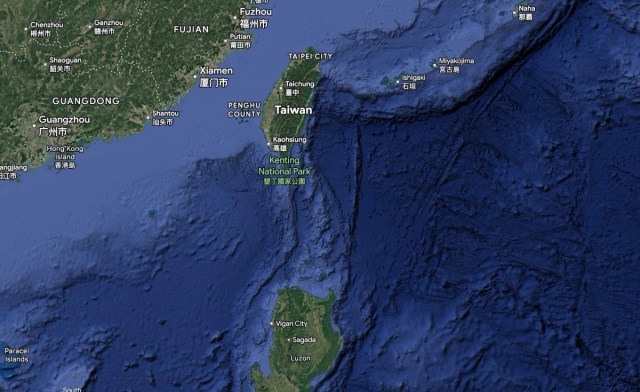
By Karl Garcia
If conflict erupts in the Taiwan Strait—a scenario that experts now discuss with alarming regularity—the Philippines will be thrust into the center of one of the largest humanitarian operations in modern Asian history. This is not speculation. It is geography, demography, and inevitability.
No other country sits closer to Taiwan. No other country hosts diplomatic, military, and logistical partnerships deep enough to support a mass evacuation. And no other country has as many of its own nationals at risk on the island. Whether we like it or not, the Philippines will become Asia’s primary humanitarian corridor.
The only real question is whether we prepare now—or improvise later at unacceptable cost.
The Coming Wave: Up to One Million Evacuees
Taiwan is home to 150,000+ Filipinos, most concentrated in northern and central Taiwan—the likely epicenter of early conflict.
But the Philippines will not just be evacuating its own people. Taiwan hosts over 700,000 foreign workers, including:
- 270,000 Indonesians
- 230,000 Vietnamese
- 70,000 Thais
- Thousands from Japan, Korea, the US, Europe, and India
Most of their governments lack the immediate airlift or sealift needed to get their citizens out. Where will they go? The Philippines—the nearest safe territory with major ports, airports, and allied support.
Worst-case estimates place total evacuees transiting through the Philippines at 500,000 to 1 million within two to four weeks. Daily arrival peaks could hit 50,000 to 100,000 people.
For perspective: that is more people than the entire population of Batanes, arriving every day.
Northern Luzon: The Frontline of a Humanitarian Operation
The geography is unambiguous:
- Batanes lies only 141 km from Taiwan.
- Laoag and Tuguegarao airports are within rapid flying distance.
- Ports in Aparri and San Fernando are the first maritime landing points.
Today, these facilities can manage 10,000–15,000 arrivals per day—a fraction of what a crisis demands. Tuguegarao needs international capability. Laoag needs expansion. Aparri requires modernization. San Fernando, La Union, must be scaled up into a true northern gateway.
Enhanced Defense Cooperation Agreement (EDCA) sites—such as Laoag International Airport, Camp Melchor Dela Cruz, and Basa Air Base—offer critical military logistics, staging, and medical support.
This is not about bases.
It is about saving lives.
A Coalition Effort—Whether We Plan for It or Not
A Taiwan crisis will not be a Philippine operation alone.
- The United States can provide unmatched air and naval lift, field hospitals, logistics, and command-and-control support.
- Japan and Australia have both the humanitarian tools and political will to assist.
- ASEAN neighbors will depend on the Philippines to receive and temporarily host their own citizens.
- UN agencies will inevitably deploy to Manila and northern Luzon.
The Philippines will be the regional humanitarian hub, the only viable staging ground short of Okinawa.
That role can elevate our global standing—or expose our unpreparedness.
We Need to Build Now
Preparedness must happen in phases.
Immediate (Next 6 Months)
- Create a National Taiwan Evacuation Task Force under DFA–DND–DSWD.
- Expand San Fernando and Aparri ports.
- Begin international operations capability upgrades at Laoag and Tuguegarao.
- Preposition medical stockpiles and field hospitals.
- Launch multilingual communication platforms for evacuees.
Short-Term (6–24 Months)
- Identify and prepare temporary shelter sites for 100,000+ people.
- Build evacuation transportation networks with buses and ferries.
- Draft expedited immigration protocols.
- Train responders in civil defense, language support, and trauma management.
Long-Term (2–5 Years)
- Establish permanent humanitarian processing centers in northern Luzon.
- Sign bilateral evacuation agreements with key ASEAN nations.
- Integrate civil–military evacuation exercises into annual defense planning.
- Pass a Taiwan Strait Humanitarian Response Act with dedicated emergency funds.
- Build dual-use ports and airports that enhance both humanitarian and defense readiness.
This is not pie-in-the-sky planning.
It is the minimum required for a foreseeable crisis.
Leadership, Reputation, and National Interest
Preparedness is not just operational—it is strategic.
A successful humanitarian response grants the Philippines:
- Regional leadership within ASEAN
- Deepened alliances with the US, Japan, Australia, and Europe
- Goodwill from Indonesia, Vietnam, Thailand, Malaysia, and others
- Massive foreign assistance for infrastructure and operations
- Boosted national security through upgraded ports, airports, and logistics
And perhaps most importantly:
Protection of 150,000 Filipino lives.
The Risks of Doing Nothing
Failure to prepare brings catastrophic consequences:
- Mass casualties from overcrowded ports and airports
- Disease outbreaks in unplanned shelters
- Chaos, crowd crushes, and supply shortages
- Breakdown of public order
- Vulnerability to hostile infiltration
- Diplomatic disaster and loss of confidence in Philippine governance
- Exploitation by criminal networks or foreign actors
- A humanitarian tragedy playing out on Philippine soil
We cannot allow that.
Lessons From History
Evacuations like Vietnam 1975, Kuwait 1990, Yemen 2015, and Libya 2011 all show the same patterns:
- Countries that prepared early saved lives.
- Countries that had international support succeeded.
- Infrastructure limits became deadly bottlenecks.
- Communication failures caused chaos.
- Political will was the decisive factor every time.
The Philippines can either learn these lessons now—or relearn them in the worst possible way.
A Moral and Strategic Imperative
A Taiwan conflict would be a tragedy for the region. But the Philippines does not get to choose its geography. We do not get to choose who stands between Taiwan and safety.
We only get to choose how ready we are when the first boats and aircraft arrive.
Preparedness is not militarization.
It is humanitarian discipline.
It is national responsibility.
It is strategic foresight.
When history looks back at this moment, the question will not be whether the Philippines had the capability.
The question will be whether we had the vision to act before it was too late.
The time to build our humanitarian corridor is now—before the first evacuee steps onto Philippine soil, pleading for safety in a moment of unimaginable fear.
And when that moment comes, the Philippines must be ready to answer.
Cover photo from Google Maps.


 The Society of Honor by Joe America
https://www.navalnews.com/naval-news/2025/12/philippines-u-s-eye-luzon-strait-base-for-joint-defense-operations/
https://www.philstar.com/headlines/2023/04/20/2260276/edca-sites-be-used-ofw-evacuation-officials
Forward looking, something not everyone can do, especially Philippine Government that seems reactive rather than strategic. The recommendations are excellent, to avoid the hell that would result from conflict. I do think, however, that China will attack the Philippines if it gives outright help to Taiwan. So that needs to be factored in.
Short answer: very low.
If the Philippines evacuates Taiwanese and other foreign civilians during a China–Taiwan conflict, that alone would not make a Chinese attack on the Philippines likely.
Here’s the structured reasoning.
—
1. Evacuating civilians is not a hostile act
Under international law and long-standing practice:
Civilian evacuation (humanitarian assistance, consular protection) is neutral behavior.
Many countries would evacuate nationals from Taiwan, Japan, or nearby areas if war breaks out.
China has tolerated such evacuations in past crises elsewhere.
➡️ Evacuation ≠ intervention
As long as:
Philippine forces do not escort Taiwanese troops,
No weapons are moved,
No intelligence support is provided,
China would have no legal or diplomatic basis to treat this as aggression.
—
2. China’s strategic priority would be Taiwan — not opening new fronts
If China attacks Taiwan, Beijing’s priorities would be:
1. Defeat Taiwan quickly
2. Deter or delay U.S. and Japan
3. Prevent escalation into a multi-front war
Attacking the Philippines would:
Open another front
Trigger treaty obligations with the U.S.
Stretch PLA naval and air resources
Risk ASEAN-wide backlash
➡️ Strategically irrational unless the Philippines becomes militarily involved.
—
3. What would raise the risk significantly
The risk changes only if evacuation is paired with military enabling actions, such as:
High-risk triggers
Allowing U.S. or allied combat operations from Philippine bases
Pre-positioning missiles or strike aircraft aimed at China
Escorting evacuations with armed naval task forces
Sharing real-time intelligence on PLA movements
In these cases, China might:
Conduct limited strikes (radar, airfields, ports)
Use gray-zone attacks (cyber, maritime harassment)
Increase pressure in the West Philippine Sea
Still, even then, China would likely avoid full-scale invasion.
—
4. Likely Chinese response to a neutral PH evacuation
If the Philippines clearly frames evacuation as:
Humanitarian
Temporary
Neutral
Coordinated diplomatically
China’s most probable reactions:
Strong diplomatic protests
Propaganda accusing PH of “hidden alignment”
Increased pressure via coast guard and militia (WPS)
Cyber or information operations
➡️ Not kinetic attacks
—
5. The U.S. factor matters more than evacuation itself
What China watches closely is:
EDCA base usage
U.S. force posture
Rules of engagement
Evacuation using:
Civilian vessels
Coast Guard
Multinational humanitarian coordination
…is far less provocative than evacuation conducted as part of a U.S.-led military operation.
—
6. Bottom-line probability assessment
If PH only evacuates civilians:
🔴 Direct Chinese attack on PH: <5%
🟡 Gray-zone pressure: Moderate
🟢 Diplomatic fallout: High but manageable
If PH enables combat operations:
🔴 Limited strikes or coercion: Significantly higher
🔴 West Philippine Sea escalation: Very likely
—
7. Strategic advice (implicit but crucial)
For the Philippines:
Maintain clear humanitarian framing
Keep evacuation multinational
Use civilian and coast guard assets
Communicate openly with ASEAN and China
Avoid ambiguity that blurs neutrality
This aligns with your broader theme in past discussions:
deterrence without provocation, and sovereignty without recklessness.
The assumption is that Philippine forces will not engage Chinese forces. It’s an iffy assumption.
De Lima thinks the Navy should do more than escort the Coast Guard
https://www.philstar.com/headlines/2025/12/15/2494364/de-lima-deploy-navy-west-philippine-sea-foil-harassment
Right. I also think President Marcos is irritated.
President Marcos Jr.’s Policy on the West Philippine Sea
1. No Naval Confrontation
Marcos has explicitly ruled out sending Philippine Navy warships to confront Chinese vessels.
Such action would be considered provocative, as the Philippines and China are “not at war.”
2. Philippine Coast Guard (PCG) Deployment
The administration has prioritized deploying more PCG vessels to protect Filipino fishermen and assert sovereignty in the country’s EEZ.
The PCG serves as a visible, non-military deterrent to Chinese incursions.
3. Diplomatic and Legal Measures
Manila continues to file diplomatic protests against Chinese harassment, including water cannon attacks and the use of military-grade lasers.
Actions are framed within a rules-based approach, relying on the 2016 Arbitral Ruling that invalidated China’s broad South China Sea claims.
4. “Do More” Countermeasures
While avoiding direct military conflict, Marcos has emphasized the need for proportionate responses, such as:
Modernizing the Philippine military.
Strengthening partnerships with allies like the U.S., Japan, and Australia.
5. International Support
The United States has reaffirmed its commitment under the 1951 Mutual Defense Treaty, which could be invoked if Philippine public vessels or forces are attacked.
Summary:
The official policy under President Marcos focuses on defending Philippine sovereignty through non-military means, combining diplomacy, legal action, coast guard presence, and international alliances, while deliberately avoiding a direct naval confrontation with China.
the aforementioned countermeasures are not working, never have, never will! we are very good at barking at the wrong tree, every time, all the time. if president marcos is not afraid of success, he ought to take the road less taken! grow a back bone and sidle up to trump. arrange a meeting with trump done via our ambassador to united states. the sooner the better.
china is deaf to all our pleadings. but trump can make the chinese sit and take notice. can make the chinese behave too.
I believe the Navy has been sent out to the area of the recent water cannoning of Filipino fishermen, which is one step short of China shooting them or arresting them.
they might do it again! of course, chinese coast guard will do it again, that is already their habit. it’s partly president trump’s fault. as a favor to president xi, trump reigned in japan and told the japanese prime minister not to be loud about her support of taiwan, without asking a return favor from president xi like toning down the aggressiveness of china’s coastguard vs filipinos fishermen.
china will listen to trump, not to us.
president marcos might be irritated, but he cannot vent his irritation at commodore jay tarriela, and fire him.
marcos might as well face up to trump and maybe lick trump’s boots! that marcos will only allow edca sites to be made into de facto american army bases housing american army personnel, missles, etc. only if trump will call off president xi, for chinese coastguard to stop its water cannon mania vs filipinos.
chinese coastguard and filipino fishermen can both sail the sea peacefully, without chinese coastguard immediately going for their water cannons and accosting filipinos.
Xi does not respect Trump, which means Trump will not call him to ask favors about the irritating Philippines. Trump said Nvidia could sell chips to China and China said we don’t want them, or somesuch. That was yesterday I believe. The chess board is three dimensional.
pbbm did not ask trump for his kind intervention, and the opportunity passed. fearful of trump? fear of being rejected by trump, and told to shut up!
and of course trump let the opportunity go coz it was not asked of him. and trump not being a mind reader did not realise what it is he can to do to alleviate tension in west phil sea. no one pointed it out to him.
our people are pretentious and kept telling the white house that philippines has got it all under control, that philippines dont need help from anyone despite being constantly snubbed by china and not getting any respond from china. and despite our fisherfolks being hurt and traumatised, on tenterhooks and fearful for their lives, courtesy of chinese aggression.
presumably, philippines is okay with the status quo, and will kept on sending protests and not verbales to china. always the same modus, no direct confrontation with china. we filipinos must be saints and loved to suffer chinese ignominy time and again. not only we are down trodden but brow beaten too. we really must have enormously liked the world wide publicity of being at the receiving end of china’s inhumanity that we got addicted to it.
nothing ventured, nothing gained. pbbm is the president who cannot stop the water cannons, such is his legacy. and he let our fisherfolks suffer as a result.
but if pbbm wants to man up and stop the water cannons and still avoid confrontation with china, he can do so via trump. trump is pbbm’s trump card! for pbbm to tell trump (very nicely of course and with greatest diplomacy!) for trump to call chinese president xi and for trump to tell xi to reign in the aggressiveness of the chinese coast guard (done very nicely and also with greatest diplomacy!).
if trump tells pbbm, he wont do it and he wont call president xi, then pbbm knows who his real friends are!
nothing ventured, nothing gained.
I think President Marcos will deal with the US via DFA. Trump is a lunatic and should be avoided for serious work. Marcos is wise to speak highly of Trump and should definitely not ask for favors.
it will probly cause consternation among americans already here in philippines if trump, when asked for help, refuses to help. and might end up coping heated flack from filipinos.
americans ought to bear in mind that what trump may eventually end up doing, has nothing to do with them. and bear also in mind that we freedom loving filipinos will not boot our dear american friends out of our country just because their president is not amenable to us.
The US Congress has just passed a bill that has the US supporting and funding a five year plan to build US/Filipino military strength. Oddly, the Philippine Congress concurrently pulled back on funding military modernization. Weird.
Regarding the DND budget, still higher year on year but still lower than wished or proposed. But Lacson recently reported that there were some unprogrammed funds transferred to MUP pay and pensions. Again the MUP pension system needs big time refoms hopefully within our lifetimes.
Ah, that’s good to know. The US bill, if enacted, will provide up to $500 million annually for five years. That’s a help for sure.
out of topic: karlG, what’s this I heard? my friends in australia are asking me whether I knew that the father and son terrorist duo, sajid akram aged 50yrs and naveed akram aged 24yrs who massacred jews at bondi beach in sydney australia two days ago, had attended extreme training camp at south of philippines, in mindanao?
that the father and son were apparently here in our country a month ago, before actually shooting australian jews. that the father and son managed to escaped attention of australian intel by having their extremist training done in philippines. the father is a sports member of a shooting club that occasionally attended a shooting range in australia, but the extremist training was kept secret. filipino intel did not priorly tip off australian intel what the father and son had been up to while in philippines. the father was eventually shot dead by australian police, the son is now recovering in hospital and between them, they had killed 15 innocent civilians mostly jews. the 16th victim is the father himself who was disarmed by a civilian but the father had a 2nd gun, and before the father can do anymore damage, australian police shot him dead.
I really thought abu sayyaf has long been disbanded and their extremist training camp is more or less idle. but, we never can tell.
PH as a Training ground for terrorists, cited in AUSTRALIAN Bondi beach attack investigation. Another hit at PH reputation besides systemic. corruption. Alleged shooters spent month in overseas terror zone
Peter Devlin
The terrorists allegedly responsible for the Bondi Beach attack spent a month in the Philippines before the shooting.
Why Sajid Akram, 50, and his son Naveed Akram, 24, were together in Asia, and their movements there are now a top priority for authorities.
The father and son went together, without any other family to the nation that “is known as a training ground for terrorism”.
“The Philippines is known as a training ground for terrorism but just how entrenched these two are is yet to be seen,” a police source told news.com.au.
there is apparently a video of father and son terrorists done before thier killing spree in bondi (pronounced boon-die) beach being studied by australian federal police. I dont know if filipinos are in the vid, but if I were to use my imagination and put the dots together, with the destabilisation going on to topple our govt, and the father and son terrorists visit to davao, then on to zamboanga for extreme training at a jihadists camp, there may well be an iota of truth about the destab plot. the report that filipino retired generals were inkling for destab may serve as vanguard, had already done their 1st round of job: destab plot is off and running, and we were warned. the generals’ sons who may have trained with the terrorists (they had better not be in the video!) may serve as rear guard and will come into action during the holiday season when filipinos are celebrating and no one is paying attention. haha, sometimes, I am frightened by my own imagination.
* * *
and to think that our foreign sec teresa lazaro sent a note of condolence to her australian counterpart, penny wong, really hits my funny bone! australian foreign minister penny wong, I am told, is big anti semite and has rarely said a word about the bondi beach massacre!
I think it is a mistake of logic to believe conspiracy theories.
https://www.pna.gov.ph/articles/1265374
PBBM rejects PH label as terror hotspot, orders ATC to stay vigilant
Marawi was in 2017 and that represented the peak of the terrorist infiltration. Mamasapano was 2015. AFP has been diligent at rooting it out.
Correct, Joe!
so very convenient naman! davao hotel where father and son terrorists stayed no longer have cctv coverage, apparently cctv footage was destroyed after one week. davao hotel also did no show visitors logbook too (no reporter asked to see it!) so we have no way of knowing who father and son talked with, and who visited them in the hotel. all we have are the words of hotel staff to inform us.
kaso, father and son apparently made personal video tape, a manifesto of some sort, the video is in the hands of australian feds now being studied. I think, our afp ought to request to see the video, see if there are filipinos involved. though, I understand, filipinos are defensive and quite adamant father and son acted on their own, with no help from filipinos.