We Are Not Starting From Scratch: A Note on Continuity, Constraint, and National Learning By Karl Garcia
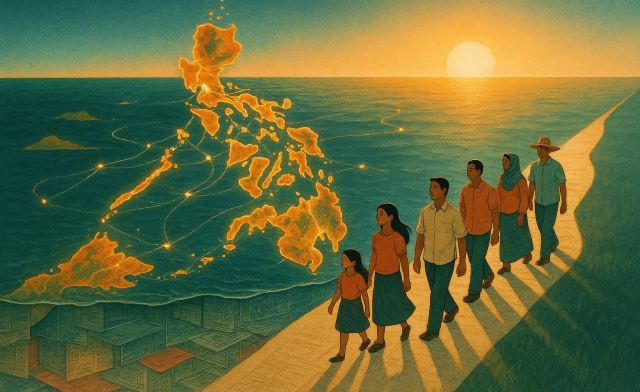
The Philippines is often spoken about as if it is perpetually beginning—resetting with every administration, rediscovering problems it has already named, relearning lessons already paid for in time, money, and sometimes lives. That framing is comforting in its simplicity, but it is also misleading.
We are not starting from scratch.
We are, instead, operating within a long accumulation of experience—policy experiments, institutional reforms, partial successes, repeated failures, and adaptive workarounds. The country is not a blank slate. It is a layered system of memory, some of it formal in law and planning documents, much of it informal in practice and lived governance.
To ignore this is to misdiagnose the problem.
The Philippines does not suffer primarily from a lack of knowledge. It suffers from uneven absorption of knowledge into durable systems. Lessons are learned, but not always retained. Policies are written, but not always institutionalized. Innovations emerge, but are often not scaled or protected from political turnover, bureaucratic fragmentation, or resource constraints.
And yet, despite this, the system moves. Sometimes slowly. Sometimes unevenly. But it moves.
This is important to acknowledge because it reframes what reform actually requires. The task is not simply to “introduce new ideas,” but to connect ideas across time—to build continuity where discontinuity has been the norm. It is to strengthen institutional memory, align incentives with execution, and reduce the gap between policy design and operational reality.
We also operate under constraints that are not entirely self-inflicted. Geography shapes logistics. Climate intensifies vulnerability. Global shocks ripple through domestic systems. Strategic competition in surrounding seas adds pressure that no single policy cycle can fully neutralize. These are not excuses; they are conditions.
But conditions are not destinies.
What is self-inflicted—and therefore most within our control—is the tendency to treat governance as episodic rather than cumulative. Each cycle risks discarding the partial gains of the previous one in favor of reinvention. In doing so, we lose compounding effects that are essential for national development.
If there is a quiet argument embedded here, it is this: progress is less about dramatic departures and more about disciplined accumulation. Institutions matter not because they are perfect, but because they allow societies to remember what works long enough to improve upon it.
This is also why writing, documentation, and even imperfect analysis matter. Ideas do not need to be final to be useful. They need to be transmissible. They need to survive contact with future readers—policy makers, students, analysts—who will inevitably operate under different constraints but may still face familiar problems.
If any of this survives revision, critique, or adaptation by those who come after, then it has done its work.
The hope is not that future decision-makers inherit certainty. It is that they inherit continuity.
And from continuity, improvement becomes possible.
Comments
58 Responses to “We Are Not Starting From Scratch: A Note on Continuity, Constraint, and National Learning By Karl Garcia”Trackbacks
Check out what others are saying...-
[…] such tools is evidence of what Karl wrote in April that We Are Not Starting From Scratch because it utilizes foundations built ever since Project NOAH which would become part of the […]
-
[…] course Karl is right that the Philippines is not always starting from scratch and one could also ask about whether European countries have done enough to deal with the effects […]


As I look at it, there are several factors that contribute to the slow-pace and start/stop jerkiness of progress in the Philippines.
Decision-making certainty can be improved by giving a major project prominence over time, politics, and laws. Certain laws should be subordinated to projects of national importance. Get politics, budgets, land use and rights of way, and LGUs out of the way.
Thanks Joe, this sums up and articulated my past long form articles and the one I scheduled next. Which I myself find redundant so I will replace it.
I note that younger, tech savvy oligarch family members are moving into key management roles. This is good I think.
https://bilyonaryo.com/2026/04/21/next-gen-takeover-jaime-alfonso-named-globe-vice-chair-mariana-joins-board/technology/
Yes I think it is good too.
But the one about a Lopez scoonand Razon is creating a Board room battle
battle for leadership, lopez vs lopez much like the marcoses with imee marcos contradicing her brother, but unlike the lopezes, imee can never take over the presidency.
methink, if the lopezes dont settle their differences and go to court, lawyers will gain the most, financially! maybe, the lopezes will have arm wrestling na lang, cheaper that way: to the winner the spoils.
whereas polong duterte is up to his old trick again, challenged madriaga, sara’s ex bagman, for a bout of boxing. and surprisingly enough, madriaga accepted the challenge. I am thinking tuloy na maybe, ex gen torre may have to give up his coveted boxing belt to the winner of the polong duterte vs madriaga bout.
TACO trump always chickens out to PACO
oh, I loved battles! blond vs brunette, I did not mean vice ganda who is blond these days, haha.
anyhow, if I have to bring down the abstract, I would give it local context. and we could well be starting from chicken scratch, though we rarely starts from scratch, coz our scratching has long been thought of, just did not have the opportunity to bring it up, conditions were uberly hostile then. now, not so. what was started as sly scratch is finally gaining momentum and maybe imploding big time. but enough riddle!
me talking about one of the grandest family of all, the embattled dutertes. the family is being consumed from the inside thanks to their own doings: the patriarch cannot escape the hague, the daughter is facing impeachment, and her once trusted bagman is witness against her. and now, she will be leaving the country and approved to be gone for 22 days, before impeachment could start. will she back, is everyone’s guess! but we hope she’ll be back.
her nemesis, trillanes, has been scratching for so long, now his scratchings are being given time of day! the docus he has been keeping, the bank records of sara duterte, once ridiculed and laughed at loudly, are back in favor, have the potential to pin down sara’s unexplained wealth.
maybe sebastian duterte will challenged trillanes to a boxing bout too, haha. instead of sebastian 38 to challenge madriaga 58, trillanes is younger and in better physical shape than madriaga. not that I am being boxing promoter.
Haha one time Zubiri reninded everyine that he is a judo blackbelt when Sen Tri and him crossed. I think as long as The Dutertes won’t send Paquiao if they rub elbows again d na mismatch.
Bato is also a big man, he pulled Robin away from Villanueva once, but where is he?
when the going gets tough, the tough gets going! gone hiding bato is. self imposed. the great absentee has not been to work since november 2025, been stripped of his committee memberships too, his request to stay in the luxurious senate mansion in baguio was denied. but still collecting his regular pay, as well as enjoying perks and benefits like use of govt car. and if he dies of boredom from lack of meaningful work and developed brainrot due to lack of interaction, he’ll probly gets free state funeral too.
He is allocated a plot in Libingan ng mga bayani.
I’m not sure about that, if the great absentee happens to die, himself hidden so well where no one can find him, he would just have to be consumed by worms! given burial by worms: earth to earth, dust to dust, worms will have a grand humongous feast! by the time his mortal remain is found, he can only be identified by dna.
much I wanted to say congratulations for being vice chair, I see potential conflict arising. jaime alfonso zobel is sharing vice chairmanship with a singaporean telecom rep. two of them in that chair, I am reminded of the atlassian tech group, there were two directors and very good friends they were too until the two had a fallout, and one was ejected: voted to vamoosh!
still, it is good to see younger zobels joining the business.
In the extreme, if a hole is exposed the nepo baby or dysfunctionsl family feud card will be used again as in my other comnent about Lopez family.
Get ABS-CBN drama producers on it. 🙂
teleserye coming up!
Karl, I took the shameless liberty of adding a title picture to your article as I think it deserved one. Just a tip on how to generate such pictures: I went into Claude, pasted in the entire article text and asked it to make a Bing Image Generator prompt for the topic, then went to Bing and toyed around with different models (it has 3) or went back to Claude and asked for tweaks (more positive please, darker, brigher etc.) until the picture came out that I liked.
I think in general our articles get more engagement if they have title pictures.
This is inserted as the “feature image” in the right column of the post edit feature. I set mine to a 1200px width.
Many thanks, Irineo and Joe.
Re national learning: we had a surge in visitors as I actively promoted the OPM article, then Coachella, then the Detroit article. This surge has tipped off again.
Possibly the the music crowd read some of our stuff and thought “What is that?” and the technocratic crowd read our stuff and thought “Who are THEY?”.
Ok maybe we don’t realize that the growth of national learning is taking place elsewhere, or is it simply too many spaces that don’t know how to talk to one another?
There was this X account that correctly analyzed the issues BPO might get soon. There is Behind Asia FB page who are right on many economic matters. There are blogs like d0ctrine about traffic policies that are pretty sensible.
And there is Heydarian who has some good ideas but is a bit too full of himself to dialog.
The written medium makes attracting a new audience quite difficult — less people read nowadays.
Even I who reads voraciously find myself reading a bit less in recent years…
What I find very useful is that audio podcasts are often now going video-first then just releasing both on YouTube and podcast platforms. I spend a lot of time listening to podcasts while driving or working on other stuff and switch between video and audio format when convenient. Even when I’m reading longform pieces I often have a podcast on in the background. Maybe I’m one of those weird people but I can multitask well.
It would be interesting to have a Philippine podcast that actually is about important matters such as what is discussed in articles here, and not the usual Pinoy-cheerleading and what I term “Pinoy-slop” contents (inspired by “AI slop” heh).
I fully maintain that Filipinos have always been capable, and most are more than open to learning; the problem is almost no one bothers to show them HOW they can use the ABILITY they already have.
Giancarlo was experimenting with AI-created videos some years ago based on the content here. Claude has already MASSIVELY improved so that is something we might try again, of course with selected and appropriately tightened articles.
Karl has articles coming up with more pictorials and diagrams, which makes the text less daunting. Even I who was raised in a bookworm household (my father’s private library in UP had 10K books at some point, and still is huge even if it is now in the La Salle university library) I also am very visual.
I preferred learning from American popular science books my father brought home from UP Clark when he taught there. They had really good pictorials.
You probably know the Siemens mobile phones of the late 1990s which were notoriously unintuitive when it came to interface. Very German, just like the SAP interface still sucks, even as the more modern FIORI (HTML5-based) interface is slowly gaining ground.
Modern Times (I see Charlie Chaplin my mind’s eye) make things both easier and harder, always.
P.S. downloads for today. Yesterday there were none, after a flurry when I posted the article.
P.P.S. re 1960s, yes most big firms were American. Even the ABS part of ABS-CBN started American while CBN came later, I still saw “Uncle Bob” the old GMA owner on Channel 7 as a kid, the end of parity meant the end of the road for Uncle Bob and it seems he was quite bitter about that. Nonetheless there were also a few Filipino pioneers like Sarao and Francisco, or even Guevara of Radiowealth. Yes, he was originally a knock down RCA assembler but at some point had own speakers and transformers built in Caloocan (not the high-tech for that time vacuum tubes or cathode ray tubes) so in another timeline these enterpreneurs would have been encouraged not discouraged and levelled up. But yes they were just at the start back then. And Guevara was one who left for the USA in the 1970s. THOUGH the claim that the Sakbayan was “invented” by Guevara is nonsense – he basically repackaged the VW Country Buggy that had flopped in Australia. The trouble with a lot of Pinoyslop channels and exaggerated websites is that the real accomplishments are disbelieved. It makes all Filipinos potentially seem like posers.
RE posers: I only started believing that PNoy was doing real reforms when I read about the De Lima Criminal Code and the PNP reform from the Bavarian partners of those reforms, the Hanns-Seidel foundation. I was at extreme loggerheads with Joe until that point. I thought PNoy was just more of the same Pinoy BS I had grown up with, and Rappler summarizing his SONAs with “Aquino boasted that” when he was spitting real facts didn’t help. I found out from Giancarlo only later that DPWH at least in PNoy’s time built roads properly with several layers (like in Deutschland, what a miracle) and not just what I was used to seeing in Marcos Sr. times – they often just painted compacted soil with a little tarmac. Just a few months later the roads were full of potholes.
I asked Claude what three industries the Philippines could most easily develop utilizing already existing capabilities and resources (I did ask it to particularly check if the nickel battery thing is a thing) and got this:
I then asked: “so could getting the renewable energies and the battery industry up to speed make it easier to build a car industry as suggested in https://joeam.com/2026/04/22/is-a-philippine-detroit-possible-checking-out-industriepolitik-3/ or would that opportunity already have passed”
so next I asked if the subsidy Joey proposed would solve things for the meantime until renewables were in place. I got this answer FWIW with some inaccuracies in reading who said what in the article and in the plan, but this is definitely worth looking at:
I asked Claude to (separately) look at Leni Robredo’s 2022 industrial plans, summarize them, and prioritize the Top 3 and got this:
then I asked where is nickel and got this answer:
OK, my tokens are used up for today. Good night folks.
My previous deep-dive analysis also came up with the same conclusions as Leni Robredo’s economic platform. I cannot speak for Leni’s team, but speaking on my part I don’t consider my conclusions to be that revolutionary… but rather conclusions were obvious, which is the all more frustrating in the Philippines context.
https://www.dropbox.com/scl/fo/ljtvfzre5nw9f60euviqb/AFZz4BuyWwTH-iuIwzlNv7I?rlkey=tknk7ck26h96zlyl8j0qp95gs&st=hyxcnc2y&dl=0
I will have more to add later. I have some Augustinian friar friends over for dinner and am finishing up a hearty pot of beef mechado.
Specifically in 6. pda_industry_analysis.pdf:
The suggested industries are given weights for impact vs risk, then properly sequenced.
I put more thought into this though, and honestly a good retail politician should be able to sell a vague plan that is more inspirational than exacting in detail. The hard part is to connect inspiring a nation to having competent people to do the backend work in order to flesh out then execute the plan. The Philippines usually gets the former right and almost never gets the latter right.
Nerds like me, Irineo and Karl love to deep dive into the weeds. Too much detail makes most peoples’ eyes glaze over though. People just want to know: “What is my part in this, what do I need to do, and what result can I expect.” That’s it pretty much.
Clearly Leni is not a great retail politician. Leni always seemed like a reluctant politician who only entered after her husband the former secretary tragically died. Leni does seem to recognize her own limitations (which may include retail politics) and is focused on building perhaps a new “school” of Philippine politics. One that is more durable and can last losing leaders.
leni got out of the way, so that the libs can put up a leader better able to tackle the nation’s top job, trillanes ought to thank leni instead of quipping that with leni you have to defend her; whereas with risa hontiveros, risa will defend you, and that’s about the difference accordingly.
Those three industries are terrific. I doubt DTI has a clue. Call it nickel, seaweed, and renewables.
Here’s a positive on renewables, a part of SBC’s infrastructure portfolio.
https://business.inquirer.net/587348/smc-power-unit-bolsters-hydro-solar-portfolio#
And another, primarily geo-thermal.
https://mb.com.ph/2026/04/25/renewable-energy-firm-expands-in-cebu
If you get the commissions out of construction, the quality here is quite good. The cement work on my house in Biliran is extraordinary, the window sills and design features. Woodwork, too. All hand crafted at 750 pesos a day.
The most flexible format nowadays probably would be video-first because from video-first one can derive audio podcast and written formats. I would caution against AI videos since everyone is doing that nowadays in order to capture monetization.
Yes diagrams and pictorials do help but I worry about that most people are so sufficiently degraded in ability to focus long enough to read that they’d just skip through to the pictures. Even those who claim to simply be speedreaders regularly skim and misunderstand what is written.
We had mostly Motorolas and Nokias in the late 1990s here in the US. I did see Siemens during trips to Europe but not so much in the US. I do have this Fujitsu Siemens Dual Pentium III Xeon server though that the local USPS postmaster gave me back in 2003 (it was a 2000 model) when the local post office upgraded equipment. To be honest this server is not that well designed yet still works after 26 years…
A strategy game I play when I have spare time, “Tropico,” is mostly based off of a generic Latin banana republic where nearly every scenario involved the local oligarchy nationalizing foreign-built enterprises then the economy slowly declining afterward. The Philippines copied nationalization along with ISI from Latin America to unsurprisingly the same results.
To fill in some info about Francisco Motors, it appears that the current management was able to develop industry partners in China and Germany for stuff like drive trains, motors and batteries. Francisco Motors had a relationship with China’s Chery Motors for a while. What isn’t clear is how Francisco had enough liquid in order to survive until now where they are trying out manufacturing in the US. In any case it is ridiculous that a Philippine company had to go to the US in order to get support for its business ideas, all to build stuff to export back to the Philippines. California will get most of the rewards from such investment if it goes well.
Another fact that Filipinos don’t know when national media only pushes cheerleading “plus points:” Most of the car models assembled locally in the Philippines are last-gen, sometimes amalgamated from leftover parts and components into a sort of “Frankenstein” vehicle that isn’t sold anywhere else in the world. Let that sink in. The Philippines gets leftover stuff and boasts about it 🙂 The Sakbayan was also an example of these leftovers, a failed model that was sold in the Philippines.
When I was in middle school (JHS) and high school many Fil-Am classmates claimed to be “Pacific Islander” or “Polynesian” rather than Filipino. It wasn’t common to meet Indonesians or Malaysians yet, so the same Fil-Ams claimed their Austronesian looks were a result of being “hapa” (Hawaiian for “half,” Hawaiian mestizo). Anything but Filipino. Just yesterday a pinoyslop video popped into my feed claiming that Pacific Islanders/Polynesians “descended from Filipinos.” Well to take that argument to the end, one can say that Polynesians descended from Taiwanese Aborgines, or Polynesians descended from Proto-Austronesians who had not yet migrated from the mainland to Formosa…
https://www.youtube.com/@TheForgottenEmpire-v5o
(Under the video comments Filipinos are apparently informing each other that in fact, humans evolved independently into Filipinos, with the pinoyslop channel owner trying in vain to explain the Out of Africa theory…)
I was so happy when PNoy was elected. When Duterte got elected I had a sick feeling in my stomach, which became a doubly sick feeling when Trump won later that year. It is a shame you didn’t visit during PNoy’s time. There were many efforts going on in parallel… PNoy’s main mistake is that he was too humble and did not boast his accomplishments.
https://www.1000bit.it/js/web/viewer.html?file=%2Fad%2Fbro%2Ffujitsu%5Fsiemens%2F470%2Epdf#zoom=page-fit
Heydarian might have given IBRS the wrong vibe but I listen to him and when he interviews he does not show he knows more or better at least in the few, I saw and heard. I think, they had twitter interaction once or twice and one might have been about us guys here in this space esp Joe.
looking back, heydarian might have been prouder than a peacock, when one is a professor, it is difficult to be humble. his subsaharan article had rattled a lot of nerves, and when dds are rattled, all hell, nah make it, all hellholes and potholes opened. so much for so little ado. unlike trillanes who oftenly and blatantly go straight to the point, heydarian went circuitous in his rebuttal, gotta save his own hide and and as a result, heydarian is much around and vlogging still.
somehow, hedarian comparing mindanao to subsahara, I belatedly seem to see his point. like maybe, those higher echelons in mindanaw need to evolve, like the hierarchy of the hugbong ng mga maisug, advertised themsleves as maisug, but then it is rarely a maisug thing for polong duterte turning up in singapore when the fight of the decade between him and ex gen torre was the new thrilla in manila!
sara going on 22days leave visiting 5 countries overseas when her impeachment is currently being heard. dds so love no accountability, no consequences to face, and being a law unto themselves.
and now we may have a thrilla in camp bagong diwa where ramil madriaga is being detained, madriaga has accepted sebastian duterte’s boxing challenge and is waiting for sebastian to turn up for the fight.
The line of the defense is will cross the bridge when it reaches to the 9 or more bridges in the senate.
The mister is now testing the waters of the fine line between secrecy and accountability if it reaches SC during impeachment…another teleserye
moot na yan, mister is trying to close the gate when the horse has long bolted. trillanes has been scratching for around a decade with the hard evidence (bank records) of the dutertes ill gotten wealth, sara’s specifically, but trillanes could not quite dent the facade the dutertes put up, such were the power of the dutertes then.
the same evidence trillanes had once flaunted is now being scrutinised and for the mister to file complaint that their privacy and confidentially were breached, methink mister should have been prompt and filed the complaint when trillanes 1st aired the evidence, not a decade later when the evidence become a common knowledge.
I recall that like Irineo Heydarian was pro Duterte or he kept on explaining Dutertismo phenomenon. Irineo got words of wisdom Edgar Mary Graceand even jameboy and more.
He and I got down and dirty on X. If it were road rage he would have come at me with AR-15 blasting. I was right, of course. I stopped paying any attention to him. Disappeared him from my mind. Before all that I thought he’d make a good president. Not now.
Thanks for the refresher Joe.
My issue with Heydarian and those like him is their lack of actual experience makes their addition to the discourse quite shallow. The lack of depth may be why often the Philippine public discourse often jumps from one conclusion to the next — in any case talking for the sake of talking and never transitioning to action seems quite useless to me. Other than that, I guess Heydarian is sort of harmless. He’s just talking after all; one can choose to listen along or tune him out.
Though I am not on a podcast or a talk show host, I offer opinion beyond my expertise. If you find it shallow then duly noted.
I found that developing opinions required me to become informed of the relevant matters. A very healthy process. Most of my opinions proved relevant and a lot of the discussion flying around them proved HIGHLY relevant. Right or wrong, they inspired discovery and insight. Keep up the good work.
Many many thanks Joe.
I think your thought process is much different than Heydarian’s. You’re thinking iteratively and trying to put some coherent ideas together. Heydarian often jumps wholesale from one idea to the next, and often his new ideas conflict with his old ideas. It’s okay to be wrong; that’s part of a learning process, but Heydarian will often just zoom ahead. When I say that there is a lack of depth in the Philippines intelligentsia, Heydarian is a prime example. I’m not quite sure why he’s always trotted out as the talking head to explain stuff. But Heydarian being the literal only one (usually) also being brought out by Western media to “explain Philippine stuff” is also an indictment on the lack of a deep bench. It goes both ways.
There is a shallow bench of telegenic information talking heads. And I suspect a shallow audience. Nevertheless, the news is mostly factual here rather than political, even if shallow. So there is a plus to it. I see the breakdown of honesty in US media and find the Philippines refreshing in comparison. Earnest.
There’s still high-quality factual reporting in the US. That reporting just moved to New Media on platforms like YouTube, SubStack, Apple Podcast. Most are veteran reporters who now free, are unleashed. Corporate media is slowly being bought up or are cowed by MAGA, even to the point they just help repeat the same coordinated lines about the “assassination attempt” yesterday which was so ridiculously staged. But that’s fine, no one reads or watches legacy media anymore. The media environment has moved on.
Ah, good point. I find that many independent journalists moved to substack and need to eat, so charge a fee. So I don’t read them. I do follow H C Richardson now, so appreciate that tip. She’s free and hits top topics well.
Journalism still needs support to survive, so it might be a good idea to toss over a couple of bucks a month to support journalists you appreciate who have gone independent.
Aside from Heather Cox Richardson whose ability to tease out lessons from history that we might be able to use in the present time, here are some other Substacks you might be interested in:
The following Substacks focus more on video content and are reliable for daily US, world news:
All the Substacks I suggested are either free or mostly free. AFAIK the paid content if offered from the list above are mostly AMA (“ask me anything”) type supporter hangout engagements that are not necessary for understanding news.
https://heathercoxrichardson.substack.com/recommendations
Thanks. i follow about half of them on Blue Sky. Good reference list.
Because MLQ3 stopped being the explainer, wait he is still.around and he has many old followers. But Heydarian has his clique. Dunno if larger than MLQ3s but substantial.
IIRC Heydarian jumped to fame due to being invited into Taiwanese English-language media, then from there he was invited into American, German, Qatar etc media.
I still read MLQ III religiously, but I’m sure Heydarian’s audience is bigger. One of them has more substance than the other though. I’ll let you guess which one I think it is.
Ah Taiwan Talks, DW and Al Jazeera
al jazeera is pro hamas, pro hezbolla, pro iran, antisemite and hugely anti western is what I think. one of al jazeeras journalist is serving prison in egypt.
They had a run at being objective but when the Gaza fight broke out, they lost it.
a good and well trained journalist should be able to contain heydarian, and not let him be all over the place, jumping from one subject to another. if heydarian cast his mesmerizing spell again, journalist should be able to bring heydarian back to the topic, then back to the topic again, instead of letting heydarian dictate the pace.
I asked ChatGPT to write a Heydarian-style critique of the https://joeam.com/2026/04/22/is-a-philippine-detroit-possible-checking-out-industriepolitik-3/ article and this was what came out:
whadda smart-@ss haha..
I also asked ChatGPT to critique my https://joeam.com/2026/04/05/from-pilita-in-vegas-to-bini-at-coachella-filipino-music-rising/ article in Manolo Quezon style.
now I have no choice but to bow before this simulation of MLQ3 and concede..
OK, I now asked “ChatGPT as MLQ3” to critique the Philippine Detroit article:
well, here I am just humbled, as it does seem correct.