Deindustrialization and Policy Shifts in the Philippines: From NEPA to Neoliberal Globalism
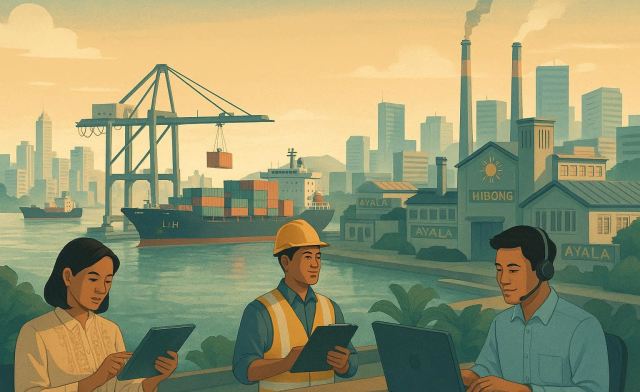
By Karl Garcia
1. Historical Context: Industrial Policy and Protectionism
Following independence in 1946, the Philippines confronted a central post-colonial challenge: how to develop a self-sustaining economy despite a colonial legacy of resource extraction, limited industrial capacity, and heavy dependence on imports. Policymakers adopted import substitution industrialization (ISI), a strategy widely employed in Latin America and parts of Southeast Asia, which sought to reduce reliance on imported goods by nurturing domestic manufacturing.
The Philippine government implemented ISI through several mechanisms:
- Tariff Protection and Quotas – High tariffs on imported consumer goods and intermediate inputs shielded domestic industries from foreign competition, allowing infant industries to grow.
- State-Led Industrial Projects – Investments in heavy industries, including steel, cement, and chemicals, were undertaken via state-owned enterprises or public-private partnerships.
- Incentives for Local Entrepreneurs – Financial support, tax breaks, and preferential access to raw materials encouraged domestic industrial investment.
A key legislative instrument was the National Economic Protectionism Act (NEPA) of 1971, which explicitly aimed to prioritize Filipino enterprises in the domestic market. NEPA offered protection against foreign competition through import licensing, equity restrictions, and preferential financing. It reflected a broader ambition of state-led industrialization, seeking economic self-reliance and reduced dependency on multinational corporations.
During this era, policies also encouraged agro-industrial linkages, such as food processing and textile manufacturing, with the expectation that industrialization could generate employment, foster technological capability, and reduce trade deficits.
2. Limitations of Import Substitution and the Onset of Deindustrialization
Despite these efforts, ISI and NEPA faced structural limitations:
- Small Domestic Market – Limited domestic demand restricted economies of scale, constraining productivity gains.
- Weak Industrial Linkages – Industries remained dependent on imported machinery, raw materials, and technology.
- Inefficiencies and Rent-Seeking – Protected industries often lacked incentives to innovate, leading to high costs and low competitiveness.
- Political Instability and Policy Inconsistency – Frequent shifts in policy and governance undermined long-term industrial planning.
By the 1980s, these factors led to deindustrialization, particularly in textiles, steel, and electronics, where imported goods were often cheaper and more reliable than locally produced alternatives. Industrial output stagnated, employment fell, and the Philippines increasingly relied on imports despite nominal protectionist policies. The political and economic upheavals of the Marcos era and post-Marcos transition further compounded these challenges.
3. Integration into the Global Trade System: GATT and WTO
In the late 1980s and early 1990s, global trade pressures accelerated shifts in Philippine policy. Membership in the General Agreement on Tariffs and Trade (GATT), and later compliance with WTO rules, required reducing tariffs and non-tariff barriers.
While global integration promised access to new markets and foreign investment, it also exposed domestic industries to international competition for which they were unprepared:
- Textile and garment producers struggled against lower-cost imports from China, South Korea, and India.
- Electronics firms could not compete with more technologically advanced East Asian competitors.
- The steel industry, reliant on imported inputs, lost ground to cheaper foreign products.
Trade liberalization, though necessary for competitiveness, accelerated industrial decline in vulnerable sectors, highlighting the tension between domestic protection and global integration.
4. Neoliberal Policy Shifts and Structural Adjustment
From the 1980s onward, successive administrations embraced neoliberal reforms, often under guidance from the World Bank and IMF. Key measures included:
- Trade Liberalization – Reduction of tariffs and removal of quantitative restrictions.
- Privatization and Deregulation – Sale of state-owned enterprises, easing of foreign investment restrictions, and market liberalization.
- Fiscal and Monetary Discipline – Policies aimed at reducing deficits, controlling inflation, and attracting foreign capital.
These reforms had mixed outcomes. While BPOs, electronics assembly, and export-oriented agribusiness flourished, traditional manufacturing continued to decline. The Philippines became increasingly service-oriented, with industrial decline reinforcing dependence on remittances and global demand for services.
5. Implications of Deindustrialization
The consequences of deindustrialization were profound:
- Employment Vulnerability – Loss of stable, middle-class manufacturing jobs pushed workers into informal or precarious employment.
- Trade Deficits – Domestic industries’ inability to meet demand increased imports, worsening balance-of-payments pressures.
- Regional Inequalities – Industrial decline concentrated economic activity in Metro Manila, intensifying regional disparities.
- Innovation Deficit – Firms invested little in R&D, limiting technological advancement.
The paradox is clear: NEPA and ISI policies failed to create globally competitive industries, while liberalization exposed structural weaknesses, demonstrating the complex demands of industrial policy in a small, open economy.
6. Contemporary Reflections
Today, the Philippines faces the dual challenge of reviving manufacturing and remaining integrated in global markets. Lessons from NEPA and neoliberal reforms highlight the need for:
- Strategic Phasing – Temporary protection linked to performance metrics.
- Domestic Capacity Building – Investments in skills, technology, and industrial linkages.
- Global Alignment – Policies consistent with trade rules and regional value chains.
- Sector Diversification – Balancing service exports with industrial development in electronics, agro-processing, and renewable energy.
Industrial policy is not merely a choice between protectionism and liberalization; it requires careful calibration, domestic capacity development, and integration with global economic realities.
7. Comparative Perspective: The Philippines in Southeast Asia
Examining Malaysia, Thailand, and Indonesia provides context for understanding why the Philippines lagged in industrial development.
7.1 Malaysia
- Phased Protection and Export Orientation – Managed tariffs, strong FDI attraction, industrial estates, and vocational training.
- Outcome: Globally competitive electronics and automotive sectors; strong export-oriented manufacturing.
- Lesson: Strategic, phased industrial policy with global integration drives sustainable growth.
7.2 Thailand
- Agro-Industrial Focus – Leveraged agriculture to build food processing and light manufacturing, coupled with infrastructure investment.
- Outcome: Avoided severe deindustrialization; diversified manufacturing and exports.
- Lesson: Aligning industrial policy with comparative advantage strengthens resilience.
7.3 Indonesia
- Resource-Linked Industrialization – Initial ISI followed by selective liberalization and export promotion.
- Outcome: Avoided extreme deindustrialization; concentrated growth in Java and Sumatra.
- Lesson: State capacity and targeted export-oriented investment mitigate liberalization shocks.
7.4 Comparative Insights
| Factor | Philippines | Malaysia | Thailand | Indonesia |
|---|---|---|---|---|
| Market Protection | NEPA; weak enforcement | Phased, performance-linked | Gradual, targeted | Initial ISI, selective liberalization |
| Export Orientation | Limited, late | Strong, early | Moderate | Increasing, selective |
| FDI Policy | Restrictive | Aggressive, structured | Moderate | Encouraged strategically |
| Infrastructure | Underdeveloped | Developed industrial zones | Developed regional hubs | Targeted industrial corridors |
| Skill Development | Limited | Strong vocational & technical training | Moderate | Focused regionally |
Insight: The Philippines’ delayed export orientation, restrictive FDI policies, weak infrastructure, and policy inconsistency explain its relative industrial lag. Protection alone is insufficient; success requires coordinated policy, investment in human and physical capital, and strategic global integration.
8. Policy Recommendations: Revitalizing Philippine Industrial Capacity
Drawing from historical lessons and regional experience, the Philippines can adopt the following strategies:
8.1 Phased, Strategic Industrial Policy
- Target high-potential sectors: electronics, renewable energy, agro-industrial processing, light manufacturing.
- Implement temporary, performance-linked protection with sunset clauses.
8.2 Leverage FDI for Technology Transfer
- Encourage joint ventures and partnerships for skills and technology transfer.
- Offer incentives in priority sectors aligned with global value chains.
8.3 Human Capital Development
- Expand technical and vocational education.
- Promote R&D and innovation grants.
- Integrate digital skills and automation training.
8.4 Industrial Infrastructure
- Develop modern SEZs and regional industrial corridors.
- Facilitate supply chain access and logistics efficiency.
8.5 Global Trade Alignment
- Gradually liberalize markets once domestic capacity is built.
- Ensure WTO/GATT compliance and legal defensibility.
- Leverage regional cooperation and ASEAN agreements.
8.6 Inclusive and Sustainable Industrialization
- Support SMEs with financing and technical assistance.
- Promote environmentally sustainable manufacturing.
- Ensure gender-inclusive workforce participation.
8.7 Institutional Strengthening
- Establish a dedicated Industrial Development Agency.
- Ensure policy consistency across administrations.
- Facilitate public-private collaboration in policy design and implementation.
8.8 Phased Implementation Roadmap
- Short-Term (1–3 years): Prioritize sectors, develop SEZs, begin skill-building programs, attract targeted FDI.
- Medium-Term (3–7 years): Liberalize competitive sectors, scale technology transfer, expand infrastructure.
- Long-Term (7–15 years): Build globally competitive clusters, diversify exports, strengthen regional industrial hubs, embed sustainability.
Expected Outcomes: Revived manufacturing employment, reduced trade deficits, technological advancement, regional development, and a resilient export-oriented industrial economy.
Conclusion:
The Philippine industrial trajectory—from NEPA-driven protectionism to neoliberal liberalization—offers vital lessons. Protection without capacity building leads to stagnation, while liberalization without preparedness accelerates industrial decline. By strategically combining targeted protection, domestic capacity building, global integration, and institutional reform, the Philippines can reverse decades of deindustrialization and achieve sustainable, inclusive industrial growth.
References and Further Reading
- Balisacan, A. M., & Hill, H. (2003). The Philippine Economy: Development, Policies, and Challenges. Oxford University Press.
- Bautista, R. M. (1999). Import Substitution Industrialization and its Aftermath in the Philippines. Philippine Institute for Development Studies.
- Campos, N. F., & Root, H. L. (1996). The Political Economy of the Philippines: Industrial Policy and Reform. Cambridge University Press.
- Rodrik, D. (2007). One Economics, Many Recipes: Globalization, Institutions, and Economic Growth. Princeton University Press.
- World Bank. (1993). Philippines: From Crisis to Sustainable Growth. World Bank Country Study.


Karl,
I happened to recently look into this Import Substitution plan that we tried in order to develop some manufacturing at home. We imposed tariffs on imports to protect local manufacturing. What I read that in response to this protectionism, our local manufacturers did not bother to make quality products since they had little or no competition. Did you happen to come across that in your research? I think it was true because I remember as a child we learned to look down upon “Made in the Philippines” products. By the 70s, however, I recall that our fabrics improved in quality, but I don’t know about other products.
During my childhood to youth I was conditioned to think that local products were inferior to “stateside”
Yes garments, marikina shoes, handi crafts were a few products that did impress me
So our local manufacturers only saw as far as the domestic market, which was of course tiny. They had no ambition to use the “privilege” of no foreign competition to develop products at least equal in quality to that of foreign competition. Par for the course for us Filipinos I think we have to admit.
Acceptance IS impotant moving forward but so is learning. I hope we learned.
How about accepting that we haven’t learned? hehehe.
I’m being cynical.
Your current subject is regarding formal education in the Philippines. The actual problem is likely the people, not the education, and I do include the people who develop the education curricula, etc.
Not having learned that we should be more greedy in manufacturing and go after foreign markets (which means produce higher quality products that can compete with foreign made products) begs the question: What else have we not learned?
From the posts I read here at TSOH regarding the Philippines I can tell there is a lot we have not learned.
While all Filipinos are a fault (somehow) because the nation is made up of Filipinos, let’s make sure blame is assigned proportionally to agency and responsibility. So in that reframing it’s the leaders and elites at the top who have the most blame due to both having the most agency while leaders choosing themselves for positions of responsibility. Poor Filipinos would have the least blame outside of voting “wrongly.”
Anyway…
The Import Substitution Industrialization (ISI) policy of the Philippines from the 1950s to 1970s was the Philippines bandwagoning onto a popular developing country trend at the time. Latin America led the way on ISI and the Philippines was “late to the party” (as usual). Well no one really knew that ISI (macroeconomic theory was still being ironed out at the time and indeed economists still can’t explain some stuff even now) would fail so it became a matter of how fast one pivoted once it was clear stuff was failing.
Actually ISI dead-ended for the Philippines in the 1970s long before ISI failed for Latin America in the 1980s. The main reason was that yes, the Third Republic economic policy was still rather laissez faire, essentially not using the small window that ISI’s protectionism affords in order to have the Philippine state direct and coordinate national champions. There was no real policy aside from “we are adopting ISI” — a policy of press releases, as usual.
Then there’s how developing nations utilized loans taken out on the sovereign (national) debt. In the 1950s to 1980s Latin American countries used sovereign debt in order to build infrastructure, schools, services, utilities (of course with a bit of corruption on the side) at a massive scale. The Philippines took out sovereign debt then blew most of the debt on corruption while asking the US (and later Japan) to build infrastructure on a charity basis — think the national electrification, McArthur Highway, damns, things like that. Yes, that happened even during the early to mid Third Republic. As we know Marcos Sr. accelerated the national debt at a great scale by building for-show infrastructure and greasing the hands of political allies during his 1969 re-election — leading to the 1969 balance of payments (currency) crisis when the peso was rapidly devalued after the peso-to-dollar peg was broken. Normally if a country’s currency has a lower value in relation to a foreign currency, it makes local exporters more competitive… but of course the Philippines had little to no manufacturers aside from the factories and businesses the Americans had left behind as little effort was made to industrialize since the 1950s (missing the second “I” in ISI). First Quarter Storm, rapid inflation, affordability crisis since imported stuff was now more expensive.
So the IMF recommended the Philippines follow a new economic strategy, export oriented industrialization (EOI) under the Taiwan and South Korea model. But of course whatever loans the Philippines got to accomplish EOI just went into corruption — in this case Marcos Sr.’s crony system after this 1969 second term win. Again little to no actual factories were built nor industrialization done.
Then there was the capital flight after Ninoy was assassinated which took away the few remaining foreign investors until stuff stabilized in the 1990s prior to the 1998 Asian Financial Crisis which blunted many things.
Nowadays the Philippines “follows” EOI quite strictly. The exports are OFW physical labor and BPO work products, thus enabling the Philippines to skip industrialization entirely, haha.
My last point is that it’s hard, nearly impossible, to become an export powerhouse without first saturating the domestic market. Usually exports consist of surplus from a saturated domestic market traded in the global economy to get things the domestic market is lacking or does not specialize in. Presently in Vietnam the per capita income may be slightly less than the Philippines, but economic power is more evenly distributed among a broader population (there’s no vast D+E in Vietnam), most Vietnamese seem to have enough food to eat and money to buy cheaper models of nice things, which is exactly what Malaysia, Singapore, Taiwan, South Korea all went through before. The Vietnamese are actually able to buy the things the factories located in their country are building, which should be a goal for the Philippines also.
See Irineo’s recent article which he kindly helped with writing based on my research if you’d like to read some ideas I had on the subject:
**Poor Filipinos would have the least blame outside of voting “wrongly.”** – Nguyen
I agree. “From those who have more, more is expected.”
But how about Rudyard’s description of us – “Half-devil, half-child?” Do we see that in the poor too? Or is that more with the elite? We have to examine the evidence. If true, that sure doesn’t help.
Disclosure: I am a member of the Kipling Society.
Well the reasons why the US embarked on a short adventure in imperialism, which one of the results was the Philippines for a time coming under the control of the US, are complicated and often contradictory.
In short certain American WASP circles, Theodore Roosevelt being the most prominent face of, had their own version of insecurity vis a vis the power of the European powers on the Old Continent. There were discussions along the lines of, paraphrased, “how is it possible tiny Belgium or small Netherlands could have empires but the US did not?”
There were other reasons such as the First Industrial Revolution in the US having saturated American markets with spillover into Canadian markets and Mexican markets not having sufficient purchasing power yet. So such WASPy elites figured if there were colonies, there would be a source of resources AND a captured consuming population.
Anyway, the US quickly figured out that having colonies would be a headache. Pretty much immediately actually in 1898, the same year the Philippines was acquired from Spain. Well before the end of Theodore Roosevelt’s 1901-1909 term, even Teddy Roosevelt had had enough of foreign adventuring. TR’s personal losses of two of his sons during WWI cemented his aversion to imperialism; a sentiment shared by many of his New England elite cohort.
Then the policy of Filipinization which started during the military administration, and became official policy with the Jones Act, accelerated by the Tydings-McDuffie Act.
As for Kipling himself, his personal beliefs were not that different from other patriarchal British elites of his time. Well, pretty much all the current world problems were caused by the colonial legacies of the UK, France, Netherlands, Belgium, Spain, Portugal, Italy and so on, but especially the British (followed by the French). Of course, everything gets blamed on the US, even by those Europeans who are fare more culpable and never bothered to “tutor” their subjects in the first place like the US attempted to do.
The Filipino elite have a lot to answer for in the blame department. The poor don’t have a lot to answer for, just “voting wrongly.” But if both are “half-devil, half-child,” I wonder how much that characteristic plays into the drama that is the Philippines under the rule of Filipinos. Karl spoke recently about the importance of acceptance in dealing with defects and weaknesses and moving forward (“Acceptance IS important moving forward but so is learning. I hope we learned.”).
Should we look at the evidence and decide if Kipling was right, and if we decide he was right, should we accept it and learn and move forward?
The easy route is to simply deny it. But then we have to deal with the consequences.
Hmm I see things differently:
I have often written about how the Philippines is actually two countries existing in the same physical space.
One country of microstate cities enclaved not by a physical intramuros but with walls of status and wealth.
Another country of everything else — a Philippine Wild Wild West where Filipinos are trying to make due the best they can.
The former constitutes 7-10% of the population; the latter, 90-93%.
Guess which population is neglected, and which population is emphasized culturally, politically.
By the way, the majority also now have their own culture, something I’m still trying to understand myself and I find ludicrous that most affluent and elite Filipinos brush broadly and dismiss easily.
I guess what I’m trying to say is the Duterte-type populist, while being elites themselves, have figured out how to tap into the zeitgeist of the D+E. It wasn’t something rare or exquisite; on the contrary the strategy seems to me to be quite simple — expand the successful local control strategy nationally and override the traditional dynasty horse trading and politicking.
Something to learn from in order in order to be used for pro-democracy and progress.
**I have often written about how the Philippines is actually two countries existing in the same physical space.
One country of microstate cities enclaved not by a physical intramuros but with walls of status and wealth.
Another country of everything else — a Philippine Wild Wild West where Filipinos are trying to make due the best they can.
The former constitutes 7-10% of the population; the latter, 90-93%. – Nguyen**
I don’t see it that way at all because the “two countries” you describe are too interdependent on each other. It is more like a Filipino household with “mga kasambahay.” I grew up with “mga kasambahay.” Our household of 5 (2 parents and 3 children) had 3. They were called “katulong” back then.
Examine that Filipino household model if you would and tell me if it better fits the bigger country situation that is the Philippine society.
Eventually, I would like to link my analogy, the Filipino household, to Nicholas Roosevelt’s “half-devil, half-child” description of us, if there is any interest in that here.
Countries, whether a physical sovereign entity or figurative socioeconomic “country,” can be interdependent or dependent. Long before globalization, and indeed from the dawn of human sedentary civilization, there has never been such a thing as self-sufficiency and no trade between other group; whether that be other family groups, other clans, other tribes, or other nations in the sense of having a common culture, much less autarky elsewhere.
The nacionalista strain within the Philippine elite and the echoes thereof have often, to their own detriment and the detriment of the Philippines, seen “the Philippines” (and by which they mean themselves) as resilient, indepedendent, even borderline autarkic even when they too depend on their community and others.
When my best friend visited me in Los Angeles for the first time decades ago she remarked “You’re so generous for letting your driver take a rest for the day.” I chuckled and replied that I am my own servant. Mind you she is an open-minded, well-educated and well-intentioned Filipina. Her family didn’t even come from old wealth, but rather wealth from her father’s busines dealings in Hong Kong where he resettledd to escape Martial Law. But in less than a generation her family went from being of Third Republic precariously lower middle class stock to being solidly Class B, adopting the attitudes of class as well (in their benign form in their case).
I think this is the wrong question to start the inquiry… because the reality is that households that can afford helpers would have a hard time understanding Class D+E, while Class D+E better understand their employers. The former might have a hard time adjusting if their social and economic situation deteriorated; the latter has no where to go but up.
As for Rudyard Kipling’s assessment of the peoples of the Philippines (who were not yet Filipinos in the modern sense), we must recognize that Kipling’s ideology and worldview was one of a Victorian aristocrat, and not even American, though his poem The White Man’s Burden was part of a series of short stories and poems in a movement of which Kipling was a participant that sought to influence US decisions of whether or not to keep the newly won former Spanish territories. Kipling and his co-ideologists in the Imperialist Movement (of which William McKindley and Theodore Roosevelt were prominent members of the movement’s American branch) were successful in aquiring the former Spanish colonial possessions yes, but as I’ve explained the American side of the movement almost immediately recognized its folly yet felt that as a matter of American national interest could not release the Philippines due to the British, Germans and Japanese circling around waiting for the Spanish to be expelled. That recognition of folly in imperial ambitions was what led the embark on a path of preparing the Philippines for indepdenence and pushing other countries to give up their colonies after WWI. Up until the Suez Crisis the UK and France still thought their countries could still have imperial ambitions; when the US intervened and said “no,” the UK acquiscened gracefully while France is still angry about losing colonial possessions to this day in an unhealthy way that interferes with diplomatic affairs.
While I am an admirer of Kipling’s other works and am a member of the Kipling Society, I think it to be fair to say that we should understand, but not subscribe to outdated views, relitigating what had been done. The “sullen peoples, half devil and half child” pronouncement should instead be judged under the principles of moral relativism. Personally, I think stretching moral universalism far outside of its useful scope is a great danger that no longer makes it universalist but rather at risk of personal prejudice clouding objectivity that ends up inhibiting progress.
“You’re so generous for letting your driver take a rest for the day.”
Was your driver in the US (L.A.) a “kasambahay?” I don’t understand your Filipina lady friends question. We regularly allowed our “mga Katulong” a day off. If you talk to Filipino families today (as I have), it is not unusual for them to allow a “kasambahay” to eat at the dining table with the family. That didn’t happen in my day, but I’m talking about current Filipino households.
I have heard from Filipinos who retire in the Philippines that they do not hire a “kasambay” who lives unlike back in my day. They say it is hard to find one that you can trust. In my day, it was not uncommon for a middle or upper class family to have a “kasambahay” who had been in the family’s employ for many years, in some cases many generations. These were ones you could trust and generally they kept any other “mga kasambahay” in check should they get any devilish ideas. We had one for many years. When my mother got rid of her because of some disagreement, the thefts began. We used to buy rice by the sack, but noticed it got “depleted” at a faster rate. I lost a nice watch that just mysteriously disappeared.
“I think this is the wrong question to start the inquiry… because the reality is that households that can afford helpers would have a hard time understanding Class D+E, while Class D+E better understand their employers.” – Nguyen
It is a matter of the relationship, a co-dependent relationship, not understanding of each other’s station in life. You say the D+E better understand their employers than vice versa. What is your evidence of that and I emphasize your use of the adjective “better” to describe the understanding?
I wonder if the “half-devil, and half-child” people that Kipling described understood Kipling’s class better than Kipling understood theirs? Yes or no, however, I don’t think it matters w/ respect to describing the relationship, however.
“While I am an admirer of Kipling’s other works and am a member of the Kipling Society, I think it to be fair to say that we should understand, but not subscribe to outdated views, relitigating what had been done.” – Nguyen
My proposition is that Kipling’s view is not outdated. I don’t take pleasure in saying that. But I submit that it still applies today and am willing to discuss it further. You like to assume that if you give the D+E the tools, they will be empowered. Yet, as I recall, you admit to have given up on many in the D+E who you have tried to empower by teaching them, and yet found yourself wasting your time….could that be evidence of your dealing with a “half-devil, half-child?” Is that more the rule than the exception?
From a literary standpoint, the half-devil half-child description is great at capturing a moment, or series of them, but not a peoples’ character. 120 million souls have a lot of character, with a touch of devil and a dash of child. Your cousin might joke and laugh in drunken warmth under the mango tree, then murder you in the dead of night if aggrieved or needing to snatch the money you mistakenly showed him. There seems to be a gross detachment from consequence across many classes, ask Dela Rosa, or my wife’s cousin, who killed a neighbor who was planning to kill his family. I love literature but much of the stuff is fiction.
I am a bit tired today (not towards you particularly) so I will not be giving a long reply back this time. I will say however that the best way to see “how the Philippines is doing” and from that what are some possible ideas to improve the situation, I suggest you visit, especially with D+E families. Not to bring ayuda or relief, but to live with them in their own places, eat the food they eat and chat about the things they chat about. The limitation of an approach from afar is quite similar to the way much of a Philippine academia is limited — they work on theory that is built on top of previous untested theory that ultimately derived from what some white man said in the past to justify whatever ideology was in vogue at the time. It’s much faster to just “go out into the field” to find the truth.
“I will say however that the best way to see “how the Philippines is doing” and from that what are some possible ideas to improve the situation, I suggest you visit, especially with D+E families.” – Nguyen
Oh, I totally agree. But until that happens, I like to discuss the improvements suggested in places like TSOH. I spent 27 years plus in the Philippines. I lived with the D+E families all around me, although they were not called D+E back then. Household servants were not called “kasambahay” either. We usually had three during my growing up years. We weren’t from different countries sharing the same space. We were from different social & economic classes for sure.
I note that you wrote “I espouse for doing things the “Filipino Way,” within the Philippine framework.” That is what we have been doing since 1946. My doctor acquaintance who did retire in the Philippines after years of practice in Denmark and the US calls the Filipino Way “PinoyThink.” He is not a fan of it.
You say that Philippine Academia “work on theory that is built on top of previous untested theory that ultimately derived from what some white man said in the past to justify whatever ideology was in vogue at the time.” Not sure what you mean by that, but Philippine Academia are not from “afar” like me, so being up close does not necessarily bring positive results in the way of coming up with solutions.
Nicholas Roosevelt did spend time in the Philippines before writing his book. He does seem to agree with Kipling’s “half-devil, half-child” diagnosis. He quotes Kipling in his book. I’m not done reading his book yet. I find it quite interesting.
I wonder if you agree that what he considered was the White Man’s burden is now the Brown man’s burden in the Philippines? Maybe that is not true either…perhaps there is no burden. Could the “Filipino way” of dealing with burdens be to deny they exist? Isn’t that what the A, B, and C do with the D+E, i.e. deny they exist, until they need a “kasambahay” or their votes perhaps?
Just my thoughts on a relaxed Sunday morning.
Right. No one is discounting your lived experience as a young man in the Philippines back then. I am not dismissing your experience — rather I am saying that experience and history needs to be put into context relative to what happened during that time, not what is possible now. So let’s keep in mind past experience and history as reference points in order to move forward relative to where the Philippines is now , not to use the past to justify continuing inaction.
It may be that your retired doctor friend had already resigned to the impotence of the Filipino people, of which he is included. One wonders why he even moved “back home.” If I knew him I’d suggest he get to know regular Filipinos without prejudice or bias. To put it another way, no one wants to be commanded and told what to do, not a poor person, nor an educated person; but I have observed that many people are willing to come together communally to work on shared interests when there is a sense of shared respect.
Most Philippine academia are just as far removed and detached from the reality of the Philippines as many elites are. After all, academia are part of the “elites.” They in the past made shit up (literally) to fill in gaps rather than go out and learn the truth, something that is thankfully done less nowadays. It’s not a surprise that the best work on Filipinology, Philippine sociology, and anthropology as relates to the Philippines have been done by “foreigners” who seemed to love the Philippines more than Filipino elites loved their own country.
Yes, and I think works from prior eras should be valued — to understand the context of that era. Even the best historians can make the mistake of trying to study subjects within a vacuum. No, human history and events are not in a vacuum. There is a context and there is a connective web of how events relate to each other in order to become history.
In that regard the “half devil, half child” quote should be seen in the context of how Americans (and British) viewed the world over 100 years ago. Which is not the world of today.
This is a topic that is hard to simplify. The framework as it operates in reality is a lot more complicated than it appears on surface. I have done some analysis work recently on the subject if you’d like to read:
The Kingdom Beneath: Hidden Sovereignty Complex:
https://claude.ai/public/artifacts/a727e143-b63c-4c35-ac5e-a4e7135d9b85
The Hidden Sovereignty Complex: Political Mythology, Millenarian Consciousness, and the Architecture of
Philippine Myth-Making, 1840–2024:
https://www.dropbox.com/scl/fo/sblg992h3tfhulywxl4d0/ABhwJmYvPttaLadpH8TJqY4?rlkey=d1rgn27wiy47kt18ur5erlf92&e=1&st=h3t2dd1q&dl=0
Thanks, Joey for the interesting discussion. I find it hard to pin you down on a single subject. So allow me to wrap it up and conclude.
To try and wrap it up, Karl G. presents the Philippine journey towards building a nation after no longer being the White Man’s burden. He suggests adjustments to the original plans (Import substitution, etc. etc.). I suggestion that the original plans were good to begin with, it was the execution that was poor. My concern is that new plans will likely meet the same poor execution.
You disagree with the poor execution and propose that the plans were not proper for the Filipino, and needed to envision implementation in “the Filipino way.”
I suggest that the reason for poor implementation is the diagnosis of us as a people as being “half-devil, half-child” as articulated by Rudyard Kipling and Nicholas Roosevelt agrees. Roosevelt’s proposition to the US government is that the Philippines needs more time to prepare Filipinos for self-government.
We know the US declined that suggestion and gave the Filipinos what they wanted, in July of 1946. Fast forward about 80 years and our results have been poor. I suggest it is because from 1946 to the present, we are still half-devil, half-child…speaking of the collective, not individual Filipinos.
You disagree.
I ask about White Man’s burden, suggest that now it is Brown Man’s burden….or maybe no burden at all (Filipino way – denial). You suggest it is a topic difficult to simplify…and introduce this Hidden Sovereignty Complex topic.
I took a peek at the links you gave and found them too far out in left field for my comfort, not to mention understanding. I know we Filipinos are a very superstitious lot, but Hidden Sovereignty Complex??? I asked Gemini about the links and Gemini said: “You can think of this as a piece of digital fan-fiction or a creative school project.”
So I think we can end with the “digital fan-fiction” as Gemini labeled it.
Best regards….
and even now, those who ARE interested in the truth (including some like Ileto who is one of your major sources for the HSC which can be seen as an extension of the Pasyon and Revolution framework) are busy fighting for “Epistemic power and authority” as Caroline S. (maiden name Sy) Hau clearly delineates:
https://www.academia.edu/33774856/Privileging_Roots_and_Routes_Filipino_Intellectuals_and_the_Contest_over_Epistemic_Power_and_Authority
haha it takes a female Filipina intellectual to point out that many of the present generation of Filipino intellectuals are acting as “datus of the mind”. Actually I would be a lakan here by virtue of my being the son of one of those datus but this online barangay is too small to be important.
——
now re HSC: many of the examples you have put into your study are from Mindanao. Historically it makes sense as the Philippines often exported the people it could not give any opportunities to “frontiers”. That a mindset dating back to the colorums and Sakdals is strong in Mindanao is not surprising considering that Magsaysay himself encouraged settlement to Mindanao to help defuse the Huk challenge in Luzon.
That Duterte utilized the HSC is something I probably instinctively realized when I tweeted in jest that he looked to me like Bernardo Carpio acting ill-tempered from having been in the smelly ground too long, or that he seemed to see himself as the Filipino “Tupac Amaru”. Others noted the behavior of some DDS as similar to devotees of the Poong Nazareno in Quiapo, with the joke “Poong Nazeraan” coming pretty soon after that.
So the Philippine elite (including myself) understood and understand the mythology but mock(ed) it. Rizal has Spaniards and some ilustrados mocking the story of Bernardo Carpio somewhere in one of his novels. I think Rizal wanted to warn people not to underestimate the symbolism of the “Hidden Sovereign”.
https://societyofhonor.wordpress.com/wp-content/uploads/2026/05/a-legacy-of-the-propaganda-the-tripartite-view-of-phil-history.pdf P.S. the ilustrado view of the Philippines being redeemed was expressed in non-millenarian terms but had some structural similarities..
(just found a copy of that paper – one of my father’s older works still in English – somewhere and uploaded it here)
Not just a Filipina but a Chinay. Chinoys of course being consummate insiders but at the same time held apart as permanent outsiders. I believe Prof. Xiao Chua has written about this a number of times.
Which brings me back to my analogy of the inuman (or in the Visayan languages, mag-inom) as an entry metaphor into the way I, as an outsider, view relational mechanics in the Philippines:
While in more educated and respectful circles the participates may not engage in so much drinking the effects seem often to be just the same — the more rounds of tagayan go on the higher the chance of argument or even away of base measuring bouts in who is the mightiest, richest, most successful (which in polite society is replaced with who has the most followers, holds the most property, has the most political or insitutional power). Where positions held are justified “because I said so and because I have more followers.”
I did pick specific Mindanaoan examples; it is also important to remember that just as Magsaysay through Marcos Sr. encouraged the internal colonization of Mindanao to release pressure closer to Luzon. Later on the subsequent descendents of those settlers “reverse-colonized” urban areas by migrating to work in the brief period of industrialization (late 1950s to early 1970s), starting with Metro Manila, a cyclical phenomenom that has been going on since the 1950s.
My original inception of the Hidden Sovereignty Complex was something I had been thinking about for years: Tangata manu — the Bird-man cult of Rapa Nui. The Rapa Nui of Easter Island were of course (East) Polynesian, and Polynesians are a branch of Austronesians.
Across Austronesia, Oceania, Melanesia and Polynesia there were other millenarian cults that arose as reactions to social collapse (of the pre-existing order) and scarcity. Some examples are:
So the HSC is not necessarily a Philippine phenomenon. I am interested in teasing out any connections to pre-colonial, even proto-Austronesian beliefs however I am of course limited by lack of expertise in reconstructing this area of study. There is also not much study done in the area in the first place. Of course there is also the broader human reaction to being in a state of uncertainty that transcends the Philippine context, such as the millenarian trends of the QAnon and UFO cults (LCpl_X would probably find this subject a hoot).
A bit amused here as my Los Angeles area Catholic diocese has a dedicated Poong Hesus Nazareno Filipino Catholic Center, built by Fil-Am Catholics. Two years ago I had the occassion to participate when the Poong Hesus visited, where previously I had been the one paying a visit in the Quiapo Minor Basilica of Jesus Nazareno in Quiapo, Manila.
I do remember reading this paper by your father years ago. I had thought at the time that his tripartite model of Rizal was a bit utopian and reconstructionist… Actually I had also always wondered where Rizal had picked up his knowledge of indigenous folklore. Wherever the origin, that indigenous folklore Rizal learned, when syncretized with Christianity produces the template later used by the Pasyon. That template being what was explored in the HSC.
Carolyn Hau a lot more, even about how many Chinoys in the Spanish period hid their identity by calling themselves “mestizos”.
Xiao when I still checked out comments around my father’s Facebook posts (especially when long-form posts were still possible) seemed a bit like the Chinoy insider/outsider within Pantayong Pananaw who did take a few drinks out of respect but found an excuse to leave the inuman session early.
my father’s older forms of inuman were coffee and ensaymada at the UP Faculty Center, or long chess Sundays with some other professors (where my mother actually got impatient when she fetched him as they took extremely long) which I sometimes took part in, or an amateur painting club of professors that even managed to have an exhibit in gallery of the Quezon Memorial. Old school Fiipino journalists would either drink coffee or engage in real inuman – plus smoking.
Xiao Chua mentioned quite a while ago how the Pantayong Pananaw group was scattered out of UP mid-noughties – and to me he said it was Agoncillo followers.
Xiao Chua’s PhD thesis is about the Quiapo-based devotion around the Poong Nazareno.
Though he probably will see all that more favorably. He was pretty busy sharing stuff on Facebook when a movie came out about Hermano Pule – yes the colorum man – some years ago. It is also from one of his shares on FB that I learned that Bonifacio visited the “cave of Bernardo Carpio” in San Mateo, Rizal.
Xiao also sees Bonifacio as the true first President of the Philippines – a claim which IS a bit HSC. But well, I once saw a presentation – not by my father himself but by someone else from Pantayong Pananaw – via a diagram implying that Pantayong Pananaw was the submerged legacy of Bonifacio’s “Ang Dapat Mabatid ng Mga Tagalog” returning to Philippine consciousness. So maybe even many who don’t intend to have a bit of HSC in them.
I read something by Ileto not too long ago where he seems to see the Japanese period of the Philippines as the completion of the “unfinished revolution” – which is HSC’s intellectual cousin IMO. There was also a passage where he seemed to praise Valentin delos Santos of Lapiang Malaya.
In any case, I suspect a bit of a continuum, not a dichotomy between elites and masses in the Phiippines.
even the elites were pretty close to Filipino folklore at least back then as they didn’t live behind walls yet unless they were Spaniards. The documented story of Seberina Candelaria who was even popular among the principalia of her place in Bulacan is an example of that:
https://www.academia.edu/9957906/Devils_Familiars_and_Spaniards_Spheres_of_Power_and_the_Supernatural_in_the_World_of_Seberina_Candelaria_and_her_Village_in_early_19th_Century_Philippines
BTW some of the critics of Ileto’s Pasyon and Revolution do raise the point that the pasyon was popular among members of at least local elites as well. BTW one aspect where even Ileto seems to concede a continuum is how he detailed that the likes of escribanos (village scribes, often failed priests) were already the core of a provincial middle class. And of course critics of Pasyon and Revolution do point out some Enlightenment influences on the Katipunan. One could see the continuum I guess in the masonic stuff the ilustrados (and many members of the Katipunan and the Republic: Bonifacio, Luna, Aguinaldo etc.) were fond of, or that Rizal’s mother kept the skull of her son, a very native practice that even my Bikolana great-grandmother followed with her late husband. BTW my grandfather’s skull was exhumed and examined when my grandmother was buried in 1995, I was told. I definitely lack the background to go deeper into all that though..
“Industrial policy is not merely a choice between protectionism and liberalization; it requires careful calibration, domestic capacity development, and integration with global economic realities.” – Karl Garcia
Karl’s essay gives an excellent bird’s-eye-view of the situation. I thought that the government’s original plan was sound. It matches what other countries did. We did not fail in the planning…we failed in the execution. Karl’s essay points that out. The solution, I believe, is not just in more planning. That is important because the game has changed. But the issue of poor execution has to be addressed, else history will repeat itself.
All I’ll say here is a plan that was not executed is probably not a plan that fits the situation, no matter the merits of the plan itself. Filipino liberals have a curious preoccupation to doing things the Western way, conditions for accomplishing that methodology which do not currently exist. Rather, I espouse for doing things the “Filipino Way,” within the Philippine framework. There is a lot of room to move forward within the indigenous Philippine framework. In any case the vast number of the population are D+E, who operate within that Philippine, not Western framework. One may have an objective of first educating the D+E to give them the tools needed to operate within a Western framework, but that would possibly take decades, and may not be successful anyway.