The Propaganda Movement in the Philippines: Published and Unpublished Works as Instruments of Reform
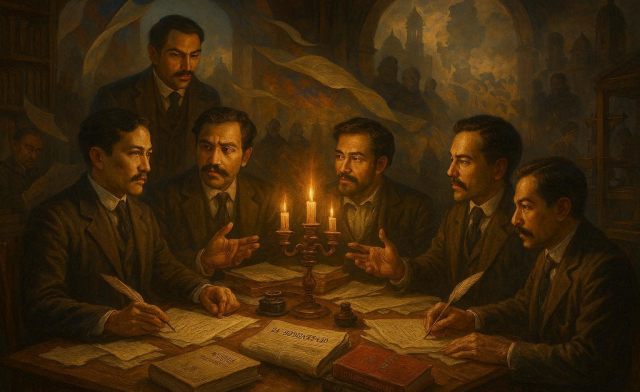
By Karl Garcia
The Propaganda Movement, emerging in the late 19th century, represents a seminal chapter in Philippine history, bridging the intellectual awakening of the Filipino people with the eventual pursuit of independence. Unlike the revolutionary currents that would later culminate in the 1896 Philippine Revolution, the Propaganda Movement pursued reform through education, literature, journalism, and peaceful advocacy. Its proponents, often referred to as ilustrados, were educated Filipinos who had studied in Europe and were exposed to liberal ideals of political participation, equality, and civic responsibility. The movement’s works—both published and unpublished—served as the primary vehicles through which Filipino intellectuals articulated grievances, demanded reforms, and shaped a collective national consciousness.
Historical Context and Objectives
The Philippines in the late 19th century was under Spanish colonial rule, where power was concentrated in the hands of Spanish authorities and the friar-dominated clergy. Political representation for Filipinos was nonexistent, education was limited, and abuses by religious orders were widespread. The Propaganda Movement emerged in response to these systemic inequities, seeking peaceful reforms rather than armed insurrection. Its main objectives included:
- Representation of the Philippines in the Spanish Cortes.
- Equal treatment of Filipino clergy and secularization of parishes.
- Freedom of the press and assembly.
- Educational reforms and access to knowledge for Filipinos.
- Abolition of discriminatory colonial laws.
The movement functioned primarily from Europe, particularly in Spain, where its leaders could write freely and interact with liberal intellectual circles. By employing the power of the written word, they sought to awaken both the colonial authorities and their fellow Filipinos to the necessity of reform.
Key Leaders of the Propaganda Movement
The movement’s intellectual vigor was embodied in its leaders, who combined academic training with literary talent and social conscience. Among the most prominent were:
- José Rizal, the polymath whose novels would later ignite nationalistic fervor.
- Marcelo H. del Pilar, a journalist and writer renowned for his satirical critiques of clerical power.
- Graciano López Jaena, an orator and journalist who founded the movement’s primary newspaper, La Solidaridad.
- Mariano Ponce, a physician, writer, and diplomat who coordinated reformist networks.
- Antonio Luna, scientist and early propagandist, who contributed essays and scientific writings.
- Pedro Paterno, a politician and writer who advocated reform and mediated correspondence between leaders.
These figures exemplified the intellectual caliber and moral commitment that distinguished the Propaganda Movement from earlier reformist efforts in the Philippines.
Published Works: The Engine of Reform
The written word became the movement’s most potent weapon. Publications ranged from newspapers and journals to novels and pamphlets, each targeting specific audiences and employing distinct literary strategies.
Newspapers and Periodicals
- La Solidaridad (1889–1895)
Founded in Barcelona by López Jaena and later edited by del Pilar, La Solidaridad was the movement’s principal vehicle. It published essays, editorials, and letters calling for political reform, secularization, and equality. Through its pages, propagandists debated strategies, criticized colonial abuses, and rallied international attention. - Diariong Tagalog (1882–1885)
Although produced under stricter censorship, this publication circulated reformist ideas within the Philippines, particularly among educated classes. It championed vernacular education and the moral upliftment of Filipinos under Spanish rule.
Books and Pamphlets
- Noli Me Tangere (1887) – José Rizal
Rizal’s seminal novel exposed the social cancer of colonial abuses, particularly the tyranny of the friars, the corruption of officials, and the suffering of ordinary Filipinos. Written in Spanish to reach both local elites and European intellectuals, it humanized the Filipino experience under colonialism and called for social reform. - El Filibusterismo (1891) – José Rizal
A darker, more radical sequel to Noli Me Tangere, it warned of the consequences of continued oppression and suggested that meaningful reform required both moral awakening and structural change. - Dasalan at Tocsohan (1883) – Marcelo H. del Pilar
This satirical religious pamphlet mocked clerical abuses by parodying prayers and catechism, undermining the moral authority of friars while educating Filipinos about their exploitation. - La Soberanía Monacal en Filipinas (1888) – Marcelo H. del Pilar
In this work, del Pilar criticized the friars’ monopoly over political and social life, demonstrating that their authority was neither divinely sanctioned nor beneficial to society. - Fray Botod (1889) – Graciano López Jaena
A sharp satire on the hypocrisy and greed of Spanish friars, Fray Botod entertained while provoking reflection on colonial injustice.
These publications were critical not only for informing Filipinos but also for engaging European sympathizers who could pressure Spanish authorities to enact reforms.
Unpublished Works: Private Advocacy and Correspondence
Due to censorship and the threat of persecution, much of the movement’s work circulated in manuscript form or through confidential letters. These unpublished materials included:
- Letters to Spanish Officials – Rizal, del Pilar, and López Jaena wrote petitions and appeals to ministers, monarchs, and journalists advocating reforms and critiquing colonial policies.
- Private Essays and Treatises – These texts explored education, governance, and social reform, often circulated among expatriates or discreetly sent to sympathetic Filipinos.
- Memorials and Petitions to the Cortes – Formal documents seeking representation and civil equality, carefully crafted to influence decision-makers without inciting backlash.
- Confidential Circulars – Used to rally support among Filipino communities abroad, these documents outlined strategies for promoting reform and unity.
Though less visible than published works, these materials were essential in coordinating efforts, shaping strategy, and maintaining morale among propagandists.
Impact and Legacy
The Propaganda Movement’s greatest achievement lies not in immediate political victories but in the awakening of Filipino national consciousness. Its intellectual output exposed abuses, legitimized reformist arguments, and inspired subsequent generations of leaders, ultimately paving the way for the Katipunan and the 1896 Revolution.
Even today, the published works of Rizal, del Pilar, and López Jaena remain central to Philippine education and literature, while the unpublished manuscripts offer scholars insight into the careful, strategic thinking of the movement’s leaders. Together, these works exemplify the transformative power of ideas, demonstrating how reasoned argument, satire, and literature can challenge entrenched power and shape the course of history.
Conclusion
The Propaganda Movement illustrates the critical role of literature and intellectual discourse in nation-building. By leveraging both published newspapers, books, and pamphlets as well as unpublished correspondence and manuscripts, the ilustrados of the late 19th century effectively laid the foundation for modern Philippine nationalism. Their works were instruments of reform, vehicles for education, and catalysts for political consciousness, proving that the pen, indeed, can be mightier than the sword. The Propaganda Movement stands as a testament to the enduring power of ideas to inspire justice, equality, and national identity.


Excerpt: ” Its main objectives included:
Abolition of discriminatory colonial laws.
2. Representation of the Philippines in the Spanish Cortes.
3. Equal treatment of Filipino clergy and secularization of parishes.
4. Freedom of the press and assembly.
5. Educational reforms and access to knowledge for Filipinos.”
We pretty much got what we asked for while under the Americans. I don’t think we did a good job with what we got. I’ve recently stumbled upon a book written by American Nicholas Roosevelt back in 1926: The Philippines: A Treasure and a Problem. It can be found on-line. It is a criticism of the Filipino of that era. Some in TSOH may find his thoughts interesting.
Here is an excerpt from Nicholas Roosevelt’s book, Ch. 4 Democracy vs. Despotism
>>The principal difference of opinion is as to whether a dictatorship by Filipinos or by Americans is best for the Islands. It is hard for either side to still its racial pride. The Filipino, very naturally, resents even the implication that he is not best able to administer his own affairs. As one shrewd observer put it, he is sensitive to criticism of himself or his people on account of his inward lack of confidence in himself. “He may become self-assertive or aggressive, and aspire for high position whether he is fitted or not. He is eager for degrees and honors, regardless of what he has done to deserve them, and is looking for short cuts to success/’ His own high estimate of his abilities often strikes Americans as pitiful, as it is based on his aspirations rather than on his capacities. It is said that when the Filipino Cabinet presented its resignation to General Wood, and to its great surprise learned that he accepted it, its members resented more than anything else
his remark to them that their action was unworthy of serious-minded men. The very fact that they knew in their hearts that this was true made it rankle all the more bitterly.
The Americans, on the other hand, feel that they alone are prepared to furnish the initiative and driving power to push through an efficient plan of development, and that their position out of and above Filipino politics gives them the opportunity to render more disinterested service than can the Filipinos. They realize that fair play and justice must be ever present in the execution of such a project. The idea of fair play is as alien to the Filipino as to all other Orientals. His conception of justice is, like that of so many Asiatics, governed by influence and position rather than by right and wrong. In China the saying is common that law goes to the highest bidder. In the Philippines it may be said that justice is on the side of the powerful—the inherent principle of despotism.<<
Thanks CV
“The movement functioned primarily from Europe, particularly in Spain, where its leaders could write freely and interact with liberal intellectual circles. By employing the power of the written word, they sought to awaken both the colonial authorities and their fellow Filipinos to the necessity of reform.” – Karl Garcia
I recall that when Rizal arrived in Spain in his first trip to Europe, he found the Filipinos to be more engaged in “wine, women, and song” than in working for reforms in the far off Philippine colony. I believe he commented that they were worse than the Spaniards, waking up late and taking siestas all the time. As I understand it, he whipped them into shape and said among other things that if they expect to be taken seriously by the Spanish they have to be “above reproach” in their behavior, i.e. they need to be more virtuous than virtuous Spaniards or something to that effect.
I think it worked for the most part, with Rizal leading by example. What would the movement have been like minus Rizal?
I’d like to give a shout out to Spaniards who championed the cause of reform in the Philippines. Some were “Insulares” i.e. pure blood Spaniards but born in the Philippines. “Peninsulares” were pure blood Spaniards born in Spain, i.e. the Iberian Peninsula. Here are some names I can give a shout out to: Joaquin and his brother Felix Pardo de Tavera, Franciso Pi y Margall, Miguel Morayta, Emilio Junoy, Manuel Zorilla, Juan Atayde, and Antonio Regidor.
Years ago, I got interested in these people because I had joined a Yahoo Group called Circulo Hispano-Filipino. That is where I met this group of Spanish speaking Filipinos. I was unpopular with them because their idea of a good Hispanista was someone who hated the Americans! Hahaha
My focus was to talk about topics the Propaganda folk would talk about. For fodder, I thought to look up Spaniards who spoke Spanish more fluently than they did AND spoke about abuses by Spaniards in our countries. They did not want anything to do with that. Eventually I got kicked out, hehehe
Key Themes of the BookEconomic vs. Political Focus: Roosevelt argued that the true challenge in the Philippines was economic development rather than political sovereignty.Opposition to Immediate Independence: He advocated against immediate American withdrawal, viewing the push for immediate independence by local politicians as premature and harmful to the general population.U.S. Duty: He framed the American presence as an uncompleted task of preparing the population for stable, long-term nationhood.Historical ControversyThe book sparked massive outrage among the Filipino public and political leaders. When President Herbert Hoover later appointed Nicholas Roosevelt as Vice Governor-General of the Philippines in 1930, widespread protests erupted in Manila, with demonstrators famously hurling copies of his book into Manila Bay. Due to the intense local backlash, Roosevelt ultimately declined the appointment.
“The book sparked massive outrage among the Filipino public and political leaders.”
Exactly….was their outrage valid? What lessons from the leaders of the Propaganda did they learn and apply? You can see why Rizal criticized us: “Our ills we owe to ourselves…”
We obviously need to do better.
CV, a similar over-defensive reaction happened in response to Glenn Anthony May’s Inventing a Hero: The Posthumous Re-creation of Andres Bonifacio (1996). At the time there was a huge and immediate uproar in Philippine academia (which I vaguely remember as I was in junior high school and had not yet visited the Philippines 2 years later). May was working from verifiable archival records while the Philippine academics who were participating in an act of sacred narrative protection of nationalist hagiography were delivering an emotionally-charged pushback against “foreign” interference to an integral pillar of national hagiography. There was the usual accusations of “you accused first,” alleging that May was dismissing wholesale the work of Agoncillo and Ileto, which was definitely not the case. Academic critique and integrating new (or re-discovered) knowledge into a theory is not a personal attack but many Philippine academics took it as an attack.
The humorous irony is that it was in fact Filipinos, through Aguinaldo’s Magdalo faction, who suppressed Bonifacio (and Bonifacio’s Magdiwang faction) after the fallout from Tejeros. It was the US Governor-General Francis Burton Harrison, a proponent of Filipinization who established Bonifacio Day via the 1921 Philippine Legislature Act 2946 — thus being the initiator of Bonifacio’s rehabilitation that enabled Philippine academia in 1996 to rail against May’s Inventing a Hero.
I myself encounter furious pushback and overly sensitive retorts at times when I’m in the Philippines. That’s why I choose to stay away from Manila elite circles, especially around UP alumni who are perhaps 50 years old or younger. They sometimes live in their own constructed worlds.
“Academic critique and integrating new (or re-discovered) knowledge into a theory is not a personal attack but many Philippine academics took it as an attack.” – Joey
Sadly, I am not surprised. I think we call it “balat sibuyas” or being thin skinned, speaking of my kapwa Pinoys who are often too quick to label something a personal attack as opposed to objective or even constructive criticism. Not a productive trait, in my opinion. I think N. Roosevelt attributed that trait to insecurity.
Nicholas Roosevelt was trying to point to the mistakes the US had made up until 1926 in its effort to “tutor” the Filipinos on democracy and self-governance. He was hoping that in cooperation with the Philippine leadership (Quezon and Osmeña primarily), the Americans AND Filipinos could change strategy and course correct. In sports we would call it “half time adjustments.”
But of course that was not to be…and the US gave up on its first try at tutoring a colony on self-governance. I have not read Nicholas Roosevelt’s book completely yet. My intention is use it to balance it against Karl Garcia’s essay on the Propaganda. I think it will be a fun exercise over a cup of Java or a beer or a glass of wine.
Karl’s article “AMERICAN POLICIES AND PHILIPPINE TRANSFORMATION: FROM COLONY TO SOVEREIGNTY” is coming out on May 27th (schedule shifts may happen of course)
**Karl’s article “AMERICAN POLICIES AND PHILIPPINE TRANSFORMATION: FROM COLONY TO SOVEREIGNTY” is coming out on May 27th (schedule shifts may happen of course)**
Ah, I am looking forward to that. I was just reading up a bit on the role of the US after our “sovereignty” in July of 1946. It is not very pretty. For the most part, our leadership in close collaboration with American business (and maybe politics) basically sold “taong bayan” and the country got sold down the river. The Philippine elite and some American businesses made money, but not much of it trickled down. The low point I imagine was the bankrupt nation in 1986.
https://joeam.com/2020/06/19/theres-no-such-thing-as-crony-capitalism-its-crony-corruption/#comment-361434 this comment by Sonny (born in 1943, left for the USA in 1969 so similar generation as yours, I guess a bit older) is his opinion on why the Third Republic from 1946-1972 failed:
https://joeam.com/2020/06/19/theres-no-such-thing-as-crony-capitalism-its-crony-corruption/#comment-361724 this as well:
https://joeam.com/2020/06/19/theres-no-such-thing-as-crony-capitalism-its-crony-corruption/#comment-361738 and this:
https://opinion.inquirer.net/123446/rise-and-fall-of-our-fifth-republic MLQ3 (Manolo Quezon) believes that the 5th Republic (the post-EDSA order) ended in 2016..
https://www.facebook.com/notes/770753413778775/ and these were MLQ3’s notes on 70 years of post-1946 Independence (back in 2016)
https://joeam.com/2020/06/19/theres-no-such-thing-as-crony-capitalism-its-crony-corruption/#comment-361593 Karl about Marcos:
https://joeam.com/2020/06/19/theres-no-such-thing-as-crony-capitalism-its-crony-corruption/#comment-359351 and this was my comment:
in any case the big picture is complicated..
Sonny’s old comment is on point and is something I think a lot of educated Filipinos won’t admit to. Not that admitting to something that happened in the past is any proof of current moral failure, but rather a springboard to not repeating mistakes again…
Nowadays the DDS faction seems hellbent on pushing the Philippines back to the old ways but where they are at the top. They do not seem to care whether the US is replaced as “hegemon and benefactor” (I would say the actual relationship is of a friend) with communist China, as long as they get to sit at the top. I have been a bit blunt at times at the general mediocrity of the Philippine governing-bureaucratic elite, but the Dutertes and their cronies have both mediocrity and arrogance which is the worst combination. I am reminded of the German general Kurt von Hammerstein-Equord’s famous maxim on leadership in which the Dutertes and Trumps of the world are as bolded:
https://www.goodreads.com/quotes/1193383-i-divide-my-officers-into-four-classes-the-clever-the
an old pattern as well. Rey Ileto in one of his books (can’t recall which) wrote that in early 20th century Bikol, the “upstarts” were usually “Americanistas” who embraced the new rulers while the old elites were “Nacionalistas” (not in the later party sense, just distant towards the USA).
my grandfather Atty. Irineo Salazar would fit into that pattern, speaking English with his kids and letting them learn Bikol from their nanny. Sure his folks were abaca planters in Tiwi, but his becoming judge in Daraga (near the new train line the Americans built) and living close to the cathedral in Sagpon, Daraga was clearly “asenso”. BTW the father of the historian Rey Ileto was a most prominent “Americanista”: General https://en.wikipedia.org/wiki/Rafael_Ileto
The situation probably deserves more nuance than the oftentimes flattened presentation.
The pro-annexation Americanistas (though, I think it more accurate to describe as pro-integrationist), as a group, seemed to me to recognize in the US beyond simple power and idealized American values — the US civil colonial authorities were truly the leading edge of American Progressivism at the time well beyond any European close-minded thinking.
The independence-at-all-costs Nacionalistas (right, not the later NP that was based on the Nacionalista political philosophy) preached what future President Manuel L. Quezon’s famous retort to Governor-General Leonard Wood in 1922: “I prefer a government run like hell by Filipinos to one run like heaven by Americans.” which Quezon later claimed to be an utterance that was “that it was heard around the world.” The context of Quezon’s retort was when the former American general, whose military background lent him a cautious disposition despite his genuine Progressive bona fides, slowed down (not stopped) some of the Filipinization policies that the previous Governor-General Francis Burton Harrison had put into place to assess the state of implementation of said policies when Wood took over the Governor-Generalship.
MLQ III shared a few times (Inquirer: The Long View, That most famous phrase, 2025) the phrase in full was “I prefer a government run like hell by Filipinos to one run like heaven by Americans because no matter how bad, a Filipino government might be improved,” which Quezon himself claimed in at a 1939 Philippine Civil Liberties Union symposium (NYT: Quezon Reiterates His Famous Preference For ‘Government Run Like Hell by Filipinos’, 1939).
There is a lot of admire about Quezon, but something that might have been lost to history is like many other Philippine leaders he had somewhat a dictatorial streak to his leadership; something that Quezon was challenged about in that 1939 Philippine Civil Liberties Union symposium by a law student, only to receive a similarly furious retort to the original to Wood.
I had always wondered though, if Quezon had ever read John Milton’s Paradise Lost (1667) where Satan stood before the despairing fallen angels after the lot were cast out of Heaven by God and delivered a rallying speech as follows (note the preceding verses to what I have bolded):
I think the great irony is that like other peoples, the leaders of what is now the Philippines have always used imported, foreign, cultural and political technology to control the native population, because that is the pattern of human civilization when the population is captive and kept in a hermetically sealed environment. As much as we, and I personally, admire Quezon and other firebrands of history for the positive balance they had left behind, what they were doing/had done was not that much different than others who came before them had done.
When I read Sonny’s comments I get a hint of what he may not be saying explicitly, which may be something like: it is not enough to have power, or even morals; but rather a nation no matter how imperfect at the moment needs to find a center of virtuousness in order to eventually live up to the moral principles espoused.
In academe and politics of the Philippines, the boundary between facts and analysis versus personal attack is very thin.
There is in fact the concept of SHADING in Filipino social media – something that sounds totally factual but is in fact a hidden takedown of a rival.
UP Diliman can be a huge bubble – that is what I know as someone who grew up there. The culture shock I had at 9 years old when I ventured outside campus on my bike, crossing Katipunan into Balara, getting nearly hit by a tricycle whose driver called me “tanga” (well I was not used to Balara traffic, just the tame world of UP Campus) was HUGE..
And even the relationship professors had with the maids, gardeners or the workers of the UP Physical Plant (the maintenance people) were what a lot of the leftists among them would call “feudal” – even if we were not aware of how feudal it was. A fish doesn’t know it was in water until it has become amphibian?
Nowadays a lot of my UP Elementary/Integrated School classmates – often children of professors – have married childrem of professors. Professorial dynasties. That is not much different from people who live in subdivisions. I recall how Will Villanueva, a man who definitely means well, was surprised (I recall his FB post) at the slum conditions depicted in the Brillante Mendoza movie “Ma Rosa” – there are lot of bubbles (or shall I say islands of perception) in the archipelago.
Interesting to know, Irineo. I went to high school at the Ateneo in Loyola Heights. In ’68-’70 I was a distance runner in track and field, and a lot of times I would run through the UP campus from the Ateneo as part of my training. There was a lot of lovely open space back then which you younger folk can probably only imagine or see in old photos. I had a few college friends who studied at the UP, but we didn’t compare methodology or culture much between Ateneo and UP.
https://unipress.ateneo.edu/ Ateneo University Press has more foreign authors who write about the Philippines in its catalog, that’s for sure.
I wrote an obituary for Fr. Bernas of Ateneo – the main driver behind the 1987 Constitution. A lot of rambling about what laws and constitutions actually mean in that article, and about human rights as concept juxtaposed against Filipino kapwa notions – my older style of writing.
To “throw shade” used in the way of a backhand comment came from African American and American gay communities. Shade is an indirect insult, while a read is a direct insult. The closest Tagaglog equivalents of “throw shade” are pasaring and patutsada.
Merriam-Webster: What does ‘throw shade’ mean?
Explained briefly as follows by a 1980’s drag queen:
AFAIK there was always intermixing between the American gay community and the Filipino diaspora gay community going way back to the gay rights movement which started in 1969 at Stonewall Inn, Manhattan, New York City, which is probably how the term “shade” entered gay lingo (and later Manila conyo). Most Filipino users of imported words probably don’t know that history though — and may even use the words wrong and out of context (forthwith!).
I’ve been following the NPA clashes in Negros Occidental since I became alarmed about how close the fighting was to friends in Kabankalan City.
Parents of slain ex-UP Cebu student leader decline to claim body
It’s quite sad that this young idealist became totally brainwashed by the NPA through their Kabataan and Makabayan civil affiliates and met his end this way. Sort of illustrates how elites who live in their own constructed worlds can become detached from reality and delusional — going as far as brainwashing idealistic but mentally fragile youths to do their dirty work for them while they sit at the top as the intelligentsia whether that be on the far-right or the far-left.
https://joeam.com/2024/10/28/is-makabayan-a-lost-cause/#comment-493173 ICYMI.. my old life in the Philippines ended due to those guys. Not requoting for exactly that reason.
You were part of the convo thread though. What I didn’t mention was that for us it wasn’t the “ABC” (Aguinaldo, Bonifacio, Crame) they put professors through, it was literally Pasay City jail, though my capacity for telling stories might have saved us all from whatever. If I mentioned the name Kuya Jigs in the original post, I now mention the “bastonero” or cell boss of our youth cell, maybe 16 people in barely 12 square meters. Tonet from Pasay was a wiry 17 year old with very alert eyes and two alalay always around him. There were also first or second year college students with our group. One asked when Tonet and his alalays strip searched them “anong ginagawa ninyo” and got one of the quickest punches I have ever seen from the bastonero. Found out much later in academic studies of the Philippine jail system that the bastonero as an “institution” dates back to Spanish times, as the name already suggests. I wonder if Tonet survived the move to the “men’s cell” just across us when he turned 18. The hungry wolf looks they had when we passed were something else. Well we got out after one evening.. whew.
I’m aware of (and have visited in Exarcheia, Athens) far-left communist and anarchist communes in Greece, Italy, Germany that are actually hardcore. By comparison far-left groups in the UK, Ireland, like US and Canada far-left groups, are mostly bored upper-middle class and rich kids (some who are in their 40s plus). Those rich kids don’t even bother to read Marx or the dozens of offshoot schools of communism and only parrot what they are told and indoctrinated into.
The Philippine elite, being at times yearning to be a reflection of the US and the West in general, have youths that can be even more delusional and reductionist.
In any case I will never trust anyone who spouts off yet can’t do themselves what they claim to be easy — for that reason I cannot trust a communist and I especially cannot trust a Western communist who claims to follow that family of theories but is really all about being a selfish bastard. Funny that the far-left always insists that the followers go first and receive the most harm.
P.S. My comment on the same 2024 post, a few comments up:
This has been my theory of a possible way to create a political entity (coalition, alliance, what have you) that would be far more durable than the typical Philippine shifting political “loyalties.” The key is stability long enough to build political infrastructure to sustain political power, which where it is lacking is like Philippine infrastructure that holds back a country.