A STAR ON THE WALK OF FAME
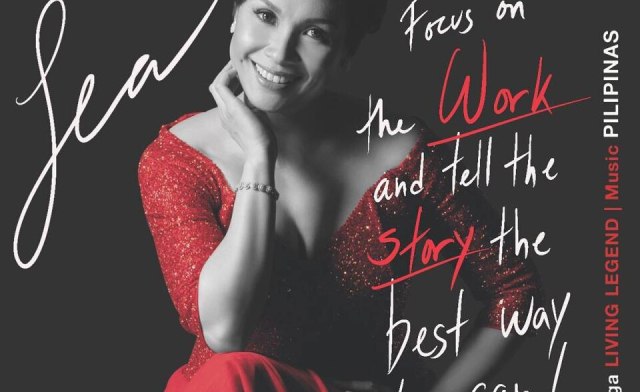
Lea Salonga and Another Proud Philippine Moment
By Karl M. Garcia
There are moments when the success of one Filipino becomes a celebration for an entire country.
Lea Salonga receiving a star on the Hollywood Walk of Fame is one of those moments.
For Filipinos, the Hollywood Walk of Fame is more than a tourist attraction. It represents a particular kind of global recognition—the moment when an artist’s name becomes permanently associated with the international entertainment industry.
And there, among some of the biggest names in the history of cinema, television, music and theater, is the name of a Filipina.
Lea Salonga.
Her journey is remarkable because it was never simply about becoming famous abroad. She carried Filipino talent into spaces where Filipinos had historically been seen more often as audiences, workers and supporters than as the principal artists on the stage.
Her breakthrough as Kim in Miss Saigon changed that perception.
She did not merely perform the role. She became the first Asian actress to win both the Tony Award and the Laurence Olivier Award for the same role, helping demonstrate that a Filipino performer could stand at the center of the world’s most competitive theater industry.
Her voice subsequently reached millions more through Disney, where she provided the singing voice of Jasmine in Aladdin and Fa Mulan in Mulan.
But perhaps what makes Lea Salonga particularly special to Filipinos is that her international success never required her to stop being Filipino.
She became global without becoming detached from home.
That is why her Walk of Fame star resonates beyond Hollywood.
It is a reminder that Filipino excellence does not have to be confined to Filipino institutions, Filipino audiences or Filipino borders.
And there is something wonderfully Filipino about another celebrated Filipino artist becoming a fan herself.
Pops Fernandez—the country’s own “Concert Queen”—was among those who could celebrate Lea not simply as a colleague, but as an admirer.
That image carries a powerful message.
When one accomplished Filipino becomes a fan of another accomplished Filipino, there is no diminishment of either.
There is admiration.
There is recognition.
There is a sense that Filipino talent can inspire Filipino talent.
For generations, Filipinos have grown accustomed to celebrating international stars from Hollywood, Broadway and the global music industry. We buy their records, watch their films, follow their careers and sometimes travel thousands of kilometers simply to see them perform.
But every once in a while, one of our own crosses the other side of that equation.
The Filipino becomes the star whom the world watches.
Lea Salonga represents that transition.
Her Walk of Fame star is therefore not simply a plaque embedded in a sidewalk in Los Angeles. It is a symbol of how far Filipino performers can travel when talent is matched by discipline, preparation, opportunity and persistence.
It also reminds us that international recognition is rarely achieved overnight.
Behind the glamour are years of auditions, rehearsals, performances, rejection, pressure and reinvention.
That is the part worth remembering.
A star on Hollywood Boulevard is the visible result.
The invisible part is the work.
And perhaps that is the lesson Filipinos should take from Lea Salonga’s achievement.
We should celebrate our stars, but we should also build the systems that allow more Filipino stars to emerge.
One Lea Salonga should not be an extraordinary exception.
She should be evidence of what Filipino talent is capable of producing when given world-class training, institutions, opportunities and platforms.
From theater to film, music to television, animation to digital media, the Philippines possesses enormous creative talent.
The challenge is turning talent into a sustainable creative industry.
Lea Salonga’s star tells the world that Filipinos can compete on the biggest stages.
Pops Fernandez becoming a fan tells us something else: even our own stars can inspire each other.
And perhaps that is the most beautiful part of the story.
A Filipino performer stands among the world’s great entertainers.
A Filipino audience cheers.
A Filipino star becomes a fan.
And an entire country gets another reason to say:
We are proud to be Filipino.


I think it was her performance on stage in Miss Saigon that launched her global fame. That was 1989. So she’s held her fame for 37 years now, a remarkable run. I have long been impressed with Philippine musical and entertainment talent. She has a foot in both. Television productions here are first class. My wife still gapes at Coco Martin even though he’s put on a couple of decades and a few kilograms, lol. More power . . .
I missed her actually being on stage at Miss Saigon by a bit as I watched that musical at the original London West End stage in 1992, I think it was the second one after her, Janine Desiderio playing the role of Kim, and by then the role of “The Engineer” had passed to a Pinoy, Junix Innocencio, who played the role with a perfect mix of comedy and sleaze..
Lea Salonga BTW voices the role of a villain for the first time in the coming Dreamworks production “Forgotten Island” where she is the Manananggal gatekeeper/ruler of an island full of Philippine mythical creatures. I have the feeling that movie (which is coming out globally end of this month as it has Universal pictures behind it) will be way bigger for Filipino representation than Trese on Netflix was. Its director / main animator is Fil-Am (part of the tandem that produced Puss in Boots) and Jolibee is a co-promoter etc etc
Wonderful. I saw Miss Saigon in the Music Center in LA. Depressing for me as it struck too close to home, from my experiences there. An on-stage helicopter scene at the end was the dramatic high point.
Yes some reminders are painful and I know where you are coming from.
I’ve been a fan of Lea Salonga since childhood, so good on her.
Something that interests me is which diaspora individuals the Philippines chooses to celebrate. There’s a clear preference for singular stars from entertainment and sports over recognition of broader success. It brings to mind the debate within the African American community at the turn of the 20th century between Booker T. Washington and W.E.B. Du Bois over how African Americans should pursue advancement, and what kind of recognition should come with it.
Washington argued for a steady, incremental pragmatism which becomes cumulative: vocational training and economic strengthening that would build a broad base of people reaching their potential and making themselves indispensable to American life. Du Bois pushed for immediacy instead, led by a vanguard “Talented Tenth” — a classically educated elite whose example and agitation would pull the whole community toward social and economic equality. Du Bois largely won that argument — though not in the way he expected.
In the US, the Filipino diaspora has long held prominent roles across state and federal government, academia, science, business, and the military. California’s attorney general is a Fil-Am, and Hawaii had the nation’s first Fil-Am governor. A Fil-Am has held the position of chief justice on a state Supreme Court. In the military, Fil-Ams have risen to general and admiral rank — one commanded the US Army’s premier I Corps — and others have earned the Medal of Honor for valor in combat. Fil-Ams lead major companies, found startups, hold tenured professorships and presidencies of major research universities, and are overrepresented in both the federal and state civil service.
None of this is meant to make light of Lea Salonga’s accomplishments, or the recent athletes and performers who’ll follow her her road to stardom. Singular talent is real, deserving of real celebration. But definitionally talent cannot be replicated — it belongs to the person who has it, not to the community that claims them. A country that only knows how to celebrate its exceptional singers and athletes is teaching its people a narrow lesson about what excellence looks like and how it’s earned.
The Washington-Du Bois debate contains useful lessons because we already know how it played out. Du Bois’s Talented Tenth, drawn from the academia and the professions, produce lawyers, judges, scientists, and generals. But the fame went disproportionately to those with talent, until sports and entertainment became the fields where Black excellence was most visible, celebrated, and expected — even as plenty of equally hard-won advancement happened quietly elsewhere.
The Filipino-American diaspora already has what Washington was arguing for, sitting quietly underneath the entertainers and athletes who make the headlines: attorneys general, chief justices, generals, tenured professors, career civil servants — people who got where they are by a route that’s open to whoever studies, serves, and tests — a path of developing potential over waiting for talent to be born. Fostering excellence is replicable in a way individual genius never is. A star on the Hollywood Walk of Fame may tell a Filipino kid that greatness is possible. A judge or a general tells them how to get there. Talent can’t be reproduced — institutions and the ordinary, replicable careers built on developing excellence inside them can.
which is why I mentioned Dr. Mahar Lagmay in an article, even as such people are also part of the PH Talented Tenth:
in fact he is a member of one of many professorial dynasties that now exist at UP, an unintended consequence of having faculty live on-campus and UP Diliman forming almost an enclave of its own.. but that doesn’t make him any less qualified and any less dedicated in making use of his talent for the common good.
I know him as a very down to earth person, embodying the better aspects of UP traditions – even as the last time I ran into him was ages ago.
One thing that changed since UP was founded in 1908, based on the American “University of” (State) template is that the old system of public schools built in American times and continued in Quezon’s time rotted, don’t know to what extent Aquino’s K-12 and other reforms have made up for what was lost, but before valedictorians and salutatorians of public high schools automatically got UP scholarships. The pipeline of people who were able to pass the UPCAT became richer and richer as private schools maintained their standards and public schools gradually fell apart.
BTW a bit of public schooling existed even before US times due to Queen Isabel’s decree in 1863 mandating a school for boys and school for girls in every Philippine town, but Spanish colonial reality like a lot of Philippine policy reality today is that it was implemented very unevenly and in many places not at all, and it was simple schools for all levels under parish control. Nonetheless it made it possible for a working class to seek employment in Manila’s export companies, Bonifacio for instance worked at the German company Fressel and Co. as a warehouseman, it gave many people some literacy. Of course that was nothing compared to the later foundation of colleges in the American period, the Philippine Normal University established in 1901 to train teachers being one of the most important.
Somehow the increasing neglect of everything not helping the “Talented Tenth” in the Philippines, the almost loonie fixation on having kids be valedictorians, with one of the worst examples shown in the link above, learned Filipinos who put down others by calling them “mediocre” or “sophomoric”, that all could be a case study in how the American idea of equal opportunities failed to grow roots in the Philippines. Sometimes I wonder if part of why some PH Filipinos dislike Fil-Ams is because they feel threatened by the self-made..
P.S. or maybe the mentality of lamangan or one-upmanship described in this comment https://joeam.com/2026/09/04/from-bpo-boom-to-legacy-shoring/#comment-510188 is key to understanding how things got to be that way. Admiring stars that are way up there while making sure others don’t advance is of course not going to make opportunities available for more Filipinos.
I’m not that familiar with Dr. Lagmay outside of reading about him in the news, but he seems to value practicum as much as he values theory — the former which seems lost on many Big Four grads I know, especially those from UP. The solutions Dr. Lagmay proposed out of Project NOAH are quite practical and straightforward. It’s a shame that too many Filipino politicians prefer theatrics over doing things right the first time. I suspect that at a certain point it is no longer possible to cover up inaction, incompetence, and half-measures with theatrics, such as Climate Change-driven extreme weather events, so it may be that experts like Dr. Lagmay start to be taken more seriously.
IIRC the main American land grant state university system UP was modeled after is the University of California (of which the founding and flagship constituent university is my alma mater, UC Berkeley). UC is still a preeminent international university today that serves the public regardless of financial background. Perhaps where UP eventually diverged from the American model was that the Philippines didn’t have a traditional Ivy League-type cohort of elite universities like the US has? Here US states and the federal government also dedicate a substantial amount of public funding to state university systems.
Just to illustrate the scale of American universities:
Could be either one, or a bit of both; the former is limited to PH pinoys from the upper middle class and higher who probably feel “limited” and don’t want others to rise above them. Generally I find poorer Filipinos to be inspired by success stories abroad. This is just my anecdotal sampling, and may be biased due to my preferred association with DEs, but it seems to me that most of the Filipinos who are strivers (many eventually going abroad, whether as OFWs or as university credentialed professionals) come overwhelmingly from CDE, with much of the energy to break out coming especially from Ds. ABs already have it quite good in the Philippines, so being comfortable does tend to breed complacency and envy.