From the Filipino Stage to the World Stage
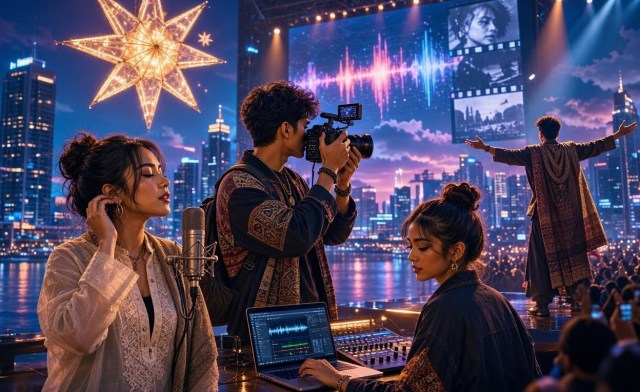
Building a Philippine Creative Economy Through Theater, Cinema, Music, and Television
By Karl M. Garcia
A nation with stories to tell
A country’s cultural influence is not measured simply by the number of its performers appearing on international stages, the films entering prestigious festivals, or the awards its artists receive. It is measured by its capacity to create, finance, produce, distribute, preserve, and export its own stories and intellectual property.
The Philippines has never lacked creative talent.
Filipino filmmakers have competed at Cannes. Filipino singers have reached the finals of American Idol and The Voice. Performers have appeared on Britain’s Got Talent and America’s Got Talent. Filipino theater companies have produced original musicals, adapted international works, and brought Philippine history, literature, and popular culture to the stage.
The country’s theatrical tradition alone demonstrates a remarkable capacity for reinvention—from indigenous storytelling and ritual performance to the komedya, sarswela, nationalist drama, and contemporary musical.
Works such as Walang Sugat, A Portrait of the Artist as Filipino, Mabining Mandirigma, Rak of Aegis, Ang Huling El Bimbo, and Mula sa Buwan show that Filipino stories can be interpreted across generations and artistic forms.
On November 14, 2026, the Philippines added another milestone when CARMELLE won the inaugural Eurovision Song Contest Asia with Sobra-Sobra. The victory was significant not only because a Filipino performer prevailed internationally, but because the winning entry was an original composition by Filipino songwriters. It demonstrated the possibility of bringing locally developed creative work to a new international audience. <Cite refs={[“turn615558search0″,”turn615558news48”]}/>
But individual achievements, however impressive, are not yet evidence of a fully developed creative industry.
The larger challenge is to turn talent into institutions, performances into intellectual property, and international recognition into sustainable economic and cultural influence.
The Philippines must move from exporting talent to developing creative industries—and from participating in global cultural platforms to creating work that the world wants to experience.
1. Theater: A cultural tradition, not a marginal art
Philippine theater is not a recent import or a minor branch of entertainment. It is part of a long cultural history.
Indigenous performance traditions, religious drama, the komedya, sinakulo, and sarswela provided successive generations with ways to express identity, conflict, faith, humor, and political consciousness.
Theater also became a vehicle for national reflection. Works such as Walang Sugat and Tanikalang Guinto engaged with colonialism and the struggle for independence. Later works, including A Portrait of the Artist as Filipino, explored the tensions between tradition, modernity, family, and social change.
Contemporary theater has extended this tradition. Mabining Mandirigma reinterprets national history through musical theater. Care Divas examines the lives of Filipino migrant workers. Rak of Aegis uses popular music and comedy to explore inequality, disaster, and community. Ang Huling El Bimbo revisits social memory through the music of the Eraserheads.
These productions demonstrate that theater can entertain while examining the country’s history and present realities.
Its value should not be measured solely by ticket sales or prestige. Theater develops writers, composers, actors, directors, designers, technicians, stage managers, and producers. It creates opportunities for collaboration and trains audiences to engage with complex ideas.
It is also an important testing ground for stories that may eventually reach film, television, streaming platforms, and international stages.
2. Original stories and adaptation can coexist
A creative industry needs original work, but it does not have to reject adaptation.
- Mula sa Buwan* demonstrates how a familiar international literary work can be reinterpreted through Filipino sensibilities and music. Adaptations of Shakespeare, Greek tragedy, and international musicals can introduce audiences to different traditions while developing local artistic skills.
The reverse is equally important: Filipino films, songs, novels, and historical narratives can become the foundation for new stage productions.
Works such as Himala: Isang Musikal, Bituing Walang Ningning, Bar Boys, and Die Beautiful: The Musical illustrate the possibilities of translating stories across media.
The objective should not be to choose between original Filipino material and international adaptations. It should be to develop the creative judgment and technical capability to do both well.
Adaptation is not automatically imitation. It becomes meaningful when artists reinterpret material, bring new perspectives to it, and create something that stands on its own.
The country needs more original Filipino librettos, screenplays, musical compositions, novels, animation concepts, and stage works. But it also needs the freedom to learn from international traditions without surrendering its own artistic identity.
3. Cinema: Festival recognition must lead to a stronger industry
Filipino filmmakers have demonstrated that Philippine cinema can compete internationally.
Directors such as Brillante Mendoza have brought Philippine stories to major international festivals. Films including Serbis, Kinatay, and Ma’ Rosa have attracted international attention, while Jaclyn Jose received the Best Actress award at Cannes for Ma’ Rosa.
Such recognition matters. It gives Filipino filmmakers visibility and challenges the assumption that important cinema must come from established global production centers.
But festival recognition is only one part of a film industry’s success.
A sustainable cinema sector requires financing, professional production companies, skilled crews, accessible equipment, post-production facilities, distribution networks, marketing, exhibition, and reliable routes to international audiences.
It also needs a healthy domestic market. Films should not depend entirely on festivals, government support, or occasional commercial successes to survive.
The question is not simply how many Filipino films reach Cannes or qualify for Oscar consideration. It is whether the country can consistently produce films, retain creative and technical talent, build production capacity, and earn returns that finance the next generation of work.
4. Music and television: Talent needs an ecosystem
The international success of Filipino singers has become familiar. Competitors from the Philippines have appeared in American Idol, The Voice, and international talent competitions, while Filipino performers have attracted attention on Got Talent platforms.
These programs demonstrate vocal ability, discipline, adaptability, and stagecraft. They also provide exposure that would otherwise be difficult to obtain.
But the distinction between performing successfully and building a music industry is important.
A competitive music economy requires more than exceptional singers. It needs songwriters, composers, producers, arrangers, recording studios, publishers, managers, concert promoters, digital distribution, copyright administration, and sustainable ways for artists to earn from their work.
The Eurovision Asia victory offers a useful example of what this broader approach can achieve: an artist, original songwriters, production, national representation, and an international platform coming together.
The opportunity is to develop that capacity consistently—not to wait for another exceptional performer to emerge.
The same principle applies to television. Talent competitions can be valuable platforms, but the country should also develop original formats, scripted programs, documentaries, animation, and entertainment properties that can travel beyond the domestic market.
The goal is not merely to supply contestants to international franchises. It is to create formats and content that other countries may want to acquire, adapt, and distribute.
5. Cultural influence is also economic influence
Culture is often treated as a matter of national pride or soft power. It is both, but it is also an economic sector.
A successful production generates work for performers, writers, musicians, technicians, designers, fabricators, venues, transport providers, marketing agencies, and other businesses.
A successful intellectual property can generate value repeatedly through performances, licensing, adaptations, recordings, merchandise, publishing, streaming, and international distribution.
This is why the ownership and management of intellectual property matter.
If Filipino artists create successful work but lack the contracts, legal support, publishing arrangements, and commercial structures to retain meaningful rights and income, much of the value may accrue elsewhere.
The country should therefore develop stronger intellectual property literacy and management, transparent contracts, collective rights administration, and professional business support for creative enterprises.
The ambition should be to build Filipino-owned creative properties with the potential for long-term international life.
6. Institutions make creative careers possible
Creative success cannot depend indefinitely on individual determination or isolated private initiatives.
The Philippines already has institutions and companies that provide important foundations: the Philippine Educational Theater Association, Tanghalang Pilipino, Repertory Philippines, Dulaang UP, Ateneo BlueREP, Atlantis Productions, Theater Group Asia, Sandbox Collective, 9 Works Theatrical, and New Voice Company, among others.
Their contributions extend beyond individual productions. They develop audiences, train professionals, maintain production standards, and provide continuity in an industry where projects are often temporary.
But the wider ecosystem remains vulnerable to limited funding, inconsistent venues, short production runs, inadequate compensation, and the migration of skilled professionals to markets with more stable opportunities.
The Philippine Creative Industries Development Act, Republic Act No. 11904, provides a policy foundation for developing the sector. The challenge is implementation: translating legislation into coordinated programs, financing, infrastructure, skills development, market access, and measurable results. <Cite refs={[“turn615558search12”]}/>
Government should not dictate artistic content. Its responsibility is to create conditions in which independent artists and enterprises can work, take risks, reach audiences, and compete.
That means supporting institutions without making them dependent on political patronage, and encouraging private investment without allowing commercial considerations to become the only measure of artistic value.
7. Creative development must reach beyond Metro Manila
The creative economy should not be concentrated in a few established institutions and urban venues.
Regional languages, histories, music, crafts, performance traditions, and contemporary experiences are sources of original material. Cebuano, Ilocano, Hiligaynon, Bikol, Waray, Kapampangan, and other linguistic communities should be part of the country’s creative production and distribution networks.
Regional theater, film, music, festivals, and digital content can develop audiences and professional opportunities outside Metro Manila.
This requires more than occasional cultural events. It requires accessible venues, training, production facilities, regional funding, distribution partnerships, and stronger connections between local creators and national and international markets.
A genuinely national creative economy should allow artists to develop their work where they live, rather than treating relocation to the capital as a prerequisite for professional success.
8. Technology should expand creative capacity
Digital platforms, streaming, animation, gaming, virtual production, and artificial intelligence are changing how creative work is produced and distributed.
These technologies create opportunities for Filipino creators to reach audiences without relying exclusively on traditional gatekeepers. They also create new questions about copyright, compensation, attribution, and the use of artists’ work and likenesses.
Technology should strengthen human creativity, not reduce artists to inexpensive inputs for automated production.
The country needs stronger digital skills, technical education, production infrastructure, and legal frameworks that protect creators while allowing responsible innovation.
Traditional arts and modern technology are not opposing forces. Digital tools can preserve cultural heritage, document endangered languages, expand access to performances, and help local stories reach global audiences.
The objective is to make technology an instrument of creative capability.
9. From scattered projects to a national creative strategy
The Philippines does not need another collection of disconnected cultural projects. It needs a coherent strategy for building a competitive creative economy.
That strategy should begin with a clear assessment of existing capabilities: the number and condition of creative enterprises, professional employment, production capacity, financing, intellectual property ownership, audience reach, regional participation, and export performance.
From there, government and industry can establish benchmarks and targets, identify gaps, direct interventions, set timelines, and evaluate results.
The priorities should include:
- Professional education and skills development across artistic, technical, and business disciplines.
- Sustainable financing for independent creators, production companies, and cultural institutions.
- Accessible theaters, studios, rehearsal spaces, cinemas, and regional production facilities.
- Stronger intellectual property protection, licensing, and commercial management.
- Domestic audience development and improved access to Filipino creative work.
- International co-productions, distribution partnerships, touring, and market development.
- Reliable data on creative employment, revenues, exports, and the economic contribution of the sector.
International partnerships should build domestic capability. They should provide access to markets, expertise, technology, and financing while enabling Filipino creators and companies to retain ownership, develop skills, and strengthen their position in the value chain.
This is strategic cultural autonomy: learn from everyone, collaborate widely, and develop the capacity to create and compete on our own terms.
10. From national recognition to national capability
The Philippines should celebrate its performers who succeed abroad, filmmakers who gain international recognition, theater companies that sustain original productions, and songwriters whose work reaches global audiences.
But celebration should lead to a larger question: what are we building from these achievements?
A medal, an award, a festival selection, or a viral performance can open a door. It cannot substitute for the institutions, businesses, skills, financing, and intellectual property systems needed to keep that door open.
The ultimate ambition is not simply to have the world watch Filipinos perform. It is to give the world Filipino stories worth watching, listening to, experiencing, remembering, and sharing.
That means building a creative economy in which artists can make a living, companies can grow, institutions can endure, regional cultures can flourish, and Filipino-owned intellectual property can compete internationally.
The Philippines already has the talent and the cultural material. What it must now build is the system that allows them to compound into lasting capability.
The measure of success is not how many Filipinos make it onto the world stage. It is whether the Philippines can consistently create the work, own the intellectual property, build the institutions, and sustain the industries that make the world stage worth reaching.


Thanks Karl for this article. I will answer to this part first:
yes, having some of the best Filipino songwriters (Nica del Rosario and Matt Olavides of Flipmusic who are behind major hits of Nadine Lustre, Sarah Geronimo and BINI) plus ABS-CBN Star Music backing was important.
But this is also important:
and if I compare to how ABS-CBN themselves handled two other top talents – Morissette and Gigi – there is a world of difference between how they developed Carmelle systematically from the start.
I suspect they have learned a lot from previous mistakes as well as how they systematically developed BINI (and their next girl group DeNiM, announced yesterday but already introduced without name during the Binified concert in November 2025) via the Star Hunt Academy. Let’s not yet look at how Carmelle was during The Voice Kids in 2019 when only Bamboo turned for her while Lea Salonga and Sarah Geronimo didn’t – she really was at the start then.
Let’s start by looking at her early 2025 finale at Tawag ng Tanghalan, a 17 year old singing Aretha Franklin fairly well (which is hard) and already showing a bit of the “X-Factor” that stars need aside from just musical talent:
ARETHA FRANKLIN MEDLEY BY CARMELLE COLLADO final performance in #TNTAngHulingTapatan school showdown
Then let’s look at her being the opening act for the Biniverse concert at the Philippine Arena in February 2025, a stage facing around 45-50K people depending on how the seating is done.
Carmelle Collado in ARENA CONCERT #PBBCOLLAB2POINT0 #CARTON
let’s skip Pinoy Big Brother which exposed her to the youth, seems many young Pinoys love that format, or her cover of “Stay” done in early 2026, produced by Kiko KIKX Salazar, the songwriter of Morisette’s hit “Akin Ka Na Lang” and BINI’s “Sugar Rush” which shows his versatility as the first is OPM and the second is “New Jack Swing” a la TLC.. or her debut album in May 2026 with her single “Morena” and her SM North Skydome debut concert.
By the time she entered the national selection for Eurovision Asia (whose PH partner network IS ABS-CBN) she was already a seasoned performer who was ready for the Bangkok stage.
CARMELLE – Sobra-Sobra (LIVE) | Philippines | WINNER of Eurovision Asia 2026 | #EurovisionAsia
Of course ABS can do a lot as they are still big and also are doing more now because the shutdown forced them to earn money without being the old monopoly, even as I have observed that some old habits still exist, of course..
Many thanks Irineo, your following of recent Pinoy music made me work on this topic and me realize I got musical roots.
And yes old habits do die hard like Bruce Willis.
Speaking of Monopoly. MVP is suggesting to consolidate the telco market who will be left if that happens.