Manuel L. Quezon: The Statesman Who Built the Foundations of Modern Philippine Government
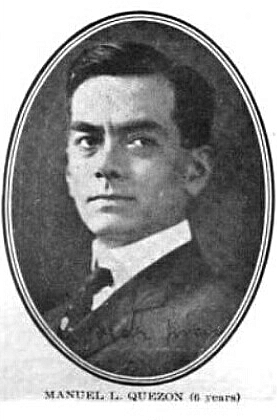
Manuel L. Quezon is one of the most influential figures in Philippine history. While he is best known as the first President of the Commonwealth (1935–1944), his greatest legacy lies in building institutions that prepared the Philippines for independence. He combined nationalist aspirations with pragmatic governance, laying many of the foundations of the modern Philippine state.
Early Life
Quezon was born on August 19, 1878, in Baler. His father, Lucio Quezon, was a schoolteacher and former soldier, while his mother, María Dolores Molina, was also a teacher. Raised in a family that valued education and public service, Quezon studied at University of Santo Tomas before his education was interrupted by war.
Role in the Philippine Revolution
During the Philippine Revolution and the subsequent Philippine–American War, Quezon joined the revolutionary forces under Emilio Aguinaldo. He served as an aide and military officer, witnessing firsthand the struggle for Philippine independence.
After the defeat of the First Philippine Republic, Quezon recognized that armed resistance had become unsustainable. Rather than continue fighting, he chose to pursue independence through political negotiation under American rule.
Leadership During the American Colonial Period
Quezon entered politics as governor of Tayabas Province before becoming a member of the Philippine Assembly. In 1909, he became the Philippines’ Resident Commissioner to the United States Congress, where he spent years lobbying for greater Filipino self-government.
His efforts contributed to the passage of the Jones Act of 1916, which promised eventual Philippine independence. Later, he worked with American leaders to secure the Tydings–McDuffie Act, establishing the Commonwealth government and setting a ten-year transition to independence.
Commonwealth Government and Commonwealth Act No. 1
After winning the 1935 presidential election, Quezon became the first President of the Commonwealth of the Philippines.
One of his earliest and most important laws was Commonwealth Act No. 1, known as the National Defense Act.
The law:
- Created the Philippine Army.
- Established compulsory military training.
- Developed a reserve force.
- Appointed Douglas MacArthur as military adviser and Field Marshal of the Philippine Army.
- Prepared the country for full independence and national defense.
This became the cornerstone of the Philippines’ modern defense establishment.
Other Major Contributions to Philippine Governance
Quezon’s legacy extended far beyond independence negotiations and national defense.
1. Professionalizing Government
His administration strengthened the Philippine civil service and emphasized a more professional national bureaucracy capable of administering an increasingly autonomous state.
2.
Promoting Social Justice
Quezon made social justice a central theme of his administration. His government pursued measures intended to improve the position of workers, tenants and landless Filipinos and to expand opportunities for ordinary citizens.
3. Establishing the National Land Settlement Administration
One of Quezon’s less frequently discussed but highly significant initiatives was his effort to address landlessness and population pressures through organized agricultural settlement.
In 1939, his administration created the National Land Settlement Administration (NLSA) through Commonwealth Act No. 441. Its objectives included acquiring and developing agricultural lands, providing opportunities for tenants and small farmers to become landowners, and encouraging migration from more congested areas to sparsely populated regions.
Mindanao became a major focus of this program. Quezon appointed Major General Paulino Santos, the former Chief of Staff of the Philippine Army, as general manager of the NLSA. Santos was placed in charge of implementing the settlement program, including the development of agricultural communities in areas such as the Koronadal and Allah valleys of Cotabato.
The first pioneers arrived in the Koronadal area in February 1939, beginning a settlement effort that brought migrants from Luzon and the Visayas and eventually helped develop communities that would become part of present-day South Cotabato and General Santos. The government had also reserved a large tract of the Koronadal Plains for settlement through Proclamation No. 383, issued by Quezon on February 11, 1939.
This program was an important expression of Quezon’s vision of social justice through access to land, agricultural development and the creation of new communities. It also became part of the larger story of the demographic and political transformation of Mindanao.
At the same time, the settlement program must be viewed in its full historical context. Government-sponsored migration and land settlement affected existing Muslim and Indigenous communities and contributed to longstanding land and identity conflicts in Mindanao. The program therefore represents both an important nation-building initiative and a complicated chapter in Philippine history.
4. Strengthening Filipino National Identity
Quezon also understood that independence required more than political institutions. He promoted the development of a common Filipino identity and supported efforts to establish a national language. His administration subsequently adopted Tagalog as the basis of the national language, an important step in the long process of developing a shared national identity.
5. Building Institutions for Independence
Perhaps Quezon’s most important contribution was his recognition that independence had to be prepared for institutionally.
The Commonwealth was not simply a waiting period before independence. It was intended to be a period in which Filipinos learned to administer their own government, develop national institutions, organize national defense, expand social programs and prepare for sovereignty.
Legacy
Manuel L. Quezon believed that political independence required capable institutions. His administration focused not only on achieving sovereignty but also on preparing the Philippines to govern itself through professional civil service, national defense, democratic institutions, and a shared national identity.
His famous declaration, “My loyalty to my party ends where my loyalty to my country begins,” continues to symbolize his belief that national interest should take precedence over partisan politics.
More than a champion of independence, Quezon was an institution builder whose reforms continue to influence Philippine governance today.


Among the ‘contributions’ you should also add launching the program of resettling people from Luzon and the Visayas in Mindanao. Quezon sent General Santos to Mindanao to manage the program.
Thanks. Will do.
Done sir or ma’am
👍🙂 unfortunately Dadiangas lost its name and became GenSan.
Just like Tayabas became Quezon province, I guess..
“why did Constantinople get the works, that’s nobody’s business but the Turks”, as the song about Istanbul/Constantinople goes.
All I remember of Dadiangas was Rolando Navarete, the bad boy from Dadiangas.
Thanks Karl.. I would add three things to this:
– NARIC as the predecessor of NFA was founded in his time
– the predecessor of NEDA was also founded in his time. Joey has mentioned that NEDA had the foundational flaw of not having direct control of what gets done.
– around the same time that Balintawak City (which was later to be named Quezon City) was built, the road that later became EDSA was also built, I think around 1940.
Re foundational flaws, Karl you also have written about the weaknesses of the act that founded the AFP in it being too focused on the Army to the detriment of the Navy – and Air Force.
Of course my view of Quezon is strongly informed by what his grandson wrote about him, but I am of course surprised when I read deeper of how little we mostly know about the era from 1908-1935. That might be a mistake as the foundations of the present Philippines were indeed laid in that era.
–
The foundation was good it was the patchwork that came after became the issue of CA1. It is like Cobol which became too complicated to replace because of many things I might over simplify.
maybe many of those who came after him did not understand the “system architecture” – or built annexes based on their own idea of architecture.
it is a bit like there was also a Burnham Plan for Manila which became outdated after WW2. OK, there are those who say that the Burnham Plan was “Westernized” and “colonialist” but did Filipinos have an alternative plan I doubt that even Imelda had besides the “City of Man” slogan.
Exactly.
ah, the weakness of the afp, methink the afp is at it again! investigating its own man, albeit leniently, maybe even protecting sara duterte’s chief of security who was handed 125millions on sara’s order, eventhough the man is not disbursing officer and had no mandate to spend such big amount. and then the afp man/chief of security in question will not be called to account at the impeachment court due to senate’s apparent (I say misplaced!) respect for the afp.
I appreciate this snapshot of a good leader in a time of huge change. Had Japan not brought the Philippines back to America, I suspect his statesmanship might have carried forward and the nation would never have had Marcos Sr.. He did understand institutions. And capability.
Many thanks, Joe.
methink, manuel l quezon has an underbelly, marrying his 1st cousin maybe to keep wealth and influence within the family, for the family and by the family. married aurora aragon he did in 1918 at a civil ceremony in hongkong, sans the blessing of the catholic church that apparently didnt look kindly on close relatives marrying each other.
his children were brought up as catholic though and were baptised in the catholic church. manuel l quezon was a mason and estranged from the church but later converted. had quezon met marcos sr, they would have gotten on like a house on fire, both driven and similarly ambitious. mrs quezon was said to be religious, and so was imelda, who was often seen attending mass and at times, walking on her knees and seeking god’s intercession, all within the glare of the camera.
AI thinks, marcos sr and manuel l quezon have many things in common.
AI Overview
Manuel L. Quezon and Ferdinand Marcos Sr. shared major political similarities as dominant, charismatic Filipino “strongmen” who centralized executive authority, mastered patronage and populist rhetoric, and successfully won re-election to a second presidential term—a rare feat in Philippine history.
Political Ambition and Leadership Style
Governance and Power Manipulation
Fascinating, the similarities, but maybe success depended on democratic power-mongering, and, whereas Quezon had his focus on the nation, Marcos had his on himself. Quezon was busy trying to wean the Philippines from the US. Marcos played the US like a banjo.
Karl,
Thanks for the write up on Quezon. In my short pants days he was labeled “The Great Orator.”
One of my favorite books on Philippine history, specifically the American period, is Stanley Karnow’s “In Our Image.” It has been years since I picked it up, but I recall he had much to say about Manuel Quezon. Here is a summary:
>>Karnow’s portrait of Manuel L. Quezon in In Our Image is admiring but not reverential. He presents Quezon as an extraordinarily able, theatrical, ambitious, and sometimes manipulative politician—a nationalist who mastered American politics and used it to extract larger concessions for the Philippines, while also helping consolidate an elite-centered political system.
Karnow’s Quezon
Karnow depicts Quezon as a man of exceptional political talent: persuasive, tactically flexible, personally magnetic, and unusually effective at operating in Washington. As Resident Commissioner, Quezon cultivated congressional allies and worked behind the scenes on the legislation that became the Jones Act of 1916. A congressional history similarly describes him as particularly skilled at private legislative maneuvering, meetings with presidents, and navigating congressional procedure.[history.house]
He was therefore not, in Karnow’s account, a simple slogan-maker for independence. Quezon was willing to accept gradual gains in autonomy when immediate independence seemed risky or unattainable. In 1916, he faced a dilemma: an amendment promising very rapid independence was politically attractive, but he believed a hurried timetable could bring economic and social instability.[history.house]
Independence—and dependence
One of Karnow’s more interesting themes is the tension in Quezon’s nationalism. Quezon publicly pressed for independence, but he also understood the value of American market access and protection. That was not necessarily hypocrisy; it reflected the difficult position of a colonial politician seeking sovereignty while confronting economic dependence and Japanese expansion.
The United States’ trade arrangements tied the Philippine economy closely to American markets: by the late 1920s the United States supplied 60 percent of Philippine imports, and in 1934 it took 83 percent of Philippine exports. That setting helps explain why an independence leader might want freedom while fearing the immediate consequences of separation.[history.house]
The darker side
Karnow is skeptical of the political order Quezon helped shape. His broader argument is that American rule empowered and accommodated an educated, landowning Filipino elite rather than transforming the country’s highly unequal social structure. In that narrative, Quezon was both a genuine nationalist and a leading figure of that elite political class—not a social revolutionary.
So the implied criticism is that Quezon’s leadership strengthened national political institutions and advanced self-government, but did not dismantle landlord power, patronage, family dynasties, or rural inequality. Karnow repeatedly treats these as central continuities from the colonial period into the independent republic. His book is explicitly about how American attempts to remake the Philippines produced a relationship marked by “blundering, ignorance, and mutual misunderstanding.”[penguinrandomhouse]
Important caveat
Karnow wrote vivid history as a journalist, and his character sketches can be memorable but also sweeping, culturally stereotyped, and too ready to generalize. For instance, a quoted passage attributed to the book describes Quezon through a “prototypical Latin” temperament—a formulation that is dated and analytically poor.[goodreads]
The fairest shorthand is this: Karnow saw Quezon as perhaps the most formidable Filipino politician of the American period—an authentic nationalist and master tactician, but also an elitist political boss whose success did not cure the social foundations of Philippine inequality.<<
Would appreciate comments on this view of MLQ.
First this.
Some echoing what you said, but there is more.
This episode deserves a deep historical treatment, because the common shorthand—“Quezon gave MacArthur $500,000 out of gratitude”—is true but incomplete and potentially misleading.
The strongest interpretation is that the payment sits at the intersection of Filipino reciprocity (utang na loob), Quezon and MacArthur’s unusually close personal-political relationship, MacArthur’s prewar contractual compensation, wartime desperation, Philippine state finances, and the question of whether a gift to a U.S. Army officer could become an instrument of political obligation.1. What actually happened
On January 3, 1942, while Quezon and MacArthur were on Corregidor during the Japanese siege, Quezon issued Commonwealth Executive Order No. 1.
The order awarded:
The total was $640,000. The order described the payments as “recompense and reward” for distinguished service rendered from November 15, 1935 to December 30, 1941. It praised MacArthur’s military leadership and explicitly linked his service to the national fate of the Philippines. (Lawphil)
This is important: the legal document did not describe the $500,000 as a bribe, personal loan, or payment for a particular future decision. It formally characterized the money as compensation for past service.
But the circumstances make the story much more complicated.2. MacArthur was not simply a foreign general whom Quezon suddenly rewarded
Their relationship began years earlier.
In 1935, Quezon recruited MacArthur to become the principal military adviser of the new Philippine Commonwealth. MacArthur helped develop the Philippine defense establishment and became deeply embedded in the country’s political and military affairs.
The compensation arrangement itself was unusual. According to the PBS historical account, MacArthur obtained an exception from the U.S. War Department to receive Philippine compensation, and Quezon promised him a bonus tied to Philippine defense expenditures. (PBS)
So the $500,000 did not emerge from nowhere.
There was already a financial relationship between MacArthur and the Philippine government, alongside a political and personal relationship between MacArthur and Quezon.
That distinction matters enormously.3. Utang na loob explains part of it—but not everything
The Filipino concept of utang na loob is frequently invoked to explain the payment.
But it should not be translated simplistically as “gratitude.”
Utang na loob is closer to a reciprocal moral obligation arising from a relationship of trust, assistance, loyalty and indebtedness.
The relationship can become reciprocal:
But the deeper expectation is:
This is why the payment is historically fascinating.
The money could simultaneously represent:
reward + gratitude + honor + reciprocity + relationship-building + political insurance.
The historian Theodore Friend characterized the relationship as involving a compadrazgo-like bond and mutual utang na loob, while emphasizing that the payment should not automatically be interpreted as purchasing a specific policy or action from MacArthur. (Quezon.ph)
That is a much more sophisticated interpretation than simply saying:
“Quezon bribed MacArthur.”
There is insufficient evidence to reduce the entire transaction to that proposition.4. But the timing is extraordinary
This is where the story becomes much darker.
The payment was authorized on January 3, 1942, while the Philippines was being invaded and the Commonwealth government was facing destruction.
Manila had fallen.
Bataan was under siege.
Corregidor was under bombardment.
The Commonwealth government was preparing for the possibility that it would have to leave the Philippines.
Washington was also urging Quezon to evacuate and establish a government-in-exile.
Consequently, the $500,000 cannot be evaluated as if it were an ordinary retirement bonus issued during peacetime.
The decision occurred at precisely the moment when Quezon’s personal survival, the survival of the Commonwealth government, MacArthur’s military command, and the future of the Philippine-American relationship were becoming intertwined.
That makes motive much harder to establish.5. There was an even more important political relationship
Quezon and MacArthur had become exceptionally close.
MacArthur was not merely a military adviser.
He was simultaneously:
Quezon therefore had a reason to regard MacArthur’s service as something far beyond ordinary professional employment.
The language of Executive Order No. 1 reflects precisely that sentiment. It says that the record of MacArthur’s services was “interwoven forever into the national fate” of the Filipino people. (Lawphil)
That is extraordinarily emotional language for a financial authorization.6. Then comes the biggest problem: MacArthur was a U.S. Army officer
MacArthur had retired from the U.S. Army in 1937 but remained in the Philippines as military adviser.
When the war began, he was recalled to active U.S. military service.
That created an obvious conflict.
A U.S. Army officer accepting a huge personal payment from a foreign government was problematic under military regulations.
PBS describes the payment as one of the most controversial episodes of MacArthur’s career and notes that its legality and circumstances were subsequently debated. (PBS)
This is why the story remained secret for decades.
The transaction was not publicly revealed until historian Carol Petillo’s 1979 research brought it to wider attention. (PBS)
The secrecy itself is historically significant.
If this were simply an ordinary, routine Philippine government award, there would have been little reason for the transaction to remain hidden.7. The $500,000 was not actually handed to MacArthur in a suitcase
This is another popular misconception.
The Executive Order was issued January 3.
The actual financial transfer took place later.
Research into the transaction indicates that MacArthur eventually instructed that the $500,000 be transferred from Commonwealth Philippine funds held in New York to his account at Chemical National Bank and Trust Company.
The transfers were processed through Chase National Bank, and the documentation carried the signatures of Quezon and Finance Secretary Jose Abad Santos. (Quezon.ph)
So this was a formal financial transaction involving Commonwealth government funds—not merely a personal cash gift between two men.8. And there was a remarkable second financial transaction
This is one of the most interesting details.
While the $500,000 payment was being processed, MacArthur reportedly sought a loan of approximately 1.2 million pesos from Manuel Roxas, an amount exceeding $500,000 at the prevailing exchange rate.
The loan was subsequently returned after the transfer of the MacArthur payment was confirmed. (dokumen.pub)
That complicates the simplistic theory that MacArthur was merely being enriched by Quezon.
It indicates that the financial circumstances surrounding MacArthur, Quezon, Roxas and the Commonwealth government were extraordinarily fluid during the final days on Corregidor.
There were government assets, military requirements, evacuation plans, private accounts, Philippine Treasury resources and wartime contingency arrangements all interacting with one another.9. Did Quezon pay MacArthur to evacuate?
This is the most controversial interpretation.
There is no established documentary basis for saying that Executive Order No. 1 explicitly purchased MacArthur’s evacuation.
The order itself says the money was compensation for past distinguished service.
However, historians have examined the timing and asked whether the payment became part of a broader implicit bargain.
MacArthur initially faced the extraordinary question of whether he would remain with his forces in the Philippines or leave when ordered by Washington.
Ultimately, Roosevelt ordered MacArthur to leave.
MacArthur departed Corregidor with Quezon’s evacuation party and eventually reached Australia.
The timing of the financial transfer, MacArthur’s negotiations over evacuation, and the handling of Philippine government assets occurred in remarkably close proximity. Some historians therefore see the transaction as potentially connected to the broader question of persuading MacArthur to evacuate. (Quezon.ph)
But that should be presented as historical interpretation, not established fact.10. The Roosevelt connection is crucial
The payment also became an American problem.
President Franklin D. Roosevelt and Secretary of War Henry Stimson knew about the transaction.
According to the historical reconstruction, Stimson authorized the banking procedures after MacArthur requested that the payment be transferred. (Quezon.ph)
That creates an extraordinary triangle:
Quezon → MacArthur → Roosevelt
The Philippine president wanted MacArthur’s loyalty and protection.
MacArthur had obligations to both the Philippines and the United States.
Washington desperately needed MacArthur to survive and eventually continue the war.
Thus the transaction cannot be understood solely as a Filipino cultural phenomenon.
It was embedded in the strategic crisis of early 1942.11. Eisenhower provides the fascinating counterexample
Perhaps the best way to understand the ethical problem is to compare MacArthur with Dwight D. Eisenhower.
Quezon later offered Eisenhower money as well.
Eisenhower refused.
The contrast is powerful because Eisenhower apparently regarded accepting such compensation from the Philippine government while serving as a U.S. officer as incompatible with his obligations.
That gives us two very different approaches to the same cultural and political environment:
MacArthur: accepted.
Eisenhower: declined.
This is why attributing MacArthur’s acceptance entirely to utang na loob is inadequate.
Culture can explain why Quezon offered.
It does not fully explain why MacArthur accepted.12. Was it legal?
This requires careful wording.
The payment was authorized by a Philippine Commonwealth executive order, and subsequent historical accounts have described it as legally authorized under Philippine law.
But that does not automatically answer the separate question of whether a U.S. military officer could ethically or legally accept such compensation under American military rules.
That distinction is essential.
A Philippine government could authorize an expenditure.
That did not necessarily mean a U.S. Army officer was free to accept it.
This is why the episode has been described as legally questionable or contrary to military rules even though the Philippine side had formally authorized it. (Quezon.ph)13. The amount was enormous
The $500,000 must also be understood in historical purchasing-power terms.
It was an extraordinary amount of money in 1942.
MacArthur’s payment dwarfed the amounts given to his aides:RecipientPaymentDouglas MacArthur$500,000Richard Sutherland$75,000Richard Marshall$45,000Sidney Huff$20,000Total$640,000
These figures come directly from Quezon’s Executive Order No. 1. (Lawphil)
The size of MacArthur’s payment tells us something about the symbolic nature of the award.
Quezon was not merely reimbursing expenses.
He was making an enormous statement about MacArthur’s importance to the Commonwealth.14. There is also a paradox in the word “gratitude”
Quezon genuinely had reasons to be grateful.
MacArthur had spent years helping construct the Philippine defense system.
He had personally invested enormous prestige in the Philippine cause.
He had become identified with Philippine independence and national defense.
And during the invasion, MacArthur was the military commander responsible for the defense of the Commonwealth.
So “gratitude” was not invented after the fact.
But gratitude and political calculation can coexist.
Quezon could sincerely feel:
while simultaneously thinking:
Those propositions are not mutually exclusive.
That is probably the most useful way to understand utang na loob in this episode.15. It also reveals something about Quezon himself
Quezon was a highly sophisticated political operator.
He understood personal relationships as instruments of statecraft.
His relationship with MacArthur was not purely bureaucratic.
It was personal, political, military and symbolic.
The payment therefore reinforced a relationship that both men regarded as important.
Theodore Friend’s interpretation is particularly useful here: the transaction strengthened a relationship in which either man could occupy the role of patron or client at different moments. (Quezon.ph)
That is much closer to the historical reality than portraying Quezon simply as a grateful Filipino president handing money to a heroic American general.16. But we should avoid the opposite exaggeration
There is also a temptation to rewrite the entire episode as:
“Quezon bribed MacArthur so that MacArthur would save him.”
That goes too far.
There is no conclusive evidence establishing a quid pro quo in which Quezon said, in effect:
The official executive order explicitly identified the payment as compensation for earlier service.
And MacArthur’s evacuation was ultimately embedded in Roosevelt’s strategic decision to remove him from the Philippines, not simply a private bargain between Quezon and MacArthur.
So a serious historical treatment should distinguish:
documented fact
from
plausible interpretation
from
speculation.17. The deeper historical meaning
The episode is fascinating precisely because both sides of the transaction can be true simultaneously.
It can be:
a genuine expression of gratitude
and
an exercise in political relationship management.
It can be:
legally authorized by the Commonwealth
and
ethically problematic for a U.S. military officer.
It can be:
an expression of Filipino utang na loob
and
a transaction that cannot be reduced to Filipino culture.
It can be:
a reward for past service
while its timing inevitably raises questions about future loyalty and wartime decisions.
That ambiguity is the historical story.18. The irony of history
The greatest irony is that the man who accepted the $500,000 eventually became the iconic American liberator of the Philippines.
MacArthur returned to the Philippines in 1944 and fulfilled his famous promise to return.
That later history transformed the way generations of Filipinos remembered him.
The secret payment, meanwhile, remained largely outside public consciousness until 1979.
Thus two MacArthur narratives developed:
the MacArthur of Philippine memory:
the general who returned, liberated the Philippines and symbolized the Filipino-American alliance;
the MacArthur revealed by the archival record:
a brilliant but controversial commander who had an unusually intimate relationship with Philippine political power and accepted an enormous wartime payment from the Philippine government.
Both are part of the historical record.Bottom line
I would not call the $500,000 simply a “debt of gratitude.”
A more historically defensible formulation would be:
And perhaps the most important lesson is broader than MacArthur.
This is a historical case study in how personal loyalty, cultural reciprocity, patronage, state power and national interest can become entangled.
That makes it particularly relevant to understanding Philippine political culture: utang na loob can be a profound ethic of gratitude and solidarity, but when transferred into the machinery of public office, it can also raise the fundamental question of where personal obligation ends and public duty begins.
If you mean Stanley Karnow’s view of Manuel L. Quezon in In Our Image: America’s Empire in the Philippines, Karnow’s portrait is much more complicated than either the heroic nationalist version or the caricature of Quezon as merely an American client.Karnow’s Quezon
Karnow presents Quezon as brilliant, ambitious, intensely nationalist, personally charismatic, and highly pragmatic—but also deeply embedded in the patronage politics of the Filipino elite.
That duality is central to Karnow’s interpretation.
He sees Quezon as someone who wanted Philippine independence genuinely, but who operated through the political system created under American colonial rule. Quezon became one of the most effective Filipino political operators of the American period, rising rapidly after initially fighting the Americans during the Philippine-American War. PBS’s historical account likewise notes that he joined Aguinaldo’s guerrilla resistance in 1899 before his subsequent rise within the American colonial political system. (PBS)
Karnow therefore does not simply see Quezon as a puppet.
Rather, the paradox is:
By 1916 he was president of the Philippine Senate and a principal leader of the independence movement. His lobbying in Washington eventually helped produce the Tydings-McDuffie Act of 1934 and the Commonwealth transition toward independence. (PBS)But Karnow is critical of Quezon’s political system
This is where Karnow’s larger thesis becomes important.
In In Our Image, he argues that American colonialism did not simply impose an alien political system on Filipinos. American institutions became intertwined with existing Filipino patronage, family, personal loyalty and elite networks.
Quezon was arguably the supreme practitioner of that hybrid system.
One scholarly summary of Karnow’s argument describes him as portraying Quezon as a highly effective politician who became deeply involved in the American-created political order, while American officials themselves became entangled in Filipino patronage networks. (CiteSeerX)
So Karnow’s Quezon is simultaneously:
The Quezon–MacArthur relationship is especially revealing
This is probably the most interesting part for your earlier question about Quezon’s payments or financial obligations to MacArthur.
Karnow treats the Quezon–MacArthur relationship as an example of how personal relationships and political power overlapped in the Philippine-American system.
MacArthur and Quezon had known each other since MacArthur’s first Philippine assignment. Their relationship became exceptionally close. MacArthur was godfather to Quezon’s son, while Quezon later brought MacArthur back to the Philippines as military adviser after the Commonwealth was established. (VERA Files)
This was not merely an official diplomatic relationship.
It was personal, familial and political at the same time.
That matters because utang na loob, compadrazgo and personal loyalty were not peripheral features of the political system; Karnow uses relationships like this to illuminate how the American and Filipino political worlds became intertwined.Yet Karnow does give Quezon substantial credit
It would be misleading to read Karnow as simply hostile to Quezon.
Quezon’s greatest achievement, in Karnow’s framework, was his ability to convert political accommodation into a pathway toward sovereignty.
He fought for independence in Washington while simultaneously maintaining relationships with powerful Americans.
The Tydings-McDuffie settlement was therefore not simply an American gift. Quezon had spent years lobbying for independence, and he became the central political figure of the Commonwealth. (PBS)
And when Japan threatened the Philippines, Quezon’s relationship with MacArthur became strategically important. Quezon turned to MacArthur to organize Philippine defense, while MacArthur accepted the role of military adviser. (PBS)The great Karnow paradox
The deeper Karnow interpretation could therefore be reduced to this:
Quezon was both a product of American colonialism and one of its most successful political opponents.
America created institutions through which Filipino elites could acquire political power.
Quezon mastered those institutions.
Then he used that mastery to negotiate independence.
But the same political system also preserved elite dominance, patronage and oligarchic politics.
That is why Karnow’s Quezon is so useful for your broader argument about Philippine political reform today. The problem is not simply “Filipinos were Americanized.” Karnow’s more complicated argument is that American institutions and Filipino political traditions fused into a hybrid system that survived independence.
And that makes Quezon an important bridge between:
American colonial rule → Commonwealth politics → elite democracy → post-independence patronage politics.
One should also be careful, however, not to attribute every criticism of Quezon directly to Karnow. Karnow’s In Our Image is an interpretive history, not an exhaustive biography of Quezon, and some of the sharper claims about Quezon–MacArthur finances or personal payments require examination of the underlying archival evidence rather than assuming that Karnow established them.
If your immediate interest is the Quezon → MacArthur “debt of gratitude” / money-payment story, that is a separate and fascinating issue, and it is worth going into the actual Karnow passage, the amount, dates, source trail, and whether “utang na loob” is an accurate characterization or an overstatement.
Let us also not forget the complex relationship of McArthur himself to the Philippines.
His father Arthur McArthur was in the Philippine-American War and military governor of the Philippines for a while.
(Douglas) McArthur himself was in the Philippines as a young officer sometime from 1903 onwards.
What I also recall is MLQ3 writing about the US system itself at that time being more like Tammany Hall.
For me Tammany Hall brings to mind “Boss Tweed” of New York and very normalized patronage.
Ah, so the US was not puritanical, ethically, at the time. And Doug was attached to the Philippines, through his father. Thanks.
Yes…I believe Arthur MacArthur was a veteran of the Apache wars if memory serves me right.
Fascinating read. Thanks Karl.
Off topic but related to Clark becoming a major airline service hub. Six UPS flights will be moved from Hong Kong to Clark. I tell you, this is big. Clark is “him!”.
https://www.freightwaves.com/news/dot-approves-ups-transfer-of-hong-kong-routes-to-philippines
And how Pax Silica will help develop infrastructure.
https://business.inquirer.net/606724/pax-silica-seen-to-benefit-visayas-mindanao-too
A nice brief on Pax Silica negotiations and physical structure:
https://bworldonline.com/economy/2026/08/19/771308/bcda-promises-to-obtain-favorable-pax-silica-terms/
And how the Philippines moves into modern manufacturing.
https://business.inquirer.net/606722/epson-to-build-industrial-robots-in-batangas-plant
Speaking of aviation. Here’s an executive move by SBC to solidify it’s airport construction and management expertise.
https://insiderph.com/smc-taps-ex-pal-chief-jaime-bautista-as-airport-bets-grow
Here is another story on Quezon that always bothered me…why, in time of war (1942), he authorized a payment of $500,000 to Gen. MacArthur to be deposited in his personal account in New York. To give one perspective, the average price of a home in the US was $3,000.
Here is a report:
>>>The amount was $500,000. In early 1942, while the Commonwealth government and USAFFE were trapped on Corregidor during the Japanese invasion, Quezon authorized a transfer of Philippine government funds to MacArthur’s personal account—plus $140,000 to three of MacArthur’s senior aides. It remains one of the most troubling features of the Quezon–MacArthur relationship.[pbs][esquiremag]
What Quezon authorized
Executive Order No. 1, issued under emergency wartime conditions, awarded:
Recipient & Amount
Gen. Douglas MacArthur – $500,000
Lt. Col. Richard K. Sutherland – $75,000
Brig. Gen. Richard J. Marshall – $45,000
Lt. Col. Sidney L. Huff – $20,000
The $500,000 was transferred from Philippine Treasury funds held in New York through Chase National Bank in February 1942. Quezon’s order described it as “recompense and reward” for the MacArthur mission’s “magnificent defense” and services to the Commonwealth from 1935 to 1941.[pbs][esquiremag]
The background
In 1935, Quezon invited MacArthur to organize and serve as military adviser to the new Commonwealth. MacArthur was made field marshal of the Philippine Army. The arrangement reportedly included an unusual bonus: 0.46 percent of Philippine defense spending through 1942. The later $500,000 was thus presented as compensation or a promised reward for his Philippine service, not formally as a spontaneous personal present.[pbs][esquiremag]
Yet calling it compensation does not make the episode comfortable. The money came as Bataan and Corregidor were under siege, Filipino and American troops were starving and facing defeat, and Quezon himself was preparing for evacuation. It went to MacArthur personally, not to an operational military fund or the defense of the troops.
Why it is controversial
The central questions have never been fully resolved:
A revealing comparison
Quezon later offered Dwight Eisenhower an estimated $60,000 for his earlier Philippine service. Eisenhower refused, saying that—even if legal and well-intentioned—it could be misunderstood and impair his usefulness to the Allied cause.[pbs][esquiremag]
That response makes the MacArthur payment look worse, not better. A reasonable judgment is that Quezon’s action reflected genuine gratitude, personal dependence on MacArthur, and the patronage-inflected political culture of the time—but it was still a grave misuse of public funds at an appalling moment for the Filipino people.<<
Comments welcome.
More than two links puts a comment into moderation.
No wonder McArthur argued so strenuously that the US attack on Japan go through the Philippines. I wonder if the US Navy commander was aware of this “employment” agreement. Smells worse than rotting fish in Denmark. I’ve long thought McArthur was an arrogant jerk. I wonder if MLQIII has written on this. Seems corrupt to me.
“I wonder if MLQIII has written on this.” – JoeAm
I wonder too.
So find out. Ask The Machine. You’re as capable as me at digging for perspectives.
I found out. The answer is “yes.”
You know, you are sometimes an intentional idiot. What did he write? is it hard for you to deal earnestly? I share Joey’s speculations, you have issues. Anger or something.
“You know, you are sometimes an intentional idiot. What did he write? “ – JoeAm
I don’t know. Idiot me didn’t ask Machine. I just asked it a yes or no question.
Really poor critical thinking.
Turns out the MacArthur payment story was a lot more complicated than it tends to be flattened out to be when it became used as an anti-Marcos Sr. cudgel. The struggle of the narrative to not cast blame on Quezon himself, instead raising up Quezon’s decision as tragic, pitiful, and made in desperation, taking away any agency Quezon himself had, while creating a simplified villain in MacArthur as a stand-in for US support for propping up the Marcos Sr. regime at the time. The difficulty of trying to create a coherent narrative is apparent even when the stories were flattened for political purposes.
The much simpler explanation is:
MacArthur was a brilliant, but vainglorious military leader who resonated with Filipino expectations while Quezon, who counted MacArthur as a close personal friend for 4 decades since both were young men, made a decision on his own that he felt was beneficial to the Philippines.
In the Liberation of the Philippines, the military actions of Adm. Nimitz, Adm. Halsey, Adm. Kinkaid, in the pivotal Battle of Leyte Gulf, Gen. Kenney’s air war over the Philippines, Gen. Krueger’s landings in Leyte and Luzon, and Gen. Eichelberger’s area control of Visayas and Mindanao, were arguably just as crucial if not more important than MacArthur’s actions but were led by more stoic men who do not capture the Filipino imagination. All the general and flag officers I mentioned here have either military bases or capital naval ships named after them, while MacArthur himself did not. Even Fort MacArthur in Los Angeles (named after the father of MacArthur) has been downsized.
Would the actions of both MacArthur and Quezon be considered ethically problematic decades later? Apparently. Eisenhower (and presumably other officers) were offered similar payments by Quezon, yet Eisenhower understood the context of utang na loob from which Quezon was operating from despite not accepting the money for (American sensibilities) ethical reasons. That is probably where we today should view this MacArthur episode, grounded in truthful history, rather than perpetuate 1970s propaganda.
https://www.pbs.org/wgbh/americanexperience/features/macarthur-secret-payment/
Thanks. It rather punctuates for me the wrong-headedness of following MacArthur’s plan, vs the Navy plan to go directly to Japan. So that Quezon payment may have been the seed to Manila’s destruction.
“It rather punctuates for me the wrong-headedness of following MacArthur’s plan, vs the Navy plan to go directly to Japan. So that Quezon payment may have been the seed to Manila’s destruction.” – JoeAm
It may not be that simple. If you look up MacArthur’s lifestyle in 1930s Manila, you will see that he lived in more luxurious conditions in the penthouse of the Manila Hotel than Quezon did in Malacañang Palace. His 7 room apartment had central air conditioning, something rare in the tropics in that era. And I believe he already had adequate compensation from various sources like the US government, the Philippine Government, and even from the Hotel itself for I believe he had the title of General Manager of the hotel!
But here is the thing….Manila was booming in the 30s (yes, while the US was struggling through the Depression). There were a lot of expats and generally the Manila Hotel was fully booked most of the time. Now most Americans captured by the Japanese were interned at the University of Santo Tomas for the duration of the war under horrible conditions. Many died from starvation. Filipinos used to toss food over the walls to help them out. One of their biggest fears towards the end of the war was that they would be slaughtered by the Japanese rather than allow them to be liberated. One of the first visits MacArthur made after the liberation of Manila was to the UST internment camp. I have read accounts of how horrible conditions were. I recall the story about one “survivor” and I put that in quotes because he lived to see MacArthur come to the camp in 1945, but then he was killed in some fighting the very next day!
So I don’t think it was so much that MacArthur felt he was paid extra to make the Philippines a priority. I think it was partly he knew that there were a lot of Americans suffering in Japanese prisons and the Japanese might have turned on them if they knew that their homeland was under attack while the Philippines was still in Japanese hands.
Also, his father was the conqueror of the Philippines in the War against Spain….so I think it was a matter of pride for him to take it back from another foreign power that controlled us – Japan. But that is just speculation on my part.
MacArthur’s strategy in the early part of the war was to conserve American lives and attack the Japanese where they were weak. But when it came to the Philippines, he changed his strategy because the Japanese were strong in the Philippines, stronger than their forces in Okinawa. Yet he argued (and won) for the Philippines first. His argument was that the Japanese could hit them from behind if they went to Formosa then Okinawa then Japan. Not sure how accurate that assessment was, but it was enough for MacArthur to get his way. Just my humble speculation based on what I have read and watched in documentaries.
Yes, I know the argument. According to Gemini, there were 800 American soldiers and 500 civilians held at Bilibad, and around 3,000 American civilians held at U of Santo Tomas. Around 1,000 American soldiers were killed during the month long battle. 100,000 Filipino civilians were executed by the Japanese or killed by American artillery fire.
I factor in MacArthur’s personal ego and the unethical payment and conclude war is hell, flawed people fight in them in addition to heroes, and I wish the Navy plan had been adopted.
Ah no, that’s not what I meant. The situation was much more nuanced and steeped in Filipino relational mechanics. Essentially, one can liken the situation to MacArthur “going native” and adopted Filipino-ness, while Eisenhower did not and remained “American.”
MacArthur’s personal vainglory aside (vainglory in American moral sensibility but which actually endeared him to Filipinos when viewed through a Philippine cultural lens that did not see MacArthur as vainglorious), MacArthur and Quezon had a well-documented 4 decade deeply personal friendship. One can even say MacArthur’s famous “I shall return” was a personal commitment to the brotherhood he and Quezon shared.
In Southeast Asia, there are three types of relationships:
I have blood brothers and sisters who I would die for.
Well, just to summarize the events between Quezon and MacArthur:
I think we should use caution not to view historical events out of context and using either out dated or too modern a lens. In the relative context of the time, both Quezon and MacArthur were both operating within the Filipino utang na loob framework.
Well, I’m not susceptible to Japanese propaganda issued in WWII and merely view the ruins of Manila, and 100,000 dead Filipino civilians, and think I’d like the Navy plan better.
I asked Claude for a short pithy summary of the two plans, and how historians come down on it.
The debate: In 1943-44, the US Joint Chiefs weighed two paths to Japan. The Navy (King, Nimitz) wanted to skip the Philippines entirely — island-hop across the Central Pacific (Marianas, then Formosa) straight toward the Japanese home islands, arguing it was faster and avoided a costly land campaign. MacArthur wanted to retake the Philippines first, both strategically (bases, cutting Japan off from Southeast Asian oil) and personally (“I shall return”).
FDR met both men in Hawaii in July 1944 and essentially split the difference, greenlighting the Philippines invasion while keeping Central Pacific operations going too.
Where historians land: Mostly unconvinced the Philippines campaign was militarily necessary. The dominant view (Spector, Weinberg, and most postwar strategic analysts) is that Formosa or a direct Central Pacific push would likely have gotten the US to Japan faster, and that the Philippines mattered more for political and prestige reasons than operational ones — MacArthur’s personal promise to the Filipino people, and Washington’s reluctance to overrule a popular five-star general during an election year.
That said, a minority pushback exists: some historians note the Philippines gave the US badly needed land-based airfields and a staging area, and that a Formosa invasion (heavily fortified, larger, less developed infrastructure) might have been bloodier than assumed. But even that camp treats it as a defensible call rather than the clearly superior one — the consensus leans toward “MacArthur won the argument, but the Navy had the better strategic case.”.
Methinks trying to relitigate done history is always an exercise of woulda-coulda-shoulda. MacArthur is celebrated in the Philippines for his audacity; in the US MacArthur is held up as an example of ethical and moral landmines. Who knows if the Navy plan had worked out. As noted, Formosa was both heavily fortified AND had a lighter Japanese presence. A modern example is that for 76 years and counting the CCP has not been able to dislodge democratic Taiwan from Formosa despite the former being numerically superior. My dad observed Taiwan as an island fortress when he went on military exercises there as a young officer back in the late 1960s, with mountainsides bristling with cannon, artillery, and missiles pointed Westward towards the strait. A lot of those Taiwanese mountain fortresses had their origins in Imperial Japanese fortifications.
That’s what historians do, is it not? It’s their job description. Who else are we laypeople to believe? And they change their views as new data arrive. One of the rankings of US presidents is done by historians. CSPAN i believe. It’s credible to me.
Sure. Something like changing the historical consensus based on new data and findings (e.g. the Presidential Rankings) is the correct thing to do since credible historians try to remain accurate in light of what’s known. The problem is the Invasion of the Japanese Islands war plan ended up going through the Philippines, and not Formosa, so there won’t be any countervailing data to begin with on an alternative Formosa first rather than Philippines first path to update the historical view.
Historians who believe going through the Philippines was not the best strategy, which is most of them evidently, had or have the best data to make a call. That MacArthur was paid $500,000 before the war, a “hidden” fact until 1979, is not likely to change their assessment. Only solidify it.
I think a bunch of things are being conflated here, including the $500,000 between Quezon and MacArthur which I view more of an utang na loob relational transaction rather than a quid pro quo. If anything one would question if Quezon shared equal ethical questions as MacArthur as Quezon paid the monies to the generals from the Commonwealth treasury (public money that was not Quezon’s as the people’s custodian), which he did under an American moral framing, but might not hold up in a Filipino relational morality framing. Both men were widely observed to have dictatorial tendencies, Quezon dictatorial in the civilian sense and MacArthur dictatorial in the military sense, even at the time, whose relationship was close, mutual, and longstanding. Both ignored Washington when it was convenient and they could get away with working off of their personal relationship alone.
Not to downplay the loss of civilian life, but again most of the 100,000 were systematically murdered by the Imperial Japanese in the well-documented Manila Massacre when Iwabuchi realized he had lost, a pattern of Neo-Bushido that happened a lot in the latter part of the Pacific Theater (most famously in the Saipan Massacre). As for going through either Formosa or Okinawa, the US simply did not have enough troops to take either at that point; most American ground troops were still engaged in the European Theater. Formosa was and still is an island fortress with very shallow beaches bracketed by mountain fortresses; Okinawa’s Ryukyu archipelago is large and spread out. It’s doubtful that the US even had enough troops to invade Japan to end the Pacific War, which was one of the many factors that led Truman to authorize dropping the two nuclear bombs. So going through the Philippines is the historical fact and ended up being the correct path even if MacArthur’s legacy is taken out. Both Yamashita and Iwabuchi were also tried and executed for the Imperial Japanese Manila Massacre, again well documented.
See also this US Army Center of Military History (US OCMH) report on “Formosa First” being an operational mirage:
https://webdoc.sub.gwdg.de/ebook/p/2005/CMH_2/www.army.mil/cmh-pg/books/70-7/70-7_21.htm
I read a lot of history and have been a history buff since childhood, Run my comment through Claude if you’d like. You’ll likely find that what I said aligns with the factual truth.
Re Imperial Japanese propaganda: When I was working in Japan I ran into Japanese ultranationalists a few times who tried to convince me that Vietnam did great under the Greater East Asia Co-Prosperity Sphere (totally disregarding the fact that I’m an American). The same Japanese ultranationalists repeated the claim that MacArthur and the Americans were the killer of the 100,000 Manileños in the Massacre of Manila, not the Imperial Japanese under Iwabuchi who were documented to have systematically murder the Filipino civilians. So the propaganda lives on. Some of it was used by anti-Marcos Sr. opposition, perhaps cynically.
The US Navy perspective, which wrote most of the WW2 Pacific Theater history, also complicates the picture due to its explicit anti-MacArthur stance (Army-Navy rivalry and the Navy being upset that MacArthur’s dramatic style “stole” the Navy’s blood-bought glory during the island-hopping campaign).
Then there was Philippines High Commissioner Francis B. Sayre’s diary, which we now have, which details Sayre’s immense frustration with BOTH Quezon and MacArthur flouting the rules and operating at the edge of the law. Sayre viewed BOTH Quezon and MacArthur, in his assertion, as running a de facto dictatorship within the Commonwealth. Sayre criticized MacArthur’s “Messiah” complex (Sayre’s words), while accusing Quezon of being a defeatist and lacking principles. FDR addressed both by putting MacArthur in a “Golden Cage” to maintain public morale while constricting MacArthur’s cowboyism, and by funding Quezon’s (as described) lavish government-in-exile to boost Quezon’s (and his cabinet’s) waning confidence. Combined, FDR separated Quezon and MacArthur’s mutual symbiotic relationship and reduced erraticism. How did FDR address Sayre? Sayre was sidelined and placed into an out of the way UN ambassadorship. Pragmaticism wins wars, which FDR, Quezon, and MacArthur all practiced, while Sayre’s insistence on bureaucratic correctness no matter how legally correct that was usually loses wars.
my recall of how different Philippine sides saw WW2 and McArthur is like this: (it might be a bit blurred, just a quick note during lunch break)
– there were the Manila nostalgists whose narrative was “the Americans destroyed our city”, IIRC Nick Joaquin was most prominent
– it was I think The Left that propagated the narrative “McArthur abandoned us” which was cynically rehashed by DDS as “the US will not help us against China”
the point you mentioned about them being kumpares is the most significant one, I guess kumpare is the bloodless version of sandugo of old.
and even if my memory of the somewhat hagiographic McArthur biography “American Caesar” (a book my father had since high school) is hazy, I do recall reading that McArthur pretty much became part of Philippine social circles.
What I also recall from that book is how McArthur ran the military governorship of Japan after WW2 (apparently well) and how he basically got himself retired for suggesting the use of nukes against the Chinese in the Korean war.
Of course destroying civilian infrastructure is not ideal, even in war, but something the Philippine Left has never explained is how exactly the Philippines would’ve been liberated from Imperial Japanese to-the-death entrenchment (which happened in Saipan and elsewhere as well). I don’t accept Nick Joaquin’s romanticized view that the loose network of Filipino guerillas would’ve successfully liberated the Philippines by themselves; this is just a rehashing of the Katipunan peasant sandatahan romanticization. This is not to discount the contribution of the anti-Japanese guerillas who were highly effective in hit-and-run tactics, but the guerillas simply did not have heavy weapons to attack Japanese land forces nor the air and naval power to attack the Japanese logistics lines. Liberating the Philippines was crucial in breaking Japanese logistics bringing raw resources powering the Imperial Japanese war machine from the Greater East Asia Co-Prosperity Sphere.
Yeah, that’s why I am not in favor of flattening or historical reductionism. History is nuanced.
Some foundations leading up to the modern DDS narrative:
Then somehow Duterte and DDS claim of “We can’t trust the US to protect us from China, because the American alleged imperialists might run away” claim to the absurd conclusion of “We must pledge obeisance to the communist Chinese literal imperialists and become friends with the Russian literal imperialists.” Duterte was never ideologically consistent himself. One can probably say that certain nationalists and all leftists have a tendency towards ideological inconsistency as well.
Yes, the Quezon-MacArthur relationship is well documented and appeared to rise to the level beyond bond brotherhood. Of course like blood siblings they had their own feuds, but both seemed to have genuine affection for each other. After Quezon died from TB, MacArthur went into a multi-week rending grief over the loss of his friend and his desire to protect Quezon’s legacy was a major factor in his passionate support to liberate the Philippines first. This documented relationship is why I have a hard time accepting that MacArthur forced Quezon to pay him, or that Quezon was giving a quid pro quo. Rather if a question is raised, it should be: “is it good to operate so close to the edge of law and ethics, why did Quezon feel that the Commonwealth Treasury was his own piggy bank, and why did MacArthur accept the money knowing it was public money?” As for the payment itself, apparently it was entirely legal with regard to both Commonwealth law and US law.
The period from the Spanish-American War to immediately following WWII (roughly 1898-1949), which coincided with the rise of newspaper empires then magazine empires, saw journalists raise up generals and admirals into public heroes which the readership readily ate up. Douglas MacArthur wasn’t the only cowboy general or admiral — there was also Smedley Butler (LCPL_X’s hero), George Patton, William Halsey (whose grandson from the Spruance side I went to school with, and who I admire), Curtis LeMay, Claire Lee Chennault, and so many others. The 1949 National Security Act re-asserted clear civilian oversight by reducing the independence of individual general and flag officers. Most generals and admirals fell in line, but MacArthur decided to test the limit leading Truman to fire him in 1951 for insubordination, not for threatening to nuke the Chinese in the Korean War, but for publicly pushing pass civilian leadership to advocate for invading communist China. MacArthur’s firing set the precedent for the modern professionalized US military.
Something I forgot to attach to my previous post:
MacArthur and the Liberation of Manila, 1945 — Is MacArthur to blame for the bloodbath that destroyed the Philippine capital?
For more than 50 years Han Chinese guerillas failed to get rid of the Japanese in Taiwan. But as you said Taiwan was fortified while it was being opressed.
Yeah it takes a visit to Taiwan to appreciate how much of a natural fortress Formosa is. There are only a handful of beaches suitable for creating a landing beachhead, and nearly all have 2-3 sheer mountain faces bracketing the beach. The Formosan mountainsides usually have fortresses carved into them.
The Philippines is her own version of a fortress with jungles and mountain ranges so deep guerrilla forces can disappear into. The Imperial Japanese occupation never really attempted to occupy further out from the lowlands as Filipino guerrillas would harass them. Unfortunately, the lowlands are where the cities were are well.
Irineo, since we’re history nerds, also interesting is how much of Philippine anti-MacArthur and anti-American narratives were probably actually about trying to create a consistent anti-Roxas story WHILE STILL keeping Quezon’s (who obviously preferred Roxas as his successor) status as Father of the Nation and National Hero intact. MacArthur’s huge ego, which was equal to Quezon’s, was just too convenient within that framing. A lot of the big names were actually pro-Roxas and pro-MacArthur up until the point they realized they wouldn’t get to be in power following the liberation. Roxas breaking off from the Nacionalista Party and forming the Liberal Party finalized the break. Confesor, Tañada, Cabili, to name a few. To be anti-Roxas while keeping Quezon as a national hero was the impetus of the “Quezon was deceived by MacArthur and Roxas” narrative and the argument over to what extent Quezon meant in his secret orders to collaborate and if Roxas’ securing of civilian food and supplies from the Japanese occupiers amounted to treason by in their view exceeding Quezon’s order. The anti-Roxas faction were not from the landowning principalía class. Then there was the debate from that faction that Quezon’s consistent demand for sovereignty ACTUALLY MEANT was for an idealized form where the non-landed had equal power. Of course by this time Quezon was dead so anyone, both Roxas and the anti-Roxas, could just reinterpret Quezon’s intentions to whatever end they deemed convenient for them. Which is ironic though since Quezon probably would’ve preferred to keep the landowning political structure that eventually evolved into today’s dynasties and oligarchs in place.
things are rarely nuanced in the Philippines, chicken or egg would be do teleseryes contribute to the cartoonish bida/kontrabida view of history and politics most have there or are teleseryes just like that because nuance wouldn’t be popular?
ideologically he and the DDS are inconsistent, but their form of patronage “logic” that the patron (whether politician or overlord nation) doesn’t have to be good but the “protection” offered has to be full – and the ayuda has to keep on coming – is VERY consistent – even if alien to us.
pretty well known in Europe, though in the context of West Berlin where my mother grew up, Gen. Lucius Clay was the heroic figure due to his role in the Berlin airlift, seems he was definitely more on the administrative and engineering side though.
Not necessary. I regret the Navy plan was not chosen, and I don’t like MacArthur. It is not necessary that my thinking align with yours.
Modern MILITARY HISTORY assessments generally agree that an American invasion of Formosa would’ve resulted in a wiped out American invasion, which is also the reason why the communist Chinese haven’t attempted to invade Taiwan (yet).
Not the biggest fan of MacArthur myself, as I like the more humble generals and admirals like Marshall, Kinkaid, Spruance, for example, but personally I try to stay factual.
Of course opinions are opinions. Everyone is welcome to their own opinion. I’m only sharing with you where the anti-MacArthur narratives likely came from, even if I don’t personally idolize MacArthur myself.
My anti-MacArthur narrative came from my own assessment of his character and acts. No need to suggest otherwise.
Oh for sure, I share your opinion that MacArthur was of low character in the American moral context which is why he was never a hero to me, but it seems that many Filipinos viewed MacArthur quite favorably in the Filipino moral context. I think that distinction is important. His personal low moral character did not prevent him from being a genuine military genius though, beloved by the troops and by the people. My point is we should separate his personal failings, which he shared with many men of that time both in the US and in the Philippines, from his strategic military successes.
my father it seems to me admired McArthur in his youth and continued to respect him later when he had the historical training to evaluate him better.
Noteworthy also because my father experienced the Battle of Manila firsthand just two months before he became 11 years old. Of course he never went into detail but I do gather that he saw the Japanese blow up the Ayala bridge and otherwise had nothing good to say about them in the WW2 context.
An interesting thread to pull on is that both Quezon and MacArthur may have understood the masa far better than the anti-Roxas non-landowning Commonwealth politicians who later used MacArthur as a convenient “foreign villain.” As always I find it useful to try to view things through a Philippine-centered framework which is sometimes hard to translate into a Western framework’s vocabulary…
Of course we have discussed here the Visayan concept of gahum — which was fundamentally tied to the chieftain being a person of power — that might be expressed through inner potency (e.g. martial prowess, exceptional craftsmanship, skill in diplomacy that benefited the barangay), cosmic potency (e.g. the ability to secure and redistribute wealth), and spiritual potency (e.g. the ability to balance spiritual harmony). In Tagalog there is the related concept of ginhawa , while in the broader Austronesian cultural context there is mana. Gahum, of course, had to be continuously demonstrated and performed, often theatrically in a way we would probably call “OA” nowadays.
Then there is the Stranger-King theory first developed by Marshall David Sahlins to describe how Pacific Islanders voluntarily subjugated themselves to a foreign noble or prince. Later the Stranger-King theory was applied by David Henley to what he observed in North Sulawesi where the constantly warring Minahasa clans appeared to gratefully accept intervention and self-subjugation to non-Minahasa chieftains. There was also the famous case of the so-called White Rajahs of Sarawak in Borneo where the indigenous peoples indigenized the British Brooke family as their rajah. In the Philippines we do know that many pre-Hispanic datus, lakans, and rajahs were not “indigenous” per se, but for example in the immediate pre-Hispanic period were of Bornean origin. These Stranger-Kings were invited to rule, usually to resolve inter-clan factional conflict, as due to not having any blood or clan ties were seen as unbiased arbitrators. That Stranger-Kings often brought with them more advanced technology and exotic goods was definitive proof of gahum to followers.
The masa who revered Quezon likely cared not about bureacratic efficiency, just as DEs do not care about bureacratic efficiency now — the performance of power that brought benefits to followers was what mattered. Quezon’s theatrical leadership, intensely deep charisma, and care for highly personalized patron-client politics in many ways mirrored that of a pre-Hispanic datu.
MacArthur on the other hand, in rejecting his issue military uniform and cultivating a gold-braided field marshal uniform, corncob pipe hanging off his lip, and large sunglasses, while appearing as an act of personal vanity in the Western moral context, might have appeared to the masa as a highly stylized and mighty Stranger-King and adopted datu. MacArthur made sure to display naval ships, aircraft, advanced cannon, advanced technology that could be seen as gahum by an awestruck onlooker operating within a Philippine cultural context. Then there is the Austronesian foundational myth shared across Austronesia of noble ancestor emerging from the ocean to establish the first barangay, restoring gahum (or ginhawa) — echoed in MacArthur’s “I shall return.”
There were also many instances in pre-Hispanic Philippines of dual-datuships, or conferations, where two or more datus divided a territory between their barangays, sharing power and thus shared gahum (Interesting aside: I observed the “Maharlika cults” operating in very much the same way with multiple datus/rajahs/lakans/kings, an example of the same sociocultural logic continuing to this day, unseen by most cityfolk). Quezon was operating as an indigenous datu ruling supreme over the land with moral and emotional authority, while MacArthur was an indigenized foreign datu protecting the land from external threat with his superior technology.
Of course there were documented instances where Quezon and MacArthur had public, sometimes explosive, spats. I suspect many of those spats were actually performative negotiations between allies bound by utang na loob, which to a Western lens might seem off-putting but in an indigenous lens was further proof that those two allied men had immense amounts of gahum.
It is like that even today. Mar Roxas lost his “gahum” in the eyes of the people because he was photographed slipping from a motorbike. Both Duterte and Marcos Jr. only look at storms from above in a plane. Isko Moreno seems to look like he is taking action but “Yorme” never has any dirt on his white sneakers. Marcos Jr. effectively shields himself from the criticism that hounded PNoy by just firing technocrats that work for him, never going into the fray directly.
I read something interesting about the oral histories of the Maori: that every “canoe” aka tribal group has its own version where they came first.
the popularity of Voltes V in PH might also be partly due to Ned Armstrong, exiled Boazanian Prince Zardoz, being the one who builds the mecha Voltes V to defend the Earth from the mechas and kaijus that his own people send. 3 of the Voltes V pilots are his half-Earthling sons..
Unfortunately that’s how DE’s viewed the Roxas motorbike fumble incident. Now I don’t think DE’s explicitly know the academic deconstruction of the ancient sociocultural expectations — rather it is more of an innate knowledge they live in their daily lives. I have written about my theory of the “Two Philippines” before, where the Western-facing liberals and progressives appear to be out-of-touch to the general population with their non-adaptive Western solutions while the dynasties who are closer to the masa are operating within a completely different framework that is wholly Filipino. Ironically for Mar Roxas, it was his grandfather Manuel Roxas who was “closer to the people” back in those days with regard to the Osmeña-Roxas rivalry’s proxy battle between the Roxas backers who preferred returning to customs while the Osmeña supporters (e.g. Confesor, Tañada, Cabili, etc.) preferred Western ideas (I’m simplifying the story here a bit).
The Māori foundational myth in which semi-divine noble chieftain descendants of deities used their mana (spiritual power, akin to gahum), with the help of a priest-craftsman (akin to babaylan) to produce waka ancestral canoes, by which they carried the iwi (tribe) on a spiritual voyage to found a settlement is an example of the Austronesian noble ancestor emerging from the ocean to establish a settlement story. Similar stories are still preserved across the Pacific nations, and even in Indonesia and Malaysia. The Malagasy of Madagascar and the Cham of Vietnam also have such stories. Presumably, pre-Hispanic Filipinos had similar foundational myths, which seem to be sadly forgotten by now.
my personal experience (both in terms of own exposure as well as observation) with Filipino associations in Germany – initially mostly C (nurses) and then later some D people did show me how much those principles worked even if I had no academic idea of what they were back then. Being from the B class it was quite different for me back then but it did inform my later view of Philippine politics in this blog..
there is a gahum legend of Manuel Roxas kicking away a grenade someone who didn’t like parity threw at him – it was a teacher who told me that legend, and I found out later that the one who kicked the grenade into the air was a general close to Roxas, but one can see how mythmaking works. For Marcos Sr., the myths were about his closeness to Gregorio Aglipay (a candidate in the 1935 elections) as well as his alleged anting-anting.
The Bikolano Ibalong myth only survived because a Spanish priest transcribed it. There are hints of the original settlement (Baltog killing the boar close to what is now Legazpi City) and a later “second son” conquest (Handyong from Bhottavara, a place name that sounds like Indian-influenced Java or Sumatra) with an aspect of resistance from those there first (Oryol – there are versions of HER legend which place her home at the Tiwi hot springs) with aspects of the challenge of storms in Bikol (“onos” destroying what Handyong built near what is now Naga) as well as earthquakes (the Bikol river changing course due to one) and finally new foreign invaders like Rabot, the “man-monster” some speculate was a reference to a Western person in armor. The Lam-Ang myth is I think not foundational, but it does have the old Ilokano-Cordilleran (as the latter would say “lowlander-highlander”) rivalry in it.
Opinions of MacArthur aside, and I’m not a personal fan of MacArthur, I still think it is important to remain factually accurate for all the reasons I wrote about previously — surviving historical actors have a motive to write the story to suit their own agendas, especially when a dead man can be made a villain.
Have read both Spector (Eagle Against the Sun, 1985) and Weinberg (A World at Arms, 1994) so found the previous Claude summary to be suspect. AI isn’t that useful for surface level understanding of things that require deeper dives. Especially when the chatbot, on lower effort levels for speedy response or token conservation, starts searching non-authoritative sources. Seems my memory from reading both Spector’s and Weinberg’s books in the 1990s upon introduction by my elementary school librarian was closer rather than not, and that both authors did not espouse for a Formosa First strategy nor pin the 100,000 dead that the Japanese killed on MacArthur.
Claude prompt, Sonnet 5 Max:
Output:
The historical consensus was that the large percentage of the 100,000 Filipino civilian deaths were due to Rear Adm. Iwabuchi disobeying Gen. Yamashita’s order to withdraw, instead following his twisted notion of Neo-Bushido, purposely using Filipino civilians as human shields, then ultimately killing tens of thousands of Filipinos civilians (as well as Japanese civilians), even by bayoneting, when it was clear Iwabuchi had lost. MacArthur actually had initially resisted targeting Japanese troops who had entrenched in cities until the liberation force started suffering major losses due to Japanese sniper fire when they attempted to liberate Manila. I’m no MacArthur fan; I’m a fan of Adms. Halsey, Kinkaid, and Spruance; important to remain historically accurate though, MacArthur had his rivals within the services.
I think historians are generally historically accurate.
“Well, I’m not susceptible to Japanese propaganda issued in WWII and merely view the ruins of Manila, and 100,000 dead Filipino civilians, and think I’d like the Navy plan better.” – JoeAm
I checked w/ The Machine to analyze the 2 plans, and it says the principal reason for deciding on the Philippines instead of Formosa first was the need for 200,000 ground troops for a frontal attack on Formosa. At that period of the World War, the US did not have such troops strength. They were still fighting in Europe. There are other smaller reasons that make the Philippines the better option.
Secondly, on the Utang na Loob issue between Quezon and MacArthur, I humbly suggest you examine the possibility that it was more of a Quid Pro Quo between the two than Utang na Loob. You don’t have to, just a suggestion on my part.
I’m sure MacArthur pulled every string within intellectual reach. Wha iffing Formosa was one of the arguments, too, I’m sure. I feel most comfortable with Claude’s assessment. I need do no further what iffing. It’s done.
Utang ng loob give and take, same difference, one gives and one takes.
“Utang ng loob give and take, same difference, one gives and one takes.” – Karl G.
With Utang na loob, the debt is never fully paid, unlike in Quid Pro Quo. Kung may utang na loob ka sa isang tao, walang katapusan ‘yan, hanggang kamatayan.
Sa panahon ngayon, you just one up the favor giver and say quits na tayo.
“Sa panahon ngayon, you just one up the favor giver and say quits na tayo.” – Karl G.
So basically it is no longer Utang na Loob…it just becomes plain ‘ol utang. I guess for convenience we keep the original name. But basically the “loob” is gone.
Pero noong panahon ni Quezon, hindi pa ganyan. In my opinion, however, the point is moot. In the case between Quezon and MacArthur and his aids, it was not utang na loob. Just looking at the circumstances (including the offer to Eisenhower), it is easy to see that the exchange was institutional (from the public treasury to personal accounts) through an executive order, not personal. As the Mafia would say: “Nothing personal, strictly business.”
One thing to note, the historian Carol Petillo, who promoted the theory that it was utang na loob, was an American. Filipino historians and academic scholars for the most part reject the idea that it was utang na loob. Even Carlos P. Romulo, who was alive in 1979 when Petillo made the discovery, rejected the explanation that it was utang na loob.
Incidentally, I tried to prime the pump towards discussion of Quezon’s legacy – building the institutions for the new republic. This was the main point of your essay. There doesn’t seem to be any interest in that, eh?
I humbly submit finish or not finish pass your paper
“I humbly submit finish or not finish pass your paper” – Karl
As much as possible, it is good for us Filipinos to hold on to our good traditions. Utang na loob is one of them. Even Joey speaks highly of it, I think (unless he was referring to blood brothers/sisters). When a good tradition becomes diluted because of modernity, it is not admirable that we just roll over and surrender in the name of “progress,” in my humble opinion.
BTW, when was the last time we in this forum have read this: “Contributors who speak in OPPOSITION to authors and contributors are welcome and are allowed to present their views freely as long as the focus is on issue rather than insult, and the intent is to open minds rather than close them.”
No problem. I was just joking at the last part. I was really and sincerely humbly submitting to your worldview. And I request you to heed your own advice. The past few comments here made me say that.
Carry on, Karl….am looking forward to your next essay. I’m saddened we did not toss around more extensively the subject of Quezon’s legacy – the weak foundation on which our institutions were built.
Seems to me that the best equipped with experience to go back to build the “correct” institutions as you want the institutions to be would be diaspora folks like yourself. You’re retired already and have time. Go on. It would be more productive than what you’re attempting to do here.
“Seems to me that the best equipped with experience to go back to build the “correct” institutions as you want the institutions to be would be diaspora folks like yourself. You’re retired already and have time. Go on. It would be more productive than what you’re attempting to do here.” – Joey N.
I’m flattered that you think so, Joey. I don’t think I have the capability to dismantle landlord power, patronage, family dynasties, or rural inequality. I would nominate Karl and JoeAm since they are already there and they probably know more than I do because I am just an idiot.
I know a lot of Filipinos who have retired there and have brought with them the ideas they learned here. But they know better, and nothing has changed despite their best efforts. One said to me “Instead of shouting at the darkness, I know it is better to light a match. But heck, here in the Philippines we need flood lamps!!”
My doctor acquaintance, who has done what you suggest and in a big way because he rubs elbows with the movers and shakers there especially in the health field, is back to doing what we do here – talk and discuss. One of his biggest subjects is the fact that the local medical establishment there is hostile to Fil Am doctors coming back on missions and giving pro bono assistance, AND they are hostile to their ideas. He says and I quote: “Doctors without borders can be found in Gaza, but they are banned from the Philippines!” That is the mentality a balikbayan would be up against should he take your advice.
I’m not sure if you are aware of that.
Great for your doctor friend then if true. Maybe he’s just full of crap though since I myself when I was younger had joined a few Doctors Without Borders missions that went to the Philippines — MSF is still quite active in the Philippines. So maybe don’t believe everything you read in chat forums just because it aligns with your worldview.
https://www.doctorswithoutborders.org/what-we-do/where-we-work/philippines
As for you, criticism without extending a helping hand to help or teach is destructive and non-constructive. I mostly criticize the rich and the powerful, but I also point out those who are moving forward in a positive direction with new ideas.
“MSF is still quite active in the Philippines. So maybe don’t believe everything you read in chat forums just because it aligns with your worldview.” – Joey N.
Ah, I must check w/ my Doc BL and see why he said they are banned. Thanks for bringing it up.
“As for you, criticism without extending a helping hand to help or teach is destructive and non-constructive.” – Joey N.
Ah yes, I humbly confess that I am not as holy as thou art in that department. I did not realize it was a prerequisite for expressing ideas and opinions in the Society.
Just common courtesy would do, we are not asking for too much niceties
Joey,
I asked my doctor acquaintance about his claim that Doctors w/o Borders was banned in the Philippines. Here is his reply which is self explanatory:
>>the late rene marasigan, a pediatrician in northern california, wanted some help for his friends. their annual mission to the philippines was canceled by the DOH. as luck would have it dr ona then the SOH was in monterey. his daughter was getting married to the son of a HS classmate (dr danny canon). the mission got approved “for just one more time”.
medical missions used to be easy to organize. it is no secret. the country is medically underserved. intrigued l made some inquiries when l got back to the philippines, including a shout out to the HC egroups. some r active in medical missions.
l got tons of feedback – no point in enumerating – it came down to – the missions competed w the limited economics of rural healthcare (they took away the 2-3 paying patients in the barrio). restrictions were promulgated – some so strict many organizations just gave up. l gathered that included the MSF.
l just googled – ur AI is correct. turns out the statement from napa valley, california was not true in that they did not “totally abandon” certain projects in the philippines. how that translates in reality – l do not know. l am forwarding this to the HC egroups – see if we get anything – 2 things r certain – 1. the country is underserved and 2. the local medical establishment (public and private) is not really bending over backward trying to help.
it’s the old debate – academe vs real life<<
That seems to be more about a clearance / paperwork issue then, which might affect less organized privately funded missions, but would likely not affect a global NGO like MSF that would have its ducks lined up in a row with regards to necessary clearances. Go to another country, respect their laws and requirements — that’s what I do when I’m in the Philippines even if it’s annoying sometimes. So it appears the doctor’s comment about MSF was perhaps misunderstood or conflated. The rest of the doctor’s comment regarding his frustration with not being able to help underserved communities (which I sympathize with), should give impetus for the groups he’s affiliated with to get their paperwork in order next time, which they likely will after their previous experiences. Best of luck to his group on their next mission. There are poor folks who need it.
I don’t see how academe comes into the picture. Hospitals must meet financial expectations of either the State or investors. Poverty produces unusual service standards. Doctors are first come first served, not by appointment, so a doctor’s calendar is filled full and they can make money by charging 1,000 pesos per visit +/-. Hospitals require “watchers” in patient rooms to reduce demand on nurses and keep nursing costs low. Hospitals hold patients until bills are paid so they don’t get stuck holding mountains of debt. So the reality is not bad hospital care that is the root issue. but poverty, and related to that, lack of an industrial base, poor tax collections, and all that. Hospitals operate in a financial ecosystem that binds them to sketchy services. I would add, to interlink our discussions, this is why Pax Silica is a big deal. You can’t stay the same, and change.
Speaking of Pax Silica, this article shows a part of the incredible potential.
https://unbox.ph/news/taiwan-pax-silica-hub/
“I don’t see how academe comes into the picture.” – JoeAm
I think academe refers to the dream or the vision which somehow gets mentioned every now and then. Here is one you recently mentioned, for example:
“Which is why the goal of education must be changed, not recitation, but making original thought, with moral voting a modern concept that is taught within that framework. Employment practices also need to change. Filipinos ought NOT be serfs. Recognize the blossoming that would evolve with career motivated competence.”
I think that is what Doc BL would call “academe” talking. His field is Health Care, so he gets a lot of academe solutions in his forum discussions and for some reason he often bcc’s me. Most in his forum are doctors.
Your point about hospitals (and doctors/nurses/etc.) operating in a financial ecosystem having to make money is spot on. There is no denying that.
But there is no denying that there are people who need health care but cannot afford it. In the Philippines that is a lot of people in proportion to the total population.
I believe it is the duty of government to SERVE these people. Private enterprise cannot because it is too small. It takes big government. As an example, I think of the Post Office here in the US. There are routes that are unprofitable to serve, but still the Post Office serves them. The more profitable routes subsidize the unprofitable routes. The Post Office is big enough to be able to afford that.
The question becomes “How do we skin this cat.” That is where critical thinking comes in. I believe that with respect to health care it is doable. Many nations have done it. Of course we run into the reality that many nations have done things that the Philippines has not done for its citizens.
Why? Well maybe because those that hold power (the wealthy elite) do not care that much for the poor and their health. And since they hold the power in government, government solutions for the majority poor fall short.
We talked about that and asked the question “how do we change the minds and hearts of the wealthy elite?” I don’t think we came up with a doable answer. I think I mentioned “being born again.” I think JoeAm mentioned “war.” Karl’s essays mention a ton of necessary actions with the goal of going from small time capacity to big time capability.
So far, all academe.
BTW, I got an insight into how the elite deal with Philippine problems. I got a message from my super wealthy relatives in Dasmariñas Village telling about the horrible flooding in the Metro Manila area….but in Dasmariñas they are fine. Problem solved, as far as they are concerned. This is an oversimplification, of course, but it gives one an insight on how the wealthy in the Philippines think. Growing up in the Philippines I was able to rub elbows with some of the very wealthy and I developed the same attitude. It was the way it is. You learn from your elders, right? I was like the Pharisee in the New Testament who thanked God he was not like the tax collector. “Mabuti na lang hindi ako ganyan.”
“You can’t stay the same and change.” – JoeAm
Very profound, but then there is isomorphic mimicry as Joey has pointed out. hehehe
Haha, there is isomorphic mimicry. Thanks for the explanation of academe, and I agree that’s mostly what we do here. Your commentary on health care makes a good deal of sense. The post office model is a good one.
Thanks also, Karl, for this link. Lots of good stuff in it, but still lacking the legacy of Quezon w/ regard to the feudal system that was left in place. Focus was on this from the link you gave:
>>Filipino leaders actively navigated the balance between American oversight and the quest for independence:
C’est la vie.
Keep ‘em coming…hope you don’t mind my humble scrutiny.
Thanks for the link, Karl. This from the essay is what I was hoping would get kicked around a bit in the forum:
Limitations
Seems to generate no interest.
Karl is correct here on the meaning of utang na loob. CV’s view is applying Western morality systems onto the Filipino relational-morality system, which IMHO is incorrect. Filipinos copy and adapt originally foreign systems all the time over hundreds, thousands of years. The difference is that the foreign system is mapped onto and adapted to the native Filipino system, not forced upon it.
“Karl is correct here on the [modern] meaning of utang na loob.” – Joey N.
I took the liberty of editing Joey’s statement. Let me know if that changes his intended meaning. If not, I agree that such is the modern meaning of the term, and I lament the loss of its original meaning, the meaning in Quezon’s day.
As of today I have at least a couple of Utang na Loob relationships that I can think of off the top of my head, and I can assure anyone that I do not look upon my “utangs” as just “one up the favor and then quits na tayo.” That description is totally foreign to my Filipino make up.
No, that is not fully correct as to the original meaning in the Austronesian context which most Filipinos still innately abide by. The elite context has a Christianized overlay that was never reconciled with the original meaning. I encourage you to look outside of the Philippines and at the closest cousins (Indonesia and Malaysia) and you might find what I’m referring to.
“No, that is not fully correct as to the original meaning in the Austronesian context which most Filipinos still innately abide by.” – Joey N.
Since what Filipinos innately abide by today is “one up the favor and then quits na tayo,” that must be the Austronesian context you are talking about.
I’m afraid that is not what I learned growing up in the Philippines, and as I have stated, I have at least a couple of mga utang na loob and my attitude towards them is nowhere near “one up the favor and then quits na tayo.” I can only speak from my own experience learned on Philippine soil over 27 years.
Meanwhile I think we have exhausted this topic between ourselves and suggest we take JoeAm’s wise advice and leave it at that.
In my tradition of moving goal posts, I am looking for discussion on MLQ’s legacy with regard to Philippine institutions. I wrote a post about how he failed to build a good foundation upon which to build the facades that are what we see of the institutions. Maybe you can contribute something, especially in light of the fact that the American Nicholas Roosevelt in the 1920s brought it to the attention of Quezon and Co. that the foundations on which Philippine institutions were being built were faulty. Perhaps you have something to contribute with regard to Karl’s essay on the subject. No pressure.
re Nicholas Roosevelt I already explained why your understanding was wrong once or twice, so I decline to do so again since every time I try to address your replies you move the goalposts in search for something else to morally harangue the Philippines about. It gets exhausting.
I would just say: quit looking for stuff to disparage the Philippines, especially when misapplied out of context. The goal is for a better Philippines, not to constantly use the unlearned ignorance of some there as a reason to whip the shit out of them rather than teaching with firm but constructive methods. There are people in the Philippines who are trying, and ironically it is not by building Western-style foundations but new foundations that align with Filipino culture.
“Nicholas Roosevelt I already explained why your understanding was wrong once or twice, so I decline to do so again since every time I try to address your replies you move the goalposts in search for something else to morally harangue the Philippines about. It gets exhausting.” – Joey N.
Sounds good to me. I just thought you might want to discuss something related to Karl’s current essay, the legacy of MLQ. If you don’t want to, no pressure.
“I would just say: quit looking for stuff to disparage the Philippines, especially when misapplied out of context. The goal is for a better Philippines, not to constantly use the unlearned ignorance of some there as a reason to whip the shit out of them rather than teaching with firm but constructive methods. There are people in the Philippines who are trying, and ironically it is not by building Western-style foundations but new foundations that align with Filipino culture.” – Joey N.
No idea what you are talking about here, which is par for the course. I am told here that I am an idiot and don’t know what I am talking about. But I admit that with all humility and brevity (as required by Marcus Aurelius you tell us).
The foundations upon which Quezon & Co. built our institutions (landlord power, patronage, family dynasties, or rural inequality) were not ideal for a democracy to function well. I don’t believe that it is a sin to discuss it. If one is not familiar with the problem, working on good solutions is not possible. As doctors will say, 99% of the work is correct diagnosis of the ailment.
If I were part of the elite that you despise for not giving agency to the D & E classes, I would be happy that there is a person like you discouraging discussion of the problem.
I will ask you directly again:
What are your ideas, that are actionable in the Philippines as-is, that may rapidly advance the material condition of the average Filipino so the Filipino gets to the point where he/she has the economic and political power to demand moving towards the idealized goal of good democratic governance with less inequality?
“I will ask you directly again:…” – Joey N.
On advice of our moderator, I am taking the 5th. But thanks for asking.
Why do you always decline offers to contribute something of substance?
..while having the temerity to tell the present main writer of this blog what is “still lacking”. CV sino ka ba?
Yeah
Then write it yourself , CV
You can do it, you already lnow what is lacking.
Joey does not want to write articles but he contributes in the comment section.
“Then write it yourself , CV
You can do it, you already know what is lacking.” – Karl G.
Yes, that is one way to do it. Another is to point it out like what geerthpb did:
>>geerthpb says:
August 19, 2026 at 8:39 am
Among the ‘contributions’ you should also add launching the program of resettling people from Luzon and the Visayas in Mindanao. Quezon sent General Santos to Mindanao to manage the program.<<
Of course every written article lacks something…I don’t think it is possible for any author or even group of authors to cover everything. I imagine even the bible lacks something.
I went a step further than geerthpb and pasted a report on what Stanley Karnow had to say about MLQ, including a “dark side.” You followed with a similar report. As a result, the forum readers had a more complete picture to look at. It is called building on what was already there, I believe. JoeAm reminded me to “criticize if you must, but always remember to build.”
Also, I am not an article writer, same as Joey. Instead I contribute in the comments section.
Here is the screenshot of the most significant part of your Karnow comment.. (and no that is not like a meme, just a different way of quoting)
OK, so if you want a real discussion on this, I can give it to you as “TGIF” (yes, Friday night!):
1. of course Quezon was working within the realities of the system, with money and literacy as major factors influencing AGENCY.
2. In the 1907 Philippine Assembly election, the same rules applied as in the 1895 municipal election (EXPLICITLY) – landowners, people with property – AND those who had held positions in the 1895 election – could vote and be voted into office. That is how elitist things were back then.
3. The 1935 Commonwealth Constitution at least allowed MEN who were literate (about 30% of Filipino men back then) to vote. By I think 1937 the referendum on suffrage allowed WOMEN to vote in the Philippines. By comparison, the last Swiss canton to allow women to finally vote did so in the 1990s (!)
4. One could make the case that his building institutions including schools increased literacy and chances of employement (he was of course building on what the Insular Government had already started) and indeed by the 1950s as a result of that over 50% of Filipinos were literate.
5. Quezon ALSO defended the interests of those with land. There is a personal side to that as well. His (Spanish soldier) father and brother were killed by bandits posing as Katipuneros. So I get why he supported the PC going after the Sakdalistas – for them it was the same kind of people. The tragedy got worse for the Quezons when the Huks killed Aurora Quezon, their daughter and their son-in-law Felipe Buencamino after WW2.
So MY READING (based on what I know until now, feel free to give me new information or perspectives to change my mind) is that Quezon was a REFORMIST but with a top-down, definitely elite perspective.
Meaning “they can be equal but let them learn how to read (and I guess also how to behave) first”. And: “give them one language to be able to communicate with one another”. In Cebu in 1975, I ran into an old woman in the market (and an old Chinese in the Taoist temple) who spoke NEITHER English nor Tagalog. So back to the question of Joey originally, what else would have been truly possible in those days which were so different from today?
P.S. in the time of Quezon, divorce was allowed. In that respect, the Philippines then was on paper more progressive than in 1950, when NP and LP unanimously voted to abolish divorce completely.
Thanks for the Friday night Special and the five points that you enumerate. They’re great. Problem is, I don’t believe they make a dent in the foundational problem of our dear Inang Bayan – power concentrated in the elite, patronage and clientelism, family dynasties, and societal inequality. These points are in the screenshot you gave. Quezon’s legacy is great and he achieved a lot, but a lot of the country’s problems today are rooted in what he (and the rest of the ruling class) did not correct during the American period and even after independence in 1946.
You ask what else could have been done? Well, whatever would be involved in dismantling the power of the elite. We would have to explore methods of re-distributing wealth which was (and still is) concentrated in the elite. Land reform? Taxation reform? Government planning & execution at all levels that involve CAPACITY and CAPABILITY as Karl has written extensively about lately? Lots of options…but we have to think AND we have to have good intentions, not personal ambition or gain.
But before one goes to solutions, one has to agree on what the problem is. For me, on the national level it is our foundation that Quezon & Co. and subsequent leaders failed to correct. Note that with Marcos, Sr. came a new set of elite in addition to the old elite (some of which have gone broke).
At other levels, the foundational problems are probably different. We should not mistake symptoms for foundational problems. Waste clogging up our drainage systems are not foundational problems. They are symptoms.
‘nuff said for now. Maybe others have good ideas.
all the stuff you mentioned has been discussed over all the years of this blog, maybe that is why we are a bit tired of repeating things.
This article BTW is by Nick Joaquin under his pen name: https://philippinesfreepress.wordpress.com/1970/08/29/the-ruling-money-august-29-1970/
Joe has pointed out creating OPPORTUNITIES for the masses to rise, while Joey has pointed out INDUSTRY as one source of new wealth.
even Duterte tried to set up some new players, but they weren’t that competent, see Quiboloy and his SMNI which got the ABS-CBN frequencies, or Dennis Uy.
don’t tell me that The Left even if it won – which it never will in the Philippines – would not fill a few pockets more and also dispense patronage.
BPO has led to new money, and Joey has suggested utilizing PEZA which fueled BPO to drive industry – with Pax Silica as one opportunity.
Basically bypassing certain issues that exist at local level, as BCDA land is not something local powers-that-be can control.
I do recall that you were not really in favor of Pax Silica, while my stance is check if one can make something out of it as of now.
Irineo,
I enjoyed the article by Nick Joaquin. It was interesting to revisit what it was like in 1970 just before Martial Law, and to see what came to pass per Joaquin’s predictions and what did not come to pass.
On Pax Silica, I embrace it….but it doesn’t mean we need to accept it lock, stock and barrel. Those arguing against toxic waste may have a point. I believe it should be looked into before the fact, not after the fact. Just my opinion.
CV, I have detailed what is known about the toxic waste “issue” across multiple exhaustive comments, breaking down the key players pushing their own interests through various op-ed writers in Philippine media. Short version is the whole issue is pure speculation, conflation, or even totally fake, created in order to push political or corrupt purposes of the Duterte faction, LGU’s that won’t be able to get bribes, or rent-seeking local conglomerates that won’t be able to capture another rent. The terms of Pax Silica are very clear and open (so far). It is available to read. The only concerning part was that the US REQUESTED (not demanded) diplomatic immunity for the expert personnel of investing countries WHEN operating WITHIN the confines of the BCDA authority SPECIFICALLY as it relates to Pax Silica. That request of diplomatic immunity was rejected by BCDA and promptly accepted by the US without protest.
The main known objections I’ve read about are waste, water, energy, and sovereignty. They are all being addressed to some extent. The issue is not, “are Filipino leaders too stupid to recognize waste is a potential problem?”, it’s whether or not they can deploy the routines and disciplines to follow through so it is managed well. That needs to be tracked. To delay or halt the process is to send it to other countries and keep the Philippines mired in a thin, aging economy.
A comment worth reading. How do elite come to be? Does America have them? What can be done? The elite arise from wealth (capitalism) or politics (democracy). In the Philippines there is an additional layer, feudal dynasties. The Constitution calls for laws to restrain them but they’ve never been written. Communists and socialists of course have the answer for the elitism sponsored by capitalism and democracy. Unfortunately, their answers are neither kind nor effective.
I can’t imagine a society where power does not exist, or wealth homogeneity does. The solution is in reforming the moral character of the elite so there are more Warren Buffets and fewer Jeff Bezoses. More Leni Robredos and fewer Sara Dutertes. I don’t exactly know how to do that. Churches fail. Schools fail. Social media PROMOTE elitism.
“Does America have them?” – JoeAm
Oh yes, we do. I recall during George W. Bush’s term, the number and influence of moneyed lobbyists set records.
“The solution is in reforming the moral character of the elite … I don’t exactly know how to do that. ” – JoeAm
A cyber acquaintance of mine (a Filipino fundamentalist Christian), says the only solution would be for them to be born again. Hehehe
That means it would take an act of God. At my age, I’m inclined to agree.
Could be. War I suppose.
“Could be. War I suppose.” – JoeAm
I’m inclined to disagree. War is an easy solution to fall back on because it involves destroying what makes us angry. But then the devil comes back in the rebuilding/fixing to replace what we destroyed. After all is said and done, there is a tendency to be back where we started, if not worse.
Trump used that rallying cry – fire this guy, fire that guy! Shut this down! Bomb this and bomb that!
Now he is in a pickle…full of destruction around him, and no good ideas on how to fix things. Yet he told us that he alone can fix things! Sounds good, but rarely works.
Wow. The first set of intelligent things you said in a while, even if it is ironically hypocritical.
So I do wonder if you’d be willing to apply the same with regard to the Philippines. Empty sloganeering about easy solutions that don’t require personal and collective effort often end up being more destructive than maintaining status quo until real solutions can be implemented.
Look no migrant’s motives for leaving should be questioned, even if the reason was economic in nature. It is however, nonconstructive for the migrated to continually criticize the alleged moral failings of their home country while expecting their Ideal Philippines to be put in place, immediately and without putting out personal effort to build towards that ideal. Such nonconstructive criticism is akin to a person standing next to a host cooking at a party in which they are a guest to criticize the manner the food is prepared yet don’t help at all, only expecting to enjoy the benefit of results.
Your generation of migrants collectively “blew it” in the chance to be a part of reconstructing the Philippines towards whatever idealistic nostalgia remembered from the leadup to People Power. To be frank, you yourself who left even earlier when you could’ve helped in 1986 and afterward have less right to demand anything. In the Philippines today there is a new generation that is figuring out a way to either bypass political entrenchment or leverage existing political power, both towards positive ends. They have an uphill battle to climb, but they are climbing without complaint. They are the cooks. If you don’t have any secret rekados to share, I suggest you just let the ones who know how to cook, cook.
Oh, war is a future condition that is wholly hypothetical and the future can’t be disagreed with. And the Philippines is highly unlikely to pull a Trump. It’s among the most peaceful nations on the planet. Now China, on the other hand, could create a wartime condition that binds Filipinos to necessary structures, making corruption, nepotism, and unseemly wealth (tax avoidance) treasonous.
I think schools can do better but rote instruction has to be done away with in favor of free thinking that is not afraid to address the negatives of strict obedience (how the national anthem is sung), wealth that favors self over national well-being, and moral character in voting.
“CV sino ka ba?” – Irineo
Just a member of the forum trying to build on what Karl G. had touched on in his essay, the legacy of MLQ. We were talking a lot about the façade, i.e. the institutions of government. That is indeed part of his legacy.
We were not talking about the foundation on which these institutions were built – powerful landed elite, patronage system and clientelism, and severe social and economic inequality. I believe that this is also part of his legacy.
Hope this helps answer your question.
I think the screenshots of the previous convos speak for themselves, read again especially what Karl wrote to you.
“I think the screenshots of the previous convos speak for themselves, read again especially what Karl wrote to you.” – Irineo
Thanks, Irineo. I know you mean well. JoeAm recently gave me this advice regarding the forum discussions: “Use words, not memes and videos as content, except as punctuation. We are a discussion blog, not Instagram. Original thoughts are rare these days, and hard. Memes are too easy. You Tube links are spam in my book. View the video yourself and give us the pith.”
It may apply to screenshots too.
Irineo has earned the right to post whatever he pleases. You haven’t. See the distinction?
“Irineo has earned the right to post whatever he pleases. You haven’t. See the distinction?” – JoeAm
Yes, no problem. I noticed since way back that enforcement of the Terms and Conditions is subjective. JoeAm’s blog, JoeAm’s rules.
If ever there were a subjective application of the blog’s rules, you are certainly the current beneficiary of such subjectivity. Keep that in mind.
Oh, perfect.
That’s correct. As the guidelines state, it is a lightly moderated blog. The editorial vision is clear and simple except to those who feel it somehow restricts their ability to be assholes.
“The editorial vision is clear and simple except to those who feel it somehow restricts their ability to be assholes.” – JoeAm
I agree…in a sense, it is a microcosm of Philippine politics where we have great laws on the books, but power & enforcement rests in the elite.
No, it’s more like professional newspaper publication. Editors have a vision of what they want to be, and take the decisions necessary to create that. Blog commentary is harder to guide because there are hundreds of contributors. Good will is assumed. Some just cannot get there. You are half and half, and I would encourage you to respect the editorial guidelines that make TSOH a respected publication.
CV for your reading. I promise not to be sensitive to your critique.
HUMAN BECOMING
The Filipino Nation as an Archipelagic Project of Becoming
Tradition, Reform, Identity, Institutions, and the Discipline of Independent Judgment
By Karl M. Garcia
Introduction: From Who We Are to Who We Are Becoming
Few questions appear simpler than:
What does it mean to be Filipino?
Yet the question becomes difficult when we try to answer it.
Are Filipinos defined by ancestry, language, religion, geography, culture, history, or political consciousness? Are certain behaviors inherently Filipino? Is talangka mentality uniquely Filipino? Are bahala na, utang na loob, pakikisama, kapwa, resilience, and diskarte expressions of a distinctive Filipino character?
We often answer with a phrase that sounds explanatory but may actually end the inquiry:
“Pinoy kasi.”
But saying that someone behaves a certain way because he or she is Filipino identifies the person without explaining the behavior.
This distinction matters.
Filipino identity and Filipino behavior are not the same thing.
Identity is historical, cultural, political, and civic. Behavior is also shaped by family, social expectations, institutions, incentives, economic circumstances, relationships, and the predictability with which rules are enforced.
The same Filipino can behave differently under different conditions.
Someone accustomed to navigating weakly enforced rules may comply when enforcement becomes predictable. Someone deeply loyal to family may support impartial institutions when those institutions are trusted. Someone described as talangka in one setting may cooperate generously in another.
Culture matters.
But culture alone does not determine behavior.
The broader human problem is similar. Human beings are social creatures. We learn from others, seek belonging, inherit traditions, and rely upon knowledge we could never independently reproduce.
That makes civilization possible.
It also creates vulnerability to conformity.
We may accept an idea because it is true—or because everyone around us appears to believe it. Repetition creates familiarity; familiarity can be mistaken for credibility; group loyalty can make disagreement feel like betrayal.
The challenge is therefore not simply to decide who Filipinos are.
It is to understand how people and institutions become what they are—and how they can become something better.
That is the problem of human becoming.
For the Philippines, it is also the unfinished work of nationhood.
I. A Nation That Was Made
The history of the Philippines began long before the modern Filipino nation.
Human communities inhabited the archipelago for thousands of years. Successive migrations, including those associated with Austronesian-speaking peoples, helped shape its languages, cultures, technologies, economies, and maritime connections.
There was nevertheless no single Filipino nation in the precolonial archipelago.
There were numerous communities with different languages, political structures, economic systems, traditions, and relationships with their environments. They traded, migrated, intermarried, competed, cooperated, and fought.
The Philippines was therefore diverse before Spanish colonization.
Colonialism profoundly transformed this diversity by creating wider political, economic, religious, and administrative structures. American rule later introduced mass public education, new political institutions, English-language systems, and an increasingly integrated national economy.
But Filipino nationalism was not simply imposed from outside.
Filipinos appropriated, resisted, reinterpreted, and transformed the institutions and ideas they encountered.
During the nineteenth century, Filipino increasingly acquired a broader political meaning. Reformers and revolutionaries transformed it from a colonial designation into an assertion of community, equality, representation, and eventually independence.
The Propaganda Movement, Philippine Revolution, First Philippine Republic, and subsequent struggle for independence were therefore stages in the construction of national consciousness.
The crucial point is:
Nationalism did not merely describe an existing nation. It helped create the political community it claimed to represent.
This resembles Benedict Anderson’s concept of the nation as an imagined community: people recognize one another as members of a common political community even though they will never meet most of their fellow citizens.
A farmer in Nueva Ecija, a fisher in Palawan, an entrepreneur in Davao, a worker in Manila, and a seafarer abroad may lead radically different lives.
Yet all can understand themselves as members of the same Republic.
That shared recognition is one foundation of nationhood.
II. The Archipelago as Connection
The Philippines is not simply a country that happens to contain thousands of islands.
It is an archipelagic society whose history has been profoundly shaped by the sea.
The sea did not merely separate communities.
It connected them.
Maritime movement facilitated migration, fishing, trade, warfare, cultural exchange, and political interaction. Coastal and riverine communities were connected to wider Southeast Asian networks.
Philippine nationhood therefore cannot be understood entirely through a land-based conception of territory.
The modern Republic inherited this geography and its central challenge:
How can a nation divided by geography achieve integration without requiring uniformity?
The answer is not the elimination of difference.
It is connection.
The contemporary Republic’s maritime framework, including Republic Act No. 12064, the Philippine Maritime Zones Act, recognizes the country’s archipelagic character and maritime zones under Philippine law and international law.
This is more than a legal classification.
It reflects a broader national reality: the archipelago is a network, not merely a collection of islands.
Ports, shipping, telecommunications, transportation, energy, fisheries, disaster preparedness, and maritime security are therefore not only sectoral concerns. They are instruments of national integration.
A Filipino in a remote island community should be no less connected to the Republic than a citizen in Metro Manila.
The challenge is to make geography less of a barrier to citizenship.
III. Identity Without Purity
The search for Filipino identity has often become entangled with race.
Nineteenth-century racial classifications, including the broad category of “Malay,” attempted to place complex Southeast Asian populations into simplified racial frameworks.
But race cannot adequately explain Philippine history.
Human populations move, intermarry, trade, migrate, adopt languages, exchange technologies, and transform one another.
Filipino identity therefore cannot be reduced to a single biological ancestry.
This does not make ancestry irrelevant. Ancestry matters, as do language, community, memory, and historical origin.
But none alone defines nationhood.
The more useful question is:
What historical processes produced the Filipino people?
Filipino culture is layered. Languages, cuisine, architecture, music, religion, institutions, names, and popular culture reflect indigenous foundations and centuries of interaction with other societies.
That does not make Filipino culture artificial.
It makes it historical.
A cultural element can originate elsewhere and become authentically Filipino through adoption, adaptation, and collective use.
The relevant question is therefore not simply:
Did this originate in the Philippines?
but:
What have Filipinos made of it?
This allows Filipino nationalism to avoid two equally limiting ideas: colonial imitation and romanticized purity.
The Philippines does not need to reject outside influence to become itself.
It needs the confidence to learn without surrendering judgment.
IV. Culture Is Not Destiny
Filipino society contains recurring social patterns.
Family relationships are important. Reciprocity matters. Social harmony is often valued. Informal networks can be powerful. Resourcefulness is frequently celebrated.
But these should not automatically be treated as fixed national traits.
Several concepts commonly discussed as “Filipino traits” are also analytically different.
Kapwa describes a relational conception of self and others.
Pakikisama concerns social accommodation and maintaining relationships.
Utang na loob concerns reciprocal moral obligation.
Diskarte commonly refers to resourcefulness or strategic problem-solving.
Resilience describes the capacity to endure, adapt, and recover.
These are not interchangeable.
Each can produce different outcomes depending on context.
Pakikisama can encourage cooperation, but can also discourage disagreement.
Utang na loob can express gratitude and reciprocity, but can become problematic when personal obligation overrides impartial rules.
Diskarte can represent creativity and initiative, but under dysfunctional institutions can become a means of navigating systems that do not work properly.
Resilience can represent courage and perseverance, but can also become a way of romanticizing conditions that should instead be corrected.
These contradictions do not make the concepts meaningless.
They demonstrate that culture provides tendencies and repertoires, not predetermined outcomes.
V. From “Pinoy Kasi” to Mechanism
This is why “Pinoy kasi” is a weak explanation.
Jealousy is not uniquely Filipino.
Favoritism is not uniquely Filipino.
Rule-breaking is not uniquely Filipino.
Family loyalty is not uniquely Filipino.
Social conformity is not uniquely Filipino.
Neither are ambition, competition, cooperation, generosity, or self-interest.
What may be distinctly Filipino is the particular combination, historical expression, and social meaning these behaviors acquire in Philippine society.
Consider talangka mentality.
Envy, status anxiety, competition, and resentment exist in every society. The more useful question is why such behavior may become especially visible under particular conditions.
Where opportunities are scarce, advancement appears dependent on connections, institutions are distrusted, or success is experienced as a zero-sum competition, people may have stronger incentives to protect their relative position.
Calling this talangka mentality may describe an experience.
It does not explain the mechanism.
The same applies to claims that Filipinos are inherently undisciplined or corrupt.
Such descriptions can obscure weak enforcement, unequal opportunity, political incentives, administrative failures, or selective application of rules.
The better questions are:
What incentives exist?
What behavior is rewarded?
What behavior is punished?
How predictable is enforcement?
What happens when institutions become trustworthy?
This shifts the discussion from character to mechanism.
It does not deny culture.
It places culture within context.
VI. Institutions Shape Behavior
Institutions do more than administer society.
They teach citizens what society expects.
Schools teach civic responsibility.
Courts teach whether law is predictable.
Government teaches what public authority means.
Markets teach what behavior is rewarded.
Media influence expectations.
Public services teach whether the Republic can be trusted.
A citizen therefore learns what the nation is not only from textbooks.
A citizen learns what the nation is by experiencing it.
If rules are applied selectively, citizens learn that connections matter.
If public services are unreliable, people learn to depend on themselves and their networks.
If merit is rewarded, people learn that effort can matter.
If institutions are fair, citizens learn that citizenship provides rights as well as obligations.
Institutions do not erase culture.
They provide the environment in which cultural norms operate.
A society can value family loyalty without producing widespread nepotism if impartial rules are credible.
It can value social harmony without suppressing disagreement if institutions protect dissent.
It can value reciprocity without undermining public ethics if conflicts of interest are controlled.
It can value resourcefulness without requiring citizens to circumvent dysfunctional systems.
The objective is therefore not to make Filipinos less relational.
It is to make the Republic sufficiently trustworthy that citizens do not have to choose between relationships and rules.
VII. From Personal Trust to Citizenship
Filipino social life is deeply relational.
Enriquez’s concept of kapwa provides one important framework for understanding this dimension of Filipino personhood.
But nation-building requires an expansion of moral concern.
The immediate circle may consist of family, friends, neighbors, and community.
A Republic requires obligations toward people whom we may never meet and from whom we may receive no personal benefit.
That is citizenship.
The challenge is not to destroy family and community relationships.
It is to extend their ethical logic beyond the immediate circle.
Family loyalty should not require nepotism.
Reciprocity should not override impartial law.
Social harmony should not require silence in the face of wrongdoing.
Personal trust should complement—not replace—institutions.
This is the movement from personal trust to institutional trust.
A mature Republic must allow people to remain relational while ensuring that rights do not depend upon relationships.
That requires equal citizenship, rule of law, democratic participation, and accountability.
VIII. The Problem of Scale
One of the most important distinctions in understanding Philippine society is the difference between social capacity and institutional capacity.
Filipinos are capable of organizing through relationships.
Families can mobilize quickly.
Neighbors can cooperate.
Communities can improvise.
Informal networks can solve immediate problems.
These are genuine strengths.
But they become more difficult to sustain as coordination expands.
A family can operate through personal knowledge.
A neighborhood can operate through relationships.
A modern Republic cannot.
The Philippines is a large population distributed across a complex archipelago. It therefore requires institutions capable of coordinating millions of people who do not know one another personally.
That means professional public administration, functioning courts, reliable infrastructure, effective education, scientific institutions, digital systems, transportation networks, environmental governance, maritime institutions, and national security structures.
The problem is therefore not simply cultural.
It is organizational.
The Philippines does not need to eliminate personal relationships.
It needs to prevent personal relationships from becoming the only reliable way to make systems work.
A strong Republic does not eliminate relationships.
It ensures that rights do not depend on relationships.
IX. Tradition, Reform, and Critical Inheritance
The conflict between tradition and reform is older than contemporary political labels.
The Reformation challenged established religious authority. The Enlightenment challenged inherited assumptions about knowledge and political legitimacy. Industrialization transformed economic and social organization. Civil-rights movements challenged institutions and practices once defended as normal or traditional.
The vocabulary changes.
The underlying question remains:
What should we preserve, and what must we change?
Tradition carries institutional memory, cultural identity, accumulated knowledge, and practices that may have survived because they work.
But age does not make an institution just.
Traditions can preserve wisdom, but they can also preserve injustice. Historical memory can provide identity, but nostalgia can turn memory into mythology.
Reform allows societies to correct mistakes, expand opportunity, and adapt.
But reform can also become dogmatic.
The assumption that everything inherited is obsolete can destroy institutions whose purposes are poorly understood.
The alternative is critical inheritance.
We inherit; we examine; we preserve, reform, or replace according to evidence, principle, and purpose.
This is how societies renew themselves without becoming prisoners of either the past or the present.
X. The Politics of Memory
The contemporary American conflict represented by terms such as MAGA and woke illustrates this broader tension.
MAGA contains, among other things, concerns about national identity, sovereignty, borders, economic security, social order, and perceived cultural loss.
Its underlying question is:
What has been lost that should be recovered?
The progressive tradition associated with wokeness emerged partly from the insistence that racial and social injustices should not be ignored merely because they had become normalized.
Its underlying question is:
What injustice have we accepted simply because it became normal?
Both questions can be legitimate.
Both can also become distorted.
Nostalgia can romanticize a past that contained serious injustice. Moral vigilance can become ideological certainty when disagreement is treated as evidence of bad character.
The lesson is not that the two movements are identical.
They are not.
Nor should Philippine politics be forced into their categories.
The broader lesson is that a healthy society needs memory and self-correction.
We should preserve institutions because they serve a defensible purpose, not merely because they are old.
We should reform institutions because they fail or produce unjust outcomes, not merely because they are old.
XI. Rights, Capability, and Human Development
Critical judgment also changes how we understand human rights and development.
Rights protect individuals from arbitrary power and establish conditions for freedom and dignity.
But formal rights alone do not guarantee meaningful freedom.
A constitutional right to education means less if a child receives an education incapable of developing his or her potential.
Political participation is weakened when citizens lack meaningful access to information or institutions.
Equal protection becomes fragile when justice depends upon wealth or political connections.
Development must therefore concern itself not only with what people are formally entitled to possess, but with what they are actually capable of doing and becoming.
Can a child from a remote province become a scientist?
Can a poor student acquire world-class skills?
Can a displaced worker learn new ones?
Can citizens criticize government without fear?
Can people recover from failure rather than being permanently excluded by it?
These are simultaneously questions of development, democracy, and human rights.
Equality has both a moral and developmental dimension.
It requires removing unjust barriers while recognizing that equal opportunity does not mean identical outcomes, abilities, choices, or circumstances.
A stronger society is one in which more people can develop and use their capabilities.
XII. Freedom Requires the Right to Disagree
A mature society must distinguish human rights from ideological conformity.
Respectful language can promote dignity.
But disagreement is not inherently oppression.
The right to be heard is not the right to be agreed with.
The right not to be discriminated against is not the right to be protected from criticism.
Freedom of expression does not eliminate every consequence of speech, nor does every offensive statement constitute a rights violation.
The crucial distinctions are between criticism and coercion, disagreement and harassment, offense and genuine harm.
A democratic society must protect people from arbitrary power while preserving the freedom to challenge ideas.
Without that freedom, intellectual life becomes a competition in conformity.
People stop asking what is true and start asking what they are permitted to say.
That is dangerous for both democracy and knowledge.
XIII. The Diasporic and Maritime Nation
Filipino identity extends beyond Philippine territory.
The Philippines is territorial as a sovereign state, but Filipino experience is also diasporic in social reality.
Overseas Filipinos contribute remittances, skills, professional knowledge, capital, international experience, and transnational networks.
The diaspora therefore belongs within the story of contemporary Filipino nationhood.
Filipino identity survives across borders through families, language, food, religion, celebrations, memory, media, digital communication, and continuing relationships with the Philippines.
The same is true of the sea.
The country’s maritime geography is not merely a strategic fact. It is part of national identity and capability.
An archipelagic state must connect its islands through ports, shipping, logistics, digital infrastructure, energy, fisheries management, tourism, disaster preparedness, and economic networks.
The sea can therefore be understood as national infrastructure.
The objective is to make geography less of a barrier to citizenship and opportunity.
XIV. From Resilience to Renewal
Resilience is one of the most frequently celebrated Filipino qualities.
It is also one of the qualities most in danger of being romanticized.
A society that repeatedly survives disasters without reducing vulnerability is resilient—but it has not solved the underlying problem.
A community that repeatedly repairs broken systems without reforming them is resilient—but remains exposed.
A citizen who learns to navigate dysfunctional institutions without demanding improvement may become highly adaptable while dysfunction persists.
Resilience is therefore necessary but insufficient.
The progression should be:
Resilience → learning → preparedness → renewal.
Resilience asks:
How do we survive?
Development asks:
How do we improve?
Renewal asks:
How do we change the conditions that make the same failures recur?
This is where Filipino adaptability can become a national asset rather than merely a survival mechanism.
Diskarte can become innovation.
Improvisation can become experimentation.
Community cooperation can become civic participation.
Resilience can become preparedness.
Experience can become institutional learning.
The objective is not to celebrate the ability to endure indefinitely.
It is to build a society in which fewer people are required to endure preventable hardship.
XV. Democracy Is Not Mob Rule
Democracy is sometimes reduced to majority rule.
Constitutional democracy is more demanding.
It combines participation with restraint.
A majority can elect a government, but it cannot make a falsehood true by voting.
It can pass legislation, but numerical strength does not automatically make injustice just.
It can criticize an individual, but popularity cannot replace evidence.
Constitutional limits exist partly because majorities can abuse power.
This is why democratic societies require constitutions, courts, elections, independent institutions, journalism, and civil society.
Their purpose is not to eliminate disagreement.
It is to make disagreement governable without allowing any person, institution, or majority to become an unchecked authority.
Democracy is therefore not the elimination of conflict.
It is a framework for managing conflict without making permanent domination or political violence inevitable.
The crowd must have a voice. The crowd must not become an unquestionable authority.
XVI. The Learning Republic
These principles point toward a larger Philippine project:
the Learning Republic.
A Learning Republic does not merely educate individuals.
It builds institutions capable of learning.
Government should measure outcomes rather than merely announce programs.
A school system should ultimately be judged by whether children learn.
A health system should be judged by whether people receive effective care.
A justice system should be judged by whether the innocent are protected and the guilty are fairly tried.
A Learning Republic continually asks:
What happened? Why did it happen? What worked? What failed? What should change?
Failure should not automatically be concealed.
It should become information.
But learning does not mean excusing every failure.
Some failures are unavoidable experiments.
Others result from negligence.
Others involve corruption.
Still others are deliberate abuses of power.
These require different responses.
The purpose of learning is to distinguish types of failure so that accountability and correction are appropriate.
A Learning Republic also requires institutional memory. Evaluations, records, archives, data, and honest histories prevent every administration from having to rediscover lessons already learned.
It requires competence.
Loyalty matters, but loyalty cannot substitute for ability.
And it requires the ability to admit error.
An institution that cannot say “we were wrong” cannot learn.
Citizens have a corresponding responsibility.
Changing one’s mind in response to better evidence should not be treated as weakness.
In a political tribe, changing one’s mind can feel like betrayal.
In a learning society, it is growth.
XVII. The Limits of Learning
Every ideal has failure modes.
A Learning Republic can become paralyzed by analysis.
An institution that spends years studying a problem without acting is not necessarily thoughtful. It may simply be avoiding responsibility.
The cycle must therefore be:
analysis → decision → action → evaluation → correction.
The Learning Republic can also become technocratic.
Expertise is essential, but experts are not sovereign. Technical questions require expertise; questions involving values, rights, priorities, and competing interests also require democratic judgment.
Experts should inform democratic judgment.
They should not replace it.
Nor should “evidence-based” become another tribal identity.
The real test of an evidence-based culture is whether it is genuinely willing to be corrected by evidence.
Finally, critical inheritance must not become permanent hesitation.
Some institutions and practices are fundamentally unjust.
They must end.
Learning does not mean indecision.
It means making better decisions.
XVIII. Principled Participation
The answer to the crowd is not isolation.
Human beings need community.
Democracy requires participation.
The answer is principled participation.
Listen without surrendering judgment.
Respect consensus without worshipping popularity.
Join political movements without allowing them to replace conscience.
Defend allies when they are right and criticize them when they are wrong.
Demand due process for people we dislike, not only people we like.
Defend free expression when the speaker agrees with us—and when the speaker does not.
Most importantly, remain capable of saying:
My side is wrong.
Independent judgment does not mean disagreeing with everyone.
It means refusing to outsource judgment to everyone else.
Sometimes the majority is right.
Sometimes the minority is right.
Sometimes both are wrong.
The independent citizen therefore needs two forms of humility: the humility to change one’s mind when evidence demands it, and the courage to maintain one’s position when evidence supports it despite social pressure.
Both are necessary.
XIX. Patriotism as Stewardship
This understanding changes the meaning of patriotism.
Patriotism cannot be reduced to flags, songs, historical heroes, sports victories, or declarations of national pride.
Those things have value.
But patriotism becomes consequential when it becomes stewardship.
To love the Philippines is to care whether its institutions work.
Whether children receive a good education.
Whether citizens can move efficiently across the archipelago.
Whether communities are protected from disasters.
Whether the seas and natural resources are responsibly governed.
Whether courts are trusted.
Whether laws apply fairly.
Whether the economy provides opportunity.
Whether democratic institutions can survive disagreement.
Whether future generations inherit a stronger Republic.
The deeper national question becomes:
What do we owe one another because we are Filipino?
And beyond that:
What kind of Philippines are we obliged to leave behind?
This is where identity becomes responsibility.
A nation is not merely a population that shares a name.
It is a political community in which people accept obligations toward one another and toward generations they will never meet.
XX. The Unfinished Nation
No nation reaches a final form.
National identity is a continuing negotiation between inheritance and possibility.
Every generation receives a country it did not create.
Every generation becomes responsible for the country it leaves behind.
The Filipino nation inherited extraordinary diversity, colonial institutions and historical wounds, strong family and community networks, maritime geography, a global diaspora, resilience, and vulnerability.
But inheritance is not destiny.
The central problem of Philippine nationhood is not a lack of identity.
The Philippines does not lack identities.
It has many.
The difficulty is coordination.
The challenge is translating relationships into institutions, resilience into preparedness, adaptability into learning, and successful individual solutions into systems capable of reproducing them.
The challenge is building institutions capable of operating effectively at national scale.
This is the unfinished work of nationhood.
Conclusion: Who Must We Become?
Perhaps we have spent too much time asking whether Filipinos are uniquely talangka, uniquely resilient, uniquely family-oriented, uniquely adaptable, or uniquely governed by utang na loob and pakikisama.
Some of these concepts describe real tendencies.
Few are uniquely Filipino.
None is sufficient to explain behavior across different environments.
“Pinoy kasi” is not an explanation. It is often an invitation to stop explaining.
A more serious national conversation asks:
What historical conditions produced this behavior?
What institutions reinforce it?
What incentives sustain it?
Why does the same person behave differently under different rules?
What happens when enforcement becomes predictable?
What happens when institutions become trustworthy?
What happens when opportunity expands?
And what kind of Republic would allow Filipino social strengths to operate beyond the scale of family and community?
These questions do not diminish Filipino identity.
They make our understanding of it more mature.
The Philippines does not need a myth of cultural purity.
It needs historical confidence.
It does not need to erase diversity.
It needs institutions capable of integrating diversity.
It does not need to reject foreign influence.
It needs the confidence to learn from the world without surrendering its own judgment.
It does not need to condemn Filipinos as inherently undisciplined.
It needs institutions that make responsible behavior predictable and worthwhile.
It does not need to romanticize resilience.
It needs to turn resilience into preparedness and renewal.
It does not need to eliminate kapwa, family loyalty, or community solidarity.
It needs to extend their moral reach into citizenship.
Our diversity must become connection.
Our relationships must become citizenship.
Our adaptability must become learning.
Our resilience must become preparedness.
Our maritime geography must become national connectivity.
Our diaspora must become a broader national network.
Our historical memory must become wisdom rather than nostalgia.
And our patriotism must become stewardship.
The Filipino nation is therefore not a racial essence waiting to be discovered, nor a collection of stereotypes waiting to be celebrated or condemned.
It is a historical community continually renewed through culture, institutions, citizenship, and shared purpose.
Its diversity is not evidence that the nation is unreal.
Its diversity is one of the conditions from which the nation emerged.
Its foreign influences do not make it inauthentic.
They demonstrate that Filipino culture has developed through adaptation and exchange.
Its social traditions do not predetermine its political future.
They provide a repertoire that institutions can channel toward cooperation—or allow to become sources of patronage, exclusion, and distrust.
Its diaspora does not necessarily weaken the nation.
It extends Filipino relationships beyond territorial borders.
Its archipelagic geography is not merely a constraint.
It can become a foundation for connectivity, economic integration, environmental stewardship, and national security.
And its resilience does not have to mean permanent adaptation to adversity.
It can become renewal.
The ultimate challenge is therefore neither to discover some hidden Filipino essence nor to manufacture a new Filipino identity from scratch.
It is to build a Republic in which diverse Filipinos can act together effectively without having to become the same.
That is the meaning of unity without uniformity.
It is also the meaning of nationhood as a project.
Every generation receives an inherited Philippines.
Every generation decides what to preserve, what to reform, and what to create.
The Filipino nation is thus not a completed story.
It is an archipelagic project of becoming.
And the deepest question of Filipino identity is no longer simply:
Who are we?
It is:
Who must we become—and are we learning enough to choose the direction?
That is the work of human becoming.
Thanks for “Human Becoming,” Karl. Based on content, excellent piece of prose. I hope you don’t mind, but 4,690 words was a bit too much for this old man, so I enlisted the help of AI for a good summary. It gave me one in under a thousand words.
It even gave me a one sentence summary even though I didn’t ask for it:
>>In one sentence: the essay says Philippine nationhood is not about discovering what Filipinos permanently are, but building the institutions, habits, and shared obligations that will allow diverse Filipinos to become a more capable, free, fair, and connected people.<<
I presume you agree with the one sentence summary.
Yes
Which is why the goal of education must be changed, not recitation, but making original thought, with moral voting a modern concept that is taught within that framework. Employment practices also need to change. Filipinos ought NOT be serfs. Recognize the blossoming that would evolve with career motivated competence.
True.
“Why do you always decline offers to contribute something of substance?” – Joey N.
Joey, Are you following me around?
resibo na hindi..
I learned early on that contributors here have lives and interests that determine what and how they contribute. One should respect that, always. If you get no feedback on something you’re interested in, it does no good to harangue, nag, and belittle others for not serving up the insights you believe you are owed. Respect is easy. Try it.
“Respect is easy. Try it.” – JoeAm
Good one, JoeAm.
“it does no good to harangue, nag, and belittle others for not serving up the insights you believe you are owed…” – JoeAm
Here in Silicon Valley it is called marketing! 🙂
In the blog I run, it is known as not following editorial guidance.
The Society of Honor is a discussion forum about the Philippines.
Blog articles present topics for discussion. The greater part of the insights we glean come from reader comments. There, minds come together, or even apart, and new ideas are hatched. Founded on facts, logic, and guesses. The method is the goal, a place where moral integrity, order, and insight are leveraged to help the Philippines.
Here’s what you can do to help as you provide the content that makes the blog work.
• Focus on the Philippines.
• Criticize if you must, but always remember to build.
• Remain civil, be logical. Temper emotionality, the bane of social media these days. Facts, not conspiracy theories.
• Use words, not memes and videos as content, except as punctuation. We are a discussion blog, not Instagram. Original thoughts are rare these days, and hard. Memes are too easy. You Tube links are spam in my book. View the video yourself and give us the pith.
• This is a lightly moderated forum, not a free forum. It works best if contributors moderate themselves. Teach don’t preach. Don’t dominate discussions. Respect others. Be civil.
• The target audience is not “us”. It is Philippine presidents, senators, agency heads, and influencers. Consider that the President has asked you for your insights. Let that frame your contributions, and your attitude. Don’t tell him or her to go watch a video. Provide some fresh thinking.
• Push Society of Honor blog articles and discussion links to the other social media channels you inhabit. Invite people to join the discussion.
• Fire off an article yourself now and then. Variety is refreshing. We can do an article daily if we are cookin’. If you do an article, kindly take a lead role in orchestrating the discussion.
• Enjoy yourself.
Simple enough, eh?
Thanks, as always, for joining to our discussion club. A fine cigar and tip of the brandy glass to ye! Or an asparagus smoothie for those who intend to live longer. 🙂 JA
Noted, JoeAm…thanks!
In case you did not knlw when you tell Joe there is a group pf moderators here, you wete addressing it to the blog owner and host. We were just given honorary badges to edit and it is just Irineo and me now, no invisible back office.
I’d like to go back to the main topic of Karl’s post – Quezon’s institution building legacy. Note the title of the essay: MLQ, the Statesman who built the Foundations of Modern Philippine Government.
>> Manuel L. Quezon believed that political independence required capable institutions. His administration focused not only on achieving sovereignty but also on preparing the Philippines to govern itself through professional civil service, national defense, democratic institutions, and a shared national identity.
More than a champion of independence, Quezon was an institution builder whose reforms continue to influence Philippine governance today. – Karl G. <<
Karnow’s criticism of Quezon is that while his leadership strengthened national political institutions and advanced self-government, he did not dismantle landlord power, patronage, family dynasties, or rural inequality which were the foundations of these institutions. So the institutions that we want to credit Quezon with building were merely nice looking facades built on foundations that were weak.
That is my humble scrutiny….
Incidentally, these weak foundations were brought to the attention of folk like Quezon in the 1920s by Nicholas Roosevelt in his book “The Philippines, A Treasure and a Problem.” But the poor fellow got sent home packing with his tail between his legs. Nobody in the Philippine government wanted to hear of it, especially Quezon. So we cannot say we were not forewarned.