THE CONNECTIVE REPUBLIC
No Ifs. No Buts. Only Momentum: Capability Renewal, Connectivity, and the Unfinished Work of Becoming
By Karl M. Garcia
There comes a moment in the life of every nation when it must decide whether it wishes merely to grow or whether it intends to become. The distinction is profound. Growth can be episodic, accidental, and temporary. Becoming is intentional, cumulative, and generational.
The Philippines stands at such a moment.
For decades, we have spoken of development as though it were a destination patiently awaiting our arrival. We have celebrated plans before they were implemented, announced ambitions before institutions were prepared to sustain them, and mistaken movement for momentum. Too often, we have begun boldly only to finish hesitantly. We have built much, but remembered little. We have grown economically, but not always wisely. We have survived crises without always emerging more capable because of them.
Perhaps this is because we have misunderstood the nature of nation-building itself.
Republics are never finished projects. They are unfinished inheritances. Every generation receives institutions it did not build, freedoms it did not secure, and responsibilities it will never live long enough to complete. We inherit both a gift and an obligation—the gift of a Republic assembled by those who came before us and the obligation to leave behind one more capable than the one we received.
The Republic is therefore not our possession. It is our stewardship.
For far too long, our national conversation has been framed by what we lack. We lack capital. We lack technology. We lack infrastructure. We lack institutional capacity. We lack manufacturing capabilities. We are perpetually told that we are not yet ready—that we must first solve every problem before we can begin building anything of consequence.
And so, we wait.
Yet nations are rarely built through perfect circumstances. They are built through momentum.
Momentum, however, is not merely movement. Momentum is sustained movement with purpose.
Today, perhaps for the first time in decades, the Philippines possesses something extraordinarily valuable—not because any single programme is revolutionary, but because so many of them are finally moving in the same direction. Industrial policy, agricultural transformation, social housing, infrastructure development, defence modernisation, educational reform, scientific advancement, and digital transformation are increasingly converging towards a common possibility—the renewal of national capability.
Viewed independently, they are merely programmes. Viewed collectively, they are momentum.
The unfinished work before us is therefore not becoming wealthier alone. It is becoming more capable.
Capability—not prosperity alone—will determine which nations flourish in the twenty-first century. Climate change will ask whether our institutions can adapt. Artificial intelligence will ask whether our people possess the wisdom to govern technological change responsibly. Economic disruption will ask whether we have cultivated institutions capable of continuous learning and renewal. Strategic competition will ask whether we possess the resilience necessary to preserve our sovereignty.
These are not merely developmental questions. They are questions of civilisation.
Civilisation is ultimately the accumulated consequence of what societies choose to preserve, what they choose to learn, and what they deliberately become.
The Philippines must therefore understand itself simultaneously as a Learning Republic, a Connective Republic, and a Capability State.
The Learning Republic understands that every crisis is also a curriculum. It remembers what matters, studies what succeeds, and learns continuously from failure.
The Connective Republic understands that nothing develops independently because nothing exists independently.
The Capability State understands that prosperity is not the ultimate objective of governance. Capability is.
Yet there is a fourth pillar without which the others cannot endure—the Democratic Republic. For institutions do not learn independently of the citizens who sustain them. Republics endure when governments become more capable, but they flourish when societies demand that they become better.
Learning republics require learning citizens.
Civil society is therefore not merely opposition to government nor public criticism of institutions. Its constitutional purpose is considerably greater and more demanding. It exists to strengthen democratic accountability, preserve institutional memory, cultivate social trust, and contribute constructively to national transformation.
Republics endure not because governments become infallible but because citizens never cease asking whether their institutions can become better.
Democratic accountability is therefore not a sign of democratic weakness. It is among democracy’s greatest strengths.
Citizens are entitled to ask difficult questions of their institutions. They are entitled to demand transparency in public expenditures, competence in programme implementation, accountability in public service, and integrity in constitutional governance. Public trust is not permanently inherited by institutions. It must be continuously earned.
Yet democratic accountability must never become selective. Constitutional fidelity requires intellectual consistency. Citizens cannot demand transparency only from institutions they oppose while excusing those they support. Constitutional principles derive their legitimacy precisely because they transcend particular administrations and political moments.
Demanding better from our Republic necessarily requires demanding better from ourselves.
Capability must therefore become both institutional and civic.
The twenty-first century asks considerably more of democratic societies than previous generations imagined. Information abundance has not necessarily produced civic understanding. Citizens increasingly confront disinformation campaigns, cyber threats, declining public trust, and the algorithmic amplification of division and outrage.
Constitutional literacy, scientific literacy, digital literacy, and media literacy have consequently become indispensable democratic capabilities.
Capability has itself become a strategic national resource.
Educational capability strengthens scientific capability. Scientific capability strengthens economic capability. Economic capability strengthens strategic resilience. Democratic capability strengthens institutional legitimacy. Together they produce what neither governments nor societies can achieve independently—a Learning Republic capable of continuous improvement.
Capable societies produce capable states.
This understanding equally compels us to reject one of our most persistent national habits—the creation of unnecessary dilemmas.
We are repeatedly told that we must choose between social justice and property rights, between affordable housing and economic opportunity, between infrastructure and due process, between continuity and reform, between compassion and accountability.
These are false choices.
A Republic governed by the rule of law should never ask its citizens to sacrifice one legitimate public good merely to preserve another. The true test of governance is not deciding which public interest should prevail, but whether our institutions are sufficiently competent to deliver multiple public goods simultaneously.
No serious nation asks its people to choose between justice and prosperity. It builds institutions sufficiently capable of delivering both.
Housing policy should not ask Filipinos to choose between having a home and having a livelihood. Property rights should not diminish our collective commitment to social justice. Infrastructure should never become captive to institutional paralysis, nor should development become an excuse for disregarding constitutional protections.
These are complementary responsibilities rather than competing demands.
Development itself suffers when we plan housing, education, healthcare, infrastructure, and employment separately.
A classroom cannot educate children who cannot physically reach their schools. A hospital bed is of little comfort when patients must travel hours to receive treatment. A housing unit becomes merely a structure when it exists far from economic opportunities necessary to sustain the family that lives within it.
Development is not the sum of individual projects. It is the product of their integration.
If government promises one million homes, are we likewise prepared to promise one million opportunities? If we build industrial parks, where will the workers live? If we promise jobs, how will workers travel there? If we construct hospitals, will healthcare workers themselves possess affordable housing nearby?
These are not separate policy questions. They are different dimensions of the same national question.
Infrastructure by itself does not create communities. Communities emerge when multiple institutions mature together.
No successful nation has ever built itself one industry at a time. Neither has it built itself one project at a time. Nations are built one ecosystem at a time.
Capability compounds.
Infrastructure attracts industries. Industries cultivate skills. Skills produce innovation. Innovation strengthens institutions. Institutions sustain prosperity. Prosperity creates the resources necessary to educate another generation capable of imagining possibilities beyond our own.
Capability compounds.
Food security strengthens resilience. Resilience strengthens sovereignty. Sovereignty enlarges freedom of action. Freedom of action expands national possibilities. National possibilities inspire another generation to learn, innovate, and build.
Capability compounds.
Democratic accountability strengthens institutions. Institutions strengthen public trust. Public trust strengthens social cohesion. Social cohesion strengthens resilience. Resilience preserves democratic freedom. Democratic freedom enlarges national possibility.
Capability compounds.
This philosophy must equally govern our understanding of continuity in governance.
Nation-building cannot begin anew every six years.
Roads do not become less useful because they were begun by a previous administration. Housing projects do not become less necessary because they were conceived elsewhere politically. Educational reforms do not become less valuable because they originated during another presidency. Institutions mature when they are continuously improved rather than repeatedly reinvented.
Projects may belong to administrations. Progress belongs to the Republic.
The Philippines has suffered greatly from our habit of governing in political chapters rather than developmental timelines. We celebrate groundbreaking ceremonies more enthusiastically than completed communities. We repeatedly rename programmes while citizens continue waiting for results.
We deserve better than perpetual beginnings.
Likewise, development itself must become connective.
If Luzon succeeds, Visayas must rise alongside it. If Visayas flourishes, Mindanao must prosper not decades later but within the same unfolding story of Philippine renewal.
Momentum must flow like water finding every possible pathway towards renewal. It cannot remain captive to administrative boundaries or political cycles. Its very nature must be sufficiently fluid to sustain simultaneous transformations occurring across islands, institutions, generations, and ideas.
There is likewise a tendency in public policy to divide ideas too quickly between the practical and the impossible. We ask whether something can be built today and too often mistake that answer for whether it should ever be built at all.
Yet nations are equally products of what they refuse to stop imagining.
Capability is not diminished by choosing intermediate steps. Capability is accumulated through them.
The Republic must therefore become comfortable with the language of “not yet” without ever surrendering to the language of “never.”
Strategic patience is not strategic hesitation.
Some dreams should wait. None should necessarily be forgotten merely because they belong to another generation.
Perhaps we have spent too many years asking when the Philippines shall finally become a developed nation. Development, however, is not a finish line patiently awaiting our arrival. Nations are never completed. They are continuously becoming.
Our obligation is neither to perfect the Republic nor to finish its work. It is simply to leave behind one more capable than the one we received.
So let this be our declaration—not merely to ourselves but to the generations that shall inherit whatever we leave behind.
We shall continue learning.
We shall continue building.
We shall continue connecting.
We shall continue renewing.
We shall continue demanding better.
We shall continue becoming.
No ifs. No buts. Only momentum.
No unnecessary dilemmas. Only capable institutions.
Only stewardship. Only accountability. Only learning. Only renewal.
From memory to learning. From learning to capability. From capability to resilience. From resilience to sovereignty. From sovereignty to freedom. From freedom to possibility. From possibility to renewal.
From one town to another. From island to island. From citizen to institution. From generation to generation.
From development to becoming.
And always—the courage to dream the impossible dream.
For nations are not remembered merely for the projects they build or the wealth they accumulate. They are remembered for the possibilities they preserve, the capabilities they cultivate, the institutions they strengthen, and the futures they make possible.
That, perhaps, is how the Philippines finally becomes the Republic it has always been capable of becoming.


Counter arguments.
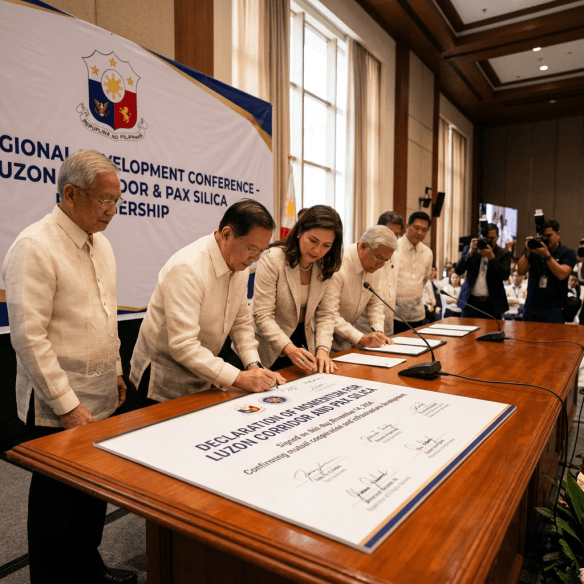
The Pax Silica debate is increasingly being framed as a choice between development and opposition. That framing is unhelpful. The better question is whether the Philippines can pursue industrialisation while respecting rights, environmental limits, and local communities.
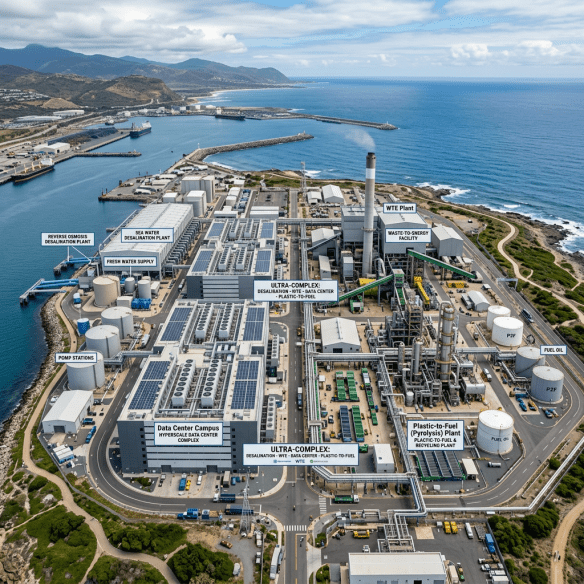
The project itself is strategically important. The proposed 1,620-hectare hub seeks to position the Philippines in global supply chains for artificial intelligence, semiconductors, advanced manufacturing, and critical minerals processing. Government projections suggest significant investment inflows, tax revenues, and high-quality employment opportunities.
Yet large projects do not become good projects simply because they promise economic benefits.
Three realities can simultaneously be true:
The present controversy demonstrates why.
BCDA maintains that the land has been under its title since the enactment of the law creating the agency in 1992 and that there is no overlap with officially recognised ancestral domains. It has also committed to complying with domestic and international legal obligations.
Critics, however, point out that legality is not the same as legitimacy. The pending ancestral domain claims dating back decades raise questions that cannot simply be dismissed because formal titling remains unresolved. Indigenous rights jurisprudence has increasingly recognised that historical occupation and customary use deserve meaningful consideration.
Likewise, the question of displacement should not be reduced to whether homes are physically demolished.
There are at least four forms of displacement:
A farming family may remain physically present while losing access to water resources or agricultural lands. An indigenous community may retain its settlement but lose hunting grounds, sacred spaces, or economic activities that sustain it. Such impacts deserve recognition regardless of whether formal eviction occurs.
The environmental questions also deserve better public disclosure.
BCDA has stated that the project will utilise rainwater harvesting, storage facilities, treatment systems, recycling technologies, and dedicated power infrastructure rather than community water supplies. Officials further emphasise that Pax Silica is envisioned primarily as an industrial ecosystem rather than merely a cluster of data centres.
These commitments are encouraging if fully implemented.
However, public trust cannot be built upon assurances alone.
For a project of this scale, government agencies should proactively disclose:
Transparency should not be viewed as an obstacle to investment. It is an investment protection mechanism in itself.
Countries that successfully developed semiconductor industries did not simply build industrial parks. They built social contracts.
There is also a false dichotomy emerging in public discourse.
Supporting indigenous peoples should not mean rejecting industrial development.
Supporting industrialisation should not mean disregarding communities.
The Philippines needs both.
If Pax Silica succeeds, it could become one of the country’s most consequential industrial projects in decades. If poorly implemented, it could equally become another case study of social conflict accompanying infrastructure development.
Perhaps the appropriate position today is neither unconditional support nor unconditional opposition.
Instead, the country should insist upon several non-negotiable principles:
Industrial policy must ultimately serve people rather than merely attract capital.
The Philippines should aspire to become a semiconductor and AI manufacturing power. It should also aspire to become a nation capable of protecting indigenous rights, agricultural productivity, and environmental sustainability at the same time.
Pax Silica does not need to choose between development and justice. The greater challenge is ensuring that it delivers both.
The debate, therefore, should not be whether Pax Silica must proceed or fail. It should be whether the Philippines is willing to demand that projects of national significance meet standards worthy of the communities that will live with their consequences for generations.
A draft I have yet to publish.
Unnecessary Dilemmas: Rethinking the Lina Law, Property Rights, and Social Justice in the Philippines
By Karl M. Garcia
Perhaps one of the greatest failures of public policy is when it presents society with false choices. We are often told that we must choose between development and environmental protection, economic growth and social justice, or national security and civil liberties. Yet the most enduring societies are those that prosper precisely because they refuse to accept such unnecessary dilemmas.
The debate surrounding the Lina Law presents one such example.
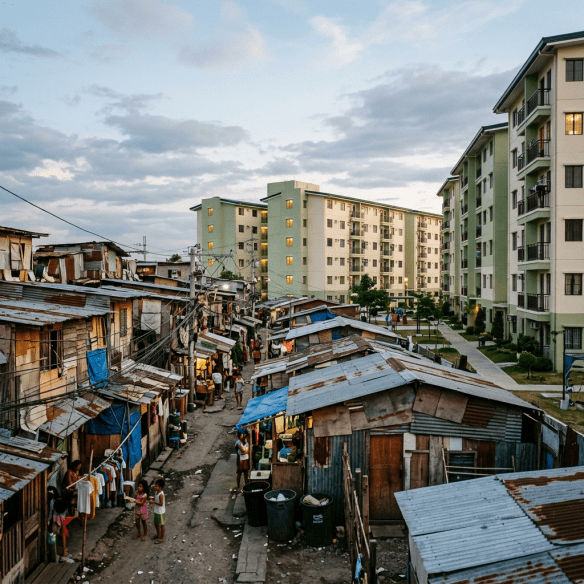
For decades, Filipinos have been asked to choose between compassion for the urban poor and respect for property rights, as though the two were inherently incompatible. We are told that evictions are inherently cruel and that enforcement is therefore unjust. Equally, we are told that property owners must simply bear the burden of unlawful occupation in the name of social justice. Neither proposition is entirely correct.
A nation governed by the rule of law should never ask its citizens to choose between justice and compassion. It should be capable of delivering both.
The intent of the Lina Law was noble. It sought to protect vulnerable communities from arbitrary demolitions while recognising the constitutional mandate to provide decent housing for all Filipinos. Few would argue that poverty should ever be criminalised or that vulnerable families should be denied dignity and humanity.
The problem, however, is that good intentions are not substitutes for good institutions.
Over time, implementation gaps have produced circumstances that neither lawmakers nor citizens should find acceptable. Professional squatters and organised squatting syndicates have taken advantage of legal protections intended for the genuinely poor. Private property owners have sometimes been compelled to shoulder burdens that properly belong to the State. Government agencies frequently lack the institutional capacity or political will to enforce lawful orders consistently. Worse still, enforcement itself may become compromised when those tasked with implementing the law possess conflicts of interest.
This presents an uncomfortable but necessary question: How can government effectively enforce housing laws when some of those responsible for enforcement are themselves illegal settlers or possess direct political interests in informal settlements?
The answer cannot simply be selective enforcement.
The rule of law loses its legitimacy when it becomes negotiable. Laws cannot be enforced only against the politically powerless while remaining dormant against those with sufficient influence or connections. Justice delayed eventually becomes justice denied—not only for property owners, but also for legitimate beneficiaries awaiting socialised housing.
Perhaps the greatest unnecessary dilemma produced by our present framework is the assumption that private property owners must shoulder the costs of solving structural failures in housing policy.
Why should an elderly couple lose decades of savings because their property has been unlawfully occupied? Why should small landowners become involuntary participants in social welfare programmes simply because government has failed to provide adequate housing? Why should victims of unlawful occupation be required to finance relocation programmes for circumstances they neither created nor encouraged?
Social justice should never become a mechanism for transferring governmental responsibilities onto private citizens.
The Constitution recognises both the rights of property owners and the State’s obligation to promote social justice. These are complementary obligations rather than competing interests. Government cannot invoke one constitutional principle to permanently suspend another.
Relocation, therefore, should remain principally a governmental responsibility whenever qualified beneficiaries are involved. The costs of housing programmes should be borne collectively through public policy rather than disproportionately imposed upon individual property owners. Compassion is most meaningful when it becomes a societal commitment rather than an individual punishment.
At the same time, compassion requires accountability.
The law must distinguish between genuine informal settlers driven by poverty and professional squatters who deliberately exploit legal protections. Housing beneficiaries should not repeatedly receive government assistance while simultaneously engaging in unlawful occupations elsewhere. Organised land-grabbing syndicates must face meaningful criminal penalties, including permanent disqualification from government housing programmes.
Justice demands distinctions.
A mother struggling to shelter her children should never be treated similarly to those who profit from organised squatting operations. Social protection was never intended to become legal immunity for abuse.
Institutional reforms are likewise indispensable. The Philippines would benefit from specialised and independent enforcement mechanisms insulated from political interference and conflicts of interest. Mandatory disclosures should be required whenever officials participating in enforcement proceedings possess interests that could compromise their impartiality. Individuals unlawfully occupying disputed properties should likewise be prohibited from participating in related enforcement decisions.
Housing policy itself must also evolve. Relocation programmes frequently fail not because beneficiaries reject housing, but because housing is separated from opportunity. Families cannot thrive when relocated far from employment, transportation, education, and healthcare services. Socialised housing must therefore become integrated with broader development planning rather than treated merely as an exercise in land acquisition.
The answer to informal settlements is not simply building more housing units. It is building communities.
Equally important are reforms in land governance. Digitised land records, comprehensive land-use planning, stronger anti-corruption safeguards, and more efficient judicial procedures would substantially reduce disputes before they emerge. Prevention remains far less costly than prolonged litigation and social conflict.
The law itself should likewise recognise that time matters. Long-standing occupants who qualify under existing protections present circumstances fundamentally different from recent unlawful occupations undertaken with full knowledge of ownership disputes. Public lands, danger zones, government-owned properties, and privately owned lands similarly involve distinct policy considerations that require differentiated approaches rather than blanket solutions.
Nuance strengthens justice.
The question before us, therefore, is not whether the Lina Law should be repealed or preserved unchanged. It is whether the law should be renewed so that it remains faithful to both its humanitarian objectives and the constitutional principles it was intended to uphold.
Such renewal need not abandon compassion. Rather, it requires us to reject the false premise that social justice and property rights are opposing values. They are not. One protects human dignity; the other protects the security upon which individuals, families, and communities build their futures. Both are indispensable to a constitutional democracy.
We should likewise reject the notion that housing policy begins only when unlawful occupation occurs. A truly developmental approach would invest in prevention as much as intervention. This means expanding affordable housing supply, improving urban planning, creating mixed-use and transit-oriented communities, and ensuring that economic opportunities are accessible to those most vulnerable to displacement. It also means strengthening institutional capacity long before disputes emerge.
Ultimately, the success of any housing policy should not be measured merely by the number of demolitions prevented or relocation sites constructed. It should be measured by whether it successfully transforms vulnerability into stability, dependency into opportunity, and conflict into social cohesion.
The Philippines deserves housing policies that neither criminalise poverty nor tolerate abuse. Property owners deserve laws that recognise their rights without diminishing our collective commitment to social justice. The urban poor deserve programmes that provide genuine pathways toward dignity, stability, and opportunity rather than perpetual uncertainty.
These are not competing aspirations. They are complementary responsibilities.
The greatest unnecessary dilemma is believing that we must sacrifice one to preserve the other.
We do not.
A renewal society is not built by choosing between justice and compassion. It is built by insisting that good governance must always be capable of delivering both.
“The unfinished state of becoming” is where we all are. There are only two finite points, being born and dying. The rest is either growth or deterioration, and the Philippines is growing. The Philippines has been on the cusp of breaking through to “capability” ever since I arrived in 2005. The nation oozes, it does not explode, into opportunities. Pax Silica may be a kick in the shorts, and it may not be. Oozing tends to resist groundbreaking change.
If we look around, what do we see?
I don’t believe the nation is on the cusp of anything dramatic. It’s oozing a little better under Marcos.
Confirmation that the nation is oozing up, lol:
https://business.inquirer.net/603203/exports-jump-to-record-high-keep-trade-deficit-at-4-month-low