Beyond Dependence: From Degree to Diskarte to Capability
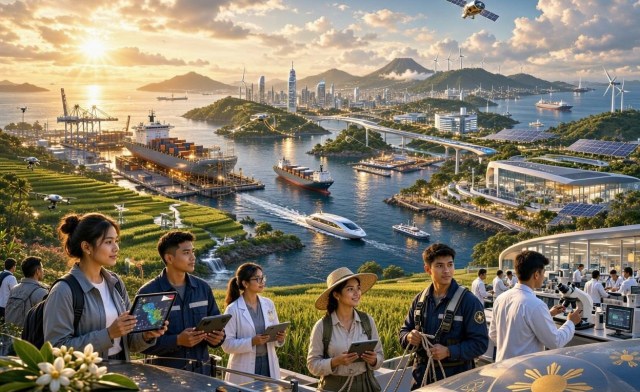
Building a Philippine Capability Republic: A New Doctrine of Nation-Building Toward 2050
By Karl M. Garcia
Executive Summary: From Development to National Capability
The Philippines does not lack development plans, educated people, natural resources, infrastructure projects, foreign investment, or international partnerships. What it has struggled to develop is the institutional and productive capacity to convert these advantages into enduring national strength.
For decades, Philippine development has been measured through economic growth, government expenditure, infrastructure construction, investment commitments, employment generation, and the expansion of services. These are important indicators, but they do not necessarily reveal whether the country has become more capable of sustaining its prosperity, protecting its interests, competing internationally, or responding independently to crises.
A country can grow economically while remaining structurally dependent. It can produce graduates without developing the industries that employ their expertise. It can attract foreign investment without acquiring sufficient technological knowledge. It can purchase sophisticated equipment without developing the capacity to maintain it. It can possess abundant natural resources while importing products that those resources could help produce. It can have internationally recognized sovereign rights without possessing all the practical capabilities necessary to exercise them.
This is the central paradox of Philippine development: the country possesses considerable potential, but has not consistently converted that potential into collective capability.
This paper proposes the Capability Republic as a new organizing doctrine for Philippine nation-building toward 2050.
A Capability Republic is a country that develops the human, institutional, industrial, technological, financial, environmental, and democratic capabilities necessary to determine its development priorities, sustain essential national functions, participate competitively in the international economy, and exercise meaningful choices in an increasingly uncertain world.
It does not advocate isolation, autarky, or the rejection of globalization. Rather, it advances strategic interdependence: engaging international markets, investors, institutions, and partners from a position of growing domestic competence instead of permanent structural vulnerability.
The doctrine rests on a fundamental progression:
- From educational attainment to demonstrated competence.
- From individual diskarte to organized institutional intelligence.
- From labor export to domestic productive capacity.
- From resource ownership to productive wealth and stewardship.
- From infrastructure construction to integrated national systems.
- From technology acquisition to technological agency.
- From fragmented government programs to enduring institutions.
- From economic growth to inclusive human flourishing.
- From formal sovereignty to the practical ability to exercise national choices.
The Capability Republic is therefore not simply an economic program. It is a comprehensive philosophy of nation-building that connects the individual Filipino to the enterprise, the enterprise to the national economy, the economy to the institutions of government, and the institutions of government to the country’s long-term sovereignty and security.
Its ultimate ambition is straightforward: by 2050, the Philippines should become a nation that can produce more of what it needs, develop more of what it knows, sustain more of what it builds, protect more of what it owns, and negotiate more effectively with the world.
The objective is not to do everything alone. It is to become capable enough that dependence becomes a choice rather than a necessity.
I. The National Development Paradox: Why Potential Has Not Become Capability
The Philippines faces a development paradox.
It has a large and relatively young population, but continues to struggle with underemployment, skills mismatches, and the productive utilization of its workforce. It has agricultural resources, but remains vulnerable to food supply disruptions and import dependence. It occupies a strategically important maritime location, but has yet to fully develop its maritime economy. It attracts foreign capital, but does not consistently capture the technological, industrial, and supplier-development opportunities that investment can generate.
It builds infrastructure, but maintenance, operational reliability, and connectivity remain persistent challenges. It produces university graduates, but many employers struggle to find workers with the practical competencies required by modern industries. It adopts advanced technologies, but frequently depends on external suppliers for implementation, maintenance, upgrades, and technical support.
These are not unrelated problems. They point to a common weakness: the mechanisms through which resources, knowledge, capital, and institutions are converted into sustained national performance.
The distinction between development inputs and national capabilities is fundamental.
A completed road is an infrastructure output. A transportation network that reliably connects farms, factories, ports, markets, and communities is a national capability.
A university graduate is an educational output. A workforce that can design, operate, maintain, improve, and eventually develop sophisticated technologies is a national capability.
An investment commitment is a financial input. A domestic industrial ecosystem that generates competitive enterprises, skilled employment, technological knowledge, and higher-value exports is a national capability.
A military acquisition is an equipment input. An armed force capable of operating, maintaining, supplying, coordinating, and sustaining its platforms is a national capability.
The same principle applies to government. Passing legislation does not automatically establish effective governance. Creating an agency does not guarantee institutional competence. Allocating a budget does not ensure public value.
The central measure of development must therefore change.
Instead of asking only how much the country spends, builds, attracts, or produces, we must ask what it has become capable of doing consistently, independently where necessary, and competitively where possible.
This is the difference between possessing potential and exercising agency.
It also explains why development must be understood as cumulative. Each generation should inherit not merely physical infrastructure and financial resources, but stronger institutions, more advanced knowledge, better-trained professionals, more productive enterprises, and more resilient national systems.
A country that repeatedly starts programs without preserving institutional knowledge does not accumulate capability. It accumulates unfinished projects.
The challenge of Philippine nation-building is to break this cycle.
II. From Degree to Diskarte to Capability: Developing the Filipino as an Agent of National Development
Nation-building begins with people, but it cannot end with educational attainment.
Filipino families place enormous value on education. Degrees represent opportunity, social mobility, professional advancement, and the prospect of a more secure future. Yet a degree does not automatically translate into competence, and competence does not automatically become productive capability.
A graduate may understand engineering principles without having operated industrial equipment. A business graduate may understand management theory without having managed an organization. A programmer may know several languages without having developed a production-ready system. A technically skilled worker may possess the necessary knowledge but lack access to the equipment, financing, and institutional environment required to apply it.
This is where diskarte becomes important.
Diskarte represents resourcefulness, adaptability, creativity, improvisation, and practical problem-solving. It reflects the Filipino capacity to navigate difficult circumstances and find opportunities despite limited resources.
It has considerable value in entrepreneurship, community development, professional work, and everyday life. However, a country cannot permanently depend on individual improvisation to compensate for institutional weaknesses.
When citizens must constantly improvise because public transportation is unreliable, government services are inaccessible, infrastructure is poorly maintained, or regulations are unpredictable, diskarte becomes a survival mechanism rather than a source of innovation.
The objective must be to transform individual resourcefulness into organized competence.
The progression can be understood through three stages:
Degree: The acquisition of knowledge.
Education develops foundational literacy, scientific understanding, technical knowledge, analytical ability, and professional qualifications.
Diskarte: The application of knowledge.
Individuals learn to adapt, exercise judgment, solve practical problems, innovate, and respond to unfamiliar situations.
Capability: The institutionalization of knowledge and experience.
Individuals and organizations develop repeatable processes, professional standards, organizational memory, quality assurance, and the ability to transfer knowledge and improve performance over time.
This progression has major implications for Philippine education.
Universities must strengthen their connections with industry, research institutions, and public-sector requirements. Technical and vocational education must be treated as a strategic pathway rather than a secondary alternative to university education. Apprenticeships, professional certification, workplace learning, and continuing education must become integral components of workforce development.
The country must also recognize that artificial intelligence and automation are changing the traditional pathways through which professionals gain experience.
Routine documentation, research, administration, customer service, and analytical tasks are increasingly automated. Yet these activities have historically provided entry-level workers with opportunities to acquire practical knowledge and professional judgment.
If these opportunities disappear, employers and educational institutions must develop alternative apprenticeship arrangements. Otherwise, the country risks creating a labor market that demands experienced professionals while eliminating the pathways through which experience is acquired.
Equally important is intergenerational knowledge transfer.
The accumulated expertise of retiring engineers, technicians, farmers, seafarers, scientists, programmers, and public servants represents an important national asset. Modernization should not mean discarding institutional memory. New technologies should incorporate lessons learned through decades of practical experience.
The Philippines therefore needs a national architecture for lifelong learning, apprenticeships, professional mobility, technical certification, and knowledge preservation.
The ultimate objective is to develop Filipinos not merely as employable labor, but as professionals, entrepreneurs, researchers, creators, managers, and institution-builders.
The Filipino must be recognized not simply as human capital to be deployed, but as human agency to be developed.
III. From Labor Export to Productive Nation: Reorganizing the National Economy
The Philippines has demonstrated its ability to supply skilled and adaptable workers to the international economy.
Overseas Filipino workers, seafarers, healthcare professionals, engineers, construction specialists, educators, and service-sector employees contribute to international industries while supporting millions of Filipino households through remittances.
The diaspora also represents an extensive reservoir of professional experience, technical expertise, managerial knowledge, international networks, and entrepreneurial opportunities.
These are national advantages. However, the country must confront the limitations of an economic structure that exports considerable amounts of human talent while struggling to create sufficient high-value employment opportunities at home.
Remittances support household consumption, education, housing, and foreign-exchange stability. But remittances cannot substitute for domestic industrialization, technological development, or productive employment.
The objective should not be to discourage overseas employment. Filipinos must remain free to pursue opportunities wherever they exist. Rather, the Philippines must develop an economy in which remaining at home, returning home, or establishing an enterprise domestically becomes an equally attractive opportunity.
This requires a stronger productive economy.
The Tatak Pinoy Act, or Republic Act No. 11981, provides an important policy foundation for developing Filipino products, domestic enterprises, and competitive industries.
But industrialization must extend beyond slogans about buying local.
It requires a coordinated ecosystem of skilled workers, affordable energy, efficient logistics, long-term financing, research and development, technical standards, competitive enterprises, predictable regulations, and access to markets.
The Philippines should prioritize industries in which it can develop meaningful domestic capabilities, including:
- Electronics, semiconductors, and advanced components.
- Agricultural processing and food manufacturing.
- Pharmaceuticals, medical devices, and biotechnology.
- Shipbuilding, ship repair, and maritime services.
- Renewable energy equipment, storage, and grid technologies.
- Defense electronics, communications, protective equipment, and maintenance.
- Advanced materials and specialized manufacturing.
- Digital services, artificial intelligence, and industrial software.
These sectors should not be pursued as isolated industrial projects. They must become interconnected productive ecosystems.
Foreign investment should be evaluated not only according to the amount of capital entering the country, but also according to its contribution to domestic supplier development, workforce training, research partnerships, technology adaptation, exports, and local value creation.
Government procurement can help create initial markets for competitive Filipino enterprises, provided procurement remains transparent, performance-based, and accountable.
The objective is not to preserve inefficient companies indefinitely. It is to help viable enterprises acquire the scale, expertise, technology, and productivity necessary to compete internationally.
Industrial policy should therefore combine strategic support with measurable performance requirements.
A company receiving public incentives should demonstrate meaningful contributions to productivity, employment quality, technology transfer, exports, or domestic supplier development.
The ultimate measure of productive sovereignty is not whether every product is manufactured locally. It is whether the country possesses sufficient domestic expertise, industrial participation, and economic alternatives to retain more value and exercise more meaningful choices.
IV. From Resources to Productive Systems: Building the Material Foundations of National Capability
A capable republic must be able to sustain the material foundations of its economy and population.
Food, energy, water, transportation, telecommunications, and logistics are often treated as separate policy concerns. In reality, they form an interconnected national operating system. A disruption in one can affect the performance of several others.
A factory cannot operate competitively without reliable electricity and water. Farmers cannot reach markets without dependable roads, storage, and transport. Hospitals cannot provide continuous services without energy, medical supplies, communications, and functioning logistics. Communities cannot recover quickly from disasters without redundant infrastructure and effective local institutions.
The Philippines must therefore move from managing individual resource sectors toward developing integrated productive systems.
Food sovereignty and agricultural capability
Agriculture must become a modern, productive, and technologically supported sector rather than an industry sustained primarily through the resilience of individual farmers.
The Philippines must address fragmented landholdings, aging farmers, inadequate irrigation, limited mechanization, post-harvest losses, insufficient storage, weak market connections, and exposure to climate disruptions.
Farmers need access to improved seeds, modern machinery, agricultural research, weather information, soil data, financing, cold storage, processing facilities, and reliable markets.
Cooperatives and producer organizations can provide economies of scale, shared equipment, stronger bargaining power, and improved access to finance. Agricultural research must be connected to extension services that translate scientific advances into practical improvements in productivity.
Trade policy must support this transformation. The WTO Agreement on Agriculture provides policy space for legitimate agricultural development measures, including research, infrastructure, and other qualifying support. The Philippines should use available flexibility to strengthen domestic productivity rather than rely indefinitely on emergency importation.
The objective is not permanent protection from international competition. It is to develop an agricultural sector capable of feeding the population, supporting viable rural livelihoods, and competing in selected international markets.
Energy and water as foundations of national power
No industrial economy can become competitive without reliable and affordable energy.
The Philippines needs a diversified energy system that combines renewable generation, appropriate conventional generation, energy storage, grid modernization, and other technologies suited to national requirements.
Energy security is not simply a question of installing additional generating capacity. It requires transmission infrastructure, distribution reliability, storage, system flexibility, fuel diversification, and the ability to maintain essential services during emergencies.
Water security requires similar attention.
Watershed protection, efficient distribution, wastewater treatment, conservation, groundwater management, and desalination where economically and environmentally viable must form part of an integrated national water strategy.
Energy and water are not merely utilities. They are foundations of industrial competitiveness, public health, and national resilience.
Infrastructure as a national operating system
Roads, railways, bridges, airports, seaports, telecommunications, power facilities, and logistics hubs create value when they operate as connected networks.
Infrastructure policy must therefore move beyond construction announcements and project completion rates.
The Philippines needs the domestic engineering, inspection, maintenance, repair, asset-management, and technical expertise necessary to sustain the infrastructure it builds.
Every major infrastructure investment should be evaluated according to its entire lifecycle: construction, operation, maintenance, rehabilitation, climate exposure, replacement requirements, and long-term fiscal implications.
Connectivity must also be understood in terms of economic geography. Strategic corridors, including the proposed Panay–Guimaras–Negros bridge system, illustrate how integrated transport networks can connect production centers, agricultural communities, tourism destinations, and regional markets.
The ultimate objective is to develop infrastructure that functions as a coherent national system rather than a collection of disconnected projects.
Spatial sovereignty and national land-use governance
Land is among the country’s most important strategic resources.
Agriculture, industrial estates, housing, transport corridors, watersheds, forests, coastal communities, protected ecosystems, and military installations compete for limited space.
Without coherent spatial planning, infrastructure development can undermine agricultural production, urban expansion can increase disaster exposure, and commercial development can destroy the ecosystems supporting local livelihoods.
A comprehensive National Land Use Act and stronger regional planning institutions are essential.
Spatial sovereignty means possessing the institutional capacity to determine how national territory is used, protected, connected, and developed in the long-term public interest.
It is the spatial foundation of the Capability Republic.
V. From Archipelago to Maritime Republic: Converting Geography into Strategic Advantage
The Philippines is not simply a country with many islands. It is an archipelagic state whose maritime domain is central to its economic identity, territorial integrity, environmental security, and international position.
Its geography connects it to global shipping, fisheries, energy, tourism, international trade, and regional security.
Yet geographic advantage does not automatically translate into maritime capability.
The Philippines must develop an integrated maritime economy encompassing commercial shipping, shipbuilding and repair, fisheries, aquaculture, offshore renewable energy, marine biotechnology, ocean research, coastal tourism, and maritime logistics.
This requires coordinated investment in maritime education, port infrastructure, marine science, financing, technology, environmental protection, and regulatory institutions.
The country’s maritime legislation provides important foundations. Republic Act No. 12064, or the Philippine Maritime Zones Act; Republic Act No. 12065, or the Philippine Archipelagic Sea Lanes Act; and Republic Act No. 12021, or the Magna Carta of Filipino Seafarers, establish important legal and institutional directions.
But legislation must translate into operational capability.
Maritime domain awareness must become a national priority. Coastal surveillance, satellite information, unmanned systems, intelligence, communications, and interagency information-sharing must function as an integrated system.
The country needs to understand what is happening across its maritime domain, identify threats and illegal activities, protect marine resources, support maritime commerce, and respond effectively to emergencies.
This has direct implications for national defense.
Military modernization must be measured not simply by the number of platforms acquired, but by operational readiness, maintenance, logistics, training, ammunition, command and control, interoperability, and the ability to sustain operations.
The Philippines should progressively develop a domestic defense-industrial ecosystem through maintenance and repair, electronics, communications, protective equipment, component manufacturing, research, and carefully selected co-production partnerships.
International partnerships remain essential, but they should progressively strengthen domestic expertise and industrial participation.
The objective is not to immediately reproduce the defense industries of major powers. It is to establish sufficient national competence to maintain essential systems, support operations, adapt technologies, and reduce critical vulnerabilities.
The maritime republic must ultimately be capable of protecting its waters, supporting coastal communities, developing its marine economy, and exercising its sovereign rights.
Geography must become more than an advantage on a map. It must become an organized source of national wealth and strategic power.
VI. From Technology Consumption to Technological Agency: Becoming a Learning and Innovation Republic
Technology increasingly determines economic competitiveness, military effectiveness, industrial productivity, and national resilience.
Yet purchasing technology does not automatically create technological capability.
A country may acquire sophisticated machinery, artificial intelligence systems, telecommunications infrastructure, satellites, and military equipment while remaining dependent on external suppliers for maintenance, software, technical support, upgrades, and critical components.
The challenge is to move from technology consumption toward technological agency.
This does not require developing every technology independently. It requires building the expertise to understand, evaluate, adapt, integrate, govern, maintain, and improve technologies according to national requirements.
Artificial intelligence, robotics, biotechnology, semiconductors, advanced materials, satellite applications, cybersecurity, and digital infrastructure should be connected to domestic research and industrial priorities.
Universities, laboratories, startups, government agencies, and established enterprises must become part of a coherent innovation ecosystem.
Research should not end with publications. It must have pathways toward experimentation, testing, commercialization, intellectual property development, manufacturing, and public application.
The country’s space initiatives, including the Diwata and Maya satellite programs, demonstrate the importance of progressively developing domestic expertise in satellite design, integration, operation, and Earth-observation applications.
These initiatives should become foundations for a broader domestic space ecosystem involving universities, engineers, scientific institutions, private enterprises, and government agencies.
The same principle applies to artificial intelligence and digital transformation.
The Philippines should not simply become a market for imported digital solutions. It should develop the technical and institutional capacity to build applications, secure information systems, manage data responsibly, and use emerging technologies to improve public services and domestic industries.
The diaspora as an extension of national capability
The worldwide Filipino diaspora represents an extraordinary opportunity for technological and institutional development.
Overseas Filipino scientists, engineers, researchers, entrepreneurs, executives, and professionals possess experience that can accelerate domestic modernization.
The country should develop structured mechanisms for diaspora participation through joint laboratories, visiting appointments, professional exchanges, research partnerships, mentoring, investment networks, and technology collaboration.
The transition must be from remittances to relationships, from individual contracts to organized programs, and from temporary participation to enduring institutional partnerships.
The diaspora should become an extension of the country’s knowledge and productive ecosystem.
The Learning Republic
Technological agency also requires a government capable of learning.
Government programs must be evaluated according to actual results. Successful initiatives should be replicated, ineffective policies corrected, and institutional knowledge preserved.
Public agencies should develop systems for documentation, knowledge management, professional development, performance measurement, and continuous improvement.
The Learning Republic does not simply acquire new information. It develops the institutional capacity to transform information into better decisions and more effective public performance.
This is particularly important in a rapidly changing technological environment. Institutions that cannot learn will become increasingly dependent on those that can.
VII. From Economic Growth to Human Flourishing: Distributing the Productivity Dividend
National capability is not an end in itself.
Industrialization, technological development, infrastructure, and economic security must ultimately improve the lives of citizens.
The Philippines must therefore distinguish between economic growth and human flourishing.
Economic growth measures the expansion of economic activity. Human flourishing concerns whether people experience better health, education, housing, employment, security, opportunity, and meaningful participation in society.
The two should reinforce one another.
A more productive economy should generate better employment, higher wages, improved working conditions, professional development, and greater opportunities for social mobility.
This becomes especially important as artificial intelligence and automation transform the nature of work.
Technology can increase organizational output while reducing the time and labor required for repetitive activities. The productivity dividend could support higher compensation, better benefits, shorter working hours, improved work-life balance, greater investment in research, and more opportunities for professional advancement.
But these outcomes are not automatic.
If companies primarily use automation to reduce headcount and intensify the workload of remaining employees, productivity gains may accrue disproportionately to corporations and shareholders.
The Capability Republic must therefore address the distribution of technological gains.
Labor standards, competition policy, collective bargaining, social protection, continuing education, and effective labor-market institutions will help determine whether automation broadens opportunity or deepens inequality.
Healthcare, education, housing, nutrition, childcare, eldercare, and social protection must be understood as investments in national capability.
A population that is healthy, educated, secure, and economically empowered is better positioned to innovate, work productively, establish enterprises, and participate in democratic life.
The ultimate objective is not simply to produce more.
It is to ensure that greater productive capacity translates into greater human freedom, dignity, and opportunity.
VIII. From Environmental Protection to Regenerative National Wealth
A capable republic must recognize that its natural environment is part of its productive and strategic foundation.
The Philippines is particularly exposed to extreme weather, flooding, coastal erosion, sea-level rise, land subsidence, water scarcity, biodiversity loss, and environmental degradation.
These are not exclusively environmental concerns. They affect agriculture, infrastructure, public health, energy, insurance, public finances, and national security.
Environmental resilience must therefore become part of economic planning.
Watershed rehabilitation, mangrove restoration, sustainable fisheries, climate-resilient agriculture, circular manufacturing, wastewater treatment, and effective waste management can protect natural capital while supporting livelihoods.
Republic Act No. 9003 provides the framework for ecological solid-waste management, but implementation remains uneven.
The country needs functioning materials recovery facilities, reliable collection systems, segregation, recycling markets, and effective enforcement.
Waste-to-energy technologies may contribute where technically, economically, and environmentally appropriate, but must be assessed according to waste composition, emissions, costs, technological reliability, and public health. They should not displace waste reduction, reuse, and recycling.
Coastal development and reclamation must also account for sea-level rise, subsidence, storm surges, sediment movement, and ecosystem impacts.
Engineering can improve resilience, but it cannot eliminate environmental limits. Some locations may require protective infrastructure. Others may be better served by ecosystem restoration or managed retreat.
The deeper objective is a regenerative economy: one that produces economic value while restoring the natural systems on which future prosperity depends.
A country that exhausts its natural capital weakens its own future productive capacity.
Environmental stewardship is therefore not an obstacle to development. It is a condition for development that can endure.
IX. From Political Administration to Enduring Institutions: Building the Governance Republic
The most sophisticated economic strategy will fail without institutions capable of executing it.
The Philippines has repeatedly experienced discontinuity in public programs across administrations, changing political priorities, fragmented mandates, political appointments, weak implementation, and inadequate evaluation.
This creates a recurring development cycle in which new administrations announce new programs while previous initiatives remain incomplete, unevaluated, or abandoned.
A Capability Republic must break this cycle.
Government should be understood not simply as a collection of departments and political offices, but as the institutional machinery through which national priorities are translated into consistent public outcomes.
This requires professional public administration, regulatory competence, procurement integrity, fiscal discipline, policy continuity, and accountability.
Public assets and the national interest
Public assets must be managed according to long-term public value.
Government-owned land, infrastructure, natural resources, and strategic properties should not be treated merely as opportunities for short-term commercialization.
Public-private partnerships and commercial leases can unlock economic value, but ownership, valuation, public obligations, environmental requirements, and accountability must remain transparent.
The redevelopment debate surrounding the New Bilibid Prison property illustrates the importance of distinguishing public ownership, leasing arrangements, commercial partnerships, and the long-term public interest.
The same standards should apply to large private enterprises whose activities intersect with public infrastructure, land, utilities, or regulation.
The evolution of major Philippine conglomerates, including family-owned business groups, also provides an opportunity to examine capital formation, entrepreneurship, professionalization, succession, economic concentration, and the relationship between business and political influence.
Family-owned enterprises can contribute substantially to national development. The issue is whether economic power operates within institutions that protect competition, prevent conflicts of interest, and safeguard the public interest.
Accountability must be evidence-based, consistent, and subject to due process.
Democratic institutions and political accountability
Political dynasties and concentrated political power raise important institutional concerns.
The constitutional commitment to preventing political dynasties requires meaningful legislative implementation.
More broadly, democratic institutions must provide fair opportunities for participation, competition, and public accountability.
The Governance Republic must ensure that public institutions serve the national interest rather than become instruments of private advantage.
The democratic dimension of capability
Citizens must also possess the capacity to participate meaningfully in public decision-making.
The Philippines can learn from deliberative democracy mechanisms in Switzerland and citizens’ assemblies in Ireland.
Participatory budgeting, citizens’ assemblies, evidence-based consultations, accessible legislative information, and stronger local participation can complement representative democracy.
These mechanisms must respect constitutional arrangements, protect minority rights, and avoid becoming substitutes for accountable elected institutions.
Filipino values such as bayanihan, pakikipagkapwa, and malasakit can reinforce the national compact.
But solidarity must not become patronage. Utang na loob must not override accountability. Pakikisama must not prevent the correction of wrongdoing.
A capable democracy combines cooperation with standards, participation with responsibility, and public authority with accountability.
The Governance Republic is ultimately a republic in which institutions are stronger than personalities, public service is more important than political loyalty, and national priorities survive changes in political leadership.
X. From Vulnerability to Strategic Optionality: The Sanctuary State
The Capability Republic must be capable of functioning under uncertainty.
The international environment is increasingly affected by geopolitical competition, economic coercion, supply-chain disruptions, cyber threats, climate disasters, and regional security risks.
For the Philippines, developments in the Taiwan Strait, South China Sea, and wider Indo-Pacific have direct implications for trade, shipping, energy, communications, migration, and national security.
The country must prepare for disruptions without assuming that conflict is inevitable.
This is the logic of the Sanctuary State.
A Sanctuary State is a country capable of protecting its population, preserving essential national functions, supporting humanitarian operations, and maintaining dependable international relationships during periods of instability.
It requires strategic reserves of food, fuel, medicine, and critical materials; redundant energy, water, communications, and transport systems; cybersecurity; capable emergency institutions; and domestic repair and maintenance capacity.
It also requires diversified international partnerships.
The Philippines should deepen cooperation with ASEAN, Japan, the United States, Australia, South Korea, Europe, and other partners without becoming excessively dependent on any single external actor.
Strategic optionality as a measure of sovereignty
Strategic optionality means possessing credible alternatives.
The country should maintain alternative suppliers, multiple transport routes, reserve capacity, backup systems, and domestic expertise in strategically important sectors.
These arrangements may appear inefficient under normal market conditions. Maintaining alternative suppliers, strategic inventories, or redundant infrastructure can involve additional costs.
But these costs must be weighed against the economic and security consequences of having no alternatives during a crisis.
A nation that cannot replace a critical supplier, maintain an essential system, or sustain basic services during a disruption has limited negotiating power.
A nation with alternatives has greater freedom of action.
This is the practical meaning of sovereignty in an interconnected world.
The Sanctuary State is not an isolated fortress. It is a republic sufficiently resilient to remain open, functional, and dependable under pressure.
XI. From Financial Dependence to Economic Agency: Strengthening the Foundations of Sovereignty
A country cannot exercise meaningful economic agency without understanding its monetary, financial, and productive constraints.
Monetary sovereignty, financial sovereignty, and productive sovereignty are related but distinct.
The ability to issue a national currency and conduct monetary policy does not eliminate foreign-exchange requirements, imported energy costs, external debt obligations, inflationary pressures, or balance-of-payments constraints.
Similarly, monetary expansion, currency diversification, or de-dollarization cannot substitute for productive capacity.
The Philippines must strengthen its ability to generate foreign exchange through higher-value exports, competitive services, manufacturing, tourism, technology, and other productive activities.
It must also maintain financial stability, diversify financing sources, manage public debt responsibly, and ensure that public investment creates durable economic returns.
Fiscal discipline should not mean refusing to invest. It should mean allocating resources according to national priorities, evaluating opportunity costs, controlling waste, and ensuring that long-term obligations remain sustainable.
Borrowing for productive infrastructure, research, education, and industrial development can strengthen future capacity when projects are properly evaluated and implemented.
Conversely, expenditure that creates recurring obligations without corresponding economic or social returns can weaken future fiscal flexibility.
The country must also improve its ability to mobilize domestic savings and direct long-term capital toward productive investments.
Domestic financial institutions, capital markets, development finance, pension funds, insurance institutions, and responsible public-private partnerships can contribute to financing infrastructure, industrial modernization, and technological development.
This requires credible institutions, predictable regulation, financial transparency, and effective risk management.
The ultimate objective is a sovereign economy with sufficient productive strength, institutional credibility, and financial resilience to engage international markets on sustainable terms.
Economic agency is not achieved by withdrawing from the international financial system.
It is achieved by becoming a more capable participant within it.
XII. The National Compact: Making Capability a Shared Project
The Capability Republic cannot be constructed by government alone.
It requires a national compact among citizens, government, business, universities, workers, local communities, and the diaspora.
Each has a distinct but complementary responsibility.
Government must establish strategic direction, provide public goods, maintain institutions, develop infrastructure, ensure fair competition, and preserve continuity in national priorities.
Business must invest, innovate, improve productivity, develop workers, adopt higher standards, and build enterprises capable of competing internationally.
Universities and research institutions must develop knowledge, professional competence, scientific discoveries, and technological solutions connected to national requirements.
Workers and professionals must participate in lifelong learning, innovation, professional development, and the continuous improvement of organizations.
Local governments and communities must translate national priorities into practical local development while protecting local resources, livelihoods, and environmental assets.
The diaspora must be connected to domestic institutions through knowledge exchange, investment, mentoring, research, technology collaboration, and enterprise development.
Citizens must participate in democratic life, demand accountability, and contribute to a culture that values competence, integrity, and public responsibility.
This compact requires a fundamental change in how national success is understood.
The Philippines must move beyond a culture that primarily celebrates announcements, inaugurations, political personalities, and short-term achievements toward one that recognizes institutional performance, professional excellence, innovation, maintenance, and sustained public value.
National development must become an intergenerational responsibility.
The measure of an administration should not simply be what it completes during its term, but whether it leaves behind stronger institutions, more productive enterprises, better-trained people, more resilient systems, and greater national capability than it inherited.
The country must begin thinking in generations rather than electoral cycles.
XIII. The Road to 2050: Institutionalizing the Capability Republic
The Capability Republic requires a long-term national strategy that survives political administrations, economic cycles, and changing international circumstances.
The transformation should proceed through three interconnected stages.
2026–2030: Establish the foundations
The immediate priority is to strengthen the country’s institutional and productive foundations.
Key priorities include:
- Implementing the Tatak Pinoy framework through measurable industrial development and domestic supplier programs.
- Improving agricultural productivity, irrigation, mechanization, post-harvest facilities, and rural logistics.
- Establishing stronger apprenticeship, lifelong learning, technical certification, and intergenerational knowledge-transfer systems.
- Advancing comprehensive land-use legislation and integrated spatial planning.
- Improving public procurement, infrastructure maintenance, project evaluation, and government asset management.
- Strengthening food, energy, water, and critical-material security.
- Identifying strategic dependencies and developing credible domestic and international alternatives.
- Connecting universities, research institutions, enterprises, and government agencies.
- Establishing a national capability scorecard with independently verifiable indicators.
- Strengthening professional civil service systems and multi-year development financing.
The immediate objective is to establish the institutional mechanisms through which national resources and investments can produce lasting capabilities.
2031–2040: Scale productive and technological capability
The second stage should expand domestic industrial, technological, and institutional capacity.
Priorities include:
- Deepening manufacturing and domestic supplier networks.
- Expanding research commercialization and technological adaptation.
- Strengthening maritime and defense-industrial participation.
- Modernizing infrastructure, logistics, and regional economic corridors.
- Developing competitive regional industrial ecosystems.
- Increasing higher-value exports and domestic value added.
- Expanding international research, investment, and technology partnerships.
- Improving wages, workforce productivity, and employment quality.
- Strengthening climate resilience and regenerative economic practices.
- Expanding the participation of Filipino enterprises in international value chains.
The objective is to move from establishing productive foundations toward achieving measurable competitiveness and greater domestic value creation.
2041–2050: Consolidate national agency
The final stage should establish a mature national capability ecosystem.
By 2050, the Philippines should aspire to possess:
- Globally competitive Filipino enterprises and industrial ecosystems.
- Professional, adaptive, and accountable public institutions.
- Productive and technologically modern agriculture.
- Resilient infrastructure and integrated logistics networks.
- Reliable, diversified, and affordable energy and water systems.
- Advanced technological participation and domestic research capabilities.
- Effective maritime governance and sustainable blue-economy industries.
- Credible defense support, maintenance, and industrial capabilities.
- Resilient supply chains and strategic reserves.
- Stronger environmental systems and disaster resilience.
- Higher wages, improved social mobility, and better-quality employment.
- Greater capacity to determine economic relationships and negotiate international partnerships.
The ambition is not to achieve complete self-sufficiency. It is to establish sufficient domestic competence and strategic alternatives to protect national choices.
Measuring capability rather than activity
The country needs a national capability scorecard that evaluates actual improvements rather than merely counting government activities.
| Capability domain | What must be measured |
|---|---|
| Human capability | Learning outcomes, technical competence, health, professional development |
| Industrial capability | Productivity, domestic value added, exports, supplier development |
| Agricultural capability | Farm productivity, farmer incomes, food affordability, post-harvest losses |
| Technological capability | Research commercialization, intellectual property, adoption, domestic expertise |
| Infrastructure capability | Reliability, maintenance performance, logistics costs, lifecycle efficiency |
| Energy and water | Affordability, reliability, diversification, resilience |
| Maritime and defense | Domain awareness, readiness, maintenance, domestic industrial participation |
| Environmental capability | Ecosystem restoration, pollution reduction, climate resilience |
| Institutional capability | Procurement integrity, service quality, regulatory performance, public trust |
| Financial capability | Fiscal sustainability, productive investment, foreign-exchange generation |
| Democratic capability | Participation, transparency, accountability, institutional independence |
| Human flourishing | Wages, housing, employment quality, social mobility, access to essential services |
These indicators should be independently evaluated, publicly accessible, and periodically reviewed.
Importantly, targets must distinguish between inputs, outputs, and outcomes.
The number of people trained is an input or activity measure. Whether those people acquire relevant competencies is an outcome. Whether enterprises and institutions can consistently use those competencies to improve productivity is a measure of capability.
The same principle applies to infrastructure, technology, research, and public administration.
A national capability scorecard must reveal whether the country is actually becoming more competent, productive, resilient, and institutionally effective.
Making the doctrine survive political administrations
The 2050 horizon must become an institutional commitment rather than a political slogan.
This requires a legally supported long-term national development framework, multi-year financing arrangements, professional planning institutions, independent evaluation, transparent performance reporting, and mechanisms for policy continuity.
National priorities should be subject to democratic review, but strategic investments should not be casually abandoned because of changes in political leadership.
Continuity does not mean preserving every policy indefinitely. It means preserving institutional knowledge, evaluating results, correcting mistakes, and maintaining commitments that demonstrably serve the national interest.
The Philippines needs a development system that learns, adapts, and accumulates capability across generations.
XIV. The Deeper Doctrine: From Development State to Capability Republic
The Capability Republic brings together several dimensions of nation-building that are frequently addressed separately.
They should instead be understood as mutually reinforcing components of a single national doctrine.
The Productive Republic develops the capacity to manufacture, process, engineer, export, innovate, and generate domestic economic value.
The Learning Republic develops the capacity to acquire knowledge, preserve institutional memory, adapt technology, and continuously improve.
The Governance Republic develops the capacity to coordinate national priorities, implement policies, manage public resources, maintain institutions, and uphold accountability.
The Maritime Republic develops the capacity to turn archipelagic geography into economic opportunity, environmental stewardship, and strategic security.
The Regenerative Republic develops the capacity to sustain economic activity while restoring the natural systems that support long-term prosperity.
The Sanctuary State develops the capacity to protect its population, maintain essential functions, and preserve strategic choices during periods of disruption.
These are not competing national visions. They are different expressions of the same underlying principle: a country must develop the ability to organize its resources and institutions toward enduring collective outcomes.
The Capability Republic is the overarching framework that integrates them.
This distinction is important because national development cannot be achieved through isolated excellence.
A technologically advanced enterprise cannot flourish indefinitely in an economy with unreliable electricity and logistics. A modern military cannot operate effectively without industrial support, trained personnel, and dependable supply chains. An excellent university cannot transform the national economy if research has no pathways toward application. A productive agricultural sector cannot thrive without water, infrastructure, financing, and access to markets.
Capability is therefore systemic.
It emerges when individuals, organizations, enterprises, institutions, infrastructure, and public policies reinforce one another.
The country must move from a fragmented development architecture toward an integrated national capability ecosystem.
Conclusion: The Philippines Must Become Capable of Choosing Its Future
The deepest challenge of Philippine development is not simply economic. It is the challenge of becoming a nation capable of converting its potential into enduring collective strength.
The Philippines has people, resources, geography, international relationships, and opportunities. But these advantages will remain underutilized unless the country develops the institutions and productive systems necessary to organize them.
A degree must lead to competence. Diskarte must evolve into organized innovation. Education must connect to productive work. Labor must have pathways toward professional growth. Enterprises must become engines of technological and industrial development. Research must translate into practical applications. Infrastructure must become an integrated national system. Government must become an institution of learning and execution.
Foreign investment must contribute to domestic capability. Economic growth must produce better livelihoods. National security must rest on resilience and strategic alternatives. Environmental protection must preserve the natural foundations of future prosperity. Democracy must provide citizens with meaningful opportunities to shape their collective future.
These are not separate development objectives. They are mutually reinforcing dimensions of national capability.
The Philippines must therefore reconsider what it means to be a sovereign and developed country.
Sovereignty is not simply the formal possession of territory, the existence of national institutions, or recognition of international rights. It also involves the practical capacity to protect national interests, sustain essential systems, exercise informed choices, and negotiate relationships without being unnecessarily constrained by structural dependence.
Development is not simply the expansion of economic activity. It is the accumulation of knowledge, competence, productive capacity, institutional strength, and human opportunity across generations.
Nation-building is not merely the preservation of national identity or the construction of political institutions. It is the continuous creation of the collective capabilities that allow a people to determine their own future.
The Capability Republic therefore rests on a fundamental doctrine:
- From potential to capability.
- From dependence to agency.
- From degree to competence, and from diskarte to institutional intelligence.
- From labor supply to productive nation.
- From resource ownership to resource stewardship and productive wealth.
- From infrastructure construction to enduring national systems.
- From technology acquisition to technological agency.
- From fragmented projects to integrated institutions.
- From economic growth to shared human flourishing.
- From formal sovereignty to the practical capacity to exercise national choices.
The Philippines does not need to do everything alone. No modern country does.
It must, however, understand what it cannot afford to depend on entirely, what it should develop domestically, what it should acquire through partnerships, and what capabilities it must preserve under all circumstances.
That is the distinction between isolation and sovereignty, between dependence and interdependence, and between possessing potential and exercising national agency.
The ultimate objective is a country that can engage the world without surrendering its capacity to choose; attract investment without remaining permanently dependent on external expertise; acquire technology without forfeiting the ability to understand and improve it; and participate in international partnerships without losing sight of its own development priorities.
Most importantly, it must become a country where the capabilities it builds translate into dignity, opportunity, security, and a better quality of life for its citizens.
A nation becomes capable when its people can do more than adapt to circumstances. They can organize, create, produce, innovate, govern, and shape the circumstances in which future generations will live.
The Philippines must move from being a country of enormous potential to a republic of demonstrated capability—a nation that does not merely receive the future, but possesses the capacity to build it.
The ultimate test of the Capability Republic is not whether the Philippines can compete with the world’s most advanced economies in every field. It is whether Filipinos can increasingly determine the conditions under which they live, work, create, prosper, and participate in the international community.
It is whether the country can preserve its essential functions during crises, develop its own productive strengths, negotiate from a position of competence, and provide succeeding generations with opportunities greater than those available to their predecessors.
It is whether national development finally becomes cumulative rather than episodic, institutional rather than personality-driven, productive rather than predominantly consumptive, and inclusive rather than concentrated.
That is the unfinished project of Philippine nation-building.
That is the ambition of the Capability Republic.
That is the work toward 2050.


