President Marcos loves the Philippines
Analysis and Opinion
By Joe America
Let me build out the context here then we can get back to my observation that President Marcos loves the Philippines. Let me add up front that this article does not score the President on his achievements, nor does it mean I am his apologist. For those so thin-skinned, I’d just say “think better”.
It seems to me the President is in a bit of a pickle.
He has been priming House Speaker Romualdez to run for the presidency to keep it within the Marcos/Romualdez family, but Romualdez is a complete dud in opinion polls. No charisma. No popularity. No newsworthy achievements in his name. Zero.
Meanwhile, the Vice President has gone hostile, apparently corrupt, and flakey. The Dutertes returning to run the nation would signify that President Marcos had failed at reconstructing the family reputation. It would mean he did not, he could not, leave office as a competent man, a leader of importance, a quality guy. He turned the nation over to trash.
That’s his pickle.
Yet, it strikes me that the President does love the Philippines. You can see it in the sincerity of his public remarks, his clear engagement on important issues, his work building international relations, and his well-reasoned explanations of things. Well, yes, he is a showman, and one could take that to mean he has no substance. But he has substance. And, yes, he may be taking decisions that pad his own pockets, how are we to know? And for sure he parties as tens of millions don’t eat well.
But that’s not the point. The point is that his whole being, his heart, his soul, his enjoyment, his whole sense of who he is, is made in the Philippines. And the reconstruction of the family name can only succeed IF HE LEAVES OFFICE A WINNER.
I had always thought Bongbong Marcos was a youngster when he was shipped off to Hawaii with his Dad. He was 29 years old. He was the family’s emissary to Switzerland to try to withdraw $200 million from a Swiss bank. He failed and the account was frozen. But the point is, he was no kid. And he was a player.
He was also the only member of the family at his father’s bedside when he died. A piece of the Philippines attached to his heart, I am sure. A big piece. He said at his father’s eulogy:
“Hopefully friends and detractors alike will look beyond the man to see what he stood for: his vision, his compassion and his total love of country”.
The son is the father, in many respects.
Bongbong left the Philippines in 1986, returned in 1991, and was elected as a House Rep in 1992, then Governor, House Rep, Senator, President.
One other important bit of trivia. His mother ran for President in 1992, but Bongbong did not support her. He backed his uncle, Danding Cojuangco.
The President is owned by no one.
And the best way he can leave office a winner, the best way to solve his pickle dilemma, is to endorse a competent successor. Like, for instance, Leni Robredo.
That would be loving the Philippines.
_________________________
The insight for this blog came from the wonderfully deep and rich perspectives from Mindanao’s representative to The Society of Honor, kasambahay. Thanks k!
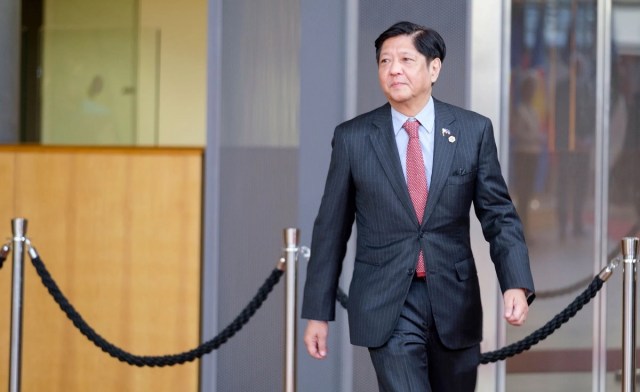
Cover photo is from Time magazine’s article: “The 100 Most Influential People of 2024: Ferdinand “Bongbong” Marcos Jr.”


 The Society of Honor by Joe America
YES! Love this post Joe.
If Trump can bounce back, so can Leni!
Thanks Gogs. Good to have your view here.
Kudos kasambahay for inspiring the article.
I thought you were from Cebu, oh does it matter?
Now, I remember Both Imelda and Danding ran.
Here is a Sider fusion analysis as to why PBBM id not support his mother.
Bongbong Marcos did not support his mother, Imelda Marcos, in the 1992 presidential elections largely due to the political landscape and family dynamics at the time. After the ousting of Ferdinand Marcos in 1986, the family’s political influence had diminished, and Bongbong was focused on establishing his own political career rather than supporting his mother’s candidacy. Additionally, there were divisions within the family regarding their political strategies and aspirations.
=====
Now as to this link I will drop.
I will always remember what Micha made me repeat after him or her.
Debt is good.
I wanted to tell her in our sari sari store it has a sign: “your credit is good but we need cash”
https://www.philstar.com/opinion/2025/01/29/2417581/govt-go-bankrupt-filipinos-go-hungrier
I hope when PBBM passes the torch, the torch still has fire.
I don’t see why it shouldn’t. He preaches well, and agencies seem to be chugging along fine.
Thanks for the perspective on why he didn’t support Mommie Dearest.
Welcome.
I was only heckling, glad joeam made use of it and came up with an article. he is brainy, that joeam.
Heckling or not, it was an inspiration.
Didn’t PBBM steal the last election? Seems to be no mention of it from commenters.
It has been mentioned, just not in this thread. My view is that it is up to Robredo to make the challenge, and, lacking that, one becomes a conspiracy theorist by adopting a position on it. Do follow regularly to get the depth and breadth of our debates here. Your comments are also welcome.
I read from some of the comments that Leni Robredo went into debt for her share of fees in the recount for the VP elections against BBM. I think she took a look at the odds and decided against going into debt again. As to being a conspiracy theorist, we saw the historical revision that BBM used during the campaign to remind people of that era when his father bankrupted the nation. We also remember when Marcos, Sr. called a “snap election” and cheated the heck out of the Filipino voter to the point where there was no legal challenge because the people knew where that would take them. Instead they resorted to People Power….and it worked. The rightful candidate was placed in Office, Cory Aquino. Also, our people tried the legal challenge approach with respect to investigation into the slaying Ninoy Aquino. The Marcos people were so arrogant because they knew it was a slam dunk for them. Marcos loves the Philippines? I think he loves money more, and the Philippines is just a step towards plundering more. Not my fight anymore as I was able to escape the disaster that was the first Marcos. But I still have relatives in the Philippines who will continue to suffer under the weight of the corruption of Marcos AND others….and it is still Inang Bayan with many fond memories.
we may have misgivings and plenty of it, but the past is gone and for many of us, it does not bode well to live in the past and put the past before the future to obscure the future. the past is behind us now and consigned to history. to be remembered never to be forgotten.
we make do of what we have. pbbm was declared president and we accept him with heavy heart. and the funny thing is his own kapartido is now trying to steal the presidency off him! his vp is at loggerheads with him. his reputation is being shredded and twisting the dagger for him, with nary an input from the opposition. I say, the opposition is really commendable, for staying principled and for not stabbing the president behind his back.
It would be sad if the Philippines chose a future that totally erases the Philippines that older generations knew, and I mean voting Sara Duterte in 2028 and choosing to be a vassal of China, that would mean it is a jejemon country without any substance or even values. Somehow, the interlude that was Duterte seems to be over. Some people will not admit it but might wonder what the hell that was they supported, return to some degree of sense, I hope.
Your perspective is very common, and sound. If you look at Bongbong Marcos’ history, corruption follows him around. But he also is doing responsible things for a reason. It is how he can rebuild the Marcos name. My argument is that, as good governance advocates, we should leverage what inspires him to move in that direction (our future) and not get bogged down with the past. Compartmentalize things.
hear! hear!
In my view, if a man stole an election, he is going to steal a lot more while in the powerful position (the presidency) that he stole. My reason for asking about the past is to understand the thinking of those who put a thief in Malacañang hoping he will do well for the country. He is doing responsible things? Like what – making the actions of politicians like himself transparent? There is that scripture verse “Jesus is light, but men love darkness because it hides their evil deeds.” Appearances of “doing responsible things” are like the appearances he gave of a golden age during that period that his father bankrupted the country. I remember the appearances that Marcos, Sr. gave us, and eventually it became obvious that they were just appearances to delay the inevitable which was the bankruptcy of the nation. I recall from Lee Kuan Yew’s Memoirs that Marcos asked to borrow money from Singapore to pay an interest installment of the country, something like $300 million if I recall correctly. Lee’s reply was to the effect: “We both know that if I lend you that money, we will never see it again.”
Just my take. We here in the US are no better as folk believed the “Mother of all liars” Donald Trump. Unlike the Philippines, we have stronger institutions to keep him in check…but they only barely succeeded during his first term. Now these institutions are even weaker, which is why it was so important that he NOT be elected.
I re-read your article on PBBM, and my position is that I disagree with it. I do not like the comparison to Duterte. Anything is better than that guy. If comparison are to be made, maybe Leni Robredo is a better one to use. Or for that matter PNoy. I heard he was fairly good for the country.
Oh, you speak of BBM being in a pickle. Guess what – the country is in a mega-pickle. Never mind the restoration of the Marcos name or reputation. How about putting the country first. That is where the rubber meets the road, so to speak. If he takes care of the country, the restoration of reputation will take care of itself.
Of course there were many who benefited from the Marcos, Sr. kleptocracy, especially the cronies. My tennis partner’s family did (not a crony). His family headed by his father, was a contractor and because he was good he got a lot of contracts from the military. I imagine it helped that they were Ilocano, or at least from Pangasinan. So he speaks highly of Marcos…yet his family all immigrated to the US for “a better life.” So yes there is short term benefit.
I don’t see the disagreement, CV. I nod in agreement through all you’ve written and appreciate the personal insight as to Marcos Senior’s cronies. I’ve not liked Marcos Jr. since he (1) scuttled Aquino’s BBL peace initiative, and (2) said the army should have fired cannons at Mamasapano even if they didn’t know people might be living in the fire zone. But I do see a man who is working diligently to do the job of presidenting, but still has an image problem with older Filipinos. So how can his desire to be seen as responsible be used to actually get someone responsible into office? If he gains, and the nation gains, we all win. If the opposition tries to win the presidency on its own, I doubt they can defeat Tulfo the Populist, or Sara the Duterte. So it’s pragmatics, not pro-Marcos.
I hear ya. Good to know the point of view of folks in the trenches. Lee Kuan Yew described us as “soft and forgiving.” He couldn’t believe how we let the Marcoses back into our politics, and so quickly too. But we did, so there. Rizal said “He who tolerates tyranny, loves it.” I don’t quite agree, I guess because if I had to at the risk of death, I would tolerate tyranny too, but certainly not love it. When you say that PBBM does responsible things for a reason, I would say that his reason is to buy himself some time so he can do his dastardly deeds, which would include weakening his opponents. As opponents get weaker and weaker, they eventually find that they are powerless. I know I’m preaching from a sort of ivory tower…but that is just how it is. Sometimes the view is better when you step back.
Thank you for your insights. Among those who comment here regularly. I think aside from Joe,Giancarlo, kb perhaps I am the only one left who resides in the Philippines. I am not even sure if KB is still here.
You may be right. I have been writing lately about the need to form a peoples coalition so the opposition gets stronger, not weaker. A street march the other day brought leftists and right center Magdalo together, and it is clear they want togetherness. This is good.
I heard that at one of the recent rallies at EDSA Shrine, the MMDA were taking down posters before the rally was over. My comment: “That would not happen w/o PBBM’s approval.”
That is what I mean when I say you have to be careful about praising things he says, even if they sound “responsible.” We call Trump a “Weapon of Mass Distraction.” That is the strategy of bad guys. Distract the people from the crime(s) you are committing.
One is faced with the problem of how to get a good governance president. That is the goal. In my view, it won’t happen if everyone insists that others have to bend to their way. If we remain tribal we won’t get anywhere. There has to be give and take. If President Marcos were to endorse Robredo or a different good governance candidate, that act stands for itself and his other deeds and misdeeds belong in their own compartments.
I can see where you are coming from, Joe….but the huge cheating factor negates the need for compromise or coming together. Sadly, that seems to be the situation in the Philippines, and it won’t likely change until perhaps the wealthy become uncomfortable.
Yes, not wanting to risk debt again might have been a motivation. I wrote that comment..
It was also BTW a bit strange that in contrast to 2016, polling precincts like for instance, Embassies, were NOT allowed to announce their local count in advance anymore. Usually, in any kind of election, that is a strong protection against cheating because anyone can put together publicized local counts and out them into a spreadsheet to double-check, especially nowadays. BUT my instincts when it comes to math tell me the margin was so large that a recount would probably not have significantly changed anything.
Just look at the kind of everyday culture that is normal in the Philippines now. It is clear that people like US who left during the Marcos Sr. period, usually old middle class, are a minority.
Every time I read of old writers, artists, etc, dying there , I feel that the old Philippines we knew is dying a bit and appeals to decency are only laughed at. There was the much worse rule of Duterte, whereas Marcos Jr. at least on paper and for now respects the old Republic.
Whether we can stem the tide of the times that has less and less opposition Senators since 2016 is a good question. Whether it will take the likes of Kiko Pangilinan getting into the Magic 12 Senators to make people tire of hating on perceived “elitists” and loving fools, I don’t know. Sara Duterte winning in 2028 might mean that the Philippines will change as irreversibly again as it did when the USA came into play in 1898-1901, as most Filipinos care little about the past. Then, the last of our kind will leave a Philippines that isn’t what we ever knew in our lifetime.
that’s freedom, we are free to choose our own poisoned chalice. we cannot be bogged down by the past, too much excess baggage. we travel light in this life and self preservation is priority. it’s in psychology. we have the right to say no even to history, the rest can lump it.
I agree…and with our choice of BBM instead of Leni, we will have to lump it, and I predict that it is going to be bad. Bahala na….
I did not vote for pbbm, I voted for leni. I lost five good sneakers in the 2022 presidential election, campaigning for leni. going to places we were not welcomed, knocking on doors, being accosted by nasty dogs and running for dear life!
haha, we sure did lump it, probly not as bad as americans under donald trump.
Me too, I voted for Leni.
Well Joeam, compared to duterte, he is way better in all aspects I think.
Yes, agree. The more he gets done, the less important his tax case seems.
you know filipinos, for now his tax case is in the back burner but will be resurrected each time we feel there is a need, just to maybe, spite him and rattle him once in a while. to bring him down a peg or two just when he is getting too comfortable in his position.
For sure. The little I’ve seen of Digong, I’ve found incredibly disturbing. Can’t imagine Filipinos tolerated 6 years of that. But we need to up our game and not base our choices on whether or not it is better than Digong.
Hmm. That makes me wonder how the Philippines has changed between the 1950s, when people cheered for Magsaysay saving Moises Padilla from goons, even as it was too late, and bringing his killers to justice, to today’s Philippines where as Joey Nguyen (and others like author Miguel Syjuco who was on the tokhang beat as a reporter) attest to people showing no respect for murder victims and even speculating that it was their fault.
I also wonder about what happened how the possibly too conservative Philippines of old where a decent girl didn’t wear shorts in public and at least the middle class upwards expected for women to at least try to stay virgins before marriage or at least engagement to the Philippines of today where as Joey Nguyen again attested a lot of sex happens outdoors in cemeteries etc. (In a film noir by Mikhael Red, Neomanila, it happens in an LRT1 wagon in the dockyards). I’m just wondering about the extremes in barely 2 generations, or did most decent people migrate?
That conservative Philippines of old may have been an illusion, Irineo. In the 19th century, Rizal was critical of our moral failure.
I grew up in Metro Manila and we were always told that people were more conservative in the provinces than us Manileños. Then when I started working, I mingled with people who grew up in the provinces. One time we were talking about marital infidelity (this was in the 70s), and I naively said “Oh, it is not like in the provinces.” OMG, several of my officemates jumped on me saying: “Oh, it is worse in the provinces!” What the f..?! But what did I know…I was just a clueless Manileño trying to make it in the working world.
I was in a message group with the late Sen. Saguisag. He spoke of a sort of “Golden Age” at least in the justice system, before Marcos, Sr. screwed it up. I thought our justice system was always screwed up, granted it may have gotten worse under Marcos, Sr. and thereafter.
I can see some semblance of morality possibly while we were under the Americans, because they could see to it that for the most part, a guilty person who was caught got convicted and sentenced. I think it was historian Stanley Karnow in his book “In Our Image” who said that Quezon and Osmeña were eager to have the Americans leave so that they and their class could go about their shenanigans more freely.
An illustrative point that I often use is how many Filipinos, especially the less well traveled ones, apparently believe that Americans are “liberalized” in sex in comparison to Filipino so-called moral superiority in that subject. I chuckle when those Filipinos used that talking point as something to be proud of, as in “Hey we are better than those Americans!” Well, even before the 1990s where parents were made legally liable, enforceable by federal law, for the babies they make, teenage birth rate among American teenagers was rapidly declining. Contrast that with the Philippines where I’ve met so many “husbands and wives” with baby faces themselves, especially out in the provinces or in squatter settlements. Americans by and large are much more socially conservative than Filipinos and probably have always been.
On sex in cemeteries, I was shocked yes because it occurred in a cemetary, which as a Catholic I consider sacred, but not so shocked at the act itself. Young folks are always going to be driven by hormones which they sometimes find hard to control. Here in the US, the youth can fool around in a car if they’re 16 plus, or while the parents are at work. In the Philippines that has always been impossible since most DEs don’t have a personal car, there’s always the watchful eye of the housewife mother, tita or lola at home, so Filipino youth make due with the bushes in the bukid, an alleyway, and yes, cemeteries. Sex is a human desire for most, so I’m not that repulsed by the act. But I am appalled at thoughtless sex with no protection where a few minutes of pleasure can ruin an entire life, especially for young girls. Clearly sexual education is very lacking in the Philippines, even compared to the US where sexual topics can be taboo.
Hmm interesting point on Quezon and Osmeña. Generally I have a positive view of those two statesmen. If they were both still alive, I’d have to ask them why they saw fit to model Philippines republicanism on the Gilded Age version of the United States complete with political cronyism and business tycoons, rather than model on the Progressive Age through New Deal/Great Society that reformed much of the Gilded Age excesses and brought about more equality and broad economic uplifting. They both surely saw the benefits of the latter. I also find it odd that the form of government was settled on a unitary executive and unitary government with subservient provinces. One of the original sins of the Third Republic in my view was continuing the project of Tagalog nationalism that started before the revolution, rather than an inclusive Filipino nationalism.
Well we must remember that social mores evolve and change, and can even regress. There was a time some hundreds of years ago where it was also common for townsfolk to gawk at murder victims or victims of accidents. In this days Europeans would attend public executions or perhaps toss rotten eggs and vegetables at a poor prisoner condemned to the stocks or pillory. Consider it a form of entertainment, not so far removed from our modern times. After all, human society tends to be relatively static for centuries, even millennia, except for rare revolutions in technology or great social and environmental upheaval. In the intense period of technological progress of the last century plus perhaps humanity has forgotten that.
Still a society may, under directions of leaders, change its social mores of what is acceptable socially. This is why I’ve observed that Filipino society at large for most of the 93% is more like a cargo cult in a sense. As educated, privileged people who aspire for others to be lifted up by our ideals, it may be unpleasant to acknowledge that the modern clothes, gadgets and eager following of Internet trends is more akin to people being exposed to something seemingly magical that they do not yet understand. I just feel like the educated elite pretending that those realities don’t exist contributes to the problem of why they can’t communicate with the masses to begin with. If we want to bring modern education, modern social norms, and more civic engagement to the people then it starts with at least being consistent with taking steps forward. One cannot run without first having a few steps then launching into a brisk trot. Momentum can’t be built by standing still contemplating on how to take shortcuts directly to the top, which is my honest assessment of most Filipino liberals. Sure sometimes there may be opportunities to bypass, but why stand motionless “waiting for a chance,” when one can move forward? Life isn’t based on luck alone. It is based on both luck and persistence.
Again, baby steps rephrased. We learn how to walk before we run.
Instead of ROTC my son’s NTSP is literacy teaching, where they are assigned to places and teach people how to read and write.
I haven’t asked him if they started immersing already.
This is a challenge. Good look to the kids, this is easier said than done.
There was a time I thought I’d like to become an academic, or a teacher. I tried making a tutoring service back in those days and I was quickly infuriated due to low patience. The kids were too spoiled with rich parents making excuses for them. But I’ve also found that poor kids often hunger for knowledge, so your son might fare better than I. Everyone likes a pogi teacher hehehe
Hehehe
That is great, Karl. Give your son a pat on the back from me.
Will do Joe. Thanks!
The positive side of face and power in the Philippines can be the next generations, especially sons, working to redeem the clan’s name from shame.
Ninoy Aquino had HIS father’s name to redeem and did it so well that many have forgotten that Benigno Aquino Sr. was not just your average collaborator but head of KALIBAPI. Not quite as extreme as the Makapili but politically very right-wing.
https://en.m.wikipedia.org/wiki/KALIBAPI
The betrayal of the First Republic by Paterno and Buencamino unfortunately made both names similar to Benedict Arnold in historical memory, even if a descendant (Nonie Buencamino) played his ancestor in Heneral Luna and the generations after redeemed the clan name.
Philippine history is a bit of a teleserye, and nearly all have a matriarch in it. Imelda is one. Marcos Jr. is like his father in voice and bearing and like his mother when it comes to partying and international charm.
Additionally, they are upstarts by Philippine elite standards, Marcos’s rivals were those who wouldn’t give him the time of day back then, but two of his kids have married Aranetas. The family of Imelda is old wealth even as she came from a disdained poorer branch.
The Marcoses are Romans, nearly patricians, to use an old analogy. There are lines they never crossed with respect to The Republic, in retrospect.
By comparison, Dutertes are Goths invading Rome, Vikings off the English Northern coast, far from being Normans, aka Vikings settled down a bit into Frenchness, even if Duterte is from an old Cebuano elite clan and Sara Duterte is married to one of the Carpio clan.
They come into the castle’s dining hall for tea time in armor and bearing battle axes.
And unlike the Mongol and Manchu invaders of China, who respected the Chinese deep state, the mandarin bureaucracy and the institution of there being an Emperor, the Duterte Goths may yet dissolve the Senate like the real Goths who made the Roman Senate subservient first. And unlike the Goths who at least held their own, they certainly will be willing vassels of Attila and help pillage and ruin the Republic, not preserve and respect Rome like the Goths still did. Stretching historical parallels here, of course. But it seems similarly serious to me. Of course, there are those who say Philippine elite democracy was always bad. It was never perfect, but the alternative is chaos again. Orderly evolution is better, and yes, that can be PBBM’s legacy.
That Buencamino history must have made for interesting arguments within the family. I got into an argument with one and blocked him, even though in an early stage here he was a mentor for me. He said the US was dealing in bad faith toward Afghans who served the US just a few days after the chaotic exit. I said they weren’t, that the bad faith was from the Taliban and failure of the Afghan army. Joe Biden doesn’t do bad faith, and he had the courage to do what should have been done by Obama. Or Trump. Over 190,000 Afghans have been resettled in the US since the pullout.
By contrast, the son of Boom Buencamino (aka Felipe Buencamino III) died in service as a US Marine. Filipino families can be more complicated in real life than in any teleserye.
Victor Buencamino, head of NFA predecessor NARIC, was tasked by Quezon with mildening the impact of Japanese occupation by cooperating not collaborating. There are nuances to how one deals with such situations. He had to get his son Philip, aka Felipe Buencamino, out of jail after he had gone through helping defend Corregidor and the Bataan Death March. Philip Buencamino was killed by the Huks together with his wife and mother-in-law, Quezon’s widow, just after Independence. Quezon’s widow had influence similar to that of Cory over the years, so the Communists destroyed one point of continuity to the old order back then..
Wow, I didn’t know all of that. Lot going on.
This is the NGO where the said former mentor is associated with. I consider him my mentor too.
https://en.wikipedia.org/wiki/Action_For_Economic_Reforms
Thanks Karl.
Welcome.
“Orderly evolution is better, and yes, that can be PBBM’s legacy.”
It seems that way to me, and fits with what is happening. I am actually quite impressed with his calm in dealing with the VP. Man, I’da been screaming for impeachment.
Clearly, PBBM has his father’s composure, possibly not as Don Vito Corleone scary as his father. Now I don’t have a complete DVD or videotape set of The Godfather like many older Filipino men, but I don’t have the Last Supper painting, tinikling dancers or a huge spoon and fork hanging in my living room either. But I do have a similar iconography I my head that also divides parts of New York into those that remind me of Batman and those that remind of Superman. Corleones are part of that iconography. Marcos Sr. kept power by being restrained.
I like what PBBM said about the Tphon Missiles.
Who is provoking whom.
He asked China to stop what they are doing and he will return the missiles.
Plus his comments on possible deportation of Filipinos.
“I don’t understand the comments on the Typhon missile system. We don’t make any comments on their missile systems and their missile systems are a thousand times more powerful than what we have. I don’t understand”
“Let’s make a deal with China: stop claiming our territory, stop harassing our fishermen and let them have a living, stop ramming our boats, stop water cannoning our people, stop firing lasers at us and stop your aggressive and coercive behaviour and i’ll return the Typhon missiles.”
President Marcos
the problem will be after the typhon missiles are returned, and china will come back, bigger, greedier, more vengeful and determined. by then, we have nothing to deter china, sitting duck ang labas natin.
Yes. Exactly!
The Philippines should build Voltes V instead.
Where is Ned Armstrong when you need him?
Who knows maybe this is being done in secret away from all the spy satellites, drones,balloons,anti stealth equipment and spy earthling and Boazanian’s view
I always believed that the tunnel boring machines from Japan for the Metro Manila subway are actually parts for the secret Voltes V project.
Hahahaha
Ah, so that’s where he got it.
Sonny Corleone was the hot headed and Fredo was the scairdy cat. Was Michael a combination?
Interesting that Marcos Sr.and Jr. Has no public outbursts.
Marcos Sr. showed nasa loob ang kulo nya.
maybe there was kulo and makoy lost his cool, but it was kept private and we didnt get to see it. hawak kasi nina makoy ang media nuon, they controlled almost everything. even makoy’s sickness was kept from the public kahit namumutla na siya and had a gait, he was shown jogging on nationwide t.v. and apparently still in the best of health with not a strand of gray hair on his head!
Thanks for that!
The media was controlled, but there were so many rumors going around Metro Manila especially that the President had to literally pass an anti-rumor mongering law by Presidential Decree. Seriously, there were enough people who could Marites even if that word was not yet used back then. Makoy’s reputation was indeed that he would bargain before he threatened and threaten before he acted, a huge contrast to Duterte who revelled in lack of control. There was the time before he became President, if he had been uncontrolled, his rivals would have reported it. Or the time where he hadn’t declared Martial Law yet, when UP students allegedly put a spicy part of a sex audio tape with American actress Dovie Beams on repeat over the UP admin loudspeakers during the Diliman commune. Filipinos always were a cruel crowd.
I once was in Malacañan and he passed just a few meters from where we were seated – Pisay students. One thing is that he was way smaller than he appeared on TV. During the part when he kept asking the Balik-Scientists to step forward and no one came, we suppressed laughter.
gloria arroyo was short, napoleon bonaparte was short, alexander the great was short, vladimir putin was short, short people are to be feared! for they make up for their lack of stature.
ukraine’s zelensky is not tall too, but he is my kind of guy, bigger than life, always wearing military fatigue, has good eyesight and forward thinking.
I remember him gracing Lou Ferrigno TVs Incredible Hulk and showing him he is fit. Can anyone confirm this, it must be my imagination.
But I recall him lifting weights.
Long before MAGA, Makoy said this nation will be great again in 1965.
Long before Putin, Marcos appeared topless aka borless, usually in the regime papers with a bolo in his hand helping farmers with the harvest in the early 1970s.
Well, since a lot of us laughed a bit bitterly about how places in photos were retouched to look far cleaner and with no disrepair, there could have been retoke there as well. Later in his rule, he would appear on TV showing the daily paper as proof that it was not prerecorded whenever rumors of long sickness abounded. Some joked that the papers headlines could have been predetermined. Bulletin Today aka Manila Bulletin was called Bolatin by some. But definitely no more borless (that slang word comes from burlesque BTW) later, and in 1986, he looked ill.
He was indeed known to eat the typical Ilokano diet, which is actually healthier than, for instance, Bikol express. The latter will make you “look healthy” aka fat, because it has a lot of coconut in it, and we know if you eat too much coconut you will get very fat (c) Ryan Cayabyab.
Hmmm, doing arm curls with that? Curious. His hands are backward I think for lifting above his head.
The pros use dumb bells for bicep curls
I rememeber Ferrigno and Marcos scene now in my head. Ferrigno was in Barong Tagalog.
Searching google I saw his 1982 visit here posing at the miniature mayon Volcano at Nayong Filipino with a pinoy body builder if I recall, Roland Dantes was the actor body builder during that period.
Link to that said photo.
https://www.facebook.com/photo/?fbid=447453145051368
“The positive side of face and power in the Philippines can be the next generations, especially sons, working to redeem the clan’s name from shame.” – Irineo
Maybe, but I doubt if BBM is the man to do it for the Marcoses….not after the way he “stole” the presidency….and I put the word in quotes to give it the benefit of the doubt….though in my case it is more doubt than benefit. Sorry….
Yeah, now that I think of it, that was the lesson of Rizal in Fr. Florentino’s admonition to Simoun that you do not try to achieve good through foul means.
I wondered what happened to Gen Eliseo Rio’s petition.
This what happened.
https://sc.judiciary.gov.ph/sc-comelec-cannot-be-compelled-to-grant-or-deny-request-for-ballot-recount/
The Supreme Court underscored that a writ of mandamus may not compel the Commission on Elections (COMELEC) to exercise its discretion in a certain way, such as granting or denying a request to open and recount ballot boxes.
In a Decision written by Associate Justice Jose Midas P. Marquez, the Supreme Court En Banc dismissed the Petition for Mandamus filed by Eliseo Mijares Rio, Jr. (Rio, Jr.) and others (collectively, petitioners).
In 2023, Rio, Jr. and others filed petitions before the COMELEC En Banc, asking for the review of Smartmatic Philippines, Inc. (Smartmatic)’s qualifications in view of the irregularities in the transmission and reception of election results during the May 9, 2022 elections. They also requested Smartmatic’s disqualification from participating in the procurement for the 2025 Automated Election System if any unexplained irregularities are found.
On November 29, 2023, the COMELEC En Banc granted the petitions of Rio, Jr. and others, disqualifying Smartmatic from participating in the bidding process. In the same Resolution, it ruled that the COMELEC may, upon the instance of the petitioners, order the recounting of the ballots in areas in every region in the country.
The petitioners filed motions with the COMELEC to open and recount at least 30 sealed ballot boxes from Sto. Tomas, Batangas.
Since the COMELEC did not respond to these motions, the petitioners filed with the Supreme Court a petition for the issuance of the writ of mandamus to compel the COMELEC to carry out its ministerial duty of implementing the Resolution it issued on November 29, 2023.
Mandamus is an extraordinary writ that compels a person, tribunal, corporation, board, or officer to carry out a legally required action if it has failed or refused to do so. This action must be ministerial, meaning that its performance does not involve the exercise of discretion or judgment.
Further, mandamus can be granted only when the petitioner’s legal right to the performance of the act in question is clear and complete.
In dismissing the petition, the Supreme Court held that the issue did not involve a ministerial act by the COMELEC, as the requested recount of physical ballots requires the exercise of the COMELEC’s discretion and judgment. It also ruled that petitioners failed to establish any clear, complete, and specific legal right to a recount.
The Court found that the petitioners failed to identify any law requiring the recount of the physical ballots in the 2022 National and Local elections. Moreover, the COMELEC Resolution expressly states that the COMELEC “may, upon Petitioner’s instance, order the conduct of the recount of the ballots.”
Nevertheless, the Court found that the COMELEC was guilty of official inaction when it acted on the motions beyond the period prescribed by its own rules. (Courtesy of the Supreme Court Public Information Office)
This press release is prepared for members of the media and the general public by the Supreme Court Public Information Office as a simplified summary of the Court’s Decision.
Thanks for the case review. Cynics such as myself are inclined to think COMELEC is cowardly. Or crooked.
Welcome.
Apparently Rio’s petition “died of natural causes.” The Supreme Court ruled that the COMELEC did not have to comply. The SC apparently scolded the COMELEC for taking so long, but that they were within their rights not to comply. The system is rigged to benefit the wealthy cheaters! Apparently Marcos’s protest of the VP election against Leni Robredo took almost the entire term of the VP!!! I got this info from ChatGPT because I was nowhere near these elections, nor have I been following the news. Too depressing.
Yes just select a few headlines if ever you see PH news on your feed.
I believe this is true. I’m hopeful that, driven by the need to clear the Marcos name and prove himself as more capable and better than the Dutertes, he will put in his best effort to make our country thrive.
Thanks for the inputs Jan. I hope so. It seems within reach.
duterte et al are doing their best to ensure pbbm lost credibility. they have filed a petition in the supreme court questioning the constitutionality of the 2025 national budget signed by pbbm. somehow, I’m glad duterte et al took the legal course coz if supreme court finds the 2025 national budget to be above board, legal and constitutional, the decision will be final and no correspondence maybe entered into. then duterte et al will just have to hanker down with their humble kamote pie.
pbbm cannot lose this one. he went line by line with no blanks left on the budget.
if by chance, the justices at the supreme court, most of them appointed to the position by ex pres duterte, or if there is any inkling that the duterte appointed justices will be partial, they may well be asked to recuse. and if they recused, the remaining justices will be few, some former croonies of makoy, others were PNoy appointees.
I think the SC justices still do law as a preference over politics. Not like that horrid ombudsman.
difficult to forget, after the apparent demolition job headed by duterte ally associate justice teresita de castro vs chief justice maria lourdes sereno who was PNoy’s appointee, duterte duly awarded sereno’s job to de castro and made de castro new chief justice. most of the justices now at supreme court are duterte’s appointees.
and like you, I hope the rule of law prevails, and any approaches made by duterte et al to pervert the course of justice as regards the petition filed regarding the constitutionality of the 2025 budget will be met with contempt. moreso now that duterte no longer wields the power over all.
Was it gantihan and weather weather politics that prevailed because before Sereno there was Corona.
But in an event in Quirino grandstand Corona was booed by the crowd, the timing of this event was post Sereno quo warranto whatchamacolit.
Corona claimed he was vindicated but the crowd did not care.
corona knew he was unconstitutionally appointed, and he could have reapplied. pero namayapa na siya, may he rest in peace.
now, itong petition nina digong is maybe a test kung may mga sympathizers pa ba siya sa supreme court and whether they will indulge their whims.
For sure they used Quimbo’s words against her.
SC still have proven time and again to show wisdom.
Well, after half a millennium, there are certainly many true Christians in the Philippines, unlike Queen Juana of Cebu, who certainly just saw the Santo Niño as a new idol, so why can’t there be SOME true believers in institutions over 125 years after 1898, especially in the SC?
Then we go back to questions of cynicism, pessimism to apathy.
All we need are a group of why we should care pundits.
Your value of stating history through analysis and not just factoids can make us learn and not dwell on the past.
Though we might have accidentally have the same style of joking out of nowhere, somehow some one will pickup like CV in this thread.
I was able to meet DJB or Dean Jorge Bocobo face to face for the first time. Now my dream meet up would be MLQ the third.
I would also like to meet MB or Manuel Buencamino.
iba pag kaharap mo na.
ahem, maria lourdes sereno, I think, was a true believer and paid dearly for it. she lost her job as chief justice of the supreme court and apparently she was also devout christian, often referring to god as in, in god we trust.
it is in the nature of the supreme court to vote judgement enblanc. and all associate justices are political appointees. we can see why there are times when justices have political leanings and recused from voting, upholding the mandate that the supreme court is impartiality and has probity.
My old satire went like this, when Christianity came to the archipelago, the natives asked what I want to kill my enemy or sleep with another woman?
Pacquiao would say don’t sleep around in the neighborhood, because it says in da Baybol though shalt not covet thy neighbor’s wife di ba?
But they were not yet that advanced in thinking, so they invented the 11th commandment to not get caught, and the 12th commandment not to admit.
But when the Spanish instituted the Penal Code, the 12th commandment was amended to thou shalt have the right lawyer in case you are caught.
When the Americans introduced a Supreme Court, what was the solution if your lawyer can’t help you?
So all that foreign stuff was efficiently localized, one could say.
I just have to watch all of his administration with reserve. If anything, his elder sister is still a cause to worry given her aggressive vindictiveness (i.e. that “Let me educate you” video of hers apparently gloating). That the crime syndicate in the south are out to reclaim their lost territory in so-called “imperial” Manila, having seen their gambling clients crumble and sent packing back to the Middle Kingdom.
Yes, agree. His sister is a whacknut it seems to me, working in cahoots with Davao and against her brother. I see them as very separate entities.
In other cultures, the onus is on the son to show good works in order to wash away the sins of the father to rehabilitate the family name. Marcos Jr. can do this by being a good president. Duterte set the bar quite low. I was cautious about Marcos Jr., but so far the worst anticipations had not come to pass.
Military, education, domestic feuds, Marcos Jr. seems to be doing well. In my opinion if Marcos Jr. wants to really cement his legacy, he’d aggressively attract foreign investment to build out jobs in order to uplift the Philippines economy. Big infrastructure projects while grand, and while having an economic impact in easing the transport of goods, still has a lesser impact than more cash in hands of working families. With all this aggression from the PRC, companies are pulling out in phases from China. Much of those investment benefits have been snapped up, but there’s still a significant portion of the pie left that the Philippines can get.
By the way, to expound on attracting foreign investment to manufacture modern goods, the Philippines would be able to transition away from an “informal” economy to a formal one. A formal economy of salaried workers, like in BPO, can be taxed more easily as it becomes the responsibility of the employer to transmit the appropriate taxes. This can start to fix the Philippines perennial addiction to sovereign debt. Over time industrial inputs can be replaced with domestic, rather than imported sources creating additional business opportunities for network of smaller manufacturers and suppliers, keeping more of the supply chain value add in the Philippines.
Marcos Jr. should consider naming Leni Robredo as his successor now, and start including her in government. This would give 3 years on ramp for Leni to build more momentum and further raise her profile. Other Marcos family members are inadequate or too young to continue the Marcos dynasty. But if Marcos Jr. creates a record of success that is continued, that would create a record that a future Marcos could draw from when that time comes.
That is an excellent suggestion. The fly in the ointment is that Robredo likely has no interest in a national government job. She seems not to associate herself with the idea that she could help a whole lot of Filipinos by being politically aggressive.
Well there is the issue of the pro-Marcos camp aggressively and unfairly maligning Leni Robredo in the last election. Undoubtedly the bad feelings were made worse by the alliance with Duterte, as DDS is way more nasty. Now I’m going to give grace and consider that what happened on the pro-Marcos side was not personally directed by President Marcos. If that’s the case then perhaps inviting Leni Robredo for dialogue and a frank discussion on how both President Marcos and FVP Robredo can work together where interests align would be immensely helpful in washing away the bad taste leftover if there is any. But as the foremost elected official, that opening of dialogue is for Marcos Jr. to take initiative on, not Leni who is out of office. I think if he can be open to that idea, it would benefit both his legacy and the future of the Philippines.
Atty Leni and PBBM did shake hands in Sorsogon some months ago (after when Atty Leni had Inday Sara visiting her at Peñafrancia in Naga) with Chiz Escudero (Casiguran’s main square is Plaza Escudero BTW, so my theory that Chiz arrived on the same UFO as Grace Poe is disproven) and Bam Aquino behind them, looks to me like a classic Filipino brokered mending of fences, somewhat outside Atty Leni’s own territory in Naga but still on Bikolano soil.
Could just be that Atty Leni wants to have to watch her back less to protect Angat Buhay.
I can think of the reasons why Sara Duterte visited Leni Robredo — trying to gain an ally to bolster her falling profile. Marcos Jr. making contact with Leni seemed a bit more mysterious to me. Well I won’t go into speculation about theories but I do hope that both realize that the Philippines is bigger than either of them alone.
I’d imagine an attack by the Duterte faction would be much more damaging to Angat Buhay. We saw what Duterte and his cronies did to Leila de Lima and countless reporters and people who dared to question, or even simply putting Duterte in a bad light. What I wish Leni would do in regards to Angat Buhay is to let the organization carry on her mission while she focuses on tackling the bigger picture which would ultimately benefit the vision that originally created Angat Buhay. Then again, I always believed Leni to be a reluctant politician who is most comfortable being close to the people. I hope there are those around Leni who encouraged her to run again. If not, surely over time Angat Buhay can serve as an incubator for a new type of people’s servant.
aba, I really hope that when sara came to see leni in naga, sara apologized profusely for what she put leni through, calling leni a fake vice president not once but many times in nationwide media, sara in all her righteous umbrage complete with finger pointing and frothing mouth! she was a sight to behold, makes one reach for the anti rabies vaccine, haha.
anyhow, the angat buhay program has helped many filipinos including digong’s supporters. the program makes no distinction.
You’re so right again KB.
I don’t think Angat Buhay is very active in Mindanao, but as the NGO expands it should. Filipinos should see up close that competency and service to others goes hand-in-hand. Perhaps then more will be converted to the cause.
I recently tried to check up on Angat Buhay and its efforts, while better than nothing, are tiny compared to what the country needs. I guess that is what Nick Joaquin would call “Our Heritage of Smallness.” Another area I wish folks would pick up on are the causes that Gina Lopez championed. Keep that flame burning.
If one can’t avoid mining, one should at least a) tax it enough to fund other useful stuff (I feel that mining firms get what they need to easily) and b) force mining firms to rehabilitate land that they opened up. There was a Pinoy vlog about strip mining in Germany where entire towns are relocated and they were calling Germans hypocrites with Duterte’s face as a quote. What they ignored that the indemnities paid for relocation are good, the companies have to rebuild the land they open, and last but not least no goons harass the natives. The latter is one reason why probably Atty Leni can’t take the risk while Gina Lopez could, coming from a rich family. I did write about the long-term dangers of lacking stewardship for nature and also mentioned Nauru, the island that ate itself. But I doubt most Filipinos see the big picture on that.
Irineo, I like what you said, no goons harassed the natives, but in gina lopez’s case she was harassed by people worst than goons! and she duly lost her job as denr secretary appointed by digong. several mining bosses ensconced in higher government offices called the shots vs gina.
https://thedefiant.net/why-gina-lopez-was-ousted-as-denr-secretary/
Without reading.
We have mining interests in both houses of congress which makes this a mirror of Agrarian reform cases somehow.
Its a small world after all.
If we use big picture, we just let what we mine go to china and others allegedly not for our domestic use.
Well that mining party list called BBM is having a jingle how nickel is used.
In the teleserye world, the show “Lumuhod Ka sa Lupa” has a mining interest series of episodes, so did Batang Quiapo. I also watch GMA so I know Widow’s war, etc also had mining.
I have always believed that the vision of Angat Buhay is in the long game and long term after having observed the activities of said organization in the last years. As an outside observer and a non-Filipino, it always was clear to me that there are two completely different countries in one in the Philippines — the metropolitan that was Manila then has since expanded to Cebu and beyond, and the world of DEs that exists sometimes just a few blocks away from towering skyscrapers and shiny malls. The two “different” countries have different exterior values and a different outlook on life.
My hope for the Philippines is to keep the idealism of the Third Republic, while showing the DEs who are the vast majority of the country (93% by some estimates) that they can be included in progress. In a way DEs keep voting for bad leaders because they are not bobo, but because they are realists. They had made a decision that, unsure of what benefits they will derive in the future from idealism, they should take the smaller benefits from soft-corruption now. I recognize that running a government is very hard, but surely in a political system where executives from the local to national level have immense power, those politicians in executive positions can use their bully pulpit to at least drive awareness on how progress can be made, putting vision to legislative paper to actionable items that voters can see. And when voters can clearly see that they would gain much more benefits from choosing progress, they may be inclined to vote accordingly.
Great observation, Joey about the 2 countries. I grew up in the Philippines (first 27 years) and did not realize that. I learned it from a Japanese writer just the other month!
He called it 2 societies – the Civic Society and the Mass Society. Both believe they are morally correct in their approach to things.
Here is a summary of his position on those 2 societies:
It is Wataru Kusaka who developed this concept in his book Moral Politics in the Philippines: Inequality, Democracy, and the Urban Poor (2017).Kusaka’s Key Idea: The Two Societies
He argues that Philippine society is divided into two competing moral communities:
Application of This Idea
Kusaka applies this framework to explain:
CV
“Views the poor as uneducated or easily manipulated.” I suppose I’m an elitist but I view the poor as uneducated and hard to manipulate, without lying. I also don’t believe the masses are immoral. They have different moral boundaries than do the moneyed or the pious. So I guess I’m part a mass society person.
If we agree with the analysis, it only explains the problem, not the solution.
If you are part of the Mass Society, then you view the Civic society as immoral, according to Kusaka.
Joe clearly straddles the boundary between Civic and Mass Society, just like my bushwhacker ancestors straddled the boundary between Christianized natives and “Gentil,” aka unbelievers, lawless people and warlike natives.
Joe is for the rule of law but gets why the rule on wearing helmets on motorbikes is nearly impossible to implement in the provinces, for instance.
It’s not immoral to be an intellectual or believe in a rules based morality, in my book. I think the top moral guidepost should be not to ascribe illegitimacy to those who are legitimate, so I think I’ll just consider his analysis confusing and mosey on down the road.
Yes, I believe Kusaka’s goal was just to point out a situation that might not seem apparent to people. Of course you don’t consider yourself immoral, and the Mass Society doesn’t consider itself immoral and both sides have their reasons. In doing an examination of conscience, I had to agree that I thought the Mass Society was immoral for doing things like voting for popular actors and not looking at issues, and then even selling their votes. But then I listen to what Kusaka had to say and I can see (not necessarily agree with) the side of the Masses and how their logic works.
To me, that is the beginning of dialogue and understanding. My high school teacher told us as seniors “From those who have more, more is expected.” If those of us who feel we have more, as in intellect, education, maybe even money, etc., perhaps the onus is on us to make the first steps towards compromise, understanding, etc. etc.
Yes, it does promote dialogue, for sure.
Thanks for introducing me to Wataru Kusaka. I’ll have to check out his work.
Based on the snippets you’ve shared, I think it would be safe to say that most societies started out as Mass Societies. In the Philippines I’ve noticed many remnants of “datu-ism,” to possibly coin a new term. DEs are not stuck in this anachronism; rather humans know what we know, unless humans learn something otherwise more beneficial. On the other hand, elites as Irineo and I observed are stuck in an artificial mythos of the revolution and a formerly “great” and “united” Philippines. Even Rizal believed in some of this as Irineo pointed out. Of course all national mythos are based on a constructed truth, perhaps to explain something unknown or to accentuate a set of ideals. I really hate to be the one to say it, but the mythos derived from the Katipunan notion of “greatness” might have ended up being more detrimental than positive, especially when very little action was done over the last century to “fake it until you make it” thus making the construction true.
DEs only know what they know. They need to earn a salary to support their families, in order to buy some niceties, perhaps to validate their hard work in instances of “deserve ko.” It is the job of progressively-minded elites to fashion a way to move the Mass Society towards a Civic Society. That requires a bit of selflessness from elites as they must give up some of their own power in service of their ideals. In the US this was done by generations of elites who looked to the general public good, instituting the Postal Service as the first modern information service as they believed a well-informed citizenry would become a responsible citizenry. Then the post Civil War agriculture reforms and mechanization was largely driven by cheap or forgiven government loans, freeing up workers for industrialization and the building of cities. When wealth grew too much in the Gilded Age, the Progressive Movement neutered the power of captains of industry breaking business trusts and implementing a progressive income tax — and income tax that was collectible due to an efficient IRS and workers who draw a salary. The result was Pax Americana and American economic and military supremacy especially post-War. But these hard gains can be dismantled in mere decades, as we have seen since Nixon. Attack the foundations of Civic Society and it starts crumbling back down to Mass Society. A Civic Society needs to cultivated, nurtured, propagated and expanded by constant positive reinforcement with government intervention in good policy.
Getting back to the Philippines, my more affluent Filipino friends seem to think that the Philippines can just “jump up the ladder” when it’s safer to climb step-by-step, with sure footing. Small wins when added up become big wins. I’m not sure if Filipino leaders, even the well meaning, are willing to self-sacrifice in order to bring about the greater good. PNoy who I admire was an example of one who sacrificed, but his communications team was atrocious. Leaders should lead by example, but they should also share their examples. In the absence of this, it’s not surprising at all that people accept, follow, and at times even copy bad leaders.
Enjoyed your thoughts, Joey. “I’m not sure if Filipino leaders, even the well-meaning, are willing to self-sacrifice in order to bring about the greater good.”
I read Karnow’s “In Our Image” and he said when the Americans arrived in 1898 one of their first actions was to meet with the local leader, the Ilustrados and Capitan Tiagos of our society, I suppose. They were shocked at how little they cared for the country but instead were simply all about themselves and securing their economic place in the New Order so to speak. That can give us an insight into who and what we are.
Thanks CV, I’m somewhat newer here so if you were a former commenter I may have not seen your previous comments in years past.
I’m a reader of history, with an interest in civilizations. In recent years I’ve been going through a lot of material on revolutions. In previous comment threads I brought up the two major revolutionary political philosophies that arose out of the Enlightenment — the American model and the French model. The American model while starting off by necessity of elites guiding the wider society, sought to broaden civic engagement. While the French model were the “new” elites (lesser nobility and urban bourgeoisie) who sought to seize power from the ancient regime “in the name of the people,” but instead really just monopolizing the newly seized power for themselves. Spain also endured a few revolutionary movements inspired by their French neighbors. A few decades later, the Ilustrados started arriving in Spain and Europe in general where they undoubtedly were greatly influenced by the Enlightenment ideas in Spain and France.
The American model was well known though by the time the Ilustrados had come to Europe, so I’m a bit perplexed why the Ilustrados had not considered the American model that emphasized responsibility by the elites. Perhaps the Ilustrados were like teenagers discovering something new and seemingly exciting thus did not yet have time to fully form their ideas; many were quite young at the time after all. When I read material from the Propaganda Movement, it seems quite naive. They had written about a great many things they wanted for the Philippines, yet didn’t seem to have any realistic plan to achieve their goals. When the Propaganda Movement of the Ilustrados failed and the Katipunan took prominence, the Katipunan seemed to me to be even more naive. As Irineo reminded, Rizal while in exile in Dapitan had advised the Katipunan to procure more armas if they were going to launch a violent revolution. What ended up happening was that out of a dozen men, maybe only one had a rifle while the rest had bolos. I doubt that the Katipunan would’ve been able to defeat the anemic Spanish garrisons, illustrated by the example in Zamboanga when they were driven back from the fort after thinking foolishly that Indios serving under the Spanish commandant would switch sides. When the US took over the Philippines, the defeat of the Katipunan in the Philippine-American War provided an all too convenient excuse… “We would’ve won against Spain, if not for those Americans…” Lost Cause mythologies can never be a positive thing, as seen here in the US presently.
I’ve also commented on how Filipino (Tagalog) nationalism is probably quite detrimental not to just national unity and cohesion, but also detrimental to progress as until recently the nation was effectively balkanized. Irineo noted that Cebu Pacific helped connect the different regions more and might be a contributing factor to homogenization of a new national consciousness. I agree that increased communication, understanding and connection would help greatly if people start thinking about how actions in their own province or city affects parts outside, and vice versa. A people also have the ability to make a new mythos and a evolve a culture, while respecting the true parts of the past. The Philippines has countless *patriots*, some who had paid the ultimate sacrifice to their ideals and for the good of the nation. Personally I think nationalism while it can be moderated, nationalism can also quickly veer into dark places, and I’d rather have patriotism which requires service and sacrifice instead of empty words.
The ilustrados were mostly in Spain, but the more venturesome ones like Juan Luna, Antonio Luna, and Rizal were in Paris, Belgium, and Germany, respectively. Most ilustrados who stayed in Madrid acted like typical Pinoys who stay together too much and learn little from outside.
Rizal was the most venturesome in that he lived in places totally without Filipinos for weeks and months, as his brother noted even sometimes going to Protestant churches to pray when he was in non-Catholic parts of Germany. His perspective broadened the most of all ilustrados.
The three ilustrados I mentioned of course were very much into the French style straight out of Dumas novels, meaning fencing, dueling and mustaches. Antonio Luna loved challenging Spaniards to duels, and once challenged Rizal to a duel, but Rizal told him to sober up.
Rizal was a far better shot and swordsman than Heneral Luna and would have easily killed him. BTW El Fili has clear Count of Monte Cristo (revenge plot) and Balzac (social satire) influence.
American ways were probably a bit unfamiliar to the ilustrados. OA French ways more familiar.
Rizal might also have been one of the few ilustrados who learned some English, visited America, and even expressed admiration for the British justice system as opposed to the antiquated Spanish one.
Apparently Rizal spent around 11 months in London (May 1888 to March 1889) after 2 weeks traveling through the US. It was there that he annotated Morga’s “Sucesos…” at the British Museum which had one of the rare original copies. Madrid was somewhat hostile to such a project because of the “rabble rousing” by the Propaganda Movement there. So apparently Rizal enjoyed quite a bit of freedom as he worked on that annotation.
While in exile in Dapitan, he encouraged his sister Soledad to learn English. He apparently knew that it would become an important language internationally. Incredible foresight, I would say. Rizal dealt with some very scholarly people while in Europe and I am sure he impressed them with his scholarly knowledge as much as they impressed him.
Did you folks know that he was made an honorary member of the Anthropological Society of Berlin (Berliner Gesellschaft für Anthropologie, Ethnologie und Urgeschichte) in 1887? The members were so impressed with the little brown fellow from Asia that they made him an honorary member! Gotta admire those Germans for recognizing brilliance when they saw it.
There is even a plaque at Jägerstr. 71 in Berlin, where Rizal completed the Noli. It says that freezing his butt off in winter, far from any Jolibee or Asian store or Filipino community, he wrote a novel taking place in his native Calamba. (Joke)
Yep, his contact with the likes of Rudolf Virchow, a famous German scientist (but also a major proponent of the anti-Catholic Kulturkampf), was significant. Blumentritt, his Austrian friend, was the one who got him the introductions.
Germany was one of the top nations of those days, far more advanced than many places. Mark Twain, who stayed in Berlin just a few years after Rizal was there, noted that everything was new in Berlin. Spain, by contrast, was considered backward. I can imagine what a boost it was for someone used to be insulted by Spaniards – Antonio Luna looked for ways to provoke or intimidate racists among the Spaniards, for instance – to be recognized in a nation that had a way higher reputation.
Rizal’s translation of Schiller’s Wilhelm Tell into Tagalog might have influenced the figure of Elias, as the romanticized rebel and bandit was a common theme of German literature then. The penultimate chapter of Fili where Tano accidentally shoots his grandfather as a PNP, I mean Guardia Civil, is remiscent of 19th century German hunting dramas where for instance hunters deal with the devil to have perfect aim, except that the devil reserves the right to send some shots to where he wants to, and the deal goes bad as these dramas end with the hunter mourning their best friend or their brother, and the master of the hunting guild noticing what happened and banning them from the Society of Honor, I mean the guild. The long-winded drama is similar. Rizal also quotes Schiller at the start of the Noli. He wrote lodi ko iyan (joke).
There is this story I can remember that Rizal told his sister in English when handing her the lamp where he hid the Ultimo Adios poem “there is something in the lamp” in English which of course the Spanish guards didn’t understand. As for Rizal’s annotations on De Morga, that was where he somewhat inflated Philippine precolonial grandeur, but it was a reaction to the clear racism and contempt of De Morga’s history. Just like the yabang of Antonio Luna was reacting. Rizal in the El Fili kind of knew where that Dark Side would lead, a century before Star Wars. 😉
Many of the Ilustrados seemed to be somewhat like dandies, in contrast to the American Framers who were mostly gentlemen planters, innkeeps, small businessmen and printers. What I found interesting about the American Framers was their diverse social and economic backgrounds did not prevent them from seeing each other as intellectual equals in what was sort of like a reading club. I contrast this with the French Revolutionaries pre-sans-culottes who were mostly second sons, lesser nobility, lower clergy, nouveau bourgeoisie who coveted the power of the higher estates. Nothing good can come out of a revolution purportedly in the name of the people, sowing ideas like a self-appointed preacher shouting at the street corner to an even less educated populace, but then trying to monopolize and retain power once seized. The Spanish liberals were greatly influenced by the French Revolution as well, but interestingly rejected Napoleon bringing “liberty.” It took decades for the French to figure it out; more than a century for the Spanish, both after much bloodletting. In that regard, I struggle with contemplating of which alternate history would be better: where either anarchy was allowed to reign in the Philippines sans American intervention until people got tired of disorder, or if American legalism was allowed more time to take root. In any case, it seemed that by the 1910s a short decade plus later, the US had already been trying to find a way to leave as political winds had changed.
“Dandies.” Love it. Such a wonderful one word parsing of the flamboyance of the well-traveled intellectuals. I can see the frilly sleeves and the book under arm.
In the picture Irineo shared of “La Solidaridad,” Rizal, Ponce, and del Pilar look positively well dressed.
The problem with the European liberals of the time, especially of the French type, was that as affluent young men who held strong ideals formed from vigorous debates in parlors, they had no idea what the regular people faced in daily life, yet purportedly claimed themselves to be leaders of the people. That type of idealism that is detached from reality tends to drift towards ideological purism. There is no orderliness in it once outside of the ideological bubble.
“In any case, it seemed that by the 1910s a short decade plus later, the US had already been trying to find a way to leave as political winds had changed.” – Joey N.
That soon? What makes you say that? And by “political winds” were you referring to the US? Did you know that in the US government we fell under the “Bureau of Insular Affairs?”
Yes that’s right (BuIA). What I’m referring to is the push to gain overseas territories was during the waning years of the Gilded Age. Once the Progressives became prominent overseas expansion stopped, but the US seemed to not know what to do with territories, as we can see even in Puerto Rico today.
So it was over almost as soon as it started. That was good of America. I had a British acquaintance and I remember him saying that the Americans should have learned from the British and not go for overseas territories.
The overseas American expansionism of the late 19th century can be interpreted as the US feeling inferior to European countries that had embarked on New Imperialism (https://en.m.wikipedia.org/wiki/New_Imperialism ) in the latter half of the 19th century across Africa and Asia. Well, there was a time when the US was not a leading world power, and in some ways seen as a backwards nation in the eyes of “enlightened” European old powers… the other part of the American story during the period was being at the height of the Gilded Age, which followed the failure of the Reconstruction.
McKinley then TR’s expansionist policy was an attempt to both extol the american national mythos of Manifest Destiny and redirect growing economic anger to overseas adventurism, first in Latin America then Asia. Well Manifest Destiny is an integral part of the American mythos that still echoes today; the belief in American exceptionalism, Romantic nationalism (deriving from the American and French revolutions), and the inevitability that every country would adopt a democratic republican form of government. Manifest is something obvious, while Destiny is something preordained and certain. This belief combined with the ideals of the Founding Documents led to “benevolent” beliefs tinged with what we recognize today as soft-racism, of such policies like needing to guide the “little brown brothers” to show the benefits of said democratic republicanism, to put the doctrine into context of the Philippines.
Around the time of WWI, there started real doubts on this expansionist doctrine. TR, as progressive as he was, was a true believer who was one of the prominent Americans who held into these beliefs the longest, until losing his sons in WWI mentally broke his spirit. There are other examples of doubt in holding overseas territory, most famously in Maj. Gen. Smedley Butler, a former expansionist zealot. With the changing of Congress, by the early 1910s the US definitely did not have the appetite for overseas territory further. The problem was that if overseas territories such as the Philippines and Puerto Rico were immediately granted independence, there was a fear that other nations that still had expansionist policies like Imperial Meiji Japan, Imperial Germany, Imperial British, the Dutch, or even ostensibly “republican” France would swoop in to subjugate the independent peoples. The US always seemed to me to be a reluctant empire during that period. This intractable problem of would-be empires hungry for extractive relationships with colonies is why following WWII, the US created new international structures and norms that forced decolonization across the globe, and that it is illegal to seize territory by force.
The Philippines did gradually get more self-government, starting with the Philippine Assembly of 1907, the Senate in 1916, Filipinization of the Insular Government from 1920 onwards, finally Commonwealth in 1935. Of course in 1935 the Great Depression and anti-immigrant settlement also played a role, Stockton riots and race laws in California included. Charming Ilocano men with slicked hair and white girlfriends are a picture that comes to mind regarding that.
America already defined a separate Filipino citizenship around 1901 anyway. This is something that became known when the citizenship of Fernando Poe with his Spanish and American ancestors was contested. Even in 1907, some candidate’s citizenship was questioned.
Definitely. What you shared here were signs that American public sentiment had started changing. Aside from the threat perceived by the then nascent American labor movements of cheap Filipino and Puerto Rican labor flooding the mainland, Americans at the time from the halls of government down to the common people struggled with the idealism of the US Constitution that extolled the universality of the rights of the governed vis a vis having an actual empire. That may be why there were many convoluted explanations made, such as there was no American Empire, but rather protectorates where the US was teaching the “little brown brothers” to become more civilized. Well the US ended up perhaps a little less hypocritical than the French, who justified their French Empire during the French Third Republic by claiming their colonies were “sister republics.” The US did try to implement reforms, good governance, improving education and infrastructure compared to the purely extractive nature of European colonies.
Sometimes I struggle with the alternate history scenario where the US had stayed longer to imprint stronger democratic republican government to shift the Philippines culture, rather than the eclectic syncretism of pre-Spanish, Spanish, revolutionary notions, and Americanisms that often provides a confused hodgepodge that exists in the Philippines today. Then again, in the American system adherence to norms are required, and as can be seen by Trump’s MAGA, those norms can be pushed aside all too easily.
Yes, since I already had explored the opposite alternate history scenario of the USA leaving in 1905 due to a premature WW1 in the my recent article (chaos of the Philippines disintegrating into warlord regions, though I was disappointed that nobody asked what happened fo Aguinaldo) and asked Gemini to tell me what might have happened if Japan had united the Philippines and run it for 20 years, with independence in 1960 and alliance with Korea, CV asked me to check out what would have happened if the USA had stayed longer, I asked Gemini and it gave me an interesting readout of possible outcomes.
BTW, the Marcosian barangay that is still there until today (SK was once KB under Imee, I knew a former KB local leader from slum areas from that time, he was a died in the wool fascist) is based on a Japanese occupation institution, MLQ3 wrote, similar to the neighborhood watches in Japan but often abusive as opposed to in Japan where it is helpful, the short but harsh influence of Japan was complex, even as the postwar influence of JICA was good.
In all scenarios, it is still mostly up to how Filipinos make use of good and bad influences.
Well yes, even the vaunted Chinese imperial system broke down into warlordism immediately prior and during the Chinese Civil War when there was absent respect to central control from Peking (Beijing). The previous Chinese empires were not a contiguous authority as the former KMT and now CCP propaganda claims, but rather largely autonomous ethnic regions that pledged loyalty to Peking. Japan was in much the same vein during the various shogunates prior to the Meiji restoration. It would not be inconceivable that post-Spanish Philippines absent central authority would break down to regionalism and warlordism. There were already signs when the Moros and Visayans wanted to other own way, as they did not believe in what the Tagalog nationalists were peddling. A largely unified Philippines today is likely one of the biggest gifts of the US to the Philippines.
I’ve been a bit busy the last few days and catching up on comments. I’ll shift over to the new blog in a bit hehe.
See you there.
https://www.wired.com/story/the-us-government-is-not-a-startup/
The above article BTW is interesting even as we shouldn’t go to deep into US affairs here..
You can as you are good at drawing up relevant perspectives. And you are not American so you have perspectives on it we can learn from. So I don’t mind.
“Most ilustrados who stayed in Madrid acted like typical Pinoys who stay together too much and learn little from outside.” – Irineo
I wonder if was the same with the group in Barcelona?
Don’t know, I just remember reading how Rizal got on the nerves of some for admonishing them, especially for gambling – he only bought lottery tickets – and didn’t join them in drinking and didn’t need to join them in going to brothels. Antonio Luna and Jose Alejandrino (who later composed Bayan Ko which was originally in Spanish) did know sisters in Brussels IIRC whom Alejandrino described as “palomas de bajo vuelo” aka low flying doves and the Tagalog equivalent of that we all know even nowaday.
As a final proof for those who think the ilustrados were too Westernized, what is more Pinoy than liking to have pictures taken? Rizal was the 19th-century selfie king.
Joey, excellent stuff in this post of yours…insights I had never read before nor thought about myself. I responded earlier to some of it, but as I was re-reading it, I got more excited…hehehe
“The American model was well known though by the time the Ilustrados had come to Europe, so I’m a bit perplexed why the Ilustrados had not considered the American model that emphasized responsibility by the elites. Perhaps the Ilustrados were like teenagers discovering something new and seemingly exciting thus did not yet have time to fully form their ideas; many were quite young at the time after all. When I read material from the Propaganda Movement, it seems quite naive. They had written about a great many things they wanted for the Philippines, yet didn’t seem to have any realistic plan to achieve their goals. When the Propaganda Movement of the Ilustrados failed and the Katipunan took prominence, the Katipunan seemed to me to be even more naive.”
I guess we have to give our compatriots some slack because after all, they were sons of Spain and Spain was quite backward compared to its European neighbors. Not everyone can have the gifts that Rizal had…intelligence, proficiency for language, patriotic passion to a fault maybe, integrity, etc. etc. The American model probably didn’t interest our Propagandists because USA was not yet glamorous. You know us Pinoys…suckers for things that are flashy, and shiny…even though they may have little value.
Just want to say I’m learning a lot in this group, from yourself and others too.
Ah, it seems you are new then CV. Welcome! How did you find this blog? I was invited by Joe after harassing him on some topics on Twitter.
On following shinies, or rather the strongest leader/country, Irineo and I no doubt both have flooded Joe’s moderation panel with meandering threads on pre-Spanish history. My little contribution is sharing some history and information from the mainland SEA perspective, such as the bygone Champa Empire. Sometimes I try to connect that history to what I have observed in the present day, where I’ve observed plenty of datu-isms in modern Filipino society that ABs who are more Western-facing may not have noticed. The further away from the modern metro areas of NCR, Metro Cebu, the more parallels can be found with the old pre-Spanish culture that persists even if the DEs themselves may not recognize it explicitly. Then I try to brainstorm how those cultural habits of society can be used to affect positive change, to evolve newer, more unified society that is forward moving while respecting its cultural past. We all need to recognize our weaknesses before we start an undertaking. Societies are no different.
Thanks to CV, we are now checking out the pivotal 19th century.
Coming article by me in 2 days might divert us a little to the early 20th century.
I compared putting together the different influences and cultures in the archipelago to weaving a fabric from different threads in my old blog. Of course, these strands have to be recognized to do that. Not suppressed.
Looking forward to it!
The Philippines might have not had a unified history across the archipelago prior to the Spanish period, but there were threads connecting communities, however thin and tenuous the threads were. Those connecting threads, along with the subsequent history up until the present day, can be a basis of creating greater national unity. It’d be a mistake for the national narrative to continue along the path of using an artificially constructed foundation, especially when little effort was made to make that construction “true.” The Tagalog project, which is ongoing though much diluted, probably needs a reckoning, and out of it a “Filipino project” should emerge that pulls in the strengths of each Filipino community whether big or small.
A bit of a more present day aside: I was talking to a friend whose college-age daughter has a current group project to portray the exploits of the Katipunan. They are Cebuano from Mindanao. While the costumes the kids made were very good, it seemed to me that the message and the point of the cosplay activity was to emphasize Katipunan greatness, bolo against rifles and all. Even the teacher didn’t seem to really understand the point of the exercise, the history behind it, and the nuances of history itself. Makes me wonder if these lesson plans are pushed down from DepEd to serve a particular narrative.
Looking forward to your article!
Interesting point, Joey. Is it a case of the blind leading the blind? 🙂
Maybe someone like Ambeth Ocampo or Resil Mojares needs to give an imprimatur on such projects.
The subject of history can be tough. If one is not careful, it can become incredibly boring. I have come to love history, but I do come across some works that really don’t communicate to me for one reason or another. I am not a scholar with extra high IQ or anything like that. Just an ordinary Juan with maybe a slightly above average interest in history.
The still heavy emphasis on rote learning in the Philippines might have a lot to do with the blind leading the blind. Back when I was younger and in university, I helped a bunso friend in the Philippines with answering a chemistry problem for her university subject. I had to jog my memory a bit as chemistry was not my educational focus (despite taking honors chemistry in high school), but I came up with the answer. My friend later came to me in tears and showed me a “0” mark on her assignment. Apparently the professor was the wrong one, and the professor kept insisting he was correct, and the dean backed him up even though I shared with my bunso friend the further, more detailed proof. This behavior by professors apparently happens even in Big 4 nowadays, though this instance was at one of the more well known Cebu private universities. When even the teachers often don’t know what they are teaching about, even to the point of repeating the teaching of wrong solutions for years… I’m at a loss of words. I’ve met great and dedicated teachers in the Philippines, but sadly quite a few of them gave up and left DepEd.
Hehe, my Exhibit A in rote learning was a music teacher who had us memorize indigenous instruments but no explanation what was what, much less pictures. Probably to have a test querying them senselessly, don’t recall. I went to our UP neighbor and husband of my piano teacher, ethnomusicologist Prof. Maceda (now a late National Artist), and yeah, he had each instrument. He even showed me how the kudyapi from Mindanao is played. I only remember the kudyapi now but that is worth more than 30 names without any sense at all.
BTW, Rizal already mocked Filipino students as phonographs. I, of course, who really wanted to understand stuff was considered pasaway in the Philippines. Why is a question often disliked.
Rote learning may be a bit lessened nowadays but it is still rather strong. The worst aspects I’ve observed (even recently) are teachers who give project assignments, yet the public school student is expected to purchase their own supplies for the project, pay their own fare for research, and no clear instructions are given besides a short prompt. No wonder that students sometimes just make shit up, not that it matters because teachers often don’t even properly grade the project. The most extravagant projects regardless of accuracy often get high marks.
My first word was apparently “why?” I probably would’ve been intellectually suppressed if I grew up in the Philippines 😅
There’s a need for more teachers who leave a lasting positive impact on their students, like your piano teacher and her husband the ethnomusicologist. How rare it is then that I hear from young Filipinos about a former teacher who they really admired, which is really sad to be honest.
‘My first word was apparently “why?” I probably would’ve been intellectually suppressed if I grew up in the Philippines.’ – Joey
Maybe not. One of my favorite Rizal stories is from a letter of his to Blumentritt. A boyhood friend of his, Anacleto de Rosario, had just passed away. Rizal describes him to Blumentritt:
“He was a Catholic, a blind and ardent believer who would not question anything, whereas I questioned al and doubted all…In the affections of my heart, Don Anacleto stood for my friendships in school, just as you represent my friendships of today in the realm of free inquiry. Your spirit alone, probably more tolerant than my own, can follow me without let in my manner of thinking.” (9 May, 1895)
‘Something interesting we might want to explore is how the political projects of “mass ideology” and “civil religion” was inherited from the French Revolution via distillation from the Spanish perspective affected the Philippines from pre-revolution until today.’ – Joey
Holy guacamole….are you a professional historian, Joey? Interesting subject, but can it be broken down into bite size portions for easy digestion?
That could be a topic Joey could write a guest article about to frame a discussion. A civil religion has symbols like the flag instead of the cross, and national heroes instead of saints. Lincoln’s huge statue in Washington might be mistaken for a Pharaoh by future generations unearthing its ruins. Yes, its ruins, though I hope the USA is not like the declining Roman Empire. Civil religion can also mean that the Constitution is sacred, so for instance, Trump could not just go against the Amendment giving birthright citizenship, while the Philippine Supreme Court simply allowed Duterte to declare Martial Law in Mindanao kahit bawal..
“Trump could not just go against the Amendment giving birthright citizenship, while the Philippine Supreme Court simply allowed Duterte to declare Martial Law in Mindanao kahit bawal.” -Irineo
I was surprised and disappointed that Trump could easily violate the Emoluments Clause in the US Constitution. Since Trump has shown us what the US Justice system cannot do, my impression of the US Justice system has come down a bunch of notches.
Well, at least there are still more Americans left who understand principles.
With some Filipinos, I wonder if they think principles is the school principal.
When the principal turns his or her back, the school kids do what they want.
https://www.philstar.com/opinion/2018/09/11/1850422/october-windmills-dutertes-mind
Philstar quoted an old article from my blog called “quo warranto et ab initio in saecula saecolorum” which satirized how the law was bent beyond belief by SolGen Calida.
“Social media is full of memes since the attempt to void the amnesty of Senator Trillanes. Just like the lack of a birth certificate does not make a person unborn, a missing marriage certificate does not annul a marriage, and whether one has the death certificate of Rizal somewhere in a museum or not, Rizal (and Elvis) are dead.
“Will quo warranto and ab initio go the way of in saecula saeculorum (‘now and forever’ in Catholic liturgy) which became colorum due to use by cult-like rebels? Has Solicitor General Jose Calida crossed the line, offended Filipinos?
“Laws as commitments – His predecessor Florin Hilbay asked whether anyone sent to buy vinegar (Robin Padilla) can just arrest someone now. There are even memes that ask if a marriage is annulled if the marriage certificate is missing. One thing very sacred to Filipinos is marriage, not just a legal document like so much else but a sacred commitment made.
“Just like an amnesty is a commitment by a state to a person. Laws are also a form of commitment, like contracts between people are commitments. Morality is also a form of commitment to restrain one’s own baser instincts, and be nice to others.
“The left is also defending Trillanes, not because they like him, but because the principle that an amnesty stays is essential to the safety of many former rebels among the left.
“Presidential Legal Counsel Salvador Panelo says that ‘The State cannot be shackled by an act of clemency it has given to a political offender when the latter pursues subsequent acts inimical to its interest…’ which betrays an idea of government ‘for the powerful, by the powerful for the powerful’ not the people. Government should keep its commitments, not be captive to the whims of groups or factions.”
Of course, barely anyone on Twitter understood my tweet “Lex Calidae nefas et inuriam est”, but there was also a lawyer’s association in the Philippines who mocked Calida, saying that one can’t just use Latin terms like Harry Potter magic spells.
Yes, thanks Irineo. I used to think more highly of Americans and their rule of law. After Trump and leading up today’s current events, not so much. Perhaps I just failed to appreciate the complexities of rule of law. Still, I feel the spirit of the law should be obvious enough to avoid excessive “justice delayed” because we know that means “justice denied.” Fingers crossed for the future of dear USA.
The narrative of June 12, 1898 as Independence is a false narrative that can either lead to Lost Cause counter-narratives of all colors, including the one implied in the Heneral Luna movie. Or even worse, the Unfinished Revolution narrative that implies that the Philippines is still under the “postcolonial rule” of “elites,” not the people, a narrative that led to both Erap and Duterte. Even as the Two Philippines are a reality, a wrong understanding of that narrative now has led to a Senate full of populists, as qualified people are somehow seen as “elitist.” Glorifying fighting with bolos against rifles too much may have led to a disdain for true modernity. The hollowness of the national narrative also has led to it being easily dissed by the likes of Dutz. Probably a more modest but real national narrative would not be as easy to deconstruct.
Maybe it should focus more on post-1946, like a lot of the works of Manolo Quezon and some of the podcasts of Xiao Chua, plus more on what happened in different regions.
Hehe, my article will not be Filipinos going to Mars, but it will be a bit unusual.
I’ve mentioned before that at times I’m self-conscious to even broach certain subjects in the Philippines, especially to an educated Filipino, due to the high likelihood of furious and indignant pushback when the orthodoxy of the narrative learned is challenged.
A “lost cause” narrative is immensely useful to leaders who don’t want to be challenged on why courage is lacking. All at once, a lost cause purports former greatness that was only defeated due to nefarious action, while also due to claiming to want to go back to that lost greatness, progress is not an option. The Philippines is largely a reactionary society always looking to the status quo ante, even if that prior state of things is mostly illusory. That illusion has been written into the national consciousness through educational policy of required subjects, and will be hard to chip away. It always seems to be easier to do nothing, than to do something.
Undoubtedly MLQ III and Dr. Xiao Chua can help create a new narrative, but I fear their work is mostly read or viewed by those who already have intellectual curiosity. For many others, there is a potential for intellectual curiosity, but that curiosity must be cultivated at a young age to give the greatest chance of rooting. Short of that, the other main impetus in history is some kind of societal shock that provides a reset. Usually that means mass suffering in some form, usually war or pandemic. The last societal shock was the Covid-19 pandemic. I was quite surprised that many people, including Filipinos, just shrugged off the pandemic as if an inconvenience — of course due to modern medicine the worst aspects of the pandemic were blunted within 2 years compared to the decades the Black Death reigned. It is possible that we are in an age of societal decadence, where many people have turned into unto themselves like the Narcissus of legend, all other national compatriots be damned.
Here, feel free. I may have questioned you a lot, but my goal is for more understanding. That is part of your goals as well.
“Ah, it seems you are new then CV. Welcome! How did you find this blog?” – Joey N.
Yes, I am new. I found Joe America’s blog when doing a search for a quote from Rizal. I don’t even remember what quote I was looking up, but one of the sources given by Google was an article by Joe America on, I believe, the Noli Me Tangere.
So far I’m enjoying what I read and learning a lot about my dear Filipinas. I’ve been away over 40 years, so am quite out of touch.
Noli is rather beautiful in the original Spanish, a language in which I’m fluent. I’ve read English translations that are quite faithful, but still can’t capture the true essence of some passages.
Speaking of Spanish and the Philippines, I did spend some time in a Hispanista community after being pulled there from a Philippines history group I was active in when I had helped to translate some original docs someone had posted. Now those Hispanistas are a weird bunch!
A lot has changed in the Philippines even in the last 25+ years I’ve been visiting. There is a sheen of modernity especially in the metro areas. Cebu has rapidly expanded compared to even back in the late 1990s, so I imagine Cebu was rather under developed when you had left. Metro Manila and the surrounding provinces have also changed a lot. I will always remember the beautiful fields of swaying palay in Nueva Ecija and the verdant gulay in Tarlac. Sadly much of that farmland is gone now… I wonder if that farmer in Isabela I had helped with an aid group to use more modern methods of growing kamote and monggos is still farming. He must be in his 80s by now. Mindanao is not as wild as when I first visited. A lot of forests and mangroves were cleared, which is sad as there is a soothing mysticism in those bukid places where one can really imagine that the mythic beasts and engkanto really exist there. Families don’t seem to be as tightly knit as I first remembered, being fractured by OFW and internal migration. I feel like Filipino-American families (and perhaps other abroad communities) still keep the old ways of family cohesion.
Well not all is bad. There are actually more opportunities today than there were when you had left (around the time of EDSA). Those Filipinos who have more self-initiative are doing quite well for themselves, buying homes in the new subdivisions and small cars to replace their motor. With the rest, perhaps if there is good government that shows the people who to access opportunities, that would help a lot.
Glad you found this blog CV, looking forward to you being a regular commenter!
Seems the more recent Tagalog translations of the Noli and Fili are better than the atrocious Patricio Mariano translation used in our time. Haha, there is a translation error in many Noli versions that has one very racist young Spaniard at the infamous tinola dinner have red hair.
Some Filipino translations translated rubio as pula ang buhok while one older English translation, I think, even the relatively good if at times quaint Derbyshire, which is online, translates it as rubicund which means red-cheeked. Maria Clara at Ibarra shows him with red hair when rubio clearly means blonde. A blonde Spaniard is way more probable than a red-haired one, and even people with A-level Spanish know that rubia is a blonde woman. Our teachers at Instituto Cervantes mentioned the rubia y alta ideal of beauty in Spain. Tall and blonde, unlike the average Spanish woman. Similar hang-ups of idealizing that yet disliking Antonio Banderas’ American wife. Some say blue blood goes back to Visigothic Kings, whose skin was so white one could see veins. Latin American rebels called Spanish rulers Godos..
The infamous what are we in power for speech just after independence, by an LP member BTW, apparently was in Spanish, and the reporter did not catch the irony or sarcasm of the original. Lots of lost in translation because the Spanish heritage was forgotten and misunderstood.
Some also analyzed a lot of mistakes about Rizal’s time as coming from the Americans who originally colonized the Philippines being nearly out of the Victorian period, which never existed in the Philippines. Even Maria Clara at Ibarra occasionally looks like Bridgeton BTW.
It took Edgar Lores to make me get that “widow” for playing or singing by ear (I can’t widow on the piano where my formal training is in the way, singing is a different story I can’t sing from notes but easily follow tunes) is actually Spanish oido, from our meaning hearing like earring. Took me reading of the exploits of Heneral Luna and Heneral Alejandrino in Brussels to know that kalapating mababa ang lipad comes from palomas de bajo vuelo. Bajo, not mabaho. There is an excellent and only translation of the Fili BTW into German by a late professor of Spanish. The atmosphere of the novel is captured extremely well, even as he did not get the big joke of Rizal calling the steamer that goes from Manila to Laguna “Tabo.” The Tagalog swear words that Rizal occasionally has people use show that life in those days was not like a diorama.
I never read the Noli and Fili fully in Spanish, just bits and pieces of the Spanish text on kapitbisig online. I failed the B medio exam at the Instituto Cervantes and stopped after that, damn that por and para. Por Dios Santo, as our labandera from Cagayan at times cursed.
“…damn that por and para.” – Irineo
I’m glad I’m not the only one. I’m self-studying Spanish using duolingo.com and sooooo struggled w/ por and para. Seems simple enough, but whatever. Not as proficient in languages as I wished I could be.
I’m not proficient enough in the works of Rizal to go into the “lost in translation” stuff. I did look up the Spanish original for what was translated into English as “worthy” as in “worthy of the liberties they seek” in the Manifesto to Certain Filipinos, or also I think in the Fr. Florentino soliloquy at the end of the Fili. I think the English word “deserving” might work better. Your thoughts perhaps? Or that of Joey who I think said he speaks Spanish too?
“The infamous what are we in power for speech just after independence, by an LP member BTW, apparently was in Spanish, and the reporter did not catch the irony or sarcasm of the original. Lots of lost in translation because the Spanish heritage was forgotten and misunderstood.” – Irineo
I did not realize that. I assumed it was in English for some reason. Some time ago I was in discussion w/ a group that claimed the quote was made out of context and thus misunderstood, but I don’t recall anyone saying it was in Spanish. Interesting. Was it an Avelino that said it? Seems IIRC that a daughter was defending her father’s expression of “What are we in power for?”
Someone still using Spanish in the late 1940s was an outlier, but for instance the regional court proceedings of the Nalundasan case (I wonder how many still know of that murder case against Marcos Sr.) were in Spanish while the Supreme Court proceedings and acquittal, by JP Laurel no less, were in English, showing the transition in those days. Bayan Ko was originally penned in Spanish by Jose Alejandrino, Heneral Luna’s friend and partner in visiting Belgian sisters that Alejadrino described as palomas de bajo vuelo, literally low flying doves.
The Palomas neighborhood in Sampaloc, Manila catered to American GIs in the early 1900s.
One misconception about the ilustrados as they wore Americana is that they were “square”, damn Luna and Alejandrino were jeproks in suits long before jeproks was known as a word.
Manuel Quezon used punyeta a lot. His populist side was why he was able to push back against the Ricartistas in the 1910s, a group that was as anti-American as Dutertistas and often had people from tough neighborhoods in it. He wasn’t like Bam Aquino or Mar Roxas.
How deep the Spanish legacy goes can be seen in music as well, there are Venezuelan Youtube reactors who found that old kundiman reminded them of bolero songs. The opposite of seeing ilustrados as too distant and unapproachable was some Fil-Ams who looked down on Latinos. When I was in NYC in 1994 and it was World Cup in the US, some Filipinos there told me para sa Latino lang iyang soccer na iyan. But that is another story, maybe also related to how upstarts in 1900s Bikol were Americanistas while old wealth was nationalist and Spanish-speaking..
Thanks for the history lesson on Spanish language in the Philippines.
Welcome, that is just an impressionist painting of the little I happen to know.
There probably are few real histories of what languages Filipinos used over even the past 150 years. There is a bit on urban slang by Vicente Rafael.
“There is a bit on urban slang by Vicente Rafael.” – Irineo
If I remember correctly, several years ago, I read an essay by Vicente Rafael where he said that Spanish speaking Filipinos of back in the day, did not really speak good Spanish. I don’t recall his exact words but it was to the effect that we Filipinos did not really understand the language well enough to use it well enough. I wouldn’t know because I don’t speak Spanish that well at all. But I asked Prof. Fernando Zialcita for his comments since I believe he was relatively fluent in Spanish. He was one of those Hispanistas in the Circulo Hispano Filipino Yahoo group who did not like my position vs. the Americans and the Spanish language and the benefits of the colony under Spain, etc. etc. He never responded to me, despite a couple of follow ups. I think Prof. Zialcita still teaches at the Ateneo de Manila U.
I asked ChatGPT about it and here is the response I got. I wonder if you have any comments on the subject:
>>>Yes, historian Vicente L. Rafael has discussed the complexities of language proficiency among Filipinos during the Spanish colonial period. In his book The Promise of the Foreign: Nationalism and the Technics of Translation in the Spanish Philippines, Rafael examines how Filipino nationalists were fascinated by Castilian (Spanish) as a potential lingua franca to bridge linguistic and regional divides. However, he also highlights the ambivalence and challenges they faced in fully mastering the language, noting that many Filipinos had limited proficiency in Spanish, which affected their ability to use it effectively.
Additionally, in his essay “The War of Translation: Colonial Education, American English, and Tagalog Slang in the Philippines,” Rafael explores the dynamics of language during colonial times, discussing how Filipinos engaged with the languages of their colonizers, including Spanish, and the varying degrees of fluency and adaptation.
These works delve into the nuanced relationship between language, power, and identity in the Philippines, shedding light on the complexities of linguistic proficiency during colonial rule.<<<
This is what Gemini says about Motherless Tongues by Vicente Rafael.
..In Motherless Tongues, Vicente L. Rafael explores the complex relationship between language and history through the lens of translation in various colonial and postcolonial contexts. He argues that translation is not simply a neutral process of transferring meaning between languages but rather an active force that shapes our understanding of events and power relations.
Rafael examines a range of historical moments, including nationalist movements, wartime propaganda, and personal narratives, to demonstrate how translation can both reinforce and challenge existing power structures. He also delves into the ways in which translation can lead to misunderstandings, misinterpretations, and even resistance.
Ultimately, Motherless Tongues offers a nuanced and thought-provoking analysis of the role of language in shaping our world..
I left the Gemini summary on Prof. Rafael’s work on slang in the other thread, as this subthread is getting unreadable to onlookers.
As for the Spanish of most Filipinos having been bad, yes, it wasn’t that good, and IIRC only 1% spoke it in the 19th century. The Philippines was further from Spain than any other colony, especially in the times before steamships and the Suez canal cut travel time to one month.
“As for the Spanish of most Filipinos having been bad, yes, it wasn’t that good, and IIRC only 1% spoke it in the 19th century.” – Irineo
Yes, and I think his point was that with few exceptions, many did not speak it very well, and I’m not talking about grammar.
Back in my college days, I was chatting with an American exchange student, and her comment about our English I can express in her example: She said “Instead of saying a thing was broken, they say ‘it was destroyed.'” Some ten years later I was in SF speaking with a working lady who had visited Manila on a working trip and she echoed the same sentiment. She said that our English, though grammatically correct, was “just different.” She meant it in a way that “it did not communicate the thought intended very well.”
Based even on my own English, which is my first language, I think their observations were spot on. My wife’s first language is Tagalog, mine English. In our first years we lived with my in-laws. I remember they observed that when my wife and I had heated arguments, I argued in English and she argued in Tagalog. Neither of us noticed that until they brought it up.
Yes, I have used destroyed for broken and said close and open the light instead of turn the light on and off. Languages have their own way of evolving. They say that French is one of the strangest Latin languages because it evolved out of conquered Gauls, Celtic people speaking Latin their way and then them and their Roman neighbors getting conquered by Franks, Germanic people who added their own flavors and accent to the language of the country they gave their name to – Joey who is a linguist by training might add details to this.
As I have made following Filipino popular culture and especially the rise of modern Filipino pop on the international scene closely, it is funny to see how fan translations of candid moments of Filipino pop idols have bloopers like „is your head broken“ for „sira ulo ka ba“ and even official translations on music videos had weird stuff like „when will I know his true views“ for „kailan ko malalaman ang kanyang tunay na pagtingin“. Even weirder are how often foreign Youtube reactors to Filipino music videos are misunderstood by Filipino fans who quarrel with them. Sometimes, it isn’t even due to constructive criticism but because something meant nicely is totally misunderstood. It isn’t surprising that reading comprehension among Filipinos is low nowadays. Even verbal comprehension is often weak. It is like tires in tropical mud sometimes.
Recently, the Filipino girl group BINI has started releasing songs written by international songwriters. Some foreign YouTube reactors described their earlier English releases written by Filipino songwriters as unidiomatic in choice of words. The girls themselves said that the international producers watched out for their diction. None of them has a carabao accent, but even well-pronounced English in the Philippines is different, most Filipinos don’t notice. For that reason and others, the song Cherry on Top achieved what previous English language releases did not – make some waves among the international audience that ABS-CBN is aiming for. For sure, they have made some sort of deal, and the songwriters earn for every stream of the song, but it was worth it, I guess. BINI’s coming World Tour will truly test the international market.
Wow, Irineo…that was one heck of a response! Thanks. Am learning quite a bit at this site.
Well I am not fluent in Tagalog so I wasn’t able to notice the incorrect translations in those editions, but there are definitely some lost nuance in English editions of Noli. It’s extremely difficult to do accurate translations unless linguists are involved. Idioms that have significant meaning are the first victims of bad translations.
Hmm could be that there was a romantic Americanized version of Victorian mores that permeated the early Insular period. Of course even nowadays Americans are often the biggest fans of British royalty, viewed through the American cultural lens of course, when many British people themselves are indifferent to royalty and nobles. The Victorian Age for Americans is mostly seen in a romanticized view that is far from the actual reality.
My Spanish is the result of it being a useful second language here in the Southwest and Western US. My command in Spanish is definitely stronger than French, which is a second language in my family. It was quite interesting to be able to interact with Chavacanos by filling in the parts of that creole that have influence from Visayan root words and structure.
Just found this about the different Noli translations.
There seems to have been an abridged French translation before there ever was an English translation.
https://www.studocu.com/ph/document/far-eastern-university/business-statistics/the-afterlives-of-the-noli-me-tangere/16658782
Irineo, Thanks for the link to the Philippine Studies article. It only contains even number pages! How strange.
Joey,
If you don’t mind my asking, are you originally from Vietnam, and I’m judging by your last name. How/where did you become fluent in Spanish? Spain or the Americas? How much time did you spend in the Philippines. I’m glad you found the place interesting.
If you reply, I hope I can find it. I still find it a bit hard to maneuver through this blog site.
Ah I’m an American. My family had history in the US going back to the 1950s through my late maternal grandfather (a South Vietnamese statesman and government official) and my late paternal grandfather (a South Vietnamese military officer). My family never put down strong roots in the US prior to the early 1980s however as they had gone all in on trying to build democracy in South Vietnam. Nguyen is quite a common surname for someone of Vietnamese ethnicity, similar to the variations of “Smith” in Germanic-influenced languages like English. In Vietnam surnames usually denoted descent from the associated clan, or being adopted into that clan, which is unlike the various Filipino ethnic groups that did not generally use surnames before the Spanish (Catálogo alfabético de apellidos). The Nguyen were the last royal dynasty so many followers adopted the surname as a pledge of loyalty. I am descended through one of the minor branch lines on both sides though.
I’m fluent in Spanish as it’s a useful language here in Southern California. My first Spanish teacher was a Venezuelan friar who taught at my Catholic high school. Admittedly I still sound a bit like a gringo (think Beto O’Rourke’s Spanish accent, even though he’s fluent as well). I found Spanish useful when I did more charity work/travel as a younger man. I’ve been to every Latin American country, though did most of the charity work in Guatemala, El Salvador, Nicaragua, Costa Rica (Central America). Spanish is also interesting as I had been able to communicate with Chavacanos in the Philippines, filling in the Visayan words and structure that creole uses. Sadly the number of Philippine creole speakers is rapidly dwindling, just like Kapampangan. Visayans and some Tagalogs had rapidly expanded across Mindanao compared to when you had left… Cebuano is the lingua franca of Mindanao nowadays. Yes, I’ve been to Spain and Portugal as well, both to visit architecture, history, and to go on Catholic pilgrimage.
As for the Philippines, I have been all over. The Philippines after all is only about as big as California. I’ve probably been to more places than most Filipinos would go, or dare to go in the case of Sulu, Tawi-Tawi, Lanao del Sur, Maguindanao. Having Tausug and other local friends probably helped, though I’m not the typical clueless foreigner in the Philippines chasing girls.
I started my Philippines journey when my best friend in high school invited me to go with his family to visit their home province, Batangas. His parents are doctors who participated in EDSA and going against the Marcos Sr. regime as young medical residents. Their family left in the 1990s after being disillusioned with the broken promises of EDSA. Aside from Catholic an NGO charity work that I also did in the Philippines, I later worked and lived in Japan and South Korea and would fly over to Manila or Cebu often, sometimes once a month, to visit friends I made over the years. I have a lot of friends in the Philippines… most who are poor DEs.
The Philippines is a beautiful country often run by incompetent governments, and with a people many of who lack the self confidence outside of what they can affect immediately. There is a lot of potential, as seen by the accomplishments it many abroad Filipinos of every Philippine ethnic group. Personally in the past decade I’ve been trying to impart some confidence to friends help get them into BPO so they don’t need to become OFWs.
Thanks for sharing, Joey!
Joe’s blog comment section can get a bit hard to navigate once a comment thread gets going and too many replies become nested in the thread. The comments are especially hard to navigate in a mobile browser on the phone. Hopefully Joe or Giancarlo can change the comment template to fix that.
If you’ve made a WordPress account to comment, there are two ways to read and comment more easily:
1. Through http://www.wordpress.com logged into your WP account; choose the “Reader” view.
2. Using the official Jetpack app logged into your WP account which you can find here: https://jetpack.com/mobile/
I also usually compose comments elsewhere, like the Notes app, before posting the reply.
Hope that helps!
It is known that Aguinaldo came back to Manila from HK on an American ship, and that he also directly called upon the mighty North American nation when he declared Independence, hoping to be under their protection, but well they decided they didn’t need him. BTW, the preamble of the Constitution of Malolos starts with “We, the Representatives of the Philippine people..” as Prof. Vicente Rafael (Univ. of Seattle) pointed out. They were pretty honest in that respect.
Here’s an interesting tidbit: Calderón openly said that the Constitution of Malolos was based upon the 1812 Constitution of Cádiz, which had also served as a template for many Latin American constitutions of that period. The Cortes of Cádiz was a Spanish Junta reaction to the prior 1808 Napoleonic constitution instituted after the Napoleonic conquest of Iberia. While the Constitution of Cádiz was one of the most liberal in Europe at the time, instituting a constitutional monarchy and increased rights for other components of the Spanish Empire, it was very much influenced by the French Revolution and included many of the quirks of that French Revolution. Later, the 1812 Cádiz Constitution was revoked, reinstated, revoked again during the various Spanish Bourbon restorations. The 1812 Constitution of Cádiz, much like the various French revolutionary constitutions, had power reside in the self-appointed “representatives of the people,” rather than the people themselves.
The first one to openly act as a Filipino nationalist was directly influenced by the French revolution:
There were some Filipino, meaning Insular Spanish representatives to the Cortes, due to the Cadiz Constitution for a while. Some ilustrados wanted basically to stay in Madrid as something similar.
MLQ3 has also written about the melodic inspirations of Lupang Hinirang, which include the Marseillaisse and the main melody of Aida, often played during Philippine graduations, the Egyptian three trumpet melody..
Rizal in the El Fili has Manila students watching a French play, waiting for them to dance the cancan, which is what they were rumored to perform.
France also clearly influenced Portugal and Romania in the late 19th century. Most modern words those languages have referring to administration and technology are French derived. Most Latin American former colonies copied the Code Napoleon as their Penal codes..
There seems to be scant information on Varela. He seems to have disappeared after his deportation from the islands. We do know that the Ilustrados, like emerging nationalism in other Spanish Empire possessions, mostly preferred to stay within the Spanish sphere but with more equal recognition.
By the time of Rizal’s European tour, the original events of the French Revolution were already a century removed, with the disastrous series of political and economic calamity well known. Interestingly, aside from the interjections where the monarchy was restored, or the two Napoleonic periods, the French were in disarray until they finally had enough of the chaos right before the French Third Republic. The French Third Republic started in 1870, about a decade before Rizal first landed in Madrid.
What really perplexes me is given the knowledge of a century of revolutionary turmoil in both France, but also Spain and across Western Europe, the Ilustrados would conclude that going back to purist idealism was the right answer. When I review the events of that revolutionary period, once the initial second sons and bourgeoisie were pushed aside by demagogues riling up the people with populist and radical newspapers, the radicals further radicalized, while former radicals who apparently didn’t get along with their friends at the parlor left and became reactionaries. Much of the evil on the last century had origins in the French Revolution, namely ultra-radicalism (Montagnards) and ultra-reactionism (reactionaries who later put Napoleon in power) that later gave rise to communism and fascism respectively.
Something interesting we might want to explore is how the political projects of “mass ideology” and “civil religion” was inherited from the French Revolution via distillation from the Spanish perspective affected the Philippines from pre-revolution until today.
Rizal did warn Filipinos with the figure of Simoun in El Fili. That man was a prototype Makapili, Luis Taruc, Joma Sison, or Digong Duterte.
But I believe Filipinos did Rizal a disfavor by “lodifying” him, and the way his books are taught simply sucks. That is why what I write about TSOH becoming the future Scripture is sarcasm. Filipinos quoting us like i7sharp quotes the Bible will bury all efforts ever undertaken.
I do believe that sincere idealism is a necessity to prod progress along. But I also believe that among idealists, there exist many more fake-idealists who use all correct terminology and do all the right hand motions. These fake-idealists are in it for themselves, not to help the greater good. It is the job of each community to police our own and both the left and right, but especially the left, are really bad at saying “no” because those fake-idealists seem to be on side.
Lafayette and his cohort did not police the radicals among them, radicals that gave birth to both the modern ultra radical far-left and ultra reactionary far-right. The Ilustrados did not police the hangers on among them, who then became in part (together with a good portion of former Katipunan) the beneficiaries of cheap land buys when monasteries and church lands were liquidated. Anyone can be a passionate speaker in a political salon or parlor, or the modern day equivalent of parties. Collectively we need to start be more critical of whether the passionate speakers show their actions, or if they are populist rabble rousers.
‘But I believe Filipinos did Rizal a disfavor by “lodifying” him, and the way his books are taught simply sucks.’ – Irineo
I agree. I was educated in the Philippines and I think especially in the Ateneo they really did not want us to go deeply into Rizal. It was enough to know that he was very smart and very brave. As an adult, and thanks to the internet, I stumbled upon 50 letters between Rizal and Blumentritt at an Austrian website. The very first letter in their collection brought Rizal down for me from Mt. Olympus with the other gods, and I realized he was just another man….a very gifted man, true…but not a god. Here is the first letter in that collection. He heard about Blumentritt and his passion for the Philippines despite the fact that he had never been to the archipelago. He used the book as one would use the excuse to borrow a cup of sugar from a new neighbor because you want to meet them.
>>>Rizal compliments Blumentritt with a copy of
Rufino Baltazar Hernández, Aritmética,
written in Tagalog and Spanish.
11 Obere Neckar Strasse
Heidelberg, 31 July 1886
Esteemed Professor Ferdinand Blumentritt
Esteemed Sir,
Having heard that Your Lordship is studying
our language and that you have already
published some works on the subject, I take
the liberty of sending you a valuable book(1)
written in that language by a countryman of
mine. The Spanish version is mediocre
because the author is only a modest writer, but
the Tagalog portion is good and this is
precisely the language spoken in our province.
I am
Very respectfully yours,
J. Rizal<<<
The website: rizal-blumentritt-correspondence-converted.pdf
Rizalistas worship him? Is that correct? Or I have the wrong info on them.
It took Ambeth Ocampo to remove Rizal’s overcoat and show the human side of the hero. I mean, just putting him up there but not teaching his writings properly because a lot of what he wrote is still relevant today. Rizal must be sweating in that coat on the Rizal monument.
Dr. Xiao Chua, even if he is part of Knights of Rizal, which have pretty corny rituals, has done a lot too to make him reachable. Heroes people feel they can never be like, even in small ways, make people feel more helpless. But there is a hint on that in tomorrow’s article.
Looking forward to your article.
Thanks, and a bit of a hint on relatibility. We are practically the same generation, so similar references like we wish you Amerikano and Voltes V.
There were those who preferred Batman over Superman when I was in elementary school because any human being could do what Batman did with training and gadgets. Of course, that argument was among boys not yet interested in girls. The point is that we feel intimidated by what we feel we can’t reach, and putting Rizal on a pedestal too much can make people feel he is unreal. If one reads the corny jokes Filipino students make in his novels, one knows he did not act like a wannabe Spaniard. But more on that within less than 24 hours..
I like Batman precisely for the reasons you have mentioned.
And to almost spoiler stuff, that is why maybe Incognito, Iron Heart, and even Ang Probinsyano are a sign of modern times in the Philippines, instead of aliens like Darna or magical warriors like Ang Panday. Ned Armstrong at least helps humans build Voltes V.
Also, Maria Clara at Ibarra made Rizal’s times relatable by sending a Gen Z into Rizal’s novels and becoming a friend of Sisa before seeing her go crazy. Sure, this isn’t all explicitly in tomorrow’s article. That the Klaybarra fans of MCAI were bitterly disappointed that the start of romance between Ibarra, just back from Europe and fascinated by a Filipina more modern than anyone back then, was probably cut short by more conservative fans, isn’t there either. Nor that the Gen Z Klay stopped being overtly feminist, probably after some Filipino fans on YT called her parang aktibista. Though she still teaches Maria Clara to stand up for herself more. One thing many forget is that Maria Clara is exactly what Rizal wanted Filipinas to stop being like. What he wrote to the women of Malolos who stood up against the fraile is Exhibit A for that..
Re history, I have mentioned that historical discussions in the Philippines are often not really about history. The entire Bonifacio is better than Rizal discussion, for instance, had to do with the Far Left appropriating Bonifacio.
The discussion on whether Rizal returned to Catholicism or not before he died had to do with the 1950s debate on whether his books were to be made official curriculum or not, and the then vigorous opposition by the Catholic Church.
Even Dr. Xiao Chua once referred to Rizal as woke, a mistake really, projecting present political discourse into the 19th century. Some see Rizal as having been out of touch like the present day AB classes. To some extent it was true, to some extent it is so very wrong.,
“Some see Rizal as having been out of touch like the present day AB classes. To some extent it was true, to some extent it is so very wrong.” – Irineo
I don’t think he was out of touch…in Dapitan, he seemed to function very well with even the poorer folk. I acknowledge that he was elitist. He felt change must come from above. But the change he wanted coming from above was to uplift those below. He recognized their lack of dignity.
I am also elitist in the sense that those below usually don’t have time to think of the more abstract and longer-term stuff as they are concerned with survival. Many of the weaknesses poorer classes have are universal human condition. I have talked about that stuff for instance with my brother-in-law who is from a North London family, working class origins but his father rose from being a construction worker to owner of a construction firm and sent him to study. Those who have the luxury of having learned to analyze and have time to think should indeed try to look for ways to raise all boats, even if humans are by nature not equally talented and there always will be rich and poor, and Communism leads to freeloading and other abuses.
Of course it is dangerous if one is just a dandy, or a soy latte woke. Ibarra in the Noli was a bit of Rizal’s self-reflection and a warning against naive reformism that does not consider the limitations of people. The El Fili was a warning against self-righteous radicalization.
Dapitan was a kind of proto-Angat Buhay.
I also recall vaguely an analysis of early cave paintings or even scribblings by Stone Age people that theorized their thinking was short-circuited by fear. People who have to deal with danger have little time to think deeply for sure.
What is, of course, making us stupid again is social media. Our brains are probably not wired to handle so much bad news at the same time. As biologically Stone Age humans, we are wired to become alert if something bad happens in our neighborhood. Now, the entire world is like our neighborhood, and our limbic system, our reptilian brain, constantly gets threat signals. This means us feeling threatened and might short-circuit many brains.
Cigarettes used to be a pleasure until scientists figured out the health risks, then for many it was no longer fun. Social media has not been examined along the lines you suggest or there would be warning labels every time we opened Facebook. I think you are exactly correct. We can’t handle the distorted reality.
Hear, hear! “making us stupid again” – Joe Am
Yikes! My granddaughter is 9 years old and a major joy in my life. I shudder to think what the adult world will be like for her. I try to give her nuggets of wisdom to help her discern wheat from chaff, heat from light, good from evil, etc. etc.
“Of course it is dangerous if one is just a dandy, or a soy latte woke. Ibarra in the Noli was a bit of Rizal’s self-reflection and a warning against naive reformism that does not consider the limitations of people. The El Fili was a warning against self-righteous radicalization.
Dapitan was a kind of proto-Angat Buhay.” – Irineo
Good thoughts!
I think by “lodify” he means put them on so high a pedestal that he is to be seen and admired but not imitated because he is like a demi-god, and cannot be imitated….sort of like some a superman.
I got lost, but Varela who?
Varela 19th century
Félix Varela y Morales (1788-1853) was a prominent Cuban intellectual and priest who played a significant role in the 19th century. Born in Havana, he became an educator, philosopher, and advocate for Cuban independence. Varela was ordained as a priest in 1811 and later served as a professor of constitutional law, where he authored one of the first books on the subject in Spanish[1][4].
In the early 1820s, Varela was elected to the Spanish Cortes, where he championed the cause of Cuban self-government and called for an end to slavery. His political activism led to his exile in 1823 due to his opposition to the Spanish monarchy[3][4]. After fleeing to the United States, he became a key figure in New York’s Irish immigrant community, founding the Church of the Transfiguration and providing pastoral care to the city’s poorest residents[3][4].
In Uruguay, another notable figure named José Pedro Varela emerged around the same time. He was an educational reformer who significantly transformed public education in Uruguay during the late 19th century. His initiatives laid the groundwork for a more structured educational system, emphasizing positivist thought and modern pedagogical methods[2][5].
https://en.m.wikipedia.org/wiki/Luis_Rodr%C3%ADguez-Varela
https://en.m.wikipedia.org/wiki/Andr%C3%A9s_Novales
The above two men would not be considered Filipinos by today’s standards.
MRP might say not brown-skinned and flat-nosed enough.
One was an “insular,” and the other was of Mexican origin.
But they were the first to try to define the Philippines as an entity.
They were suppressed long before Gomburza and Rizal.
Ideas can take long to be born and evolve into realities.
Thanks again Irineo.
I missed your reddit comment about the Filipino Count that is why I searched for it in vain. The second name you mentioned called himself Emperor, huh!
Welcome. Before Andres Novales, there were the Bayot brothers. It was a crazy time for Spain, with nearly all the Latin American colonies breaking off. Varela is misspelled as Valera in below article. Rey Valera? “Ako si Superman..”
https://www.esquiremag.ph/long-reads/features/manuel-jose-joaquin-bayot-philippines-a2212-20190104-lfrm?s=9o6a9sgrhshihbjdnhj4ie0t9b
“Ideas can take long to be born and evolve into realities.” – Irineo
Could that be why Rizal said through the character of Pilosopong Tasio “I do not write for this generation but for a future more intelligent generation?”
Put the poor Pilosopo in a time machine and show him most of the Philippine Senate of today to drive him into despair.
Sin duda.…w/o a doubt. What on earth happened? I listened to Dr. Xiao Chua, a member of Knights of Rizal, and he said reminded his audience that Rizal was big on education to build a nation (note his Manifesto to Certain Filipinos), but the education we received was a colonial education and he believes that our education is still that way. He called on the Knights to work towards changing that. I’m afraid, however, that is again going back to the blind leading the blind. I don’t think we have any idea what a non-colonial education is! I wonder if Joe America can write an article on it so we can discuss it. I think it would be more interesting than discussing PBBM.
I wrote about the gap between colonial education and the very direct perception of the world that a lot of Filipinos have in the article below. It is Indeed very hard to bridge.
Thank you, Irineo, for the link to Widening Philippine Horizons. I’ve browsed it, made a copy so that I can go through it at my leisure. I think you may have mistaken Placido Penitente for someone else. Placido was the student who was falsely accused of absences from class by the Spanish friar professor. The professor also made fun of him, and the class laughed along with the professor. In any case, the essay looks excellent and full of great points which is why I want to take the time to go through it slowly.
https://www.kapitbisig.com/philippines/el-filibusterismo-the-reign-of-greed-by-dr-jose-rizal-a-complete-english-version-chapter-12-placido-penitente-english-version-of-el-filibusterismo_808.html/page/0/6
Thanks, you’re right. This is the passage:
“..Placido heard no more, for he was already far away, hurrying to his class. He heard the different voices—adsum, adsum—the roll was being called! Hastening his steps he got to the door just as the letter Q was reached.
Tinamáan ñg—! [5] he muttered, biting his lips.
He hesitated about entering, for the mark was already down against him and was not to be erased. One did not go to the class to learn but in order not to get this absence mark, for the class was reduced to reciting the lesson from memory, reading the book, and at the most answering a few abstract, profound, captious, enigmatic questions. True, the usual preachment was never lacking—the same as ever, about humility, submission, and respect to the clerics, and he, Placido, was humble, submissive, and respectful. So he was about to turn away when he remembered that the examinations were approaching and his professor had not yet asked him a question nor appeared to notice him—this would be a good opportunity to attract his attention and become known! To be known was to gain a year, for if it cost nothing to suspend one who was not known, it required a hard heart not to be touched by the sight of a youth who by his daily presence was a reproach over a year of his life wasted.
So Placido went in, not on tiptoe as was his custom, but noisily on his heels, and only too well did he succeed in his intent! The professor stared at him, knitted his brows, and shook his head, as though to say, Ah, little impudence, you’ll pay for that!
[5]Tinamáan ñg lintik!—a Tagalog exclamation of anger, disappointment, or dismay, regarded as a very strong expression, equivalent to profanity. Literally, May the lightning strike you!—T..”
https://www.kapitbisig.com/philippines/el-filibusterismo-the-reign-of-greed-by-dr-jose-rizal-a-complete-english-version-chapter-13-the-class-in-physics-english-version-of-el-filibusterismo_809.html/page/0/5
And he isn’t taunting but helping his classmate but gets caught and taunted:
“..The professor heard the cry, stared at the pair, and guessed what had happened.
Listen, you meddler, he addressed Placido, I wasn’t questioning you, but since you think you can save others, let’s see if you can save yourself, salva te ipsum, and decide this question.
Juanito sat down in content, and as a mark of gratitude stuck out his tongue at his prompter, who had arisen blushing with shame and muttering incoherent excuses.
For a moment Padre Millon regarded him as one gloating over a favorite dish. What a good thing it would be to humiliate and hold up to ridicule that dudish boy, always smartly dressed, with head erect and serene look! It would be a deed of charity, so the charitable professor applied himself to it with all his heart, slowly repeating the question.
The book says that the metallic mirrors are made of brass and an alloy of different metals—is that true or is it not true?
So the book says, Padre.
Liber dixit, ergo ita est. Don’t pretend that you know more than the book does. It then adds that the glass mirrors are made of a sheet of glass whose two surfaces are well polished, one of them having applied to it an amalgam of tin, nota bene, an amalgam of tin! Is that true?
If the book says so, Padre.
Is tin a metal?
It seems so, Padre. The book says so.
It is, it is, and the word amalgam means that it is compounded with mercury, which is also a metal. Ergo, a glass mirror is a metallic mirror; ergo, the terms of the distinction are confused; ergo, the classification is imperfect—how do you explain that, meddler?..”
Good to see someone notice such details, such reading in detail is encouraging.
The point that it was rote teaching already back then remains. Padre Millon is quite an asshat for testing actual understanding when he never taught it.
I do recall getting curious about different types of mirrors and indeed, metal mirrors came first, polished to be reflective. Mirrors with a glass front were invented later. Therefore a glass mirror with metal on the back is of the more modern kind.
Actually Padre Millon does know that the classification is BS.
That reminds me of Joey’s friend and his chemistry test.
Chatgpt generated.
It sounds like you’re interested in how the political projects of mass ideology and civil religion, originating from the French Revolution, were filtered through the Spanish perspective and their impact on a specific historical or cultural context. Based on your areas of interest, I assume you might be looking at their influence on the Philippines, Latin America, or Spain itself.
Here are some angles we could explore:
1. French Revolution as the Origin of Mass Ideology & Civil Religion
The French Revolution secularized power and sought to replace the monarchy’s divine right with mass ideological mobilization (liberté, égalité, fraternité).
The concept of civil religion (as Rousseau theorized) manifested in nationalist rituals, symbols, and state-enforced republican virtues.
2. Spain’s Distillation of These Ideas
Spain, under the Bourbon monarchy, rejected radical French ideals but was forced to engage with them, especially after Napoleon’s invasion (1808).
The Spanish Cádiz Cortes (1810-1814) adopted constitutionalism but retained Catholicism as a national pillar, blending civil religion with monarchy.
Later, during the Carlist Wars and Spanish liberal movements, competing visions of mass ideology—one conservative-Catholic, one liberal-progressive—emerged.
3. Impact on the Philippines
Propaganda Movement (1880s-1890s): Filipino intellectuals like Rizal, Del Pilar, and Mabini engaged with these ideas, advocating for a secular, constitutional state while grappling with Spain’s conservative Catholic nationalism.
Revolution & Malolos Republic (1898-1899): The first Philippine Republic borrowed mass ideology from France and Spain, with strong nationalistic and quasi-religious rhetoric.
American Colonial Influence (1900s-Present): The U.S. introduced a Protestant-infused civil religion that redefined national ideology, mixing democratic republicanism with civic rituals.
Would you like to explore this in relation to Philippine nationalism, Spanish liberalism, or another context?
Yuval Noah Harari wrote that what motivates human beings are ideas.
If you look at Filipino nationalist rituals and how for instance Bato was able to mock VP Leni’s being at the Independence Day instead of Duterte as “flag ceremony lang” shows how little they have really become part of what Filipinos really believe in.
Look at any US movie, and you will see how solemnly they take their patriotic rituals, I found it weird that sometimes the flag is even inside Catholic churches there.
Making note of that for my reading list, thanks. That view is consistent with my examination of Dewey in the Philippines and America’s lack of confidence in Filipino ability to govern. https://thesocietyofhonor.blogspot.com/p/fire-when-ready-gridley.html
Hi Joe, I read with great interest your “You may fire when you are ready, Gridley” account of then Commodore Dewey’s Battle of Manila Bay. I once read an account on Dewey’s trip from Hong Kong to Manila written by a seaman on one of the ships. They expected a battle at the Spanish naval base in Subic (yes, first time I heard that the Spanish had a naval base there), but the Spanish had moved any ships they had there to Manila Bay.
On reaching Manila Bay, the expected cannon fire from Corregidor so the slipped through on the part that gave them more space between the island and the main shore of Luzon…I suppose that was Cavite? They traveled in darkness, all lights out, as again they expected to be fired upon by cannons from the shore. They tried to be as quiet as they could be. Wouldn’t you know it that after Corregidor, there was an explosion on one of the ships…I think a boiler. They thought that for sure now they would be discovered and the Spaniards would begin firing from the shore. Nada!!
The Spanish fleet was of course pretty much crap. One of the ships was not even running. It had been towed into position so that they could face its cannons at Dewey’s fleet.
Okay…enough of that. I had never heard that Aguinaldo arrived from Hong Kong with nothing, but then lived like a prince in Malolos. Maybe some wealthy folk were more than willing to dress him up, so to speak. It probably didn’t take much to look like a Philippine prince. I know that a lot of us Pinoys think of Aguinaldo as a traitor. So far, I’ve given him some slack, if not for anything but to at least give him some credit for showing a sense of pride in his homeland. It may have been only a little, but it was something. Mabini, in his The Philippine Revolution (La Revolución Filipina), did declare that Aguinaldo’s personal ambition overrode his patriotism. And I trust Mabini’s judgment. He was in Aguinaldo’s inner circle, as you probably know.
I like what that British interpreter Bray said about what Dewey committed to Aguinaldo: H. W. Bray, the interpreter who introduced Aguinaldo to U.S. Consul of Singapore writes to Senator Hoar stating: “I frankly state that the conditions under which Aguinaldo promised to cooperate with Dewey were independence under a protectorate. I am prepared to swear on this.”
That was my leaning after reading the different stories in historical accounts.
I enjoyed doing that project. Well, I suppose in those days it was dicey treading between the US, Spain, and the various factions in the Philippines and he deserves credit for finding his way through. You may find the following blog a useful resource to explore what was going on “back in the day”. I used it for background to my article. https://leynes-vc.blogspot.com/
Thanks, Joey…am learning a lot from your posts. I am a big fan of Rizal and have read a lot of his works and a lot about his works. On this: ‘On the other hand, elites as Irineo and I observed are stuck in an artificial mythos of the revolution and a formerly “great” and “united” Philippines. Even Rizal believed in some of this as Irineo pointed out.’
Rizal actually said somewhere “In the Philippines, a man is an individual, not part of a nation.” He observed our lack of national sentiment. He had it, definitely. He considered people from other regions like Ilocos or Visayas as fellow Filipinos. But few Filipinos then, and perhaps even now, have the same sentiment. I have a former classmate from good ol’ Jesuit Ateneo, graduated college at least magna cum laude, I believe. When his Ang Kapatiran Party lost badly in a national election, but Among Ed won in Pampanga for governor, I said to him that he should support the efforts of Among Ed in Pampanga. He actually said “Nah, what do I care. I am not from Pampanga.” And yet his wife was (she has since passed away, RIP). It gav me an idea of how even the best educated in the Philippines think w/ regard to national sentiment (in Rizal’s language: “sentimiento nacional”).
I love your touching on a bit of US history, with regard to the Gilded age and how they dealt with it (Robert Reich, former Labor Secretary under Clinton, loves to talk about that). Also the socialized taxation, etc. etc. Yes, the wealthy have made it back, and Robert Reich says a correction is at least 20 years overdue.
Rizal basically extended the term Filipino, originally used only for Spanish born in the Philippines, to all “races” as in mestizos both Spanish and Chinese (though Prof. Carolin Hau, maiden name Sy, has shown that many mestizo de sangley pretended to be Spanish mestizos or at least went culturally Spanish, even Rizal whose great-grandfather was Domingo Lam Co), “indios” of all ethnicities and “negritos” (I have family land papers from Bikol that include one signed by a “negrito”, and I wonder if his penmanship looked shaky because it was bad or because my great-great-grandfather pointed his rifle at him, I know he had one, the clan legend is that he rode on a horse with a rifle and wielded a whip, even as I saw on the land papers that he was classified as indio, even as he self-styled himself Don in some as a small landowner).
But Bonifacio himself always wrote Katagalugan, Tagalog country, and in some papers wanted to exclude half-Spanish and local Spanish from being considered kababayan, Chinese as well, though half-Chinese were seen as OK. There are those who say that he meant all Filipinos because Taga-ilog means people that live along rivers, so maybe the Kapampangan which means people of the riverbanks were also meant, the only non-Tagalog province among the 8 to originally rise against the Spaniards, even as Aguinaldo in his flag did include the three stars, the Visayans who had separate revolutions on different islands only tentatively recognized him and the Sultan of Sulu didn’t recognize him at all. As is known the Aguinaldo’s Kawit Brigade killed Heneral Luna, the first DDS in a way. So Rizal’s ideal was far from being in most people.
Are you folks familiar with Trinidad H. Pardo de Tavera? He was at least 75% white (Spanish-Portuguese ancestry), born in the Philippines in 1857, but proudly declared that he was not a Spaniard, but a Filipino. He might be what fit the original term Filipino – 100% white, but born in the Philippines. He wasn’t 100% white, but you could not tell by looking at him. I call him a Rizal without the martyr complex.
He served our country until a ripe old age of 68, almost twice as long as Rizal. Historian Resil B. Mojares (I think of Cebu, University of San Carlos) has an excellent biography of him (one of 3) in his book “Brains of a Nation.” The other two are Isabelo de los Reyes and Pedro Paterno. Mojares has an excellent writing style, very easy read for me. His English in the book was like that of an English speaking native of the US.
https://linguistics.upd.edu.ph/news/the-department-honors-pardo-de-tavera-its-first-chair-and-the-premier-filipino-filipinist/
Yes, he founded the UP Department of Linguistics over a century ago.
He unfortunately also witnessed how Juan Luna, his brother-in-law, shot his sister in Paris. Juan Luna was deeply insecure about a French neighbor.
The Luna brothers abroad had a very strong inferiority complex, leading to aggressivity. I say abroad because Sonny, who also comments here, mentioned a quieter brother.
Juan Luna’s son did bring back his father’s papers to the Philippines, and what happened they were lost in an archive fire. He never fully recovered from what he also witnessed, it seems, as he ended up living in US exile, and IIRC married an “exotic dancer,” dying early.
The mother of reporter Raissa Robles was either descended from Maximo Viola or from the Pardo de Taveras, I think. Her father lived in an Ermita condo after retiring from UP, having a condo there was an old mestizo family thing even as he himself wasn’t of those origins.
Thanks and I checked out the link about UP College of Linguistics honoring Pardo. Learned a few more things about the man. He could snap at you if he thought you were wrong. Yikes!
Oh, Joey…I must add: “Leaders should lead by example, but they should also share their examples. In the absence of this, it’s not surprising at all that people accept, follow, and at times even copy bad leaders.”
Lee Kuan Yew was a great example of this. Before he took over, corruption was very much ingrained in Singapore, even under the British. He insisted that it be rooted out and kept out, so he not only set his own example, but insisted that his partners in government do the same…until eventually, the entire country “saw the light” and honesty is now second nature to them. But I believe it is well known and he even acknowledges it in his Memoirs, that at times you had to force it into people. No Mr. Nice Guy w/ Lee as in slap on the wrist or something like that. His government would whack you pretty hard if you cheated. He said it was needed, and I believe he was right.
Yes, although in the 2016 Presidential campaign, Duterte was being peddled as the Filipino LKY. I used to joke that he is not Lee Kuan Yew, he will kuwan you, all of you, that’s all. But seriously, how do you reach people who think like that?
I started my Philippines adventures tagging along with my high school friend on summer visit to his family compound in Batangas. His parents are both doctors who left the Philippines in the mid-1990s disillusioned by the broken dreams of EDSA. I was kept around more affluent Tagalogs for a while, but having grown up poor myself I quickly felt comfortable wandering out to the slums of Manila, pre-developed Tondo, the various squatter settlements, even what remained of the community around Smokey Mountain. So I saw the two worlds quite early and always felt it strange that so many affluent Filipinos (at that time it was mostly Tagalogs, and those culturally Tagalog) had very little curiosity where and how their helpers who were often not Tagalog lived.
I arrived in Cebu some years later, on charity missions with the Catholic Church and the locals found much amusement in my wrong use of false friend words that had different, sometimes crude meanings depending on if used by a Tagalog or a Cebuano. At that time Cebu was still quite poor. I have many friends around Mactan that has much of the urban squatter communities in Metro Cebu.
I’ve probably been to more of the Philippines than the average Filipino, which is how I started observing the two countries in one dynamic. Leaning towards spending time and doing charity work among DEs, it became quite clear that the affluent who dwelt within the modern version of the Intramuros, the gated subdivision, could not see, or perhaps did not want to see, the reality just outside the gates. The gates are often manned by armed guards. It is much more convenient to turn a blind eye.
There is sometimes an exasperation among some liberals, who bitterly see DEs voting for dynastic clans as bobotante, seemingly voting against their own DE interests. I don’t see it quite that way. DEs know what they know, and we cannot blame someone on what they are ignorant on if no effort is made to educate them. I’ve remarked before how local dynasties, some of which are good, some are bad, but most are neutral, aren’t inherently bad. The dynasties are closest to the people and know what the people need, even if it’s a bag of relief goods.
Now I’d argue that it’s much better to lift all boats, but Filipino liberals in general have failed to make that argument. People want leaders they can look up to; people want leaders they can emulate. I just wish that Filipino liberals moderate their lofty ideals to match the present realities, then put action to those ideals. There is still a belief in magic among the lower classes, whether literal native magic, or the magician politician. Liberals say the magic words, but without actually doing the magic trick, there is nothing to wow the crowd. Whereas dynastic clans say abra kadabra, and out comes an envelope with a 500 vote bribe. I just think that where liberals manage to gain power, if there are results the people can see and touch, like a modern factory providing good jobs, it’d be not a heavy task to outcompete dynastic interests.
(And yes, the US is long due for a correction. The Democratic Party, of which I’m a member, is making that correction quite hard though by clinging onto disproven neoliberal policies and catering to the educated elite.)
joey, this is just to let you know that digong’s supporters are not compacted as one homogeneous bunch in mindanaw. some are laagan and travel all over the kabisayaan and the rest of the country in search of jobs and better life, and some have benefited from leni’s angat buhay.
so even if angat buhay is not as ubiquitous in mindanaw, it is felt and its services used and I hope with gratitude.
This is true.
Yes, most of Digong’s supporters are “squishy” on the actual support. They supported him for other reasons, such as seeing him as an avatar of retribution against perceived elites, group voting within families and friends circles, that Digong is a “Bisaya” or “talks like them,” Digong being supported by their local kapitan or mayor, or something simple as thinking he will have policies that benefit them. That support has always been squishy, as the Dutertes found out when they overplayed their hand with all the Mindanao secession nonsense and there was no mass popular uprising in support of the Dutertes. That’s why I think that the squishiness of Duterte’s support can be harnessed by the opposition, if the party leaders can figure out how to “talk to” the common people who supported Duterte then Sara Duterte. If party leaders don’t know how to talk to the common people to identify what rallied a significant portion of the electorate towards Duterte the first time then use that energy to their advantage, then they need to find “translators” pronto.
I have great respect and hope for Angat Buhay. I believe Angat Buhay is the “long game” in order to bring about revolutionary change in mindset for Filipinos towards modernity, progress, and the good. Still, I hope that Angat Buhay can be expanded in itself or through a sister organization that can tackle short-term openings and opportunities that can accelerate progress, while Angat Buhay the NGO can work on long term changes in mindset.
‘then they need to find “translators” pronto.’ – Nguyen
I agree. That is something the Democratic Party here needs too. Bill Clinton was good at it. But very few others are.
“Still, I hope that Angat Buhay can be expanded in itself or through a sister organization that can tackle short-term openings and opportunities that can accelerate progress, while Angat Buhay the NGO can work on long term changes in mindset.” – Nguyen
Well said. I’m a big fan of uniting for bigger effect, especially when you have problems as big as that of the Philippines. Takal takal solutions only get takal takal results which just aren’t good enough. But one shortcoming we Pinoys have is the need to be a “bida” in anything. Even Rizal argued w/ del Pilar over who would be “bida” of the Propaganda Movement. Bad form, in my opinion. But I don’t know how we can get over that hang-up.
Globally in the West and Western-aligned countries we’re seeing the waning of the (economic philosophy) neoliberal order that both the center-left and center-right subscribed to. The neoliberal orthodoxy places a great emphasis on the rule by elites, elites of which unfortunately became strained from the people over time, allowing for populists on both sides to shill their agenda.
In the US the Democratic Party moved towards neoliberalism after being walloped by Reagan, and today there are too many out of touch elites with too much influence. I would also consider the Philippines after EDSA to have followed a similarly neoliberal policy, but with all the quirks of soft corruption baked into the system.
Here I consider: Perhaps the disconnect between well-meaning elites on our side (in the US and Philippines) and regular people boils down to the fact that elites can survive due to better education and wealth, while the DEs simply cannot. I constantly challenge my DE friends to try saving for a rainy day, but I also need to have an understanding that being one day millionaire brings them a bit of happiness even if short lived in extravagance. To use terminology from a younger generation, the elites in their affluence are in a “safe space” where intermittent storms won’t affect them much, even if that storm is Trump or Duterte. Sure many affluent Americans wailed in Trump 1.0, and many AB Filipinos were horrified by Duterte, but they survived. Most regular folks can’t weather interruption of even one payday.
I do recognize the intricacies of government planning is much more complicated, but the outline of a solution to uplift the vast masses of Filipinos is to attract FDI to finally industrialize the Philippines. There’s a huge chance now with manufacturing moving out of China. Elites who believed in the myths of supposed prior “Filipino greatness” might balk at the introduction of “low skilled” factory jobs. But challenge that by pointing out that any factory job is probably better paying than being a labandera being paid per load, or a trabahador being paid per sack of kamote collected. With better salaries brings more dignity and self-confidence. The elite supposition that the Philippines can just bypass every step and vault to the top, while not putting in the hard work is completely wrong. All the while in the decades of globalization since the fall of the USSR, the Philippines’ neighbors have all taken the slow, but methodical steps to advance even if slowly. The complete shock by Big 4 educated intellectual and government elites at that realization just tells it all on how much they had not been paying attention in the last quarter century.
angat buhay does not appear manipulative and collect personal data from those helped by it for the purpose of coercion, political gains or political purposes. it aims to help with no strings attached.
though the program does accounting to account how best to spend its fund, where it went and how it was used.
I’m not aware of the on-the-ground personal information collection practices of Angat Buhay, so thanks for filling that in KB. I always maintained ever since the days I was still active in charity/humanitarian work that the practices of an organization should reflect the morals the organization espouses. I did not like some other (religious) groups that were very aggressive with collecting data and/or not disbursing aid unless the needy person joined their group. Some may take because they are greedy, but I think many more will avail help because they actually need it. Hopefully those who availed help will start to connect the NGO to a greater political project. The meaning of “ayuda” in the Philippines can then hopefully change for the better, where it is no longer used as an explicit political tool like what dynasties and some churches do.
Atty Leni had to go into personal debt with relatives of her husband to pay her part of the fees for the recount PBBM insisted on from 2016 onwards. That alone, even COMELEC refusing to let the initiative Piso para kay Leni pay that fee, shows how skewed the system is in favor of those with money. Aside from that, what was done to someone also of the Bikol middle class, Leila de Lima, could have made Atty Leni wary of rocking the political boat, going for the long game instead as the Philippines isn’t ready for her kind of democracy as 2022 showed.
There were BTW few who stood in solidarity to Atty Leila, massive respect to Will Villanueva and his group for doing so. Those who lived through Marcos Sr. Martial Law know what snitches at worst and cowards at best a lot of Filipinos can be. EDSA was a surprise to most.
Yes, which illustrates that politics is for snakes and sharks who import money from Daddy, corruption, or China. And occasionally a non-endowned pauper can catch a wave of popularity and surf into office. I suppose President Marcos could connect his chosen successor to some money to get over that hurdle.
he may not have a crystal ball, but president marcos should know who his successor is going to be. it cannot be among his hanay, coz they are busy baying for his blood! trying to discredit him, asking that he be hair follicle tested for drug use, bah, humbug. the same was done to ex pres noy, hounded because he was a cigarette smoker. there was a time when pres noy was asked to undergo psyche test. I think, pres noy’s consolation was that it was mostly the desperate acts of the opposition, not of his own hanay. habang ito naman si pres marcos, ka-uniteam niya mismo ang humaharang sa kanya.
I guess that would be worse if we have a setup where the runninig mate of the President automatically becomes Vice President if he or she wins.
But I get your point, Uniteam partner of convenience once inconvenienced laglagan na.
I think that was funny, polong duterte crowing and so proud his hair follicle tested negative for illegal drugs. like how can we be sure the specimen submitted was truly his own! and not from a tarsius monkey.
even the simpler blood or urine samples can be cheated and if a cheater wants to cheat they will find ways.
Can we sense flexibility in this article even just a hint?
https://www.abs-cbn.com/news/2024/10/5/leni-robredo-says-no-plans-to-run-for-president-in-2028-1519
Tingin ko magiging unfair para sa city if gagamitin ko lang pagiging mayor bilang jumpoff point. Hindi ako magiging effective mayor kung ang iniisip ko lang ay yung 2028,” she said.
(It would be unfair for Naga if I will use my position as jumpoff point in the 2028 elections. I will not be effective as Mayor if all I would think of is the next elections.)
====
What if Bikolanos tell her it is OK?
Especially after she passed being mayor with flying colors. That means she was focused notwithstanding so called distracting glamours for her presidency.
Frankly, I think someone influential needs only to point out to Robredo how many people she would be hurting by taking that decision. Like 110 million. It is an honorable position but makes absolutely zero sense to me if, say, President Marcos is the person asking her to run.
This should happen next year.
I meant for that influential someone to convince her.
nah, those 110million dont know what they are missing! they have a chance before but blew it.
the same thing may happen with president marcos if he wont widen his vision and do a daring deed, one he has not done before! and traverse across his own political party and reach out to leni. not that his cousin romualdez will let him, probly put him in iron mask and throw him in the palace dungeon.
still, if president marcos can rationalize his position, romualdez may concede and put his own ambition on hold. let a better person run the country first, then romualdez can ply his own candidacy for presidency later on. when things are more stable.
Well, who knows how this will play out. There certainly is no harm done by pointing out how the President can acquire a good reputation for his family, and perhaps create a path for Sandro to develop. The error would be to assume the President cannot be enlightened, and do nothing.
he can be obstinate sometimes. but as this blog already pointed out, there is indeed a better path, a road less taken. unprecedented. I pray he has the courage.
I thought you were just heckling…just kidding.
it’s an art: heckling comes in many forms aside from the obvious. and my ultimate heckling adventure is to heckle a hakot crowd!
Continue with the art.
Again, I keep on learning a lot even with just a few of us.
keep the fire burning.
CV your views were a most welcome addition.
Re: Ilustrados.
One name I recall Graciano Lopez Jaena.
https://en.wikipedia.org/wiki/Graciano_L%C3%B3pez_Jaena
Dropped out of med school,was so in Politics and Literature until he got too sick.
Before Del Pilar he was the publisher of La Solaridad.
The first publishing house of La Solaridad was in Barcelona then moved to Madrid.
I am not sure what to make of what Irineo said that they stuck together too much and isolated from the outside world.
I am sure Irineo will enlighten me.
A lot of Pinoys abroad don’t engage with those outside their tropa except for work and on the street. That was true of a large part of the ilustrados even as they were well read and learned a lot at European universities. Many were too much about inuman and sugalan sessions.
It was either the likes of Luna brothers, Jose Alejandrino, and Rizal, who dared to get an outside perspective and talked more to “white people.” Of course, some of that self-segregation, even until now, was because of being exposed to racism.
Graciano Lopez Jaena is an ancestor of Visayan journalist Inday Espina-Varona and one of the few Visayan ilustrados. Those who published like Del Pilar and Jaena were energetic types even as Del Pilar also succumbed to pneumonia, just like Juan Luna, whom I don’t pity BTW.
Many thanks.
Thanks for the Luna Brothers’ historical facts.
Yes, I recall from my reading that Rizal was disappointed when he first arrived, and I think that was at Barcelona, where it was “wine, women, and song” for his compatriots. He whipped them into shape. He said that they had to show the Spaniards that they were better than best or words to that effect. He said that they must not give the Spaniards and ammunition for negative criticism. I know they had a nickname for him, maybe “Bishop”….
Irineo Please also enlighten me on this.
The article “Dewey and the Germans at Manila Bay” by Thomas A. Bailey, published in the American Historical Review in October 1939, provides a detailed examination of the interactions and tensions between Admiral George Dewey’s American fleet and the German naval presence during the Spanish-American War, particularly around the pivotal Battle of Manila Bay.
Context of the Article
In April 1898, Commodore Dewey led a successful naval campaign against the Spanish fleet in Manila Bay, marking a significant moment in U.S. military history. However, following this victory, the presence of German warships created a complex diplomatic situation. Bailey’s article delves into how these interactions were influenced by broader international relations and national ambitions.
Key Themes and Incidents
Conclusion
Bailey’s study is based on extensive research into primary sources, including Dewey’s private papers and various naval documents from British, American, and German archives. It serves as a reminder of how historical narratives can be shaped by international politics and the importance of understanding diplomatic contexts in military history. The article is regarded as an essential contribution to understanding both the events at Manila Bay and their broader implications for U.S. foreign policy during a transformative period in its history.
US foreign policy being to hold onto the Philippines so no one else could have her.
Thanks Joe.
re: Trinidad Pardo de Tavera
Thanks CV for the quick bio.
Trinidad Pardo de Tavera (1857-1925) was a significant figure in Philippine history, known for his contributions as a physician, historian, and politician. He played a crucial role during the late 19th and early 20th centuries, particularly during the tumultuous period of the First Philippine Republic and the subsequent American occupation.
Early Life and Education
Born on April 13, 1857, in Escolta, Manila, Trinidad Pardo de Tavera was of mixed Spanish and Portuguese descent. His family background included notable figures, such as his grandfather who was a regent of Spain during the reign of Charles I. He pursued medical studies at the Sorbonne in Paris and became deeply involved in linguistic and cultural studies, which would shape his later works[1][3].
Career and Contributions
Pardo de Tavera is best remembered for his extensive writings on Philippine culture and history. He was a pioneer in various fields:
Political Involvement
In addition to his scholarly work, Pardo de Tavera served as Deputy Prime Minister under President Emilio Aguinaldo during the First Philippine Republic. However, he eventually resigned due to conflicts regarding the direction of Philippine independence efforts. He was known for his belief that immediate independence might not be the most dignified option for Filipinos[1][2].
During the American occupation, he became an influential figure, often seen as an intermediary between American officials and Filipino interests. His vision included integrating the Philippines into a broader American framework rather than pursuing complete independence at that time[1][3].
Legacy
Trinidad Pardo de Tavera’s legacy is multifaceted; he is remembered not only for his contributions to medicine and history but also for his role in shaping modern Filipino identity through education and cultural advocacy. His works continue to be referenced in discussions about Philippine historiography and cultural studies, highlighting his enduring impact on the nation’s intellectual landscape[5].
Don’t forget Pardo de Tavera’s speech: “Legacy of Ignorantism” which he gave in 1920. He was critical of Spain’s failure to properly educate the Indio during their long rule. One of my favorite resources for a description of the education system under Spain is from the report done by the Americans of the Philippine Commission. I have a hard copy of it somewhere, but haven’t looked at it in ages.
Many thanks CV for additional information on Tavera and our educational system.
He definitely espouse secular education.
“The Legacy of Ignorantism” is an address delivered by Dr. T.H. Pardo de Tavera on April 23, 1920, before the Teachers Assembly in Baguio1. In this address, Pardo de Tavera discusses lay education in public schools since the implementation of the new regime and examines the education of Filipinos under religious direction, assessing its outcomes after more than three centuries1. “The Legacy of Ignorantism” critiques the educational system in the Philippines2. It is a compelling and thought-provoking examination of the perils of ignorance within society4. Tavera argues that secular education catalyzed progress6.
Could not find the Philippine Commission Report.
Next best things. Two UP publications.
https://archive.org/stream/in.ernet.dli.2015.180267/2015.180267.A-History-Of-Education-In-The-Philippines-1565-1930_djvu.txt
https://archive.org/stream/in.ernet.dli.2015.178485/2015.178485.The-Phillippine-Educational-System_djvu.txt
During the Spanish colonial period in the Philippines (1521–1898), the educational system was largely influenced by the Catholic Church, with a primary focus on religious instruction48. Access to education was limited, especially for the majority of Filipinos, and was mainly available to the elite class4. The curriculum emphasized the Spanish language, which was compulsory14.Key aspects of the Spanish education system:
The “Spanish Educational Decree of 1863” mandated free primary education, marking a major step towards systematizing education, though it still heavily relied on Spanish language instruction13. The decree required two elementary schools in each municipality and standardized the curriculum5. Despite the reforms, the education system during the Spanish period was considered inadequate, suppressed, and controlled1.
The main conflict between Ibarra and Padre Salvi was because Ibarra wanted to build a secular school. Salvi even paid the “yellow man” to sabotage the groundstone laying. As I was Incognito watching MCAI, even on YT, nobody knew my association with Pink, I caught some MCAI reactors saying yellow was treacherous even back then. Got along well with a Federalist DDS and a Marcos loyalist MCAI reactor who both knew the Noli and Fili extremely well.
Cf how Rizal praised the Women of Malolos, Chinays who set up a school for girls on their own against the friars. MCAI has an Easter egg as Klay says she is from Malolos, not from the future. She is mistaken for a mestiza de sangley, aka Chinese mestiza, by Ibarra and others.
One side effect of working class people learning Spanish due to schools was BTW that many got work in international firms in Manila. Many of these young men became Katipunan later. Bonifacio worked as a warehouseman at a German firm. I started to draft a story, Basilio, which has the poor young Basilio, expelled from the university after spending time in Crame, I mean Fort Santiago as a suspected activist, looks for work and encounters Bonifacio. Noli and Fili are like the first two parts of an unfinished trilogy I feel. But writing stories is not easy. Even as I would have shown how Boni and associates were a bit like 19th century BPO workers,
Thanks again Irineo.
BTW
also for CV.
I understood “lodifying’, but my question was did the Rizalistas go beyond idolizing and hero worshipping to the extreme cultish behavior of mythical God worshipping? Or is it just on the admiration levels.
Summed into: were Rizalistas a cult?
There IS a real Rizalista cult living on the slopes of Banahaw or Makiling.
Do the crazies that still believe that Aldub are together even if they themselves told them stop still exist as a group, BTW?
Bavaria, which is very religious by tradition, also has its share of delulu groups like the Michael Jackson fans who put pictures of him at the foot of a monument intended for someone else. I know a secretary from a Bavarian ministry who is part of that group.
There also are loyalists of Franz Josef Strauss, or the folkloric loyalists of Mad King Ludwig who don’t believe he drowned himself, no it was them Northerners, the Prussians did it!
The real Illuminati of Bavaria were for Enlightenment but acted like a cult sometimes.
Thanks again.
You still haven’t told me what I really care about. Does the Aldub delulu group still exist, or have they gone the way of Noranians and Vilmanians? Hell, it seems even the Kapamilya-Kapuso dichotomy has died down.
If you don’t tell me, I will dress like Vice Ganda and address everybody here as madlangpipol. Joey will take a break from TSOH because it will turn into TSOA for a while. Seems lodi BTW is a bit out of use and might go to where walastik is nowadays.
When Nora and Vilma had a movie, the combined following showed support.
As to Aldub
2016 article.
https://business.inquirer.net/205570/is-the-aldub-phenomenon-losing-its-appeal
My turn again to post a TSOH classic
https://joeam.com/2017/05/04/the-aldub-phenomenon-revisited/
Waitaminit
I googled and it never happened after T bird at ako at Ikaw ay akin.
https://balita.mb.com.ph/2018/10/01/nora-at-vilma-pagsasamahin-sa-pelikula/
But in every inteview together, their fans showed up.
This is about some Aldub fans creating a cult and even believing Alden Richards and Maine Mendoza are secretly married and have kids. Was in the news some years ago but maybe that has faded away.
Well, what Joe said about the Philippines being tribal but also what he said about it being a fluid culture applies at all levels, from fangroups to politics.
Nobody wondered why I had Simeon Ola pacting with the US Navy to protect the abaca trade in my recent fiction, but probably few know that he was one of the last Republic generals to hold out against the USA thanks to the caves of Albay.
His biography is fluid as can be in reality. Colonial era policeman then revolutionary then later mayor during the American period. A PNP barracks in Albay is named after him. I find Camp Macario Sakay for the AFP hilarious BTW. Do the soldiers there all have long hair?
Last sentence. ROFLMAO
‘The “Spanish Educational Decree of 1863” mandated free primary education…’ – Gemini from Karl
Yeah, my Hispanista friends love to quote that decree…never mind how it was implemented. Stupid is as stupid does.
Thanks, Karl, for the 2 UP publications. I’ve downloaded them for future reading when time permits.
Pleasure!
Re: What are we in power for?
What was the context of Avelino’s quote
José Avelino’s quote “What are we in power for?” was said during a Liberal Party caucus in Malacañang[1]. The full quote provides context: “Why did you have to order an investigation Honorable Mr. President? If you cannot permit abuses, you must at least tolerate them. What are we in power for? We are not hypocrites. Why should we pretend to be saints when in reality we are not? We are not angels. When we die we will all go to hell. It is better to be in hell because in that place there are no investigations, no secretary of justice, no secretary of the interior to go after us”[1].
However, the accuracy of this quote is disputed[1]. Historian Quintin Doroquez claims Avelino was misquoted by Celso Cabrera, a reporter who did not speak Spanish[1]. Doroquez says Congressman Faustino Tobia claimed the quote was fabricated, and that Avelino’s comment was about the Quirino administration’s failure to address the country’s problems[1]. According to Doroquez, Tobia paraphrased Avelino’s actual words in Spanish as “Señor Presidente, ¿no es la verdad que sin hacerlos vigorosamente es traicionar y negar esencialmente nuestros deberes como sirvientes públicos? ¿Para que esta el nuestro mandato del pueblo?”[1]. Doroquez translates this as, “Mr. President, is it not the truth that not addressing vigorously these problems [i.e., of losing the Liberal Party’s insight into the postwar reconstruction, the country’s peasant plight that is fueling the Huk’s insurgency, and the moral discipline of those who use their position or influence in government to advance their selfish ends, like appointing less qualified men from the opposition party] is to betray and negate fundamentally our duties as public servants? What for is our mandate from the people?”[1].