The honorable, the corrupt, and the blind
Analysis and Opinion
By Joe America
We mistakenly hold that there is only one kind of patriotism in the Philippines, the one expressed in the Constitution. But in its actual operation, in the deep state forces that drive government’s acts and the acts of people under that government, there are three. Let me identify the three then put them together to describe the dynamics in play right now.
The Constitution’s definition
This is the patriotism AFP and DFA operate under that puts politics aside and represents the whole of the nation, and its people, largely stripped of greed, self-dealing, religion and other sub-communities, and crime. This is the default patriotism that most government officials profess publicly. It is honorable.
Impunity
Impunity is a form of loyalty to favored government officials and businessmen who reach a certain level of authority that gives them a vertical edge up over everyone else. It is driven largely by greed and is exercised through the power to command others to cheat and be loyal. This is the cheating that keeps dynasties in power, the oppressed suppressed, DDS active as a propaganda force, and tax money re-routed through pork and commissions to the entitled. It is ” wink and nod” patriotism. It is also betrayal. It is corrupt.
Resilience
This is the people’s patriotism, the determination to make the best of things, to nod and wink at the powerful, to take it easy if possible (indolence is a form of patriotic spirit, eh?), and to cheat on the margins (in traffic, cutting lines, paying fixers, grabbing freebies and promotions). There is no nation beyond the barangay or town where feudal dynasties exercise their impunity. Most of the nation is here, and they vote badly because their horizon is not national. They are the strong and blind.
The Flood Control Corruption Scandal
Bam. The obscene wealth of a pair of flood control project contractors, husband and wife, spilled out into the public scene during a television program hosted by an historical Filipino notable, Korina Sanchez Roxas. Jaw dropping. 38 cars worth of obscene greed. How could they acquire that much wealth so easily? Apparently by splitting huge commissions with government officials or outright stealing taxpayer money from ghost projects.
Bam, Impunity with a capital I, the form of patriotism that has suffocated the Philippines for decades, was thrust into the public eye so boldly, so brazenly, that even the corrupt were aghast. And the President of the Philippines was aghast.
Bam, the Senate and House had new leaders just days later, anti-corruption leaders,
Bam, the President formed an Independent Commission for Infrastructure populated by heavyweight honest people and a couple of wobbly ones that would ensure continued intense scrutiny of the Commission’s work.
Why did the President form the Commission? Why didn’t he instruct the Department of Justice to investigate and start jailing people?
Because against the wall of Impunity, the scale and scope of which covers the entire nation, DOJ would be a pantywaist lightweight, a 90 pound weakling, running against the the deep state wall of history and tradition, against the odd greedy patriotism of senators, house representatives (the Speaker?!?), and top agency officials. The President created a heavyweight Commission free of warped ideals and crooked patriotism. Ostensibly. A special adviser to the Commission, Baguio Mayor Benjamin Magalong, is under considerable criticism for being a Duterte loyalist.
The wall of lethargy that accompanies the peoples’ patriotism, resilience, has been cracked open by the scandal, generating street protests. But it is too early to determine if this is just a minor tremor or a full scale earthquake.
The impunistically patriotic DDS are trolling the internet hard to make President Marcos the fall guy and Vice President Sara Duterte the Peoples’ hero.
So we see all three groups of patriots in action.
- The honorable
- The corrupt
- The blind
The Philippines is being defined before our very eyes.
Honorable, corrupt, or blind.
_________________________
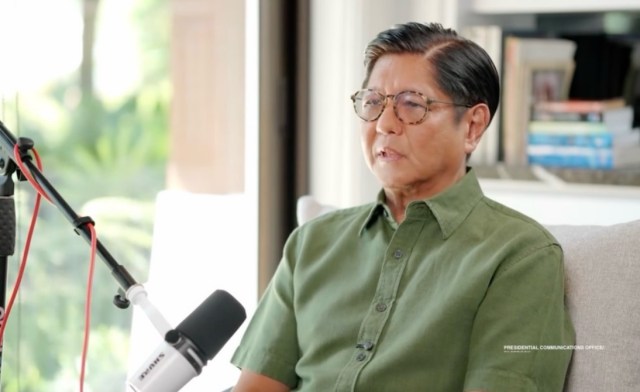
Cover photograph from Politiko article “Accountability Matters: Marcos Orders Independent Commission To Probe Flood Control Anomalies“.


 The Society of Honor by Joe America
Once you conquered the blindness you will be more vigilant and put a stop to corruption producing honorable people and not just honorable mentions.
That’s the way I hope it plays out. The fundamentals are there for the honorable to open the eyes of the blind and oppress the corrupt.
Let us hope for the best. There are reasons to be hopeful now.
Honorable, corrupt, blind; I would only place the first as patriotic, while the third facilitates the second with neither second or third being patriotic.
The simplest definition of patriotism is the love for one’s country and its values that drives a person to make a meaningful sacrifice in order to preserve those values. In order words, patriotism is *inclusionary* and has a hard requirement of sacrifice and service towards the community.
Whereas nationalism is a sense of superiority over other peoples and countries which grows out of a domestic sentiment of the same towards disfavored groups. Nationalism is inherently *exclusionary,* with those who do not sufficiently perform the required chauvinistic rituals may well be targeted as the next disfavored group. Nationalism is often selfish, and does not require personal sacrifice, only demonstration of belief, not the practice of belief.
Looking at Revolutionary to current Philippines history, most of that time has been flavored by nationalism, aside from brief periods (anti-Japanese resistance, early-to-mid Third Republic, the Aquinos come to mind). Politicians like Leila de Lima and Risa Hontiveros are patriots. The rest? Questionable aside from a handful. The general mentality among the population both rich and poor is one of varying degrees of exclusionary selfishness. When the community suffers, such as in floods, those who sacrifice their time *without being required* to do so to help the affected are the definitional patriots, but they are just few.
The Aquinos are a patriotic family. I had my doubts about Marcos Jr., and was disappointed when he did not come fully clean about his father’s sins, but he is trying to do patriotic things. The Dutertes are selfish, using nationalism and exclusionary tactics to divide.
Nationalism being wholly emotions-based, does not need to be taught. Patriotism on the other hand is based on love of *ideals*, and needs to be taught by those who lead by example of their sacrifice and service.
I think, president bong marcos is letting dogs lie. kasi, if he were to tackle the sins of the father, how would he pander to the vanities of the behemoths created by old apo! I serious doubt the bub is equal to it. there is limit to bub’s dexterity. if PNoy in all his righteousness could not clean the past . . . the best bub could do is make his legacy his own and the present better.
there were so many building, schools, streets and even bridges made under old apo, like the san juanico bridge, the cultural center, etc. so many people have worked and benefited and prospered because of the sins of the father. if bub were to come clean, those edifices and the people who have worked, lived and prospered, past and present, in them would have to come clean too. buildings would have to be purged, maybe renamed and re-inaugurated with new plaques. workers would have changed in uniforms, letterheads too, as well as their stationery. done nationwide, that would cost millions in expenditures. added expenses just when we are tightening our belts.
I think, bub is maybe doing right and concentrate on today’s issues.
Totally agree, k.
Yes, the sins of the father are the sins of the father. The son should be judged by the works of the son.
Yesterday Obama was at a democracy forum at the Jefferson Center, where a pro-Hamas protester heckled him for not ending “genocide.” Even if the is a genocide going on in Gaza (there isn’t), even if there are war crimes happening with excessive use of force against civilians (there is), the one responsible is the current president. Reaching into the past to leaders who are not in power anymore (or even might not be of this world, like Marcos Sr.) is an exercise of performative antics that doesn’t make the current situation any better.
It’s good that Marcos Jr. is focusing on current issues like the public corruption crisis. If in 2015 when Marcos Jr. announced his run for VP, we had been told that the same Marcos Jr. might possibly be the one standing in front of the new forces of Filipino authoritarianists led by the Dutertes, I know at least I myself would’ve laughed. But here we are. The biggest redemption of the Marcos name would be for Marcos Jr. to be a patriotic bulwark.
Nice delineation between nationalism and patriotism. Patriotism does require a concept of nationhood. The blind miss that, and the corrupt don’t care. The corrupt do the damage because they keep the blind blind.
The blind can’t see beyond their localized community, as even a few towns over seems like a country away. Hard to believe sometimes that the Philippines is roughly about the size of California, yet it takes so much effort to travel within a province much less across provinces.
The corrupt certainly don’t care as many probably have squirreled away their ill-gotten money overseas. If they can no longer leech from the blood of their own people, they probably will be flying to where their properties and bank accounts are. They have no love besides money.
slightly OT, sharing this FB post of Ninotchka Rosca on SK as a training ground for self-indulgence and corruption – it is about the Manila SK federation spending PHP 34M for 667 of them going to Bangkok for a two-hour seminar and three days in the city.
Looking at that, I wonder if the blind are that blind, or also yearning to get “their share”?
very funny, why is ninotchka rosca blaming the victims, the sk kabataan, and not dilg secretary jonvic remulla who has given the almighty green light for the trip? jonvic remulla is brother of justice sec boying remulla.
apparently, jonvic remulla did not see, could not see, anything wrong with the trip and has given his full blessing. no questions asked. no hesitation.
if I were to dispute excessive spending on 0/s trips, I’d point the finger at the vice president sara duterte. laging gumagala yan at habit na yata, spending big on dubious o/s trips. and how had philippines benefited from the vice president’s countless trips? ammos, the trips must have given her ammos to criticize the president, always the president, rarely anyone else. people should demand sara cease her o/s trips for those trips only serve to make her a bitter and most disillusioned person, always critical at the person who is trying hard to make things right for constituents and the country.
I suspect we all yearn to get our share if it is considered acceptable by social mores, which in the Philippines accept cheating at the edges. Only when we are authoritatively in charge of our wealth, and there is an upside to honesty, would it change. That’s why careers are important, not day jobs, because they give us control and require honesty.
c’mon, be nice. shares are allowed, like in sales commission as in travel agent, real estate agent, pharmaceutical agents, etc. they all get their commission allowable, that’s what keep them going: fee for service. the lucky ones, the top sellers mostly, got more sales commission than others coz they work harder and longer hours and have wider clientele, more happy and satisfied clients in their wake. sometimes, these agents sacrificed family time, probly have no other life outside work. hefty bonuses probly compensate for their absences at home. more money for spouses to spend, kids able to buy anything and everything.
Ha, stop being so nice!
old mother witch, couldnt sew a stitch, fell in a ditch, picked up a penny, and thought she was rich!
hah! I am not nice to bent politicians and those whose boundless greed, self interest, utmost love of money, kickbacks and bribery, worked on the sly and made career of insertions and would have been truly unstoppable, had citizens not been badly hit by the extend of their largese!
That reminds me of a Romanian colleague at my former employer joking about how Romanians in another firm maybe over a decade ago shamelessly used the possibilities they had in terms of travel budget and made that company close loopholes. The way she laughed about it had an almost Pinoy ring, though she did clearly understand it was banditry.
Interesting to see though how a country where even teachers allegedly used to ask for bribes to give kids good grades, the motorways on the way to Turkey passing through were feared by truck drivers due to police checkpoints allegedly practicing extortion etc. has had a consistent anti-corruption movement for decades now with especially those working abroad (around 5 million while 20 million live in the country) and those working in BPO (Romanians speak a lot of languages including English but also Spanish, German) pushing for an enviroment where they can open own businesses and earn an honest living. But the main difference to Filipino OFWs might be that they believe they can also do what the people in the countries they live in do. Pinoys might think that is out of their reach.
I always point out that other peoples that “recovered” had something to recover from. The Romanians for example already had a unified state during the time when they were called Dacians, which remained relatively ethnically intact under the hundreds of years of Roman then Ottoman rule.
Whereas the Philippines was never unified in the sense of a country which had traditionally evolved from an ethnostate. I often joke that one reason why Filipinos work so well as OFWs in the Middle East is because the various Middle Eastern countries reminds the pinoy of something like the Philippines: A collection of ethnically closely related people that all hate each other to varying degrees, with much of the same endemic tribal problems (including corruption). The Filipino also suffers with a similar mentality as the Arab, as in “*I* deserve to be given *this*” great thing, while not being able to recognize that in a relationship there needs to be a give-and-take according to ability. Case in point, all the Filipino nationalists in the pre-Internet days until today’s age of socmed who feel like the Philippines *deserves* to be given the latest military equipment, tanks, fighter jets and naval ships because of the MDT (lol). That sort of mentality cannot even begin to fathom how to try taking the first step on one’s own, with consistency, then perhaps then the help of friends may be requested to complete the journey.
Countries that descend from a previous unified past, even at their lowest point, find ways to bounce back as the foundation is within their cultural consciousness. The next decades will find Filipinos bewildered at the rise of those “dirty Africans” just like Filipinos were surprised at the rise of South Korea and Vietnam regionally. There is no rise, but a return to historical equilibrium. The Philippines still needs to build that lacking foundation. It’s a shame that English was not used as a unifying language in the Philippines during the Third Republic. Many decades were wasted since the Revolution on trying to Tagalog-ize the archipelago, downplaying the contributions of non-Tagalog Filipinos, causing ethnic tension with half-hearted measures compared to let’s say the schooled in Parisian French in France or the Castilian emphasis in Spain. Still, it was not possible to stamp out all ethnic groups, such as the Basques and Catalans who still resist assimilation. But then again the Basques and Catalans are regional economic powerhouses in their own respect.
Then your MPGA suggestion to me won’t cut it.
Ah, that was sarcasm. Just like “Make America Great Again” claims to take the US back to a golden era that never existed, a “Make Philippines Great Again” would be the same.
There are many things that Americans should be proud of, the US is literally the most powerful country in the world militarily, economically, technologically and culturally even with Trump screwing up everything. All these great things about America was built over the decades and centuries by the combined effort of average Americans both native and self-chosen who believed in the propositional ideals of what it means to be an American. The US is a place where one can start as a blank slate and fill out one’s own future, with subsequent layers on top of layers, not covering up past imperfections or mistakes, but to make a portrait that is beautiful in both future artistic strokes complimenting the past misstrokes of the brush.
Since the awakening of the Filipino consciousness a little over a century-and-a-quarter ago, the Philippines is pretty much still a blank slate. See the problem is the collective Filipino identity chases a notion of perfection that the Philippines can never attain, as it was never Filipino to begin with but an attempt of Filipino envy to imitate others. Rather than taking apprenticeship seriously then becoming one’s own artist inspired and influenced by prior great works, the mentality is to somehow exceed the Old Masters of the arts. The result is of becoming a copy artist, never being one’s own artist, then tearing down the canvas in frustration, then trying to copy another and another master artist, never ending, never inching closer to masterclass, always going back to the beginnings. It breeds resentment; resentments of which stymie progress by dwelling on past what-ifs rather than future to-bes.
There’s no shame in admitting one’s student status. There’s no shame in becoming a serious apprentice to others more experienced. Even at my age I still consider myself a forever learner. There are always those smarter, more accomplished than I can hope to be, but I can strive to inch towards those goals with consistent effort. When the student thinks he can immediately surpass the master, well, that’s a set up for failure and more resentment which reinforce regressive rather than forward motion.
Before that chopped liver was written I already asked: What are we chopped liver?
The Datu kingdoms and fiefdoms may look messed up, but they are still some form of government back then.
Only conquerors were expansionists and many small kingdoms existing in one mainland was fine and considered peace time.
The West was won only in the the 1800s.
Heck US threw our the British almost at 1800s as well.
The French had to be convinced to give up their land.
Not downplaying AMERICA but do not downplay the Philippines
Excellent points, Karl. I think comparatives don’t work as ways to describe the Philippines because the Philippines has her own history with much of it being occupied by powerful nations in their time who used and abused Filipinos. Comparatives are useful for describing the principles we hope to use to develop a future we think will be good for Filipinos. It is futile to think the Philippines ought to be what she is not. We should indeed like her for who we are. (Using ‘we’ to embrace all who live here, or who call the Philippines their homeland.) As during fiestas, foreigners are always welcome, and we can learn a lot from them, but (lol lol lol) we’re done with them as owners.
And that is what wr are doing here in TSOH.
Joe, it must be synchronicity as I read this comment just now, but I just wrote an article (scheduled for tomorrow because it fits what is happening on that day) in that vein, with the flood issue and Philippine governance as the topic. Still looking for a picture but if it is fine with you I shall keep it scheduled on that unusual day outside our standard publishing schedule.
Yes, that works. My next article can be kicked back to keep the schedule normal.
Not sure how pointing at the supposed un-greatness of others makes the Philippines great, especially when the criticism is not paired with realistic plans that are actionable.
Let’s be real, the prehistoric barangays were just that — small time petty chiefdoms. Even Tondo, Maynila, Sugbu and Butuan were *slightly bigger* chiefdoms. The celebrated Lapu-Lapu ruled a tiny domain facing Sugbu across the Mactan (Opon) Channel that did not even encompass all of already tiny Mactan Island (which takes approximately 2 hours to walk from the northernmost point to the southernmost point). Nothing wrong with that at all. Maybe it’s even something to be proud of in a way. Civilizations had to start somewhere. The ancient barangaic history was obscure and relatively unknown until WESTERN historians and anthropologists like Henry Otley Beyer and William Henry Scott started studying the subject in seriousness after decades of quite a few native Filipino historians simply making stuff up based on folk tales or outright fabrications like the Code of Kalantiaw. Contrast to the Austronesian Champa state was also set up along the lines of barangaic local autonomy, with the difference Champa was as a real confederation that was a powerful regional thalassocracy for more a thousand-and-a-half years exerting influence across the Malaccas, the Indo-Malay archipelago, all the way to the Philippines archipelago, yet still retreated into historical obscurity.
It’s hard to go into a future, any future, if the hazy past which may not even be true is clung onto with such ferocity. If everything was great already, there is nothing to do better. Might as well give up. Europeans who may have something to cling to sometimes look to the past in revisionist fashion, but have the capacity to look forward. Americans generally are optimistic forward thinkers. No one is downplaying Filipinos or the Philippines; Filipinos do that quite well themselves by insisting on constructing some grand past that’s still taught in Philippines schools to this day, then feeling defeated when reality bites every time looking on towards other nations’ steady march forward. Filipinos need to ask themselves: what is more important, clinging to a possibly untrue past of supposed greatness, or building the new future based on what exists and is possible NOW?
Some Philippine nationalism has its roots in Rizal’s responses to early Spanish colonialist Antonio De Morga’s depiction of the Philippines as extremely backward, while Prof. Xiao Chua in one vlog mentioned how hurtful it was to see the Philippines called “lesser Asia” by some early American colonialists. Well, some German nationalism of the 19th century, including the glorification of Arminius for his successful attack against the Romans, had its roots in a sense of being backward compared to Latin peoples way back to when Tacitus described the Germans in a very “colonial” way. Well, I tend to see history as a bit of a gang fight sometimes, and isn’t one of the tactics of gangs to diss and intimidate? One should see De Morga, Tacitus and the Frenchmen of Napoleon’s time who described Germany as backward because they had no central state and Voltaire famously mocking the Holy Roman Empire as having been neither holy, nor Roman nor an Empire in that context and move forward from it. Germany went a very wrong way trying to prove it could match France and maybe even Napoleon, consciously or not, and found a better balance in 1949 by balancing aspects of the Holy Roman Empire (relatively autonomous Länder or federal states, strong municipal autonomy) with the centralized requirements of a modern polity, The Federal Republic.
Even Rizal made the mistake of claiming the ancient archipelago had a form of confederation in his responses to De Morga. One should see him as a great man, yes, but also as a young man strongly influenced by European ideas of the time. Even our youngest in TSOH, Giancarlo, is older than Rizal was when he died.
There is a certain “essentialism” in 19th century European ideas, while America was founded as a future-oriented society.
@Joey
And by no.means I was hyping the Philippines in the comment.
I get the “get real” all the time as if I am delusional.
Karl, there is no issue with discussing the issues, even in disagreement. However I do take issue with taking the ideas being discussed personally, then being a target of that displeasure. Let’s learn from discussing disagreements so we can get closer to the truth. Let’s pushback on ideas and explain exactly why we disagree, rather than push back on a person. Normally I would be more measured, but I am in a foul mood today.
All countries had to come from somewhere, and that somewhere was usually of modest origin, with generational building on top of the previous efforts.
The Japanese have a term, “chūnibyō,” which described the delusions of grandeur of an young adolescent before growing out of it, being embarrassed by it, and finally facing reality. Some Japanese people are stuck in perpetual chūnibyō, and are shunned by society which is ordered.
The Vikings were able to retire their inclinations of raiding and build a modern civilization in the Arctic and Subarctic wastelands of Northern Europe. The Singaporeans built themselves up from nothing at all, being located on a former “rock.” I’ve always believed that Filipinos can move forward too, with consistent purpose and practical steps, but that’s hard to do when the goal so often is to get something, money, possessions, prestige, etc. to prove that one is the greatest one. Why not just be proud of who one is, and if one aspires to something higher, work towards it?
Robin Padilla who brushes his moustache in the Senate is clearly an eternal adolescent.
Tito Sotto might keep his moustache as a memory of the times when he was considered the sexiest man in Metro Manila by some as part of the Bee Gees like trio VST&Co, though I see him as a throwback to the ilustrados of old by now.
He is very serious about his role in the Senate now.
From my own view, nothing makes the Philippines anything but what she is. Not great, not trash. As I have mentioned before, we here see and live the flaws. Hearing them recited over and over again does not have an uplifting effect. We can’t get blood from kamote or progress from Dutertes even if Dutertes put salve on injured Filipino souls. You also have to consider that the American moral platform is collapsing, so expect a lot of pushback to any criticisms you may make of others.
I do not see anywhere where I am outright critical of the Philippines. In practice I am complimentary of many aspects of the Philippines and Filipinos, otherwise I would not visit or maintain interest. However I am firm with my belief that if someone (or a country) is continually treated with kid gloves and sensitivity, that person or country would never grow. Growth requires introspective contemplation of constructive criticism.
And as I related to Karl, I do not understand this tendency towards pushing back on me as a person rather than any ideas I may share. Nor do I understand the constant attachment of myself and other Americans to the MAGA project. There is a lot of anti-American sentiment out there that existed before Trump even came on the scene. If that were to be a reason to ad hominem nearly 350 million Americans, then by extension all Filipinos should be tarnished for the majority supporting the Dutertes before, and probably soon once again. Let’s not deal in fallacies.
I was actually admitting more to my sensitivities than critical of your personal perspectives which I find well expressed. And Americans losing their moral platform is a factual issue that we all have to deal with. The worst I ever experienced was anti-Bush hostility that carried over to me when I visited Australia in 2004. It looks to me like America is in complete moral collapse and capitulation to a tyrant.
Trump’s base is only about 30% of Americans. The rest of his 2024 voters that got him a 0.05% popular win were wildly misinformed or underinformed people who appear to be regretting their vote to varying degrees and are turning against him. I will posit that if Trump did in fact hold the power some thinks he has, then he would not need to try to rig the elections or repeat acts of performative strength on a weekly basis when he’s in trouble politically. Some people from afar may be more informed than most, but ultimately are not aware of the actual facts on the ground. Twitter, Facebook and even Bluesky are a looking glass providing a view filtered through an algorithm, though Bluesky is better than the others. Trump is weakening, people are waking up.
I do not think hysterical moaning about how the US is done for is helpful, especially when it comes from non-Americans, and I am highly allergic to that type of sentiment. The US has bounced back from other instances far worse that have receded into history books. Foreigners who gleefully shame Americans always find themselves hiding behind Uncle Sam when they themselves get into trouble. It’s convenient to be Australian, Kiwi or Irish, being behind multiple layers of security and being removed from global issues then need to criticize. The US has made mistakes like any other country has such as in the GWOT, yet the difference is the US tries to make things right, eventually, while other countries tend to ride high on their horse without acknowledging even minor mistakes. If other world leaders and peoples want to criticize, then they should lead with moral authority and global authority to solve all the worlds’ problems. But of course they can’t, and they won’t. Americans of all political stripes tire of this. The US has been carrying the global peace on her shoulders that has enabled every other developed country to soar economically and for developing countries to rise up for more than 80 years.
We share sentiments, you for the US, me for the Philippines, no asterisks, exceptions, or rationalizations permitted. Both nations are works in progress at this moment. As for the Philippines, there is so much social media distortion that it is hard to know the truth. If what I read is true, the most distinguished member of the Independent Infrastructure Commission (Carpio) has laid a heap of blame on President Marcos for not vetoing over 400 billion in infrastructure insertions that formed the discretionary funds that scoundrels took a share of. His was not a crime, theirs was, of course, but it explains why the President was angry (embarrassed) enough to form the Commission, and to let government workers join anti-corruption rallies. I think most view this as a possible turning point against the deep state of entitlement, but the agents of corruption (DDS) remain highly influential. It’s fascinating to watch. This is much more meaningful than prior flame-ups.
Carpio continues to disappoint, especially after his retirement. Carpio misunderstands the PRC basis on the WPS issue and thinks he can convince the CCP using legalese (lol), to outright meddling on legal questions when he had “retired.” I’m not an attorney, but I have read the Philippine Constitution. It seems to me quite clear that the Constitution defines three branches of government sharing responsibility, yet Carpio takes positions as if the Chief Executive is a de facto monarch or dictator, able to do all and responsible for all. This position differs little from a common Filipino citizen uneducated in the law who expects a president to be a personal dictator. Disappointing to say the least for a graduate of both AdM and UP.
The Philippines was the first instance of memetic warfare (a form of psychological warfare pioneered by the Russians) in the modern day, so it is reasonable to see the Philippines as the first battleground in the democratic world. The Philippines proving ground developed the strategy for Brexit and MAGA, which Maria Ressa reminded Americans of in an interview a few days ago on John Stewart. I’d hope NBI would be a bit more serious about investigating foreign links to these socmed meme farms that push a coordinated message for the Duterte nexus (or any other politician for that matter). It’s wild to think that even with the more meager investigative capacity of the Philippine state, that no one has the slightest clue where bank transfers originated or who is funding who.
I have no idea what you are referring to. Justice Carpio was one of the few voices of reason who pushed back against Duterte, and especially China, always law based, as a private citizen. A private citizen can assume the perspective of any branch he chooses to assess. He is one of the most highly respected elders in the Philippines with the Constitution and Country as frameworks for his voice. His appointment to the Infrastructure Commission gave it an instant stamp of credibility. Pardon me for setting your opinion aside.
As for the lack of investigative might in DOJ, I’d just say that crimefighting is not a skill here, nor is initiative that can cross the powerful and end esteemed careers. Your idealistic fervor is admirable I suppose, but it’s as fruitless as me saying Trump should respect the Constitution to unite people, or that Stephen Miller should be kinder. My idealism is out of touch with the way it works when powerful people are, well, powerful.
I left my idealism a long time ago. I’m a practical person who believes in practical solutions, leaning towards the bottom of the pyramid rather than from the top.
Project 2025 was supposed to be a multi-year plan (it is written in the actual document), but Trump’s cronies are rushing it because they are weak and realize they may lose political power soon if fair elections are held in 2026. There is a palpable mood shift in the Democratic base, and also in the habitual-but-not-necessarily-MAGA Republican as well. These people will be held accountable at some point. The “long arm of the law” actually means something in the US, even if it takes a while.
Going back to Justice Carpio and practicality, I feel intensely annoyed every time the good justice unfurls his WPS maps as if the paper that map is printed on means something to the PRC. Irineo and I have had many discussions on the educated Filipino’s obsession with legalese and the meaning of singular words rather than the larger picture (see Duterte’s defense team at the Hague). Carpio has a naturalized Filipina wife who happens to be of Vietnamese origin. Did his wife not educate him on the mentality of the PRC, which derives from Han imperialism going back over 2,000 years? The Koreans and Vietnamese know the subject the best, as those two peoples were the ones most often attacked by nearly every iteration of the Han state since the beginning of recorded history in the East. The basis of the PRC claim is that the PLAN can reach out with hard power and claim for the PRC want the PRC wants. Claiming “historical Chinese territory” is only secondary, as every Chinese monarch going back before those monarchs even claimed the title of “emperor” already had an ideology of everything under Heaven belonging to the Han state; certainly anything that a Chinese ambassador, general, admiral, ambassador, explorer or trader actually touched with their own hands and saw with their own eyes. The only way to counter this ideology (which is remarkably similar to Russia’s tsarist ideology) is with the threat of equal hard power, either alone, or with allies. In this instance, I am annoyed that Justice Carpio is fixated on the 450 billion and which *one* person is responsible for it, rather than working to expose how corruption is deep in the veins of the Philippines being extensions of pre-colonial expressions of Filipino political power with tentacles wrapped around every aspect of Philippine life down to captains, tanods, SK members, wholly incompatible with building a modern state. Missing the forest for the trees is such a common condition there that it is not shocking that even a former justice and an example of the pinnacle of the legal profession is also afflicted.
Well, every one is entitled to their annoyances. Idealism to me is the unreasonable expectation that somehow things can be as we wish they would be without regard for the practical realities that make that outcome impossible. It is a useless wish outside of context. I’m driven a lot by it, but it is just energy, not a pragmatic undertaking. It supplies direction, not outcome.
For me, I stayed hopeful and kept writing when others gave up on the Philippines in part because Justice Carpio was here true and patriotic and not inclined to do easy things like most. So, again, your opinion has no meaning for me, personally. It for sure is much too early to be judging the Infrastructure Commission’s work. So your rant is weird to me.
Weird means not consistent with rational assessment. Not unlike conspiracy theories that draw firm conclusions from chosen events, not the whole of things because the whole of things are beyond our view.
Sometimes it feels like we talk past each other — please keep in mind that we agree on pretty much every principle and goal. That being said, we are both Americans, and Americans are known to be strong-willed, we both being probably prime examples. I also get very annoyed with those far-removed wag the moral finger at the US, when the American system has benefited the world with relative peace and prosperity for 80 years at great sacrifice to the American poor and middle class, as if other countries didn’t make mistakes (often far worse).
I am not ranting; rather I have strong opinions for this topic just as you have strong opinions. I daresay probably walk closer to ordinary Filipinos of the D and E classes than most, and am familiar with how problems affect those Filipinos at an intimate level. So of course I would feel strongly about how issues affect people who are in my life, and people like them. I feel even more frustrated when everything is overcomplicated by even well-meaning lawmakers and attorneys with their smug grins as if they are in a competition on who is more erudite rather than coming any closer to fixing problems one by one.
I’ve found that nearly every single problem in life have relatively simple solutions. If a road has a pothole, then fill the pothole. If the PRC is trying to take over the WPS, maybe not kick out the USN from Subic Bay to begin with and have the PLAN move in a few years later taking over one atoll, and in the recognizance of that mistake, explain to the people why the USN and USMC need to be immediately re-invited not wait until entire multiple island groups are squatted on by the PRC. If there is a corruption problem, a president of the Philippines has always had much more executive power than American presidents had (until recent times), then investigate and arrest the offenders. If cities and towns are being flooded, look back to the vast human history of manmade flood works going back thousands of years. My frustration is at every instance, at every turn, the leadership and educated classes of the Philippines overcomplicate stuff and then throw their hands up in “oh, we’re just poor,” “oh, it’s too hard,” “oh, it’s in God’s hands.” No wonder why D and E class Filipinos are generally apathetic and just vote for whichever party consistently gives them the most money and stuff. From my conversations, it really does seem to the average Filipino like nothing ever gets fixed.
Now in respect to the Commission on Infrastructure, I heard Marcos Jr. say (paraphrased) in a slightly embarrassed tone that leaders need to have the courage to accept that even some of their own parties and groups may be culpable, and to let the law judge whoever’s hand is tainted. I do hope that will indeed happen. Whoever starts to take a dent in the massive endemic corruption, builds public services like roads and schools, and provide jobs, will win the hearts of the majority. However, former Justice Carpio’s ill-advised comment of “Marcos must resolve the scam to save his credibility” is infuriating. Just like Carpio unfurling with a self-assured grin maps of the Spanish-era Philippines territorial claims was infuriating. So is it going to be like it always is in Philippines politics since before the Revolution where one person becomes the “fall guy,” while nothing was ultimately solved? Or does Carpio care about the greater problems that need to be solved?
I don’t find the Carpio comment infuriating. I first used “rage” and stepped it down to rant in responding to your intense criticism of a “good guy”. Now you are admitting to rage, so color me confused. I consider that Carpio is telling the President directly, we need you to lead on this. And he either will or he won’t. And I consider your voiced anger as undermining of the anti-corruption effort, spitting on a team-mate, and I can only shake my head and move on.
I do wish words were not put into my mouth (or fingertips). Where did I say I feel rage? It is very difficult to have a discussion this way when the discussion partner is insisting the other said something they did not. Are we debating ideas or are we getting into a personal scrap? Pull apart the idea with better ideas if there is disagreement; don’t attack the person.
Perhaps I spend a bit too much time contemplating the issue at hand. Even if a reply is dismissive or acerbic at a seemingly personal level I do try to practice moderation, diplomatic deference and patience. Clearly the amount of time I put into the thought was not useful since it often appears to not been read, or even skimmed. To be quite frank I do not have time for fixations and particularisms on singular emotions that do not address the substance. Fixations, particularist attitudes and an attachment to public figures that can’t be criticized as if they are saints are the whole reason why so many things are immovable in the Philippines to begin with, in a nutshell. My down time during my travels ends this week as I make my way to Poland. See you around Joe. I will stop by occasionally.
Your word was infuriated. I appreciate your thoughtful perspectives here. I sometimes think they are off the mark and it is difficult to explain when that is the case.
Nothing personal, Joey. I apologize for my tone.
There is this quote from an early American educator in the Philippines that fits to your description of the Philippines:
“A great deal has been said in the American press about the eagerness for education here. The desire for education, however, does not come from any real dissatisfaction which the Filipinos have with themselves, but from eagerness to confute the reproach which has been heaped upon them of being unprogressive and uneducated. It is an abnormal condition, the result of association of a people naturally proud and sensitive with a people proud and arrogant. At present the desire for progress in things educational and even in things material is more or less ineffective because it is fed from race sensitiveness rather than from genuine discontent with the existing order of things. …
Our own national progress and that of the European nations from whom we are descended have been so differently conceived and developed that we can hardly realize the peculiar process through which Filipinos are passing. We cannot conceive of Robert Fulton tearing his hair and undertaking a course in mechanics with the ulterior view of inventing something to prove that the American race is an inventive one. We cannot imagine Eli Whitney buried in thought, wondering how he could make a cotton gin to disprove the statement that the Americans are an unprogressive people. Cyrus Hall McCormick did not go out and manufacture a reaper because he was infuriated by a German newspaper taunt that the Americans were backward in agriculture. Nor can we fancy that John Hay … was continually distracting his mind … by wondering if he could not do something a little cleverer than the other diplomats would do. …
… I do feel warranted in stating that the mass of intelligent Filipinos fail to distinguish between critical or appreciative ability and real creative ability, and that what they are acquiring in huge doses just now is the critical and not the creative.”
https://www.gutenberg.org/ebooks/13392.html.images – from Chapter VII / “An Analysis of Filipino Character” in A Woman’s Impressions of the Philippines – by Mary Fee, one of the first Thomasites of 1901, trained in Iowa State Normal School.
Wow, the greater observation in that paragraph of critical vs creative ability, and the tendency towards wanting the best of the best without having the slightest idea of how to get to that state seems like a mentality that never changed. I have my doubts about if this mentality was instilled by the Spanish. The eventual downfall of the Champa Empire was caused by the rajahs of each Cham polity thinking along the same lines, climbing over each other trying to imitate perceived greatness rather than following the Cham rajah of rajahs.
The daughter of a friend in Misamis Oriental won in the last SK elections (2023). Friend is an old school Liberal, while the daughter is DDS. They are not particularly poor, but not rich either. Now the daughter has a brand new motor, which I wonder how she was able to purchase given that their family can’t afford such an expensive model, and that she is still a 3rd year Criminology student. Shocking, not shocking, that a young person studying to become a policewoman would engage in such questionable activity.
she a pretty girl likely to have a sugar daddy? looks dont last, and she had better a career, just in case. by the way, digong likes them young, haha.
The Congressmen and senators should include all business interests mining fishing gambling in their SALN
BoC ad BIR should di their jobs to Al Capone all big fish.
now, I am wondering which politician owned the travel company that arranged the travel of the 667 sk kabataan to bangkok. the price quoted looked overly bloated to me! it would have to be a chartered flight, booked in advance, kabataans’ intenaries and accommodation paid beforehand. since it was group tour, it would have to be be cheaper and made more cheaper because thailand had summat dropped tour prices, trying hard to attracted international travelers due to the border clash with cambodia that earned thailand a not safe place for tourists to visit.
and then cheaper again coz kabataan were likely to have share accommodation with maybe four to a room! if someone had made lots of money out of this trip, I seriously doubt it was the kabataan.
Now I know how to get rid of any politician without violence
Amend all conflict of interest laws for elected and appointed positions.
I am for encouraging good politicians true to their mandate, and lauding them for job well done. I am for 2nd chances if good politicians made error in judgement at the heat of the moment, but made effort to stay on course. I am also for re-electing them, giving them another term to serve. for the betterment of us all.
what I am against are politicians who have lost their vision and sold their integrity, nasilaw sa pera ng bayan, and connive with fellow politicians who have same weakness.
yes, politicians should be self regulating and having failed that, their fellow politicians should be 1st to call them to toe the line rather than leave it to us citizens to enforce regulation.
Me too of course but many are in conflict with family business.
All the interviews if Ted Failon
If what Kim Henares, Dizon, Lopez and others suggestions suggested would happen
then our needs improvement rating will be most improved.
methink, conflict of interest happens when politicos suddenly become opportunistic, have no borders, and cannot say no to temptations to enrich themselves. too self centered, utterly shameless, and dont have the decency to inhibit themselves, injuring and perjuring the dignity and the integrity of their office.
https://politiko.com.ph/2025/09/20/nakakasuka-tulfo-wants-4-senators-out-of-dpwh-flood-control-hearings/politiko-lokal/
They insist to inhabit instead.
ang apat na yon, medyo manhid na and not uberly conflicted. vice ganda sa sobrang galit said at the trillion peso march yesterday sept 21 that death penalty may be in order for them kuraps; death penalty for them and their families too.
somehow, masked youths dressed in black may have taken vice’s words literally and caused mayhem in mendiola, throwing molotov bombs, stones, etc. police were hurt as well as civilians. there were arrests and some were hospitalized. chief of police nartatez said it was isolated incident. bah, nartatez’ intel must be switched off and did not see the masked youths coming.
stupid masked youths dressed in black, hurting concerned citizens at the march, but not the kuraps. maybe the youths worked for the kuraps and got paid for their effort.
The youth could have done better than vandalise public and private property.
If it was a full blast revolution that is a different story.
A chatgpt rewrite of my joint article with Irineo about getting out of the Mud.
Here are some thoughts and ideas — plus expansions — on “how the Philippines can get out of the mud,” based on the essay you shared and other observations. Happy to dive deeper into any part.—What “mud” refers toIn the piece, “mud” is metaphorical: the stagnation, the dependency, corruption/leakage, low morale, structural inefficiencies, and attitudes that hold progress back. So getting out means reforming systems (bureaucracy, governance), changing mindsets (entrepreneurial, proactive), catalyzing community agency, enhancing accountability, etc. Let’s map out ways to get out — some from the article, some additions — and how those might be implemented or scaled.—Key levers / strategiesBelow are strategies or “ways out,” grouped by type. We can think of these as levers. Some are top-down; others bottom-up. The combination tends to be more powerful.Strategy / Lever What it entails Challenges Possible Paths ForwardClean-up first / build credibility Removing visible corruption; improve public infrastructure; show wins. Improve basic services like clean water, sanitation, transport. Reinforce rule of law. Resistance from vested interests; slow pace; cost; sometimes superficial clean-ups that fail to address root causes. Small pilot projects with high visibility and accountability. Community involvement. Transparent budget and monitoring. Use tech for transparency (e-governance dashboards, open data).Boost morale / culture of civic responsibility Encourage people to believe they can effect change. Promote civic pride, volunteerism, mutual help (bayanihan). Reduce learned helplessness. Cynicism; fatigue; distrust in institutions; few examples to emulate. Highlight and scale local success stories. Education to include civic values. Leadership that models accountability. Media and culture can help shift narrative — showing what works instead of always complaining.De-bureaucratization / reduce red tape Streamline processes; reduce delays; simplify rules; make government service more efficient and citizen-friendly. Entrenched bureaucracy; possible loss of “power points” for people who benefit from complexity; risk of oversight lapses. Digitization of procedures; one-stop shops; setting KPIs for LGUs (local government units); third-party audits; citizen feedback loops. Also, decentralization (if well-managed) to bring decision-making closer to people.Entrepreneurship and innovation Empower people to generate value: more Filipino firms (not just BPOs); more value-added agriculture; biotech, services, creative industries. Improve incentives for innovation. Requires stable institutional support; funding; risk-tolerance; legal certainty; ability to compete globally; infrastructure. Strengthen incubation hubs; better access to capital (especially seed/angel); protect IP; better STEM / technical education; align industry, academe, govt. Promote clusters of innovation. Attract returnees, diaspora investment.Law and accountability Enforcement of laws; reducing impunity; ensuring public officials are accountable; reducing leakage of funds. Political resistance; weak institutions; corruption networks; sometimes laws exist but aren’t implemented. Judicial reforms; strong independent oversight institutions; citizen watchdogs; transparency; public auditing; media + civil society; consequences for corruption.Local/community power Mobilize local knowledge and strengths; allow LGUs and communities to make decisions; empower barangays; harness local initiative. Uneven capacity; sometimes local corruption/dynasties; lack of resources; coordination problems. Capacity building; providing local governments with tools, funds, technical assistance; institutionalizing local performance metrics; enabling local participatory budgeting and planning; community engagement.Prioritizing first things first Address immediate big messes that have multiplier effect; do what can produce relatively fast wins. Politicians may prefer projects that are symbolic or flashy; lack of consensus on what is “first”; risk of undermining trust if promised wins don’t happen. Data-driven decision making; metrics; transparency; involving experts/local stakeholders to choose priorities. Focus on infrastructure, health, food security, water, disaster resilience.Learning from others but adapted Look at what’s working in similar or different contexts; adapt, rather than copy. Context matters a lot; risk of mimicking unsuitable models; ignoring local culture. Comparative studies; partnerships; exchanges; pilot programs; contextualization. For example, look into other Southeast Asian countries or islands with similar challenges.—Additional / Complementary IdeasBeyond what was in the article, some more possible ways:1. Strengthening disaster resilience and climate adaptationGiven the Philippines is heavily exposed to typhoons, flooding, etc., better planning, infrastructure (e.g. flood control, drainage, resilient roads), early warning systems, and incorporating climate risk into all major planning.2. Agricultural reform and food sovereigntyThe article notes dependency on imports or overseas remittances. Bolstering agriculture: better farm-to-market roads; support small farmers; investment in irrigation, research (disease-resistant varieties); promoting value adding locally; reducing waste; improving logistic chains.3. Education reformNot just access, but quality, relevance, critical thinking, innovation, technical and vocational skills; linking curricula to local needs; promoting scientific literacy; digital literacy. Also civics education to foster citizen engagement.4. Infrastructure (physical and digital)Reliable and inclusive infrastructure: transportation, power, internet. Infrastructure that connects remote areas, eases movement of goods and people, lowers costs.5. Healthcare systems and basic servicesHealthy populations are more productive. Improve primary healthcare, preventative medicine; ensure access in rural areas. Sanitation, clean water.6. Fiscal reformTax reform to ensure that government has the funds for public goods and infrastructure; reduce leakage; improve efficiency in spending; transparency in budgets.7. Strengthening institutions of democracyEnsuring media freedom; judicial independence; freedom of information; protecting dissent; political reforms (election, campaign finance) to reduce dynasties, reduce patronage networks.8. Incentivizing socially beneficial behaviorFor example: reward LGUs with good governance; recognize and support citizen initiatives; tax incentives for clean and sustainable business practices; programs that reward honesty, innovation, community involvement.—Risks / Things to Watch Out ForPutting too much focus on symbolic projects without structural change leads to dissatisfaction.Corruption and patronage can co-opt reforms.Resistance from those who benefit from status quo.Overdependence on foreign aid or external models can lead to dependency or mismatched solutions.Big infrastructure without inclusion can worsen inequality.Reforms must be inclusive — rural, marginalized, indigenous communities need to have voice and benefit.—What Could Be First StepsIf one were to design a roadmap, some early steps might be:1. Identify a few local pilot areas where reforms are applied (e.g. LGUs with relatively good governance) to implement various levers (streamline bureaucracy, local accountability, infrastructure) so there are model cases.2. Public campaign to change narratives: highlight success stories; engage civic media; encourage citizen participation.3. Build institutional transparency tools (open data portals, budget tracking apps, participatory budgeting) so citizens can monitor govt performance.4. Support entrepreneurship hubs in underdeveloped areas, so economic growth is more dispersed.5. Enact legal reforms that promote accountability: anti-corrution measures, simplifying procurement laws, strengthening oversight.—If you want, I can map these ideas into a more structured roadmap over short-term (1-2 years), medium (5 years), long term (10+ years) for the Philippines. Do you want me to build that?