The 1973 Philippine Constitution: Structure, Contradictions, and Authoritarian Transformation
By Karl Garcia
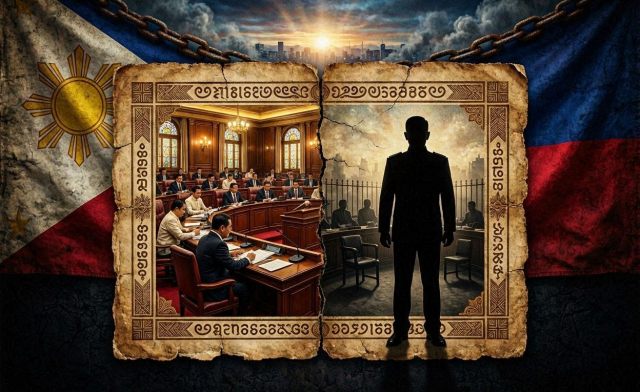
The constitutional history of the Philippines reaches a critical turning point with the 1973 Constitution—a document that, more than any other, reveals the tension between formal institutional design and political reality. Framed during a period of unrest and ratified under controversial conditions, it sought to inaugurate a parliamentary system grounded in social justice and national development, yet ultimately became the legal architecture for authoritarian rule under Ferdinand Marcos.
I. Historical Context: Crisis, Control, and Constitutional Change
By the late 1960s and early 1970s, the Philippines faced a convergence of pressures:
- Rising social inequality and student unrest
- Communist insurgency and separatist movements
- Elite political dominance and institutional gridlock
In response, Marcos declared Martial Law in 1972 through Proclamation No. 1081, suspending civil liberties and consolidating executive authority. Within this environment, a Constitutional Convention—originally convened to reform governance—was overtaken by the executive agenda.
The resulting 1973 Constitution was ratified not through a conventional plebiscite but via citizens’ assemblies, a process widely criticized for lacking transparency and legitimacy. This contested birth would define the constitution’s credibility from the outset.
II. Structural Design: The Shift to a Parliamentary System
On paper, the 1973 Constitution introduced a parliamentary form of government, replacing the presidential system with a structure intended to promote efficiency and accountability.
Core Institutional Features
- Unicameral Legislature (National Assembly):
The legislature was reorganized into a single body responsible for lawmaking and selecting the executive leadership. - Prime Minister as Head of Government:
Executive power was theoretically vested in a Prime Minister elected from the legislature. - President as Ceremonial Head of State:
The presidency was redefined as largely symbolic. - Fusion of Powers:
Unlike strict separation of powers, the system fused legislative and executive functions—typical of parliamentary systems but highly dependent on political safeguards.
Intended Logic
The shift aimed to:
- Reduce executive-legislative deadlock
- Strengthen party-based governance
- Accelerate policy implementation
In theory, it was a move toward modernization and institutional efficiency.
III. Constitutional Reality: Executive Dominance and Legal Engineering
Despite its parliamentary blueprint, the constitution was never implemented as intended. Instead, a series of transitory provisions and amendments allowed Marcos to retain—and expand—presidential powers.
Mechanisms of Control
- Transitory Provisions:
Allowed Marcos to exercise both presidential and prime ministerial powers during the transition period—effectively indefinite. - Legislative Powers by Decree:
With the legislature sidelined, Marcos governed through Presidential Decrees, bypassing representative institutions. - 1976 Amendments:
Created the Interim Batasang Pambansa and formally recognized Marcos as both President and Prime Minister. - Judicial Constraints:
While the judiciary remained formally intact, its independence was weakened under political pressure and the realities of Martial Law.
Resulting System
What emerged was not a parliamentary democracy, but a hybrid authoritarian regime:
- Concentrated executive power
- Weak or compliant legislature
- Constrained civil liberties
The constitution became less a limiting framework and more a legal instrument of centralized rule.
IV. Social Justice and National Development: Ideals vs. Implementation
One of the most notable features of the 1973 Constitution was its expanded emphasis on social justice, economic reform, and national development.
Key Aspirations
- Land reform and equitable wealth distribution
- Protection of labor rights
- Regulation of key industries for national interest
- Promotion of a self-reliant economy
These provisions reflected a growing recognition that formal democracy alone could not address deep structural inequalities.
The Contradiction
However, the same constitution that articulated these goals also:
- Restricted political freedoms
- Limited public accountability
- Concentrated decision-making in the executive
This created a fundamental paradox:
a socially progressive constitutional vision implemented through authoritarian means.
V. Amendments and Institutional Evolution (1976–1984)
The 1973 Constitution did not remain static. It evolved through amendments that further entrenched executive control while attempting to simulate institutional normalcy.
- 1976 Amendments:
Formalized Marcos’ dual role and established interim parliamentary structures. - 1981 Amendments:
Lifted Martial Law formally, but retained many of its powers; introduced a semi-presidential veneer. - 1984 Amendments:
Reintroduced a modified parliamentary system with the Regular Batasang Pambansa, though still under executive dominance.
These changes illustrate how constitutions can be incrementally reshaped to maintain political control while projecting reform.
VI. Significance: Lessons in Constitutional Design and Political Power
The 1973 Constitution offers several critical insights:
1. Institutions Are Only as Strong as Political Context
A well-designed system can be rendered ineffective if political conditions undermine accountability and checks.
2. Flexibility Can Enable Abuse
The constitution’s transitional provisions and amendability allowed it to be adapted for prolonged executive rule.
3. Social Justice Requires Democratic Foundations
Ambitious socio-economic goals cannot be sustainably achieved without transparency, participation, and institutional balance.
4. Legal Legitimacy Matters
The controversial ratification process weakened the constitution’s moral authority from the beginning.
VII. Legacy: From Authoritarianism to Constitutional Safeguards
The eventual collapse of the Marcos regime during the People Power Revolution led to the drafting of the 1987 Constitution, which was explicitly designed to prevent a repeat of authoritarian excess.
Key safeguards introduced afterward include:
- Stronger checks and balances
- Term limits for executive officials
- Expanded Bill of Rights
- Independent constitutional commissions
Conclusion
The 1973 Constitution stands as a paradox in Philippine constitutional history:
a document that combined progressive aspirations with authoritarian execution.
It demonstrates that constitutions are not self-enforcing. Their success depends not only on design, but on political culture, institutional integrity, and public vigilance. In this sense, the 1973 Constitution is less a failure of ideas than a cautionary case of how power can reshape law to serve its own ends—and why safeguarding democracy requires more than words on paper.


Constitutions are not self-enforcing. So true. A corrupt political culture and no institutional integrity gets you what we see in the US today, with public vigilance perhaps meaningful. We’ll know more when mid-term elections occur in November. Certainly Trump is trying to game them. In the Philippines it took 13 years, from 1973 to 1986, for public vigilance to finally win.
Thanks Joe.
looks like public vigilance again is needed now that senate is in turmoil still with cayetano et al refusing to religuish power. methink they lost it when they boycotted the senate 2x, would have been 3x had escudero not broken the empasse. now that there is new majority with sb11 becoming sb12, saka na lang sumipot si cayetano et al with liars in tow. had escudero not broken the empase, cayetano’s boycott could have been indefinite.
the so called 18marines presented by cayetano, these witnesses are summat mga senile na, their evidence are so full of holes and so lacking in details. they cannot pass the kalamansi test! they should be dismiss outright, ni kahit isa sa 18 cannot come up with coherent story.
dyos ko, according to the 18 liars, ang dami raw ng mga maleta puno ng pera, nagkakalat ang mga maleta, yet none comes my way! de lima may maleta kuno, president marcos meron daw, and anak niyang si sandro meyron daw, yaong prosecutor to sara’s impeachment si luistro meron daw, por bida, everyone is having maleta, did the 18marines got maleta too!
time for the public to dump cayetano as sp, and support gatchalian as new sp.
cayetano no longer has the number to make up the majority: jinggoy cannot vote, bato de la rosa cannot vote, 11 na lang sila ngayon, compared to gatchalian’s 12.
at the session chaired by the cayetano yesterday, the senate secretary did not attend, the stenographer did not attend too. cayetano et al were their lonesome.
Cayetano is a loser. He went weird when Aquino was president, kind of a Harry Roque persona wrapped in pious showboating and railing against the Bangsamoro treaty Aquino had arduously crafted. Icky personality.
I am posting this here, my previous posting kasi sa previous article about the 1935 constitution ay nawala. this is regarding the recent trouble in the senate with cayetano’s absence. there are a number of lawyers in cayetano’s majority of 13 and ought to have done their research and known what might have been in store for them. failing that apparently, they are now made minority, as gatchalian finally got the number. jinggoy said he is still alive and should be counted as such, a living breathing senator in strife for plunder. and together with missing in action bato de la rosa, cayetano lost two members. they maybe around but the not available to vote. hence, no longer active member.
AI Overview
In the landmark 1949 Philippine Supreme Court case of Avelino vs. Cuenco, the Court ruled that the active membership of the Senate—not the total constitutional number—is the basis for calculating a quorum. Because one senator was out of the country (beyond the Senate’s jurisdiction), the active total was 23. A majority of 23, which is 12, was deemed a valid quorum to conduct business and elect a new Senate President.
The Core Facts and Logic
Modern Application
This case remains a highly cited and debated precedent in Philippine legislative history. It is frequently invoked in modern controversies when a smaller group of lawmakers continues a session after a walkout, or when there are detained or incapacitated senators who cannot attend proceedings. For a broader look at how this impacts legislative procedure, you can review the Senate of the Philippines rules.