The Philippines Needs Its Own Thomas Greshams
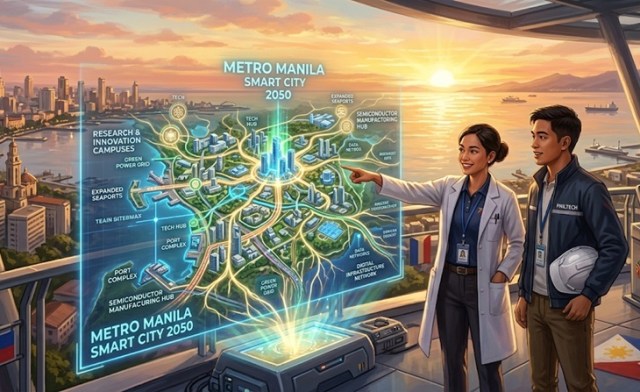
Institution Builders, Merchant Modernizers, and the Missing Layer in Philippine Development
By Karl Garcia
Who Was Thomas Gresham — And Why Does He Matter?
Most people vaguely recognize the term “Gresham’s Law” — the principle commonly summarized as “bad money drives out good.”
Far fewer know the man behind the name.
Thomas Gresham was not a king, philosopher, or military commander. He was a 16th-century English merchant, financier, diplomat, and institutional entrepreneur who operated during a pivotal phase of England’s transition into an emerging commercial power.
At first glance, he appears secondary in history.
He did not invent a scientific theory.
He did not write a foundational philosophical text.
He did not conquer territories.
Yet his influence on England’s long-term development may have been disproportionately large precisely because he helped build the infrastructure that allowed other forms of power to scale.
Gresham served the English Crown under multiple monarchs, particularly during periods when England’s financial system was unstable and underdeveloped relative to continental Europe. He spent extensive time in Antwerp, then one of Europe’s major commercial and financial hubs, where he observed more advanced systems of trade finance, exchange networks, and market coordination.
Instead of treating commerce merely as profit-making, Gresham recognized that markets themselves were institutions.
England at the time lagged behind parts of continental Europe in financial sophistication. Merchant coordination was fragmented. Capital markets were thin. Information moved slowly. Trade lacked centralized infrastructure.
Gresham helped change that.
He played a central role in establishing the Royal Exchange, modeled partly after the bourses of Antwerp. The Royal Exchange created a centralized venue where merchants, financiers, insurers, and traders could coordinate transactions and information more efficiently.
This mattered far beyond commerce.
Financial coordination increases:
- state capacity,
- taxation efficiency,
- investment scaling,
- risk-sharing,
- and eventually industrial expansion.
Modern capitalism requires not only producers and consumers but also systems of trust, pricing, liquidity, and information exchange.
Gresham helped institutionalize those systems.
But his influence extended beyond finance.
Through his endowment of what became Gresham College, he funded public lectures and professorships in fields such as astronomy, geometry, law, medicine, rhetoric, and music.
This was not merely philanthropy.
It represented an early form of knowledge infrastructure.
The significance of Gresham College is often overlooked because its effects were indirect rather than dramatic. Yet it became part of the intellectual ecosystem that later fed into England’s scientific revolution and the eventual emergence of the Royal Society.
Figures associated with Gresham College included thinkers like:
- Robert Hooke,
- and Christopher Wren.
Gresham therefore represents a different category of historical actor:
Not the discoverer.
Not the ruler.
But the enabler.
The builder of systems that allow discoveries, markets, and institutions to compound over generations.
This distinction matters because societies often misunderstand how civilizations actually rise.
History tends to glorify visible peaks:
- great inventors,
- heroic leaders,
- revolutionary moments.
But behind those peaks are usually quieter institutional layers:
- exchanges,
- universities,
- standards,
- legal systems,
- credit mechanisms,
- ports,
- archives,
- scientific networks,
- and educational infrastructure.
Without those systems, talent remains isolated and economic growth remains fragile.
This is why the recent reassessment of Gresham by Marginal Revolution is intellectually important.
The argument is not that Thomas Gresham was more brilliant than England’s scientists or statesmen.
The argument is that:
institutional architecture itself is a form of civilization-building.
And that raises an uncomfortable but necessary question for the Philippines:
Who are our Thomas Greshams?
The answer is complicated because the Philippines historically produced fragments of the Gresham function — but rarely the complete institutional archetype.
The Missing Class in Philippine Development
The Philippines has never lacked intelligence.
It has never lacked entrepreneurs.
It has never lacked talented individuals.
What it has often lacked is a sufficiently large class of actors focused on building durable, compounding institutions beyond family timelines and political cycles.
This distinction matters enormously.
A businessman builds wealth.
A political dynasty builds influence.
A celebrity builds attention.
But a Gresham-type actor builds:
- systems,
- standards,
- coordination mechanisms,
- knowledge infrastructure,
- and institutional continuity.
That is a different developmental layer altogether.
The Philippines often confuses wealth accumulation with institutional construction. They are not the same thing.
A tycoon can become extremely rich while contributing little to national institutional depth.
Conversely, some institution builders may never become iconic public figures at all.
The Philippines Did Produce Partial Greshams
Certain historical actors approximated pieces of the role.
The Educational Layer
University of Santo Tomas and its founder lineage represented an early knowledge infrastructure system within the Spanish colonial order.
Long before the Philippine republic existed, educational institutions created:
- legal elites,
- medical professionals,
- administrators,
- intellectual networks,
- and eventually nationalist thinkers.
Like Gresham’s professorships, these institutions mattered because they created continuity of elite formation.
Civilizations are not built from isolated intelligence.
They are built from repeatable elite production systems.
The Financial Layer
The creation of Bank of the Philippine Islands as Banco Español-Filipino in 1851 introduced a more formalized banking structure into the archipelago.
Again, the importance was not merely “banking.”
It was coordination.
Modern economies require:
- trusted ledgers,
- credit systems,
- liquidity channels,
- financial predictability,
- and mechanisms for scaling transactions beyond kinship networks.
Without these systems, economies remain trapped in fragmentation.
The Corporate-Institutional Layer
Modern Philippine conglomerates — especially Ayala Corporation — arguably came closest to developing long-horizon institutional behavior.
Not because conglomerates are morally superior.
But because some of them learned that surviving for 150 years requires:
- managerial continuity,
- governance systems,
- capital discipline,
- infrastructure thinking,
- and partial insulation from political volatility.
In weak or fragmented states, conglomerates sometimes become substitute institutional coordinators.
This is simultaneously a strength and a danger.
A strength because they provide continuity where the state often cannot.
A danger because excessive dependence on oligarchic institutions can weaken broader democratic institutionalization.
The Core Philippine Problem: Institutional Thinness
The Philippine developmental challenge is not merely corruption, poverty, or infrastructure gaps.
It is institutional thinness.
The country often operates through:
- personalities rather than systems,
- patronage rather than process,
- improvisation rather than institutional continuity.
This creates a paradoxical society:
- highly adaptive people,
- but weak collective coordination.
Filipinos are individually resilient yet institutionally fragile.
That explains why the country repeatedly produces:
- talented professionals,
- globally competitive workers,
- and successful overseas migrants,
while struggling to consistently scale:
- industrial policy,
- research ecosystems,
- transport systems,
- scientific infrastructure,
- and long-term strategic planning.
The issue is not human capital scarcity.
It is coordination scarcity.
The Philippines Needs More Institutional Builders
The modern world increasingly rewards countries capable of building:
- research ecosystems,
- energy systems,
- digital infrastructure,
- logistics coordination,
- industrial finance,
- semiconductor ecosystems,
- and AI-capable educational systems.
Raw talent alone is no longer enough.
A nation may produce brilliant engineers, scientists, and entrepreneurs — but without institutional scaffolding, talent leaks outward instead of compounding domestically.
This is one reason why countries like:
- South Korea,
- Singapore,
- and Taiwan
scaled faster than the Philippines despite facing severe historical disadvantages.
They built denser coordination systems.
The Philippines often generated talent.
Others built the machinery that multiplied it.
The central developmental question for the Philippines may therefore no longer be:
“How do we produce talent?”
But rather:
“How do we build institutions strong enough for talent to compound nationally instead of dissipating globally?”
That is the real lesson of Thomas Gresham.


That pounds the nail on its flat head, precisely. if the Philippines does not have builders who think forward, not backward, and even around corners to discover new ways, it cannot build institutions. Builders must connect things, not just work on one thing.
Interestingly enough, I think President Marcos has quite a lot of build in him, more than I expected. He is featuring Robredo’s work these days, a builder in her little geographic realm. He understands that digitization is going to spark Philippine development, and he doesn’t let trivial rules interfere with what he thinks is important. So he visits Russia, because it is in Philippine interests to do so. DICT is trying to drive digitization. DSWD is trying to get corruption out of building. Defense is piling up capacity like never before. Pax Silica has promise to spark manufacturing. There is a lot of good work going on these days.
Notes.
1) Manufacturing yogurt: https://insiderph.com/lucio-tans-asia-brewery-to-build-p1-b-yogurt-plant-in-laguna
2) Clark is becoming a major airline manufacturing and service center. Here’s another 1,000 jobs there: https://bworldonline.com/corporate/2026/06/24/758737/aircraft-parts-maker-to-invest-p600m-in-clark-expansion/
3) And gambling is big business in the Philippines. PhilWeb runs regulated online gambling platforms: https://bilyonaryo.com/2026/06/24/lance-gokongwei-to-invest-p2-billion-in-philweb-eyes-15-stake/business/
4) And the Philippines has a good sized data center. Waddaya know: https://www.philstar.com/business/2026/06/23/2537068/pldt-taking-data-center-unit-public-files-p24-billion-ipo
Great news about tge Yogurt plant. Yes our manufacturing will be sparked by Pax Silica
Karl, I’ve done an article about the anti-dynasty bill. Would you please publish when feasible? Thanks.
I Will do it tomorrow Morning, Joe.
I will also move the one scheduled for Friday
Thanks Joe.
Terrific. Thanks.
My pleasure.
Thanks Joe and yes we need more builders. Again, I agree that PBBM is a builder.
I believe that Pax Silica counts as Foreign Direct Investment. One obstacle to FDI is the cost of power and energy in the Philippines. Apparently, Pres. Marcos, Jr. and others are working on it….fingers crossed on my side. We have competition for Pax Silica work…we need to work for it, and I don’t mean setting up brothels.
We aren’t exactly breaking any records in our region for attracting FDI.
I believe that Pres. PNoy was a builder, probably much more so than current Pres. Marcos, Jr. Look at what the voters decided after PNoy. We could not stand success, right? hehehe
The Philippines may have never lacked intelligence…but I guess sometimes we just have too much abundance of the opposite.
Aquino was a builder, tens of thousands of classrooms and a lot of bridges and expressways that Duterte took credit for. He had his problems though, Abaya and his trains, but a few AFP ships and a small fleet of small jets, and incidents like Yolanda and Mamasapano that undercut his accomplishments. Mar Roxas had so many anomalies he could not project his capabilities. President Marcos is actually more engaged “in the field” than Aquino was, and has achieved more on defense building, working to digitize the nation, tossing Pogos, and building alliances sealed with agreements. My recommendation a couple of years ago was that he endorse Robredo as his successor, and he seems to be moving that direction. His cabinet people are for the most part seriously engaged, it seems to me. He has not at all been dictatorial and seems to believe doing good work is the best way to rebrand the Marcos name. I see people on social media (yellows, pinks) ticking over to his side, one after another, as they watch. I was among the first to tick over and was labled an apologist. You might get there eventually, lol.
I judge Marcos, Jr. based on Marcos, Jr., not his father. Here is the question: “Did he revise history when he painted the Marcos, Sr. years as the Golden Age of the Philippines during the campaign?” It is as simple as that.
(I know it was the Golden Age for my tennis partner. His family was in construction and they benefited financially from a lot of government contracts awarded to them by Marcos, Sr. Never mind that the country went bankrupt because of Marcos, Sr. To me, it was as simple as that.)
If Marcos, Jr. did revise history, as I believe he did based on what people who have heard him told me, then I don’t trust the fellow. Sorry, but that is just the way I am.
Now here is the funny thing….thanks to AI, I can read up on all the positive things that Marcos, Jr. is doing that at least give the appearance that he is a builder. (Marcos, Sr. was good at giving appearances of “greatness”….until he just could not hide the fact that the country was bankrupt.) But I don’t here much from the people on the street in the Philippines about all these good things Marcos, Jr. is doing…even at TSOH. I don’t know the reason for the disconnect. But I am keeping my eyes and ears open to find out.
BTW, you shared that you have been labeled an apologist for Marcos, Jr. I have been labeled a “hater.” I guess you and I have been victims of labelers, hehehe
We are the opposite ends of the norm, I agree. The Executive Branch is a huge beast of an organization, wide, deep, intricate. No one has a complete grasp of the goings on. President Marcos gets stuck with the results, good or bad. One can follow PNA to understand some of the good, or DDS to understand the bad. One can take quotes from a certain context and apply them to a presidency, it’s just words. What matters? Is the country economically well-off, are more people doing a little better, are protections getting stronger (from China and storms), is the nation respected internationally, are agencies running well? Is the President working hard and earnestly? I was one of those terrified of a Marcos Presidency. Now I see a nation that is sensible, peaceful, respected, and edging upward into prominence, more attached to Japan than the US in many respects. The spoiled son is doing quite all right.
“Now I see a nation that is sensible, peaceful, respected, and edging upward into prominence, more attached to Japan than the US in many respects. The spoiled son is doing quite all right.” – JoeAm
Yes, we are at opposite ends of the norm.
Like I said, I judge Marcos, Jr. based on Marcos, Jr…..not based on his father as some probably think. As a result, when judging his leadership of the country, I am currently watching 4 events: The Maharlika Fund, The PhilHealth fund transfer, the Flood Control Projects scandal, and the fuel/fertilizer crisis created by Trump’s war with Iran.
After all is said and done, let’s hope the country continues doing quite all right. I know that is where we both are in agreement.
That’s like following Mamasapano and Yolanda and judging the whole of Aquino’s presidency on them, ignoring the arbitration win, economy, and international standing. Many did. Exactly why we got Duterte and not Roxas.
“That’s like following Mamasapano and Yolanda and judging the whole of Aquino’s presidency on them, ignoring the arbitration win, economy, and international standing.” – JoeAm
Of course I am not judging Marcos, Jr.’s presidency at this point…but I am forming a judgment of Marcos, Jr. the man. That is why I mentioned his historical revisionism tactic during the campaign. That was before he became president.
I don’t vote in the Philippines. I am not eligible, therefore I can afford to cherry pick what to watch for and I mention those four big areas on which he needs to lead the Filipino people as their president. As with the anti-dynasty bill mentioned in the next topic, I can just wait and see.
The challenge, I believe, is to see what the bad guys don’t want us to see. A consequence of not being able to do that is to elect a Marcos, Jr. instead of a Robredo, a Duterte instead of a Roxas, or as is the case here in the US, a Trump instead of a Harris.
If I may, you are in a way giving an opinion on his governance in some of the topics here. My take.
I wouldn’t be surprised, Karl. I’m a very opinionated person, but on a limited number of topics….and I like listening to the opinions of others and compare notes with my own.
I also try to keep discussions within the context of the subjects of your essays. That is my way of saying that I appreciate the time and effort you have spent on them.
Many thanks
Will Renewable Energy Lower Philippine Electricity Prices?
The Philippine Department of Energy (DOE) argues that a large-scale expansion of renewable energy could substantially reduce electricity costs over the long term. Under scenarios modeled in the Power Development Plan (PDP) 2023–2050, a power system with significantly higher shares of renewable energy produces markedly lower wholesale electricity prices than today’s fuel-dependent system.
According to DOE simulations, average wholesale spot prices could decline dramatically by 2050 under high-renewable scenarios:
These figures represent modeled wholesale market prices rather than final consumer electricity bills. Actual retail rates would still include transmission, distribution, ancillary services, taxes, and other regulated charges. Why DOE Expects Lower Prices 1. Reduced Exposure to Imported Fuel Costs
The Philippines remains heavily dependent on imported coal, oil, and increasingly liquefied natural gas (LNG). Because fuel costs are passed through to consumers, international price shocks quickly translate into higher electricity rates.
The government’s energy transition strategy seeks to reduce this exposure by increasing renewable energy’s share of generation to at least 35 percent by 2030 and 50 percent by 2040. Solar, wind, hydro, and geothermal facilities have high upfront capital costs but minimal fuel costs once operating, making their long-run electricity production less vulnerable to commodity price volatility. 2. A More Diverse Generation Portfolio
The PDP does not rely on solar and wind alone. The DOE’s planning scenarios envision a broader mix that includes:
The objective is to lower system costs while maintaining grid stability as variable renewable generation grows. 3. Market and Grid Reforms
The DOE also expects institutional reforms to contribute to lower costs.
These include:
These measures are intended to improve competition, reduce procurement inefficiencies, and make better use of lower-cost generation resources. Important Caveats
The projected price reductions are not guarantees. They depend on several assumptions:
Moreover, consumers should not interpret projected wholesale prices of ₱0.28–₱0.48/kWh as future electricity bills. Even if generation costs fall substantially, retail electricity rates will continue to include network charges, taxes, and reliability-related costs. The Real Policy Question
The debate is not whether renewable energy can lower generation costs—it often can. The more important question is whether the Philippines can build the transmission lines, storage systems, market institutions, and regulatory capacity needed to translate lower generation costs into lower consumer electricity bills.
In that sense, the challenge is as much institutional as technological. Cheap renewable energy alone does not guarantee cheap electricity. The country must also build the infrastructure and governance systems capable of delivering those savings to consumers.
@CV,
Somewhat related.
The Philippines Is No Longer Expanding—It Is Negotiating Limits By Karl M. Garcia
For decades, Philippine development followed a simple logic: expand outward. Cities spread into agricultural land, industrial estates occupied former open spaces, and infrastructure followed wherever growth appeared. That model worked because the country still possessed slack—unused land, available resources, and room for institutions to operate independently. Today, that slack is disappearing. The Philippines is entering a new phase of development defined not by expansion, but by competition over limits. Land, water, energy, digital infrastructure, and environmental protection increasingly occupy the same finite space. Growth is no longer about finding new areas to develop; it is about deciding which uses take priority. The clearest example is land. Agricultural production now competes directly with housing, logistics hubs, renewable energy projects, industrial zones, data centers, and environmental conservation. What once appeared to be “available land” is now recognized as performing multiple functions simultaneously. Data centers illustrate this shift particularly well. They require not only land, but also reliable electricity, water, cooling systems, and fiber connectivity. Their rise signals a broader reality: development projects are no longer independent. They increasingly compete for the same infrastructure and resources. The same pattern appears in urban infrastructure. The overhead “spaghetti wires” visible across many Philippine cities are not merely an engineering problem. They are the physical manifestation of fragmented governance, where multiple utilities expanded separately without long-term coordination. Digital transformation adds further pressure. As telecommunications networks, cloud services, and AI infrastructure expand, demand for power, connectivity, and urban space grows alongside them. Infrastructure systems that were once planned separately are becoming deeply interconnected. Even urban greenery is part of this convergence. Trees provide cooling, flood mitigation, and environmental benefits, yet they often come into conflict with power and telecommunications lines. Without coordinated planning, infrastructure and environmental goals undermine one another instead of working together. The contrast with cities such as Tokyo, Seoul, and Singapore is instructive. Their success did not emerge primarily from superior technology. It came from institutions capable of coordinating utilities, transportation, land use, and environmental planning over decades. This is ultimately the Philippines’ central development challenge. The country does not primarily suffer from a shortage of infrastructure projects, investment capital, or technological solutions. It suffers from uneven institutional coordination. The challenge is increasingly one of governance rather than engineering. As climate adaptation, energy transition, urbanization, and artificial intelligence converge, previously separate sectors are becoming part of a single constrained system. Agriculture, energy, industry, housing, and digital infrastructure are now competing for the same land, water, and power resources. The Philippines is not running out of development options. It is running into the limits of uncoordinated development. The defining question of the next generation will not be how to grow faster, but how to coordinate competing systems within a finite archipelago. In that environment, the decisive variable is no longer scale. It is institutional coherence under constraint.
Excellent article, Karl. Thanks. The information is useful. Unfortunately, I don’t think any of our builders will pay much attention to it. We are not known for planning in our building, unlike the Americans who hired Daniel Burnham to plan Manila and Baguio City.
I grew up in New Manila, Quezon City. We weren’t one of the wealthy folk that I learned later the district was famous for. We rented a home on the edge. It was brand new when we moved in back in 1957. After a few years, our water pressure became weak. If you wanted to shower in the upstairs, you could not turn on any faucet downstairs else there would not be enough pressure for water to get upstairs. I learned that was because as more homes were added in the area, the main pipes feeding water to us were not enlarged.
When I arrived in the States around 1980, I told my dad about the “slow flow” showerheads they were promoting here to conserve water. My Dad jokingly said that the Philippines is ahead of the US as we have long had “no flow” showerheads.
I heard that Bonifacio Global City is not yet completed yet its roads already cannot handle the volume of traffic.
Karl, I forgot to mention this experience I had. When I got back from a 10 month exchange student experience in Michigan in 1971, I commented to my brother (we were in our teens then) about how crowded Metro Manila was. He said, “Oh no, there is still a lot of space to build up on.”
My reply to him, I recall, was: “You haven’t seen space like I have.” Michigan, which I would say is far from the most beautiful state in the US as I found out much later on, had a lot of open space which I just adored.
So I can understand that it is a matter of perspective.
As Rizal was sailing away from Manila on his first trip to Europe, he made a sketch of the Manila skyline. It is unrecognizable compared to even the Manila of my youth in the 70s. I would say that the Manila of the 1870s in that sketch was “our Eden Lost” to quote the line from the Last Farewell of Rizal’s.
On a final note, however, that sketch of Rizal’s must have included the Intramuros fortress. When the Americans came, they had to drain the moat around Intramuros because it was full of disease carrying bacteria. William Taft almost died from the disease. He had to be sent back to the States to heal and recover. So not all was well in that Eden that Rizal wrote about.
My experience was in 1988 when different school reps tried to convince us to choose them for college, I asked the Dean of Engineering of DLSU about space for engineers to work on, and his answer was like “you aint seen nothin yet” in a polite way.
Karl,
Was the DLSU rep right when he said “you ain’t seen nothin’ yet?” Or maybe you did not stick around to find out?
Yes
I only lasted 4 terms in DLSU and graduated somewhere else
But I did enroll in Engineering in DLSU.
But I made up by completing my MBA in DLSU.
In the first place, what did you expect to see that prompted your question. What did you actually see and how did it meet or exceed your expectations? Sorry, just curious.
In my mind bacj then, I only saw Metro Manila even if I have travelled a bit. In my mind was an urban jungle.
The Dean corrected my judgement or misjudgementlt, he told me that engineers are still needed and there are lot to be built.