Filipino Political Literacy, Middle-Class Agency, and Decades of Self-Assessment
By Karl Garcia
Over the past twenty years, two influential critiques of Philippine society have shaped public conversation:
(1) Richard Heydarian’s 2025 observation that the Filipino middle class is “functionally literate but not politically literate,” and
(2) the earlier discourse from Get Real Philippines (GRP), which framed national underperformance as rooted in cultural habits and civic attitudes.
Looked at together, these perspectives reveal a consistent pattern — not a national doom loop, but a long-standing mismatch between education, civic engagement, and institutional expectations. The challenge is real, but it is also solvable.
I. Understanding the Literacy Paradox
The Philippines has made substantial gains in functional literacy and professional expertise. Yet these advances have not translated into commensurate gains in political engagement or accountability.
This gap is not unique to the Philippines; it is common in societies where economic modernization outpaces institutional reform.
The Filipino middle class was shaped within a political environment that valued stability, accommodation, and upward mobility over dissent or structural change. This historical formation helps explain present patterns without resorting to fatalism.
II. Cultural Frames Without the Drama: Luna, Goyo, Quezon
The themes popularized by both GRP and the Bayaniverse films reflect this tension between idealism and pragmatism:
- Luna symbolizes reformist urgency, often celebrated but rarely emulated.
- Goyo reflects the dangers of political personalization and emotional loyalty.
- Quezon represents the long-standing preference for negotiation and incremental progress.
These archetypes aren’t destiny; they are recurring cognitive frames that help explain why civic mobilization tends to surge episodically but rarely consolidate into lasting institutions.
III. GRP’s Contribution and Limitations
GRP offered sharp critiques that resonated because they articulated frustrations many already sensed: tolerance for shortcuts, fragile public debate, and cyclical political behavior.
But its diagnosis often leaned toward cultural determinism — overemphasizing personal flaws while underplaying structural constraints.
The more productive insight is this: behavior adapts to incentives. When institutions are weak, party systems unstructured, and public information inconsistent, even a well-educated middle class will behave cautiously and individually rather than collectively and politically.
The issue is not national character. It’s institutional design.
IV. The Demand–Supply Gap in Governance
A more accurate and actionable way to describe the situation is as a demand-side governance gap:
- Institutions need pressure to improve.
- Citizens need channels to exert that pressure.
Right now, both are underdeveloped.
The result is not a culture problem, but a participation bottleneck.
Filipinos are not disengaged out of apathy; they often disengage because available pathways feel ineffective or opaque. That’s an opportunity for reform, not a justification for resignation.
V. A Grounded Path Forward
A constructive approach focuses on building competencies, improving incentives, and broadening participation:
1. Strengthen political literacy
Not slogans or partisanship, but understanding of systems, consequences, and institutional logic.
2. Professionalize civic action
Professional associations, industry groups, and local chambers can be powerful sources of accountability if mobilized properly.
3. Expand practical participation channels
Participatory budgeting, local consultative councils, school boards, and citizen audit platforms can convert concern into influence.
4. Normalize constructive criticism
Move public discourse away from moral shaming and toward evidence, design, and long-term thinking.
5. Tie reforms to SDG 16 and ESG principles
These frameworks provide practical roadmaps for improving transparency, justice, and institutional trust.
None of these require cultural transformation. They require predictable rules, clear incentives, and stable civic habits — all achievable with steady investments and political will.
VI. The Combined Insight
The synthesis of Heydarian’s critique and the legacy of GRP yields a clearer, more balanced conclusion:
Filipinos are not politically illiterate because of cultural flaws.
They are politically under-engaged because institutions have not yet invited, rewarded, or sustained deeper participation.
That framing avoids despair, avoids idealism, and focuses on practical levers.
VII. The Productive Mindset Going Forward
The Philippines does not need a reinvention of its national character — it needs refinement of its civic infrastructure.
The middle class is not a failing actor but an underutilized one.
And the country’s self-awareness over the past two decades should be seen not as evidence of decline, but as a foundation for more deliberate reform.
This is not a “woe is us” narrative, nor a rosy one.
It is a realistic assessment: the problems are identifiable, the solutions are implementable, and the potential — while unrealized — is substantial.
Cover photo from Heinrich Böll Stifting blog “Political Developments in the Philippines“.


 The Society of Honor by Joe America
Some links for our reference.
https://opinion.inquirer.net/187371/quezon-heneral-luna-and-the-middle-class
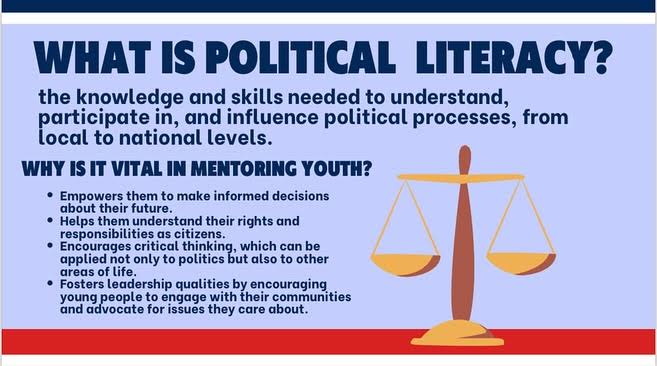
The OECD views political literacy (or civic literacy/digital citizenship) as crucial for strong democracies, focusing on skills to understand, analyze, and participate in political life, especially given declining trust and rising misinformation. They promote civic education to build trust and active citizenship, addressing issues like low voter turnout and polarization through developing critical thinking, media literacy, and digital skills for navigating complex information landscapes, even developing frameworks for financial literacy as part of citizen competence.
Key Themes & OECD Focus Areas:
How OECD Addresses It:
In essence, the OECD sees political literacy as a vital skill set for navigating modern society, crucial for informed decision-making, democratic health, and fostering trust in an increasingly digital and complex world.
a realistic pathway for institutional improvement without demanding cultural change:
Not through sloganeering or partisan mobilization, but through civic education that explains how systems actually function:
How budgets move through agencies
How laws are implemented (or blocked)
How regulatory capture works
What institutional constraints leaders face
How procurement, governance cycles, and accountability chains operate
Political literacy should build a population that can diagnose problems structurally, not morally.
This is the foundation for any meaningful citizen influence.
Civic pressure is most effective when channeled through organized, technically competent bodies:
Local business chambers
Sectoral associations
Unions and worker cooperatives
Scientific and engineering societies
Parent–teacher groups
Environmental watchdogs and professional NGOs
These groups can issue policy briefs, audit processes, engage LGUs, and negotiate reforms far more effectively than loose activism.
This is how democracies convert private expertise into public accountability.
Citizens often care but lack mechanisms to turn concern into influence.
Provide structured entry points:
Participatory budgeting at the barangay and city levels
Local development councils that actually deliberate
School boards with parent/community voting rights
Citizen monitoring platforms for procurement and infrastructure
Feedback loops (not ceremonial consultations) linked to actual policy adjustment
When people see their input convert to outcomes, trust and engagement rise naturally.
The Philippines’ public sphere is often moralistic or personality-focused.
Shift discourse by embedding habits that reward evidence, design thinking, and systems logic:
Critique policies, not identities
Use data visualizations rather than outrage
Shift focus from “who is to blame?” to “what structure failed?”
Incentivize government to publish diagnostics and post-mortems (like aviation or health sectors do)
This creates civic maturity without cultural overhaul—just better norms and incentives.
SDG 16 (Peace, Justice, Strong Institutions) and ESG frameworks provide ready-made, internationally validated templates for:
Transparent budgeting and procurement
Predictable rule of law
Anti-corruption mechanisms
Accessible justice and grievance systems
Inclusive decision-making
Performance metrics for governance
These frameworks depoliticize reform—turning it into compliance, standards, and measurable improvement.
The Unifying Insight
None of these reforms require Filipinos to “change who they are.”
They require:
Predictable rules (institutional stability)
Clear incentives (reward good behavior, penalize abuse)
Stable civic habits (routinized participation)
Professionalized mechanisms (competence + continuity)
These are all achievable through policy design and steady investment, not cultural reinvention.
These are excellent ideas but I am struck by how resistant the culture is to good ideas. The leaders are there for prestige and money, not to lead. The people are unread and vote idiots into office. That is not an insult, it’s a fact. You simply cannot shift the thinking because AI calculates it would be a good idea. Joey thinks change can come from the people. I don’t. Pro-democracy influencers have maybe 100,000 followers on any given platform. DDS have millions. Major mass media pander to Sara like a rock star. She knows how to tweak the masa’s neediness, just like Trump did. She’ll be a six year train wreck. The only hope for the Philippines is if she gets disqualified from running or the stars and moons align to catapult a decent person to popularity. Then that decent person has to work hard and smart on these things and LEAD to cultural transformation.
I am now into thinking that bobotate is a statement of fact rather than an insult.
I dont know why we have to relay so much on the power and monopoly of bobotantes. when there are other things that make up the whole. look at hong kong, they may their own bunch of bobotantes that elected pro china officials, but the way they go after wrong doers is summat commendable. daig tayo. when the housing towers in hong kong burned, killing 160 resident, the hongkongers immediately grab the builders and put them in calaboose! they are likely to face the death penalty. there, problem solved.
rito sa atin, we showboat muna, entertainments galore with inquiry here and inquiry there, plenty drama, giving ample time for wrongdoers to go and hide overseas. if we are to have cultural change, maybe we can as the hongkongers did, and grab wrongdoers before they can do anything, put them in chain and charged them. innocent until proven guilty favor mostly wrongdoers, aside from being so time consuming, they have so many mind boggling palusot!
what is evident, should need no explanation.
What is obvious is in the eyes and ears of the beholder.
ahem, there is a bobotante who’s asking for permission to travel to 17 countries! since bobotante did not turn up at ICI probe, permit to travel should be denied!
only when bobotante attends the probe and declared clear of wrongdoings can bobotante be allowed to travel, else magtatago yan o/s never to return.
Makes sense.
the gap between the abstract and the concrete (and I don’t mean the pavement) is a huge gulf in the Philippines.
some of the cynicism could be because good ideas there often end up like great laws without IRRs, much less actually implemented in reality.
very good ideas can be trap for the unwary! and in these days and age, very good ideas have to scream and fight to be heard as social media is very noisy and full of malaise!
very good ideas are in urgent need of better sales pitch. perception is everything.
funny about greater laws, nice crafting them though, keep senate and congress busy on their toes like they are doing something and have the brains for it. then it fizzle from there. kaming mg grassroots have ways of circumventing great laws. we ignore them and stick to what have been proven to be useful. work for us. too much ado about nothing, them great laws.
IRRs fizzle in areglohan between parties, it is fast pace and quick justice where there is no conviction recorded, and all starts with clean slate. filipinos are very good in areglohan. the bad thing about areglohan is when parties renege, and end up in patayan. though, involved parties can now record agreement on their cell for future reference.
Change always comes from the people, as are not leaders chosen by the people in the first place, even the bad leaders?
Even if the masa’s logic process is upgraded via better education, logic is an unnatural state in the first place for humans, as the natural state is emotionality. To me logic and critical thinking are more like a tool, just like other human-made tools like hammers and other implements; logic and critical thinking is just a mental-based tool. And just like any tool, one needs to be taught how to use the tool. But the base emotionality will always be there and will especially come out when people become more stressed.
The solutions to start fixing things in the Philippines are a lot simpler than let’s say, to fix the US, or UK, or even France and Germany simply because so little exists in the Philippines to begin with compared to an advanced country. There is a huge population of underemployed and unemployed Filipinos. Give them access to decent jobs with decent salaries. The most obvious way, it seems to me, is by attracting factories to be built by foreign investment.
One or two good votes by Filipinos would indeed redirect the nation’s fortunes.
yep, and it is not a stable middle class yet. Neither is it the majority of the population like in North America, Europe or places like Japan, Korea or Taiwan.
I can imagine that participation is often seen as activism and in the Philippines activism has the (wrong) connotation of sedition or rebellion.
A lot of Filipinos probably see what the country’s institutions do as a “rigodon” danced by the elites, a party they are not invited to. And as for civic groups, I wonder if cooperation even works well at the level of homeowner’s associations there, you tell me.
Activism and woke was turned into something bad.
I think our county has produced more elites than it can absorb, and there’s plenty of aspiring elites destined to join the middle class but found the door closing. young, educated, urban and frustrated, the problem may not be with the masses but the jostling of over educated and under employed elites, causing distortions in both market and society. too many elites expected to stand at the top and failing thus, their disappointment become summat a political dynamite. their credentials exceed opportunities. cannot even buy their own homes and may well be in debts. were told diplomas equate prosperity and when it did not, by their unruly large, our country become ideal for toppling. simbako lang!
While it is disappointing that the Filipino middle class did not generate more forward-thinking leaders, I think it a mistake to blame the Duterte phenomenon wholly on the middle class. As I noted previously, ABC combined is a relatively small slice of the population — barely 7%. The Dutertes and Marcoses are in fact only electable via support of the vast D class.
Rather my theory is that political fickleness is a result of economic precarious, or at least the *feeling* of economic precariousness. For the “newly middle class” of social aspirants, it may be the fear of falling back down a rung on the economic ladder. For the D group, it is often a very real, daily lived experience with economic uncertainty. Whether the cause of economic anxiety is real OR perceived, such people seem to gravitate towards whichever politician promises to guarantee stability.
The biggest mistake of left-politics (in which I include the center-left) is the *assumption* that the constituency will make decisions like a surgeon; cold, calculating, aseptic. This is the result of *too much* education and distance from people’s lived realities I suppose where humans are but numbers on a voting receipt, a fraction of a percentage point in a political poll. Humans are emotional creatures; perhaps Filipinos are even more so. Given two candidates, a flawed but charismatic one and a more logical but sterile technocrat, people will probably choose the flawed candidate every time.
To me the starting point in finding the answers is simple. Increase economic stability, opportunity for upward mobility, while creating emergency brakes to have a floor on how far someone can fall in times of personal economic calamity. For a country like the Philippines that is so far behind peers, it will not take much to give people that economic stability they want by which to increase their family’s chances in life. There is already a lack of decent jobs. Indeed there is a lack of enough jobs at all. Changing the environment to allow for more factories that can employ even functionally illiterate Filipinos would be a start, along with revamping the education system so that the next generation of Filipinos are equipped with the prerequisite skills to go beyond a factory or basic service job.
Risa Hontiveros is center left. She is well attuned to people’s needs and articulates programs to address them. But people broadly have a neediness that is hard to understand, simple thinking directed by emotions, like MAGA. Most of us tend to think others think like we do, and feel as we do. But they don’t. And I know of no leader who emerged from being the seventh of 10 kids in a broken home with the breadwinner having a day job. The shortcoming in pro-dem thinking is that being a “good person” will make them popular. No, among the masses, being a bad person is stronger creds.
because bad is seen as decisive while good is seen as wimpy and hesitant, which is exactly how Duterte painted Mar Roxas in one Presidential debate.
even those not in the masses can feel similarly, like when for instance PNP General Torre challenged Duterte’s son to a fistfight and he didn’t show up.
During the time of Quezon, only the literate were allowed to vote, but they liked how he cursed his political rivals with “punyeta” at times.
The culture is what it is, and if Senator Risa unleashes Miriam Santiago like energy, she has a chance of winning the next election.
MLQ3 called Santiago the Mother of Dragons, Risa Hontiveros can develop such capabilities more than Leni Robredo could.
Personally I think the whole “good person will be popular” thinking among the educated Westernized is more of a result of their own insularity. Throughout history, even kings who received the popular epithet of “The Good” rather than “The Great” proved to have prowess not just in military matters, but matters that concerned the wellbeing of the common man. If we really think about it, the type of thinking that expects that people whose only virtue is that they are good will prevail is a recent, rather technocratic worldview that relies on certain rituals of meritocracy. Note, ritual of meritocracy rather than a requirement of actual merit. Unfortunately, politics can often be a knife fight, and those who know how to fight will prevail in most instances. Knowing how to fight does not preclude also being a good person.
That rings true. Insularity is a great descriptor for our natural inclination to see ourselves as the center of the world. A person handy with a political knife can be a good person. There seems to be a knife shortage in the Philippines among pro-democracy citizens.
Under the neoliberal (economic) wave that has washed over Western/Western-adjacent nations in the last 4 decades, officials both elected and appointed act more like corporate penny pinchers wielding abaci. People do feel pinched as technocrats attempt to min-max to squeeze the most profit from the economy as possible and keeping people at a place where they are surviving yet not yet pulling out the pitchforks.
In the last decade of Trumpism and rising global illiberalism I’ve reviewed old political speeches from decades ago again. Those speeches were astounding in the emotional connection to the nation, set clear goals, and gave people the inspiration to be part of a future rather than being another number on a national balance sheet. It has become clear to me that while we need competent technocrats, the role of the technocrat is in the merit-based bureaucracy and to provide advice to leaders who must be decisive. Politics seem to me to be an exercise to putting one’s finger on the pulse of the populace, and technocrats in their clean room style are terrible at decision making. The role of a leader is to gather advice inputs and to make a decision, sometimes snap decisions based on the best available information. Neoliberal technocracy tends to generate policy paper after policy paper, where everything needs to be poll-tested, not to inform a decision, but too often exaggerating the risk until the end result is inaction. Competent and memorable politicians of the past decided based on the best available information at the moment, then course correct as the policy rolled out.
The US is a remarkably technocrat-led nation, which resulted in Trump. American politicians, being so captured by neoliberal technocratic thinking view political advancement as a matter of seniority and merit, where both the center-right and center-left have become a gerontocracy as elected officials wait their turn for what they deem as their right, ultimately flailing when they reach the top when decisiveness is required in a fight against feral but politically attuned opponents. The UK has it even worse, where technocratic inaction has squandered centuries-old British ingenuity. In my estimation a lot of the stagnancy of the Philippines is caused by Filipino politicians after EDSA bandwagoning along with technocratic government. Some might point to the increasingly shiny cities and say “this is improvement,” but I look to the provinces and see only stagnation and hopelessness that has barely changed in the more than 25 years I’ve had the opportunity to see the Philippines.
I wonder as to what extent there was a continuity between the technocrats Marcos Sr. was famous for (“Marcos technocrat” was a term) and 5th Republic technocrats.
I recall a client telling me that a leader’s role is to decide where others don’t dare to decide, and also face the consequences of that decision.
Pre-modern Europe did quite well with often illiterate Kings surrounded by ministers, where the word ministrare literally means to serve.
These ministers were literate and took care of the details while the Kings decided based on their inputs.
In the modern age, decision-makers get one-page summaries as their role is to see the big picture and decide.
There are fewer and fewer literate souls I think. There are souls filled with data and mistaken ideas and precious little other-based thinking and a whole lot of rage, mostly subliminal until someone throws up a target for it. Leaders are short form readers by necessity, the demands are so high. The better their staff, the better they are. So I think today is no different than when kings pranced about in tights. Or was that the jesters? Hard to tell one from the other. Then and now.
I hadn’t thought about which Marcos Technocrats continued on in service in the Fifth Republic, though my guess is that they were not forgiven and faded from public life like Cesar Virata who surprisingly is still alive and kicking. As many of the Marcos Technocrats came from UP, and quite a few were UP professors, the more relevant thread to pull on is probably who did the Marcos Technocrats influence during their time spent within the teaching institutions, similar to how most strands of Filipino far-leftism originated from Joma Sison’s time as a professor at UP and lasted long after Joma went into exile.
On a leader’s role is the decider, yes. Biden getting knifed revealed a lot to those who watch closely. From newsmen who felt slighted they did not get the access they thought they deserved, to celebrities who felt like they did not get honored the way they wanted, to executives who felt inadequately praised for their own sense of genius, to political advisors who felt it their right to be the leader’s puppeteer, all contributed to the mess that resulted in Trump eking out a second win. If all the above wanted to be the director of policy, they should’ve run for president, rather than being so full of themselves to think themselves *higher* than the elected leader, then backstabbing when they felt slighted.
Well in pre-modern society, advisors who thought themselves better than the potentate often got their heads chopped off, so they knew better than to overextend their hand in palace intrigue. Perhaps we in the West are too civilized and polite nowadays.
Even the best advisors are usually specialized into niches. A leader needs to be able to see the big picture and a vision of what can be, which is a difficult task for specialists. Problems arise when specialists end up thinking they know everything, and demand to be listened to rather than offering honest advice to become inputs for action.
Neoliberal technocrats seem to me to be a good thing. Presidents Obama and Biden had the economy righted and sound, generating jobs galore. Corporations ran as they always have, for profits within regulations. Two flaws were placed in the system, one by the Supreme Court allowing unrestrained corporate giving to PACs and the second the Gingrich Republican poisoning of partisan politics, striding right alongside the development of social media and the ability to plant and raise rage.
Add to that that people in a nationalistic sense have nothing to pursue, nothing left to achieve. The wars grew weary, everyone had a home and a car and playgrounds, but there was something missing. Ah, lets throw out the immigrants then! Let’s have something to rage against!
A peaceful life seems directionless to those who don’t read and are unable to pursue intellectual and spiritual and even physical growth as fulfillment.
America became a land of too many empty unread souls, easy to rage bait and lie to with grand conspiracy theories as fact.
Biden was more in a classical progressive mold; he was shanked by the neoliberals in the party precisely because he was too progressive at the same time he was accused of being out of touch. They intended to replace Biden with a pro-corporate technocrat, which would’ve brought us back to the original problem. Obama was good overall, but he was held back considerably by the same group of neoliberals who later knifed Biden. Either way, technocrats have a place and that is as one of many advisors whose advice should be considered but never expected to be followed up upon. In my view it is the job of the leader to weigh advice and go with the best information. If those technocrats want to control policy, they should run for president instead. This strain of technocratic neoliberalism is what allowed Gingrich to latch onto back in the 1990s (though all Gingrich really just did was to make crazy Buchanan’s ideas more palatable to habitual Republicans and moderates). If one looks back to the glory of the original Progressive Movement, New Dealers through Great Society, leaders really spoke to the people. Since then the balance of power has gone to pro-corporatism, which does not care whether a politician is neoliberal or Trumpist. Corporations have used this power to steer subsidies their way, creating socialism for the rich and laissez faire capitalism for everyone else. Good for people like me, and for you whose career spanned before mine, but bad for most everyone else. I’m interested in how to bring the greatest good to the most people. The only reason I’ve really been insulated from economic stress is having luck to have more opportunities arise for myself than others have got, but the Millennial generation as a whole has been under economic hardship their entire working lives, which is now continuing into Generation Z. I just don’t think the neoliberal technocratic system of maximizing profits over people’s material needs is sustainable, and either it is fixed or people will continue to turn to the next Trump or next Duterte.
I struggle with painting even MAGA or DDS as being deficient somehow for not having time to read or pursue personal growth whether that is intellectual, spiritual or otherwise. People simply are exhausted after working and barely surviving, in both the US and in the Philippines. The rise of illiberalism in the UK, France and Germany follow the same lines. People whose material needs and a sense of “having a future” barely exist do not have time for high minded ideas like “liberalism.” If we are to go by what the American Founders intended of having the right to “property, self-reliance and general welfare,” what they meant was a system wherein people had opportunity (which in those days was land), independent in their basic needs, while ensuring those who fell through the cracks got the help they needed to get back on their feet. This has been lost since before the second Reagan administration in the US. People can only endure so much before they go insane and lash out and become irrational. The US is actually not that bad, even now under Trump 2.0. Even now the U.S.S. America is starting to right herself of her list. The Philippines is probably in a much more precarious situation, which worries me.
When they turn to the next strongman, they punish themselves. They ought to turn to reading and the ability to discern fact from fiction, then exercise their voices and votes. If people are exhausted (by what others do), they should recalibrate their own lives. If they are fat, exercise. The Philippines is a vibrant, active, (corrupt) democracy. People are unread, exhausted, emotional, and engaged in unhealthy practices, as are Americans. It’s a movie and we are the extras in it. That vision is courtesy of Laker center Deandre Ayton, a poet in shorts.
Well you and I despite whatever our own personal difficulties were, have had lives that were blessed with a measure of luck and opportunity. You had the additional advantage of the GI Bill which you rightly earned; I was too stupid as a young man to take up the same opportunity and didn’t go into the service when I had a chance. However I think it important to recognize that for the vast majority of people both in the US and the Philippines the same level of luck and opportunity doesn’t exist, or if it does exist no one had guided them towards that opportunity. Speaking from personal experience if I had not been so fortunate to meet certain mentors and helpers at crucial moments of my formative years, I probably would’ve ended up just like those people who do not have time to read and learn because they are stuck in the economic rat race and barely surviving.
Learning requires a degree of leisure time. The European Enlightenment, Islamic Golden Age, Greek Classical Age, East Asian golden ages under various Chinese, Khmer, Mongol, Vietnamese rulers all had one thing in common — times of relative peace paired with rapid economic development that allowed people to sit around and ponder things in the areas of philosophy, technological invention, or just simply pure imagination to create new stories.
The UK has been terrible economically for a long time. Even 20 years ago I had more than a few British friends who graduated from college yet worked as cashiers at Tesco (grocery store chain). I laughed at offers UK-based companies gave me and demanded an “American rate.” Most of those British friends are still in dire economic straits; most cannot survive unless they have access to a “council house” housing arrangement. The entire UK economy literally centers around the City of London (not London the City) and hardly anything else.
The economic shrinkage of the American middle class has been on going since the late 1970s, and was precisely what allowed Gingrich to push his agenda back in the 1990s. The middle class shrinkage only accelerated after the 2008 financial crash, after which I knew of colleagues who went to prison for financial fraud (I was in the financial sector at lead up to 2008). Things just never got fully fixed. You might be shocked how many die hard MAGA were actually originally hopeful Obama voters; nearly all MAGAs I know were fervently hopeful in Obama fixing things but he was held back by the neoliberal corporatists. The same political operatives who puppeteer milquetoast politicians of both sides and stabbed Biden in the back last year. Most Americans are in fact barely surviving economically. Over half of the US GDP increase this year is controlled by 7 megacorporations pursuing the fantasy of AI super-intelligence.
In the Philippines outside of the shiny new developments in the major cities (which I refer to in slightly mocking terms), I have barely seen any improvement in the “bukid” in my entire time visiting the Philippines over many years. When one sees someone, or a thing, everyday one may not see the change or lack of change. When one observes and compares a snapshot over time with each visit, change or lack of change is more apparent. The only real change I’ve seen in the provinces is that now people have access to smartphones and mobile Internet, by which they spend all their time on social media or consuming vapid drama shows. Yes, these unemployed and underemployed people are technically are “free” in that they don’t have work, but they do not have “free time” as they spend their idle time being in a constant state of anxiety of how to survive until the next week, even the next days at times. Not really a state conducive to “leisure time” in the sense that leisure is when one is free of worry and can engage in pleasure activities, activities which include learning. I’d argue that one would have more leisure time if one has a decent, dignified job that covers their material needs and allows time leftover for pleasure activities. Something that’s totally missing in most parts of the Philippines outside of the city, and often even lacks within the city.
That’s about right, the way opportunities unfold through fate mentors and the root advantage of being pragmatically and innovatively smart. And typing fast, lol. My GI bill went immediately into a Ford Maverick, about $2,800 if I recal correctly, to get me from Colorado th California, and exactly 16 months of getting by. I was down to $120 when I moved in with my girlfriend, soon to be wife, who put me through USC for a master’s degree where I met the guy who hired me for a wonderful career in banking. Fate smiled.
As for the Philippines being stuck unchanged in the poorer provinces, I muse that American suburbs are strikingly the same as in the ’50s but the houses are bigger, and I wonder what changed provincial living would look like, and if I would like it changed. The homes would be bigger and made of hollowblocks, the mountains would be torn down for subdivisions, and businesses would be bigger because you’d need space for cars. Families would be smaller and kids would no longer support their parents and the whole social fabric would change. Change means change.
Oh jeez, the original Ford Maverick. That was my dad’s first car, and it was a POS. I recall when my godfather who was visiting from UC Berkeley on his summer break took me in the old Maverick out for a jaunt and as he rounded a left-hand turn at the light the passenger door just fell off its joints with toddler me nearly tumbling out as my godfather smoothly reached over and yanked me back into the car by my shirt collar lol.
Unfortunately higher education in the US is extremely competitive and very expensive now. Loans required to attend a decent university is equivalent to a mortgage on a condo, impossible for most people to repay. That is if they can even get admitted into college. Suburban American homes are bigger than the 1950s yes, but that is only because those 1950s homes were small starter homes for GIs. Even a 1950s vintage home (I own a few for rent) cost $800,000 to $1 million nowadays. My late neighbor the Navy sailor once told me he bought his home for $15,000 back in 1958. When he passed it sold for $750,000. He was able to support his 8 kids on a single income, with a bit of difficulty yes due to the number of children, but it was doable. Nowadays two-income American families can barely survive on $120,000 combined incomes. I hate to think how families that earn $60,000 or less manage. People don’t know where to turn to, so they swing from Trump to far-left communists masquerading as “democratic socialists.”
There are actually more similarities between the US and the Philippines than most realize. The two countries are intertwined, for better or for worse. The main difference is the US has mechanisms to right herself, eventually. It has been done many times before. I worry the Philippines would not be able to deal with long term damage with another Duterte administration.
Ha, the Maverick was a cheap piece of junk. Glad you survived. I traded mine in on a Honda Civic, one of those short stubby newbies to the US that got 40 miles to the gallon in the early 70s. I’ve owned Hondas ever since.
The US has become an economic monster eating her children.
A Duterte presidency would transfer the Philippines to China’s effective control, the US would get booted out, and the nation would remain the same, that is, senseless and poor. My guess.
The “American Dream” has been slowly chipped away by neoliberal policy that favors big capital rather than petite capital. It is still a fact that the most innovation and business creation happens at the “petite” level in small businesses. But even with the massive regression the average American still has more opportunity and a better future than the average Filipino. The images and videos you see online and media are mostly highly curated propaganda videos put out by the regime and are not reflective of reality; a reality that is worse and not great for sure, but far from “America is done for” that people love to talk about online. After all, there are seldom any American economic migrants who need to make their way to other countries. Even with Trump’s draconian immigration crackdowns, immigrants are still braving the border every day to find their own American Dream. That can’t be said about the Philippines.
The Philippines does not have jobs for immigrants but it has girls, beaches, and cheap living, so it gets a different type of immigrant. Nor does it have masked goons profiling people by race, separating families, and running internment camps with horrid treatment of people denied due process. The US is a mess. There is no platform there from which to scorn other nations.
While the situation in the US is not great, it is also far from what is portrayed in the media and social media. For most Americans and residents legal or otherwise, life goes on. The main impact is to personal and family economics.
I am highly discerning of what I read and see, and much of what is promoted in algorithmic feeds and reported by the media are exactly the highly curated, manufactured, and fake narrative the various power centers within the Trump administration want Americans and foreigners to believe is true. It is a performative display of power by those who lack power and mandate. Does Trump have fascistic tendencies? Do his lackeys like Miller, Vought, Noem and Bovino act fascistically? The answer to both is yes. But the US is far from gone and it is far from fascism. It is impossible to completely break the professional bureaucracy of loyal civil servants who are throwing sand in the gears everyday. Project 2025 has already failed. To be of the mind that the US is somehow lost is a position of weakness and defeatism and plays directly into the hands of this administration that is in fact a weak and flailing administration whose base is in the process of imploding. And that is no way to fight back to retake a democracy Americans and the world which depends on the US deserves. I still stand by my assertion that on the worst day, the US is still more put together than the Philippines ever was and probably won’t be for quite some time. As I said, even now there are immigrants trying to get into the country legally or illegally, which cannot be said about the Philippines where the goal of many is to escape their economic stagnation. To think otherwise would be like the Germans giving up to the AfD or the French giving up to FN.
The Philippines is poor the US rich. What’s the point of the comparison but to denigrate the Philippines and Filipinos? The US is a mess. Ask Canadians, Europeans, Greenlanders, South Americans, probably China, Australia, black countries, brown countries . . .. Of course the wealth sector in the US is doing well, That’s the policies. Ask farmers.
Well I talked to plenty of Europeans on my trip. Nearly all were able to differentiate from the American People and a small group that just happens to presently run the American Federal Government. Which is the prevalent view of most non-Americans by the way.
Not sure why you always think I denigrate the Philippines. No where, no comment have I never denigrated or looked down on the Philippines. You often compare the Philippines to the US in a positive light; while I compare to illustrate ways the Philippines can do better by following established examples elsewhere that are sometimes American examples but sometimes are not. Love and appreciation for someone or something or somewhere need not extend to treating it with kid gloves and constant reassurance which does not build internal fortitude which is a requirement for success. Tough love works.
Tough love is nonsense devoid of appreciation and solutions. I stay away from foreigners here because they relentlessly hold that their standards and achievements are better and Filipinos are stupid for not achieving them. They weren’t raised the 8th of 10 kids on a shack on a hillside born of a father they never knew and attending a school that gave them the tough without the love. They didn’t live in a country where competence was offensive and cheating admired. They were pampered and schooled in everything except respect for people who were given different circumstances and rules than they got. I tire of tough love that seems to miss the love part, where love is compassion and help.
That’s great for those foreigners who got to have an upbringing of such privilege where they can lord their feelings of superiority over others. I had not experienced any of that as I grew up in poverty, without enough food, living in a house shared with 3 families and more than two dozen people, later in a cheap rental whose previous occupant’s dead corpse’s fluids still stained the floor of my room, and had to struggle my own way through to college. You see, just like the poor provincial, my family also squatted the empty lot nearby in the blighted part of the outer city and grew the same vegetables a Filipino grows because we didn’t have food. Upo, ampalaya, pechay, kamote, gourd, okra, kangkong, patola, kalabasa, kamatis, pepino. When people stole our veggies or the moles got it in the middle of the night, I had to eat the same rice with vegetable oil that desperately poor Filipino children eat. Many days as a child I did not have protein if we were unsuccessful at fishing something off of the pier. I pitied Filipino children who have school clothes full of holes, because I experienced the same in elementary. So I assure you I understand the plight of the poor Filipino more than most. I dislike being compared to the people you resent. When I’m in the Philippines I visit directly with the poor, never the privileged, certainly not the rich. I offer no money, no disdain, only friendship and perhaps advice if they want it. I do not understand why you take such offense to my frank but measured view of things, which are grounded in experience with ordinary Filipinos and a sincere desire for the Philippines to succeed. Making excuses as you have written above allows no one succeed and is one of the root problems that holds back the Filipino in the first place. I held myself to no excuses in my own life, paid for my own mistakes and forced my way ahead regardless, while those who were born with a silver spoon in their mouths yet were full of excuses often failed. If my commentary which is bound by reality is unwanted here, it would be best for me to take my leave. I have no desire to be a punching bag. There are other ways that I had long engaged in that I can help the Philippines, touched by my own hands that produced real results for the people I was fortunate to be able to give that help to.
you do recognize – unlike GRP – that some people need to be given a stairs or at least a ladder (for instance via manufacturing jobs) because not everyone is Spiderman, and that there are rules by which one can succeed, and bad habits to avoid as they lead to failure.
Between the spectrum of the old Filipino patronage mindset (which even in its liberal form does not believe there is a way up for the poor, it’s just nicer about it) and the GRP mindset of wanting to kick the poor into shape (which does not build their confidence, just makes the ones kicking feel superior), there are approaches like yours, Angat Buhay and other “helping people help themselves” approaches that empower people and help build confidence.
I also believe it important to know when to cut losses when it comes to trying to help others yet leave the door of opportunity open and seen. Energy and time are limited, and focus should be on those who are ready to be helped now. Some people are not ready to be helped yet; some may take longer to come around. A few will never be able to be helped as all as they are essentially leeches that expect everything to be given to them, but I do not agree with the stuck-up attitude of some economically higher Filipinos that even those incalcitrant people should be left out to die or something. They can get basic welfare, with the door of opportunity provided to their children.
But the other problem is there are too few doors of opportunity in the Philippines, at least ones that are apparent. Government of all levels from national to local often seem to take a very hands-off approach, eager to accept credit for success but otherwise waiting for private individuals, NGOs, or companies to take initiative. One of government’s main responsibilities is to create frameworks and incentives for people to reach their full potential. That is just not done in the Philippines. The vast majority improvements I’ve seen since my first visit in 1998 are mostly concentrated in the cities, especially Manila. It’s as if everyone else in the Philippines is slightly out of the picture, unseen, no attention given to them. Furthest away provinces are essentially thrown a bone. The “Real Philippines” as opposed to GRP’s headline.
On intestinal and Test*cular fortitude.
Hitting the former a hundred times a day would work for boxers but hitting the latter once is very painful.
I am more leaning of ficklesnes even on surveys that ask if they consider themselves poor or otherwise. Every quarter the fickleness shows.
According to recent surveys by the Social Weather Stations (SWS), the percentage of Filipino families who rate themselves as “poor” has fluctuated throughout 2024 and 2025, but generally remains around half of the population.
Key Findings (2024-2025)
The government has acknowledged the SWS data as a subjective indicator of well-being and highlighted its efforts to improve living conditions, citing official data from the Philippine Statistics Authority (PSA) that shows a decline in income-based poverty incidence.
If population growth moderates, as it has recently, the nation’s steady economic growth should enable a slow improvement in people’s richness. Things that could be done to accelerate this (restraints on foreign investment) are politically difficult to do. There is a lot of money in the poor Philippines.
Why Good Ideas Struggle in the Philippines: The Gulf Between Thought and Action
One of the most striking features of Philippine political culture is the persistent resistance to good ideas. Reformers, technocrats, and idealists often find themselves bewildered: Why do proposals that are sensible, evidence-based, and beneficial to the public routinely get ignored, distorted, or left to die? Why does cynicism seem to triumph over reason? The answer lies not in any intrinsic flaw in Filipino character, but in a deep structural gap between the abstract and the concrete, between the realm of ideas and the realm of actual implementation.
The Philippines is a society that excels in talk, aspiration, and principle. It produces eloquent speeches, progressive laws, thoughtful frameworks, and ambitious development plans. Filipinos are not short on imagination or strategic thinking. What is missing is the institutional machinery that can turn ideas into reality with consistency. Reforms often follow the same tragic arc: a good concept becomes a good law, the law waits for an Implementing Rules and Regulations (IRR) that arrives late or never, and even when the IRR exists, the budget is insufficient, the bureaucracy is weak, and the political will is fragmented. What should have been a genuine reform becomes another symbolic victory, celebrated on paper but hollow in practice.
This repeated failure to operationalize good ideas has produced a deeply conditioned cynicism among the public. It is not that Filipinos do not want progress; it is that they have repeatedly watched progress fall apart. When promises routinely evaporate and laws are passed without enforcement, people learn to distrust abstractions. They begin to value leaders who project decisiveness rather than competence, toughness rather than integrity. In such an environment, the “strongman” archetype is not an accident; it is a survival response. If systems do not deliver order, the public looks for individuals who appear capable of imposing it. If ideas have no track record of becoming real, people will instinctively choose personalities over programs.
This is how the failure of institutions becomes misinterpreted as the failure of “culture.” The problem is not that Filipinos are allergic to good ideas, but that the system has not rewarded rationality or long-term thinking. Reformists are sidelined because the bureaucracy is politicized. Technocrats are overridden because technical decisions are seen as secondary to political patronage. Honest officials are isolated because impunity is normalized. The culture adapts to these realities, developing low expectations of government and high tolerance for shortcuts.
Over time, this creates a society where new ideas are met with skepticism, not because people are ignorant, but because history has taught them that nothing changes. When good ideas collapse in practice, the lesson absorbed is simple: “ideas don’t matter here.” The distance between vision and execution becomes so wide that abstractions lose credibility. Even well-meaning leaders are judged not by their principles but by their perceived ability to “get things done,” regardless of method.
Yet this cycle is not irreversible. Countries once trapped in similar patterns—Indonesia after Suharto, Vietnam after the Đổi Mới reforms, even Georgia in the early 2000s—transformed not by preaching better values, but by building better systems. When small, concrete institutional wins accumulate—permits processed in days instead of months, transparent procurement that consistently delivers, public services that function without bribes—public expectations shift. Cynicism begins to recede. People slowly learn that things can, in fact, work.
For the Philippines, the path forward lies not in demanding moral heroism from leaders or behavior change from citizens, but in creating reliable institutional channels through which good ideas can survive contact with reality. When implementation becomes predictable, trust follows. When trust grows, good ideas finally gain oxygen. The cultural resistance dissolves not because culture changes first, but because reality does.
Ultimately, the Philippine problem is not too few ideas, but too little machinery to make them real. The challenge of our time is to close that gulf—to build a society where good ideas do not remain trapped in paper and rhetoric, but are translated into concrete outcomes that people can see, touch, and rely on. Only then will cynicism lose its logic, and hope regain its force.
That’s true. The intermediary between idea and successful action is the plan and Filipinos are lousy at it. The Japanese are very good at it. A lot of corporations are very good at it. Philippine government (NEDA) has an overdeveloped plan, glossy, detailed, and cool, but a monster to implement.
**Why “Bad” Beats “Good” in Philippine Politics:
Cultural Logic, Historical Patterns, and the Future of Reformist Leadership**
In the Philippines, political success has never been solely about virtue, competence, or technocratic credentials. Instead, it is shaped by a deeper cultural logic in which perceived toughness outweighs moral goodness, and where decisiveness—even when rooted in cruelty or crudeness—is interpreted as strength. This pattern is not confined to the masses nor to the uneducated. It runs through the veins of Filipino political psychology itself, across social classes, historical eras, and changing political landscapes.
At the heart of this dynamic lies a simple but powerful truth: Filipinos do not look for a “good” leader—they look for a protector. And in a country where institutions are weak, protection is judged by the leader’s performance of strength, not their ethical record.
I. The Cultural Preference for “Strength” Over “Goodness”
In societies with fragile institutions, leadership becomes personalistic. Leaders are not seen as temporary managers of a functioning system but as the system itself. Thus, citizens gravitate toward figures who embody:
Matapang (bravery)
Palaban (fight-ready)
Astig (tough)
May angas (assertive swagger)
Hindi nagpapasindak (unintimidated)
These traits are equated with reliability and capability. Goodness, by contrast—especially when expressed as politeness, restraint, and proceduralism—can look weak. This explains why Rodrigo Duterte’s crude language felt “strong” while Mar Roxas’ competence looked “soft,” and why even Gen Z voters today still respond to “alpha dominance” performances.
These traits are not exclusively admired by the urban poor. Even the educated middle class responds to shows of strength, whether in the form of bravado, rhetorical aggression, or public shaming of opponents. The archetype of the “barumbado but protective” leader is deeply familiar in Filipino households, barangays, and films. Philippine political culture simply elevates this archetype to the national stage.
II. Historical Continuity: From Quezon to Duterte
History reinforces that this phenomenon is not new. During the Commonwealth era, voting was restricted to the literate—a more “educated” electorate by modern standards. Yet even then, Manuel L. Quezon’s willingness to curse his rivals with “punyeta” won admiration. It was a performance of power, a signal that he could dominate the political arena.
This is the same logic that made Ramon Magsaysay appealing as a heroic father figure, that allowed Joseph Estrada’s macho film persona to translate into electoral success, and that gave Duterte his aura of ruthless decisiveness.
Even isolated incidents, such as PNP General Torre challenging Paolo Duterte to a fistfight, are interpreted through this lens. Torre gained public respect not for policy expertise but for asserting dominance. Paolo lost points not for immorality but for backing down. The spectacle of toughness matters as much as, if not more than, the substance of governance.
III. The Miriam Santiago Archetype: Goodness with Teeth
One figure stands out as a successful hybrid: Miriam Defensor Santiago.
She fused:
moral righteousness
intellectual superiority
savage wit
volcanic anger
fearless confrontation
Unlike the prototypical strongman, her power was rooted in intellect and ethics, yet projected through unfiltered ferocity. Her Senate tirades felt like justice delivered in real time. This made her the rare figure who satisfied both the desire for virtue and the hunger for dominance.
This “fierce good” archetype is one of the few viable pathways for reformist leadership in the Philippines.
IV. Why Risa Hontiveros Has a Chance Where Leni Robredo Does Not
Within the current political landscape, Senator Risa Hontiveros is uniquely positioned to inherit the Santiago mantle. Unlike Leni Robredo—whose persona is grounded in quiet decency, maternal empathy, and principled restraint—Risa has the latent ability to project controlled fury, sharp wit, and moral indignation without undermining her credibility.
The public already recognizes her as principled. What she has yet to fully weaponize is her capacity for:
incisive banter
righteous anger
cutting humor
rapid intellectual counterpunches
If she were to release her inner “Mother of Dragons,” as MLQ3 once characterized Santiago, she could embody a modern reformist archetype that Filipinos instinctively respect:
the dragon of justice, not the dove of reason.
This is not about abandoning goodness but about performing strength, because in the Filipino imagination, goodness is only respected when it is fearsome.
V. The Path Forward: Reformism Must Evolve
If reformist candidates continue to present themselves as gentle technocrats, they will continue to be overpowered by candidates who project dominance regardless of their moral character.
The culture is what it is—shaped by pre-modern expectations of leadership, reinforced by decades of institutional fragility, and expressed through a deeply emotional political psychology. Until the institutional landscape dramatically changes, leadership must speak the cultural language of the electorate.
This does not mean becoming immoral.
It means becoming fierce.
The future of reform in the Philippines will not be led by saints.
It will be led by good dragons—leaders who can blend integrity with fire, compassion with strength, and competence with the courage to confront power head-on.
Senator Risa Hontiveros, if she chooses this evolution, could be such a figure.
And it is precisely this fusion—of goodness with ferocity—that might finally allow reformist politics to break through a culture that has long admired strength above all else.
“Strength over goodness”. Three words that define Filipino voting choices. Attaching ferocity to Senator Hontiveros is essential, if she is the top pro-democracy candidate. Right now, Sara Duterte is viewed as strong, even though she is morally, ethically, and politically weak. Maybe good trolls should make that their counter-theme.
How Leni Robredo Can Succeed Without Changing Her Character
The recurring criticism against Leni Robredo is that she is “too good” for Philippine politics—too polite, too honest, too straight, too unwilling to fight dirty. In a political culture shaped by precarity, misinformation, and emotional decision-making, many assume that moral decency is a weakness. They conclude that unless she transforms her personality—becoming harsher, more aggressive, more authoritarian—she will never win.
But this assumption rests on a mistaken premise. Leni does not need to change her character. She needs to change her method. The problem is not her goodness; it is how goodness has been framed in a society conditioned by insecurity, political illiteracy, and the cultural normalization of strongman tropes.
The challenge for any reformist leader in the Philippines is that democratic institutions are fragile, voters feel economically vulnerable, and political literacy is uneven. In such a context, people rely on emotional signals instead of institutional logic. They gravitate toward leaders who project strength, decisiveness, and personal protection—even if these leaders are corrupt or incompetent. This is not the fault of the poor. It is the predictable consequence of a state that has failed to provide stability, education, consistent justice, or reliable welfare.
Political illiteracy does not make voters stupid; it makes them defensive, anxious, and survival-oriented. When life is uncertain, emotional logic takes precedence. When institutions fail them, individuals search for heroes, not technocrats. In this landscape, the moral and technocratic brand that Leni embodied in 2022 was interpreted not as competence, but as distance—as if she was good but not forceful enough to protect them in a crisis.
Yet this does not mean that integrity is doomed. It means that integrity must be translated into a language the public understands: the language of strength, care, and everyday survival.
What Leni needs is not a personality transplant but a recalibration of political style. Her decency must be anchored to a more assertive, resonant narrative—one that frames honesty not as moral purity but as “tibay,” strength, and unwavering service. Filipinos do not dislike honest leaders; they dislike leaders who seem passive, abstract, or disconnected from the grit of daily life.
To succeed, Leni must project courage, not just kindness. She must show that clean governance is not the opposite of strength but a different kind of strength—one that fights for people rather than against them. She must embrace emotional storytelling, tie reformism to material benefits, and communicate in a way that speaks to aspiration, insecurity, and identity. This is not manipulation. This is culturally intelligent leadership.
Moreover, the moral leader cannot rely on moral appeal alone. She needs infrastructure: sustained grassroots presence, barangay-level organizers, community-based welfare networks, and local alliances independent of traditional political brokers. Her 2022 campaign proved she could inspire a movement, but inspiration alone cannot substitute for machinery, familiarity, and everyday visibility in the lives of the poor. Integrity without organization cannot defeat entrenched patronage.
The true path to reform is not to lecture voters, but to walk with them. Not to fix the people, but to meet people where they are. Not to shame political illiteracy, but to design politics that respects emotional realities while gradually elevating civic understanding.
Leni can succeed—without shouting, without cursing, without abandoning who she is—if she embraces a leadership method that combines moral clarity with assertiveness, compassionate storytelling, and grassroots institution-building. The burden is not to become someone she is not. The burden is to translate her character into political language that resonates with a society navigating fear, hope, and the constant struggle to survive.
In the end, character is non-negotiable. Method is flexible. And success in Philippine politics has never required leaders to be cruel—it has required them to be understood as strong.
Leni can win. But she must win as herself—simply expressed through a more culturally attuned, emotionally grounded, and strategically organized form of leadership.
I think Pinks should shift to Hontiveros. I no longer consider Robredo a presidential prospect. She does not hunger for the job and that makes her weak. Filipino voters hate weak.
Why the Philippine Public Is Apathetic, Skeptical, and Cynical Toward Good Ideas
A Cultural, Historical, and Psychological Essay
The Philippines is not a country lacking ideas. It is not short of reform proposals, development visions, policy blueprints, or well-intentioned leaders. What it lacks is belief—belief that good ideas matter, belief that institutions will follow through, and belief that citizens themselves have the power to demand excellence. This disbelief then hardens into something deeper: apathy, skepticism, and eventually cynicism.
To understand this phenomenon is to understand the emotional and historical landscape the Filipino lives in.
I. The Long Shadow of Promises: Why Good Ideas Don’t Feel Real
Filipinos have been raised on a diet of unfulfilled promises.
Our history is a sequence of “magagandang plano” that never moved beyond rhetoric:
Land reform promised since Quezon
Clean government promised after EDSA
Anti-dynasty provisions written into the Constitution but never implemented
“Build, Build, Build” followed by empty lots
Great laws passed but no IRR
Announcements celebrated, execution forgotten
When a nation experiences this pattern for generations, people learn a painful psychological lesson:
Over time, this trains society to treat any new reform, however well-designed, as just the latest episode of a long-running soap opera of disappointment.
This is not stupidity; it is trauma.
II. Colonial Hangovers: Obedience Without Ownership
300 years of Spanish rule and 50 years of American rule built a culture where people were taught to:
obey
wait for orders
avoid rocking the boat
defer expertise to an outsider
Thus, when good ideas appear, the instinct is not to own them. Filipinos often believe:
This colonial hangover manifests as fatalism—a belief that good governance is something other countries enjoy, but Filipinos must simply endure whatever arises.
III. The Abstract–Concrete Gap: Ideas vs. Lived Reality
Filipinos are adaptive, improvisational, highly practical. But this creates a strange psychological split:
Abstract ideas feel irrelevant
Concrete, immediate actions command respect
This is why:
A traffic plan is mocked, but a traffic enforcer berating a violator is cheered.
A development roadmap is ignored, but a mayor giving ayuda personally is praised.
Reformers who speak of institutions seem “elitist,” while strongmen who act decisively seem “tunay.”
The foreign observer is confused—but the Filipino simply equates behavior they can see and touch with authenticity.
Ideas? Those are theoretical. And theory, in the Philippine context, has often meant lies.
IV. Cultural Inversions: When Goodness Feels Weak and Toughness Feels True
Filipino political culture contains a disturbing inversion:
“Good” is often perceived as naïve or weak.
“Bad” is often perceived as strong, decisive, or real.
This is why “matapang,” “pasaway,” and “palaban” leaders gain credibility. Meanwhile:
earnest reformers seem plastic
intelligent technocrats seem cold
honest leaders seem boring
kind leaders seem wimpy
This inversion is reinforced by media, by everyday hardship, and by a culture that has equated hardship with the need for a tough savior.
Thus, when someone presents a good idea, the instinctive reaction is:
V. Economic Precarity: The Root of Political Fickleness
A significant share of Filipinos live one medical emergency away from poverty. This creates a mindset where:
survival > long-term planning
short-term relief > structural reform
charisma > competence
emotional certainty > policy complexity
Good ideas require patience, trust, and civic engagement—luxuries people struggling with daily survival cannot easily afford.
Economic insecurity produces political volatility. Volatile societies mistrust abstractions. And mistrust creates cynicism.
VI. Learned Powerlessness: “Wala naman mangyayari diyan”
Because institutions repeatedly fail, Filipinos develop learned helplessness:
They avoid civic engagement because they believe it is pointless.
They avoid demanding better because they expect retaliation or futility.
They avoid hope because hope has been betrayed too many times.
This leads to the most dangerous cultural belief of all:
Cynicism becomes an emotional shield. Skepticism becomes self-defense. Apathy becomes survival.
VII. The Media and Social Media Factor: Sensationalism Over Substance
Traditional media focuses on:
scandals
personalities
drama
conflict
gossip
Social media amplifies:
outrage
memes
simplistic narratives
disinformation
emotional triggers
Good ideas do not go viral. Outrage does.
Thoughtfulness does not trend. Sarcasm does.
Thus, an entire society becomes trained to dismiss depth and reward spectacle.
VIII. The Tragic Result: A Culture That Eats Its Best Minds
Filipino culture has become:
suspicious of intelligence
impatient with nuance
allergic to long-term thinking
distrustful of institutions
Reformers are met with mockery.
Technocrats are dismissed as elitists.
Visionaries are called unrealistic.
Honest leaders are seen as weak.
Even well-meaning citizens fear being laughed at for trying.
This kills the soil in which good ideas should grow.
IX. Is There a Way Out? Yes — But It Is Slow, Cultural Work
The solution is not merely policy; it is psychological reconstruction.
Trust grows by accumulation, not slogans.
Predictable systems rebuild belief.
Let people see that change is possible.
Filipinos trust what they can see.
Shift the cultural narrative: good can be strong.
Ownership destroys cynicism.
Conclusion:
Filipinos are not apathetic, skeptical, or cynical by nature. They are this way by experience.
These traits are not cultural defects—they are the psychological scars of a nation repeatedly betrayed by its leaders and institutions.
Yet cynicism is not destiny. It is merely a reaction to disappointment. And reactions can change when the stimuli change.
A renewed Philippines begins not with another grand idea, but with a simple shift:
deliver on promises
make ideas real
let people experience good governance with their own senses
When that happens, apathy becomes interest.
Skepticism becomes critical thinking.
Cynicism becomes hope.
The Filipino spirit has not died—it is simply waiting to believe again.
“Ideas? Those are theoretical. And theory, in the Philippine context, has often meant lies.”
Wow, just wow! That explains Roxas vote-getting weakness, and the general wariness of voters toward elites.
Richard Heydarian and Randy David are two prominent Filipino public intellectuals who have written extensively on the nature and behavior of the Filipino electorate, often intersecting in their analysis of populist movements like “Dutertismo”.
Their key observations include:
Richard Heydarian’s Views
Heydarian, a political scientist and media personality, often frames the Filipino electorate’s choices within the context of socioeconomic grievances, historical dynamics, and the powerful influence of social media.
Randy David’s Views
Randy David, a respected sociologist and professor emeritus, emphasizes the deep-seated cultural aspects, the power of narratives, and institutional weaknesses that shape voter behavior.
Summary of Convergence
Both Heydarian and David agree that the Filipino electorate has demonstrated a susceptibility to populist, personality-driven politics that bypass traditional institutions. They both use the term “Dutertismo” in their analyses, recognizing it as a significant political phenomenon. They view social media as a powerful, and often unregulated, tool that amplifies these trends, leveraging emotional narratives and revisionist history over substantive political debate.
Nice profiling. The emotionalizing of information is a new development, a disease frankly, and no one has found the antidote.
Agit Prop, emotional blackmail,pushing bottons, trigerring triggers
Here’s a breakdown of what the article argues — and how that fits into broader debates about elite rule, oligarchy, and political polarization in the Philippines. I also point out what to treat as opinion vs what is broadly accepted in academic or political‑economy analyses.
🔎 What the GRP article claims
The article uses the derogatory label Liberal Party (Philippines) (LP) supporters often get — “Yellowtards” (or “Dilawan”) — to accuse the “Yellows” of (re)entrenching a status quo of “oligarch‑backed colonial rule.”
According to the article, the post-1986 political order (after People Power Revolution / EDSA) merely swapped one set of elites (the old landed/colonial oligarchs) for another — effectively preserving entrenched elite interests rather than dismantling them.
It suggests that what passes for “liberal opposition” or “reformist politics” under the “Yellows” is in reality an elite‑controlled liberal order that benefits a select class: wealthy families, oligarchs, and those with ties to foreign capital — not the masses.
The article frames this as a continuation of “colonial rule,” not in the strictly historical sense, but in the sense of an economic and political order heavily shaped by foreign capital, foreign‑dominated global finance, and local oligarchs that survived (or emerged) after colonial rule and martial law.
📚 How this view relates to broader scholarship and context
To evaluate GRP’s claims, it helps to see where these critiques overlap with — or diverge from — mainstream academic and political‑economy analyses:
Scholars have argued that after the Marcos dictatorship ended in 1986, the restoration of democracy under EDSA did not fundamentally dismantle the power of traditional oligarchic — or elite — families. Rather, many of them re‑emerged, while new elites consolidated their position through neoliberal reforms, privatization, and foreign‑capital investment.
This is what some call a structural continuity: even though authoritarian rule ended, the elite class structure stayed, meaning that inequalities — economic, political, social — persisted.
As a result, some analysts warn against a simplistic “dictatorship vs democracy” narrative: democracy did return, but without deep structural reforms — especially in land ownership, industrialization, distribution of wealth, and social equity.
Relatedly, persistent economic inequality, political dynasties, elite capture, and oligarchic influence in media, business, land, and politics have been widely documented as systemic issues in the Philippines.
In short: while GRP presents a strongly opinionated critique, many of the structural features it condemns — elite dominance, oligarchic rule, inequality, and continuity of elite influence post‑EDSA — are consistent with academic and historical analyses.
⚠️ What to take cautiously
Because the GRP article is clearly a polemical/opinion piece, there are important limits to how one should interpret its arguments:
It uses provocative and derogatory labels (“Yellowtard,” “elite liberal order,” “colonial‑rule persists”) that frame the argument in a highly partisan, antagonistic tone. That affects objectivity.
It tends to draw broad causality (e.g., “Yellows = oligarchic rule”) without always offering rigorous empirical data. For instance, the claim that liberal opposition equals oligarch-backed colonial rule depends on assumptions about elite motives, class background, and political alliances that require deeper historical and sociological analysis.
It presents a binary framing (oligarch vs masses, Yellows vs real opposition) that can oversimplify complex political dynamics: there have been variations among individuals, factions, and periods; not all “Yellows” may conform to the same profile, and political loyalties are more fluid over time.
It risks conflating different meanings of “colonial rule” — sometimes historical/imperial, sometimes economic/neocolonial — which can blur analytical clarity.
🧮 My Assessment: What works — and what needs more nuance
I find GRP’s central critique — that oligarchic power persisted through the post‑1986 democratic transition, and that structural inequality remained — to have significant analytical merit, especially when contextualized within decades of Philippine economic and political history.
However, I treat its more sweeping and provocative claims (about “Yellows” being the enforcers of colonial rule, or portraying all liberal‑oriented politics as elite capture) as political opinion — valuable for understanding a particular ideological stance, but not as neutral or definitive accounts.
For academic or policy analysis (especially in your white paper context), it is useful to borrow the structural critique (on elite persistence, inequality, oligarchy, global finance, neoliberalism) — but complement it with empirical data (wealth distribution, land ownership, economic performance, class composition, etc.), counter‑examples, and recognition of variation across time and actors.
🎯 Relevance to Your Work
Given that you are working on a white paper exploring development, monetary sovereignty, industrialization, and inclusive/regenerative development in the Philippines — this piece is quite relevant. It offers:
A critical lens on how structural power, elite interests, and historical continuities may impede progressive development, industrialization and equitable growth;
A caution against equating “democracy” with “development” or “social justice,” especially when economic and social inequalities remain entrenched;
A reminder that governance reforms must not only address institutions (laws, policies) but power structures — inequalities in wealth, land, access to capital, and influence.
GRP has to much gameplaying for me. They aren’t serious about helping the Philippines. They are racists within the race. A good place to avoid.
During Pre Filipinovoices.MLQ3 waa supportive of benign0 maybe because of their UP ties.
He first told us it is all tough love. That went in until he had enough.
Benigno taught me a lot on FV. I enjoyed our exchanges. He’s a smart guy. Then greed or anger or something made him hostile to decency.
How unfortunate.
This is what Joe has been saying all along. About neediness and all of that.
Why Mar Roxas Fell and Duterte Rose: A Fact-Checked Essay on Political Perception in the Philippines
Modern Philippine elections are not decided purely by competence, policy, or even wrongdoing. They are shaped far more by public perception, emotional narratives, and cultural signaling. The contrasting political fates of Mar Roxas and Rodrigo Duterte illustrate this starkly. Both men entered the 2016 election with long public careers, yet the electorate judged them through very different lenses.
This essay explains, using documented events, why many Filipinos remained harshly unforgiving of Mar Roxas while overlooking more serious controversies surrounding Duterte — and why Sara Duterte still benefits from the same political patterns today.
I. The Sticking Power of Symbolic Moments
This line, delivered by Mar Roxas during a post-Yolanda meeting in 2013, was recorded and circulated widely. While Roxas claimed he was explaining the legal complications between local and national authority, the clip spread online stripped of context. It was framed as elitist, insensitive, and political at a time of human suffering.
Fact:✔ The line was real and widely publicized.✔ The public perception was overwhelmingly negative.
Even though no policy failure was proven, the symbolic meaning endured: Roxas became associated with bureaucratic aloofness during a crisis.
Videos and photos circulated showing Roxas slipping while riding a motorcycle during a relief mission. Nothing in the incident indicated incompetence, but it fed a social-media narrative portraying him as “trying hard” or staging a photo-op.
Fact:✔ The accident happened and was recorded.✔ Viral memes amplified the perception of inauthenticity.
These moments mattered not because of their substance but because they fit a stereotype: that Roxas, as a member of a political dynasty and a U.S.-educated technocrat, did not connect naturally with the masses.
During the 2016 campaign, Roxas occasionally used strong language in rallies — a break from his usual refined image. These attempts to sound tough were interpreted by critics as forced mimicry of Duterte’s style.
Fact:✔ Roxas did use harsher language in some rallies.✔ Media and online commentary mocked these instances as “pilit.”
Again, consistency mattered more than content. A clean, diplomatic figure suddenly swearing appeared inauthentic to many voters.
II. Why Duterte Was Forgiven What Roxas Was Not
Duterte had long been associated with extrajudicial killings during his tenure as Davao City mayor. Human rights organizations, Senate inquiries, and his own ambiguous statements fueled the controversy. Yet these allegations failed to damage his candidacy.
Fact:✔ DDS allegations existed long before 2016.✔ Duterte himself made public statements that seemed to endorse tough, violent policing.✔ Despite this, his popularity rose.
The electorate interpreted his brutality as decisiveness, not a flaw. The violence aligned with his public persona — a strict, tough-talking enforcer who would protect the ordinary man.
Political scientists call this “narrative coherence.” Duterte behaved like the character he projected: unfiltered, angry, strong, protective. His shocking statements did not contradict his image — they reinforced it.
Meanwhile, Roxas’s controversies — the Romualdez line, the motorcycle slip, the forced toughness — created a feeling of inconsistency. They clashed with his elite background and technocratic image.
Fact:✔ Survey data showed Duterte outperforming expectations whenever he acted “tough.”✔ Roxas’s ratings stagnated despite achievements as DOTC and DILG secretary.
Voters punished perceived inauthenticity more harshly than allegations of wrongdoing.
III. Cultural Factors Behind Selective Forgiveness
The Philippine electorate does not rely primarily on logical policy evaluation. Research in political psychology, plus decades of electoral trends, shows that Filipino voters tend to respond strongly to:
personality
emotional resonance
masculinity and toughness
anti-elite narratives
storytelling and symbolism
Thus:
Brutality is forgiven if it signals strength.
Profanity is forgiven if it appears natural.
Mistakes are condemned if they appear elitist or pretentious.
This is not political illiteracy; it is political psychology shaped by historical trauma, colonial hierarchy, and distrust of elites.
IV. Why Sara Duterte Remains Viable
Sara Duterte inherits her father’s political brand: toughness, fearlessness, and populist appeal. She does not need perfect governance credentials because her base does not vote on policy — they vote on identity and emotional security.
Fact:✔ In surveys, Sara consistently ranks top-tier despite controversies.✔ Duterte’s legacy remains strong in many regions, especially Mindanao.
The same cultural dynamics that elevated Rodrigo Duterte still operate today.
V. Conclusion: The Power of Narratives Over Facts
Mar Roxas fell not because of major scandals but because symbolic incidents branded him as aloof, elitist, and inauthentic. Duterte rose not despite his controversies, but partly because they matched the image of a strong protector willing to break rules to deliver order.
Philippine elections reflect a deeper truth:
Voters respond more to emotional narratives than to factual evaluation.
Perceptions outweigh records.
Cultural expectations shape political forgiveness.
Understanding this gap — between what politicians do and what voters feel — is essential for analyzing why good ideas, technocratic leaders, and reformist candidates often struggle in the Philippines.
The gap is hard to grasp because it is not tangible. Filipinos, even leaders, cannot relate. Thus, no solutions.
Then vote buying and dynasties will persist. All we can do now persist with our ideas.
Bong Revilla part two ending up.not returning the money for he did no wrong( eyeball roll)
https://mb.com.ph/2025/12/07/rightly-so-vp-sara-talks-return-of-p60b-philhealth-fund-with-dad-rody
Now that I’m back home in Los Angeles and can use Jetpack again, the client is choking on the lengthy AI replies 😅
Welcome back. I find the volume of material overwhelming but as I wade through the ones that interest me, I discover all kinds of diamonds.
Thanks. Short rest here back in LA, then heading to my delayed trip to the Philippines.
What’s interesting is the more the AI session is fed information, the more it regurgitates what it was fed in the first place just in reworded form. Well, AI chatbots are like that by design.
Before I used to cringe or complain to myself of the length of the comments of Irineo and RHiro and I was only good for one liners. You used to comment long too. Speaking of rephrasing comments, I entered your entire comments more than once and yes they were regurgitated but with some bonus points we might have missed.
I might be somewhat measured and laconic when it comes to speaking, but I type super fast. When I was still in university my final submission was often my first draft.
Irineo was like that too.
I’d love to see you and Irineo in a typing race. Smoke would be rising from the keyboards.
I type quite fast, comparable to court recorders who average 150+ WPM. 80 WPM just takes a bit of practice. But my work has to do with putting ideas into words and connecting the threads in between, which is different from a more technical work like Irineo probably does.
The first skill I taught my son was typing, at age 7. He grants that I’m a good father because of that. I also taught him to keep his eye on the baseball which resulted in him getting a black eye and taking up badminton.
Good on your son that he learned to use physical keyboards as most other Filipino kids are mobile-first and cannot use a computer competently. A computer is much more useful for job purposes later.
How about basketball? Given your height, if your son got some of that he would do well in basketball. Being gifted with height as well I enjoyed basketball greatly when I was younger and still play recreationally at the neighborhood park when time allows.
He played basketball for a couple of years then moved on to girls, guitars, studies, and an exercise gym. I can in no way condemn his choices.
Ha, I was laughing about that myself this morning. AI is training AI to recite what AI thinks, basically talking to itself. Original thought is like islands shrinking under rising seas of artificial thinking. There are no lifeboats.
The AI companies are now angling for a bailout for when the bubble ultimately pops. Some CEOs said something along the lines of “AI might destroy humanity, but we want to create it anyway.” Just preposterous. All that economic activity could be going towards real innovation that positively affects people.
Yes, one wonders how they’ll monetize stealing other people’s data. Search is free and it does wonderful work. Would I pay $12 a month for that? No. They are certainly building a lot of data centers that will look sad empty and rusting away.But I don’t think they can get the genie back into the lamp. Governments use the stuff for propaganda and warfighting so it is a necessity. It’s here I fear.
The entire “AI” business model is training based on stolen data, both general people’s online information and private IP. But this type of “AI” will never be truly AI as it is just a procedurally generated mimic. I find the various AI offerings to be nearly useless. Now military AI is a whole other game and is closer to the true meaning of an artificial intelligence as it is trained on very specific, clean, datasets for a specific purpose.
I read this morning that (1) Microsoft is planning $23 billion in AI investments, a lot of it in India, and (2) investors are worried that Oracle is borrowing too much and relying too much on AI. If it blows, it’s going to take the US to her knees.
I tend to follow the viewpoints of the economic advice of Paul Krugman and Justin Wolfers, with investment advice from Scott Galloway. All three doubt that the AI bubble crashing would take out the US economy, as aside from AI hardware the “trillions” are fake numbers somewhere on a computer anyway. Any built infrastructure can be repurposed for a factory or other industrial purpose. Valuation is mostly emotional “vibes” based, similar to how Elon Musk is now a “trillionaire” despite having very little liquid cash flow.
There are remarkably very few people working in the AI industry in comparison to the investment numbers on paper thus fewer people will actually be affected once the whole thing bursts. After all, how many people were really affected by the Dutch Tulip Mania bursting? Mainly only the investors who probably should’ve have had been allowed to accumulate that much capital to begin with at the expense of everyone else. The AI craze is a modern day Tulip Mania.
Okay. I don’t think Microsoft invests billions in tulips so, although I cannot argue that AI will persist, I think it will.
The scramble for illogical investments is an effect of FOMO. It is inconceivable to make business decisions on assets (the hardware which trains the AI) that depreciate in value to nearly nothing within a year, certainly within a few years. Already massive investments have been made with negligible gains in the efficiency of the AI models, as they were doing it wrong to begin with by pursuing too general a model rather than focusing on specific areas.
All the AI CEOs have already admitted that if they screw it up, they expect a bailout, which they probably won’t get.
When companies are insisting that the next big thing is an AI companion or an AI girlfriend, they have lost the plot somewhere. Will AI survive? Sure. The remnants will be renamed to something else, like “digital assistant,” and companies will move on having set fire to billions of dollars. I do not have any of my investments in anything AI related. I only believe in tangible things.
I’d love to see Microsofts financial projections on it, for sure. And Google’s. The US is a bubble economy, so maybe it will bust. But I’m thinking it will be more than digital assistants.
I did not say the US economy is in a bubble. I said that well respected economists and technologists, including a Nobel Laureate, have observed that the 7 top NASDAQ performers may be in a bubble. This is not a situation like the Dotcom Bubble or Real Estate Securities Bubble which involved hundreds and thousands of companies and affected many more sectors of the economy. The AI ecosystem is a circular of very few companies and one company’s hype boosts the next company’s hype, and so on until the circle completes. Microsoft and Google are actually quite conservative investors when it comes to AI. I’m sure they will be fine in the end. In any case the massive amount of money thrown at AI is another symptom of the imbalance that tips too much of the economy towards the top. Now I sound like a far-leftist, which I am definitely not. It is just the lived reality of many ordinary Americans and Europeans whom I am not insulated from in both personal and real-life interaction.
“AI Overview
The US companies investing the most in AI are the major technology giants, including Microsoft, Alphabet (Google), Amazon, Meta, and Nvidia, largely driven by massive capital expenditures for AI infrastructure and R&D.”
If Microsoft and Google are no worries conservative, why the apoplexy over how much is being spent?
You are free to believe what you want. I will go with the economic and technology experts’ view to inform my own investments.
FWIW
Good question. I checked — and yes: a number of the claims and references in your summary are supported by recent reporting and data, although some caveats apply. Here’s a breakdown of what is factually supported, what is plausible but uncertain, and where interpretation matters.
—
✅ What checks out (supported by recent sources)
The Bank of England (BoE) has explicitly warned that equity valuations — especially for technology companies focused on Artificial Intelligence (AI) — are “materially stretched,” and that on “some measures,” U.S. valuations are “close to the most stretched they have been since the dot-com bubble.”
The BoE’s report also identifies increased risks related to debt-financing for AI infrastructure, noting that some of the upcoming AI investment boom may be externally financed, which raises concerns about financial stability if valuations decline.
On the other hand, Morningstar — in its December 2025 U.S. market outlook — estimated that the U.S. equity market was trading at a ~ 3% discount to its “fair value” composite, as of November 28, 2025.
The broad conclusion that the market is divided — with some analysts/organizations warning of a bubble and others seeing value — is thus real: there are credible voices on both sides right now.
So your framing of a “sharp division in expert opinions, with some flagging a destructive bubble and others seeing fundamental support” is accurate and reflects current public discourse.
—
⚠️ What should be treated with caution or qualifies the narrative
While BoE argues valuations are “close to dot-com bubble” levels on some measures, that does not mean the whole market is identical to the dot-com era in all respects (earnings, business models, diversification, balance sheets). The warning is more about risk of a correction, not a prediction that a crash is certain.
The “3% discount” from Morningstar is based on their own internal fair-value model, which — like any model — depends on assumptions about future earnings, interest rates, growth, etc. That doesn’t guarantee the market stays fairly valued under different macro or earnings scenarios.
The presence of some overvalued players (especially AI-related mega-caps) does not mean all equities are overvalued. The risk may be concentrated in specific sectors — meaning the “bubble” could be more sectoral than universal.
—
🎯 Interpretation: What this fact-check implies
It is accurate to say that many experts, including a major regulatory institution like BoE, have raised serious concerns about potential overvaluation — especially in AI-heavy tech stocks — and risk of a sharp correction.
It is also valid to point out that some respected market analysts (Morningstar) still see the aggregate U.S. equity market as only modestly below their fair-value baseline, suggesting not all stocks are overvalued.
But one must be careful: terms like “bubble” are qualitative and can be misleading if applied to “the market” as a whole. The risk seems more acute in concentrated sectors, less so in diversified broad-market portfolios — depending heavily on what you own.
—
✅ Conclusion of the Fact Check
Overall — your summary passes the fact-check: it fairly captures the current state of debate and is grounded in recent, public data from credible sources (BoE, Morningstar, etc.).
If you like, I can pull up 5–10 concrete valuation metrics (CAPE, P/E, forward earnings, concentration ratios) from public sources as of December 2025, so you see exactly where “stretched valuations” stand numerically.
I actually first thought that the AI bubble is a bit like the dotcom bubble where a lot of stuff was half-assed prototypes of what later became mainstream.
The funniest actually was one my brother’s first jobs (in marketing) at a Munich startup that tried to create something like an iPad back in 1999. Imagine that good idea but without the battery, screen or even 5G technology of today as WLANs were not as ubiquitous back then, the prototype mostly didn’t work..
The following illustration depicts a high level view of the circular interactions within the AI economy which consists of about 7 main companies. If one is able to look past the hype machine and read serious economists and more risk-aware technologists the defects of the financial arrangements can be quickly become apparent.
“OpenAI, Nvidia Fuel $1 Trillion AI Market With Web of Circular Deals;” Bloomberg:
https://archive.is/20251202091544/https://www.bloomberg.com/news/features/2025-10-07/openai-s-nvidia-amd-deals-boost-1-trillion-ai-boom-with-circular-deals#selection-1557.633-1592.0
The massive amount of money “invested” is not just a condemnation of what far-leftists rail against as “late stage capitalism” (which they have been railing against since the time of Marx and Engels), but it is a condemnation of just how much neoliberalism had allowed such deregulation that pooled capital towards the top. In essence these companies and the private equity firms that are backing them are betting that if their recklessness fails, governments would have no choice but to bail them out. OpenAI is already hinting at the “need” for a bailout in the near future, while Oracle has leveraged their founder’s corrupt dealings with the present US administration to secure any needed backing.
There is also a less reported but MAJOR element of oil sheikh money involvement. Saudi Arabia, Qatar, the Emirates all recognize that their oil-based economy may decline in the not so distant future. Their original plans to “speedrun” becoming first world industrialized countries has failed; the biggest example of that was MBS nearly getting overthrown when he suggested rather mild welfare reforms and the necessity of Saudis to actually work in the near future rather than receiving huge government stipends each month. The Arab plans for techno-cities like Neom also failed as one cannot just throw money at foreign consultants and have them build everything when the locals themselves are just overseers and users. The Arabs initially tried to buy up with their sovereign wealth funds (which are the vehicles by which their social welfare is funded) port infrastructure, real estate, capture global sports, logistics, etc. but it was not enough of a return compared to simply pumping oil out of the ground. Arab fingers are all over these AI deals and datacenter buildouts, again with the expectation that the US and to a lesser extent EU will bail out any failures.
The problem with the AI market is that it depends on massive capital investment in infrastructure, energy, water, and purchasing assets, yet the biggest capital expenditure (the graphics card “accelerators” that “train” the AI models) have a rapid depreciation rate. As any gamer knows, an expensive new graphics card quickly becomes outdated within 2-3 years. For AI inferencing and training purposes, datacenter versions of graphics cards are $30,000-50,000 apiece, yet become worthless in about a year. AI server clusters consist of hundreds, thousands of these AI accelerators. AI accelerators, being based on general purpose graphics chips are actually very INEFFICIENT at the job of data interference. While a graphics chip which is a parallelized processor is more efficient at inferencing than a CPU chip which is good at random general tasks, graphics chips are still very, very inefficient for the task. That’s why FPGAs (field-programmable gate arrays; semi-programmable chips) are the logical transition, ultimately purpose-designed ASICs (application-specific integrated circuits) are needed in any very specific and specialized computer operation. FPGAs use less power and are faster for semi-specialized purposes; ASICs being designed for a specific purpose perform those operations with much less power usage and vastly increased speed. But both are extremely expensive to develop. What nVidia has done is to take their consumer gaming graphics chip and slapped on faster memory, and instead of selling it to consumers for $1,000 they can now sell it to AI companies for $30,000-50,000. nVidia’s generational performance uplift has been quite disappointing in the last 3 generations, which gives an idea of why AI companies are just throwing more hardware at the problem. Now I may be an idiot but it does not seem to me that investing in something that becomes worthless in a year would be a very good investment. The only reason why these companies are able to continue on is the massive capital investment by US private equity, now Arab sovereign wealth funds, and ultimately their bet that they can convince governments to bail them out if they fail.
I treat “AI” as I treat Tesla “Full Self Driving.” It is mostly a bunch of magic tricks to convince the user that it has abilities that it does not have, which masks the deficiencies rather than creating guardrails to mitigate known risks. It is fake AI. No doubt one day humans will create some form of real AI that can operate on a below-human level of artificial cognition, never equal or above, but that day will be long into the future.
Speaking of advisors, chief of staff, I wacthed King David starring Richard Gere and how the Kings before David, maybe this was diminished during the time of Solomon known for his wisdom.
Fast forward to Napoles era, most of the suspected Congressmen and Senators had fall guys, their chief of staff. I have one former congressman friend who had no chief of staff but was found guilty by Sandigan bayan. The cirumstances were weird but Dura Lex sed Lex must be appealed to the Supreme Court.
As to the EoS of the president let us see the mettle of Recto whom recntlyI admired until he faked his creds exacerbating the Recto name already known for its fake diplomas and theses and other docs.
My point on King David was the role of prophets who over rides the whispers of advisers but not the women…joking not joking.
Recto has long been on my list of suspected phonies. He has a public front and a backroom work ethic that is not healthy. Robbing PhilHealth is common practice, I think, characterwise.
He is dangerous.
Sociologist and columnist Randy David has written extensively on “Dutertismo” and its evolution, particularly in the context of the political standing and challenges facing Vice President Sara Duterte.
Randy David on “Dutertismo”
Randy David defines “Dutertismo” as a form of presidential rule that operates outside the standard application of law, using the premise that extraordinary measures are needed to address national threats (such as the war on drugs).
Key aspects of David’s analysis of “Dutertismo” include:
Sara Duterte and the Current State of “Dutertismo”
In recent articles, David has focused on the challenges facing Sara Duterte, suggesting that “Dutertismo” is currently “under crisis”.
The last line sums it up perfectly. It’s a battle most people don’t know they are in.
Yes.
Richard Heydarian, an Asia-based academic, policy adviser, and prominent columnist for the Philippine Daily Inquirer, has extensively analyzed Sara Duterte and Dutertismo through numerous articles and his podcast “Deep Dive”.
His analysis presents a critical perspective on the political dynasty and its associated ideology:
Heydarian has been a vocal critic of the Duterte dynasty’s methods and has produced extensive content analyzing their impact on Philippine democracy and governance, available through his articles in the Inquirer and his Spotify podcast.
Heydarian is a lot of smoke and mirrors. Rand David is an originalist. My impressions only. One studies others like AI and puts out ideas. One studies others and makes original deductions. One mocks the unread, the other sees the unread as a factor in outcomes.
I often agree with your impressions and what you said was excellent
Manolo Quezon III, a prominent Filipino political analyst and writer, has written extensively on Sara Duterte and the political phenomenon known as Dutertismo. His analyses often contrast contemporary populism with historical Philippine politics, particularly the legacy of his grandfather, former President Manuel L. Quezon.
Manolo Quezon III’s Analysis
Quezon’s work frequently examines how “Dutertismo” operates as a political brand centered on crisis, populism, and strongman imagery, initially sustained during the Rodrigo Duterte presidency. He has observed:
Sara Duterte and Dutertismo
Sara Duterte, the current Vice President, is a key figure in perpetuating the Dutertismo movement, though recent reports suggest she is facing significant political challenges, which some analysts interpret as the “beginning of the end” for the movement.
MLQ is very smart and often exceeds my capacity to understand.
We try to catchup and luckily we have and had some intellectual power houses here.
I sometimes wonder if I am just a human AI, reconfiguring stuff that I get as inputs from Edgar Lores before and Joey Nguyen now in particular, plus stuff from Joe of course over the years. Stir in a bit of MLQ3, Randy David, Xiao Chua, Ninotchka Rosca and Vicente Rafael plus history, history, history.
There is a sci-fi story called “Aristotle and The Gun” by L Sprague de Camp where someone goes back to the time of Aristotle and finds out he is like a sponge who just takes in ideas from others and repeats them, coming out dirtier like water that has been through a sponge. He actually wants to jump start Aristotle’s thinking to be more modern so that the West becomes more advanced but it backfires as he notices upon return to present times, but I digress..
What got me thinking is kb’s comment about “too many educated people” in the Philippines who are not able to become what they expect to be, and that could be an issue among both the office crowd and the academic crowd. The office crowd might channel that frustration into becoming like GRP (their ideas are popular among Filipino professionals, unfortunately) and the academic crowd might channel that into the usual Far Left slogans.
add to that Joey’s recent comment about neoliberalism (which he explains properly, unlike Micha who just used it as a slogan of sorts) putting people into the hamster wheel where they feel they have no real life perspective. Having worked with people from both the West and emerging countries (Philippines, India etc.) I can see how that applies, and I have personally felt the hamster wheel even as I know I do good work.
So we KNOW we are not AIs, we do have our own personal perspective to sort out what we get as inputs.
OK, now I asked a few questions of ChatGPT and this is what I got:
I can confirm what it says about Gen X based on some comments of my batchmates like “is this the society we went to EDSA for”? Many turned DDS.
I think AI is good to generate hypotheses that in turn must be reality checked.
Neoliberalism is a capitalism of corporate capture, rather than a capitalism that allows room for possibility. People are treated as faceless numbers on a spreadsheet, which people will put up with for a while, but eventually the pitchforks will come out. Unfortunately for the US and Philippines, the people with pitchforks headed towards charlatans and liars offering retribution rather than transformation. What is needed is a reformation, not a restoration.
Speaking on the disappointment of having a college degree, Millennials were the first generation whose bachelors degrees no longer really meant anything. It’s tough out there even with a masters degree. People were sold a dream that they could rise above their blue collar parents who worked in service and manufacturing with college degrees, and it turned out to be a complete lie. Colleges in the US act like investment funds that just happen to have a university as a side operation. Impractical degrees are pushed which don’t have enough jobs to handle the output of graduates from an art, music, or philosophy program. Not that those jobs really paid enough to begin with. Ridiculous degrees like “Theory of Marxist Poetry” or whatever are offered now for GenZs which are even more useless in real life.
In the Philippines I consider higher education even worse. Why is vocational training being offered as a bachelors degree? Medical technician, X-ray technician, tour guide, hotel staff should absolutely not be a bachelors degree. In the US a medtech is 3 months of vocational training for example, yet earns more than a Filipino graduate of bachelors of medtech who had to go through college for four years. Private colleges in the Philippines are out of control with the useless degrees they offer. I’m really worried that the “free college tuition” program to train teachers, agriculturalists, engineers will end up being a big failure and waste of money as nearly all students I talked to who take advantage of the program actually hate the course they are taking, and plan to use the bachelors in order to go into BPO or overseas in an unrelated job. Just a total mess.
ahem, I am always under the impression that if one has gone tru the rigors of a bachelor’s degree, they can almost always walk into a job or talk their way into a job, and have the confidence that goes with having achieved higher education. one cannot be isolated in college, they have to belong and find their own mob and to stay in that mob, there are rules and regulations that can be really tough and life changing, but if they can hack them and stay true, they are more or less on the way.
they network in college, find and meet people who can help them on the way up, like mentors and facilitators who can provide good job references, give them the leg up too. give introduction to governing bodies and organisations, give leads, etc. also give better advice how to achieve the perfect presentation at job interviews, and create a killer resume to go with it.
sometimes, it is all in the mind. if graduates think defeated, they are. if they are open to opportunities, they’ll find some. and those who trained in tourism may end up being flight crew of an airline company! or work for travel agencies, learn the ropes with view of having their own travel agency. teachers can be private tutors, or be vloggers, be followed by thousands and get paid for being endorsers, the world can be their oysters. there are opportunities for the willing and the brave.
That’s true. College is one third for studies, one third for relationships, and one third for partying. It is mainly for teaching kids how to become self-reliant in several dimensions, including figuring out how to get the laundry done. The army is similar but more deadly.
executive sec ralph recto did not finish college but made his own opportunity, and now, he is among the bigger fishes in the ocean! as well, president marcos did not finish his university studies, but after becoming president, was awarded a doctorate at harvard and has honorary degree.
I once worked with an executive who had only a high school degree, but a British accent that made him sound smart. Which in fact he was. There are no rules to intelligence, I suppose, and a lot of paper (as in diplomas) are just symbols, or marks of progress. Success on a job is a different matter entirely.
Well here’s something that will pierce the (well-intentioned) marketing lie that colleges tell their students about using their degree to get a job: an education is supposed to give basic skills but mostly it gives networking and social skills. In the US actual job training was for college students was traditionally done via corporate sponsored internships where the student got free hands on training and mentorship in return for free/low paid labor, with a high likelihood of being hired on after they graduated. Sometime in the mid-to-late 1990s, companies started using internships as purely free labor, did not provide training beyond menial tasks, no mentorship of course, and no possibility of a job after graduating from the internship. Well that’s also how most Philippine OJT works as well.
The other badly kept secret is that most of the time all a degree means is that the graduate will become a cog within the corporate machinery. I was managing and directing people with degrees for a number of years before I even graduated. Most people with degrees, especially STEM degrees, just don’t have the vision and big picture ability to act independently.
The one class that did not suffer so much is the professional managerial class, which I suppose I’m a part of on the consultant side. A lot of actual work has been outsourced to the lowest priced labor. Originally that was poorer Republican run states, then developing countries. Later the plan is to replace workers in developing countries with AI.
Yes, it is good to be proactive and have a bit of diskarte. But most people just aren’t built for that. What I may have some of, I recognize most others don’t have. I think there is value in the government ensuring whether by private or public employment, people have the ability to lead stable lives that increase with the level of experience they gained. In times past people were able to start at the bottom in a company as an assistant and climb the ladder even to becoming CEO. People were able to build families by working 30, 40 years with the same company that valued workers as human capital to be invested in rather than as a number of a spreadsheet. Stability is the best way for most families to build themselves generational wealth.
god helps those who help themselves. divine providence comes to those who work hard and seize the day, rather than to those who are passively waiting for miracle.
That’s a gut punch, people who are not able to become what they expected to be. They have to hate on someone, which explains the over the top rage against immigrants for a lot of them. Have degree will live with Mom for 10 years, then in a box on Main Street. It also explains depression and suicides. I once packed two degrees but thought I’d end up as a security guard until fate came along and allowed me to exceed my expectations. The treadmill aspect hits us all if we have no independent means of fulfillment. Then there’s social media that serves to intensify the negatives, rather a mirror showing our failings each time someone else succeeds. We need to develop the ability to have a self in this maelstrom of attacks on our psyche. I’m enjoying watching it unfold, which is only possible because I no longer aspire for things or people, having both in my life now. And the end is way closer than the beginning which is enough to deal with without freaking out about politics or corruption or AI. Wisdom is 8 parts letting go and 2 parts hanging on to the things that matter.
Risa Hontiveros, the Pink Movement, and the Road to 2028
Risa Hontiveros stands today as the most enduring nationally elected figure of the Philippine democratic opposition, and her relationship with the Pink Movement—born from the 2022 Robredo campaign—illustrates both the strengths and limits of contemporary reformist politics. Evidence of Pink support for Hontiveros is clear: she ran under the Robredo–Pangilinan slate in 2022, frequently receives public backing from Pink-aligned personalities, and openly acknowledges that Pink and Yellow forces form a central part of her political base. Political analysts likewise credit her with sustaining the embers of the Pink wave after the 2025 midterms, portraying her as the opposition’s most stable national voice.
Yet this support is not absolute. Hontiveros is careful not to be trapped by “Pink-only” branding, knowing that a movement composed largely of middle-class volunteers and progressive advocates remains too narrow to win a national majority. Her strategic distance—wearing other colors, broadening messaging—shows an understanding of Philippine electoral realities: moral clarity alone does not win elections; coalition-building does.
This dynamic feeds directly into the emerging landscape for the 2028 presidential election. Hontiveros has signaled openness to running but insists that unity among reformist and opposition blocs must come first. Early polls place figures like Sara Duterte and Raffy Tulfo ahead, underscoring the fragmented nature of the electorate and the limited reach of purely progressive politics. Still, Hontiveros holds a unique position: she is the lone nationally elected opposition senator, the most visible face of democratic dissent, and the one figure around whom Pink and liberal forces naturally coalesce.
Ultimately, the question for 2028 is not simply whether Risa Hontiveros will run. It is whether the opposition—Pink, Yellow, Akbayan, civil society, and moderate independents—can consolidate behind a single candidate capable of expanding beyond their traditional base. If they succeed, Hontiveros becomes a viable contender. If not, she remains the moral center of a movement still searching for the breadth needed to reclaim national power.
This is a fine summary, but I would fault Senator Hontiveros for saying opposition blocs must unite before she runs. HUH? She needs to LEAD the uniting!! Good gracious me. What a miserably weak positioning. I throw my hands in the air and run to the refrigerator for a beer. Does NO ONE here understand what leadership means? Sara is the only one who gets it?
I looked for the quote and here it is.
““Yes, I’m open,” Hontiveros said to cheers from her audience. “If the opposition sides with me, I’m open.””
Ah, so she is saying “if the opposition picks me over other choices.” So she is not really demanding unity from opposition groups as AI concluded. She just has to be asked (by pinks, yellows, and moderate left). If pinks keep demanding Robredo, that is a bit of a problem though.
Idolizing personality rather than seeing a charismatic-enough politician as a vessel by which to achieve as many of one’s goals as possible.
methink, it has to be her party, or summat, to officially anoint hontiveros as leader before she can demand unity. she cannot just assumed the authority to lead without the accoutrements, else she’ll end up with egg on face! once the party swore an oath and make commitment, then risa it is and she can dictate her terms.
at the moment, risa is sending feelers. yes, she is willing. but if the party chooses kiko over risa, what will be, will be.
Ah, thanks for that view of it. Makes a whole lot of sense. I watch Sara running and get impatient. Robredo lost because she started too late and it feels a lot the same.
if risa really wants to lead, she can make her move early on and tell her party that if they want her as leader, these are her terms and conditions. the party will mull them over, if risa’s terms and conditions are acceptable they’ll give her the nod. kaso, the party maybe reluctant kasi with risa they would have to be summat clean, no secretive insertions, no kickbacks, no asking for payola, no employing of bagmen, etc. that is probly too hard basket for some of them to swallow. and choose someone flexible and pliant they can work with, someone who will have their backs come what may.
I have come to the conclusion that Leni Robredo is the default driver of the opposition as a whole lot of pinks are not willing to move away from her. The longer this lasts, the more the opposition is forced into waiting. And losing, just as in 2022. Leni Robredo is toxic, a cynic might say.
ahem, methink, leni has already cut the umbilical cord, once cut cannot be attached.
pinks wont easily forget leni and will always refer to her, rightly or wrongly. toxic or not, leni can be very good political endorser come election time.
I think the endorsing shoyld be done early 2027 or late 2026.
She needs to make a clear positive forceful statement and free the Pinks to give up their idealistic chains to Robredo.
https://newsinfo.inquirer.net/2152968/fwd-vico-sotto-other-reform-minded-dynasts-push-for-anti-dynasty-law
BBM supports the bill.
https://newsinfo.inquirer.net/2153091/marcos-lists-antidynasty-bill-among-his-priorities
why dont they just hit the nail on the head! they want anti dynasty law passed yet mum on sara’s impeachment.
Watered down na daw ang mga filed anti dynasty bill that still allows 1 each for every position which some call deceptive.
Kailan ba yung 1 year ban ng impeachment nalimutan ko na.
supreme court said, sara impeachment can resumed in february 2026, though some blocs are already reprocessing and readying the impeachment process vs sara.
Thanks