 Wilfredo G. Villanueva
 Cha Coronel Datu
 Juana Pilipinas
 Karl Garcia
 giancarloangulo
 Irineo B. R. Salazar
 JPilipinas
 karlgarcia
 JoeAm
JoeAm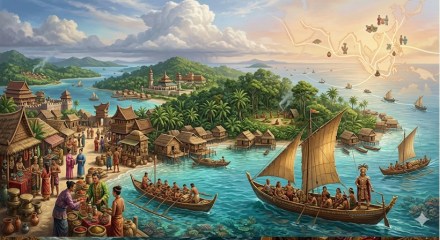
Before Colonization: The Maritime, Networked, and Layered Foundations of the Philippines
By Karl Garcia Introduction: Beyond the Myth of Isolation The history of the Philippines is often told as a simple sequence: early settlements, followed by centuries of isolation, and then sudden transformation with the arrival of Europeans. In this narrative, the archipelago appears peripheral—its development delayed until external forces brought change. This view is misleading. … Continue reading
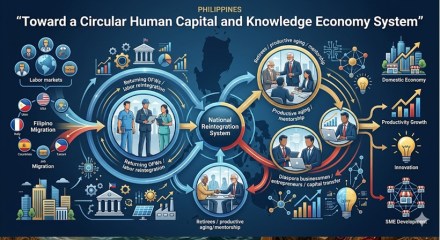
MIGRATION, REINTEGRATION, AND LABOR MOBILITY IN THE PHILIPPINES
Toward a Circular Human Capital and Knowledge Economy System By Karl Garcia EXECUTIVE ABSTRACT 0.1 Problem Statement The Philippine labor migration system remains heavily dependent on external employment flows, producing high remittance gains but weak domestic reintegration outcomes. The system underutilizes two strategic populations: Returning Overseas Filipino Workers (OFWs) Retirees and aging overseas Filipinos Filipino … Continue reading
Why the Philippines Keeps Entering Global Value Chains Without Fully Climbing Them
By Karl Garcia From Fragmented Governance to Industrial Coherence Why the Philippines Keeps Entering Global Value Chains Without Fully Climbing Them By Karl Garcia The Philippines does not suffer from a lack of development plans. The constraint lies in the limited integration of these plans into a coherent system of execution. Across decades, the country … Continue reading
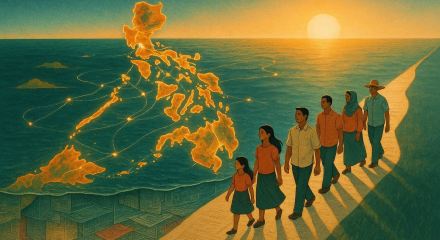
We Are Not Starting From Scratch: A Note on Continuity, Constraint, and National Learning By Karl Garcia
The Philippines is often spoken about as if it is perpetually beginning—resetting with every administration, rediscovering problems it has already named, relearning lessons already paid for in time, money, and sometimes lives. That framing is comforting in its simplicity, but it is also misleading. We are not starting from scratch. We are, instead, operating within … Continue reading
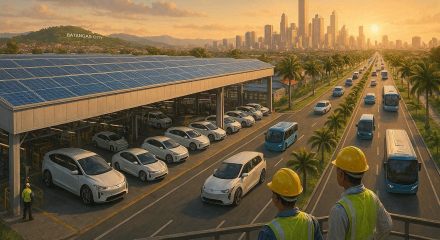
Is a Philippine Detroit possible? Checking out Industriepolitik
My previous article mentioned Michael Jackson’s father and his frustration with the factory. The Philippines barely has factories: unlike Motown aka Detroit, it never built the industrial base that turns working people into a middle class. That is why the majority of Filipinos live in precarity, and why the poorest remain truly destitute. So I … Continue reading
Recent Comments
JoeAm on From Decongestion to Justice:… Joey Nguyen on The Philippines Is a Legal Hyb… Karl Garcia on A SHIPYARD IS A TEST OF THE… Joey Nguyen on A SHIPYARD IS A TEST OF THE… CV on The Philippines Is a Legal Hyb… kasambahay on The Philippines Is a Legal Hyb… kasambahay on The Philippines Is a Legal Hyb… CV on The Philippines Is a Legal Hyb… kasambahay on The Philippines Is a Legal Hyb… kasambahay on The Philippines Is a Legal Hyb… CV on The Philippines Is a Legal Hyb… kasambahay on The Philippines Is a Legal Hyb… kasambahay on The Philippines Is a Legal Hyb… CV on The Philippines Is a Legal Hyb… Karl Garcia on A SHIPYARD IS A TEST OF THE…


