 Wilfredo G. Villanueva
 Cha Coronel Datu
 Juana Pilipinas
 Karl Garcia
 giancarloangulo
 Irineo B. R. Salazar
 JPilipinas
 karlgarcia
 JoeAm
JoeAmFLOOD CONTROL
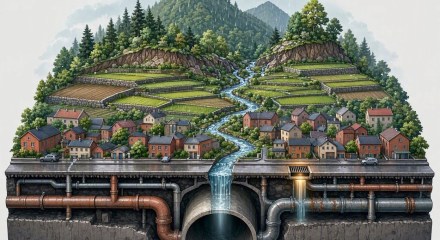
From the Little Grate to the Big Spillway By Karl M. Garcia THE FLOOD DOES NOT BEGIN IN THE STREET Every time Metro Manila floods, we look for a culprit. A clogged drain. An overflowing creek. A failed pumping station. A blocked estero. An undersized pipe. A river that has breached its banks. A catch … Continue reading
BUILDING THE PHILIPPINE MARITIME STATE
From Maritime Nation to Maritime Capability—and from Buyer to Builder Building the institutions, people, industries and infrastructure of an archipelagic nation By Karl M. Garcia Introduction: A Maritime Nation Building a Maritime State The Philippines is already a maritime nation. Its islands are connected by seas. Its people have lived from fishing, seafaring, boatbuilding and … Continue reading
MENTAL HEALTH AS NATIONAL INFRASTRUCTURE
From Forensic Justice to Maritime Human Capital—and from Fragmented Programs to a Continuity-of-Care State By Karl M. Garcia Introduction: The System Must Follow the Person The Philippines has begun an important transition in the way it thinks about mental health. For decades, mental illness was too often treated as a private medical problem, a family … Continue reading
FROM THE FREE INDIVIDUAL TO THE FREE REPUBLIC
Ayn Rand, Daron Acemoglu, Political Competition, and the Philippine Search for a More Democratic State By Karl M. Garcia Introduction: Freedom Requires Institutions Ayn Rand and Daron Acemoglu begin from very different intellectual traditions. Rand emphasizes the moral autonomy of the individual; Acemoglu examines how institutions distribute political and economic power. They should not be … Continue reading
THERE IS NO SHAME IN SAYING: I USE AI
A Layman’s Case for Transparency, Curiosity, Human Judgment, and Responsibility in the Age of Artificial Intelligence By Karl M. Garcia Introduction: I Use AI. So What? I use AI. I say that openly because I see no reason to hide it, and I see even less reason to be ashamed of it. I am not … Continue reading


